网约车

Search documents
曹操出行:收购蔚星科技全部股权
Jin Rong Jie· 2025-12-30 13:19
曹操出行在港交所公告称,本公司的并表联属实体杭州优行30日与浙江济底订立济底股权收购协议,并 与梅赛德斯-奔驰出行及吉利控股订立梅赛德斯-奔驰出行股权收购协议。根据该等协议,杭州优行同 意向浙江济底及梅赛德斯-奔驰出行分别收购蔚星科技50%股权,总现金对价为人民币225,000,000元。 于收购事项完成后,蔚星科技将成为杭州优行的全资附属公司。 本文源自:金融界AI电报 ...
曹操出行:杭州优行拟2.25亿元收购蔚星科技100%股权
Zhi Tong Cai Jing· 2025-12-30 12:58
Core Viewpoint - The acquisition of a 50% stake in Weixing Technology by Hangzhou Youxing enhances the company's luxury transportation offerings and strengthens its core mobility platform [1][2]. Group 1: Acquisition Details - Hangzhou Youxing has entered into equity acquisition agreements with Zhejiang Jidi and Mercedes-Benz Mobility to acquire a 50% stake in Weixing Technology for a total cash consideration of RMB 225 million [1]. - Following the completion of the acquisition, Weixing Technology will become a wholly-owned subsidiary of Hangzhou Youxing [1]. Group 2: Business Expansion and Strategy - Weixing Technology operates under the "Yao Chuxing" brand, providing luxury transportation services, including business concierge car services, long-term dedicated driver services, brand event transportation, airport transfers, and intercity travel with professional butler services [2]. - The acquisition will allow the company to integrate ride-hailing services with high-end concierge services, thereby expanding its high-end transportation product line and attracting a broader middle to high-end customer base, which is expected to enhance overall customer spending and lifetime value [2]. - The corporate services segment is a significant part of the company's business, characterized by stable demand, high average prices, and high gross margins per unit [2]. - Weixing Technology's extensive corporate client resources present cross-selling opportunities, aiding the company in rapidly expanding its corporate client base and enhancing operational efficiency [2]. - The synergy between corporate and individual customer segments is anticipated to drive bidirectional traffic and value conversion, thereby increasing customer loyalty [2]. - Weixing Technology's established luxury vehicle operation system, high-end client resources, and mature concierge and vehicle management systems in Hong Kong provide a solid platform for the company's international expansion strategy [2].
曹操出行(02643):杭州优行拟2.25亿元收购蔚星科技100%股权
智通财经网· 2025-12-30 12:56
Group 1 - The core point of the news is that Caocao Travel announced the acquisition of a 50% stake in Weixing Technology for a total cash consideration of RMB 225 million, which will make Weixing Technology a wholly-owned subsidiary of Hangzhou Youxing after the completion of the acquisition [1][2] Group 2 - Weixing Technology operates under the "Yao Travel" brand, providing luxury travel experiences, including business chauffeur services, long-term dedicated driver services, event transportation, airport transfers, and intercity travel with professional concierge services [2] - The acquisition enhances the group's core travel platform by integrating ride-hailing services with high-end concierge services, allowing the company to expand its high-end travel product line and attract a broader middle-to-high-end customer base, thereby increasing overall customer spending and lifetime value [2] - The enterprise service segment is a significant part of the group's business, characterized by stable demand, high average prices, and high gross margins per unit, with Weixing Technology's rich corporate client resources providing cross-selling opportunities to rapidly expand the corporate client base and improve operational efficiency [2] - The synergy between enterprise and individual customer groups can drive bidirectional traffic and value conversion, enhancing customer loyalty [2] - Weixing Technology has a well-established luxury vehicle operation system, high-end customer resources, and a mature concierge and vehicle management system in Hong Kong, providing a solid platform for the group's international expansion strategy [2]
曹操出行(02643.HK):杭州优行拟收购蔚星科技100%股权 拓展高端豪华出行服务
Ge Long Hui· 2025-12-30 12:55
蔚星科技以「耀出行」品牌运营,提供豪华出行体验,包括商务礼宾车服务、长期专职司机服务、品牌 活动出行服务、机场接送以及配备专业管家服务的城际出行。收购事项通过兼顾网约车服务与高端礼宾 服务,强化了集团的核心出行平台。集团将商务礼宾车及豪华车辆纳入服务体系後,将使集团能够拓展 其高端出行产品线,丰富平台的车型配置,并吸引更广泛的中高端客户群体,从而提升平台的整体客单 价及用户生命周期价值。 企业服务是集团业务的重要组成部分,具有需求稳定、平均价格高、单均毛利率高的特点。蔚星科技丰 富的企业端客户资源带来了交叉销售机会,有助于集团快速扩大其企业端客户群,巩固其企业端业务, 提升运营效率,完善数据整合并增强长期盈利能力。同时,企业端与个人端客户群体之间的协同效应可 推动双向流量及价值转化,从而提升客户忠诚度。此外,蔚星科技在香港拥有完善的豪华汽车运营体 系、高端客户资源以及成熟的礼宾与车辆管理体系,这为集团的国际化布局提供了坚实平台,从而支撑 其全球扩张战略。 格隆汇12月30日丨曹操出行(02643.HK)公告,于2025年12月30日(交易时段后),杭州优行,公司的并表 联属实体,与(i)浙江济底订立济底股权收 ...
滴滴预测元旦出行需求 12月31日打车单日量或破8000万
Feng Huang Wang· 2025-12-30 09:22
Group 1 - Didi Chuxing predicts that on December 31, 2025, domestic ride-hailing demand will exceed 80 million orders due to multiple factors such as New Year's Eve celebrations, commuting, and travel [1] - The peak demand for rides on New Year's Eve is expected to start at 3 PM and last until 8 PM [1] - Demand for rides to outdoor entertainment venues, tourist attractions, and major shopping areas is projected to increase by over 9 times compared to the same week last year [1] Group 2 - The demand for high-quality transportation options, such as ride-hailing and luxury vehicles, is expected to rise significantly, with increases of 226% and 188% respectively compared to the previous week [2] - The post-00s generation is anticipated to be the main contributor to ride-hailing demand on New Year's Eve, accounting for approximately 37% of total orders, and 45% of orders at 1 AM on January 1 [1] - During the New Year's holiday period (January 1 to January 3), the main travel themes are "heading south to escape the cold" and "going north for snow," with cities like Guangzhou and Shenzhen seeing high demand and significant year-on-year growth [1] Group 3 - Didi's car rental data shows a substantial year-on-year increase of 243% in rental bookings during the New Year's holiday [2] - Over 70% of users opted to pick up rental cars before the holiday (from December 27 to 31), with 50% planning 2 to 4 days of self-driving trips [2] - The majority of rental orders (60%) are for cars at travel destinations, with popular locations including Haikou, Qingdao, Urumqi, and Sanya [2] Group 4 - To manage the travel peak and incentivize drivers, Didi will launch commission-free cards in 245 cities from December 31 to January 3, along with additional rewards in some cities [2] - The rental orders in Harbin are expected to reach five times the volume of the same period in 2025, while the Altay region is projected to see a sevenfold increase [2]



滴滴:12月31日打车需求量预计突破8000万,打车晚高峰将提前至15时
Xin Lang Cai Jing· 2025-12-30 08:17
Core Insights - Didi Chuxing predicts a significant increase in ride-hailing demand on December 31, with peak hours starting at 3 PM and lasting until 8 PM, expecting over 80 million rides nationwide [1][3] - Demand for high-quality rides, such as Didi's premium and luxury services, is expected to rise by 226% and 188% respectively compared to the previous week [1][3] - The post-00s generation is anticipated to account for 37% of the ride-hailing demand, with the highest demand expected at 1 AM on January 1, reaching 45% [1][3] Ride-Hailing Demand - The demand for rides during New Year's Eve is projected to increase over nine times compared to the previous week, particularly in outdoor leisure venues, tourist attractions, and large shopping districts [1][3] - Didi's charging services predict a notable increase in charging orders in coastal cities such as Wenzhou, Haikou, Huizhou, Quanzhou, and Xiamen during the New Year holiday [1][3] - Fuel orders are also expected to rise in cities like Wenzhou, Nanchang, Nanning, Haikou, and Jinhua compared to regular days [1][3] Car Rental Trends - The "3 days off, 8 days on" holiday arrangement has stimulated demand for self-driving trips, with Didi's car rental bookings increasing by 243% year-on-year [1][3] - Over 70% of users are expected to pick up their rental cars early (between December 27 and December 31), with 50% planning 2-4 day self-driving trips [1][3] - Among Didi's rental orders for the New Year, 40% are local rentals while 60% are for out-of-town travel [1][3] Driver Incentives - To thank drivers for their service during the holiday period, Didi will launch a commission-free card in 245 cities from December 31 to January 3 [2][4]
哈啰无人车在株洲撞伤路人续:交警称已前往平台总部调查取证
Nan Fang Du Shi Bao· 2025-12-30 06:49
Core Viewpoint - A self-driving ride-hailing vehicle from Hello (哈啰) in Zhuzhou, Hunan, injured two pedestrians, prompting an investigation by local traffic authorities [1] Group 1: Incident Details - On December 6, a Hello self-driving vehicle struck two pedestrians, leading to public concern and media coverage [1] - The injured individuals were taken to Hunan Provincial Traditional Chinese Medicine Hospital for treatment [1] - Local authorities have temporarily suspended the operation of Hello's autonomous driving services in Zhuzhou, with no confirmed timeline for resumption [1] Group 2: Investigation and Response - The Zhuzhou traffic police are conducting an investigation into the incident, including a visit to Hello's headquarters for evidence collection [1] - A professional agency has been engaged to assess the vehicle's safety and technology; any identified issues will require Hello to implement corrective measures [1] - Hello's customer service confirmed the incident and stated they would continue to monitor the situation [1]

百度集团-SW涨超7% 百度无人车布局英国 自研AI芯片昆仑芯有望进入放量期
Zhi Tong Cai Jing· 2025-12-30 02:40
值得注意的是,百度集团本月初公告,有媒体报道公司拟分拆非全资附属公司昆仑芯(北京)科技有限公 司进行独立上市。公司谨此澄清,目前正就拟议分拆及上市进行评估。倘进行拟议分拆及上市,将须经 相关监管审批程序,而公司并不保证拟议分拆及上市将会进行。申万宏源发布研报称,百度自研AI芯 片昆仑芯有望进入放量期。 百度集团-SW(09888)涨超7%,截至发稿,涨6.8%,报127.2港元,成交额9.54亿港元。 消息面上,12月22日,美国网约车平台Uber和Lyft宣布,已与百度达成合作,计划于2026年在英国推出 无人驾驶出租车(Robotaxi)试点项目。公开资料显示,目前,萝卜快跑每周全无人订单数量已超过25万 单,全球累计提供的出行服务次数突破了1700万次,累计服务单量超越Waymo,成为全球第一的自动 驾驶出行服务商。 ...

超八成消费者选择网约车自营平台,安全考量成为首要因素
Feng Huang Wang· 2025-12-29 13:11
摘要: 超八成消费者倾向选择自营平台,这既是市场自发的选择,也是对行业未来方向的一种提示。 近日,天津市消费者协会联合北京大学电子商务法研究中心、北京阳光消费大数据研究院等机构发布的《网约车服务消费者满意度调查报告》显示,超八 成(80.66%)消费者倾向于选择网约车自营平台,而安全因素成为消费者选择网约车服务的首要考量。 根据报告来看,消费者对自营平台和聚合平台的认知存在明显差异。58.87%的消费者认为自营平台安全审核和主体责任更明确,45.06%的消费者认为其 客服与售后处理更高效。 调查结果显示,网约车已深度融入城市生活,成为基础公共服务的一部分。截至2025年10月31日,全国共有393家网约车平台公司取得经营许可,10月份 共收到订单信息8.92亿单。 本次调查采用问卷调查与体验调查相结合的方式,全面评估网约车服务市场现状。问卷调查阶段回收有效问卷3944份,其中3919名受访者有过网约车消费 经历,样本覆盖广泛。 体验调查则由工作人员以普通消费者身份,在滴滴出行、首汽约车、曹操出行、阳光出行、高德打车、百度打车、腾讯打车、美团打车等8个主流平台进 行全程消费体验,累计完成24个有效体验样本。 调 ...

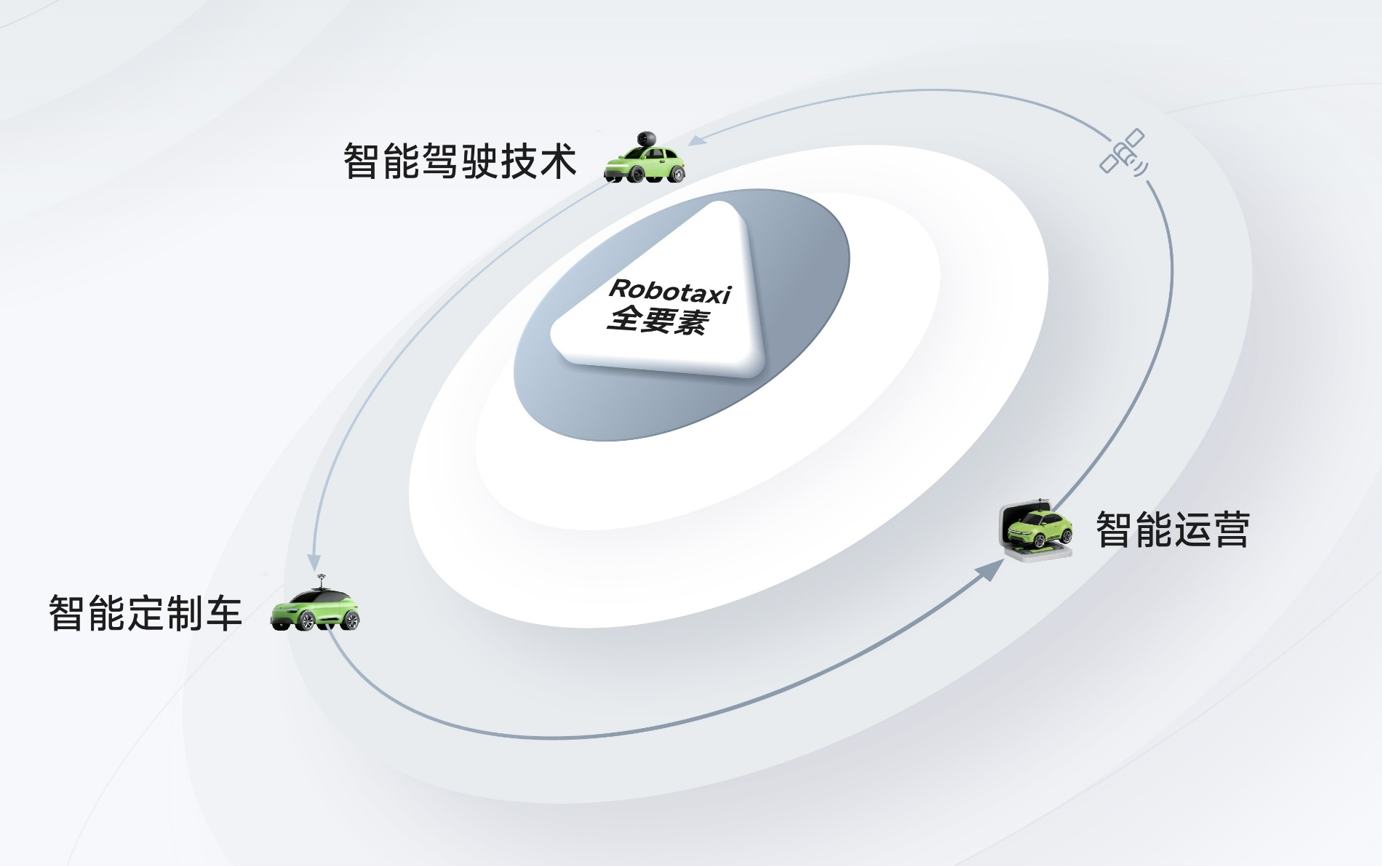
曹操出行今日解禁 Robotaxi全要素生态成长期价值压舱石
Zhi Tong Cai Jing· 2025-12-29 03:25
Core Viewpoint - The unlocking of shares for Cao Cao Mobility marks a significant moment, creating short-term pressure on stock prices but also providing an entry point for new investors who believe in the company's long-term ecological value and the Robotaxi sector [1] Group 1: Commercialization Turning Point - The Robotaxi industry is at a critical juncture for scaling and commercialization, with breakthroughs in autonomous driving technology and policy support [2] - Advances in algorithms, computing power, and hardware are leading to a cumulative effect that reduces the cost of autonomous driving systems by 10%-15% annually, with predictions that by 2027, Robotaxi costs per kilometer may match traditional ride-hailing services [2] - Multiple cities in China are facilitating the testing of Robotaxi services, with Beijing and Shanghai leading initiatives to promote autonomous driving [2] Group 2: Competitive Landscape - The Robotaxi sector has evolved into a competitive ecosystem with diverse entrants and technological routes, including collaborations between ride-hailing platforms and tech firms [4] - Cao Cao Mobility focuses on building a comprehensive operational system, integrating vehicle manufacturing, smart driving technology, and operational services, supported by Geely's technological ecosystem [4][7] - The transition from autonomous vehicles to reliable transportation services hinges on complex system engineering capabilities, which Cao Cao Mobility is developing [4][6] Group 3: Operational Capabilities - Cao Cao Mobility has established a systematic operational capability that includes a user base, efficient demand forecasting, and lifecycle management of vehicles, which supports cost control and commercial validation [8] - The company operates the largest customized vehicle fleet in the domestic market, which is crucial for scaling operations in the Robotaxi era [8] Group 4: Industry Outlook - The Robotaxi market in China is projected to reach 1.2 trillion yuan by 2030, representing over 30% of the shared mobility market, with significant societal benefits anticipated [9] - Cao Cao Mobility's ambitious goal of "ten years, a hundred cities, and a thousand billion" aligns with industry growth expectations, supported by a replicable construction standard for its green intelligent transit islands [9] - The integration of Robotaxi with emerging technologies like eVTOL and low-orbit satellites is expected to reshape urban mobility, positioning Cao Cao Mobility advantageously in this competitive landscape [9]