丝绸

Search documents
跨越时空的丝绸“变形记”
Hang Zhou Ri Bao· 2025-12-24 02:20
Group 1 - The second "Silk Fashion Festival" has opened at the China Silk Museum, featuring various events including exhibitions and academic seminars that highlight the intersection of fashion and cultural heritage [1] - The event celebrates the 55th anniversary of diplomatic relations between China and Italy, showcasing the work of 32 young designers from both countries who incorporate traditional Chinese textile patterns into contemporary designs [1] - The Natural Dye Biennale, part of the museum's exhibition system, features 104 works from nearly 130 artists and researchers from over 10 countries, emphasizing both the preservation of traditional techniques and contemporary innovation [1] Group 2 - The "Silk Fashion Festival" project was initiated by the China Silk Museum last year to promote the development of the Zhejiang silk industry, spread silk culture, and create contemporary silk fashion brands [2]
万事利12月23日获融资买入2264.53万元,融资余额1.35亿元
Xin Lang Cai Jing· 2025-12-24 01:28
Group 1 - The core viewpoint of the news is that Wanshili's stock experienced a decline of 2.07% on December 23, with a trading volume of 176 million yuan, indicating a potential concern in market sentiment [1] - On December 23, Wanshili had a financing buy-in amount of 22.65 million yuan and a financing repayment of 25.33 million yuan, resulting in a net financing outflow of 2.69 million yuan [1] - As of December 23, the total balance of Wanshili's margin trading was 135 million yuan, which represents 4.21% of its circulating market value, indicating a high level of financing balance compared to the past year [1] Group 2 - As of September 30, Wanshili had 12,700 shareholders, a decrease of 18.69% from the previous period, while the average circulating shares per person increased by 22.98% to 14,880 shares [2] - For the period from January to September 2025, Wanshili achieved an operating income of 519 million yuan, reflecting a year-on-year growth of 5.68%, but the net profit attributable to shareholders decreased by 27.83% to 20.09 million yuan [2] - Since its A-share listing, Wanshili has distributed a total of 56.75 million yuan in dividends, with 43.29 million yuan distributed over the past three years [2]

太湖雪:千年“软黄金”焕发新生
Zheng Quan Ri Bao· 2025-12-18 15:43
Core Viewpoint - The article highlights the transformation of Taihu Snow Co., Ltd. into a leader in the silk industry through the integration of cultural revitalization, technological innovation, and multi-channel strategies, showcasing how traditional industries can innovate and thrive in modern markets [1][9]. Cultural Revitalization - Silk, known as "soft gold," is not only a luxurious fabric but also a significant symbol of Chinese civilization, with Taihu Snow emphasizing the importance of cultural roots in its growth strategy [2]. - The company has established a cultural translation space at its silkworm culture park, showcasing the traditional silk-making process and enhancing consumer engagement with the heritage [2]. - Taihu Snow's approach to "cultural revitalization" involves using digital technology to promote intangible cultural heritage, collaborating with museums to create immersive experiences that connect consumers with traditional craftsmanship [2][3]. Technological Innovation - Taihu Snow addresses industry challenges such as low production efficiency and quality inconsistency by creating a closed-loop supply chain from mulberry fields to silk quilts, ensuring quality control [4][5]. - The company employs IoT sensors in its mulberry plantations and smart systems in production to maintain consistent quality and improve efficiency, blending modern technology with traditional craftsmanship [5]. - Research and development investments reached 21.36 million yuan in the first three quarters of the year, accounting for 3.87% of revenue, with a focus on developing proprietary silk processing technologies [5]. Market Strategy - Taihu Snow's market strategy includes a comprehensive channel approach, leveraging both online and offline platforms to reach consumers effectively [6][7]. - Online sales accounted for 58.15% of the company's main business revenue in the first three quarters of 2025, with a year-on-year growth of 26.34% [6]. - The company has established immersive experience stores in key cities, enhancing consumer engagement and brand loyalty through hands-on interactions with products [7]. Future Development - Taihu Snow plans to invest 300 million yuan in building a cross-border e-commerce headquarters to support its international expansion and aims to produce 4 million silk products annually by 2027 [8]. - The company is committed to sharing research outcomes with the industry to promote high-quality development in the silk sector, indicating a focus on collaborative growth [8][9]. - The integration of AI technology across production, sales, and service processes is part of the company's strategy to enhance operational efficiency and product offerings [9].
今年羽绒被“涨声一片”?不少人转而选择蚕丝被,“太明智了”!
Mei Ri Shang Bao· 2025-11-28 14:36
Core Viewpoint - The market for down comforters has seen significant price increases, leading consumers to consider silk comforters as a lighter and more affordable alternative [1] Group 1: Market Trends - Domestic goose down comforters are priced over 2000 yuan, while imported options from Poland and Germany have seen even higher price hikes [1] - The rising cost of raw silk has been noted, but companies like Kai Xiya maintain price control through their own high-end silk production bases [1][2] Group 2: Product Features - Silk comforters are made from mulberry silk, which contains 18 amino acids that are highly compatible with human skin, making them suitable for sensitive individuals [1][2] - The unique structure of mulberry silk, with over 38% being hollow, provides excellent breathability and warmth, reducing the likelihood of discomfort during sleep [2] - Silk comforters are recognized for their natural, pollution-free characteristics, as silkworms are sensitive to environmental conditions [1][2] Group 3: Product Offerings - Kai Xiya offers various weights of silk comforters, with prices ranging from 599 yuan for a 1 kg comforter to 2599 yuan for a 6 kg option [3] - Custom sizes and weights are available upon request, although they require additional time for production [3] Group 4: E-commerce Platform - "Meiman Life" is a public welfare e-commerce platform that aims to support businesses affected by the pandemic and promote quality products at reasonable prices [3][4] - The platform has partnered with over a hundred enterprises, offering a variety of products from local and well-known brands [4]
六部门发文增强消费品供需适配性 2027年形成3个万亿级消费领域和10个千亿级消费热点
Zhong Guo Zheng Quan Bao· 2025-11-26 21:00
Core Viewpoint - The implementation plan aims to enhance the adaptability of supply and demand in consumer goods, promoting consumption upgrades to lead industrial upgrades and achieving a dynamic balance between supply and demand [1][3] Group 1: Key Areas of Focus - The plan outlines 19 key tasks across five areas, focusing on industries such as smart connected vehicles, smart home products, consumer electronics, modern textiles, food, and green building materials [1] - It emphasizes the development of innovative applications and the creation of flagship products and enterprises, along with establishing testing platforms in various consumer goods sectors [1] Group 2: Expanding Product Supply - The plan advocates for the development of leisure and sports products, targeting new demands from event economies and outdoor activities, and promoting high-quality sports equipment [2] - It aims to diversify product offerings for specific demographics, including children's products, quality student supplies, trendy items, and age-appropriate products [2] Group 3: Innovation and Internal Demand Activation - By 2027, the plan targets a significant optimization of the consumer goods supply structure, aiming to create three trillion-level consumption fields and ten hundred-billion-level consumption hotspots [3] - The policy is expected to positively impact various industries, including smart vehicles, home products, and health-related goods, by fostering technological innovation and responding to new market demands [3][4] Group 4: Focus on Specific Demographics - The policy particularly addresses the needs of specific consumer groups, promoting the refinement and quality enhancement of products for children, students, and the elderly [4] - New consumption formats such as live e-commerce and instant retail are expected to develop in an orderly manner, injecting vitality into core business districts and new product launches [4]
六部门发文增强消费品供需适配性
Zhong Guo Zheng Quan Bao· 2025-11-26 20:20
Core Viewpoint - The implementation plan aims to enhance the adaptability of supply and demand in consumer goods, promoting consumption upgrades to lead industrial upgrades and achieving a dynamic balance between supply and demand [1][2]. Group 1: Key Areas of Focus - The plan outlines 19 key tasks across five areas, focusing on industries such as smart connected vehicles, smart home products, consumer electronics, modern textiles, food, and green building materials [1]. - It emphasizes the development of leisure and sports products, targeting new demands from event economies, outdoor economies, and winter sports, while promoting high-quality sports equipment [1][2]. Group 2: Targeted Consumer Needs - The plan aims to match diverse consumer needs by enriching the supply of baby products, enhancing quality student supplies, expanding trendy products, and optimizing products for the elderly [2][3]. - It also seeks to cultivate new consumption scenarios and business models, including the promotion of product launches, orderly development of platform consumption, and regulated shared consumption [2]. Group 3: Future Goals - By 2027, the plan targets a significant optimization of the consumer goods supply structure, aiming to create three trillion-level consumption fields and ten hundred-billion-level consumption hotspots [2]. - By 2030, it envisions a high-quality development pattern where supply and consumption interact positively, with a steady increase in consumption's contribution to economic growth [2]. Group 4: Industry Impact - The implementation of the plan is expected to positively impact multiple industries, including smart connected vehicles, smart home products, consumer electronics, and green building materials, driving technological innovation through the creation of flagship products and innovative application scenarios [2][3]. - The sports and leisure product sectors are anticipated to benefit from new demands arising from event and outdoor economies, gaining new growth momentum [2].
万事利布局四大千亿级产业
Hang Zhou Ri Bao· 2025-11-25 02:36
Core Viewpoint - Wanshili Group celebrates its 50th anniversary, highlighting its evolution from a small factory to a leading brand in China's silk industry, and outlines its future ambitions in four trillion-level industry sectors [3][4]. Group 1: Company History and Legacy - Founded in 1975 by Shen Aiqin, Wanshili started with 22 farmers and 17 primitive looms, marking the beginning of its entrepreneurial journey [4]. - The company has achieved cumulative sales exceeding 200 billion yuan and has contributed over 8 billion yuan in taxes, providing nearly 50,000 jobs and donating over 100 million yuan to public welfare [4]. - The second-generation leader, Tu Hongyan, emphasizes the importance of inheritance and has transformed Wanshili from a diversified traditional manufacturer to a modern brand focused on silk [4][5]. Group 2: Future Strategy and Innovation - Wanshili aims to become a century-old enterprise and a leader in Chinese silk culture, technology, and branding, with international expansion planned in Italy and France [6]. - The company is focusing on four trillion-level industry sectors: classic silk, integrated textile dyeing, silk health products, and AI smart systems [6][7]. - Wanshili is innovating in the classic silk sector by expanding into new applications such as silk art, home decor, and cultural tourism [6]. - The company is developing a waterless dyeing machine to promote a green revolution in textile production, targeting zero pollution and zero emissions for 300 billion meters of fabric [6]. - In the health sector, Wanshili is collaborating with top research institutions to create products aimed at improving the quality of life for patients with conditions like Alzheimer's and ALS [6]. - The introduction of an AI smart system allows for a fully integrated process from order to delivery, achieving rapid delivery times for products like silk scarves [7]. - Wanshili is also venturing into the pet travel service market, aiming to create a harmonious travel ecosystem for pets and their owners [7].

四川持续推动蚕桑产业建圈强链,助力“川丝产品”向“川丝品牌”转变 东绸西固,托举首个历史经典产业
Si Chuan Ri Bao· 2025-11-23 01:27
Core Viewpoint - The "East Silk West Solid" initiative aims to enhance the synergy between the eastern and western regions of China in the silk industry, promoting high-quality development and resource optimization across the country [2][4][10] Group 1: Industry Overview - The western region accounts for 75% of the national mulberry garden area and 85% of the silkworm cocoon production, with Guangxi, Sichuan, and Yunnan contributing 80% of the western total [1][3] - In 2024, Sichuan's mulberry garden area is expected to stabilize at 2.3 million acres, with a production of 87,000 tons and silk products exported totaling $170 million [1][9] - China's cocoon production value reached a historical high of 47.567 billion yuan [1][3] Group 2: Strategic Initiative - "East Silk West Solid" is a strategic framework that aims to balance the resource endowments and industrial foundations of the eastern, central, and western regions, facilitating a tiered transfer of the silk industry [2][4] - The initiative builds on previous concepts like "East Mulberry West Move" and "East Silk West Advance," reflecting the evolution of the silk industry in response to changing production factors [3] Group 3: Market Dynamics - Over 270 silk industry enterprises participated in the Silk Expo, highlighting the market's responsiveness to the "East Silk West Solid" initiative [6] - Companies are actively seeking new collaboration opportunities, with Jiangsu's silk industry focusing on technological advancements to enhance manufacturing capabilities [7] Group 4: Future Prospects - The initiative is expected to create new opportunities for Sichuan, which is positioned as a major supplier of high-quality silk raw materials, aiming to develop a billion-dollar industry [9][10] - Collaborative projects between eastern and western enterprises are being established to drive innovation and enhance the value chain in the silk industry [10]
2025四川丝绸博览会累计签约项目27个 协议总投资额105.25亿元
Xin Hua Cai Jing· 2025-11-22 10:40
Core Insights - The 2025 Sichuan Silk Expo, themed "Silk Rhythm Life, Chain Moving Future," took place from November 21 to 23 in Nanchong, attracting 164 silk-related enterprises from nine provinces and six countries, resulting in 27 signed projects with a total investment of 10.525 billion yuan [1][2] Industry Overview - Sichuan ranks among the top provinces in China for silk production, with an expected output of 87,000 tons of silkworm cocoons in 2024 and a domestic market share of over 50% for high-quality raw silk. Silk product exports have increased by 80.2% year-on-year [1] - Nanchong has developed a complete industrial chain from "one piece of mulberry" to "one piece of clothing," leading the province in silk and satin production. In 2024, Nanchong will have 97 key silk and clothing enterprises, with an industrial output value of 7.1 billion yuan [2] Technological and Cultural Advancements - Sichuan is enhancing the silk industry through technological innovation, promoting the use of automated silk reeling machines, and integrating traditional craftsmanship with modern industry. The province has established 2.3 million mu of mulberry gardens and developed ten provincial-level star parks focused on sericulture [1] - Cultural initiatives include the formulation of a special plan for the protection and promotion of silk culture, upgrading museums, and creating new consumer experiences such as the "Silk Source Point" exhibition park [1] Collaboration and Future Outlook - The Silk Expo serves as a platform for domestic and international silk enterprises to collaborate, aiming to strengthen partnerships across various sectors and contribute to the high-quality development of the silk industry during the 14th Five-Year Plan period [2]
2025四川丝绸博览会开幕 签约协议总投资超百亿元
Zhong Guo Xin Wen Wang· 2025-11-21 06:12
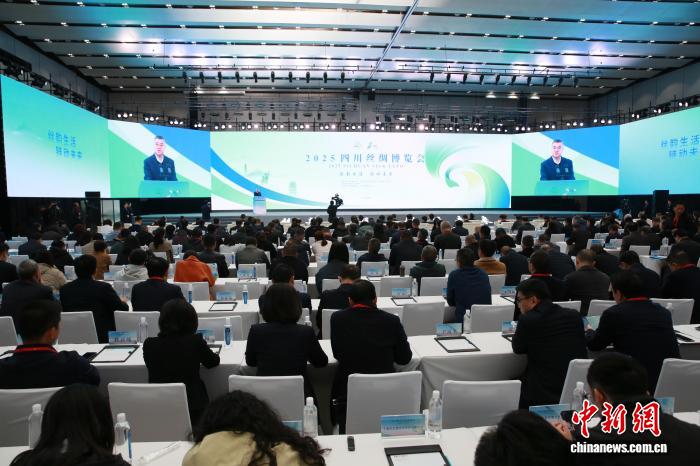
Core Insights - The 2025 Sichuan Silk Expo has opened in Nanchong, Sichuan, with a total investment of over 10.5 billion yuan from signed agreements [1][7] - The expo features 270 participating companies from various provinces and countries, highlighting the silk industry’s innovation and products [1][3] Group 1: Event Overview - The theme of this year's expo is "Silk Rhythm of Life, Chain Driving the Future" [3] - The exhibition covers an area of 13,000 square meters, showcasing the achievements of the national silk industry and related products [3] - The event includes five exhibition halls: China Silk Pavilion, International Cooperation Pavilion, Regional Cooperation Pavilion, Sichuan Specialty Pavilion, and Nanchong Local Specialty Pavilion [3] Group 2: Industry Significance - Nanchong is recognized as the "Silk Capital" of China, with over 3,000 years of history in sericulture and silk production [3] - The city has developed a complete industrial chain from mulberry cultivation to silk production and textile processing, leading the province in silk and silk quilt production [3][5] - The silk industry is considered a traditional and competitive sector in China, contributing significantly to the economy and cultural heritage [5] Group 3: Economic Impact - A total of 27 key projects were signed during the expo, with a cumulative investment of 10.525 billion yuan [7] - In 2024, Sichuan's silkworm cocoon production is expected to reach 87,000 tons, with high-quality raw silk holding over 50% market share domestically [5] - Silk product exports have increased by 80.2% year-on-year, showcasing the region's growing international presence [5]