合成生物制造

Search documents
魏小东参加重点协商议题调研并看望慰问教师
Bei Jing Ri Bao Ke Hu Duan· 2025-09-10 14:18
Group 1 - The core focus of the research is on accelerating the construction of an international green economy benchmark city in Beijing, enhancing its international influence in the green economy sector [1] - The research team visited the Beijing Synthetic Biology Manufacturing Industry Cluster and engaged with company leaders to understand the city's resource advantages, industry planning, cutting-edge technologies, and innovative achievements in synthetic biology manufacturing [1] - The committee emphasized the importance of cultivating the synthetic biology manufacturing industry as a key initiative for Beijing's development as an international green economy benchmark city, suggesting the creation of a highly collaborative innovation ecosystem involving government, industry, academia, and research [1] Group 2 - The research team also visited North China Electric Power University, exploring key laboratories related to new energy power systems and semiconductor device reliability, while acknowledging the university's role in training high-quality talent for the energy sector [2] - The emphasis was placed on aligning educational programs with national strategic development needs to foster leadership talent and enhance technological innovation capabilities in the energy and power sectors [2] - The city government expressed its commitment to supporting the university's high-quality development to further contribute to the construction of an international green economy benchmark city [2]
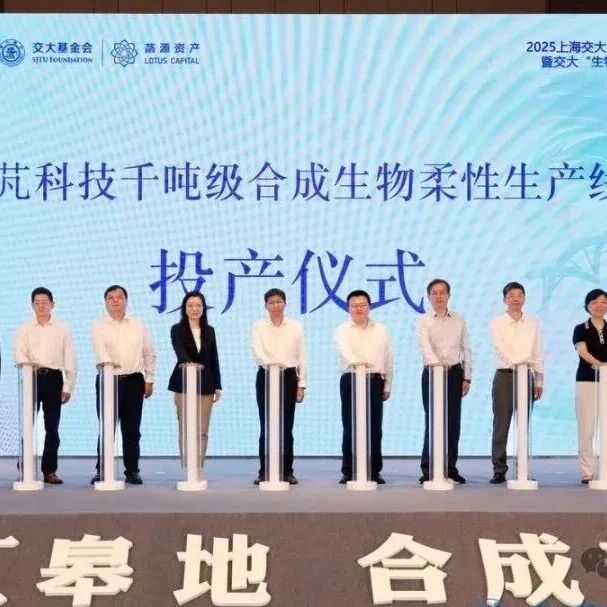
肆芃科技千吨级合成生物柔性生产线顺利落成,加速合成生物制造跨越式发展
合成生物学与绿色生物制造· 2025-09-06 21:02
Core Insights - The article highlights the recent launch of a thousand-ton synthetic biology flexible production line by Siping Technology in Rugao, Jiangsu, marking a significant step in the company's full-chain layout in synthetic biology [2] - Siping Technology aims to become an innovative leader in synthetic biological manufacturing platforms, focusing on high-performance bio-based materials and carbon-negative intelligent manufacturing [2] - The company has partnered with the Tianjin Institute of Industrial Biotechnology to develop bulk bio-based material monomer products using methanol, aiming to reduce reliance on food carbon sources and promote "one-carbon bio-manufacturing" [4] Group 1 - Siping Technology's new production line is a key component in scaling up biological manufacturing technology and aims to lead the industry towards intelligent, non-food, and sustainable development [2] - The product matrix includes carbon-negative new materials, polymer monomers, and high-value-added compounds, with a focus on efficient conversion from laboratory technology to industrial application [2] - The collaboration with the Tianjin Institute is based on shared strategic goals, leveraging the institute's expertise in low-carbon synthetic biology and Siping's advancements in bio-based products [4] Group 2 - The national strategy emphasizes the innovation and development of non-food bio-based materials, utilizing resources like crop straw and bamboo [7] - A forum on high-value utilization of non-food biomass is scheduled for November 2025 in Hangzhou, focusing on clean pretreatment, non-food sugars, chemicals, and biofuels [7]

生物制造进入产业化加速关键期,专家建议更多耐心资本进入
Di Yi Cai Jing· 2025-08-22 02:11
Group 1 - The core viewpoint emphasizes the need for strengthening core technology breakthroughs, improving resource allocation, and creating a friendly application environment to better integrate technological and industrial innovation in the biomanufacturing sector [1][3] - Biomanufacturing is identified as a significant future industry, with China holding 70% of the global fermentation capacity, indicating a substantial scale of the traditional biomanufacturing industry [1][3] - The 2025 government work report highlights the establishment of a growth mechanism for future industry investments, particularly in biomanufacturing, which has seen accelerated technological breakthroughs and improved policy frameworks [3] Group 2 - The biomanufacturing industry is characterized by its knowledge-intensive nature, with ongoing collaborative efforts needed to tackle core technologies such as proprietary strains, gene editing technologies, and high-performance bioreactor manufacturing [3] - There is a call for increased R&D investment from industry stakeholders, and the development process of biomanufacturing technology requires collaboration among research institutions, enterprises, and investment entities [3] - The long innovation cycle in biomanufacturing necessitates the entry of "long-term funds and patient capital" to support its growth [3] Group 3 - The future of biomanufacturing is expected to optimize and replace traditional manufacturing models, with new products and innovations entering the market [4] - Local governments are accelerating the development of the biomanufacturing industry, with Hunan Province recently approving regulations to promote synthetic biomanufacturing, marking a significant legislative step [4] - In the first seven months of the year, the synthetic biomanufacturing industry chain in Changde City experienced a growth rate of 23.5%, supported by substantial investment funds and partnerships with various institutions [4]
这个市发力合成生物制造领域产业基金
母基金研究中心· 2025-08-21 09:01
Core Viewpoint - The article discusses the implementation of the "Regulations on Promoting the Development of Synthetic Biology Manufacturing Industry in Changde City," which is the first local regulation in the synthetic biology manufacturing field in China, aimed at fostering high-quality development and establishing a national-level industrial cluster [1][2]. Summary by Sections Introduction - The regulations were passed on June 26, 2025, and approved on July 31, 2025, coming into effect immediately upon publication [2][4]. Objectives and Scope - The regulations aim to promote high-quality development in the synthetic biology manufacturing industry, replacing fossil-based materials with bio-based materials and traditional chemical technologies with biotechnology [4][5]. Government Responsibilities - The municipal government is tasked with formulating development plans for the synthetic biology manufacturing industry and integrating it into national economic and social development plans [5][6]. Investment and Innovation - The government will attract projects through various means, including industry chain and capital investment, and will support the establishment of innovation platforms and research centers [6][7]. Support for Enterprises - The regulations encourage the growth of leading enterprises in the synthetic biology sector and support their listing and digital transformation [8][9]. Talent Development - There is a focus on attracting high-level talent and establishing educational institutions related to synthetic biology to cultivate skilled professionals [11][12]. Environmental and Safety Regulations - The regulations emphasize the importance of environmental safety and the establishment of monitoring systems to prevent risks associated with synthetic biology manufacturing [13][14]. Administrative Efficiency - The government aims to streamline administrative processes for synthetic biology enterprises, ensuring efficient approval and support mechanisms [9][10]. Financial Support - The establishment of investment funds and financial policies to support the synthetic biology manufacturing industry is highlighted, along with measures to reduce financing costs for enterprises [12][10].

昌平区全力推动青年人才创新创业
Bei Jing Qing Nian Bao· 2025-08-18 18:01
Core Viewpoint - Changping District is positioning itself as a vibrant future city through the development of innovation-driven corridors and a focus on youth entrepreneurship, with significant financial backing and policy support [1][4]. Group 1: Infrastructure and Planning - Changping District has planned the G6 Science and Technology Corridor, G45 Industrial Corridor, and the Beijing North Ecological Corridor, breaking traditional barriers between industrial parks, residential areas, and administrative zones [2]. - The G6 Science and Technology Corridor features over 10 innovation clusters, including the Life Science Park and Future University Science Park, with a planned industrial space exceeding 14 million square meters, of which 5.218 million square meters have been completed [2]. - The G45 Industrial Corridor focuses on advanced energy, future health, and state-owned enterprise clusters, supporting innovation and collaboration among various enterprise sizes [2]. Group 2: Industry Development - The three leading industries in Changping District are pharmaceutical health, advanced manufacturing, and advanced energy, with the pharmaceutical health industry generating an annual revenue growth of 9.2%, totaling 104 billion yuan [3]. - The advanced manufacturing sector surpassed 160 billion yuan in revenue last year, with a growth rate of 15% in the first half of this year, highlighted by Xiaomi's first self-owned digital smart factory [3]. - The advanced energy sector, focusing on energy internet, wind and solar power, hydrogen energy, and energy storage, achieved a revenue of 253.2 billion yuan last year, with significant infrastructure developments like the first energy field benchmark factory [3]. Group 3: Talent and Innovation - Changping District has been approved as the first pilot area for future industries in the city, with a focus on synthetic biology manufacturing and a growing number of enterprises in this sector [4]. - The district is implementing a youth talent innovation and entrepreneurship ecosystem, allocating 130 million yuan annually to support 19 policy measures aimed at fostering youth engagement in innovation and entrepreneurship [4]. - Policies include subsidies for entrepreneurship, interest-free loans, living allowances, free workspaces, and reduced rent for talent apartments, designed to attract and retain young talent [4].

上半年昌平区GDP同比增长7.1%,三大主导产业聚集成势
Xin Jing Bao· 2025-08-18 13:27
Economic Development - During the "14th Five-Year Plan" period, Changping District's GDP is expected to grow at an average annual rate of 6.2%, surpassing the city's average by 1.3% [1][2] - In the first half of this year, the GDP growth reached 7.1%, building on a high base from the previous year [2] - The per capita disposable income of residents has exceeded 60,000 yuan, with a growth rate of 5.9% in the first half of the year, ranking third in the city [2] - Fixed asset investment has an average annual growth of 11.2%, with a total surpassing 70 billion yuan and a growth rate of 15.2% in the first half of the year [2] Industrial Development - Changping has three major trillion-yuan leading industries, including the pharmaceutical health industry, advanced manufacturing, and advanced energy [4] - The pharmaceutical health industry has an annual revenue growth of 9.2%, reaching 104 billion yuan, with a growth rate of 9.7% in the first half of the year [4] - Advanced manufacturing revenue exceeded 160 billion yuan last year, with a growth rate of 15% in the first half of this year [4] - The advanced energy industry generated 253.2 billion yuan last year, focusing on energy internet, wind power, photovoltaics, hydrogen energy, and energy storage [4] Urban and Rural Integration - Changping has over 130 kilometers of rail transit lines, with eight lines and 46 stations, leading the plain new city [6] - The district has completed planning for all 106 streets and eight towns, supplying 157 hectares of residential land over the past five years [7] Talent Ecosystem - Changping has implemented four talent introduction plans and explored 23 policy measures to support talent development [9] - The district has invested 100 million yuan annually in the "Changju Project" to support high-level talent, providing financial support ranging from 500,000 to 3 million yuan [10] - In the past two years, Changping has introduced over 1,300 talents across four categories [9]
新材料产业周报:OpenAI拟投资脑机接口公司MergeLabs-20250817
Guohai Securities· 2025-08-17 15:34
Investment Rating - The report maintains a "Recommended" rating for the new materials industry [1]. Core Insights - The new materials sector is identified as a crucial direction for the chemical industry, currently experiencing rapid growth in downstream demand. With policy support and technological breakthroughs, domestic new materials are expected to accelerate into a long-term growth phase. The report emphasizes that "one generation of materials supports one generation of industry," highlighting the foundational nature of the new materials industry for other sectors [5][16]. Summary by Sections 1. Electronic Information Sector - Focus areas include semiconductor materials, display materials, and 5G materials. Recent developments include Apple's plans to re-enter the AI field with new devices and OpenAI's investment of $250 million in brain-computer interface startup Merge Labs, which has a valuation of $850 million [6][24]. 2. Aerospace Sector - Key materials of interest are PI films, precision ceramics, and carbon fibers. A significant milestone was achieved with the successful ignition test of the Long March 10 series rocket, which is crucial for China's manned lunar exploration program [9][10]. 3. New Energy Sector - The report highlights solar energy, lithium-ion batteries, proton exchange membranes, and hydrogen storage materials. In July, China's automotive production and sales reached 2.591 million units, with new energy vehicles showing a growth rate exceeding the overall market [11]. 4. Biotechnology Sector - The focus is on synthetic biology and scientific services. A new regulation in Changde City aims to promote the development of the synthetic biology manufacturing industry, marking a significant step in local legislation [12][13]. 5. Energy Conservation and Environmental Protection Sector - Key materials include adsorption resins, membrane materials, and biodegradable plastics. The Chongqing Municipal Economic and Information Commission has launched an action plan to implement over 1,500 industrial technology renovation projects by 2025, aiming for an investment growth of over 11% [14][15]. Key Companies and Profit Forecasts - The report lists several key companies with their stock prices and earnings per share (EPS) forecasts for 2024, 2025, and 2026, along with their respective investment ratings. For instance, Ruihua Tai (688323.SH) has a stock price of 17.03 with an EPS forecast of 0.06 for 2025, rated as "Increase" [17].
倒计时6天! 40+场报告, 100+新产品和项目...第四届合成生物制造大会(8月20-22日宁波)
合成生物学与绿色生物制造· 2025-08-14 14:57
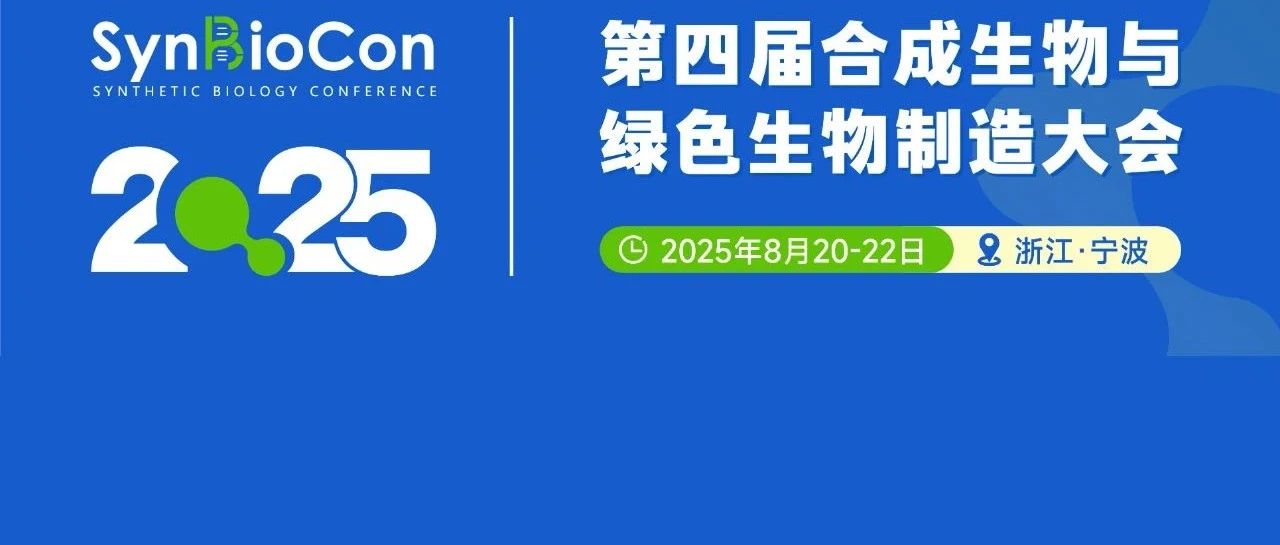
Core Viewpoint - The fourth Synthetic Biology and Green Bio-Manufacturing Conference (SynBioCon 2025) will be held from August 20-22 in Ningbo, Zhejiang, focusing on the integration of AI with bio-manufacturing, green chemicals, new materials, future food, and agriculture [4][5]. Group 1: Conference Overview - The conference will explore the development trends of the bio-manufacturing industry during the 14th Five-Year Plan, innovations driven by AI, and the technologies and products that will sustain the vitality of the bio-manufacturing sector [4][5]. - Various activities will be held concurrently, including a Youth Forum on Bio-Manufacturing, a high-level roundtable discussion, and a closed-door seminar on the "2025 AI Empowering Bio-Manufacturing Industry Innovation Development Blue Book" [4][5]. Group 2: Agenda Highlights - Day 1 will feature registration, a high-level roundtable discussion, and a Youth Forum focused on discovering innovations in bio-manufacturing [7][10]. - Day 2 will include an opening ceremony, a macro forum on the bio-manufacturing industry, and specialized forums on green chemicals and new materials, as well as a welcome dinner [8][9]. - Day 3 will focus on AI applications in bio-manufacturing, future food, and agriculture, along with technology showcases and networking opportunities [8][28]. Group 3: Supporting Organizations - The conference is organized by Ningbo Detaizhong Research Information Technology Co., Ltd. and supported by various institutions, including Peking University Ningbo Institute of Ocean Medicine and the Zhejiang Synthetic Biology Industry Technology Alliance [5][6]. - Notable experts and organizations are involved, including Zhang Xian'en from Shenzhen University and multiple biotechnology companies [5][6]. Group 4: Industry Insights - The conference will release the "China Synthetic Biology Industry Distribution Map (2025 Edition)" and a list of over 500 representative enterprises in the bio-manufacturing sector [65][66]. - The event aims to facilitate the transfer and transformation of scientific achievements, product scaling, and talent acquisition in the bio-manufacturing industry [4][5].
创新成果发布 | 功能糖及膳食纤维生物法制备技术(江南大学)
合成生物学与绿色生物制造· 2025-08-12 13:20
Core Viewpoint - The SynBioCon 2025 conference aims to facilitate the transformation of scientific achievements into practical applications, focusing on the development of the synthetic biology and green manufacturing industries [2][14]. Group 1: Conference Overview - The fourth Synthetic Biology and Green Manufacturing Conference (SynBioCon 2025) will be held from August 20-22 in Ningbo, Zhejiang [2][14]. - The conference is organized by DT New Materials, with support from various academic and industry organizations, including Peking University Ningbo Institute of Oceanography and Enzyme Bio [2][14]. - The event will focus on the integration of AI with biological manufacturing, green chemicals, new materials, future food, and agriculture [14]. Group 2: Key Activities - The conference will feature a series of activities, including a youth forum on biological manufacturing, a high-level industry roundtable, and a closed-door seminar on the "2025 Blue Book for AI Empowering Biological Manufacturing Industry" [14][15]. - A special event will showcase 100 innovative achievements in synthetic biological manufacturing to promote efficient technology transfer [2][14]. Group 3: Featured Project - One highlighted project is the biological preparation technology for functional sugars and dietary fibers led by Professor Wu Jing's team from Jiangnan University [6][7]. - Functional sugars and dietary fibers are essential components in modern food industry, offering health benefits such as low calories and regulation of gut microbiota [7]. - The project utilizes enzyme catalysis for the production of various functional sugars and dietary fibers, establishing a cost-effective and efficient green production technology [8][9].

未来科学城有座“健康糖工厂”
Ren Min Ri Bao· 2025-08-06 22:49
Group 1 - The core idea of the articles revolves around the innovative production of allulose sugar by Weiyuan Synthetic Biotechnology, utilizing advanced biosynthesis technology to reduce production costs and improve efficiency [1] - Allulose sugar is a natural sweetener with almost no calories, aiding in blood sugar control and weight management, and its production has been simplified from a two-step to a one-step process, increasing conversion efficiency from 10% to over 80% [1] - The first phase of the allulose sugar factory has been officially put into production, with an annual capacity reaching 10,000 tons [1] Group 2 - Changping District is focusing on developing a cluster of synthetic biology manufacturing enterprises, with over 120 companies gathered in the area, aiming for an industry revenue exceeding 6 billion yuan in 2024 [2] - The district is positioning itself as an innovation source and industry leader in synthetic biology manufacturing, with significant breakthroughs in various fields such as biobased new materials and gas fermentation [2]