文化艺术

Search documents
春晚“义乌时刻” 绽放世界舞台
Xin Lang Cai Jing· 2026-02-17 03:56
Core Viewpoint - The 2026 Spring Festival Gala showcased Yiwu's transformation from a small trading town to a global commerce hub, highlighting its unique cultural charm and international perspective through a blend of culture, commerce, and technology [1][13]. Group 1: Cultural Presentation - The Yiwu sub-venue featured six key locations that illustrated the city's rich commercial history and modern vibrancy, integrating elements of poetry, history, and technology to narrate the grassroots entrepreneurial story of "bartering feathers for sugar" [3][5]. - The gala included performances that celebrated Yiwu's cultural heritage, such as traditional songs and dances, emphasizing the city's historical significance and community spirit [5][7]. Group 2: Commercial Elements - Yiwu's identity as the "World Supermarket" was prominently displayed, with scenes from the International Trade City capturing the lively atmosphere of commerce, including sounds of transactions and interactions among merchants [8]. - The event highlighted Yiwu's evolution from a small commodity market to a high-tech frontier, showcasing innovations like a robot inspired by Chinese mythology, symbolizing the city's entrepreneurial spirit and confidence [8][10]. Group 3: International Engagement - The gala featured a diverse array of dancers from around the world, symbolizing Yiwu's international connections and cultural inclusivity, with performances that blended various dance styles [10]. - A significant moment was the collaboration between Jackie Chan and Lionel Richie, representing artists from countries along the Belt and Road Initiative, which underscored Yiwu's role as a global trade hub [12]. Group 4: Audience Reception - The event resonated with viewers, sparking widespread appreciation and recognition of Yiwu's journey from "bartering feathers for sugar" to becoming a vibrant city with a bright future [13].


“文化进万家 欢喜过大年”文艺惠民活动走进献县
Xin Lang Cai Jing· 2026-02-16 23:40
Group 1 - The event "Cultural Activities Entering Thousands of Homes: Celebrating the New Year" was held in Xian County, guided by the China Federation of Literary and Art Circles and organized by the Hebei Provincial Federation of Literary and Art Circles [1] - The performance featured various art forms, including choral singing, solo performances, and traditional Chinese opera, creating a festive atmosphere for the New Year [1] - Notable performances included a male solo "Galloping Horses Protecting the Border," an erhu piece "New Horse Racing," and a Hebei Bangzi opera segment "Zhong Kui," all of which received enthusiastic applause from the audience [1] Group 2 - Calligraphers participated in a New Year blessing activity in Chen Zhuang Town, writing Spring Festival couplets and characters for local residents [1] - The community expressed appreciation for the calligraphy, with residents feeling that the couplets would bring good fortune in the coming year [1]
新春走基层·见喜|家乡年味最浓
Xin Lang Cai Jing· 2026-02-16 06:48
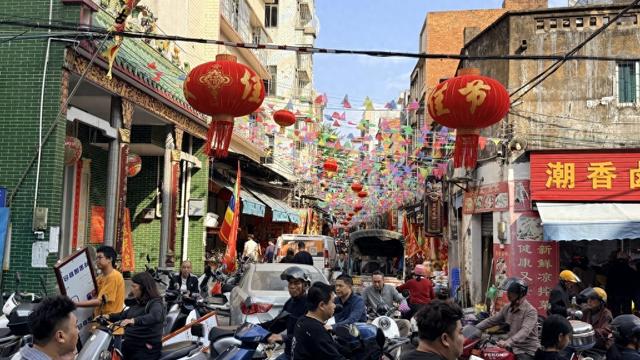
Core Viewpoint - The article highlights the increasing popularity of traditional cultural experiences during the Chinese New Year, particularly in small cities like Wuchuan, Guangdong, where local customs and crafts attract both local and foreign tourists [1][3]. Group 1: Cultural Significance - The "Ten Cross Street" in Meilun has become a hub for traditional folk culture, attracting visitors from various regions including Beijing, Shanghai, and Xinjiang, who come to experience local customs such as lion dance and drum performances [3][6]. - The local dragon and lion craft industry has gained recognition, with the "Li Yi Ji Dragon and Lion Art Workshop" being noted for its traditional craftsmanship, which was included in the city’s intangible cultural heritage list [6][8]. Group 2: Economic Impact - The influx of tourists has led to increased business for local shops, with many visitors purchasing traditional items like lion heads and drums in preparation for the New Year celebrations [11]. - The demand for lion dance performances has surged, with local teams being invited to showcase their skills at various events, further promoting the local economy and cultural heritage [13]. Group 3: Community Engagement - The community actively participates in traditional activities, with many villages placing orders for new lion heads and drums months in advance to prepare for the festive season [11]. - The cultural events during the New Year, such as lion dances and parades, serve to strengthen community bonds and enhance the festive atmosphere, making it a significant time for local traditions [12][13].
把年味画进日常
Xin Lang Cai Jing· 2026-02-15 23:23
Core Viewpoint - The Mianzhu New Year Painting Festival, a cultural event celebrating traditional Chinese art, has become a significant attraction for both local and international tourists, showcasing the integration of heritage and modernity in cultural tourism [1][2]. Group 1: Festival Overview - The 25th Mianzhu New Year Painting Festival features over 100 online and offline activities, promoting cultural tourism and inviting visitors to experience the blend of intangible cultural heritage and festive traditions [1][2]. - The festival has become a cultural staple for locals, starting from the 23rd day of the twelfth lunar month, with a grand parade featuring 32 groups and over 1,400 performers [2]. Group 2: Economic Impact - The Mianzhu New Year Painting industry generated over 37 million yuan in output value by the end of last year, with more than 40 workshops and over 1,500 practitioners involved [2]. - The festival attracts over 12 million visitors, contributing significantly to the local economy and tourism sector [2]. Group 3: Cultural Significance - Mianzhu woodblock painting, recognized as one of China's four major New Year paintings, was included in the national intangible cultural heritage list in 2006, showcasing its historical and artistic importance [3]. - The festival promotes the transmission and innovation of traditional crafts, with artists developing modern products like ceramic fridge magnets and 3D coffee art, appealing to younger audiences [3][4]. Group 4: Technological Integration - The use of creative design and digital technology enhances the traditional art form, with interactive exhibits allowing visitors to engage with the artwork in innovative ways [4]. - The integration of 3D technology in the Mianzhu New Year Painting Museum provides an immersive experience, revitalizing traditional culture through modern means [4]. Group 5: Future Prospects - Mianzhu is committed to preserving cultural roots while stimulating innovation, ensuring that ancient art forms are integrated into contemporary life [5].
踏春寻马记
He Nan Ri Bao· 2026-02-15 23:20
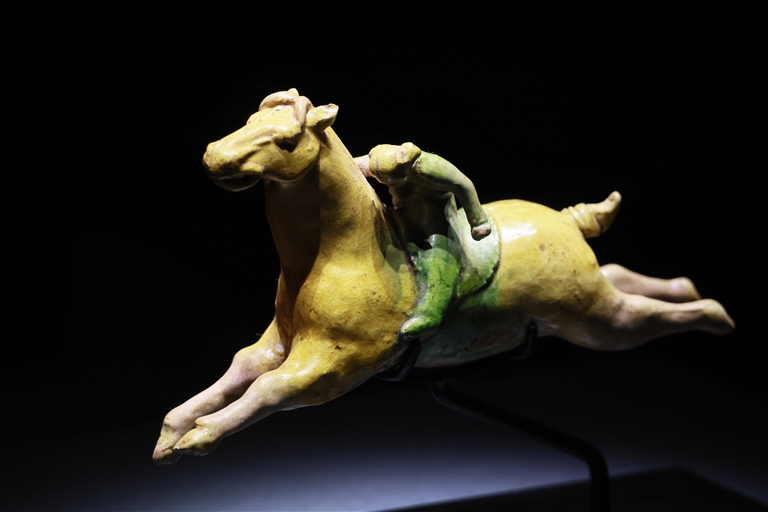
Core Insights - The article emphasizes the cultural significance of horses in Chinese history, symbolizing strength and resilience, particularly in the context of the upcoming Year of the Horse [1] Group 1: Cultural Significance of Horses - Horses are depicted as important partners to humans and are symbols of vigor and perseverance in Chinese culture [1] - The article invites readers to explore the historical and cultural narratives surrounding horses through artifacts, intangible heritage, and place names [1] Group 2: Historical Artifacts - The article mentions various historical artifacts related to horses, such as the Tang Dynasty tri-colored pottery horse, which showcases the typical features of horses from that era [9] - The jade horse from the tomb of Fu Hao is noted as the earliest known representation of a horse in China, highlighting its intricate design and craftsmanship [12] - A bronze mirror from the Tang Dynasty features hunting scenes with horse riders, illustrating the significance of horses in noble activities [15] Group 3: Regional Cultural Expressions - The article discusses the prevalence of place names containing "horse" in Henan, reflecting the historical and cultural ties between the region and horses [48] - Specific locations like Zhuzhou and Yima are highlighted for their historical connections to horse culture, including their roles as ancient relay stations and their associations with notable historical figures [49][50] - The narrative of Ma Village District connects the historical significance of horses with modern cultural practices, showcasing the continuity of horse-related traditions [51] Group 4: Artistic Representations - The article mentions various artistic representations of horses in traditional crafts, such as woodblock prints and paper-cutting, which convey auspicious meanings associated with horses [36][44] - The integration of horse motifs in contemporary cultural products, like the "Horse Snow King" and "Horse Prosperity" ceramics, reflects the ongoing relevance of horse symbolism in modern consumer culture [32]
南宁有奖发票试点活动实施细则正式发布
Xin Lang Cai Jing· 2026-02-14 18:45
Core Viewpoint - The "Lucky Invoice" campaign in Nanning aims to stimulate consumer spending by offering cash prizes for submitting valid electronic invoices during the promotional period from February 7 to July 31, 2026 [1][2]. Group 1: Campaign Details - The campaign is part of the 2026 Guangxi Spring Consumption Season and includes eight major consumer sectors such as retail, dining, and tourism [1]. - Consumers can participate by uploading invoices of 100 yuan or more from registered businesses in Nanning to platforms like Cloud Flash Pay, Alipay, and JD [1]. - The campaign will have weekly draws starting from February 19, with cash prizes ranging from 20 yuan to 800 yuan [1]. Group 2: Participation Guidelines - Invoices must be fully digital electronic invoices issued between February 7 and July 26, 2026, with a submission deadline of July 26 at 23:59:59 [2]. - Certain types of invoices, including red invoices and those marked with "purchase," are excluded from participation [2]. - The process is designed to be transparent, with verification and auditing steps in place to ensure fairness in the draw [2].
(新春走基层)侨乡中山新春非遗大展“艺起出色”
Xin Lang Cai Jing· 2026-02-14 11:25
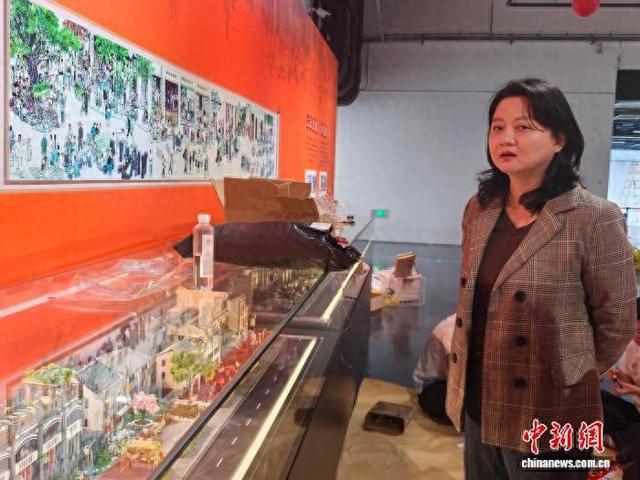
Core Viewpoint - The article highlights the launch of a cultural exhibition themed around intangible cultural heritage in Zhongshan, Guangdong, aimed at celebrating local traditions and attracting both domestic and international visitors [1] Group 1: Exhibition Overview - The exhibition features local culture, historical street markets, and traditional foods, showcasing the unique "salty and sweet water culture" of Zhongshan, a renowned overseas Chinese hometown [1] - The "Yiqi Chuchao" task force, formed by the Art Design College of the University of Electronic Science and Technology of China, collaborated with the Zhongshan Museum to plan the exhibition, which includes several months of volunteer service and design practice [1][2] Group 2: Cultural Significance - The local New Year custom "Ding Cai Gui Shou" reflects the community's wishes for prosperity and longevity, with activities such as making festive items and writing couplets [1] - Traditional snacks like "Popped Rice Cake" are highlighted as essential elements of the New Year celebrations, symbolizing wealth and attracting many visitors from Hong Kong and Macau [4] Group 3: Community Engagement - The task force collected stories and memories related to traditional New Year foods, transforming them into interactive art installations that evoke emotional connections among visitors [5] - The team created a miniature model of the historical market "Shagangxu," integrating traditional architectural features with modern business concepts, providing a visual reference for historical preservation [6]
香港西九文化区2025年接待逾1700万人次访客
Jin Rong Jie· 2026-02-14 08:07
Core Insights - The West Kowloon Cultural District is projected to receive over 17 million visitors from both domestic and international sources in 2025, representing a 13% increase compared to 2024 [1] Group 1 - The two main museums in the West Kowloon Cultural District, the Hong Kong Palace Museum and M+ Museum, attract approximately 60% to 70% of their visitors from mainland China and overseas [1] - The West Kowloon Cultural District has established itself as a must-visit cultural and creative tourism landmark for visitors to Hong Kong [1]
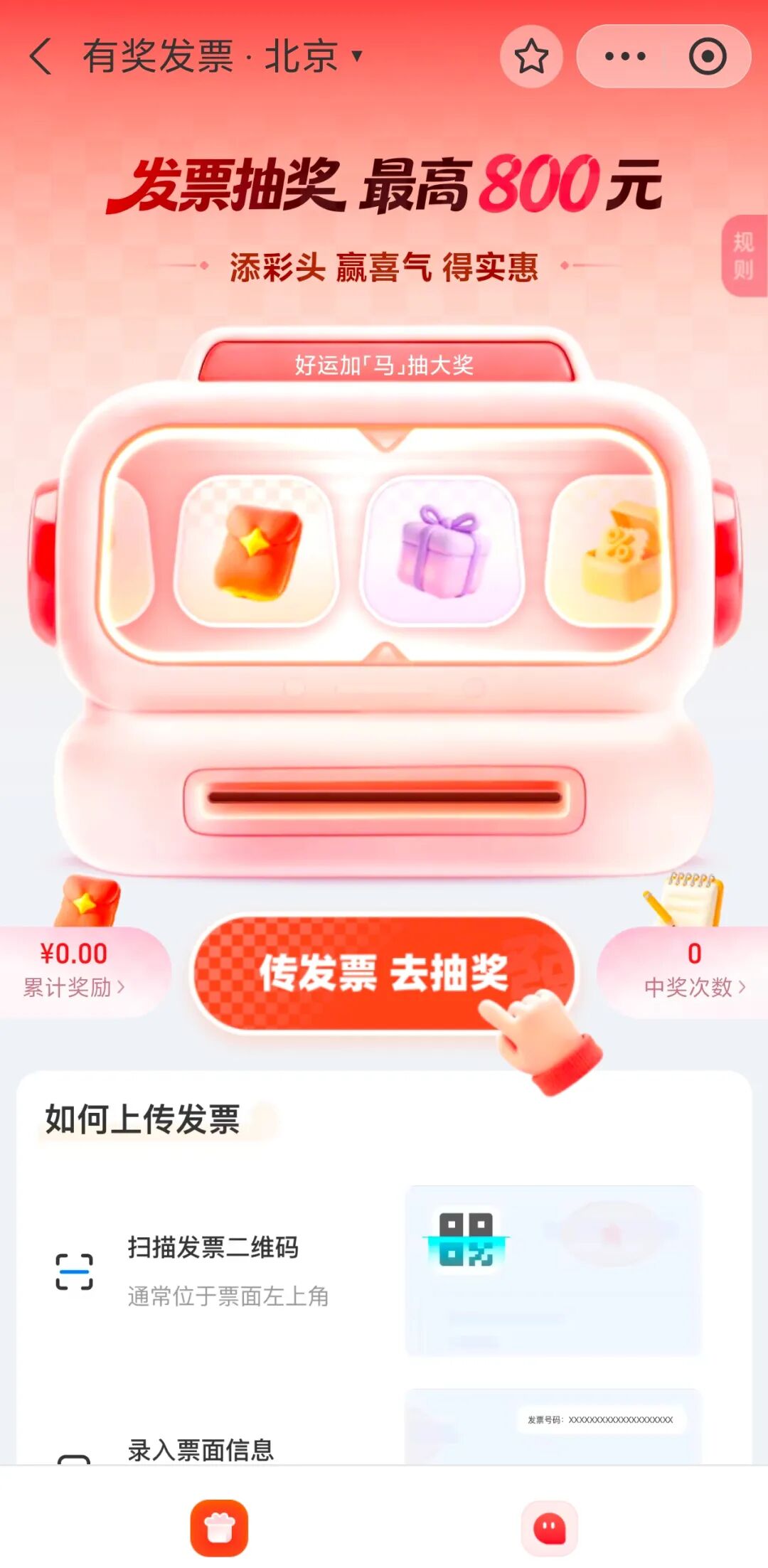
超10亿元,人人都有机会领现金!有奖发票怎么参与?
Jin Rong Shi Bao· 2026-02-14 03:07
Core Viewpoint - The "Happy Shopping Spring Festival" special event organized by the Ministry of Commerce and nine other departments will take place from February 15 to 23, featuring a notable lottery for consumers who obtain invoices during the holiday period [1][2]. Group 1: Prize Invoice Overview - The prize invoice is a lottery system for consumers who receive invoices for their purchases, with a total of 10 billion yuan in prizes available during the Spring Festival [2]. - The pilot program will be implemented in 50 cities over a six-month period, with a total of 100 billion yuan allocated for prize funds [2]. Group 2: Participation Requirements - Consumers must obtain a regular invoice with a face value of over 100 yuan in the pilot cities to participate in the lottery [3][4]. - Participants must complete real-name authentication on the activity platform before uploading their invoices [3]. Group 3: Eligible Consumption Categories - The pilot program covers eight major consumer sectors closely related to daily life, including retail, dining, accommodation, cultural arts, entertainment, tourism, sports, and residential services [6]. Group 4: Prize Distribution - Each pilot city will determine the minimum invoice amount for winning, with prizes potentially reaching up to 800 yuan per invoice [7]. - For example, in Guangzhou, prizes are categorized into seven tiers, with the highest being 800 yuan, alongside other amounts such as 500 yuan, 200 yuan, and more [7]. Group 5: Participation Limits - Each city sets its own rules for participation, with consumers allowed to upload a limited number of invoices per day and month [8]. - In Guangzhou, for instance, consumers can upload up to five valid invoices daily and a maximum of 30 per month [8]. Group 6: Invoice Submission Platforms - Major platforms for participation include UnionPay, Douyin, JD.com, and Alipay, with most cities supporting the UnionPay app for invoice uploads [9]. Group 7: Pilot Cities - The pilot program includes four direct-controlled municipalities: Beijing, Tianjin, Shanghai, and Chongqing, along with 50 other cities across various provinces [12].
中国非遗馆春节假期将延时开放!初一至初七开馆至19时,记得预约!
Xin Lang Cai Jing· 2026-02-14 03:00
Core Viewpoint - The China Arts and Crafts Museum and the China Intangible Cultural Heritage Museum will extend their opening hours during the 2026 Spring Festival, inviting visitors to engage with intangible cultural heritage and celebrate the cultural New Year [1] Group 1: Opening Hours and Visitor Information - The museum will be open from February 15 (Lunar New Year's Eve) from 9:00 AM to 5:00 PM, closed on February 16, and will extend hours from February 17 to 23 (Lunar New Year) from 9:00 AM to 7:00 PM [1] - A real-name reservation system will be implemented, allowing visitors to book up to 7 days in advance [1] Group 2: Thematic Exhibitions and Activities - The "Celebrating the New Year - Year of the Horse Series Theme Exhibition" includes four thematic exhibitions: "Historical Sequence," "Galloping Forward," "Food is Heaven," and "Light of Spring" [2] - The "Celebrating the New Year - Spring Festival Photography Exhibition" features over 400 works, showcasing both intangible cultural heritage and family reunion moments during the Spring Festival [2] Group 3: Special Exhibitions - The exhibition "Welcoming Spring - The Connection Between Mianzhu New Year Paintings and Spring Festival Customs" highlights the national first-class cultural relic "Welcoming Spring Map," depicting traditional spring customs [3] - The "Embroidered Spring Sunshine - Fine Fan Exhibition of Southwest Ethnic Minorities" displays 70 exquisite fans and various intangible cultural heritage techniques from multiple ethnic groups [3] Group 4: New Year Activities - The museum will also host the "Decorating for the New Year" series of lantern activities, featuring large lanterns designed around the Year of the Horse, museum collections, and festive elements [5]