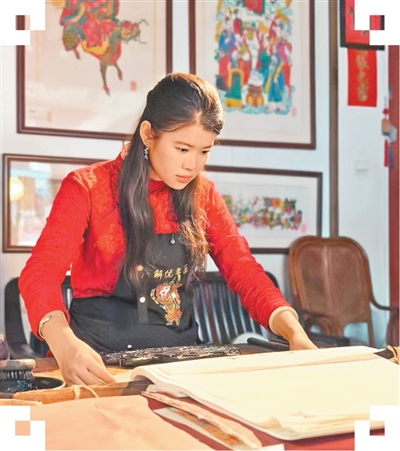
绵竹木版年画

Search documents
把年味画进日常
Xin Lang Cai Jing· 2026-02-15 23:23
Core Viewpoint - The Mianzhu New Year Painting Festival, a cultural event celebrating traditional Chinese art, has become a significant attraction for both local and international tourists, showcasing the integration of heritage and modernity in cultural tourism [1][2]. Group 1: Festival Overview - The 25th Mianzhu New Year Painting Festival features over 100 online and offline activities, promoting cultural tourism and inviting visitors to experience the blend of intangible cultural heritage and festive traditions [1][2]. - The festival has become a cultural staple for locals, starting from the 23rd day of the twelfth lunar month, with a grand parade featuring 32 groups and over 1,400 performers [2]. Group 2: Economic Impact - The Mianzhu New Year Painting industry generated over 37 million yuan in output value by the end of last year, with more than 40 workshops and over 1,500 practitioners involved [2]. - The festival attracts over 12 million visitors, contributing significantly to the local economy and tourism sector [2]. Group 3: Cultural Significance - Mianzhu woodblock painting, recognized as one of China's four major New Year paintings, was included in the national intangible cultural heritage list in 2006, showcasing its historical and artistic importance [3]. - The festival promotes the transmission and innovation of traditional crafts, with artists developing modern products like ceramic fridge magnets and 3D coffee art, appealing to younger audiences [3][4]. Group 4: Technological Integration - The use of creative design and digital technology enhances the traditional art form, with interactive exhibits allowing visitors to engage with the artwork in innovative ways [4]. - The integration of 3D technology in the Mianzhu New Year Painting Museum provides an immersive experience, revitalizing traditional culture through modern means [4]. Group 5: Future Prospects - Mianzhu is committed to preserving cultural roots while stimulating innovation, ensuring that ancient art forms are integrated into contemporary life [5].
汇成新时代四川的万千气象
Xin Lang Cai Jing· 2026-02-13 22:46
Group 1 - The article highlights the vibrant cultural and tourism activities in Sichuan during the Spring Festival, showcasing the region's unique charm and development potential [3][4][12] - Various traditional crafts and local customs are being revitalized, with events like the Mianzhu New Year painting workshop and large community gatherings, reflecting a blend of tradition and modernity [6][8][9] - The transformation of idle urban spaces into lively consumer venues demonstrates grassroots innovation and the importance of community engagement in driving economic activity [7][8] Group 2 - The article emphasizes the role of cultural heritage in enhancing tourism, with successful examples like the Sanxingdui Museum's cultural products generating significant sales, projected to exceed 200 million yuan by 2025 [10][12] - Local governments are implementing supportive policies to boost tourism consumption, including a comprehensive brand system and substantial financial incentives, such as over 30 million yuan in tourism vouchers [13][14] - The integration of traditional industries with modern tourism strategies is evident in projects like the tea industry in Luzhou, which has a reported annual output value of 8.9 billion yuan [15]


年画出新、文创上新、老街焕新 熟悉的年味变出新花样
Si Chuan Ri Bao· 2026-02-11 00:27
Group 1 - The event "Thousands of Sceneries in Sichuan" highlights the integration of traditional culture with modern life, showcasing new consumer experiences during the Spring Festival [1] - The 25th Mianzhu New Year Painting Festival features over 1,400 performers, emphasizing the cultural significance of Mianzhu woodblock paintings, a national intangible cultural heritage [2] - Mianzhu woodblock paintings, known for their vibrant colors and traditional craftsmanship, are evolving with new designs and cross-industry collaborations, such as cartoon-style "cute paintings" and themed merchandise [2] Group 2 - The Sanxingdui Museum reported over 200 million yuan in sales of cultural and creative products in the past year, reflecting a growing trend of visitors wanting to take home unique items [3] - The museum offers over 2,000 creative products with an annual update rate exceeding 30%, indicating a dynamic approach to product development [3] - The "Jiujing" plush bird, inspired by the museum's artifacts, has diversified into multiple color variations based on visitor feedback, showcasing the trend towards "IP" (intellectual property) development in cultural products [3] Group 3 - The renovation of the historic Black Tower Street in Guanghan aims to preserve its traditional atmosphere while enhancing its functionality with diverse business offerings [4] - The area has seen the completion of renovations on 119 historical buildings, creating a vibrant space for dining, coffee, and cultural experiences [4] - Plans for a tourism route connecting local attractions aim to increase visitor engagement and extend their stay in the region [4] Group 4 - The lively parade in Mianzhu transforms the streets into a dynamic gallery of traditional art, with performances based on century-old cultural themes [5] - The cultural activities have contributed to a significant economic impact, with the Mianzhu New Year painting and related creative industries generating over 37 million yuan in output by 2025 [5] - Local experiences, such as coffee and storytelling related to New Year paintings, provide visitors with immersive cultural interactions [5]
巧手寄情 辞旧迎新
Xin Lang Cai Jing· 2026-01-31 19:29
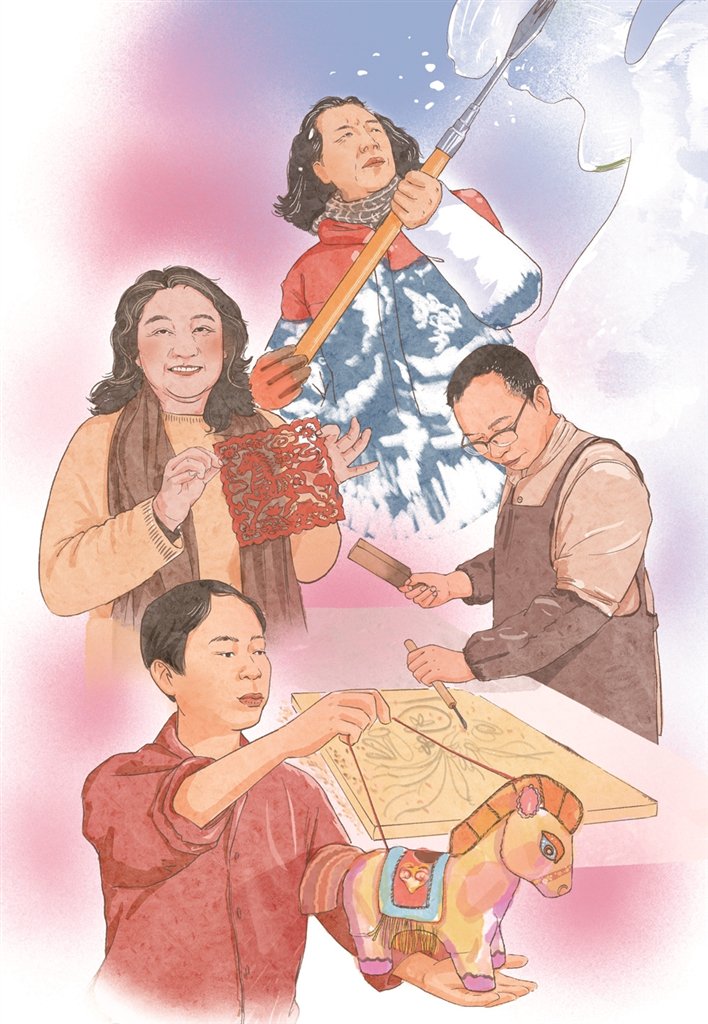
Core Viewpoint - The articles highlight the significance of traditional Chinese cultural practices related to the Spring Festival, focusing on the craftsmanship and innovation of various artisans in non-material cultural heritage projects such as lantern making, woodblock painting, ice sculpture, and paper cutting. Group 1: Lantern Making (Qinhuai Lanterns) - Chen Baihua, a national representative inheritor of Qinhuai Lanterns, innovated by creating a black horse lantern, breaking traditional color norms to present a modern aesthetic [4][5] - The lantern-making process involves meticulous adjustments and a commitment to both tradition and innovation, ensuring that the art form remains relevant to contemporary tastes [5][8] - Chen's notable work includes a large dragon lantern that has become a lasting symbol of the city, showcasing the intricate design and craftsmanship involved in lantern making [6][7] Group 2: Woodblock Painting (Mianzhu Woodblock Paintings) - Hu Guangkui, a provincial representative inheritor of Mianzhu woodblock paintings, is designing a new piece featuring a horse, symbolizing prosperity for the upcoming year [10][11] - Mianzhu woodblock painting is recognized for its vibrant colors and simple lines, embodying the festive spirit of Chinese culture [11][12] - Hu has developed a new technique called "ink color painting," merging traditional methods with modern aesthetics to attract younger audiences [12] Group 3: Ice Sculpture - Zhang Weihong, a provincial representative inheritor of ice sculpture techniques, emphasizes the importance of understanding the material's properties to create intricate designs [14][15] - The process of ice sculpting is described as a form of subtraction, requiring precision and adaptability to the material's characteristics [15][16] - Zhang is integrating modern technology, such as AI and 3D printing, into the design process to enhance the artistic expression and reproducibility of ice sculptures [16] Group 4: Paper Cutting (Yanchuan Paper Cutting) - Liu Jieqiong, a national representative inheritor of Yanchuan paper cutting, engages in teaching and promoting the craft among local women, ensuring its survival and relevance [18][19] - The art of paper cutting is portrayed as a means of expressing emotions and cultural narratives, with Liu's designs reflecting traditional themes and contemporary interpretations [19][20] - Liu's initiatives, such as the "Clever Wife Project," aim to empower local women through craft, creating economic opportunities while preserving cultural heritage [20]
年画焕新 一纸万象(古韵国风 顶流审美)
Ren Min Ri Bao· 2026-01-29 02:22
Core Viewpoint - The article highlights the innovative transformation of traditional Chinese New Year paintings (年画) through technology and creativity, showcasing how these artworks are evolving to engage younger audiences and adapt to modern cultural contexts [5][11][14]. Group 1: New Experiences - In Tianjin's Yangliuqing Ancient Town, visitors can immerse themselves in a "flowing New Year painting" experience, where the traditional art form is brought to life through interactive performances and digital enhancements [6][8]. - The integration of technology allows for a three-dimensional and interactive experience, transforming static paintings into cultural symbols that can engage in dialogue with visitors [9][10]. - The use of digital technology in traditional painting production has increased efficiency, with artisans employing AI to assist in design and color application [10]. Group 2: New Carriers - The "Year of New Life" international creative design competition for Mianzhu New Year paintings received over a thousand submissions, with a significant number focusing on digital innovations [11][12]. - The competition aims to reimagine traditional art forms using contemporary design language, thereby expanding the application scenarios of New Year paintings [12][13]. - Mianzhu New Year paintings have been digitally reconstructed, allowing for interactive experiences in museums, where visitors can engage with the art through technology [13]. Group 3: New Scenes - The "Worry-Free New Year Painting Shop" in Beijing combines traditional art with modern pop culture, appealing to younger consumers by integrating trendy elements into traditional New Year paintings [14][15]. - The shop not only sells paintings but also offers experiences that connect emotional values with traditional art, making it relevant to contemporary audiences [15][16]. - The support from local governments in promoting intangible cultural heritage has facilitated the integration of traditional crafts into modern markets, enhancing their appeal and accessibility [15][16].