
旅游业

Search documents
从“开门红”到“持续火”:节后旅游市场热度不减 消费活力全面释放
Yang Shi Wang· 2026-02-27 07:38
Group 1 - The tourism market experienced a "good start" during the 2026 Spring Festival holiday, with continued high demand post-holiday as flight and hotel prices decreased [1] - After the holiday, domestic hotel and flight prices dropped significantly, with overall travel costs decreasing by approximately 20% to 40% compared to the peak during the Spring Festival, leading to an increase in inquiries [3] - Travelers post-holiday are showing a preference for slower-paced, quality travel experiences, contrasting with the short-distance "check-in" style trips during the Spring Festival [5] Group 2 - In Henan's Yuntai Mountain, after a brief decline, tourist numbers are gradually recovering, with an average daily reception of about 13,000 visitors, of which around 30% are aged 60 and above, indicating a significant presence of the middle-aged and elderly demographic in off-peak travel [6] - Traditional popular cities such as Beijing, Shanghai, Sanya, and others continue to attract high visitor numbers, with natural and cultural attractions like Huangshan and Jiuzhaigou remaining highly favored [8] - Post-holiday, diverse travel options are emerging, with cultural and scenic experiences gaining popularity, as seen in locations like Guangdong's Shunfeng Mountain Park, where visitors enjoy leisurely walks and boat rides [9] Group 3 - In Jiangxi's Wuyuan, visitors are engaging in immersive experiences of Huizhou culture, with various intangible cultural heritage performances attracting tourists while they enjoy the scenic beauty [11] - The choices of off-peak travelers are becoming more diverse, with a rise in flower viewing and nature-related activities as temperatures rise, leading to early bookings [13] - To meet the demand for off-peak travel, various regions are enhancing their product offerings, with smaller cities and counties emerging as new hotspots for cultural and tourism consumption [13]

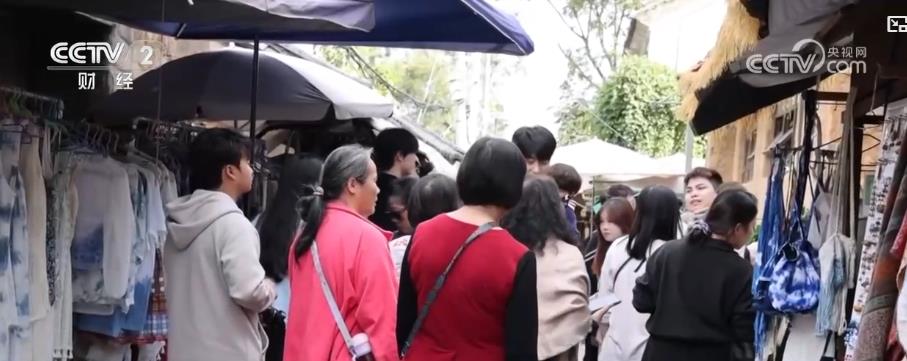
春节假期9天 广东旅游“吸金”近850亿
Nan Fang Du Shi Bao· 2026-02-27 04:35
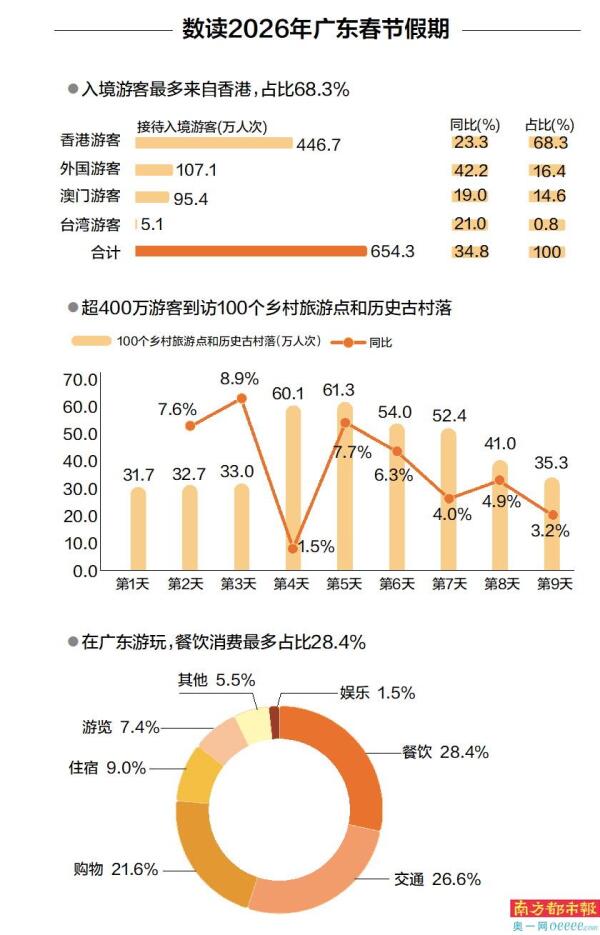
Group 1 - The core viewpoint of the articles highlights the significant growth in tourism during the Spring Festival period in Guangdong, with a notable increase in both domestic and international visitors [6][8][9]. - Guangdong province received a total of 8,658.9 million visitors during the nine-day Spring Festival holiday, marking an 8.1% increase compared to the previous year [6]. - The province's tourism revenue reached 848.9 billion yuan, reflecting a growth of 13.9% year-on-year [6]. Group 2 - The number of inbound tourists to Guangdong reached 654.3 million, a year-on-year increase of 34.8%, accounting for 7.6% of total visitors [8]. - Among the inbound tourists, 542.1 million were from Hong Kong and Macau, showing a growth of 22.6%, while foreign tourists numbered 107.1 million, increasing by 42.2% [8]. - The "Please Come to Guangdong for the New Year" campaign has successfully attracted visitors, with Guangdong being recognized as a top destination for overseas tourists [9]. Group 3 - Inter-provincial tourism saw 1,346.7 million visitors, a 12.2% increase, with Zhejiang, Guangxi, Jiangsu, Hunan, and Sichuan being the top five sources of visitors [9]. - Intra-provincial tourism reached 4,215.2 million visitors, growing by 5.0%, with the Pearl River Delta region receiving the highest number of visitors [10]. - The opening of the Guangzhan high-speed railway has contributed to the fastest growth in visitor numbers from the western Guangdong region, with a 17.5% increase [10]. Group 4 - Rural tourism attracted 4,293.7 million visitors, reflecting a 7.7% increase, with monitored rural tourism sites receiving 401.5 million visitors, up by 14.3% [11]. - Coastal tourism cities collectively welcomed 6,528.4 million visitors, a growth of 8.8%, accounting for 75.4% of total visitors [11]. - Dining, transportation, and shopping were the primary expenditure categories for tourists, making up 28.4%, 26.6%, and 21.6% of total spending, respectively [12].
终身门票的大账怎么算丨热评
Xin Lang Cai Jing· 2026-02-27 03:58
Core Viewpoint - The introduction of lifetime tickets by various scenic spots, such as those in Sichuan and Anhui, reflects a strategic shift in the tourism industry towards long-term customer engagement and revenue stability, moving away from reliance on single-entry ticket sales [1][2]. Group 1: Lifetime Ticket Strategy - The lifetime ticket model allows tourists to visit multiple scenic spots unlimited times, transforming them from "one-time users" to "lifetime users," which is advantageous in a competitive tourism market [1]. - This model provides immediate cash flow for scenic spots, effectively locking in future ticket revenue and enabling operators to invest in innovative management and services [1]. Group 2: Challenges and Considerations - Scenic spots must enhance their attractiveness by diversifying activities, improving public services, and ensuring convenient transportation to encourage repeat visits [2]. - There are concerns about potential hidden costs associated with lifetime tickets, such as increased charges for shuttle services or accommodations, which could undermine consumer trust [2]. - Effective policies and regulations are necessary to ensure the successful implementation of lifetime tickets, including guidelines for ticket transferability and adjustments for changes in participating scenic spots [2][3]. Group 3: Suitability of Lifetime Tickets - The lifetime ticket model may not be suitable for all scenic spots; it is more applicable in areas where ticket sales are not the primary revenue source or where there is a robust urban tourism ecosystem [3].
第一波,武汉花开
Chang Jiang Ri Bao· 2026-02-27 00:41
Core Insights - Wuhan's spring tourism market is transitioning from the "Spring Festival" to the "Cherry Blossom Season," with early cherry blossoms blooming earlier than usual due to a warm winter [2][3] Group 1: Early Cherry Blossoms - Early cherry blossoms in Wuhan are blooming ahead of schedule, creating a unique "plum and cherry dance" scenery as they coincide with late plum blossoms [2] - The cherry blossom viewing spots, such as the cherry blossom slope near the Liberation Park, are attracting many photography enthusiasts and citizens [2] - The cherry blossom promenade at Guishan Park features a "two-color, double-layer" landscape, with different cherry varieties blooming at different levels [2][3] Group 2: Upcoming Floral Events - The cherry blossoms are expected to peak around mid-March, with various cherry varieties like the middle cherry anticipated to bloom between March 15-20 [3] - The 2026 Wuhan Qingliangzhai Cherry Blossom Cultural Tourism Season is set to begin on March 7-8, featuring local cultural festivities [3] - A variety of spring flowers, including tulips and oilseed rape, are also set to bloom, enhancing the spring scenery in Wuhan [5] Group 3: Cultural and Tourism Activities - Wuhan's cultural and tourism bureau is organizing a series of events to extend the tourism consumption chain, showcasing the city's charm throughout the seasons [5] - The "Spring Flower Festival" at Wuhan Flower Expo features 60,000 tulips in full bloom, with various activities planned to attract visitors [5] - The integration of traditional customs and modern experiences aims to create a vibrant atmosphere for both local residents and tourists [5]

“中国游中国购”,这样火起来!
Xin Lang Cai Jing· 2026-02-26 23:51
Core Insights - In 2025, the number of foreign visitors entering and exiting China is expected to reach 82.035 million, a year-on-year increase of 26.4% [1] - The sales volume of goods eligible for tax refunds for departing foreign tourists is projected to grow by 95.9% [1] - The increase in foreign visitors and spending is supported by policy initiatives aimed at boosting inbound consumption [1] Policy Support - In March 2025, the Central Committee and State Council issued a plan to stimulate consumption, emphasizing the development of inbound consumption [1] - The "14th Five-Year Plan" includes fostering international consumption center cities and expanding inbound consumption [1] Visa Policies - As of June 9, 2025, China implemented visa-free policies for Kuwait and three other countries, increasing the total number of countries with unilateral visa exemptions to 48 [5] - The number of foreign visitors entering under visa-free policies reached 30.08 million, accounting for 73.1% of all inbound visitors [5] Payment Facilitation - The payment system in Guangzhou has been enhanced, allowing foreign visitors to use international cards and mobile payment apps like Alipay, leading to over 35 million transactions worth more than 11.3 billion yuan [7] - The growth in payment convenience has contributed to a 57% increase in transaction volume and a 58% increase in transaction value for foreign visitors [7] Tax Refund Optimization - The introduction of centralized tax refund points in major shopping areas has streamlined the refund process for foreign tourists, significantly reducing the time required for refunds [8] - In 2025, the number of foreign tourists eligible for tax refunds increased by 305%, with a corresponding 95.9% increase in sales of tax-refunded goods [9] Evolving Consumer Preferences - Inbound tourists are increasingly seeking immersive and quality travel experiences, with a 300% increase in bookings for intangible cultural heritage workshops and folk performances [12] - The trend is shifting from traditional sightseeing to more authentic experiences, with tourists expressing interest in local customs and lifestyles [13] Service Innovations - The demand for personalized travel planning services has risen, with travel planners catering to the specific needs of inbound tourists [17] - New tourism products and experiences are being developed to meet the evolving preferences of foreign visitors, including cultural and wellness experiences [18] Challenges and Opportunities - Despite the growth in inbound tourism, there are still challenges related to after-sales service for foreign customers, particularly regarding warranty and return policies [19] - Collaborative efforts between government and businesses are needed to enhance the consumer experience and address concerns related to cross-border shopping [19]
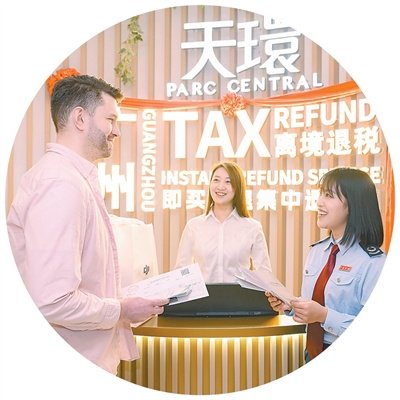
各口岸出入境外国人同比增长26.4%,“中国游中国购”这样火起来
Xin Lang Cai Jing· 2026-02-26 23:51
Core Insights - The article highlights a significant increase in inbound tourism and consumption in China, driven by favorable policies such as visa exemptions and improved payment systems [2][4][5]. Group 1: Inbound Tourism Growth - In 2025, the number of inbound foreign visitors reached 82.035 million, marking a year-on-year increase of 26.4% [2]. - During the Spring Festival holiday, foreign visitors entering China totaled 1.313 million, with a daily average increase of 21.8% compared to the previous year [2]. - The number of foreign visitors benefiting from visa exemption policies reached 4.6 million during the holiday, reflecting a daily average increase of 28.5% [2]. Group 2: Consumption and Tax Refunds - The number of foreign travelers applying for tax refunds increased by 305% in 2025, with tax refund sales growing by 95.9% [4][9]. - The implementation of the "immediate purchase and refund" tax refund model has streamlined the process for tourists, enhancing their shopping experience [8][9]. - In Guangzhou, the establishment of centralized tax refund points has improved efficiency, allowing tourists to complete refund processes quickly [8]. Group 3: Payment Convenience - The payment system for foreign visitors in Guangzhou has been enhanced, with over 35 million transactions made using foreign cards and mobile payments, representing a year-on-year growth of 57% and 58%, respectively [7]. - The availability of ATMs supporting foreign cards and multiple currency exchange points at airports has facilitated easier access to cash for tourists [7]. Group 4: Cultural and Experiential Tourism - There is a growing trend among inbound tourists towards immersive and quality travel experiences, with a 300% increase in bookings for intangible cultural heritage workshops and performances [13]. - Tourists are increasingly interested in authentic cultural experiences, such as traditional crafts and local cuisine, reflecting a deeper engagement with Chinese culture [13][14]. Group 5: Service Innovations - The rise of travel planners catering to inbound tourists has emerged, providing customized itineraries that include local experiences and cultural activities [16]. - New tourism products and services are being developed to meet the evolving demands of international visitors, enhancing the overall travel experience [16][18].
多措并举,从“一时火”到“一直火”(有所思)
Ren Min Ri Bao· 2026-02-26 23:36
Core Viewpoint - Multiple cities in China are implementing innovative measures to boost inbound consumption, aiming to transform temporary spikes in spending into sustained growth [1][2] Group 1: Policy Initiatives - Guangzhou has established "immediate buy and return" centralized refund points, while Tianjin has launched the "Tianjin Traditional Chinese Medicine Tour," and Chongqing has introduced several international brand flagship stores [1] - The "14th Five-Year Plan" suggests cultivating international consumption center cities and expanding inbound consumption [1] Group 2: Market Trends - By 2025, the number of outbound tourists eligible for tax refunds is expected to increase by 305%, with sales of tax-refunded goods projected to rise by 95.9% year-on-year [1] - Topics like "bringing empty boxes to China" have gained traction on overseas social media platforms, indicating a growing interest in Chinese products [1] Group 3: Challenges and Solutions - There are still issues such as insufficient acceptance of foreign cards by small and medium-sized merchants, lack of smooth coordination in visa, customs, and consumption processes, and difficulties in finding change [1] - To enhance the consumption environment, it is crucial to address these bottlenecks and shortcomings, creating a more welcoming atmosphere for foreign tourists [1] Group 4: Supply and Product Development - China possesses a complete industrial system and strong supporting capabilities, enabling the provision of a wide range of high-quality products, which is essential for attracting foreign tourists [1] - Localities should focus on product innovation, developing high-quality goods that meet international aesthetic standards while showcasing regional cultural characteristics, thereby promoting the "Buy in China" brand [1] Group 5: Cultural Integration - Engaging with Chinese culture, such as visiting flower streets in Guangzhou, enjoying crosstalk in Tianjin, and tasting hot pot in Chongqing, is becoming a new trend for foreign tourists [2] - Deepening the integration of traditional Chinese culture, including intangible cultural heritage and performing arts, with the tourism industry can enhance the depth and breadth of foreign tourist spending in China [2] Group 6: Long-term Strategy - Sustaining inbound consumption requires a multi-faceted approach and comprehensive efforts beyond just innovative measures [2] - Promoting high-quality development of inbound consumption not only injects lasting momentum into China's economy but also fosters cultural exchanges, allowing foreign tourists to experience a real, three-dimensional, and comprehensive China [2]
“中国游中国购”这样火起来
Ren Min Ri Bao· 2026-02-26 22:57
Core Insights - The article highlights the significant increase in inbound tourism to China, driven by visa-free policies and enhanced consumer experiences, leading to a notable rise in spending by foreign visitors [6][7][12]. Group 1: Inbound Tourism Growth - By 2025, the number of inbound foreign visitors is projected to reach 82.035 million, a year-on-year increase of 26.4% [6] - During the recent Spring Festival, 1.313 million foreign visitors entered China, marking a daily increase of 21.8% compared to the previous year [6] - The implementation of visa-free policies has allowed 4 additional countries to benefit, bringing the total to 48 countries with unilateral visa exemptions [7] Group 2: Consumer Spending Trends - In 2025, the number of foreign travelers eligible for tax refunds increased by 305%, with sales of tax-refunded goods rising by 95.9% [12] - In Guangzhou, foreign visitors made over 35 million transactions using foreign bank cards and mobile payments, with a total spending exceeding 11.3 billion yuan, reflecting year-on-year growth of 57% and 58% respectively [9] Group 3: Payment and Tax Refund Innovations - The introduction of convenient payment options, including support for foreign bank cards and mobile payment systems, has significantly enhanced the consumer experience for foreign visitors [9] - The establishment of centralized tax refund points in major shopping areas has streamlined the refund process, making it more efficient for tourists [10][11] Group 4: Evolving Tourist Preferences - There is a shift in inbound tourism from traditional sightseeing to immersive and quality experiences, with a 300% increase in bookings for cultural and traditional activities [14] - Tourists are increasingly interested in local experiences, such as traditional food and cultural performances, reflecting a desire for deeper engagement with Chinese culture [15][16] Group 5: Service Innovations - The rise of travel planners catering to inbound tourists has emerged as a response to the demand for personalized travel experiences, with a significant portion of tourists opting for customized itineraries [17] - New tourism products and services are being developed to meet the evolving preferences of inbound visitors, including unique cultural experiences and modern amenities [18][19]

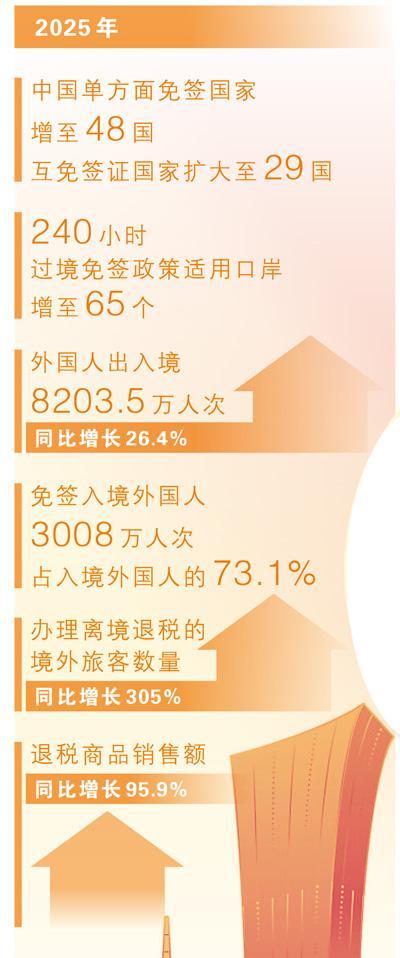
2025年 全国各口岸出入境外国人同比增长26.4% 离境退税商品销售额同比增长95.9% “中国游中国购”这样火起来(人民眼·提振消费)
Ren Min Ri Bao· 2026-02-26 22:19
Core Insights - The article highlights the significant increase in foreign tourist arrivals in China, driven by visa-free policies and enhanced consumer experiences, leading to a boost in both tourism and retail sectors [1][2][5]. Group 1: Visa Policies and Tourist Arrivals - As of 2025, China has implemented visa-free policies for 48 countries, resulting in 30.08 million foreign visitors, accounting for 73.1% of total foreign arrivals [2]. - The number of foreign tourists entering China during the Spring Festival reached 1.313 million, showing a daily increase of 21.8% compared to the previous year [1]. Group 2: Consumer Spending and Payment Innovations - In 2025, foreign visitors in Guangzhou made over 35 million transactions using foreign bank cards and mobile payments, with a total spending exceeding 11.3 billion yuan, reflecting year-on-year growth of 57% and 58% respectively [4]. - The introduction of convenient payment options, including support for foreign cards and mobile payment apps like Alipay, has significantly enhanced the shopping experience for foreign tourists [4]. Group 3: Tax Refund Policies - The number of foreign travelers utilizing tax refund services increased by 305% in 2025, with tax refund sales growing by 95.9% [7]. - New policies have streamlined the tax refund process, allowing tourists to complete refunds at centralized points, enhancing efficiency and customer satisfaction [6]. Group 4: Evolving Tourist Preferences - There is a noticeable shift in foreign tourists' preferences towards immersive and quality travel experiences, with a 300% increase in bookings for cultural and traditional activities [9]. - Tourists are increasingly seeking authentic local experiences, moving away from traditional sightseeing to engage with local culture and lifestyle [10][11]. Group 5: Service Innovations and New Offerings - The rise in demand for personalized travel planning services has led to the emergence of travel planners who cater to specific tourist needs, enhancing the overall travel experience [12]. - New tourism products and experiences, such as themed cultural tours and local culinary experiences, are being developed to meet the evolving preferences of international visitors [13][14].
推动文旅深度融合发展——对外经济贸易大学首都高端智库文化和旅游研究课题组
Jing Ji Ri Bao· 2026-02-26 22:06
Core Viewpoint - The integration of culture and tourism is a significant decision made by the central government, aimed at meeting the people's needs for a better life, empowering economic and social development, and building a culturally strong and tourism-oriented nation [1] Group 1: Economic and Social Development - The initial focus of the tourism industry was on foreign exchange earnings and infrastructure development, while cultural undertakings primarily served public functions [2] - The integration of culture and tourism has evolved from basic resource utilization to deeper collaboration, with significant policy support since the 18th National Congress of the Communist Party of China [3] - In 2024, the added value of cultural and related industries is projected to be 62.094 billion yuan, accounting for 4.61% of GDP, while tourism and related industries will contribute 58.631 billion yuan, or 4.35% of GDP, reflecting a slight increase from the previous year [4] Group 2: Market Trends and Consumer Behavior - The demand for single sightseeing tours has decreased as residents' consumption capacity has increased, leading to a need for more diverse and high-quality cultural tourism products [2][5] - By 2025, domestic tourist numbers are expected to reach 6.522 billion, with total spending of 6.3 trillion yuan, representing year-on-year growth of 16.2% and 9.5% respectively [4] Group 3: Policy and Structural Changes - The establishment of the Ministry of Culture and Tourism in 2018 marked a significant step towards institutional integration and deeper collaboration between the two sectors [3] - The 20th National Congress report emphasizes the need for a comprehensive and deep integration of culture and tourism, moving beyond simple institutional integration to a full-chain, multi-faceted collaboration [3] Group 4: Innovative Development Models - Various provinces have introduced policies to promote the integration of culture and tourism with other industries, leading to the emergence of new business models such as industrial tourism and sports tourism [6] - The transformation of industrial heritage into cultural tourism sites, as seen in Beijing's Shougang Park, has successfully attracted millions of visitors and generated significant economic benefits [7] Group 5: International Perspectives - Countries like France and Italy focus on the innovative transformation of cultural resources and brand operations to enhance cultural tourism, creating immersive experiences that extend the boundaries of cultural consumption [10] - The UK and Germany have developed sustainable tourism models through community involvement and social governance, effectively utilizing historical cultural resources [11] Group 6: Challenges and Areas for Improvement - Despite significant progress, challenges remain in product innovation, resource supply, and investment efficiency, leading to insufficient integration depth and effectiveness [13][14] - The reliance on ticket sales and a lack of diversified revenue models hinder the industry's resilience against risks [14] Group 7: Future Directions - The integration of digital technology is crucial for revitalizing the cultural tourism ecosystem, with a focus on enhancing operational management through smart technologies [16][17] - Establishing a stable support mechanism for cultural tourism projects is essential to address the long investment cycles and risks associated with the industry [17][18]