
显示器

Search documents
双十一显示器杀疯了:MiniLED狂降、OLED跌破2000元
3 6 Ke· 2025-10-26 01:20
Group 1 - The core point of the article highlights the significant price reductions for monitors during this year's Double Eleven shopping festival, making it an ideal time for consumers to purchase [1][30] - The article emphasizes the importance of understanding personal needs before selecting a monitor, as the market has diversified with various technologies such as miniled, OLED, and LED [2][4] - It discusses the differences between various panel types, including IPS, VA, and TN, and their respective advantages and disadvantages [6][7] Group 2 - The article categorizes monitor needs into three types: gaming-focused, a balance of gaming and daily use, and purely for daily use, providing tailored recommendations for each category [7][8] - Specific monitor recommendations are provided, including models from brands like 雷神, LG, HKC, and 海信, with details on their specifications and pricing during the Double Eleven event [10][12][15][22] - The article notes that the current decline in monitor prices is influenced by a sluggish PC market and excess inventory from manufacturers, leading to competitive pricing [30]

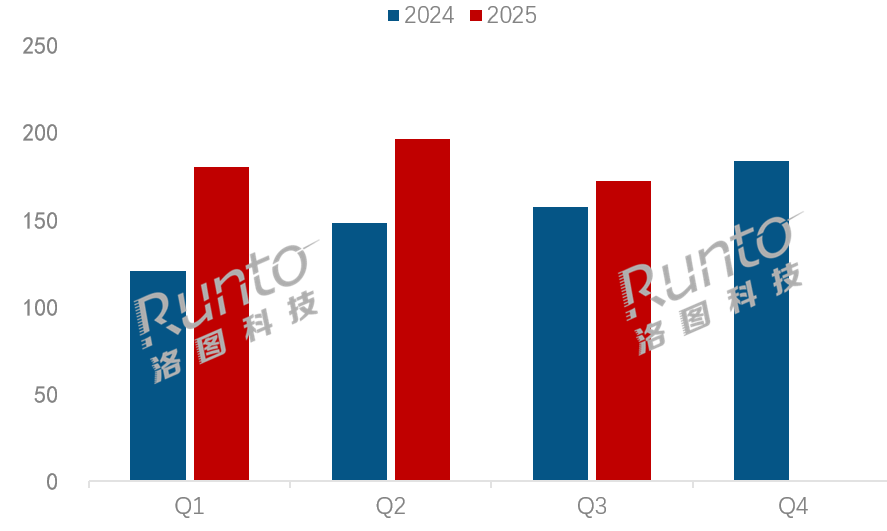
洛图Q3排名 | 中国大陆电竞显示器线上市场品牌销量
Xin Lang Cai Jing· 2025-10-25 00:10
Core Insights - The report from Runto Technology indicates that in Q3 2025, the sales volume of gaming monitors in China's online retail market reached 1.72 million units, representing a year-on-year growth of 9.5%, while sales revenue amounted to 1.9 billion yuan, up 2.6% from the previous year [1] - The average price of gaming monitors decreased to 1,085 yuan, a reduction of 73 yuan compared to the same period last year [1] - The growth rate of gaming monitor sales is expected to slow down starting Q3 2024, with the penetration rate stabilizing [1] Market Dynamics - In the first half of 2025, government subsidy policies significantly boosted market consumption, leading to a sales growth rate of 40% for gaming monitors [1] - However, by Q3 2025, the impact of these subsidies diminished due to a reduction in the scope of subsidies and increased eligibility requirements, contributing less than 10% to sales growth [1] Product Performance - The gaming monitor market is transitioning from being driven by policy to relying on endogenous growth, primarily fueled by upgrades in product performance [1] - In Q3 2025, 180Hz monitors held a 23% market share, but this was a decrease of 24 percentage points compared to 2024. Conversely, the penetration rate of 240Hz models rose to 18%, and 300Hz products increased to 6% from nearly 0% last year [1][4] Brand Analysis - The top three brands in the gaming monitor online market accounted for 44% of total sales, an increase of 11 percentage points year-on-year, with AOC leading at nearly 20% market share and a sales growth of nearly 60% [7] - HKC and KTC ranked second and third, respectively, with differentiated product offerings of 240Hz and 260Hz [7] - Xiaomi and ROG also showed significant growth, with Xiaomi achieving a 71% increase in sales due to its dual strategy of focusing on both office and entry-level gaming products [7] - ROG, a high-end gaming brand under ASUS, experienced a 24% growth in Q3, supported by new products featuring 600+Hz refresh rates and a dual-mode design [7] Competitive Landscape - Other brands like KTC, SANC, and Titan Legion experienced growth rates of 20%-60% in the first half of the year but faced varying declines in Q3 due to high base effects from the previous year and limited quotas this year [9]
鲜明对比!“超半数韩企技术被中企赶上甚至反超”
Huan Qiu Shi Bao· 2025-10-22 01:08
Core Insights - A recent survey indicates that only 32.4% of South Korean companies believe their technological competitiveness surpasses that of Chinese companies, a significant decline from 89.6% in 2010 [1][2] - Over half of the surveyed South Korean firms feel that their technological capabilities have been matched or surpassed by Chinese firms over the past 15 years [1] - The perception of manufacturing speed has also shifted, with 42.4% of respondents believing that Chinese companies are faster, compared to 35.4% who think South Korean companies are faster [1] Industry Analysis - The survey conducted by the Korea Chamber of Commerce and Industry involved 370 domestic manufacturing companies [1] - 45.4% of the companies believe the technological gap between them and Chinese firms is minimal, while 22.2% acknowledge that Chinese companies are leading [1] - Seven out of ten surveyed companies anticipate that the rapid growth of Chinese industries will lead to a decline in South Korea's global market share and sales over the next three years [1] Price Competitiveness - A strong price competitiveness of Chinese products is highlighted, with 84.6% of South Korean companies stating that domestic products are more expensive than Chinese ones [2] - More than half (53%) of the respondents believe that Chinese products are at least 30% cheaper [2] - Specific industries such as semiconductors, batteries, steel, textiles, and apparel show significant price differences, with Chinese semiconductors priced at approximately 65% of South Korean prices and batteries at 73% [2]
韩国最新调查:仅三成韩企称其技术领先中企
Huan Qiu Shi Bao· 2025-10-21 22:45
Group 1 - A recent survey indicates that only 32.4% of South Korean companies believe their technological competitiveness is superior to Chinese companies, a significant decline from 89.6% in 2010 [1][2] - The survey conducted by the Korea Chamber of Commerce and Industry involved 370 domestic manufacturing firms, revealing that 45.4% perceive the technological gap as minimal, while 22.2% acknowledge that Chinese companies are ahead [1] - The perception of manufacturing speed has also shifted, with 42.4% of respondents believing that Chinese companies are faster, compared to 35.4% for South Korean firms [1] Group 2 - Price competitiveness of Chinese products remains strong, with 84.6% of surveyed South Korean companies stating that domestic products are more expensive than Chinese ones, and over half (53%) claiming that Chinese products are "at least 30% cheaper" [2] - In specific sectors, such as semiconductors, batteries, steel, textiles, and apparel, Chinese products are significantly cheaper, with semiconductor prices at approximately 65% of South Korean prices and batteries at 73% [2] - The decline in South Korean manufacturing competitiveness is attributed to China's investment policies and flexible regulations, while South Korea relies on tax incentives that disadvantage larger companies [2]
韩国9月半导体出口额同比增长21.9%达166亿美元
Shang Hai Zheng Quan Bao· 2025-10-19 03:03
Core Insights - South Korea's ICT product exports reached a record high of $25.43 billion in September, marking a 14% year-on-year increase [1] Export Performance - Semiconductor exports amounted to $16.62 billion, showing a significant year-on-year growth of 21.9%, achieving new highs for two consecutive months [1] - Display exports increased by 1.3% to $1.92 billion [1] - Mobile component exports decreased by 23.6% to $1.07 billion, while finished mobile product exports surged by 55.8% to $0.42 billion [1] - Computer and peripheral equipment exports fell by 10.1% to $1.47 billion [1] Import Performance - ICT imports rose by 10.4% to $13.78 billion [1] - The ICT trade balance recorded a surplus of $11.65 billion, the second highest on record [1]
韩国9月半导体出口额166.2亿美元同比增21.9%,连续两个月创下新高
Ge Long Hui· 2025-10-14 06:05
Core Insights - South Korea's ICT product exports reached a record high of $25.43 billion in September, marking a 14% year-on-year increase [1] Export Breakdown - Semiconductor exports amounted to $16.62 billion, showing a significant year-on-year growth of 21.9%, achieving new highs for two consecutive months [1] - Display exports increased by 1.3% to $1.92 billion [1] - Mobile component exports decreased by 23.6% to $1.07 billion, while finished mobile product exports surged by 55.8% to $0.42 billion [1] - Computer and peripheral equipment exports fell by 10.1% to $1.47 billion [1]

两家面板大厂遭警方搜查
Xin Lang Cai Jing· 2025-10-13 08:43
Core Points - LG Display is facing allegations of leaking technology to Chinese companies, leading to police raids and the arrest of two employees [1][2] - The incidents raise concerns about fundamental vulnerabilities in the technology security systems of the South Korean display industry [1] - Both LG Display and Samsung Display are under investigation for technology leaks related to OLED and next-generation panel technologies [2] Group 1: LG Display - The Seoul police conducted a raid on LG Display's Paju factory, arresting two employees for allegedly leaking core display technology to Chinese firms [1] - Hundreds of internal documents were found on one employee's phone and storage devices during the investigation [1] - Key technologies targeted include LG Display's OLED TV panels, LTPO technology, and optical design technology, which are highly sought after by Chinese companies [1] Group 2: Samsung Display - Simultaneously, Samsung Display was also raided, with evidence of technology leaks to different Chinese companies [2] - The investigations into both companies highlight a broader industry concern regarding the absorption of South Korean display technology by Chinese firms [2]
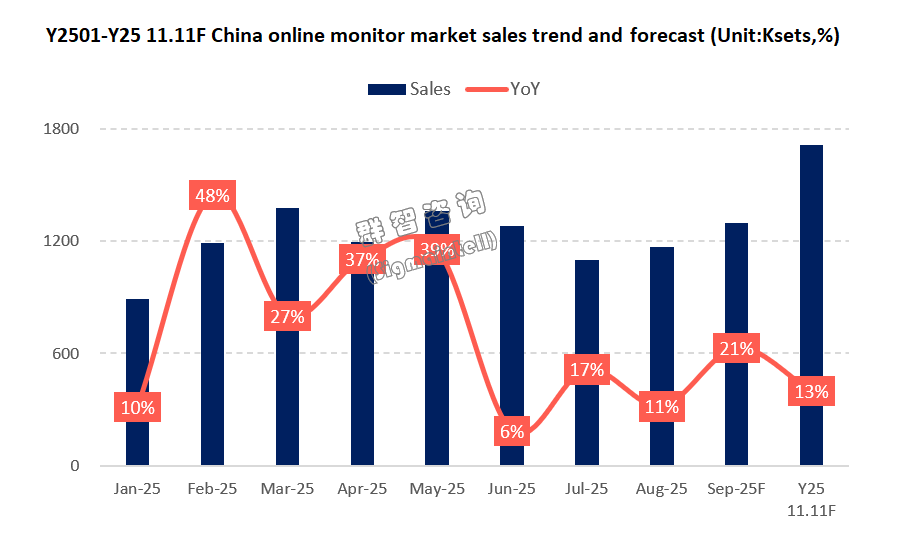
群智咨询:预计双11显示器同比增销13%
智通财经网· 2025-10-13 05:47
Core Insights - The article discusses the anticipated 13% year-on-year growth in online monitor sales during the 2025 Double Eleven shopping festival, despite underlying risks of a decline when considering natural time comparisons [1][12] - The transition from policy-driven growth to endogenous growth poses a challenge for the industry, highlighting the need for new growth engines in the post-subsidy era [1][17] Sales Analysis - The sales period for Double Eleven has been significantly extended, starting from October 9 and lasting over a month, indicating a shift in consumer purchasing behavior [6] - The core sales period from November 4 to November 11 is expected to account for 30% of total sales, with earlier sales phases gaining importance [6] Market Dynamics - The subsidy policy shows regional disparities, with only a few provinces like Sichuan and Fujian benefiting directly, while major economic provinces like Jiangsu and Zhejiang are excluded [2] - The overall impact of subsidies on total sales is projected to be less than 5%, but e-commerce platforms are compensating for this through their own subsidy programs [2] Pricing Trends - The average selling price (ASP) of monitors is expected to decline by 9% during Double Eleven compared to the previous promotion period, influenced by reduced subsidy support [15] - The ASP has seen fluctuations, peaking at 1543 yuan in 2021 and stabilizing around 1200 yuan in 2025, reflecting consumer value recognition and market adjustments [15] Future Outlook - The industry is shifting focus from mere sales volume to maintaining ASP while increasing revenue through technological innovation and new demand creation [17] - Niche markets such as ultra-high refresh rate monitors and professional design displays are emerging as new growth points, expanding the application scenarios of monitors [17]
维信诺8.6代OLED产线采购新设备
WitsView睿智显示· 2025-09-25 09:51
Core Viewpoint - The article highlights the growing investment trend in the OLED panel manufacturing sector in China, with significant contracts and collaborations emerging between key players in the industry [2][3]. Group 1: Company Developments - AP Systems has signed an exclusive equipment supply contract with Visionox to provide ELA (Excimer Laser Annealing) equipment for its 8.6-generation OLED production line in Hefei (V5) [2]. - The ELA equipment is crucial for the TFT process, converting amorphous silicon (a-Si) into polycrystalline silicon (p-Si), which enhances the electronic transmission speed of LTPS and LTPO OLEDs by over 100 times, significantly impacting energy consumption and image quality of high-resolution OLED panels [2]. - AP Systems is also expected to receive orders for its laser lift-off (LLO) equipment, indicating a strengthening of partnerships with major OLED panel manufacturers in China [2][3]. Group 2: Industry Investment Trends - The Chinese display industry is experiencing a surge in investments from OLED panel manufacturers, with Visionox advancing a total investment of 55 billion yuan for the Hefei V5 production line [3]. - BOE initiated the construction of its 8.6-generation OLED production line (B16) in Chengdu with a total investment of 63 billion yuan last year [3]. - TCL Huaxing announced a planned investment of 29.5 billion yuan to build an 8.6-generation printed OLED production line (t8), expected to commence construction in the second half of 2025 [3]. - There are also reports of Tianma planning investments in 8.x generation OLED production lines, further indicating the industry's growth trajectory [3].

大韩商工会议所报告:过去十年,中企营收增速6倍于韩企
Huan Qiu Shi Bao· 2025-09-23 23:02
Group 1 - The growth rate of Chinese enterprises over the past decade is more than six times that of South Korean enterprises, with the number of Chinese companies in the "Global 2000" increasing from 180 to 275, a growth of 52.7%, while South Korean companies decreased from 66 to 62, a decline of 6.1% [1][2] - In terms of revenue, South Korean "Global 2000" companies saw a modest increase of 15%, from $1.5 trillion to $1.7 trillion, while Chinese companies experienced a dramatic 95% increase, rising from $4 trillion to $7.8 trillion, indicating that the revenue growth rate of Chinese companies is 6.3 times that of South Korean companies [2][3] - The report highlights that the leading industries driving growth differ significantly between countries, with China and the US primarily relying on information technology and artificial intelligence, while South Korea's growth is mainly from manufacturing and finance sectors [2][3] Group 2 - The report suggests that the South Korean government has been insufficient in supporting its enterprises, with only 0.04% of small businesses growing into medium-sized enterprises and 1% to 2% of medium-sized enterprises becoming large ones, indicating a need for policy adjustments to foster disruptive startups [3] - China's growth is attributed to its focus on emerging industries such as electric vehicles, batteries, semiconductors, and artificial intelligence, which has led to the emergence of world-class companies and a robust enterprise ecosystem [3][4] - The stark contrast in growth between China and South Korea is rooted in differences in market size and industrial policies, with China benefiting from the largest single consumer market and strong strategic support for key industries, leading to significant competitive advantages [4]