
未来产业

Search documents
第十三届天下贵州人 年度盛典举行
Xin Lang Cai Jing· 2025-12-31 21:06
Core Insights - The event "The 13th Annual Gathering of Guizhou People" was held to discuss cooperation and development opportunities, with nearly 200 representatives from business associations and enterprises attending [1][2] - The theme of the event was "Integrating New Opportunities, Serving a New Future," focusing on building a modern industrial system in Guiyang and Guian [1] Group 1: Industrial Development - Guiyang and Guian aim to strengthen six major industrial clusters, including a 300 billion-level digital intelligence industry cluster and a 200 billion-level quality mineral processing industry cluster [1] - The plan includes developing 1 billion-level advanced equipment, new energy materials, and specialty light industry clusters, along with a 500 billion-level emerging and future industry cluster [1] Group 2: Service Industry Focus - The region will focus on both productive and life service industries, promoting sectors such as modern logistics, financial services, and cultural tourism [2] - A platform for showcasing and connecting businesses was established during the event, highlighting the commitment to high-quality development in the modern service industry [2]
多地积极培育未来产业 10只概念股筹码集中
Zheng Quan Shi Bao Wang· 2025-12-30 00:23
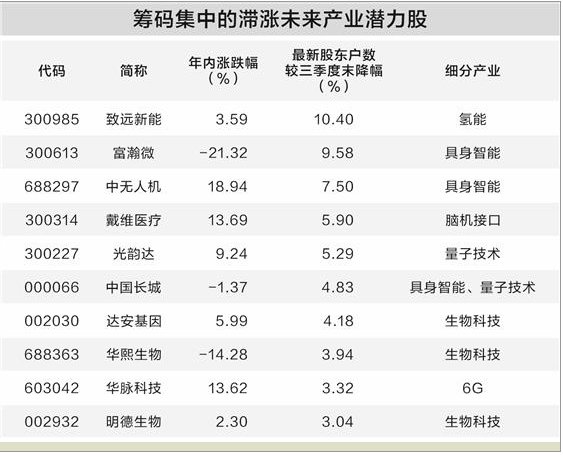
Core Insights - The article highlights the growing focus on future industries in China, as emphasized in the "14th Five-Year Plan," which aims to cultivate and expand emerging industries and future sectors [1] - It discusses the importance of exploring diverse technological routes, typical application scenarios, feasible business models, and market regulatory rules to drive economic growth through sectors like quantum technology, biomanufacturing, hydrogen energy, nuclear fusion, brain-computer interfaces, embodied intelligence, and 6G mobile communication [1] Group 1: Market Trends - The article notes that over 381 concept stocks have seen a decline in shareholder numbers compared to the end of Q3, with more than 40 companies experiencing a decrease, and 27 companies showing a decline exceeding 3% [1] - 福晶科技 (Fujing Technology) has seen a significant drop in shareholder numbers, with a decrease of nearly 26% compared to the end of Q3 [1] Group 2: Investment Opportunities - Among the 27 companies with a shareholder decline over 3%, only 10 companies have recorded a year-to-date increase of less than 19%, indicating potential for price recovery in the future industry sector [1] - The table lists several companies with their respective year-to-date performance and shareholder decline percentages, highlighting potential stocks for future investment, such as 致远新能 (Zhiyuan New Energy) with a 3.59% increase and a 10.40% decline in shareholder numbers [2]




多地积极培育未来产业 10只潜力股浮现
Zheng Quan Shi Bao· 2025-12-29 19:15
Group 1 - The core focus of the news is on the development and support of future industries in China, as highlighted by the "14th Five-Year Plan" which emphasizes nurturing emerging industries and exploring diverse technological routes and business models [3] - Various cities, including Beijing, Shenzhen, and Shanghai, are actively promoting future industries through initiatives and financial measures, with Beijing supporting 83 potential future industry companies and facilitating over 2 billion yuan in financing for 60 companies [4][5] - The future industries mentioned have significantly outperformed the market, with specific indices showing substantial annual growth, such as the nuclear fusion index rising over 83% and the 6G index increasing by more than 80% [5] Group 2 - Future industries are characterized by strong growth momentum, driven by disruptive technologies, with a projected median net profit of over 650 billion yuan for related companies by 2025, indicating a year-on-year growth of over 20% [6] - Specific companies within the future industries are expected to see remarkable profit increases, with over 60 companies projected to achieve net profit growth exceeding 100% by 2025, including notable firms like Foton Motor and Sino Medical [6][7] - A subset of companies has shown a decrease in shareholder numbers, indicating potential for price recovery, with 10 companies identified as having significant rebound potential due to their stock performance being below 19% for the year [8][9]

未来产业大会成功举办 多维度聚焦产业发展趋势
Zheng Quan Ri Bao Wang· 2025-12-29 03:47
Group 1 - The "Future Industry Conference" was successfully held at Harbin Institute of Technology from December 25 to 27, focusing on the theme "Towards a New Quality Chain Future" [1] - The conference was co-hosted by the China Electronic Information Industry Development Research Institute and Harbin Institute of Technology, with support from Beijing CCID Publishing Media Co., Ltd. and the School of Business at Harbin Institute of Technology [1] - Su Bo, Deputy Director of the National Manufacturing Power Construction Strategy Advisory Committee, emphasized the transition of China's manufacturing development from "catching up" to "keeping pace" and then to "leading" in certain areas, highlighting the importance of innovation and collaboration for future industrial development [1] Group 2 - The opening ceremony included the establishment of the "Future Industry 50 Forum" and the Future Industry Department at Harbin Institute of Technology's School of Business [2] - Professor Ma Tao, Dean of the School of Business, released the "2025 China Strategic Emerging Industries and Future Industry Development Report" [2] - Pu Songtao, Director of the CCID Think Tank Future Industry Research Center, delivered a keynote report on the outlook for China's future industry development in 2026, analyzing policy, application traction, and international competition, while providing recommendations from the perspectives of platforms, scenarios, talent, and capital [2]
上海发布重磅文件
第一财经· 2025-12-26 02:25
Core Viewpoint - The article discusses the measures introduced by Shanghai to support the G60 Science and Technology Innovation Corridor in the Yangtze River Delta, focusing on building a world-class industrial cluster and fostering a high-quality innovation ecosystem [3][4]. Group 1: Support Measures - The measures include 23 support policies aimed at creating a technology innovation source, building world-class industrial clusters, nurturing a first-class innovation ecosystem, and sharing technology innovation resources [3]. - The focus is on the integration of the G60 corridor with the broader Yangtze River Delta region to enhance technological and industrial innovation [3][4]. Group 2: Industrial Focus Areas - The measures emphasize the development of the new generation of electronic information industry (smart terminals) and the aerospace industry (satellite internet) [3][4]. - A systematic layout for the scientific instrument industry is proposed, which is crucial for ensuring the autonomy of the supply chain and supporting cutting-edge technological innovation [4]. Group 3: Future Industry Goals - By 2027, the goal is to break through several disruptive technologies and cultivate around 20 leading ecological enterprises, with a target of forming strategic emerging industry clusters by 2030 [5]. - The expected industrial scale in the area is projected to exceed 1000 billion yuan by 2030, with the aim of gathering 5-8 leading enterprises and over 300 industry chain companies [5]. Group 4: Financial and Talent Support - Financial support mechanisms include funding for research and development, with up to 30% of total project investment covered, and a maximum of 3 million yuan available for specific projects [11][17]. - There is a focus on enhancing talent support through the integration of education and technology, aiming to attract high-level talent and support the development of innovative personnel [47].

上海发布重磅文件!明确长三角世界级产业集群建设重点
Di Yi Cai Jing· 2025-12-25 12:46
Core Viewpoint - The article emphasizes the strategic development of the Yangtze River Delta G60 Science and Technology Innovation Corridor, focusing on the new generation of electronic information industry (smart terminals) and aerospace industry (satellite internet) as key areas for growth and innovation [2][4]. Group 1: Policy Measures - The Shanghai Municipal Science and Technology Commission introduced 23 supportive policies aimed at fostering a collaborative innovation ecosystem and building world-class industrial clusters [2][3]. - The measures highlight the role of Songjiang as a pilot area for integrated development within the G60 corridor, aiming to drive cross-regional collaboration in technology and industry innovation [2][3]. Group 2: Industry Focus - The policies specifically target the acceleration of the new generation electronic information industry, including smart terminal development and the establishment of innovation platforms and technical standards [2][3][26]. - The aerospace industry, particularly satellite internet, is also prioritized, with incentives for satellite manufacturing and commercial operations [2][3][30]. Group 3: Future Industry Development - The measures aim to cultivate future industries by focusing on 5G-A applications and 6G innovation, with a goal to establish a high-quality innovation ecosystem by 2027 [4]. - By 2030, the initiative aims to form several strategic emerging industry clusters, attracting 5 to 8 leading enterprises and over 300 industry chain companies, with a target industry scale exceeding 100 billion [4]. Group 4: Scientific Instrument Industry - The strategic layout for the scientific instrument industry is designed to support the autonomous control of supply chains and advance cutting-edge technological innovation [3][34]. - The development path emphasizes "domestic substitution, high-end breakthroughs, and ecological collaboration," with plans to establish specialized parks and innovation hubs [3][34]. Group 5: Financial Support and Innovation - Financial support mechanisms include phased funding for projects, with up to 30% of total investment covered, and specific caps on funding amounts for various initiatives [10][13][17]. - The establishment of market-oriented operational entities and innovation competitions is intended to facilitate the transition of research outcomes from laboratories to production lines [3][10].

2025未来产业系列对接活动(陕西行)成功举办
Xin Lang Cai Jing· 2025-12-24 10:39
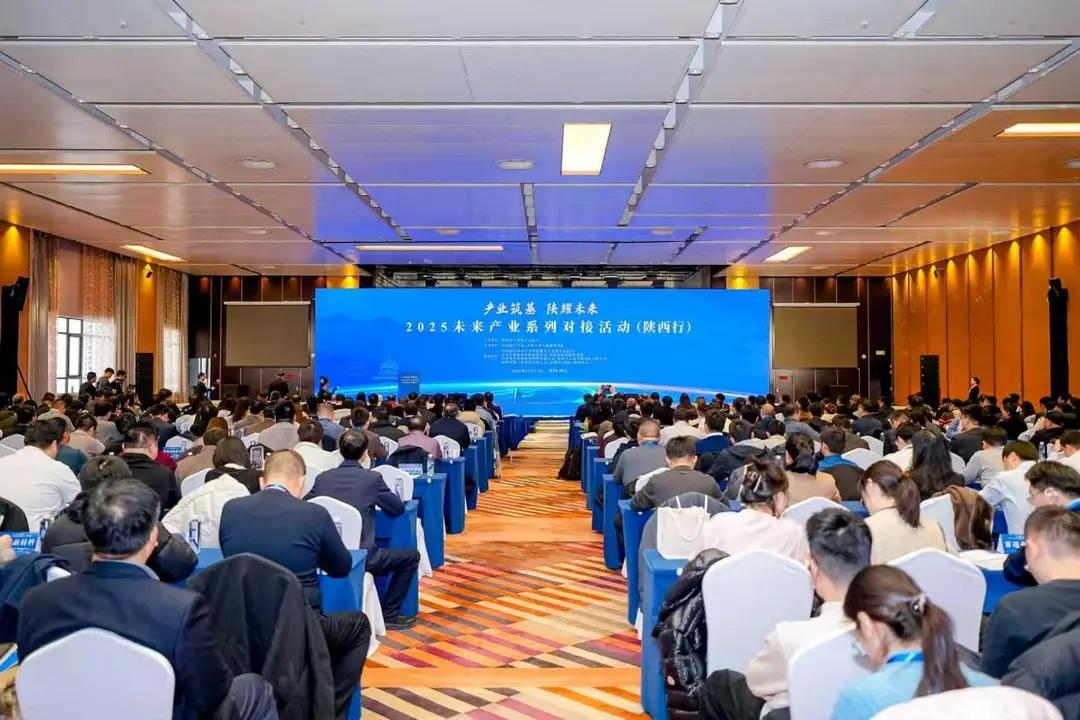
Core Insights - The event "2025 Future Industry Series Docking Activity (Shaanxi)" was successfully held in Xi'an, emphasizing the importance of developing future industries as highlighted by the central government [2][3] - The focus is on leveraging local advantages in science, education, and talent to strategically develop future industries in Shaanxi [3] Group 1: Government and Institutional Support - The central government, led by President Xi Jinping, stresses the need for innovation and the cultivation of emerging industries to build a modern industrial system [3] - The Ministry of Industry and Information Technology (MIIT) is committed to implementing policies that support the innovation and development of future industries, with a focus on building an open-source technology system and fostering a new type of R&D framework [5] - The MIIT aims to enhance the governance system for modern industries and develop a professional service support system for industry growth [5] Group 2: Regional Development and Strategic Planning - The "China Future Industry Regional Development Report (2025)" was released, outlining six major directions and 43 key industries, providing a framework for regional development and resource optimization [6] - Shaanxi's implementation plan for accelerating the development of future industries was introduced, detailing the province's goals and key development areas [6] Group 3: Collaborative Initiatives and Innovation Ecosystem - The establishment of the "Future Industry Research Institute" aims to enhance innovation capabilities and support the incubation of cutting-edge technologies [18] - The "Hundred Schools, Thousand Parks, Ten Thousand Enterprises" collaborative innovation action plan was launched to promote synergy between academia and industry, focusing on key areas of future industries [20] - Various specialized docking activities were held to facilitate in-depth cooperation and discussions on advanced materials, future information technologies, and energy solutions [24]
第二届“京沪论坛”在上海财经大学举办
Zhong Guo Jing Ji Wang· 2025-12-23 07:01
Group 1 - The second "Beijing-Shanghai Forum" was held with a focus on "Future Industry Development," co-hosted by Shanghai University of Finance and Economics, Renmin University of China, and Shanghai State-owned Capital Investment Company [1] - Shanghai aims to create high-end industrial clusters and promote the integration of technological and industrial innovation, enhancing collaboration between Beijing and Shanghai in addressing common challenges [1] - The forum emphasized the importance of think tanks in providing strategic advice and fostering effective regional development and industrial collaboration [1] Group 2 - Shanghai University of Finance and Economics is implementing three major initiatives to support future industry development, including establishing a research institute for future industry development in collaboration with Shanghai State-owned Capital Investment Company [2] - Shanghai has developed a "four-in-one" system for nurturing future industries, focusing on project management, task lists, future industry funds, and support from industrial clusters [2] - The city aims to create an ecosystem for future industries, positioning itself as a hub for foundational research, integrated industry testing, and attracting top innovative talent [2] Group 3 - A report titled "Competing for the Future: Trends in Future Industry Development and Core City Potential Evaluation" was released, highlighting that Shanghai and Beijing lead in comprehensive future industry development, with other cities in the Yangtze River Delta and Pearl River Delta making steady progress [3] - The report suggests that cities should achieve differentiated collaborative development based on their unique endowments to avoid "involution" competition and follow technological evolution patterns [3] - Two sub-forums were held focusing on "the linkage between primary and secondary markets" and "industry-education integration," emphasizing the need for universities to break traditional educational models and align closely with industry practices [3]
未来产业十强城市潜力报告出炉
Di Yi Cai Jing· 2025-12-22 13:33
Core Insights - The overall level of future industrial development in China is steadily improving, with cities like Shanghai and Beijing strengthening their advantages [1] - The "2022-2024 Future Industry Comprehensive Index" indicates that Shanghai and Beijing are leading, with Shanghai ranking first twice in three years [1][2] - The report emphasizes the need for cities to achieve coordinated development based on their unique endowments to avoid "involution" competition [5] Group 1: Future Industry Potential - The evaluation of ten core cities (Beijing, Shanghai, Tianjin, Shenzhen, Guangzhou, Nanjing, Hangzhou, Wuhan, Chengdu, Hefei) focuses on innovation capability, market potential, and policy support [2] - The Yangtze River Delta and Pearl River Delta regions show robust performance, with cities like Hangzhou and Guangzhou experiencing nearly 20% index growth [2][5] - Midwestern cities like Wuhan, Chengdu, and Hefei are rapidly releasing development potential, with Wuhan and Chengdu showing a cumulative index increase of about 50% [2] Group 2: Innovation and Policy Support - Innovation capabilities are concentrated in tech hubs like Beijing, Shanghai, and Shenzhen, with Beijing consistently leading [5] - Market potential is stratified, with Shanghai, Shenzhen, Guangzhou, and Beijing identified as core areas for future industrial commercialization [5] - The gap in policy support among cities is narrowing, indicating a clear trend of latecomer cities catching up [5] Group 3: Strategic Development Initiatives - Shanghai is accelerating the construction of an international technology innovation center, focusing on six key areas: future manufacturing, information, materials, energy, space, and health [6] - By 2027, Shanghai aims to achieve breakthroughs in disruptive technologies and establish future industry clusters [6] - The Shanghai State-owned Capital Investment Company is developing a three-in-one model for future industry funding and innovation incubation [7] Group 4: Global Trends and Collaboration - Major global economies are rapidly advancing in fields like embodied intelligence, brain-machine interfaces, and 6G technology [8] - Strengthening collaboration between Beijing and Shanghai is essential to establish a world-class future industry source [8]

十五五期间制造业迎来哪些新机遇?
HTSC· 2025-12-22 11:33
Group 1: Manufacturing Industry Trends - The "14th Five-Year Plan" aimed to maintain a stable proportion of manufacturing, while the "15th Five-Year Plan" shifts to maintaining a "reasonable proportion," indicating a potential decline from the current level, which is double the OECD average[2][10]. - In 2024, China's nominal manufacturing value added is projected to account for 24.9% of GDP, significantly higher than the OECD average of 12.4%[2][10]. - From 2011 to 2020, China's manufacturing value added as a percentage of GDP decreased from 31.6% to 25.7%, but the decline has slowed since 2020 due to real estate cycle adjustments[2][11]. Group 2: Investment and Growth Rates - The annualized growth rate of China's real manufacturing value added (PPP) from 2021 to 2024 is expected to be 4.6%, surpassing the global average of 1.7% during the same period[2][20]. - High-end manufacturing investment is projected to grow at an annualized rate of 12.2% from 2021 to 2024, outpacing the overall manufacturing investment growth rate of 9.5%[3][26]. - Traditional manufacturing sectors are expected to see an investment growth rate increase from 2.9% during the "13th Five-Year Plan" to an average of 8.9% from 2021 to 2024[3][27]. Group 3: Emerging Industries and Future Prospects - The "15th Five-Year Plan" emphasizes breakthroughs in high-tech industries and aims to enhance competitiveness in sectors like AI, hydrogen energy, and quantum information[3][29]. - The production of new energy vehicles is projected to rise from 340,000 units in 2015 to 13.168 million units in 2024, reflecting significant growth in the sector[3][46]. - The brain-computer interface industry is expected to grow from 2.33 billion yuan in 2022 to 3.2 billion yuan in 2024, with an annual growth rate of 17.2%[3][48].