物理学研究

Search documents
一生心怀家国 杨振宁:我的身体里循环着中华文化的血液
新浪财经· 2025-10-18 13:31
Core Viewpoint - The article commemorates the life and achievements of Yang Zhenning, a renowned physicist and Nobel laureate, highlighting his contributions to modern physics and his deep connection to Chinese culture and education [2][41]. Early Life and Education - Yang Zhenning was born on October 1, 1922, in Hefei, Anhui, and spent his early years in Tsinghua University, where his father was a professor [5][6]. - He excelled academically at Southwest Associated University, becoming its top student [4][9]. - Yang graduated from Southwest Associated University in 1942 with a thesis on group theory and molecular vibrations [12]. Academic Career and Contributions - In 1945, Yang Zhenning went to the United States as a public-funded student and studied at the University of Chicago, where he earned his Ph.D. in 1948 [15]. - He joined the Institute for Advanced Study in Princeton in 1949, marking the beginning of a distinguished academic career [18]. - In 1954, he co-developed the Yang-Mills theory, a significant advancement in gauge theory, laying the groundwork for the Standard Model of particle physics [21][22]. Nobel Prize and Recognition - Yang Zhenning, along with Li Zhengdao, was awarded the Nobel Prize in Physics in 1957 for their work on parity violation in weak interactions [24][27]. - He expressed pride in his Chinese heritage during the Nobel Prize ceremony, emphasizing his commitment to modern science [28]. Contributions to China - Yang Zhenning maintained a strong connection to China, advocating for the importance of fundamental scientific research and facilitating academic exchanges between China and the U.S. [31][34]. - He established the "Committee for Educational Exchange with China" to support Chinese scholars studying in the U.S. [34]. - In 1997, he became the honorary director of Tsinghua University's Institute for Advanced Study, contributing significantly to its development [35]. Legacy and Impact - Yang Zhenning's work in various fields of physics has had a profound impact, earning him numerous accolades and honorary degrees from prestigious institutions worldwide [43]. - He is recognized as one of the greatest physicists of the 20th century, with his theories being foundational to modern physics [41][44]. - His life symbolizes a bridge between Eastern and Western cultures, reflecting a commitment to both scientific inquiry and national pride [44][47].

103岁杨振宁逝世:要做好物理,是要有品位和风格的
第一财经· 2025-10-18 13:26
Core Viewpoint - The article commemorates the life and contributions of Yang Zhenning, a renowned physicist and Nobel laureate, highlighting his impact on science and education in China, as well as his personal philosophy and dedication to his homeland [3][4][12]. Group 1: Life and Achievements - Yang Zhenning was born on October 1, 1922, in Hefei, Anhui, and showed exceptional mathematical talent from a young age, influenced by his father's academic background [5][6]. - He studied at National Southwestern Associated University during a tumultuous period, where he developed a deep appreciation for the works of prominent physicists like Einstein and Fermi [7]. - Yang Zhenning achieved significant academic milestones in the United States, including the development of the Yang-Mills theory in 1954 and the discovery of parity violation in 1956, which established him as a leading physicist [7][9]. Group 2: Contributions to China - After winning the Nobel Prize, Yang Zhenning returned to China in 1971, becoming a key figure in fostering academic exchanges and rebuilding the scientific community [10][11]. - He played a crucial role in establishing over 60 top physics laboratories in China, significantly enhancing the country's research capabilities and nurturing numerous scientific talents [12]. - Yang Zhenning's philanthropic efforts included founding the "Science Exploration Award" and supporting Chinese scholars to study abroad, demonstrating his commitment to advancing science in China [11][12]. Group 3: Personal Philosophy and Legacy - Yang Zhenning emphasized the importance of character and style in scientific work, believing that a scientist's personal qualities significantly influence their contributions [13][14]. - He maintained a rigorous work ethic well into his later years, dedicating time to teaching and research in fields like high-temperature superconductivity and quantum computing [14][16]. - His reflections on life and science reveal a deep appreciation for the mysteries of the universe and a humble acknowledgment of humanity's place within it [16].
新华时评|向宇宙问路,为祖国燃灯
Xin Hua She· 2025-10-18 13:04
Core Viewpoint - The news highlights the passing of Yang Zhenning, a renowned physicist, at the age of 103, emphasizing his significant contributions to modern physics and his dedication to China's scientific development [1][2]. Group 1: Contributions to Physics - Yang Zhenning, alongside Li Zhengdao, proposed the concept of "non-conservation of parity in weak interactions," earning the Nobel Prize in Physics in 1957 [1]. - He co-developed the Yang-Mills theory, which is considered one of the foundational theories of modern physics, comparable to Maxwell's equations and Einstein's general relativity [1]. - His achievements spanned multiple fields, including particle physics, field theory, statistical physics, and condensed matter physics, profoundly influencing the development of these areas [1]. Group 2: Impact on Education and Scientific Exchange - Yang Zhenning played a crucial role in fostering scientific exchange between China and the West, supporting Chinese scholars to study in the U.S. [2]. - After returning to China, he taught undergraduate courses in "General Physics" at Tsinghua University, dedicating himself to the development of basic sciences and talent cultivation [2]. - His life exemplified the ideals of Chinese scientists, blending traditional culture with innovative scientific spirit, and demonstrating a deep sense of patriotism and commitment to education [2]. Group 3: Legacy and Inspiration - Yang Zhenning's journey from a curious youth to a leading scientist reflects a lifelong quest for knowledge, inspiring future generations of scientists [2]. - His spirit and contributions are expected to continue motivating scientists in their pursuit of progress for science, national prosperity, and human welfare [2][3].
中国民众追忆著名物理学家杨振宁
Xin Hua She· 2025-10-18 11:47
Core Viewpoint - Renowned physicist Yang Zhenning, a Nobel laureate and academician of the Chinese Academy of Sciences, passed away on October 18 at the age of 103, leaving a profound legacy in modern physics [2][3]. Contributions to Physics - Yang Zhenning made significant contributions across various fields of physics, including particle physics, field theory, statistical physics, and condensed matter physics, profoundly influencing their development [2]. - He co-developed the Yang-Mills gauge theory, which laid the foundation for the later standard model of particle physics, and discovered the Yang-Baxter equation, opening new directions in statistical physics and quantum groups [3]. - Yang's revolutionary idea regarding the violation of parity conservation in weak interactions, developed with Li Zhengdao, earned them the Nobel Prize in Physics in 1957 [3]. Legacy and Influence - Yang Zhenning's academic achievements inspired generations of Chinese youth to pursue science and contributed to the emergence of numerous scientists in fundamental research [5]. - He held a deep affection for Tsinghua University, where he served as the honorary director of the newly established Institute for Advanced Study and dedicated himself to the development of physics and other fundamental disciplines [5][6]. - Yang emphasized the importance of nurturing outstanding talent in China, which he considered a significant mission during his later years [5]. Teaching and Mentorship - Known for his humility and clarity of thought, Yang Zhenning engaged with students, teaching basic physics concepts and encouraging open discussions in class [6]. - He was respected for his broad vision and support for young scholars, fostering an environment of encouragement and collaboration [8]. - Yang's commitment to education and mentorship was evident in his interactions with students, where he motivated them to strive for excellence and remain focused on their goals [6][8]. Personal Reflections - Yang Zhenning viewed his life as a "circle," returning to his roots after a distinguished career on the world stage, and he donated over 2,000 personal documents to Tsinghua University to preserve his legacy [9].
103岁杨振宁逝世:要做好物理,是要有品位和风格的
Di Yi Cai Jing· 2025-10-18 11:13
Core Insights - The article highlights the life and contributions of Yang Zhenning, a renowned physicist and Nobel laureate, who passed away at the age of 103, emphasizing his role in boosting the confidence of Chinese people in science and education [1][3][10] Group 1: Personal Background and Achievements - Yang Zhenning was born on October 1, 1922, in Hefei, Anhui, and showed exceptional mathematical talent from a young age, influenced by his father, a mathematics PhD from the University of Chicago [3][4][6] - He graduated with a master's degree from the University of Chicago in 1945 and spent 17 years at the Institute for Advanced Study in Princeton, where he produced significant academic work, including the Yang-Mills theory and the concept of parity violation [6][7][9] - Yang Zhenning returned to China in 1971 after the normalization of Sino-American relations, becoming the first Chinese scientist to visit post-revolution China, and played a crucial role in rebuilding the country's scientific community [7][9] Group 2: Contributions to Science and Education - He established numerous top-tier physics laboratories in China, significantly reducing the gap in physical infrastructure between China and the West, and contributed to the training of many scientific talents [9][10] - Yang Zhenning initiated the "Science Exploration Prize" to foster scientific talent in China and donated his Nobel Prize winnings to support Chinese students studying abroad [7][9] - He maintained a rigorous work ethic even in his later years, dedicating ten hours a day to research in fields like high-temperature superconductivity and quantum computing [10][12] Group 3: Personal Philosophy and Legacy - Yang Zhenning viewed physics as an art form, emphasizing the importance of style and character in scientific work, and believed that a person's taste, ability, and circumstances shape their contributions [10][12] - His marriage to Weng Fan provided him with personal support, allowing him to continue his academic pursuits while also co-authoring works that reflect his thoughts on science and humanity [12][13] - In his final public speech at the age of 100, he expressed a profound understanding of the universe and humanity's place within it, highlighting his lifelong quest for knowledge [13]
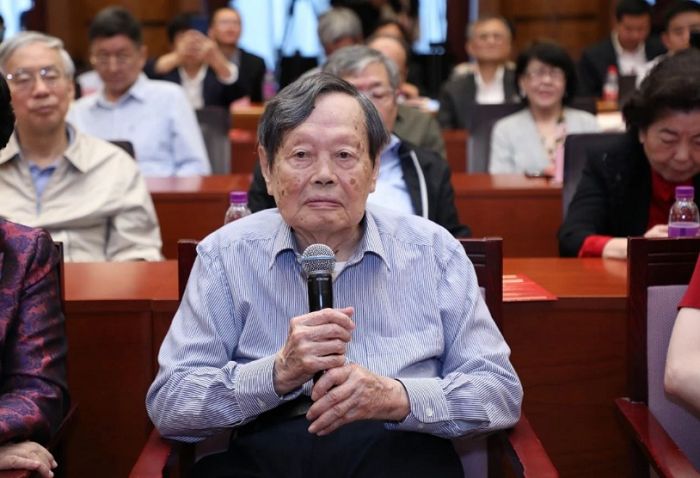
清华大学发布杨振宁先生生平
21世纪经济报道· 2025-10-18 09:05
Core Viewpoint - Yang Zhenning is a renowned physicist whose contributions to modern physics, particularly in particle physics and field theory, have had a profound impact on the scientific community and education in China [23]. Group 1: Early Life and Education - Yang Zhenning was born on October 1, 1922, in Hefei, Anhui, and spent his early years in Tsinghua University, where his father was a professor [1]. - He completed his undergraduate studies at Southwest Associated University in 1942, graduating with a thesis on group theory and polyatomic molecular vibrations [3]. - Yang pursued graduate studies at Tsinghua University, earning a master's degree in 1944 [3]. Group 2: Academic Career and Major Contributions - In 1945, Yang went to the United States as a government-sponsored student and earned his Ph.D. from the University of Chicago in 1948 [6]. - He developed the Yang-Mills theory in 1954, which is considered a cornerstone of modern physics and laid the groundwork for the Standard Model of particle physics [8]. - Yang and Li Zhengdao proposed the concept of parity violation in weak interactions in 1956, leading to their Nobel Prize in Physics in 1957 [12]. Group 3: Influence and Contributions to China - Yang Zhenning returned to China in 1971, promoting scientific exchange and advising on the importance of basic scientific research [18]. - He established the "Committee for Educational Exchange with China" in 1980, facilitating the education of Chinese scholars in the U.S. [18]. - Yang has been instrumental in the development of various scientific institutions in China and has contributed significantly to the reform and advancement of higher education [19]. Group 4: Legacy and Recognition - Yang Zhenning has received numerous accolades, including the Nobel Prize, and has been elected to various prestigious academies worldwide [23]. - He donated over 2,000 items, including books and manuscripts, to Tsinghua University, establishing the Yang Zhenning Archive [20]. - His life and work symbolize a bridge between Eastern and Western cultures, reflecting his dedication to both science and his homeland [24].
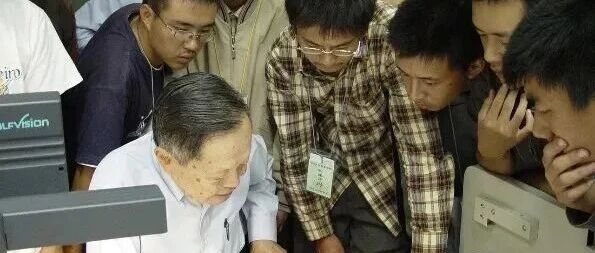
杨振宁逝世:用赤子情怀谱写一曲科学与家国之歌
Xin Jing Bao· 2025-10-18 07:51
Core Viewpoint - The article commemorates the life and contributions of renowned physicist Yang Zhenning, highlighting his significant impact on modern physics and his dedication to advancing scientific education in China [2][6]. Group 1: Personal Background and Achievements - Yang Zhenning was born on October 1, 1922, in Anhui and passed away on October 18, 2025, in Beijing at the age of 103 [2]. - He studied under prominent physicists such as Fermi and Taylor after receiving a scholarship to study in the United States in 1945 [3]. - Yang Zhenning's notable achievements include the Yang-Mills theory in 1954 and the discovery of parity violation in weak interactions in 1956, for which he received the Nobel Prize in Physics in 1957 [3][4]. Group 2: Contributions to Physics - The Yang-Mills theory is considered a crucial breakthrough in particle physics and serves as the foundation for the Standard Model, marking a significant milestone in the field [4]. - The parity violation discovery challenged traditional views on symmetry in physics, opening new avenues for research in particle physics and cosmology [4]. Group 3: Return to China and Educational Impact - After years abroad, Yang Zhenning returned to China in 2003, dedicating himself to scientific education and research at Tsinghua University [6][7]. - He established the Tsinghua University Institute for Advanced Study and actively participated in academic discussions, fostering international collaboration [6][7]. - Yang advocated for increased funding for basic research in China, suggesting that the proportion of funding for basic research be raised from 5% to 15% [7]. Group 4: Legacy and Influence - Yang Zhenning's influence extends beyond his scientific contributions; he played a vital role in nurturing local talent and breaking down barriers in scientific research between China and the West [8][9]. - His life exemplifies a blend of scientific rigor and humanistic values, making him a significant figure in both the scientific community and Chinese society [8][9].
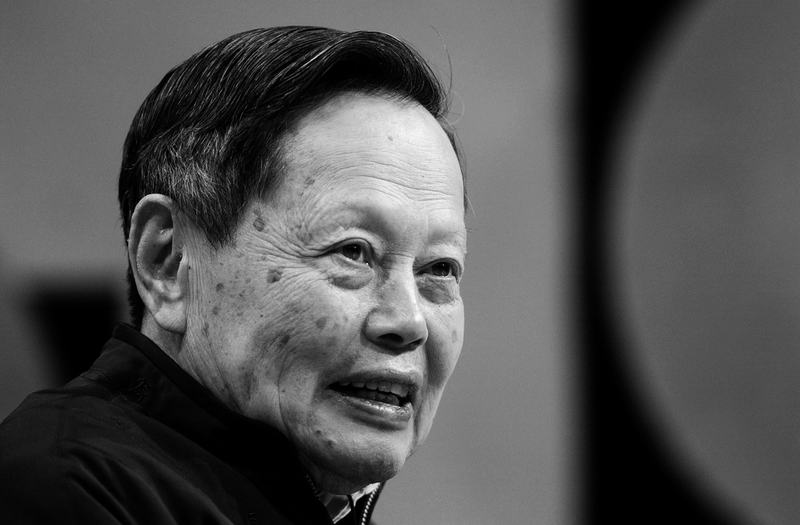
科学的星空,他已归航——追忆杨振宁先生
Xin Hua She· 2025-10-18 06:47
Group 1 - Yang Zhenning, a renowned physicist and Nobel laureate, passed away on October 18, 2025, at the age of 103, leaving behind a significant legacy in modern physics [2] - His contributions include the Yang-Mills theory, which is considered one of the cornerstones of modern physics, and the revolutionary idea of parity violation in weak interactions, which earned him the Nobel Prize [4][5] - Yang's work has profoundly influenced various fields of physics, including particle physics, field theory, statistical physics, and condensed matter physics [5][8] Group 2 - Yang Zhenning's commitment to education and mentorship is evident through his role at Tsinghua University, where he aimed to establish a high-level research institute comparable to Princeton [10][17] - He actively recruited top scholars and contributed significantly to the development of theoretical physics in China, fostering international academic exchanges [14][18] - Yang's teaching style was characterized by humility and accessibility, encouraging students to engage actively in learning [25][26] Group 3 - His life journey reflects a deep connection to his Chinese heritage and a commitment to advancing science in China, which he viewed as a vital contribution to national pride [8][14] - Yang Zhenning's legacy continues to inspire future generations of scientists, reinforcing the belief that Chinese scholars can achieve excellence in the global scientific community [8][18] - His dedication to science and education has left an indelible mark on the academic landscape, promoting a culture of inquiry and innovation [20][29]
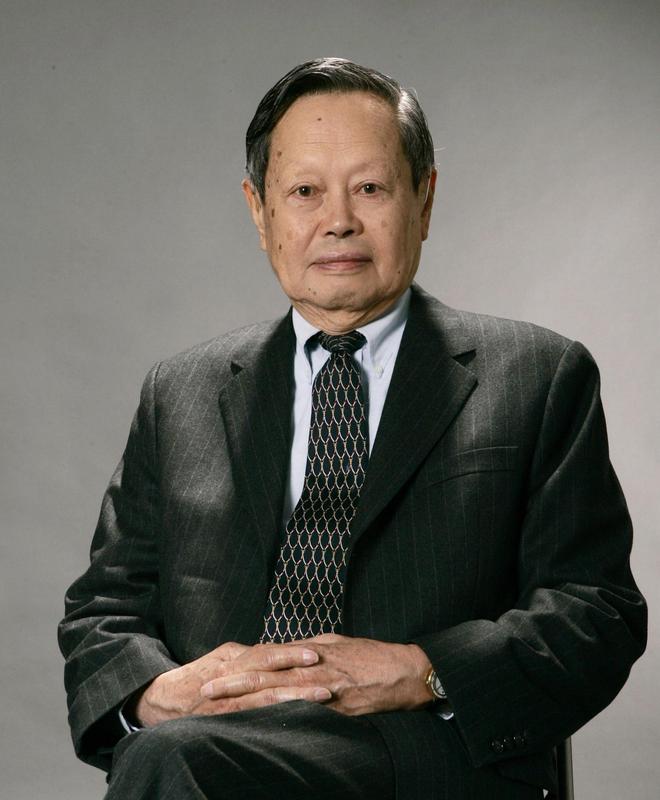
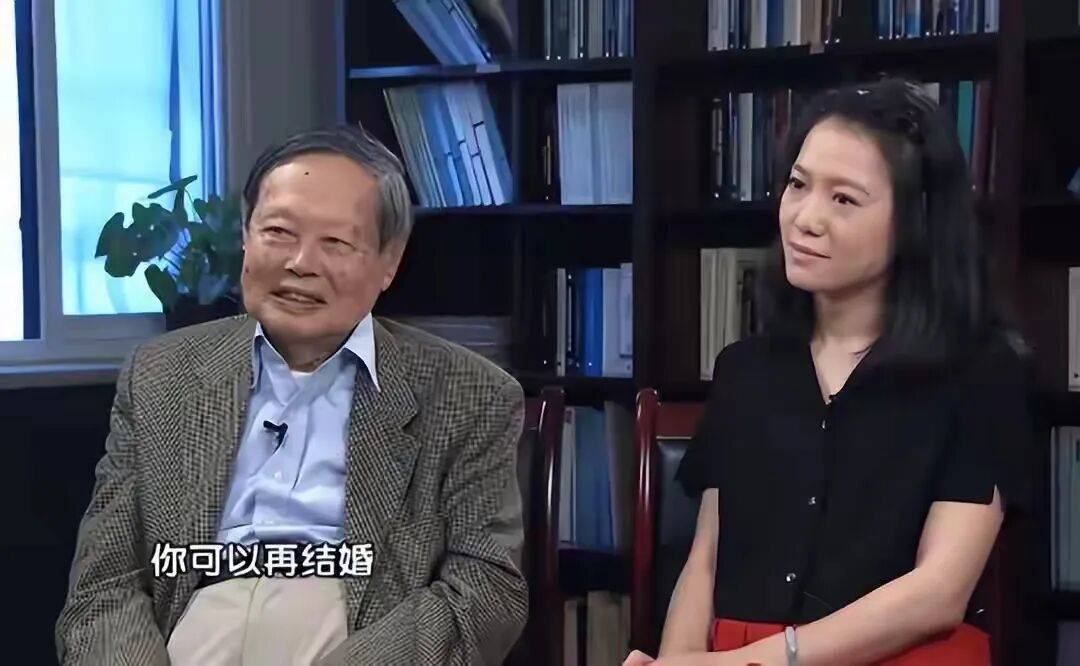
“巨星陨落”杨澜采访杨振宁:您去世后,翁帆怎么办?他的回答令翁帆泪眼婆娑
Sou Hu Cai Jing· 2025-10-18 06:36
Core Viewpoint - The news highlights the life and legacy of renowned physicist Yang Zhenning, who passed away at the age of 103, emphasizing both his scientific contributions and his profound love story with his wife, Weng Fan [1][10]. Group 1: Personal Life and Relationship - Yang Zhenning's marriage to Weng Fan, which had a 54-year age difference, evolved from public scrutiny to a deep emotional bond over the years [3][7]. - During a notable interview, Yang expressed his hope for Weng to remarry after his passing, showcasing a selfless love that prioritizes her happiness [3][9]. - Weng initially felt discomfort with Yang's statement about remarriage, interpreting it as a lack of love, but later understood it as a profound expression of love and care [5][9]. Group 2: Legacy and Impact - Yang Zhenning's scientific achievements include 13 significant contributions to physics, which will continue to influence the field [1]. - His relationship with Weng Fan not only provided companionship in his later years but also allowed him to maintain academic sharpness well into his 90s [9][10]. - The couple's bond is portrayed as a testament to the essence of true love, transcending age and societal expectations, and emphasizing mutual respect and support [9][11].
痛悼!今天,送别杨振宁先生
Huan Qiu Wang Zi Xun· 2025-10-18 05:38
Core Viewpoint - The article commemorates the life and achievements of Yang Zhenning, a renowned physicist and Nobel laureate, who passed away at the age of 103, highlighting his contributions to physics and his impact on Chinese science and education [1][28]. Group 1: Early Life and Education - Yang Zhenning was born in 1922 in Hefei, Anhui, and developed an early interest in mathematics and physics, inspired by his father's academic background and a book he read in middle school [1][3]. - He attended Southwest Associated University during the Second Sino-Japanese War, where he excelled academically, achieving top scores in various subjects [3][4]. Group 2: Major Scientific Contributions - Yang Zhenning, along with Li Zhengdao, proposed the concept of parity violation in weak interactions in 1956, which was later experimentally confirmed, earning them the Nobel Prize in Physics in 1957 [5][8]. - He co-developed the Yang-Mills theory in 1954, which laid the groundwork for the standard model of particle physics, and discovered the Yang-Baxter equation in 1967, influencing statistical physics and quantum theory [8][25]. Group 3: Contributions to China - After returning to China in 1971, Yang Zhenning played a significant role in promoting scientific research and policy, advising on the importance of basic science and contributing to major scientific projects [10][11]. - He was instrumental in establishing the Tsinghua University Institute for Advanced Study and dedicated efforts to fundraise and support academic development at the university [14][27]. Group 4: Legacy and Recognition - Yang Zhenning's contributions to various fields of physics have had a profound impact, leading to the naming of an asteroid after him, and he is celebrated as one of the greatest physicists of the 20th century [25][27]. - His life is characterized by a commitment to education and science, bridging Eastern and Western cultures, and he is remembered for his humility and dedication to his homeland [27][28].