
环保治理

Search documents
我国建成全球规模最大的清洁钢铁生产体系
Xin Hua Cai Jing· 2025-10-20 01:06
Group 1 - The core viewpoint emphasizes the significant improvements in China's ecological environment since the "14th Five-Year Plan," with key metrics showing a rise in air and water quality [1][3] - By 2024, the proportion of days with good air quality in cities at or above the prefecture level reached 87.2%, and the proportion of surface water with good quality exceeded 90% for the first time [1] - The PM2.5 concentration in cities at or above the prefecture level decreased to 29.3 micrograms per cubic meter, surpassing the targets set in the "14th Five-Year Plan" [1] Group 2 - The concept of "green" is highlighted as a fundamental aspect of high-quality development, with various regions transforming ecological advantages into benefits for people's livelihoods [3][4] - The establishment of the world's largest clean power supply system and the fastest-growing renewable energy system is noted, showcasing China's commitment to green development [3] - The ecological protection efforts have led to over 30% of land area being designated as ecological protection red lines, with significant improvements in forest coverage and biodiversity [5]
邯郸市重点行业环保绩效创A率达76.7%
Xin Hua Cai Jing· 2025-09-29 00:56
Core Viewpoint - The city of Handan in Hebei Province is transforming its industrial base by focusing on ecological environment governance, promoting pollution reduction, carbon reduction, and the development of green low-carbon industries. Group 1: Pollution Reduction and Circular Economy - The company Xinxing Foundry has implemented an intelligent "Eagle Eye" system to monitor dust emissions, achieving an A-level environmental performance rating, the highest in the industry, allowing for self-regulated emissions during heavy pollution periods [2] - Handan's ecological environment bureau has tailored pollution reduction strategies for each A-rated enterprise, resulting in a 76.7% A-rating rate among key industries, the highest in Hebei Province [2] - The New Peak Circular Economy Investment Development Company has innovated technologies to recycle various types of waste, turning ecological burdens into valuable resources [2] Group 2: Green Asset Evaluation and Support Measures - Handan has established green accounts for 57 companies, assessing green asset scales exceeding 110 billion yuan, with plans to cover seven key industries by 2025 [3] - A green account service platform has been created to match enterprises with suitable government support policies and financial products, facilitating the monetization of green achievements [3] - The city has introduced a comprehensive ecological product directory, categorizing 39 items to establish a valuation method for ecological products, aiding in market transactions and financing [3] Group 3: Comprehensive Governance and Economic Development - Handan has prioritized ecological development by shutting down "scattered and polluting" enterprises and integrating various departments to enhance environmental protection and restoration efforts [4] - The transformation of the local environment has led to significant tourism growth, with villages like Shipo leveraging their ecological advantages to attract visitors [5] - By mid-2025, Handan's air quality index improved by 17.6% year-on-year, and the region's GDP grew by 6%, ranking second in Hebei Province [5]

今年8月武汉空气质量优良率100%
Chang Jiang Ri Bao· 2025-09-26 00:56
Group 1 - In August, Wuhan achieved a 100% air quality rate, marking the best level in five years [1] - The city has implemented strict measures to control emissions, including the "A-level access" policy for high-pollution projects and the elimination of small-scale biomass and coal-fired boilers [1] - Wuhan Steel invested 15.4 billion yuan in 135 ultra-low emission transformation projects, permanently closing three blast furnaces [1] Group 2 - The number of lakes with poor water quality has been reduced to zero for four consecutive years, and the number of lakes with good water quality increased from 24 to 51 [2] - Donghu Lake's water quality improved significantly to Class III, with underwater forest areas exceeding 3 million square meters [2] - The construction of the Yangtze River ecological corridor has transformed industrial sites into public recreational areas [2] Group 3 - Wuhan has become the first "City of a Thousand Parks" in Central China, with per capita park green space exceeding 15 square meters [3] - The total length of greenways in the city has reached 2,426 kilometers, with over 60% being waterfront greenways [3] - The city has initiated various green community activities, including 3,000 green benefit events and the opening of 70,000 square meters of public green space [3]
生态环境部:推动构建和落实碳达峰碳中和的政策体系
Xin Lang Cai Jing· 2025-09-19 03:21
Core Viewpoint - The Ministry of Ecology and Environment emphasizes the importance of establishing and implementing a policy system for carbon peak and carbon neutrality, highlighting significant progress in renewable energy development and emissions control measures [1] Group 1: Renewable Energy Development - China aims to build the largest and fastest-growing renewable energy system globally, with wind and solar power generation capacity having already met the 2030 national contribution target ahead of schedule [1] - During the 14th Five-Year Plan period, the intensity of carbon dioxide emissions in China is expected to continue to decline [1] Group 2: Emission Control Measures - The government is actively controlling non-carbon dioxide greenhouse gas emissions, having released a methane and industrial nitrous oxide emission control plan [1] - Hydrofluorocarbons have been included in quota management, and the limit for coal mine gas emissions has been tightened from 30% to 8%, enhancing the control over methane emissions [1]
推窗见山畅胸怀、公园城市动人心,成都全力打造山水人城和谐相融的美丽城市
Zhong Guo Huan Jing Bao· 2025-08-27 23:51
Core Viewpoint - Chengdu has made significant progress in improving air quality and enhancing its ecological environment, achieving historical bests in PM2.5 concentration and the number of "good" air quality days in 2024 [2][3]. Group 1: Air Quality Improvement - In 2024, Chengdu's air quality achieved the lowest PM2.5 concentration and the highest number of "good" days in history, with PM10 and PM2.5 concentrations decreasing by 25% and 28.1% respectively compared to the beginning of the 14th Five-Year Plan [2]. - The number of "good" air quality days increased by 26 days year-on-year [2]. Group 2: Water Quality Enhancement - Chengdu has focused on the integrated management of water resources, environment, and ecology, resulting in significant improvements in water quality, with the Huanglong Creek outlet achieving a historic upgrade from inferior V class to II class [2]. - Major river basin water quality remains excellent, and several lakes have been recognized as exemplary cases for beautiful river and lake projects [2]. Group 3: Urban Ecological Development - Chengdu has completed the greening of 350,000 acres and has increased forest coverage to 40.5% and urban greening coverage to 44.7% [2]. - The city has been recognized as a global "Biodiversity Charming City," and its "Urban Green Heart Plan" won the 2024 World Green City Award [2]. Group 4: Community and Citizen Engagement - The city has implemented initiatives to enhance community engagement in ecological projects, resulting in the construction of over 1,500 parks and the establishment of a greenway network exceeding 9,000 kilometers [3]. - Complaints regarding noise and environmental issues have significantly decreased, with a 66% reduction in complaints about restaurant oil fume issues [3]. Group 5: Economic and Industrial Transformation - Chengdu is promoting green development by implementing low-emission standards in key industries, with over 273 enterprises achieving A and B grade certifications [4]. - The city has achieved a clean energy share of 62.6%, surpassing the national average by 36.2 percentage points [4]. Group 6: Service and Regulatory Improvements - Chengdu has introduced a series of measures to optimize the business environment, including a three-tiered environmental service system and streamlined project approval processes, improving efficiency by 30% [5][6]. - The city is focusing on integrating cultural and tourism sectors with ecological initiatives, promoting sustainable tourism and low-carbon events [6].
习近平生态文明思想省域实践的江苏探索
Zhong Guo Huan Jing Bao· 2025-08-25 00:27
Core Viewpoint - The article emphasizes the importance of ecological civilization construction in Jiangsu Province, highlighting the commitment to prioritize ecological protection while achieving high-quality economic development [1][2]. Group 1: Ecological Civilization Construction - Jiangsu has integrated ecological civilization construction as a major political task and a livelihood project, exploring paths for high-quality development and ecological protection [1][2]. - The province has established a legal framework for ecological civilization, including local regulations such as the "Jiangsu Provincial Ecological Environment Monitoring Regulations" and "Jiangsu Provincial Biodiversity Protection Regulations" [2]. Group 2: Spatial Layout and Function Optimization - Jiangsu is focusing on creating ecological protection spaces by delineating ecological red lines and promoting urban-rural integration [3]. - The province aims to develop distinctive ecological spaces, such as the "Green Ecological Corridor" along the Yangtze River and various ecological barriers across different regions [3]. Group 3: Government and Market Coordination - Over the past decade, Jiangsu has invested more than 380 billion yuan in ecological protection, while also innovating green financial products to enhance market participation [4]. - The province is leveraging traditional ecological wisdom in modern governance, creating educational landmarks for ecological culture [4]. Group 4: Key Strategic Focus Areas - Jiangsu is exploring pathways for realizing the value of ecological products through mechanisms like the ecosystem production value (GEP) accounting system [5]. - The province has established cross-regional ecological compensation mechanisms to improve water quality in the Yangtze River Delta [6]. Group 5: Industry Transformation and Innovation - Jiangsu has shut down over 5,000 chemical enterprises and reduced the number of chemical parks, significantly improving environmental governance in the industry [6]. - The province is fostering new industries, with high-tech industry output exceeding 50% of the industrial total for the first time in 2024, and maintaining the highest manufacturing quality development index in the country for five consecutive years [6]. Group 6: Public Participation Mechanisms - Jiangsu has introduced innovative governance models to enhance public participation in ecological protection, leading to a continuous decline in environmental complaints over seven years [7]. - Initiatives like the "Carbon Benefit" platform and "Ecological Savings Book" encourage the public to adopt green lifestyles [7].
以“水”之变透视山水间新活力 创新科技赋能产业链“闭环”减排
Yang Shi Wang· 2025-08-20 07:23
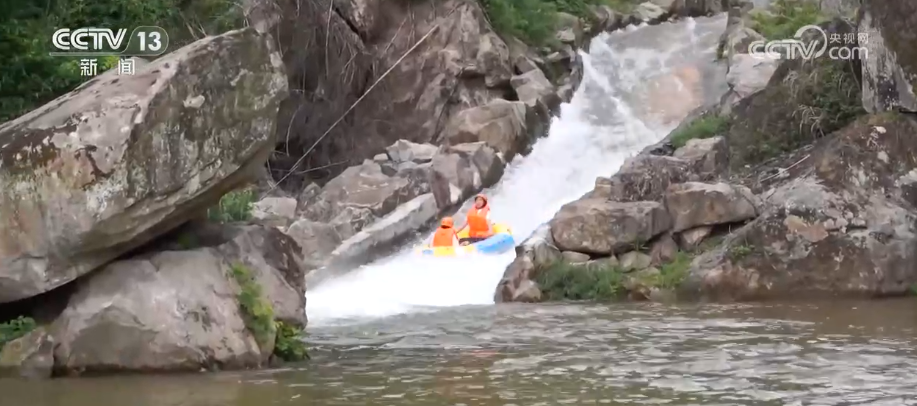
Group 1 - The article highlights the emergence of various cooling activities in Chongqing during the summer, driven by water-related tourism and services [1][5] - New tourism projects such as rafting have been introduced along the tributaries of the Yangtze River, providing visitors with refreshing experiences [5] - The local government has been actively promoting the transition of fishermen to other livelihoods, with support services like subsidies and low-interest loans [7][11] Group 2 - Since the implementation of fishing bans, the number of fish species in the Yangtze River's Chongqing section has increased by 58, indicating improved ecological conditions [13] - The water quality in the Yangtze River has been monitored, showing a consistent improvement over the past eight years, with the water quality now classified as Grade II [11][14] - The Chongqing ecological environment bureau has established a comprehensive monitoring system to oversee pollution and water quality across the city [21][23] Group 3 - The Baidao Chemical Industrial Park has seen a significant increase in the number of enterprises, growing from 26 to 60 over the past decade, while maintaining ecological improvements [26][29] - The park's wastewater treatment facility can process over 30,000 tons of industrial wastewater daily, ensuring that the discharged water meets national standards [25] - The industrial output value in the park has increased from 12.2 billion to 64.9 billion yuan, with an average annual growth rate of 23% [29][30]

《美丽日照建设规划纲要》发布,明确未来十年生态建设蓝图
Qi Lu Wan Bao Wang· 2025-07-24 05:45
Core Viewpoint - The "Beautiful Rizhao Construction Planning Outline (2025-2035)" aims to create a model of harmonious coexistence between humans and nature, contributing to the construction of a beautiful China and Shandong province [1] Group 1: Background and Objectives - The outline is based on the ecological advantages and development realities of Rizhao, with a solid background from national and provincial ecological protection initiatives [1] - The core positioning includes high-quality integration of port, industry, and city, establishing Rizhao as a modern coastal city by 2035 [1] Group 2: Key Tasks and Indicators - Six major tasks and 21 key tasks are outlined, focusing on green economy, ecological environment quality, ecosystem protection, and urban-rural beautification [1][2][3] - Specific goals include achieving significant results in beautiful Rizhao construction by 2027 and basic completion by 2035 [1] Group 3: Environmental and Ecological Goals - In the green economy sector, the aim is to transition to dual control of carbon emissions by 2030, with a target of 45% for railway and waterway freight turnover by 2035 [1] - For ecological environment quality, 70% of urban sewage treatment plants are expected to complete upgrades by 2027, with a goal of achieving a "waste-free city" [2][3] Group 4: Community and Action Plans - The plan encourages public participation in ecological protection through green and low-carbon actions [4] - Future steps include refining goals, deepening measures, and strengthening guarantees to achieve the beautiful Rizhao construction objectives [4]
排污单位内部环保责任没有落实到位,该如何改变?
Zhong Guo Huan Jing Bao· 2025-07-23 01:41
Core Viewpoint - Despite significant improvements in ecological environment quality, some polluting entities still exhibit inadequate management of unorganized emissions, ineffective pollution control facilities, and improper operation of pollution control systems, leading to diminished effectiveness of environmental protection measures [1] Group 1: Current Issues - Certain enterprises, particularly small and medium-sized ones, face challenges such as unorganized emissions and ineffective pollution control systems, which are exacerbated by a lack of internal environmental responsibility [1] - The Environmental Protection Law mandates that enterprises establish environmental protection responsibility systems, yet many small and medium-sized enterprises fail to do so, and even larger companies often lack clear responsibilities for all personnel involved in environmental management [1] Group 2: Proposed Solutions - To address these issues, it is essential to guide enterprises to comply with ecological laws and regulations, enhance their environmental management capabilities, and reduce their burdens through government-enterprise collaboration [2] - Strengthening oversight and guidance on the establishment of environmental protection responsibility systems is crucial, with punitive measures for non-compliance and a focus on integrating management practices that encourage proactive environmental responsibility [2] Group 3: Implementation Strategies - Establishing a responsibility checklist for environmental management roles within each enterprise, including clear definitions of responsibilities and regular training to ensure understanding of these roles [3] - Developing operational manuals that detail specific tasks for each position to ensure compliance with environmental regulations, such as monitoring vehicle emissions during high pollution periods [3] - Promoting professional management of pollution control facilities and online monitoring systems, while ensuring that enterprises maintain oversight of third-party service providers to achieve effective environmental management [3] - Utilizing digital management tools, such as online monitoring and access control systems, to enhance problem detection and accountability within environmental management practices [3]
【铜川】蓝天常驻 净土生金
Shan Xi Ri Bao· 2025-07-14 22:59
Core Viewpoint - Copper City has made significant investments in ecological environment protection, leading to improved air quality and a harmonious relationship between humans and nature [1][3]. Group 1: Air Quality Improvement - Copper City has achieved a notable improvement in air quality, with 286 days of good air quality in 2024 and a PM2.5 average concentration of 36.8 micrograms per cubic meter, showing a year-on-year improvement of 3.2% [3]. - The comprehensive air quality index stands at 3.92, reflecting a 2.6% year-on-year improvement, ranking first among six cities in the Guanzhong area and fifteen cities in the Fenwei Plain [3]. Group 2: Pollution Control Measures - The city has implemented a "Blue Sky Defense War," focusing on summer ozone and winter haze control, addressing five sources of pollution including industrial, dust, and VOCs [2]. - Major cement companies in Copper City have upgraded production lines for ultra-low emissions, reducing dust and sulfur dioxide emissions while enhancing energy efficiency [2]. - The city has strengthened regulations on vehicle emissions, conducting regular inspections and offering incentives for the purchase of new energy vehicles [2]. Group 3: Soil Pollution Prevention - Copper City has prioritized soil pollution prevention, conducting comprehensive inspections of rural black and odorous water bodies and implementing various remediation measures [4]. - The city has established a list of key regulatory units for soil pollution and conducts regular monitoring to ensure soil quality remains stable [5]. - The overall soil environment quality is stable, with no polluted arable land or black and odorous water bodies, supporting sustainable agricultural development and food safety [5]. Group 4: Future Goals - The city aims to achieve a higher standard and stricter requirements for pollution prevention, focusing on coordinated control of PM2.5 and ozone to maintain clear skies [5].