种植业

Search documents
农林牧渔周观点:养殖深陷亏损,生猪产能去化加速,美伊冲突推升原油价格,有望带动农产品价格上行-20260308
Shenwan Hongyuan Securities· 2026-03-08 14:28
Investment Rating - The report maintains an "Overweight" rating for the agriculture, forestry, animal husbandry, and fishery industry, indicating a positive outlook compared to the overall market performance [2][47]. Core Insights - The report highlights that the pig farming sector is experiencing significant losses, with production capacity reduction accelerating. The geopolitical conflict between the US and Iran is driving up oil prices, which may lead to an increase in agricultural product prices [1][2]. - The report suggests that the period from March to May is traditionally a low demand season for pork, and the supply side is expected to remain ample, indicating that Q2 2026 may represent the peak supply period of the current pig cycle [2][4]. - The report emphasizes investment opportunities in the planting sector due to rising oil prices and the potential for agricultural product prices to rebound after a three-year decline [2][4]. Summary by Sections Market Performance - The Shenwan Agriculture, Forestry, Animal Husbandry, and Fishery Index rose by 2.1%, while the CSI 300 Index fell by 1.1%. The top five gainers included Yasheng Group (39.0%), COFCO Technology (8.4%), Dunhuang Seed Industry (8.2%), Agricultural Development Seed Industry (8.1%), and Shennong Technology (7.4%) [3][10]. - The top five decliners were Biotech Co. (-6.7%), Yong'an Forestry (-6.7%), Dahu Co. (-6.3%), Jinxin Agriculture (-6.0%), and Huisheng Biotech (-5.2%) [3][10]. Pig Farming - The average price of external three yuan pigs as of March 8 was 10.23 CNY/kg, down 0.44 CNY/kg week-on-week, marking a 4.1% decline and the lowest price since October 2021 [2][11]. - Losses for self-breeding sows with 5,000-10,000 heads have increased to 206.3 CNY/head, reflecting a week-on-week increase of approximately 46.7 CNY/head [2][11]. - The report anticipates that the pig price will continue to decline, with a potential second bottoming out phase expected between March and May, leading to a re-initiation of production capacity reduction [2][4]. Planting Sector - The report notes that the escalation of the US-Iran conflict has led to a significant increase in oil prices, which may positively influence agricultural product prices. As of March 6, WTI crude oil prices reached 91 USD/barrel, a 36% increase from before the blockade [2][4]. - The report suggests that major agricultural product prices have been at historical lows after a three-year decline, indicating potential investment opportunities in the planting and seed sectors [2][4]. Poultry and Livestock - The report indicates that the prices of major poultry products have shown slight fluctuations, with the average sales price of white feather chicken at 3.52 CNY/kg, down 3.6% week-on-week [2][14]. - The beef market remains strong, with the average price of fattened bulls at 25.74 CNY/kg, stable week-on-week [2][14]. Investment Recommendations - The report recommends focusing on companies with strong growth potential in the pig farming sector, such as Muyuan Foods, Wens Foodstuffs, and Shennong Group, as well as in the planting sector, including Suqian Agricultural Development and Beidahuang [2][4].


投顾晨报:震荡略强格局未改,中盘蓝筹行情扩散-20260308
Orient Securities· 2026-03-08 07:13
Core Insights - The report indicates that the market is expected to maintain a slightly strong oscillating pattern, with a comparative advantage in China's asset risk evaluation highlighted amidst global geopolitical tensions [3][4]. Market Strategy - The geopolitical conflicts, particularly the escalation of the US-Iran situation, are suppressing risk appetite globally, while China's economic risk evaluation is anticipated to continue declining, reinforcing the slightly strong market outlook [3][4]. - The report suggests that the market is currently in a high-low switching window for mid-cap blue-chip stocks, with agricultural sectors showing increasing value due to their low positioning [4][5]. Industry Strategy - The agricultural sector is experiencing price increase expectations due to geopolitical disturbances, with a confirmed upward trend in grain prices and favorable fundamentals for planting and seed industries [5]. - Domestic agricultural companies are expected to expand their growth potential through international markets, particularly in Southeast Asia and Africa, where demand for improved living standards is rising [5]. Thematic Strategy - The report discusses the advancements in quantum computing, noting significant investments and strategic initiatives from major global economies, which are expected to accelerate commercialization and market potential [6][5]. - It highlights that quantum computing has reached a critical milestone in error correction, bringing it closer to practical applications, and suggests investors focus on key upstream components and downstream applications [6].
A股市场表现相对韧性,等待错杀优质股的布局良机
British Securities· 2026-03-05 02:23
Market Overview - The A-share market showed relative resilience despite a significant drop in the Asia-Pacific markets, with the KOSPI index down over 12% and the Nikkei 225 down over 3.6% [3][8] - The primary reason for the market decline is the closure of the Hormuz Strait, raising concerns about oil supply, particularly affecting major oil and gas importers like China, Japan, and South Korea [3][8] - Although the A-share indices experienced a decline, the adjustment was smaller compared to the broader market, indicating a potential for recovery supported by upcoming policy measures from the Two Sessions [4][8] Sector Performance - The agriculture sector saw significant gains, driven by geopolitical risks from the US-Iran conflict affecting fertilizer supply chains, particularly due to Iran's role as a major urea exporter [7] - Increased demand for biofuels due to rising oil prices and higher logistics costs from threats to key shipping routes also contributed to the agriculture sector's performance [7] - The electric grid equipment sector experienced an uptick, supported by the announcement of pilot projects for new power system construction by the National Energy Administration, highlighting the growing importance of stable power supply for AI computing infrastructure [7] Investment Strategy - The report suggests that the current market adjustment is more about changing market dynamics rather than reversing the underlying bull market fundamentals [4][9] - Investors are encouraged to focus on identifying high-quality stocks that have been unfairly punished during the market turmoil, positioning for opportunities once the situation stabilizes [4][9]
原油连续三日涨停
Tebon Securities· 2026-03-04 14:17
Market Analysis - The A-share market continues to adjust with a weak overall profit effect, as all major indices recorded declines, reflecting ongoing risk aversion amid geopolitical uncertainties and policy expectations from the Two Sessions [2][5] - The Shanghai Composite Index closed at 4082.47 points, down 0.98%, while the Shenzhen Component and ChiNext Index fell by 0.75% and 1.41% respectively, with a total market turnover of 2.39 trillion, a decrease of 24.4% from the previous trading day [2][5] Sector Performance - Defensive sectors such as defense, agriculture, and electric power equipment showed resilience, with respective gains of 1.25%, 1.18%, and 0.53%, while the smart grid index surged by 4.40% [5] - The energy and shipping sectors benefited from ongoing geopolitical tensions, with crude oil prices rising significantly, leading to a three-day limit-up for oil futures [7][15] Bond Market - The bond futures market exhibited a mixed performance, with the 5-year TF2606 contract showing the strongest gain, closing at 106.145 yuan, up 0.08% [9] - The People's Bank of China conducted a net withdrawal of 369 billion yuan, indicating a continued downward trend in funding rates, with the overnight Shibor rate at 1.27% [9] Commodity Market - The commodity index rose by 1.45%, driven by the ongoing geopolitical tensions, with crude oil and shipping indices experiencing significant gains [7] - Crude oil prices have surged, with Brent crude surpassing $85 per barrel, influenced by the geopolitical situation in the Middle East [15] Investment Opportunities - Key sectors to watch include AI applications, commercial aerospace, nuclear fusion, quantum technology, brain-computer interfaces, and consumer goods, all of which are expected to benefit from policy support and technological advancements [11][13] - The report highlights potential low-entry opportunities in leading companies with strong performance and policy backing, particularly in the semiconductor and AI hardware sectors [7][13]
康农种业(920403):黄淮海地区大单品放量引领增长,2025年扣非归母净利润预计同比+16%:康农种业(920403.BJ)
Hua Yuan Zheng Quan· 2026-03-04 12:57
Investment Rating - The investment rating for the company is "Accumulate" (maintained) [5] Core Views - The growth is driven by the significant increase in sales of the hybrid corn variety "Kangnong 8009" in the Huanghuaihai region, with a projected 16% year-on-year increase in net profit attributable to the parent company for 2025 [5][8] - The company is expanding its market presence both domestically and internationally, with a focus on various regions in China and potential markets in Southeast Asia and Africa [8] Financial Summary - The company expects to achieve a revenue of 3.62 billion yuan in 2025, representing a year-on-year growth of 7.43%, while the net profit attributable to the parent company is projected to decrease by 2.78% to 803.05 million yuan [8] - The earnings per share (EPS) for 2025 is estimated at 0.81 yuan, with a projected price-to-earnings (P/E) ratio of 33.39 [7][8] - The company maintains a high market share in its traditional southwestern region while achieving significant expansion in the Huanghuaihai area [8]
持仓观望?
第一财经· 2026-03-04 12:41
Market Overview - The three major A-share indices collectively declined, with the Shanghai Composite Index falling below the 4100-point mark, indicating a weakening short-term moving average system [5] - A total of 1743 stocks rose, with a significant improvement in the up-down limit ratio to 46:27, although the overall profit-making effect remains poor [5] Sector Performance - The sectors showing the most gains included power grid equipment, agriculture, and military equipment, while gas, port shipping, and precious metals sectors experienced declines [5] Capital Flow - There was a net outflow of main funds amounting to billions, with total market turnover decreasing by 24.40% [5] - Institutional investors are adopting a strategy of "shrinking positions, optimizing structure, and buying on dips," significantly reducing exposure to high-risk sectors like oil and gas, shipping, and precious metals, while increasing allocations to low-risk sectors such as power grid equipment, military, and agriculture [7] Retail Investor Behavior - Retail investors are showing a cautious approach, characterized by "careful bottom-fishing and positioning in oversold stocks," avoiding high-risk sectors and instead focusing on AI, semiconductors, and new energy sectors that have undergone sufficient adjustments [7] - Retail investor sentiment stands at 75.85%, indicating a generally cautious outlook [8] Trading Sentiment - 30.53% of investors are increasing their positions, while 16.03% are reducing their holdings, with a significant portion choosing to remain inactive [11] - The sentiment regarding the next trading day is split, with 54.73% expecting a decline and 45.27% anticipating an increase [14]


量化大势研判202603:3月核心推荐预期成长风格
Guolian Minsheng Securities· 2026-03-04 07:27
Quantitative Models and Construction Methods - **Model Name**: Quantitative Market Trend Judgment Framework **Model Construction Idea**: The model aims to identify the dominant market style by comparing asset characteristics and prioritizing superior assets based on their intrinsic attributes. It incorporates a bottom-up quantitative approach to analyze the lifecycle of industries and their corresponding asset styles[6][10][17] **Model Construction Process**: 1. Define five asset style stages: external growth, quality growth, quality dividend, value dividend, and bankruptcy value[6] 2. Use a priority framework of $g > ROE > D$ to evaluate assets based on growth expectations, profitability, and dividend yield[6][7] 3. Compare mainstream assets (expected growth, actual growth, and profitability) and secondary assets (quality dividend, value dividend, and bankruptcy value) based on their crowding levels and fundamental factors[10][17] 4. Allocate industries using equal weights within each strategy, selecting five industries per strategy per period[17] **Model Evaluation**: The framework has demonstrated strong explanatory power for A-share market style rotations since 2009, achieving an annualized return of 27.81%[17] Quantitative Factors and Construction Methods - **Factor Name**: Expected Growth ($gf$) **Factor Construction Idea**: Measures the expected growth rate of industries based on analysts' forecasts, regardless of the lifecycle stage[7] **Factor Construction Process**: 1. Calculate the expected net profit growth rate ($g_{f,ttm}$) for each industry 2. Rank industries based on $g_{f,ttm}$ and select the top-performing ones[7][23] **Factor Evaluation**: The factor has shown consistent performance in identifying high-growth industries, with significant excess returns since 2019[37] - **Factor Name**: Actual Growth ($g$) **Factor Construction Idea**: Focuses on industries with the highest performance momentum ($\Delta g$), particularly during transition and growth phases[7] **Factor Construction Process**: 1. Calculate the actual net profit growth rate ($g_{ttm}$) for each industry 2. Identify industries with the highest $\Delta g$ values[7][27] **Factor Evaluation**: The factor has delivered strong excess returns in growth-dominated environments[38] - **Factor Name**: Profitability (ROE) **Factor Construction Idea**: Targets industries with high ROE and low valuation under the PB-ROE framework, focusing on mature phases[7] **Factor Construction Process**: 1. Calculate the PB-ROE residuals for each industry 2. Rank industries based on residuals and select the top-performing ones[7][41] **Factor Evaluation**: The factor performed well from 2016 to 2020 but weakened from 2021 to mid-2024[41] - **Factor Name**: Quality Dividend (DP+ROE) **Factor Construction Idea**: Combines dividend yield (DP) and ROE to identify high-quality industries, focusing on mature phases[7] **Factor Construction Process**: 1. Calculate DP and ROE for each industry 2. Combine the two metrics into a composite score and rank industries[7][44] **Factor Evaluation**: The factor has shown significant excess returns in 2016, 2017, and 2023[44] - **Factor Name**: Value Dividend (DP+BP) **Factor Construction Idea**: Combines dividend yield (DP) and book-to-price ratio (BP) to identify undervalued industries, focusing on mature phases[7] **Factor Construction Process**: 1. Calculate DP and BP for each industry 2. Combine the two metrics into a composite score and rank industries[7][47] **Factor Evaluation**: The factor has delivered strong excess returns in 2009, 2017, and 2021-2023[47] - **Factor Name**: Bankruptcy Value (PB+SIZE) **Factor Construction Idea**: Targets industries with low PB and small size, focusing on stagnation and recession phases[7] **Factor Construction Process**: 1. Calculate PB and SIZE for each industry 2. Combine the two metrics into a composite score and rank industries[7][50] **Factor Evaluation**: The factor has shown significant excess returns in 2015-2016 and 2021-2023[50] Model Backtesting Results - **Quantitative Market Trend Judgment Framework**: - Annualized return: 27.81% since 2009 - Significant excess returns in 2017, 2020, 2021, and 2022[17][20] Factor Backtesting Results - **Expected Growth ($gf$)**: - Recent performance: Top industries include automotive sales, lithium battery equipment, and tungsten, with mixed returns over the past three months (e.g., -4.47% for automotive sales, +0.25% for lithium battery equipment)[37] - **Actual Growth ($g$)**: - Recent performance: Top industries include photovoltaic equipment and insurance, with mixed returns over the past three months (e.g., -8.92% for photovoltaic equipment, -6.04% for insurance)[39] - **Profitability (ROE)**: - Recent performance: Top industries include agriculture and garden engineering, with mixed returns over the past three months (e.g., -4.19% for agriculture, -2.07% for garden engineering)[41] - **Quality Dividend (DP+ROE)**: - Recent performance: Top industries include forestry and lithium battery equipment, with mixed returns over the past three months (e.g., +1.21% for forestry, +0.25% for lithium battery equipment)[44] - **Value Dividend (DP+BP)**: - Recent performance: Top industries include security and buses, with mixed returns over the past three months (e.g., +6.09% for security, +12.65% for buses)[47] - **Bankruptcy Value (PB+SIZE)**: - Recent performance: Top industries include automotive sales and textile products, with mixed returns over the past three months (e.g., -4.47% for automotive sales, +4.09% for textile products)[50]
投顾晨报20260304:风偏下行震感明显,分化加剧注意结构-20260303
Orient Securities· 2026-03-03 09:45
Core Insights - The report highlights that geopolitical tensions, particularly the escalation of the US-Iran conflict, are significantly impacting global asset prices and increasing risk aversion, although the direct impact on the Chinese economy is manageable [4][6] - It emphasizes the strengthening of mid-cap blue-chip stocks as a market style, suggesting that investment opportunities will concentrate on key sectors such as critical minerals, chemicals, energy, and agriculture, as well as technological breakthroughs representing new productive forces [4][6] - The report notes that rising commodity prices, driven by geopolitical factors, are expected to affect the agricultural sector, with a confirmed upward trend in grain prices and favorable fundamentals for planting and seed industries [4][6] Market Strategy - The report suggests maintaining a focus on mid-cap blue-chip stocks while being mindful of market rhythms, indicating that the current market environment is characterized by a strong oscillation pattern [4][6] - It recommends specific ETFs related to mid-cap blue-chip stocks and cash flow [4][6] Industry Strategy - The agricultural sector is highlighted as having growth potential due to geopolitical disturbances leading to price increase expectations, with domestic agricultural companies likely to expand their growth limits through international markets [4][6] - The report identifies specific agricultural companies as potential investment targets, including Hainan Rubber, Longping High-Tech, Muyuan Foods, and others [4][6] Thematic Strategy - The report discusses the recent policy initiatives from six departments aimed at promoting the comprehensive utilization of photovoltaic components, which is expected to create development opportunities in the solar industry [4][6] - It mentions specific ETFs related to the photovoltaic sector that could benefit from these developments [4][6]
白沙完成春耕备耕面积超3万亩
Hai Nan Ri Bao· 2026-02-28 04:06
Core Viewpoint - The agricultural sector in Baisha Li Autonomous County is actively engaged in spring plowing and preparation, with significant progress reported in the cultivation of rice and corn, indicating a strong start to the agricultural season [1] Group 1: Agricultural Progress - The spring plowing and preparation work in Baisha has commenced early and is advancing rapidly, with over 30,000 acres completed so far [1] - Farmers are utilizing over 1,000 agricultural machines, which enhances efficiency and reduces labor in the planting process [1] Group 2: Resource Availability - The county has stocked 34.6 tons of seeds for rice and corn, ensuring sufficient supply for the spring planting needs [1] - Fertilizer and other agricultural supplies are reported to be abundant and prices stable, meeting the production requirements for the season [1] Group 3: Support and Guidance - Agricultural technicians will be deployed to provide guidance on seedling management and pest control, reinforcing the foundation for stable and abundant grain production throughout the year [1]
给麦田做“CT”、为种子装“芯片”:新质生产力赋能 春耕春管开启智慧模式
Yang Shi Wang· 2026-02-28 03:03
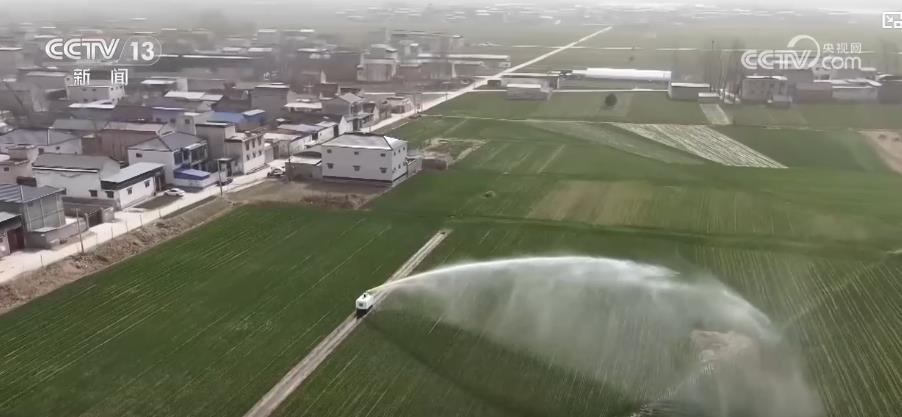
Core Insights - The article highlights the integration of advanced technologies such as smart agricultural machinery and AI decision-making in the management of winter wheat during the spring season, enhancing efficiency and intelligence in agricultural practices [1][5]. Group 1: Agricultural Technology Adoption - The use of intelligent irrigation robots in Henan province allows for efficient irrigation of 10 to 15 acres per hour, utilizing a Beidou navigation system for autonomous operation and soil moisture detection [3]. - Agricultural drones have become standard in the field, with one drone in Jiangsu province able to collect comprehensive data on 180 acres of wheat in just five minutes, including crop health and pest information [3]. Group 2: Research and Development in Crop Breeding - At the National Southern Breeding Research Base, new technologies like AI and IoT are being integrated into the entire breeding process, leading to the development of 978 new crop varieties aimed at enhancing food security [5]. - The agricultural sector is witnessing a shift towards utilizing cutting-edge technologies to drive new productive forces, with a focus on breeding superior crop varieties for the upcoming spring planting season [5]. Group 3: Digital Agriculture Services - In Sichuan province, a digital agriculture service platform named "Jishiyu" enables farmers to remotely monitor over 6,000 acres of wheat, providing precise recommendations for pest control and disease management based on AI data analysis [6].