AI Hardware

Search documents
蚂蚁、美团入局AI硬件,Looki完成超2000万美元A轮融资
Xin Lang Cai Jing· 2026-01-05 11:45
Core Insights - Looki, an AI hardware startup, has completed over $20 million in Series A funding led by Ant Group, with participation from Meituan Longzhu, Huaden, Zhongguancun Capital, and existing investor BAI Capital [1][11] - The funding will enable Looki to enhance talent development, model iteration, product R&D, and supply chain integration, accelerating its technological accumulation in the AI-native hardware sector [1][11] - Looki aims to create a new hardware category focused on daily life documentation and companionship, distinguishing itself from traditional action cameras [3][12] Company Overview - Looki was founded in May 2024 by two Carnegie Mellon University alumni, with CEO Sun Yang having a background in smart hardware at Meituan and as a founding member of Google Assistant [2][11] - The team includes members from prestigious universities and companies like Google, Amazon, and ByteDance, specializing in AI algorithms, products, and hardware engineering [2][11] - The first product, Looki L1, a wearable multimodal AI hardware, was launched internationally in August 2025 and quickly gained popularity, selling out thousands of units [2][12] Product Features - Looki L1 is designed to document daily life through video, images, and audio, providing users with insights and emotional value, and is referred to as a "life review device" by its community [3][12] - The product has unique features such as generating daily summary vlogs and creative content like serialized comics, which have become popular among users [3][12] - User engagement has increased, with average usage time rising from 6.2 hours to 7.9 hours, indicating strong user interest and interaction with the device [4][12] New Developments - Looki is set to unveil a new feature called Proactive AI at CES, which will allow the device to provide information and reminders based on real-time understanding of user activities [5][13] - This feature, termed Scene-Adaptive Intelligence, will enable Looki to proactively assist users, such as reminding them about coffee intake or encouraging them to take breaks [8][14] - The proactive capabilities aim to transition Looki from passive recording to actively identifying key moments and offering relevant services [10][14] Future Outlook - Looki plans to continue focusing on a human-centered product philosophy as multimodal AI technology matures and user needs evolve [15]

蚂蚁、美团加码AI硬件,Looki完成超2000万美元A轮融资
Sou Hu Cai Jing· 2026-01-05 09:00
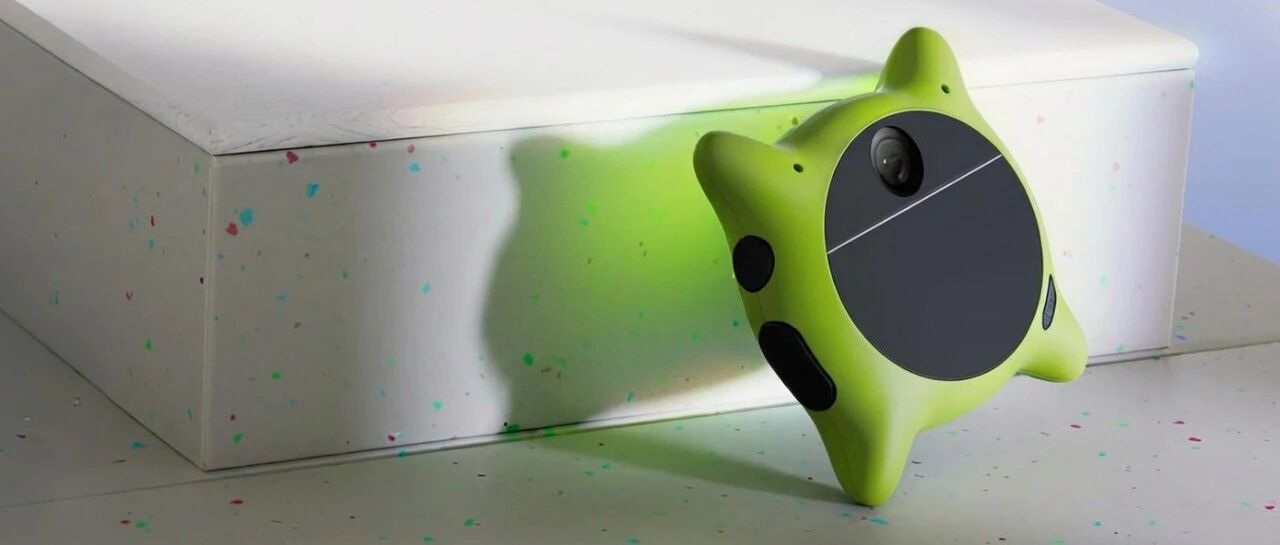
Group 1 - Looki, an AI hardware startup, has completed over $20 million (approximately 140 million RMB) in Series A financing, led by Ant Group, with participation from Meituan Longzhu, Huaden, Zhongguancun Capital, and existing investor BAI Capital [1] - The company recently launched a product called Looki L1, marketed as an "AI life manager," priced at 1499 RMB, which claims to automatically record life events and supports local data storage with user consent for cloud uploads [1] - Looki L1 features AI capabilities for automatic Vlog generation and intelligent search, providing users with insights into their personal life changes [1] Group 2 - The Looki L1 device specifications include a 16mm equivalent lens, capable of recording 1080P video at 30FPS and taking 4K photos, with 32GB of internal storage and a 375mAh battery providing up to 12 hours of battery life [4][8] - The device is available in black, white, and green, with dimensions of 50.53 × 16.84 × 48.02 mm and a weight of 32 grams, featuring an IP67 protection rating [7] - The camera supports features such as electronic image stabilization (EIS), high dynamic range (HDR), and an ISO range of 100-4800, with a field of view of 109° [8]

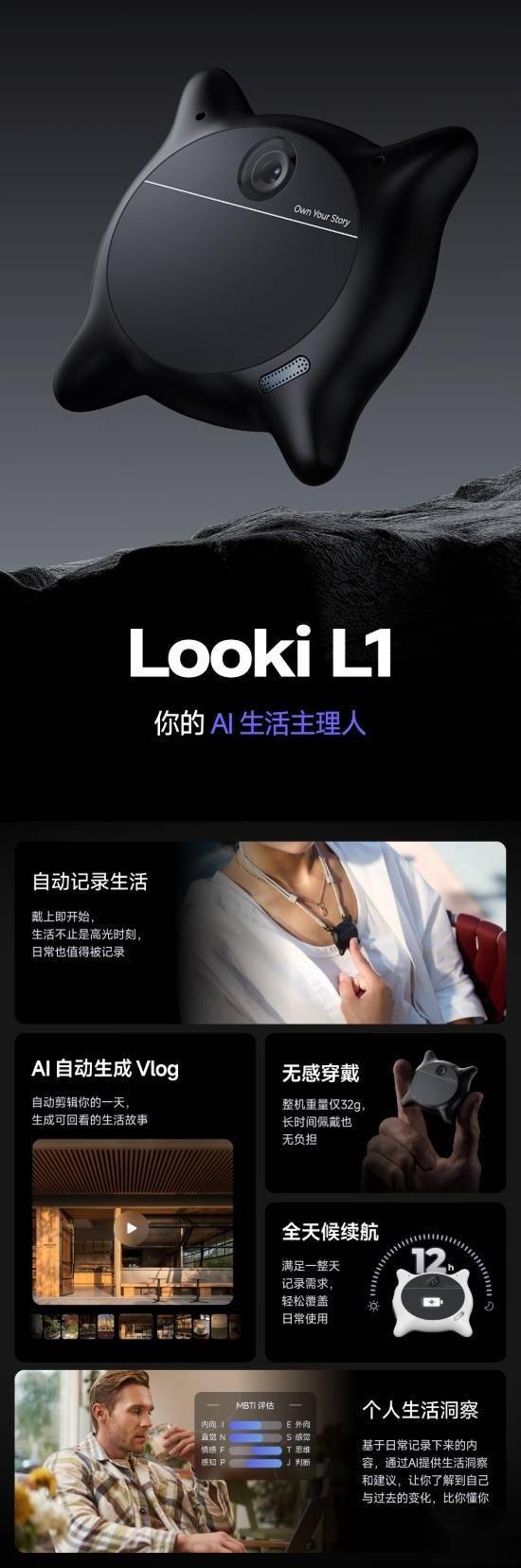
独家|蚂蚁、美团入局 AI 硬件, Looki 完成超 2000 万美元 A 轮融资
Founder Park· 2026-01-05 00:33
Core Insights - Looki, an AI hardware startup, has successfully completed a Series A funding round exceeding $20 million, led by Ant Group, with participation from Meituan Longzhu, Huaden, and others [2][3] - The company aims to enhance organizational talent, model iteration, product development, and supply chain integration to accelerate its technological accumulation in the AI native hardware sector [2] Company Overview - Founded in May 2024 by two Carnegie Mellon University alumni, Looki has completed four funding rounds in just over a year [4] - The CEO, Sun Yang, has a background in smart hardware at Meituan and was a founding member of Google Assistant, while the CTO, Liu Bo Cong, has experience in autonomous driving algorithms [4] Product Launch and Market Reception - Looki's first product, the Looki L1 international version, was launched in August 2025 and quickly sold out, with nearly 10,000 units sold globally [5] - The product has gained significant attention on social media platforms, being referred to as a "life review device" due to its unique features that provide insights into users' daily lives [8] User Engagement and Features - Initial user engagement metrics showed an average usage time of 6.2 hours, which increased to 7.9 hours over a few weeks, indicating strong user interest and engagement [11] - Looki L1 offers innovative features such as daily summary vlogs and emotional insights, which have become popular among users [8][11] Upcoming Innovations - Looki plans to introduce a new feature called Proactive AI at CES, which will allow the device to provide real-time insights and reminders based on user behavior [12][13] - This feature aims to transition from reactive responses to proactive assistance, enhancing user experience by understanding context and habits [13][17] Future Directions - Looki is committed to a "human-centered" product philosophy and aims to continue evolving its offerings in the rapidly advancing AI landscape [17]
“只有通用硬件能存活”,光帆科技董红光聊 AI 硬件和 AI 操作系统丨100 个 AI 创业者
晚点LatePost· 2025-12-31 08:04
Core Viewpoint - AI hardware is expected to be one of the hottest trends by 2025, with various companies exploring different approaches to define the future of AI hardware [4][24]. Group 1: Company Insights - Lightwear, founded by Dong Hongguang, offers a unique combination of products including headphones, a computing earphone case, and a smartwatch, all integrated with an independent operating system [6][10]. - The product aims to provide a seamless user experience by enabling multi-device collaboration and offering services such as shopping and ride-hailing through voice interaction [6][10]. - Dong Hongguang emphasizes that the choice of headphones over glasses is due to user acceptance and practicality, as headphones are easier to adopt and use in various scenarios [8][9]. Group 2: Market Trends - The article discusses the dichotomy in AI hardware, distinguishing between specialized hardware for specific tasks and general-purpose hardware that can adapt to various applications [24][22]. - It is suggested that while specialized hardware is necessary in the short term, general-purpose hardware will likely dominate in the long run, similar to the evolution seen with smartphones [24][25]. - The current landscape of AI hardware is characterized by intense competition, but it is expected that over time, a more defined market structure will emerge as companies find their niches [16][24]. Group 3: Technology and Development - Lightwear's operating system is designed to facilitate voice and visual interactions, focusing on task-oriented applications rather than traditional app interfaces [15][17]. - The integration of cloud and edge computing is highlighted as a critical aspect of their technology, allowing for efficient task execution while managing hardware resources effectively [18][20]. - Dong Hongguang notes that the future of wearable devices will likely involve a variety of form factors, with sensors and functionalities distributed across different devices to enhance user experience [13][10]. Group 4: User Experience and Market Adoption - The company aims to address specific user needs in scenarios where accessing a smartphone is inconvenient, such as driving or cooking, thereby creating a complementary relationship with smartphones [11][12]. - There is a recognition that consumer acceptance of AI hardware is still developing, with parallels drawn to the early days of smartphones when users were hesitant to adopt new technology [28][24]. - The article concludes that the evolution of AI hardware will depend on the maturation of AI capabilities, cost reductions, and improved consumer understanding of the technology's benefits [28][24].

用搭载GPT-5.2的眼镜做题,是一种什么体验?
Guan Cha Zhe Wang· 2025-12-27 05:21
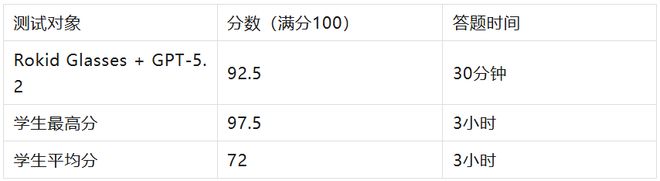
Core Insights - The experiment conducted by Hong Kong University of Science and Technology demonstrated that the Rokid smart glasses equipped with OpenAI's GPT-5.2 model scored 92.5 out of 100 in a final exam, which is lower than the highest student score of 97.5 but significantly higher than the class average of 72 [1][2][3]. Technical Performance - The GPT-5.2 model showed strong understanding and application of specialized knowledge, scoring full marks on multiple-choice and single-page questions, but struggled with cross-page questions, indicating limitations in maintaining coherent understanding across different contexts [4][5]. - The model's performance highlighted its inability to effectively integrate information dispersed across multiple pages, revealing a core limitation in current AI systems regarding global cognition and working memory [4][5]. Educational Assessment Challenges - The experiment prompted discussions in the education sector about the need to rethink assessment methods, as AI tools challenge the traditional assumption that students independently apply knowledge [7]. - Experts suggest that educational evaluation should shift focus from knowledge reproduction to problem definition, innovative solution design, and the ability to collaborate with AI tools [7][8]. Ethical and Equity Considerations - The proliferation of AI-assisted learning tools raises concerns about educational equity, as access to quality AI resources may initially benefit well-resourced schools and students, potentially widening the educational gap [9]. - Institutions are revising academic integrity policies to clarify the acceptable use of AI, emphasizing that AI should serve as an auxiliary tool rather than a means for academic dishonesty [9][11]. Regulatory and Policy Recommendations - The research team advocates for immediate action from educators and policymakers to establish reasonable regulatory frameworks that ensure technology serves ethical purposes [11]. - The goal is to balance technological advancement with moral considerations, ensuring that educational technology fosters innovation while maintaining academic integrity [11].
用搭载GPT-5.2的AI眼镜做题,是一种什么体验?
Guan Cha Zhe Wang· 2025-12-27 05:20
Core Insights - The experiment conducted by Hong Kong University of Science and Technology demonstrated that the Rokid smart glasses equipped with OpenAI's GPT-5.2 model scored 92.5 out of 100 in a computer networking exam, outperforming the class average of 72 but falling short of the highest student score of 97.5 [1][2] Group 1: Technical Performance - The GPT-5.2 model showed strong understanding and application of specialized knowledge, but it did not achieve a perfect score, primarily losing points on questions requiring information integration across multiple pages [3][4] - The model scored 29 out of 29 on multiple-choice questions, 18 out of 18 on single-page answers, and 45.5 out of a possible score for cross-page answers, highlighting its limitations in maintaining coherent understanding and reasoning across different contexts [4][3] - The experiment revealed that AI systems struggle with tasks requiring long-term dependencies and multi-step reasoning, indicating a need for improvements in memory modules and document understanding architectures [3][4] Group 2: Educational Assessment Reformation - The experiment has sparked discussions in the education sector regarding the need to rethink assessment methods, as AI tools challenge the traditional assumption that students independently apply knowledge [6][7] - Experts suggest shifting assessment focus from knowledge reproduction to problem definition and innovative solution design, emphasizing the learning process over final answers [7][8] - There is a call to cultivate human-AI collaboration skills and design assessments that integrate knowledge from multiple disciplines [8][7] Group 3: Ethical and Equity Considerations - The proliferation of AI-assisted learning tools raises concerns about educational equity, as high-quality AI resources may primarily benefit well-resourced schools and students, potentially widening educational gaps [8][9] - Academic integrity frameworks are also under review, with institutions like Tsinghua University establishing guidelines for the appropriate use of AI in academic settings [9][11] - The research team emphasizes the need for immediate action from educators and policymakers to create regulatory mechanisms that ensure technology serves educational purposes ethically and effectively [11][9]

一片录音卡,重写大厂硬件故事
36氪· 2025-12-25 06:44
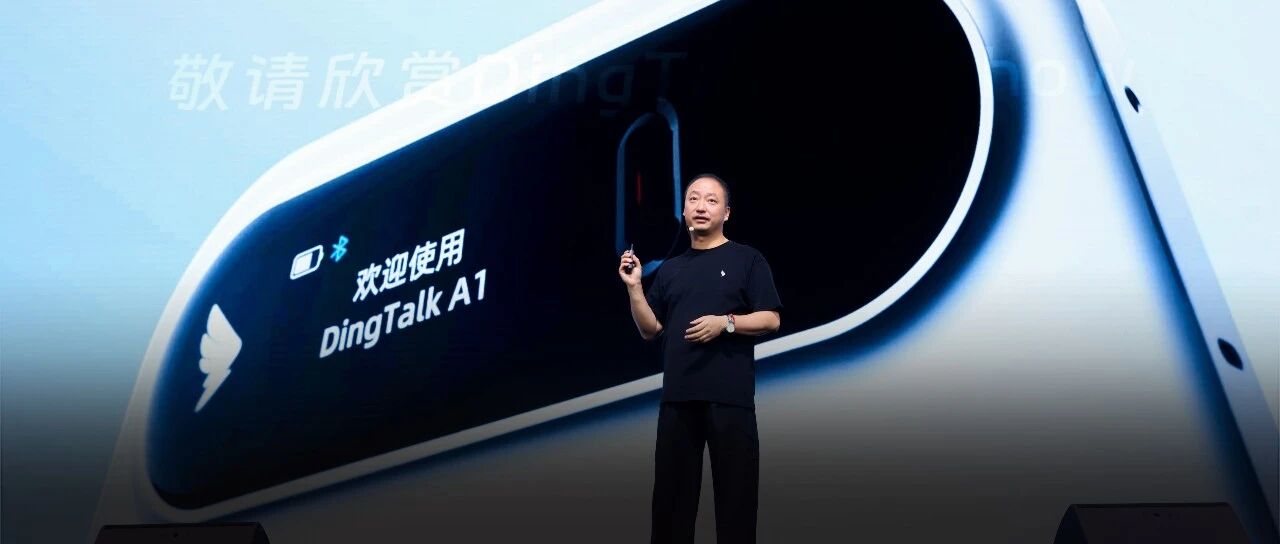
Core Viewpoint - DingTalk is breaking the curse that internet companies cannot do hardware well, marking a significant shift in the AI hardware landscape [3][7][28] Group 1: AI Hardware Industry Trends - The AI hardware sector has seen a surge in investment and innovation, with over 114 financing events and a total investment exceeding 14.5 billion yuan in the first half of 2025 [2] - Major companies like Alibaba, ByteDance, and Meituan have launched their own hardware products, indicating a competitive landscape in China's AI hardware industry [2][3] - The trend of FOMO (Fear of Missing Out) is influencing investments, with many startups securing funding without proven products [2] Group 2: DingTalk's Product Launch and Strategy - DingTalk held its second product launch in six months, introducing Agent OS and the AI hardware DingTalk Real, establishing a complete AI system architecture [3][5] - The DingTalk A1 has quickly gained popularity, becoming a top-selling product in its category, showcasing the potential for large-scale application [8][10] - The product's design choices, such as using a universal type-C charging port, reflect a balance between user habits and product functionality [10] Group 3: Market Positioning and Competition - DingTalk A1 is positioned not just as a standalone recording device but as a vital component of DingTalk's broader AI ecosystem, serving as a data collection tool [16][27] - The competitive landscape is intense, with existing players like Plaud and iFlytek already established in the market, necessitating DingTalk to clearly define its unique value proposition [8][9][16] - The product's initial reception included criticism, but rapid iterations and user feedback have led to significant improvements and a turnaround in public perception [12][13] Group 4: Future Vision and Ecosystem Development - DingTalk aims to create a seamless interaction between users and AI agents, with the physical button on the A1 serving as a strategic entry point for AI functionalities [20][23] - The integration of AI into business workflows is expected to transform how companies utilize data, turning it into actionable insights and enhancing productivity [17][25] - The vision for DingTalk includes building a robust ecosystem where hardware, data, and AI agents work together, potentially reshaping the future of office collaboration [26][27]

中科曙光正式公布scaleX万卡超集群:每节点640卡、总算力超500亿亿次
Ge Long Hui· 2025-12-23 02:34
Core Viewpoint - The launch of the scaleX supercluster by Zhongke Shuguang marks the first real machine appearance of a domestic AI supercluster with compatibility for open standards, showcasing significant advancements in computing power and efficiency [1] Group 1: Product Features - The scaleX supercluster consists of multiple scaleX640 ultra nodes, each housing 640 cards, totaling 10,240 acceleration cards with a computing power exceeding 5 EFlops (500 billion billion operations per second) [1] - The self-developed scaleFabric network chip provides a bandwidth of 400 Gb/s and latency below 1 microsecond, with the capability to expand to 100,000 cards, resulting in a 30% reduction in network costs [1] Group 2: Cooling and Efficiency - The system employs full immersion phase change liquid cooling, enhancing the computing density in a single cabinet by 20 times, achieving a Power Usage Effectiveness (PUE) of 1.04 [1] - A three-level collaborative optimization improves the training and inference efficiency of large models by 30-40%, with GPU utilization rates increasing by up to 55% [1] Group 3: Reliability and Availability - The cluster boasts a high availability rate of 99.99%, with less than 4 minutes of downtime over a 30-day period [1]

Bitcoin mining news: ERCOT queue up 270%, IREN raises $2.3B, Whatsminer M70 launches
Yahoo Finance· 2025-12-13 10:00
Core Insights - Bitcoin mining economics are under pressure as hashprice remains near all-time lows despite network difficulty adjustments [1] - Texas is experiencing a significant surge in power demand, with interconnection requests increasing by 270% in 2025, primarily driven by data centers [2][3] Group 1: Industry Trends - The demand for infrastructure in Texas has exploded, with large load requests totaling 226 gigawatts through 2030, 73% of which is attributed to data centers [2][3] - Cryptocurrency mines account for approximately 9% of the interconnection requests in the ERCOT grid [3] Group 2: Company Developments - MicroBT has launched its new Whatsminer M70 series, which boasts an efficiency rating of 12.5 joules per terahash (J/TH) [8] - IREN successfully raised $2.3 billion through a convertible note offering, primarily to refinance existing debt, with interest rates at 0.25% and 1% [6] - Luxor has expanded its services by launching a GPU trading desk, targeting a market projected to reach half a trillion dollars by 2032 [4][5]
1 Tech ETF to Buy Hand Over Fist and 1 to Avoid in 2026
The Motley Fool· 2025-12-11 21:15
Core Viewpoint - The article discusses the investment potential of tech-focused exchange-traded funds (ETFs) as the market approaches 2026, highlighting one ETF to embrace and another to avoid. Group 1: Recommended ETF - The Invesco Nasdaq 100 ETF (QQQM) is a relatively new ETF launched in 2020 that tracks the Nasdaq-100 index, which includes the 100 largest non-financial stocks on the Nasdaq stock exchange [4] - QQQM has a lower expense ratio of 0.15% compared to its predecessor, the Invesco QQQ Trust ETF (QQQ), which has an expense ratio of 0.20%, potentially saving long-term investors hundreds or thousands in fees [5] - The tech sector represents 65% of QQQM, with other sectors including consumer discretionary (17.6%), healthcare (4.9%), telecommunications (3.5%), and industrials (3.2%) [6] Group 2: Companies in QQQM - QQQM provides exposure to leading tech companies such as Nvidia, Amazon, Microsoft, Alphabet, and Apple, as well as emerging software firms like Palantir Technologies and Shopify [7][8] - The ETF allows investors to cover a broad range of tech industries while also providing some hedging against potential downturns in the tech sector [8] Group 3: ETF to Avoid - The Vanguard Information Technology ETF (VGT) has outperformed the Nasdaq-100 over the past decade but has a high concentration in three stocks: Nvidia (18.2%), Apple (14.3%), and Microsoft (12.9%), which together account for over 45% of the ETF [9][11] - VGT's focus solely on the information technology sector excludes significant tech companies like Amazon and Alphabet, which are categorized under consumer discretionary and communication services, respectively [13][14] - The concentration in a few stocks raises concerns about the sustainability of VGT's strong returns, as it relies heavily on the performance of these three companies [12]