
生物科技

Search documents
恒生科技指数午盘跌0.66%,恒生指数跌0.04%
Mei Ri Jing Ji Xin Wen· 2026-01-20 04:22
Group 1 - The Hang Seng Technology Index decreased by 0.66% and the Hang Seng Index fell by 0.04% during the midday close on January 20 [1] - The passenger airline and healthcare service sectors showed notable gains, while hotel and resort REITs and biotechnology sectors experienced significant declines [1] - Individual stock performances included Pop Mart rising by 8.46%, Zhaoyi Innovation increasing by 4.69%, and China Eastern Airlines up by 4.56% [1] Group 2 - The largest declines were seen in stock prices such as Jiajie Ankang-B, which fell by 9.77%, and New World Development, which dropped by 10.57% [1]
2026开年洞察:全球资产重估与政策博弈下的投资新坐标
Sou Hu Cai Jing· 2026-01-20 04:06
Macro Changes - The market's rise at the beginning of 2026 is fundamentally a continuation of the global "easing consensus" from 2025, but three marginal changes are disrupting this trend [3] - The U.S. political cycle is intensifying the clash with monetary policy, as Trump pressures the Federal Reserve to lower interest rates, leading to heightened market expectations for a rate cut [3][7] - The expansion of "shadow banking" in the U.S. has shifted from a hidden concern to a significant variable, with money market funds and private credit rapidly growing, which could amplify liquidity and asset bubbles [4] Policy Dynamics - The Federal Reserve faces three constraints: persistent inflation, political pressure, and the balance between shrinking and expanding its balance sheet [7] - The European Central Bank and other global central banks are signaling potential policy shifts in response to U.S. monetary policy changes, indicating a global interconnectedness in policy decisions [8] Asset Implications - U.S. Treasury yields may steepen if rate cuts occur, but long-term rates could remain suppressed due to fiscal deficits [9] - The U.S. stock market is supported by liquidity expectations, but shadow banking could increase volatility through retail leverage [9] - Gold prices are expected to rise due to declining real interest rates and increased demand for safe-haven assets [9] Investment Shifts - China's "deposit migration" reflects a shift in asset allocation from risk-free to risk-return matching, impacting A-shares, Hong Kong stocks, and the bond market [11] - A-shares are transitioning from "stock game" to "incremental drive," with significant capital moving into equity markets, benefiting high-dividend and growth sectors [11] - Hong Kong stocks are experiencing dual elasticity, attracting both domestic and foreign investments due to improving fundamentals and lower financing costs [12] Conclusion - The global market in 2026 represents a struggle between normalized policy interventions and spontaneous market dynamics, with shadow banking and deposit migration indicating a new era for emerging market assets [13] - Investors should focus on policy-sensitive assets, growth-oriented investments, and safe-haven assets to navigate the evolving landscape [13]


湖北十堰深挖无形资产“富矿”精准助企融资近20亿元
Xin Lang Cai Jing· 2026-01-20 03:29
Core Viewpoint - The article highlights how the Shiyan City Market Supervision Administration in Hubei Province has successfully leveraged intangible assets like quality, trademarks, and patents to help local enterprises secure nearly 2 billion yuan in financing, thereby addressing their funding challenges and promoting economic growth [1][5]. Group 1: Financing through Quality and Intangible Assets - The "E-Zhi Loan" program is designed for enterprises recognized for their quality management, allowing them to convert quality achievements into financial support, exemplified by Shiyan Yinyun Industrial Co., which received 2.3 million yuan in funding [2][3]. - A total of 115 enterprises have benefited from the "E-Zhi Loan," with a cumulative loan amount of 743 million yuan, demonstrating the significant capital value of quality awards [3]. Group 2: Intellectual Property Pledge Financing - The promotion of patent and trademark pledge financing has been crucial for technology-driven companies facing funding obstacles due to a lack of traditional collateral, as seen with Shiyan Yuntian Biotechnology Co., which secured 14.9 million yuan using two key patents as collateral [4][5]. - The Shiyan City Market Supervision Administration has established a collaborative mechanism with banks to enhance the scale of intellectual property pledge financing, with a target of reaching 1.25 billion yuan in patent and trademark pledges by 2025, benefiting 82 enterprises [5]. Group 3: Future Directions and Goals - The Shiyan City Market Supervision Administration aims to further develop financing models that convert intangible assets into competitive capital, enhancing the business environment and supporting high-quality economic development [6].
香港借壳上市的历史流变和现状澄析(上)
Sou Hu Cai Jing· 2026-01-19 11:30
Core Insights - The article reviews the evolution of backdoor listings in Hong Kong over the past 40 years, categorizing it into three phases: early exploration, regulatory games, and comprehensive tightening. The traditional "buy shell - inject capital" model ended after the new regulations in 2019 [2][3]. Group 1: Definition and Structure of Backdoor Listings - Backdoor listing is described as a capital activity where a non-listed company acquires control of a listed company (shell company) to achieve indirect public listing by injecting its business and assets [4]. - The transaction process of backdoor listings typically involves two key stages: obtaining control and asset injection and restructuring [4][6]. - The concept of "reverse takeover" (RTO) is clarified as a method where a non-listed company injects assets into a listed shell company to gain control, which is a core regulatory focus in Hong Kong [8][9]. Group 2: Historical Evolution of Backdoor Listings - The first phase (1984-2003) was characterized by strong financing demand and a lack of clear regulatory frameworks, leading to the emergence of backdoor listings as a quicker alternative for mainland companies to access international capital [13][14]. - The second phase (2004-2018) saw increased regulatory scrutiny due to frequent backdoor activities, leading to the introduction of the "bright-line test" in 2004, which established clear thresholds for transactions that would be classified as reverse takeovers [15][16]. - The third phase (2019-present) marked a significant tightening of regulations with the introduction of the "most stringent" new rules aimed at increasing costs and uncertainties associated with backdoor listings, effectively aligning them with IPO standards [17][18][19]. Group 3: Market Changes Post-New Regulations - From 2019 to 2025, the backdoor listing market has undergone structural changes due to high regulatory pressure, global liquidity tightening, and macroeconomic cycles, transforming backdoor listings into high-cost industrial acquisition methods [21]. - The number of transactions classified as reverse takeovers surged from 6 in the first nine months of 2019 to 18 in the following year, with most being terminated due to non-compliance with new regulations [22]. - The value of shell companies has drastically decreased, with prices dropping from 600-650 million HKD to 150-250 million HKD by 2025, reflecting a significant loss of their function as a shortcut to listing [23]. Group 4: New Transaction Forms and Market Dynamics - The introduction of SPACs in 2022 aimed to provide a compliant alternative for backdoor listings, but high regulatory thresholds have limited their effectiveness, resulting in only a few successful cases [24]. - A new approach called "Long-stop Asset Injection" has emerged, where buyers maintain existing businesses for 36 months before conducting substantial operations, shifting the focus from financial speculation to long-term strategic investments [25]. - The intermediary landscape has shifted, with mainland Chinese securities firms gaining prominence in the backdoor and merger advisory sectors, reflecting the changing dynamics of the market [26]. Group 5: Regulatory Enforcement and Market Cleanup - Regulatory practices have intensified, with detailed inquiries for large asset injections and a significant increase in delistings, totaling over 230 companies from 2019 to 2025, indicating a strong push to eliminate "zombie stocks" [27].
华大基因1月16日获融资买入1.07亿元,融资余额11.27亿元
Xin Lang Cai Jing· 2026-01-19 01:39
Core Viewpoint - On January 16, BGI Genomics experienced a decline of 6.85% in stock price, with a trading volume of 1.168 billion yuan, indicating significant market activity and investor sentiment concerns [1]. Financing and Trading Activity - On January 16, BGI Genomics had a financing buy-in amount of 107 million yuan and a financing repayment of 242 million yuan, resulting in a net financing outflow of 136 million yuan [1]. - As of January 16, the total financing and securities lending balance for BGI Genomics was 1.131 billion yuan, with the financing balance of 1.127 billion yuan accounting for 5.09% of the circulating market value, which is above the 90th percentile of the past year [1]. - The company repaid 33,700 shares in securities lending on January 16, with a sell amount of 17,490 yuan, while the remaining securities lending volume was 60,500 shares, with a balance of 3.2065 million yuan, indicating a low position compared to the 30th percentile of the past year [1]. Company Overview - BGI Genomics, established on July 9, 2010, and listed on July 14, 2017, is located in Shenzhen, Guangdong Province, and specializes in providing research services and precision medical testing solutions through multi-omics big data technologies [2]. - The company's main business revenue composition includes: 42.67% from precision medical testing solutions, 26.12% from reproductive health research and clinical application services, 17.08% from multi-omics big data services, 11.00% from tumor and chronic disease prevention and translational medicine services, 2.36% from infection prevention research and clinical application services, and 0.78% from other services [2]. - As of September 30, 2025, BGI Genomics had 67,900 shareholders, an increase of 5.58% from the previous period, with an average of 6,127 circulating shares per person, a decrease of 5.28% [2]. Financial Performance - For the period from January to September 2025, BGI Genomics reported a revenue of 2.674 billion yuan, a year-on-year decrease of 5.39%, while the net profit attributable to the parent company was -21.387 million yuan, reflecting an increase of 82.78% year-on-year [2]. Dividend Distribution - Since its A-share listing, BGI Genomics has distributed a total of 1.024 billion yuan in dividends, with 455 million yuan distributed over the past three years [3]. Institutional Holdings - As of September 30, 2025, among the top ten circulating shareholders of BGI Genomics, Huabao Zhongzheng Medical ETF ranked third with 7.1098 million shares, a decrease of 1.2088 million shares from the previous period [3]. - E Fund's Growth Enterprise Board ETF ranked fourth with 5.2957 million shares, down by 816,600 shares, while Southern Zhongzheng 500 ETF ranked sixth with 3.7411 million shares, an increase of 13,700 shares [3]. - Hong Kong Central Clearing Limited ranked seventh with 2.6059 million shares, an increase of 26,200 shares, while the招商优势企业混合A fund exited the top ten circulating shareholders list [3].
从实验室到生产线 “中试之城”的创新接力
He Nan Ri Bao· 2026-01-19 01:36
Group 1 - The company has established a flexible design concept for its pilot testing facility, allowing for rapid adjustments in process modules, which significantly enhances research and development efficiency [1] - Since its opening in April 2024, the pilot testing facility has attracted numerous new technologies and products for verification, making it one of the most comprehensive pilot bases in the field of synthetic biology in China [1][2] - The company operates under a "headquarters + base" model, with a strong focus on fermentation and enzyme-catalyzed products, providing a full chain of services from pilot testing to contract research [2] Group 2 - The pilot platform has been recognized as a "five-star" service level by the Ministry of Industry and Information Technology, placing the company among the top in the national biomanufacturing sector [2] - The company has successfully connected with 42 technology achievements and completed 22 pilot projects, including collaborations with over 30 universities and research institutions [3] - The city of Hebi has developed 33 pilot testing bases, creating a robust and active innovation ecosystem that links laboratories with the industrial chain [4]
四方光电战略投资畅合生物
Zheng Quan Shi Bao Wang· 2026-01-19 01:17
Core Viewpoint - Sifang Optoelectronics has signed a strategic investment agreement with Suzhou Changhe Biotechnology, acquiring a 57.14% stake in the company, aiming to expand into the high-end bio-safety detection instrument sector [1] Group 1: Strategic Investment - The investment was made using Sifang Optoelectronics' own funds through the transfer of equity and capital increase [1] - This strategic integration will allow both companies to deeply merge in product technology development, operational production, and sales channels [1] Group 2: Market Expansion - Sifang Optoelectronics plans to leverage its core component advantages in the sensor field to develop low-cost bio-safety sensors [1] - The new bio-safety sensors are intended for mass application in household appliances, automobiles, and buildings [1]

18家蓉企上榜
Xin Lang Cai Jing· 2026-01-18 17:25
Group 1 - The core viewpoint of the article is the release of the first "2025 Hurun China Unicorn Graduation List," which identifies 796 companies valued over $1 billion that have gone public since 2000, with 18 companies from Chengdu making the list, ranking seventh nationally [1] Group 2 - The 18 Chengdu companies listed include: Xinyi Sheng, Kelun Botai Biotech, AVIC Drone, Chengdu Huamei, Jiachitech, Dekang Agriculture, Huatu Shanding, Chabaidao, Leidian Weili, Tianwei Food, Qiaoyuan Co., Kangnuo Ya, Zhenxin Technology, Fusenmei, Bomei, XGIMI Technology, Hongqi Chain, and Tianli International Holdings [1] - The listed unicorns are distributed across 126 cities in China, with a total value of 24 trillion yuan, and an average age of 19 years, which is 9 years older than those on the 2025 Hurun Global Unicorn List [1] Group 3 - The top five industries with the most companies on the list are semiconductors, industrial equipment, biotechnology, new energy, and software services, accounting for 46% of the total [1] - The highest valued industries among the listed companies are semiconductors, new energy, industrial equipment, consumer electronics, and biotechnology [1]


云南清华校友会与楚雄高新区深化产业人才合作
Xin Lang Cai Jing· 2026-01-18 15:20
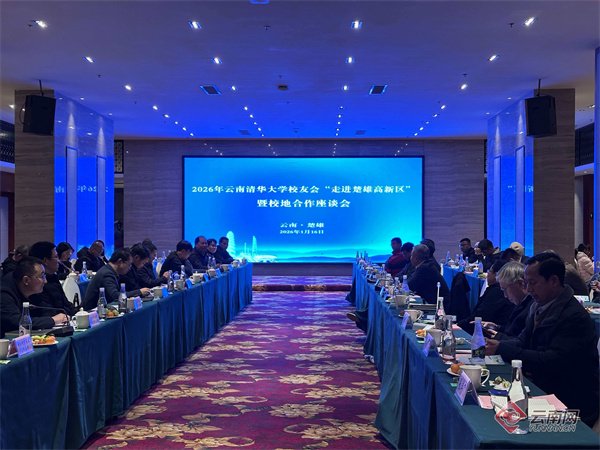
Core Insights - The event "Walking into Chuxiong High-tech Zone" organized by Chuxiong High-tech Zone aims to bridge top university intellectual resources with local industrial development, promoting substantial and institutional cooperation [1][3] - A delegation of 20 distinguished alumni from various fields, including talent development research, chip design, and environmental technology, participated in discussions on collaboration and development [1][3] Group 1 - The delegation conducted on-site visits to representative companies such as Yunnan Yunla Biological Technology, Chuxiong Laoboyuntang Pharmaceutical, Chuxiong Chuanzi Electronic Materials, and Yunnan Sanen New Energy Materials, gaining a comprehensive understanding of the high-tech zone's robust industrial foundation, active innovation ecosystem, and favorable business environment [3] - During the afternoon seminar, attendees watched promotional videos about Chuxiong City and the high-tech zone, learning about the region's natural and cultural endowments, economic and social development achievements, and the high-tech zone's advantages in industrial planning, innovation ecosystem, and policy support [3] - Chuxiong High-tech Zone is currently in a critical phase aiming for a trillion-level industrial target, with a pressing need for technological support and talent assurance, seeking to leverage Tsinghua alumni to integrate cutting-edge innovations with local industries for high-quality regional development [3] Group 2 - A memorandum of understanding on industrial talent cooperation was signed between Chuxiong High-tech Zone and the Tsinghua University Alumni Association, outlining six areas of deep cooperation [4] - The signing of the memorandum marks a significant step in the collaboration between Chuxiong High-tech Zone and the Tsinghua University Alumni Association, laying a solid foundation for the advancement of subsequent specific cooperation projects [4]
多宁生物科技向港交所提交上市申请
Ge Long Hui A P P· 2026-01-18 15:14
Core Viewpoint - Doning Biotechnology has submitted an application for listing on the Hong Kong Stock Exchange, aiming to become a mainboard listed company, with Morgan Stanley and Huatai International as joint sponsors [1] Company Overview - Established in 2005, Doning Biotechnology is rooted in the life sciences industry, providing comprehensive solutions for the development and commercialization of biopharmaceutical products [1] - The company operates two main business lines: 1. Bioprocess Solutions, offering a wide range of products including reagents, consumables, and equipment that cover all major steps of bioprocessing 2. Laboratory Products and Services, providing products for laboratory R&D and bioprocess solutions, including technical development, testing, and validation services [1] Financial Performance - In the first nine months of the previous year, the company reported revenue of 658 million yuan, representing a year-on-year increase of 19.39% - The profit attributable to shareholders was 21.604 million yuan [1]