金融租赁

Search documents
中国金融租赁(02312)10月末每股资产净值约为0.41港元
智通财经网· 2025-11-14 09:09
Group 1 - The company announced that as of October 31, 2025, its unaudited net asset value per share is approximately HKD 0.41 [1] - The net asset value calculation is based on the issuance of 416 million ordinary shares [1]
浙江东方金融控股集团股份有限公司关于2025年第二次临时股东会增加临时提案的公告
Shang Hai Zheng Quan Bao· 2025-11-13 18:27
Group 1 - The company will hold its second extraordinary general meeting of shareholders on November 25, 2025, to discuss additional proposals [1][3] - Zhejiang International Trade Group Co., Ltd., the controlling shareholder, proposed to add a temporary proposal regarding the loan limit to the company's subsidiary [2][19] - The proposal has been approved by the independent directors and the board of directors, and it complies with relevant laws and regulations [2][19] Group 2 - The loan amount proposed is 1.3 billion yuan, intended for daily operations and debt replacement, with a validity period until July 20, 2026 [13][19] - The loan interest rate will not exceed 3.15% and will be subject to the weighted average interest rate of bank loans at the time of borrowing [13][19] - The board meeting on November 13, 2025, approved the proposal with a unanimous vote, excluding the related director from voting [42][43] Group 3 - The company is also establishing the "Oriental Zheyao Zhongying Binjiang Medical Fund" with a target size of 500 million yuan, involving several partners [21][22] - The fund will focus on supporting the biopharmaceutical and medical device industries, with a management fee of 0.75% per year during the investment period [31][38] - The fund's investment strategy includes a cap on single investments and a focus on mid to late-stage projects [33][38]

浙江东方:关于关联方向公司控股子公司提供借款额度暨关联交易的公告
Zheng Quan Ri Bao· 2025-11-13 14:09
Core Points - Zhejiang Dongfang announced a board meeting on November 13, 2025, to approve a loan limit for its subsidiary, Guojin Leasing, from its controlling shareholder, Zhejiang International Trade Group [2] - The loan amount is set at 1.3 billion yuan, intended for daily operations and debt replacement, with a validity period until July 20, 2026 [2] - The loan can be reused within the validity period, with an interest rate not exceeding 3.15% and not higher than the weighted average bank borrowing rate at the time of borrowing [2] - The loan term will not exceed three years, and the transaction is classified as a related party transaction, pending shareholder approval [2]

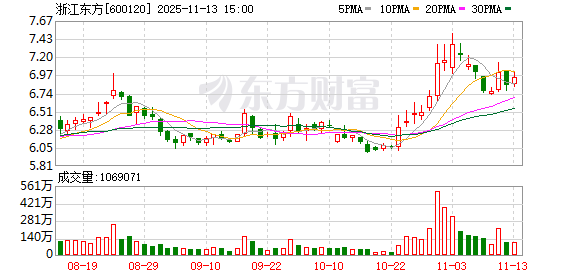
浙江东方:子公司发起设基金,控股股东提供借款额度
Xin Lang Cai Jing· 2025-11-13 10:21
Core Viewpoint - Zhejiang Oriental announced the approval of two proposals by its tenth board of directors, focusing on the establishment of a new fund and a loan provision for operational needs [1] Group 1: Fund Establishment - The company approved the establishment of the "Oriental Zhe Pharmaceutical Zhongying Binjiang Medical Fund," with a fundraising target not exceeding 500 million yuan [1] - Oriental Chanin, as the fund manager, and its designated subsidiaries will contribute 121.2 million yuan, accounting for 24.04% of the total fund [1] - Zhe Pharmaceutical Group will contribute 29.8 million yuan, representing 5.96% of the fund [1] Group 2: Loan Provision - The company agreed to provide a loan limit of 1.3 billion yuan from its controlling shareholder to its subsidiary Guojin Financial Leasing for daily operations and debt replacement [1] - The loan has a validity period until July 20, 2026, with an annual interest rate not exceeding 3.15% [1] - The loan term will not exceed three years, and this proposal requires approval from the shareholders' meeting [1]
浙江东方:关于控股子公司拟注册发行资产支持证券的公告
Zheng Quan Ri Bao Zhi Sheng· 2025-11-11 12:41
Group 1 - The core point of the article is that Zhejiang Dongfang announced its plan to apply for the registration and issuance of Asset-Backed Securities (ABS) through its subsidiary Zhejiang Guojin Financing Leasing Co., Ltd. to expand financing channels and reduce financing costs [1] - The company aims to optimize its asset-liability structure and enhance operational efficiency through this initiative [1]
资产支持票据产品报告(2025年10月):资产支持票据发行节奏有所放缓,个人消费金融和小微贷款类资产保持活跃,汽车融资租赁类资产发行规模显著增长
Zhong Cheng Xin Guo Ji· 2025-11-11 11:11
Report Summary 1. Report Industry Investment Rating No relevant information provided. 2. Core Viewpoint In October 2025, the issuance pace of asset - backed notes slowed down, with personal consumer finance and small - micro loan assets remaining active, and the issuance scale of auto financial leasing assets increasing significantly [4]. 3. Summary by Relevant Catalogs Issuance Situation - **Overall Issuance**: In October 2025, 48 asset - backed note products were issued, with a total issuance scale of 51.436 billion yuan. Compared with the previous month, the number of issuances decreased by 22, and the scale dropped by 23.64%. Compared with the same period last year, the number increased by 2, and the scale grew by 13.50%. Only 5 products were publicly issued, and the rest were privately placed [5][6]. - **Initiating Institutions**: Shenzhen Fudi Financial Leasing Co., Ltd. ranked first with an issuance scale of 6.784 billion yuan (13.19% of the total). The top ten initiating institutions had a combined issuance scale of 36.455 billion yuan, accounting for 70.87% of the total [6]. - **Underlying Asset Categories**: The underlying asset types mainly included personal consumer finance, small - micro loans, auto financial leasing, accounts receivable, and specific non - financial claims. Personal consumer finance products accounted for 28.71% of the scale, small - micro loans 22.16%, and auto financial leasing 20.95% [8]. - **Issuance Scale Distribution**: The highest single - product issuance scale was 6.784 billion yuan, and the lowest was 1.51 billion yuan. The products with a single - issuance scale in the range of (5, 10] billion yuan had the largest number (19) and scale (32.80% of the total) [10]. - **Term Distribution**: The shortest term was 0.27 years, and the longest was 18.05 years. Products with a term in the range of (1, 2] years had the largest number (17) and scale (41.34% of the total) [12]. - **Rating Distribution**: AAAsf - rated notes accounted for 92.53% of the issuance scale [13]. - **Issuance Interest Rate**: For one - year - around AAAsf - rated notes, the lowest issuance interest rate was 1.78%, the highest was 2.65%, and the interest rate center was around 1.80% [15]. - **ABCP Issuance**: In October 2025, 16 ABCP products were issued, with a total scale of 12.41 billion yuan (24.13% of the ABN issuance scale), a year - on - year increase of 7.73%. Personal consumer finance ABCP accounted for 54.54% of the ABCP issuance scale, and accounts receivable ABCP accounted for 20.57% [19]. Secondary Market Transaction Situation - **Overall Transaction**: In October 2025, there were 609 secondary - market transactions of asset - backed notes. The number of transactions decreased by 4.25% month - on - month and 1.77% year - on - year. The transaction amount was 46.139 billion yuan, a month - on - month decrease of 14.67% and a year - on - year decrease of 7.93% [5][20]. - **Underlying Asset Type Distribution**: The more active underlying asset types in the secondary - market transactions were small - micro loans (24.39% of the transaction amount), personal consumer finance (21.79%), accounts receivable (17.44%), class REITs (16.14%), and supply chains (5.98%) [20].
山东投资:4500万金融活水赋能数字绿谷,助力沂蒙新区产业数字绿色双升级
Sou Hu Cai Jing· 2025-11-11 10:19
Core Insights - Shandong Investment Co., Ltd. successfully launched a CNY 45 million sale-leaseback project for Yimeng Cloud Valley Smart Industrial Park, providing customized financial services to address regional development funding challenges [1][3] - The project aims to support the digital infrastructure upgrade, green industry cultivation, and industrial cluster construction in the Yihe New District, aligning with Shandong Province's strategy for new and old kinetic energy conversion and regional integration [1][3] Customized Financial Solutions - Yihe New District, a key area for regional integration development, focuses on enhancing infrastructure and nurturing emerging industries since its approval in 2021 [3] - Yimeng Cloud Valley Smart Industrial Park, covering 270 acres, has established a core industrial ecosystem centered on cloud computing, big data, and artificial intelligence, attracting numerous quality tech enterprises [3] - Jinding Leasing tailored a sale-leaseback solution to meet the park's needs for equipment upgrades and environmental projects, providing stable liquidity support through a comprehensive credit model [3][4] Risk Control Framework - Jinding Leasing emphasizes compliance and risk control, establishing a multi-layered risk prevention system to ensure project stability [4] - The company conducts thorough due diligence on joint lessees' operational status and asset quality, implementing rigorous rent payment stress tests to validate cash flow stability and refinancing capabilities [4] Multi-Dimensional Empowerment - The project enhances corporate development, industrial upgrades, and regional progress, alleviating financial pressure on the Huawei Big Data Center and related projects [6] - It improves the digital infrastructure and service capabilities of Yimeng Cloud Valley, accelerating the aggregation of high-tech enterprises and fostering new industrial clusters [6] - The Huawei Big Data Center's service capacity is enhanced, expanding cloud service coverage to logistics, public security, and transportation sectors, contributing to smart upgrades in governance and urban management [6] Future Directions - The project exemplifies the commitment of provincial financial institutions to support provincial new district construction and reflects Shandong Investment's policy of "financial water nourishing the entity" [7] - Shandong Investment plans to continue focusing on regional development strategies, deepening cooperation with local state-owned enterprises, and providing innovative financial products and robust risk control measures [7]
清算变重整?这家金融机构紧急“招募”,为何?
Jin Rong Shi Bao· 2025-11-11 08:12
Core Viewpoint - The announcement regarding the recruitment of potential investors for Tianjin Guotai Financial Leasing Co., Ltd. (Guotai Jinzu) has drawn significant industry attention, as the company is undergoing bankruptcy liquidation proceedings initiated by the Tianjin Binhai New Area People's Court [1][4]. Group 1: Bankruptcy Proceedings - On December 27, 2023, the Tianjin Binhai New Area People's Court accepted the bankruptcy liquidation case of Guotai Jinzu and appointed a law firm as the administrator [1]. - The recruitment period for potential investors is set for one month, ending on December 10, 2023, with specific documentation required for interested parties [1]. - Guotai Jinzu received regulatory approval to enter bankruptcy liquidation in October 2023, marking it as the first licensed financial leasing company in the industry to apply for bankruptcy [1]. Group 2: Potential for Restructuring - There is a possibility for the bankruptcy liquidation to be converted into a bankruptcy reorganization if the recruitment of investors is successful [4]. - Legal experts indicate that while it is legally permissible to transition from liquidation to reorganization, there has been no precedent in the leasing industry for such a change [4]. - The financial leasing industry has shown a positive development trend, which may provide a necessary market foundation for Guotai Jinzu's potential restructuring [4]. Group 3: Regulatory Requirements - For a financial leasing company undergoing bankruptcy reorganization, the main shareholders post-reorganization must meet specific regulatory conditions, including a minimum registered capital of 1 billion RMB [5]. - The main investor must hold at least 51% of the company's total equity and meet financial criteria such as being profitable for the last two consecutive accounting years [5]. - Guotai Jinzu was established in November 2017 with a registered capital of 2 billion RMB, and its shareholders include four companies with varying ownership stakes [5].

设备之家携手DMP工博会 共促装备产业生态融合与国产机床品牌崛起
Zhong Guo Jing Ji Wang· 2025-11-10 09:34
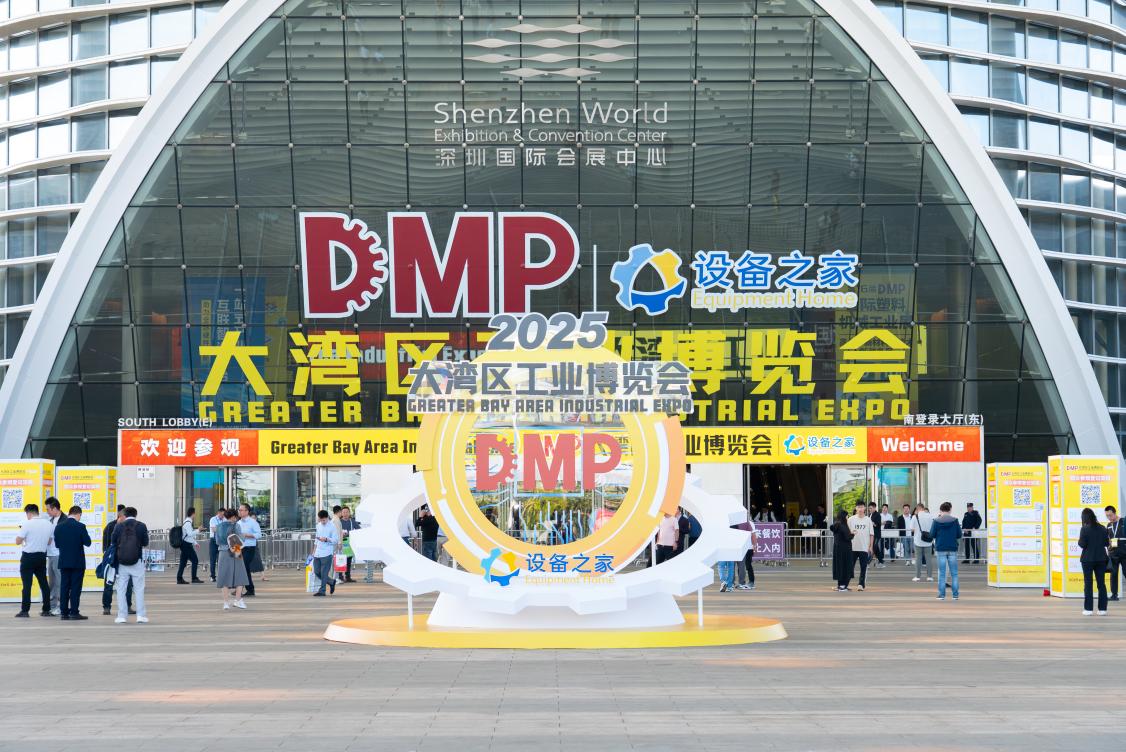
Core Insights - The 26th DMP Greater Bay Area Industrial Expo was held in Shenzhen from November 5 to 8, 2025, featuring a collaboration between Yongying Financial Leasing Co., Ltd. and the expo to showcase a "National Trend Brand Machine Tool Exhibition" [1][3] - The exhibition highlighted advancements in domestic high-end equipment, including seven-axis five-linkage machine tools and high-rigidity turning-milling composite centers, emphasizing China's self-sufficiency in precision processing and intelligent control [3] Group 1: Exhibition Highlights - The "National Trend Brand Machine Tool Exhibition" was co-planned by Yongying Financial Leasing and the expo organizers, showcasing advanced domestic equipment and self-developed CNC systems [3] - The exhibition provided a platform for domestic machine tool companies to display their brands and facilitated direct understanding of intelligent advancements in domestic machine tools for attendees and buyers [3] Group 2: Innovative Service Models - The "Equipment Without Boundaries: Ecological Interconnection" theme area covered 600 square meters, addressing core pain points in equipment procurement and operation, offering integrated solutions for buying, leasing, and vendor empowerment [5] - Attendees were offered a "cash gift package" worth 10,000 yuan for equipment purchases during the expo, applicable to over 500 mainstream brands, and an additional equipment property insurance coverage of up to 3 million yuan [5] Group 3: Online Engagement - For clients unable to attend in person, an "online exhibition hall" was launched, integrating brand displays, live interviews, procurement connections, and financing leasing services, operational until the end of the year [7] Group 4: Industry Networking - Yongying Financial Leasing hosted a new media supply-demand matchmaking event on November 5, attracting over 200 representatives from equipment manufacturers and new media influencers, promoting collaboration and resource integration in the manufacturing sector [8] Group 5: Strategic Collaboration - This collaboration marks the first deep integration of the Equipment Home platform with a professional exhibition, enhancing market exposure for domestic equipment and providing comprehensive support for the intelligent upgrade of the manufacturing industry [10] Group 6: Company Overview - Yongying Financial Leasing, established in May 2015 and wholly owned by Ningbo Bank, has a registered capital of 7 billion yuan and has become one of the top ten financial leasing companies in the industry, with leasing assets nearing 150 billion yuan [11] - The "Equipment Home" platform, launched in April last year, integrates industry resources covering the entire lifecycle of equipment transactions, attracting nearly 6,000 partners and facilitating over 22,000 transactions [12]
昔日金租公司控股股东,计划清仓持股
券商中国· 2025-11-09 08:35
Core Viewpoint - The financial leasing industry is witnessing significant equity transfers, with Bohai Leasing's subsidiary Tianjin Bohai transferring its stake in Wanjing Jin Leasing to Anhui Jiaokong Group, resulting in the latter achieving absolute control over the company [1][4]. Group 1: Equity Transfer Details - On November 7, Bohai Leasing announced the transfer of 818 million shares of Wanjing Jin Leasing, which will increase Anhui Jiaokong Group's stake from 42.31% to 63.28% [1]. - Wanjing Jin Leasing was established in late 2011 with an initial registered capital of 3 billion yuan, and Tianjin Bohai originally held a 55% stake [2]. - Following a series of transactions, including a stock reform and capital increase, Tianjin Bohai's stake decreased to 20.97% before the latest transfer [3][4]. Group 2: Market Trends - There have been at least ten significant equity transfers in the financial leasing sector this year, but the overall transaction success rate has been low [5]. - Notable transactions include the transfer of 30% of Aerospace Jin Leasing's equity with a starting price of 1.421 billion yuan, and the unsuccessful auction of 24.64% of Jiyin Jin Leasing's equity [5][6]. - The implementation of the "Financial Leasing Company Management Measures" has raised the minimum registered capital requirement to 1 billion yuan and increased the major initiator's shareholding requirement from 30% to at least 51% [6].