航天科技

Search documents
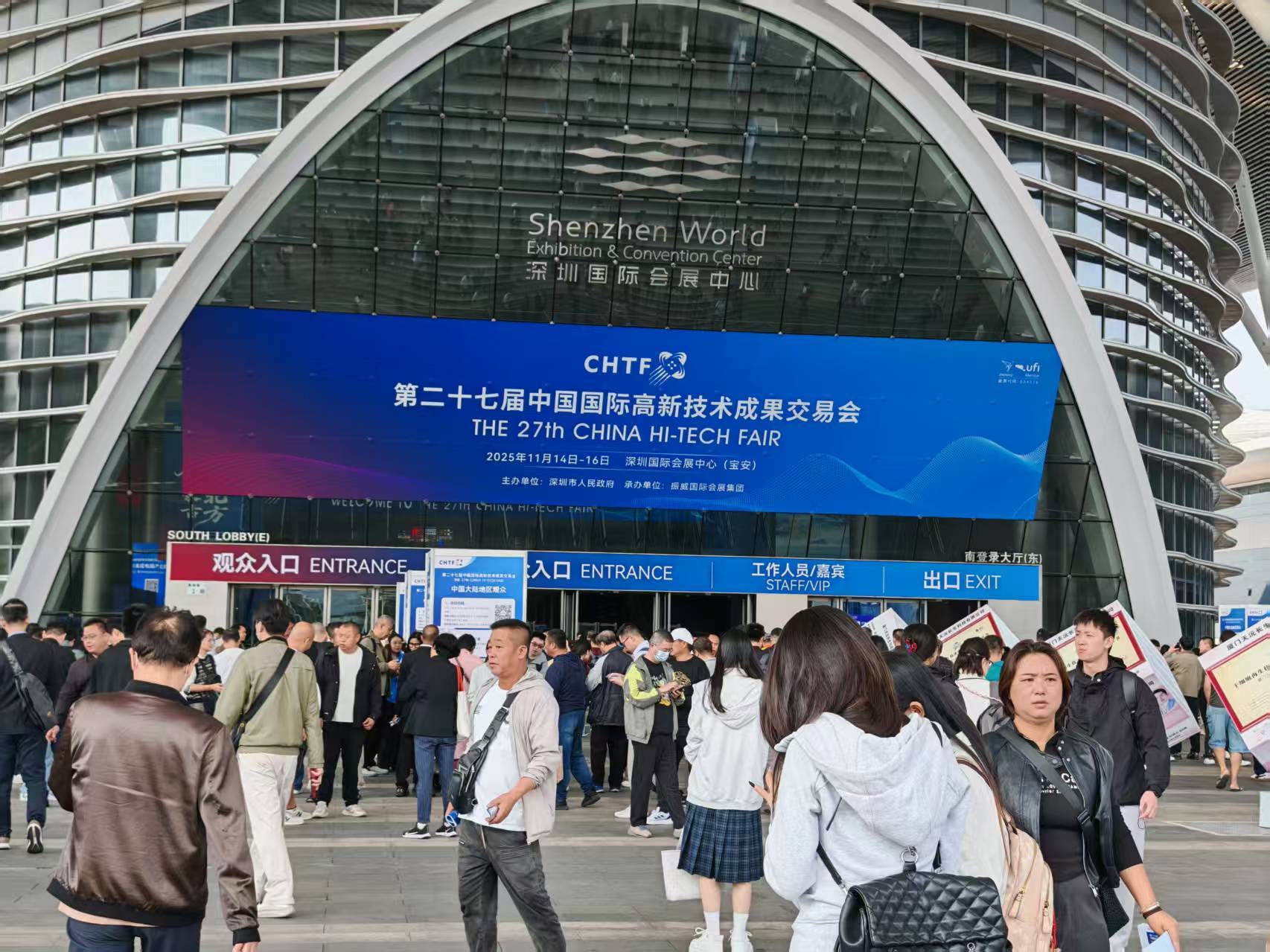
第二十七届高交会闭幕:科技产品火遍全网 意向成交与投融资金额突破1700亿元
Mei Ri Jing Ji Xin Wen· 2025-11-16 15:22
Core Insights - The 27th China International High-Tech Achievements Fair (CIHTAF) concluded with a focus on "Technology Empowering Industrial Integration for a Shared Future" [1] - The event attracted over 450,000 attendees from more than 120 countries, marking a 13% year-on-year increase [1][5] - A total of 5,000 new products and achievements were launched, with 1,023 supply-demand matches and investment projects signed, amounting to over 170 billion yuan in intended transactions and investments [1][6] Exhibition Highlights - Over 20% of the exhibits were debut products, showcasing cutting-edge technologies across 22 major exhibition areas, including aerospace, AI, semiconductors, and low-altitude economy [3][4] - More than 90% of the physical exhibits featured high-tech products, emphasizing China's advancements in technology [3] Major Participants and Innovations - Key state-owned enterprises such as China Aerospace Science and Technology Corporation and China National Offshore Oil Corporation presented significant technological innovations, including the Long March rocket and the Hualong One nuclear power plant [4] - The event featured a variety of innovative products, including the world's first "imaging" MRI and autonomous driving aircraft, attracting considerable attention from attendees [4] Regional and International Collaboration - The fair served as a platform for regional collaborative innovation, showcasing achievements from various regions in China, including clean energy and digital economy initiatives [4] - International participation included organizations and enterprises from countries like Germany, the USA, and the UK, highlighting the fair's role as a window for showcasing Chinese technology to the world [4] Transaction and Investment Focus - The event emphasized practical outcomes and transactions, with a strategic plan involving 10% international buyers, 30% local buyers, and 60% buyers from outside Guangdong [5] - Over 1,000 procurement teams from countries such as the UK, Russia, and Canada attended, with participation from over 3,000 domestic and international investment institutions [5]

港媒:中国航天从“跟跑”到“领跑”
Huan Qiu Wang Zi Xun· 2025-11-14 22:47
Core Insights - The article highlights China's successful observation of the interstellar body Atlas (3I/ATLAS) by the Tianwen-1 spacecraft, marking a significant advancement in China's deep space exploration technology, positioning it among the world's leaders in this field [1][2] - The Tianwen-1 mission, launched on July 23, 2020, achieved unprecedented success by completing three major tasks: orbiting, landing, and conducting surface exploration on Mars, thus breaking the so-called "Mars curse" [2] Group 1 - The Tianwen-1 orbiter successfully observed the interstellar body Atlas from a distance of approximately 30 million kilometers, making it one of the closest spacecraft to observe this celestial object [1] - This marks the first time a Chinese spacecraft has observed an interstellar body, showcasing the advancements in China's space technology [1] - The achievements of China's space program are attributed to decades of research and development, leading to significant breakthroughs and a transition from "catching up" to "leading" in the global space arena [1][2] Group 2 - The Tianwen-1 mission successfully landed on Mars on May 15, 2021, and conducted global remote sensing, leaving China's mark on the Martian surface [2] - The mission involved scientific exploration of Mars' atmosphere, surface climate, geological structure, soil characteristics, and internal structure, demonstrating a technological leap for China in deep space exploration [2] - China's rapid advancement in the space sector is driven by strategic determination, engineering culture, talent development, and a positive feedback loop of independent technology and high-density practice [2]
太空碎片为何成了航天器的“大麻烦”
Xin Hua Ri Bao· 2025-11-14 21:15
Core Viewpoint - The article highlights the increasing concern over space debris, which poses significant risks to spacecraft and astronauts, as evidenced by the recent incident involving the Shenzhou 20 mission being delayed due to suspected collision with space debris [1] Group 1: Space Debris Overview - Space debris, also known as "space junk," includes various objects in Earth's orbit that are no longer operational, ranging from defunct satellites to tiny fragments [1] - As of 2024, there are over 1 million pieces of debris larger than 1 centimeter in space, primarily resulting from satellite disintegration and rocket collisions [1] - A notable incident in 2009 involved a collision between Iridium 33 and the defunct Cosmos 2251 satellite, generating thousands of trackable debris pieces [1] Group 2: Risks and Challenges - Small debris poses a significant challenge due to its high velocity and potential to cause severe damage to spacecraft, particularly affecting heat shield integrity during re-entry [2] - There are approximately 36,000 pieces of debris larger than 10 centimeters in near-Earth orbit, and collisions are not rare occurrences [2] Group 3: Regulatory and Mitigation Efforts - There is currently a lack of international legal frameworks for space debris management, although various countries, including China, are working to establish guidelines [2] - The United Nations has set forth guidelines to mitigate space debris, including a recommendation that space objects should not remain in orbit for more than 25 years [2] - China has implemented regulations for small satellites, mandating that those operating above 2,000 kilometers should actively move to a "graveyard" orbit [2] Group 4: Technological Solutions - Multiple countries are exploring cost-effective and efficient methods for debris removal, such as using nets to capture debris and incinerate it in the atmosphere [3] - China's space agencies have recognized the threat of space debris and have taken preventive measures, including the installation of debris protection devices during the Shenzhou 20 mission [3]
航天vlog|寻访“东方红”升起的地方
Xin Hua She· 2025-11-14 12:38
Core Viewpoint - The article highlights the historical significance of the "Dongfanghong 1" satellite as a symbol of China's space exploration journey, marking the transition from zero to one in the country's aerospace achievements [2]. Group 1 - "Dongfanghong 1" has been restored and transformed into an educational base that connects history with the future, showcasing the stories of China's early space pioneers [2]. - The return of the Shenzhou 20 astronaut crew coincides with a reflection on the origins of China's space dream, emphasizing the emotional and historical context of the space program [2].
民营经济在成都拔节生长 五季连扬背后藏着哪些成长密码
Sou Hu Cai Jing· 2025-11-14 09:11
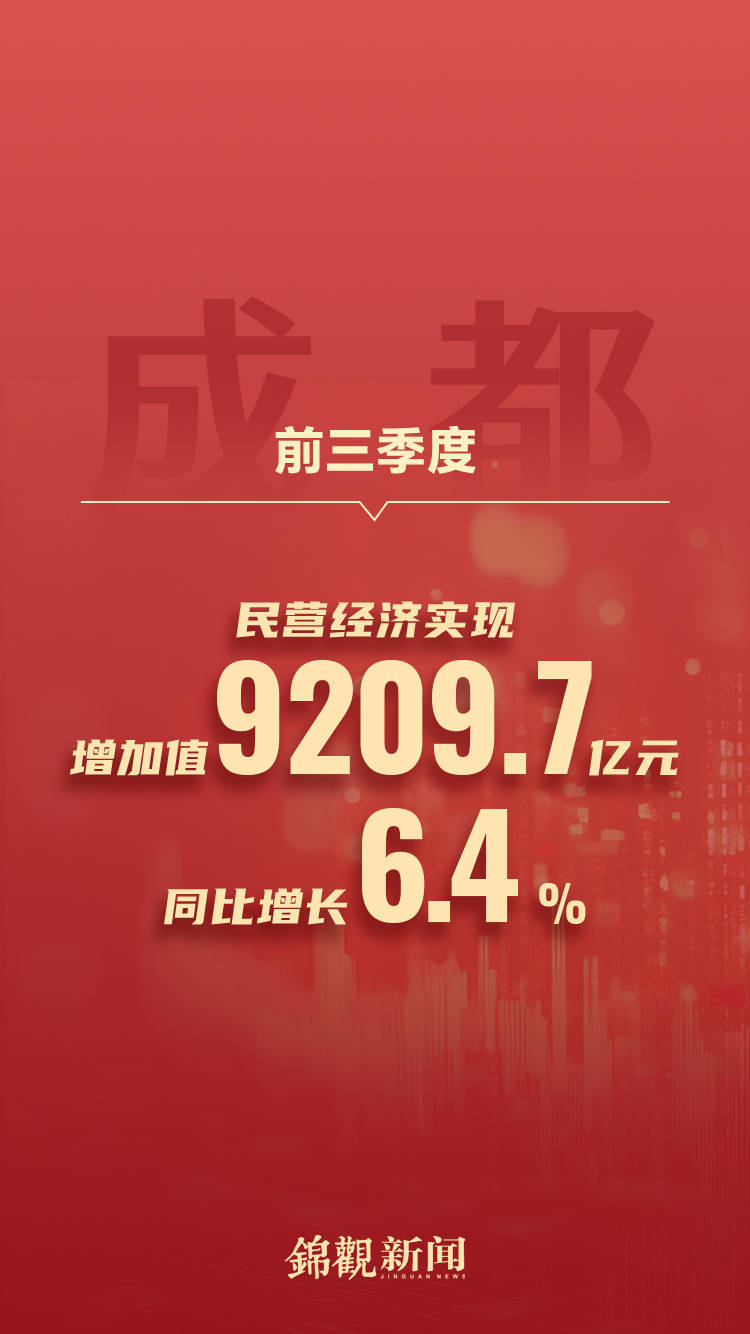
Core Insights - Chengdu's private economy has shown continuous growth for five consecutive quarters, achieving a value-added of 920.97 billion yuan with a growth rate of 6.4%, ranking among the top in the country [1][12][9] - The city has been recognized as an "Annual Innovative City" in the "2024-2025 Urban Business Environment Innovation Report," highlighting its favorable business environment [4][5] - The establishment of the Chengdu Private Economy Development Promotion Center aims to enhance support for private enterprises, embodying the principle of "responding to needs and not disturbing without reason" [5][8] Economic Performance - In the first three quarters of 2025, Chengdu's GDP reached 1,822.69 billion yuan, with a year-on-year growth of 5.8% [12] - Private investment in Chengdu increased by 6% year-on-year, outpacing the overall investment growth in the city [9][12] - The private economy has become a crucial force in advancing China's modernization, with the city’s private sector contributing significantly to its economic stability [5][12] Business Environment - The Chengdu Private Economy Development Promotion Center has organized 233 resource matching events, benefiting over 6,200 enterprises, and has facilitated 91 financing-related events, connecting 1,513 enterprises with financial institutions [8][12] - The city has seen a net increase of 518 industrial enterprises and 122 service enterprises in the first nine months of 2025, along with the addition of four new listed companies and 1,741 innovative small and medium-sized enterprises [15] Industry Growth - Chengdu's private enterprises are experiencing accelerated growth, with significant achievements in various rankings, reflecting their enhanced competitiveness and resilience [15] - The city is fostering a robust aerospace industry, with the Chengdu Rocket Production Base expected to produce 20 rockets annually after completion, injecting strong momentum into the sector [18] - The capital market has also seen success, with four Chengdu private enterprises recently listed, showcasing the city's supportive ecosystem for business growth [18] Digital Transformation - The Chengdu Public Transport Group's app has surpassed 10 million users, marking a new phase in digital service for public transportation, facilitated by local enterprises [23] - The collaboration between enterprises and the city is emphasized as a key factor in mutual growth and service enhancement [23] Future Outlook - With ongoing optimization of the business environment and effective implementation of support policies, more private enterprises are expected to thrive in Chengdu, contributing to the city's modernization efforts [23]
第二十七届高交会开幕 中国首个“太空游”项目未展示
Zheng Quan Shi Bao Wang· 2025-11-14 06:04
Core Viewpoint - The highly anticipated "space tourism" project by China Aerospace Science and Technology Corporation was not showcased at the opening day of the 27th High-Tech Fair, despite prior announcements [1] Group 1: Event Details - The 27th High-Tech Fair opened on November 14 [1] - A press conference held in Shenzhen on November 5 announced that the aerospace group would publicly launch the space tourism project at the fair [1] Group 2: Company Communication - Staff at the aerospace group's exhibition booth provided contact information for a news liaison, but multiple calls went unanswered [1]

我国“小巨人”企业已超1.76万家
2 1 Shi Ji Jing Ji Bao Dao· 2025-11-14 05:31
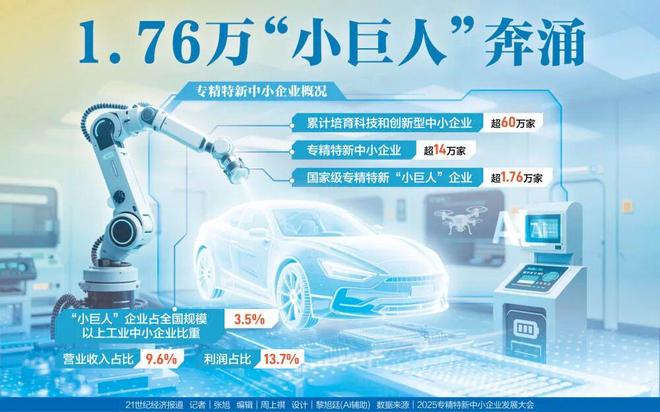
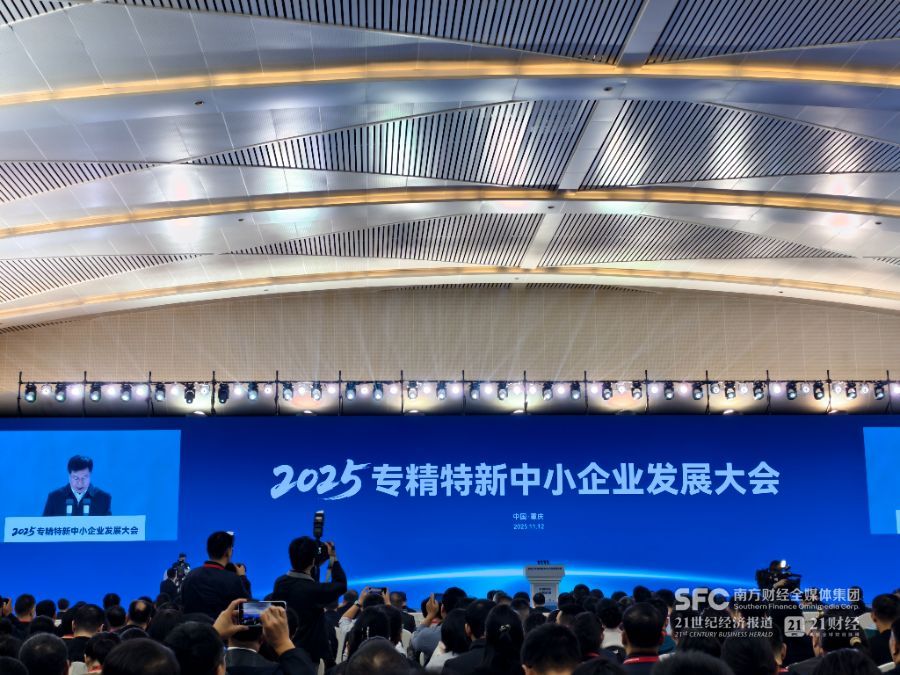
Core Points - The conference on the development of specialized, refined, unique, and innovative small and medium-sized enterprises (SMEs) highlighted the importance of SMEs in driving innovation, promoting employment, and stabilizing growth in China [1][4] - As of 2024, there are over 60 million registered SMEs in China, with SMEs accounting for 99.9% of all enterprises, 84.3% of employment, and 78% of total assets [4] - The development of specialized and innovative SMEs is supported by financial policies from the China Securities Regulatory Commission, which has implemented various measures to enhance financial support for quality SMEs [5] Group 1: Development and Impact of SMEs - Over 600,000 technology and innovation SMEs have been cultivated in China, with more than 140,000 specialized and innovative SMEs and approximately 17,600 national-level "little giant" enterprises [4][5] - "Little giant" enterprises represent 3.5% of the total number of industrial SMEs but contribute 9.6% of operating income and 13.7% of profits [4] - The average annual growth rates for value-added, operating income, and total profits of SMEs are 6.4%, 7.4%, and 5.4%, respectively, all exceeding those of large enterprises [4] Group 2: Financial Support and Market Access - The Shanghai and Shenzhen stock exchanges provide comprehensive services for SMEs, with around 1,800 specialized and innovative enterprises listed, accounting for 35% of listed companies [5] - Since the beginning of 2024, 80% of new listed companies have been specialized and innovative enterprises, with IPO financing reaching approximately 1.5 trillion yuan, representing 30% of total IPO financing [5] - The establishment of specialized boards for innovative SMEs has expanded to 30 provinces and cities, enhancing the multi-tiered capital market and optimizing financing support for SMEs [5] Group 3: Technological Advancements and Innovations - The exhibition at the conference showcased advancements in high-tech materials, humanoid robots, aerospace technology, and deep-sea exploration, reflecting the future landscape of specialized and innovative SMEs [1][7] - The new materials industry includes 3,661 specialized "little giant" enterprises, focusing on advanced chemical materials, high-performance composite materials, and nanomaterials [7] - The integration of artificial intelligence (AI) in SMEs is emphasized, with 238 typical AI application scenarios released, showcasing the potential for innovation and business model upgrades [10][11] Group 4: Global Expansion and AI Integration - Chinese SMEs are transitioning from product export to deeper integration in foreign markets, emphasizing localization and compliance in their global strategies [10] - The conference highlighted the role of AI in enhancing SMEs' capabilities, with a focus on intelligent hardware and software applications that support complex decision-making and automation [10] - Companies like Qiteng Robotics are expanding their international presence, providing services to major global corporations and exploring new business models for rapid deployment and data collection [11]
蓝色起源首次成功回收火箭,马斯克祝贺贝佐斯
Sou Hu Cai Jing· 2025-11-14 01:52
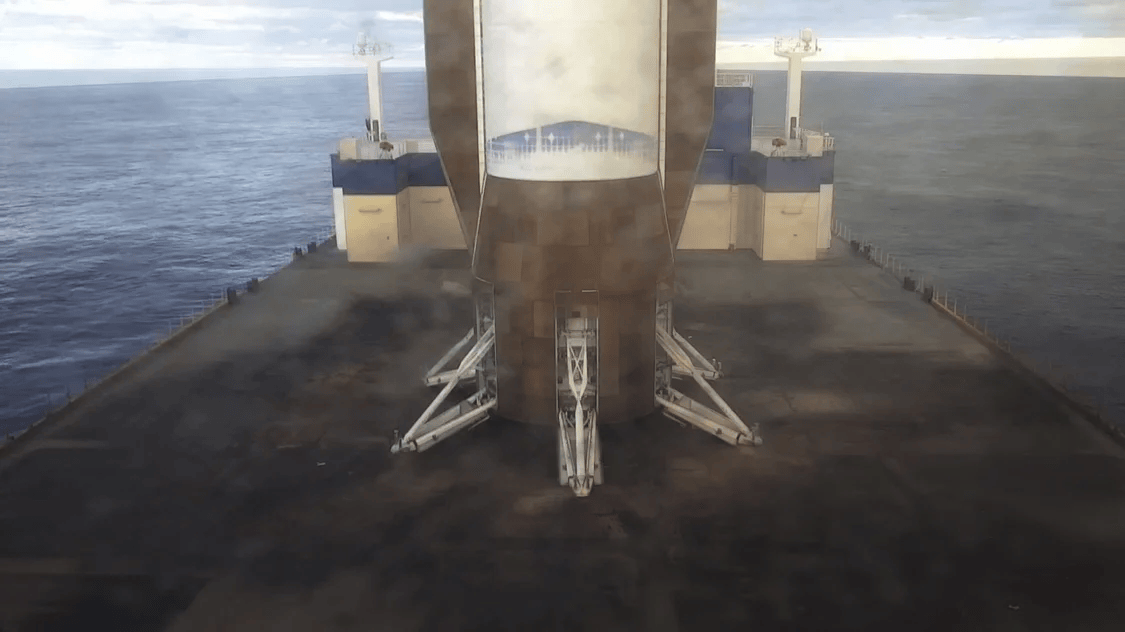
Core Points - Blue Origin successfully launched the orbital rocket "New Glenn" and achieved the first recovery of its booster, marking a significant milestone in space exploration [2] - Jeff Bezos expressed excitement over the successful recovery, sharing a video of the event on social media [2] - Elon Musk congratulated Bezos and Blue Origin on their achievement, highlighting the competitive nature of the space industry [4] Summary by Category Launch and Recovery - Blue Origin's "New Glenn" rocket was successfully launched and completed a booster recovery approximately 10 minutes after liftoff, landing on an unmanned ship in the Atlantic Ocean [2] - This achievement is comparable to SpaceX's earlier successes in booster recovery, which included both land and sea landings [2] Industry Competition - The successful recovery of the booster has drawn attention in the space industry, with Musk acknowledging the accomplishment, indicating a competitive yet respectful relationship between the two companies [4]
1.76万“小巨人”奔涌 ,AI与出海潮动
2 1 Shi Ji Jing Ji Bao Dao· 2025-11-13 11:17
Core Insights - The conference on the development of specialized and innovative small and medium-sized enterprises (SMEs) highlighted the significant role of SMEs in driving innovation, employment, and economic growth in China [1][3] - As of now, over 600,000 technology and innovation SMEs have been cultivated, with more than 140,000 specialized and innovative SMEs and approximately 17,600 national-level "little giant" enterprises [1][3] - The conference emphasized the importance of financial support for the growth of specialized and innovative SMEs, with various policies introduced to enhance their access to capital [3][4] Group 1: SME Development and Impact - By the end of 2024, the number of registered SMEs in China is expected to exceed 60 million, accounting for 99.9% of all enterprises [3] - The contribution of "little giant" enterprises, which represent 3.5% of the total number of industrial SMEs, includes 9.6% of total revenue and 13.7% of total profits [3] - The average annual growth rates for value-added, revenue, and profit of SMEs are 6.4%, 7.4%, and 5.4%, respectively, all surpassing those of large enterprises [3] Group 2: Financial Support and Market Access - The Shanghai and Shenzhen stock exchanges provide comprehensive services for SMEs, with around 1,800 specialized and innovative enterprises listed, making up 35% of total listings [4] - Since the beginning of 2024, 80% of newly listed companies have been specialized and innovative enterprises, with IPO financing reaching approximately 1.5 trillion yuan, accounting for 30% of total IPO financing [4] - The establishment of specialized boards for these enterprises has expanded to 30 provinces and cities, enhancing the multi-tiered capital market and financing support for SMEs [4] Group 3: Technological Advancements and Innovations - The exhibition at the conference showcased advancements in high-tech materials, humanoid robots, aerospace technology, and deep-sea exploration, indicating a promising future for these sectors [1][5] - The new materials industry includes 3,661 specialized "little giant" enterprises, focusing on advanced chemical materials, high-performance composite materials, and nanomaterials [5] - The integration of artificial intelligence (AI) in SMEs is seen as a crucial opportunity for innovation and business model upgrades, with 238 typical AI application scenarios released for SMEs [10][11] Group 4: Global Expansion and AI Integration - Chinese SMEs are transitioning from product exports to deeper local integration in foreign markets, emphasizing compliance and technology leadership [10] - The conference highlighted the importance of AI in enhancing SMEs' capabilities, with a focus on intelligent hardware and software applications [10][11] - Companies like Qiteng Robotics are expanding their international presence, securing orders from major global firms and exploring new business models for robot operation services [13][14]
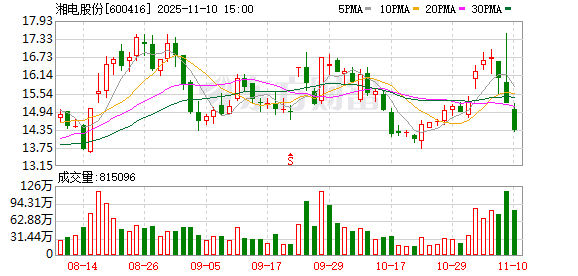
湘电股份:在电磁能产业领域,公司正在开展民用卫星发射技术和产品研发,暂无新进展
Mei Ri Jing Ji Xin Wen· 2025-11-10 13:16
Group 1 - The company is currently engaged in the research and development of civilian satellite launch technology and products in the electromagnetic energy industry [2] - There are no new developments reported regarding the civilian satellite technology as of now [2]