3D打印

Search documents
智元机器人否认和宇树高价争抢春晚赞助席位;小米否认进军AI教育;马斯克称自己是钢铁侠原型;豆包手机二手价被炒到3.6万元丨邦早报
创业邦· 2025-12-11 00:11
Group 1 - A competition is ongoing among embodied intelligence companies for sponsorship of the 2026 Spring Festival Gala, with Zhiyuan Robotics offering 60 million yuan and Yushu Technology raising their bid to 100 million yuan, although Zhiyuan claims the reports are untrue [4] - Meituan has hired Pan Xin, former head of ByteDance's visual model AI platform, to lead multi-modal AI innovation, including the development of applications like LongCat App [4] - Xiaomi clarified that its recruitment for AI education roles is misinterpreted and is primarily aimed at enhancing services for specific products like the Redmi Pad 2 and Xiaomi Mitu children's watch [5] Group 2 - Pop Mart announced the appointment of Wu Yue, LVMH's Greater China President, as a non-executive director, effective December 10, 2025 [7] - Quark AI glasses S1 are experiencing high demand, with resale prices reaching 4,000 to 5,000 yuan, and the product is sold out on major e-commerce platforms [9][10] - JD.com is set to acquire a 50% stake in a Hong Kong office building for approximately 3.473 billion HKD, indicating continued investment in the region [15] Group 3 - Bill Gates warned of an AI valuation bubble, stating that many companies with high valuations will face declines, but emphasized the transformative potential of AI in sectors like health and education [18][19] - Refly.AI completed a multi-million dollar seed round financing led by Sequoia Capital and Hillhouse Capital, launching its V1.0 version for public testing [19] - Snapmaker announced a multi-hundred million B round financing led by Hillhouse Capital and Meituan, aimed at advancing consumer-grade 3D printing technology [19]



3D打印产业,爆发了!
Zheng Quan Shi Bao· 2025-12-10 12:16
Core Insights - Since 2025, the Chinese 3D printing industry has entered a phase of capital frenzy, marked by significant investments and IPO attempts, indicating a shift towards large-scale and capitalized growth [1][2]. Group 1: Capital Influx - On December 10, consumer-grade 3D printing brand Kuaizao Technology announced it completed a multi-hundred million yuan Series B financing led by Hillhouse Capital and Meituan, with funds allocated for multi-color printing technology development and global talent acquisition [2]. - Kuaizao Technology, founded in 2016 and headquartered in Shenzhen, has a product line that includes multifunctional printers and high-efficiency multi-color printers, with its flagship product U1 achieving a crowdfunding record of 150 million yuan, reflecting strong market demand [2]. - DJI, a drone giant, invested several hundred million yuan in Smart Pie, indicating confidence in the growth potential of consumer-grade 3D printing technology [2]. - Other major players, including Tencent and Shenzhen Capital Group, are also backing companies like Chuangxiang Sanwei, which plans to raise funds through an IPO to enhance R&D and expand into overseas markets [2][3]. Group 2: Industry Growth and Trends - The number of investment and financing events in the industry reached a near five-year high since 2025, with over 40 occurrences, showing a clear trend of capital concentrating on leading projects [4]. - Shenzhen has emerged as a hub for the 3D printing industry, with significant contributions from consumer-grade products, as evidenced by 3D printer exports reaching 3.7777 million units in 2024 [5]. - In Q1 2025, global shipments of entry-level 3D printers (priced below $2,500) surpassed 1 million units, with Chinese suppliers accounting for 95% of the market share, led by Chuangxiang Sanwei with a 39% share [5]. Group 3: Company Performance - Tuo Zhu Technology, founded in 2020 by former DJI engineers, achieved revenue between 5.5 billion to 6 billion yuan in 2024, with a net profit nearing 2 billion yuan and a net profit margin exceeding 30% [5]. - Smart Pie, established in 2015, initially focused on STEM education kits but pivoted to 3D printing, launching its first resin printer at a competitive price, thus capturing the mid-to-low price market [6]. - Zongwei Lifang has expanded its business globally, generating over 1 billion yuan in annual revenue since 2016 [6]. Group 4: Industry Ecosystem and Demand - The industry's growth is driven by a confluence of technological advancements, policy support, and rising demand, with AI integration lowering usage barriers and enhancing user experience [7][8]. - The demand for 3D printing is surging, particularly among Gen Z consumers seeking personalized products, with sales of 3D printing-related categories during the 2025 JD 618 shopping festival increasing over threefold year-on-year [8]. - Policies supporting the industry, such as subsidies for desktop 3D printing devices, are expected to drive down entry-level equipment prices to around 1,000 yuan [8].
高瓴、大疆抢投的赛道,已经悄悄完成70多笔投资
3 6 Ke· 2025-12-10 11:14
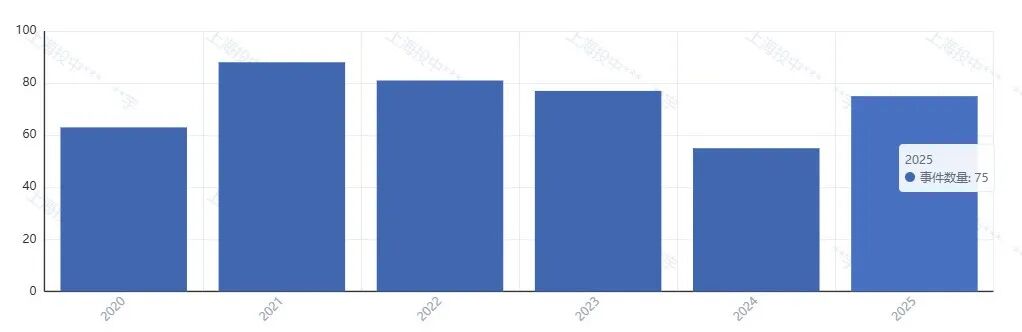
Core Insights - The domestic primary market has seen a significant increase in investments in the 3D printing sector, with 75 investment deals and 59 companies receiving funding this year, compared to 55 deals and 51 companies last year [1][2]. Investment Overview - Among the 75 financing deals, early-stage financing (A+ round and earlier) accounted for 41 deals, representing 54.7% of total financing [2]. - The 59 companies that received funding are primarily located in Guangdong (15 companies, 25.4%) and Jiangsu (14 companies, 23.7%), with Zhejiang, Beijing, and Anhui each having 5 companies [3]. Company Categories - The funded companies can be categorized into two main types: those targeting consumer markets and those providing new materials or comprehensive technical solutions for industrial applications [5]. Consumer-Level Companies - Notable consumer-level companies include: - Aileku, backed by DJI, which has achieved over 1.6 billion yuan in revenue and is a leader in the consumer-grade light-curing 3D printing market [6]. - KuaiZao Technology, which raised over 54 million yuan in crowdfunding and plans to launch its flagship U1 3D printer globally in Q1 2026, anticipating significant revenue growth [6]. - Yuanzi Chongsu, incubated by Zhuimi, has completed two rounds of financing and focuses on consumer-grade 3D printers, leveraging its parent company's technology and market channels [7]. Industrial-Level Companies - Industrial-level companies are attracting more capital, particularly those serving aerospace and automotive sectors: - XieTong GaoKe has completed three rounds of financing this year, focusing on a multi-material 3D printing technology platform for major industrial applications [9]. - SiRui ZengCai, founded in 2023, specializes in metal additive manufacturing and has achieved significant breakthroughs in recycling titanium alloy waste [10]. Investment Trends - Market-oriented venture capital (VC) and local state-owned capital are playing crucial roles in early-stage investments, with notable VC firms like Meituan Longzhu and Hillhouse Capital participating this year [11][12]. - Local state-owned investment institutions have also made significant contributions, with various funds investing in companies across the 3D printing sector [13][14]. Future Outlook - The investment trend in 3D printing from 2020 to 2025 reflects a continuation of the maker movement and a shift towards high-end manufacturing in China [15]. - As consumer-level companies achieve global success and industrial-level companies make key breakthroughs, the domestic 3D printing industry is transitioning from an "application exploration phase" to an "industry acceleration phase" [16]. - With ongoing investments from market-oriented VCs and local state-owned entities, the 3D printing sector is poised to become one of the most explosive new pillars of manufacturing in the next five years [17].
快造科技完成数亿元 B轮融资,高瓴创投、美团、顺为资本加速入局消费级 3D打印 | 融资速递
Tai Mei Ti A P P· 2025-12-10 04:11
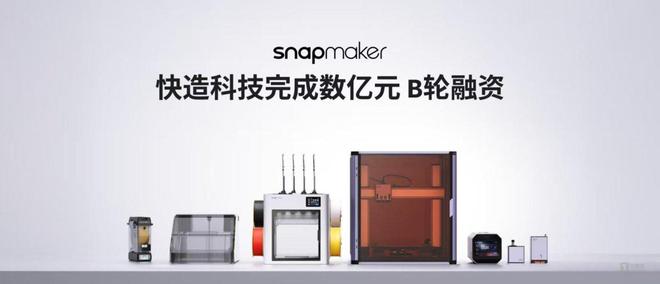
Core Insights - Snapmaker, a global consumer-grade 3D printing brand, has completed a multi-hundred million RMB Series B financing round, led by Hillhouse Capital and Meituan, with participation from several other investors [1] - The funds will be used for core technology research and development, high-end talent recruitment, and content ecosystem construction to accelerate the popularization of consumer-grade 3D printing technology [1] Group 1: Product Innovation and Market Performance - Since its establishment in 2016, Snapmaker has focused on consumer-grade 3D printing, breaking global crowdfunding records with its products [3] - The Snapmaker 2.0 raised over 54 million RMB in 2019, setting a record in the technology category and achieving the highest market share globally [3] - The flagship U1 3D printer raised over 150 million RMB (approximately 20 million USD) in crowdfunding in 2025, becoming the highest crowdfunding project in 3D printing history, supported by over 20,000 users [3] Group 2: User-Centric Approach and Technological Advancements - Snapmaker's breakthroughs stem from precise insights into user needs and deep integration of technology, addressing pain points such as low efficiency and material waste in multi-color printing [4] - The U1 printer features the innovative SnapSwap™ independent four-head system, allowing for rapid material switching and significantly enhancing printing efficiency and stability, achieving five times the speed and material savings [4] Group 3: Future Growth and Strategic Focus - The recent financing is seen as a critical milestone for Snapmaker, transitioning from product leadership to ecosystem completeness [6] - The company aims to accelerate core technology development, expand global talent recruitment, and build an open ecosystem to lower the barriers for 3D printing, making it a universal creative tool [6] - Snapmaker is actively recruiting for key positions in mechanical electronics, software control, and marketing to drive innovation [6]

速递|全球领先的消费级3D打印快造科技完成数亿元 B轮融资,互联网大厂和顶级风投共同押注
Z Potentials· 2025-12-10 02:08
Core Insights - Snapmaker, a global consumer-grade 3D printing brand, has completed a multi-hundred million RMB Series B financing round, led by Hillhouse Capital and Meituan, with participation from several other investors [1] - The company aims to use the funds for core technology research and development, high-end talent recruitment, and content ecosystem construction to accelerate the popularization of consumer-grade 3D printing technology [1] Group 1: Product Innovation and Market Demand - Since its establishment in 2016, Snapmaker has focused on consumer-grade 3D printing, breaking crowdfunding records with its products, including the Snapmaker 2.0 which raised over 54 million RMB in 2019, and the flagship U1 3D printer which raised over 150 million RMB (approximately 20 million USD) in 2025, becoming the highest crowdfunded 3D printing project in history [3][4] - The U1 printer features the innovative SnapSwap™ independent four-head system, allowing for rapid material switching and significantly improving printing efficiency and stability, achieving five times the speed and material savings [4] Group 2: Strategic Goals Post-Financing - The recent financing is seen as a critical transition for Snapmaker from a product-led approach to a more comprehensive ecosystem development [6] - The company plans to focus on three main areas: accelerating core technology R&D to address user pain points in multi-color printing and high-speed forming, expanding global talent acquisition particularly in hardware R&D and AI software, and building an open ecosystem to lower the barriers for creators and developers [6]

快造科技获高瓴、美团领投数亿元B轮融资,曾创下3D打印行业最高众筹记录|36氪独家
3 6 Ke· 2025-12-10 02:00
Financing Information - Snapmaker has completed a Series B financing round, raising several hundred million RMB, led by Hillhouse Capital and Meituan, with participation from Shunwei Capital, Meituan Longzhu, and Nanshan Zhanxin Investment [1] - The funds will primarily be used for core technology research and development, high-end talent recruitment, and content ecosystem construction [1] - The company has cumulatively received over 100 million RMB in capital injections [1] Company Overview - Snapmaker, founded in 2016 and headquartered in Shenzhen, aims to enable everyone to create freely in the physical world and is a pioneer in consumer-grade multifunctional 3D printers [1] - The product line includes a three-in-one multifunction printer, independent dual-head printer, and efficient multi-color printer [1] - The company has established a nearly 10,000 square meter factory and production line, investing in dozens of large CNC machines and grinders to ensure high-quality products [1] Product Highlights - The flagship product, U1 3D printer, addresses user pain points in multi-color printing, such as low efficiency and material waste, by introducing the SnapSwap™ independent four-head system for rapid material switching [2] - The U1 printer offers five times the speed and material savings, enhancing user experience with smooth and colorful creations [2] - All crowdfunding orders for the U1 have been shipped, with plans for a global launch in Q1 2026, and the company anticipates several-fold revenue growth next year [3] Market Potential - The global consumer-grade 3D printing market is projected to grow from $1.5 billion in 2020 to $4.1 billion by 2024, with a compound annual growth rate (CAGR) of approximately 28% [4] - From 2020 to 2023, the annual shipment of global consumer-grade printers has remained around 3 million units, expected to exceed 4 million units in 2024, with a CAGR of about 10.2% [4] - By 2029, the shipment is anticipated to reach 13.4 million units, with a CAGR of approximately 26.6% from 2024 to 2029 [4] Company Performance - Snapmaker has set multiple industry records through various crowdfunding activities, demonstrating strong market appeal and product innovation capabilities [5] Founder's Background - The founder, Chen Xuedong, has over 20 years of experience as a maker and has a background in engineering and robotics, having previously worked at a leading aerospace engine research institute [8] Industry Insights - Chen Xuedong believes that healthy and high-level competition will benefit the development of the 3D printing industry, similar to top global sports leagues [9] - The company emphasizes the importance of talent in driving innovation and aims to attract more individuals to the 3D printing sector to accelerate industry transformation [9]
快造科技完成数亿元B轮融资,高瓴创投、美团联合领投
Xin Lang Cai Jing· 2025-12-10 01:58
Group 1 - Snapmaker, a global consumer-grade 3D printing brand, announced the completion of a Series B financing round amounting to several hundred million yuan [1] - The financing round was led by Hillhouse Venture Capital and Meituan, with participation from Shunwei Capital, Meituan Longzhu, and Nanshan Zhanxin Investment, along with continued support from existing shareholders [1] - The funds raised will be used for core technology research and development, recruitment of high-end talent, and content ecosystem construction to accelerate the popularization of consumer-grade 3D printing technology [1]
快造科技完成数亿元B轮融资
Mei Ri Jing Ji Xin Wen· 2025-12-10 01:53
每经AI快讯,快造科技公众号消息,今日,全球消费级3D打印品牌快造科技(Snapmaker)正式宣布完成 数亿元B轮融资。本轮融资由高瓴创投、美团联合领投,顺为资本、美团龙珠、南山战新投跟投,老股 东同创伟业、东证资本持续加注。 ...
一家“手艺人”VC的水下8年丨入局
暗涌Waves· 2025-12-10 01:05
Core Viewpoint - The article highlights the successful fundraising of over 1 billion RMB by a relatively low-profile venture capital firm, Jing Shui Hu Chuang Tou, emphasizing its unique investment philosophy focused on identifying alpha companies in a changing market environment [4][5]. Group 1: Fundraising Success - Jing Shui Hu Chuang Tou has raised over 1 billion RMB in less than 12 months, including a recent 500 million RMB blind pool fund [4]. - The firm has successfully attracted new limited partners (LPs) such as Yuan He Chen Kun and Xiamen Capital, indicating a strong interest in its investment strategy [4]. - The firm maintains a government-guided fund attribute below 30%, avoiding forced return metrics typically associated with such funds [4]. Group 2: Investment Philosophy - The firm focuses on finding alpha companies rather than chasing beta opportunities, demonstrating a commitment to quality over quantity in investments [5][11]. - Jing Shui Hu Chuang Tou's investment strategy includes a cautious approach to market trends, opting to avoid overhyped sectors while seeking undervalued opportunities [11][12]. - The firm emphasizes a hands-on approach post-investment, providing support to portfolio companies, especially those nearing IPO [11][25]. Group 3: Case Studies - A notable investment was made in Wo Tai Energy, which was initially overlooked by mainstream VCs but later became a unicorn, showcasing the firm's ability to identify potential in emerging sectors [7][8]. - The firm also invested in Polymaker, a 3D printing materials developer, after observing significant industry shifts, leading to substantial returns as the company grew [10][11]. - The investment in Mu Xing Intelligent, a logistics robotics company, highlights the firm's preference for companies with strong overseas market potential, which have shown significant growth [12][13]. Group 4: Fund Management and LP Relations - The firm maintains a high re-investment rate of over 70% from existing LPs, attributed to a shared understanding of the technology investment landscape [15][20]. - Jing Shui Hu Chuang Tou controls its blind pool fund size to around 500 million RMB, which is seen as optimal for early to mid-stage alpha investments [19]. - The firm has demonstrated a unique approach by returning uninvested funds to LPs rather than forcing investments into unsuitable projects [19][20]. Group 5: Market Strategy and Adaptation - The establishment of an S fund in collaboration with Yuan He Chen Kun was a strategic response to liquidity challenges in the IPO market, aiming to enhance returns for existing LPs [22][23]. - The firm’s approach to managing liquidity and maintaining influence over portfolio companies is seen as a key factor in building trust with LPs [25][26]. - The firm emphasizes a micro-focused investment strategy, avoiding macroeconomic predictions and instead concentrating on the fundamentals of each project [26].

销量遇冷?影石CEO发内部信:遭舆论攻击
Nan Fang Du Shi Bao· 2025-12-09 07:19
Core Insights - The internal letter from Liu Jingkang, CEO of Insta360, addresses the negative publicity surrounding the launch of the company's first panoramic drone, the Yingling A1, and highlights its initial sales success despite claims of poor performance [3][4][5] Sales Performance - The Yingling A1 achieved over 30 million yuan in sales within 48 hours of its launch in China, indicating strong market potential [3][4] - The average daily sales for the company's handheld imaging business exceeded 24 million yuan in the first three quarters, showcasing the potential of the Yingling A1 to contribute to new growth [4][5] Competitive Landscape - The competition between DJI and Insta360 has intensified, particularly with the launch of the Yingling A1, as DJI has quickly organized research and development efforts in response [7][9] - DJI's established supply chain and cost advantages may pose a threat to Insta360's valuation if it engages in price competition in the panoramic drone market [7][9] Supply Chain Challenges - Insta360 faced external pressures from suppliers, with multiple key suppliers experiencing "exclusive" pressure around the time of the Yingling A1's launch [5][6] - The company has proactively developed a secondary supply chain to mitigate risks and maintain control over its supply chain structure [5][6] Industry Dynamics - The competition between DJI and Insta360 reflects a shift in the Shenzhen hardware industry from a "single leader" to a "multi-point competition" model, with both companies expanding their product lines and exploring new market segments [9][8] - The ongoing rivalry is expected to persist, with both companies likely to continue innovating and expanding their product offerings in the imaging and drone sectors [9][8]