农产品种植

Search documents
传统与现代融合“交响” 古村落呈现“人来、村活、业兴、文盛”繁荣景象
Yang Shi Wang· 2025-10-21 04:40
Core Insights - The article highlights the intersection of cultural heritage and rural revitalization in traditional villages, particularly in Pingnan, Fujian, showcasing the harvest season and the influx of tourists [1][9]. Agricultural Production - In 2023, the expected production of persimmons in Pingnan County's traditional villages is over 150 tons, marking a 10% increase from the previous year [3]. - The county has also reclaimed over 8,000 acres of abandoned farmland, with total grain and oil production projected to exceed 48,000 tons, the highest in five years [7]. Tourism Development - Pingnan's 25 traditional villages have welcomed over 730,000 tourists in October, indicating a thriving cultural tourism sector [9]. - The emergence of new business models and creative industries in these villages has contributed to a vibrant atmosphere characterized by increased visitor engagement and economic activity [10][12]. Community and Demographic Changes - A notable trend is the influx of young people, many of whom are not locals, participating in agricultural activities, particularly in persimmon harvesting [10]. - The local government has implemented policies to attract and retain these new residents, fostering a collaborative environment for community development [14]. Technological Integration - New residents are introducing modern agricultural practices and technologies, such as small threshing machines and light rail systems for transporting crops, enhancing productivity in challenging terrains [18][19]. - The establishment of cooperatives and the integration of internet and creative branding into agricultural activities are driving innovation in the local economy [22]. Cultural Integration - The blending of traditional and modern elements is evident in various cultural events, such as music concerts and art exhibitions, which are attracting tourists and enriching the local cultural landscape [21].


(乡村行·看振兴)山西高平:科技赋能沃野 秋粮颗粒归仓
Zhong Guo Xin Wen Wang· 2025-10-21 03:14
Core Viewpoint - The article highlights the proactive measures taken by the agricultural sector in Gaoping City, Shanxi, to ensure the timely harvest of autumn crops despite adverse weather conditions, utilizing advanced technology such as drones and machinery to maximize efficiency and minimize losses [1][6]. Group 1: Agricultural Operations - Gaoping City has initiated "agricultural machinery + drone" operations to facilitate the harvest during breaks in rainy weather, ensuring that autumn crops are collected efficiently [1][3]. - A mining company's team has been deployed to assist local farmers in harvesting sweet potatoes, utilizing excavators to minimize damage and ensure maximum yield [2][5]. - The "Smart Agricultural Assistance Pioneer Team" employs drones for short-distance transportation, significantly improving efficiency compared to traditional manual methods, with drones capable of carrying 150 pounds and transporting nearly 3,000 pounds per hour [2][5]. Group 2: Community and Government Involvement - The local agricultural department has implemented measures to reduce losses and increase grain yield, including the inspection and repair of tracked harvesters, and providing contact information for 23 harvesters to facilitate local farmers [6]. - Community engagement has been emphasized, with local party members, citizens, and state-owned enterprise staff collaborating on manual harvesting efforts to minimize autumn harvest losses [6]. - The establishment of 10 grain drying points has been announced to ensure a smooth transition between harvesting and drying operations, laying a foundation for the safe storage of autumn crops [6].

海关总署:今年9月,中国未从美国进口大豆
Zhong Guo Xin Wen Wang· 2025-10-21 00:39
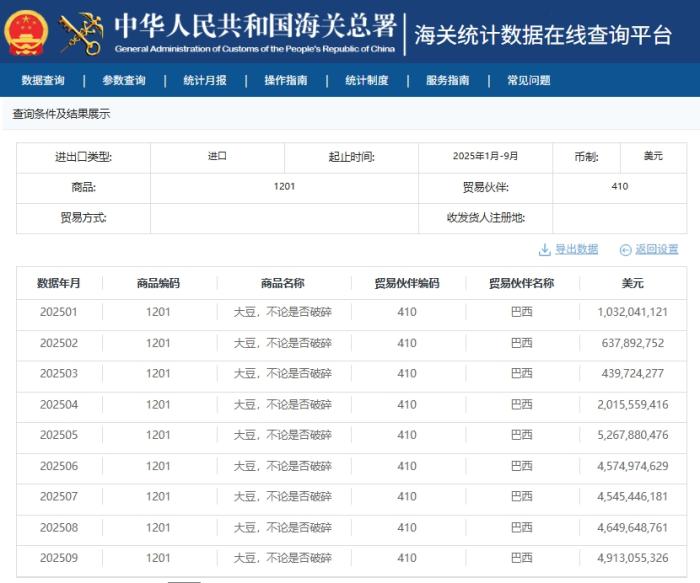
中新网10月20日电 海关总署数据显示,今年9月,中国未从美国进口大豆。这是中国对美国大豆月进口 量自2018年11月以来首次降至零。 在关税背景下,今年美国豆农的大豆丰收季没有了"中国订单"。而与此同时,作为世界上最大的大豆进 口国,中国正加大对南美国家大豆的采购以取代美豆。 据路透社等报道,今年1—9月,中国共从巴西进口6370万吨大豆,同比增长2.4%,从阿根廷进口290万 吨大豆,同比增长31.8%。中国对南美国家大豆进口量创下新高。 路透社还提到,如果美国和中国接下来的贸易谈判没有突破,随着中国继续从南美采购大豆,美国农民 可能面临数十亿美元的损失。 彭博社报道则提到,因失去中国买家,美国农民的不满情绪正在加剧,他们面临着大豆价格下跌的压 力,许多人急切期待美国政府援助。不过,因为政府"停摆",这些援助目前处于搁置状态。(记者宫宏 宇) ...
趁火打劫!巴西大豆对华猛涨价,买家集体暂停订单,静待2个时机
Sou Hu Cai Jing· 2025-10-20 22:01
Group 1 - The core issue is the shift in China's soybean imports from the US to Brazil, leading to increased prices for Brazilian soybeans, which are now $1 more expensive than US soybeans and $2.8 more than those in Chicago [3][6] - China's response to the price increase has been to halt orders for Brazilian soybeans after December, citing the high costs as the primary reason without any political motivations [5][6] - The financial implications for China are significant, with estimates indicating a loss of over 200 yuan for each ton of Brazilian soybeans purchased, making the trade unsustainable [8] Group 2 - Brazil's soybean farmers have increased planting in anticipation of high demand from China, with projections indicating record production levels for 2024 and 2025 [10] - Without Chinese orders, Brazilian farmers may face a situation similar to US farmers, leading to potential overproduction and price drops due to lack of demand [10][12] - The US is positioned to benefit from China's decision to stop buying Brazilian soybeans, as they may seek to purchase US soybeans instead, especially given the current trade tensions [12][19] Group 3 - China's agricultural strategy is constrained by the need to prioritize staple crops like rice and wheat, limiting the area available for soybean cultivation [14][16] - The importation of soybeans is seen as a necessity for China, allowing for better price control and the establishment of favorable trade relations with multiple countries [16] - Brazil's soybean export volume has reached 100 million tons by October, with 79.9% of that being orders from China, highlighting the importance of the Chinese market for Brazilian farmers [17] Group 4 - Recent developments indicate that China and the US are engaged in trade negotiations, with a significant chance of reaching an agreement that could lower tariffs and facilitate soybean trade [19][21] - The ongoing negotiations reflect the broader geopolitical dynamics, where China aims to secure its position in international trade and establish rule-making authority [21]

美国后悔当年没把阿根廷和巴西的农场给铲了!
Sou Hu Cai Jing· 2025-10-20 12:49
Group 1 - The article discusses that China has not banned the purchase of U.S. soybeans, but rather imposed tariffs due to the trade war, making Brazilian and Argentine soybeans cheaper [1] - The soybean market is relatively small, and despite Argentina's efforts to secure U.S. support, the U.S. seems unconcerned about soybean orders, as evidenced by a $20 billion aid package from Trump [3] - Soybeans serve as a strategic crop for crop rotation with corn, which is a more significant target for disruption in the U.S. agricultural sector [3][5] Group 2 - If soybeans cannot be sold, it jeopardizes future planting decisions, potentially disrupting the crop rotation system essential for maintaining soil health and corn production [5] - The disruption of the soybean-corn rotation could lead to severe issues across the entire agricultural supply chain, affecting not just soybeans but also corn yields [5] - The article suggests that the U.S. should strategically target Brazilian and Argentine farms to mitigate competition, indicating a calculated approach to agricultural trade dynamics [5][7] Group 3 - The ongoing chain reaction from these trade dynamics is irreversible, with significant implications for U.S.-China relations and potential military confrontations as a last resort [7] - China's investments in South America, including infrastructure and agricultural projects, are part of a long-term strategy to challenge U.S. dominance in agricultural exports [7]

中国9月未从美国进口大豆 美国豆农急盼政府援助
Zhong Guo Xin Wen Wang· 2025-10-20 10:47
Core Insights - In September 2023, China did not import any soybeans from the United States for the first time since November 2018, marking a significant shift in trade dynamics [1] - As the world's largest soybean importer, China is increasing its purchases from South American countries, particularly Brazil and Argentina, to replace U.S. soybeans [1][2] - U.S. farmers are facing pressure from falling soybean prices and are seeking government assistance due to the loss of the Chinese market [3] Group 1: Trade Dynamics - China's soybean imports from Brazil reached 63.7 million tons from January to September 2023, a year-on-year increase of 2.4% [1] - Imports from Argentina during the same period totaled 2.9 million tons, reflecting a significant year-on-year increase of 31.8% [1] - The shift in imports has resulted in record-high volumes of soybean purchases from South America by China [1] Group 2: Impact on U.S. Farmers - U.S. farmers are expressing dissatisfaction due to the loss of the Chinese market, which is leading to downward pressure on soybean prices [3] - Many farmers are urgently awaiting government assistance, which is currently stalled due to a government shutdown [3]
大好“食”机,无限商机!汕尾展团邀您来深圳食博会抢“鲜”机
Nan Fang Nong Cun Bao· 2025-10-20 09:04
Core Insights - The article highlights the upcoming 2025 Global High-end Food and Quality Agricultural Products Expo in Shenzhen, showcasing the Shantou exhibition group and its diverse offerings [5][6][61] - Shantou aims to leverage its unique marine and agricultural products to attract global customers and enhance its market presence [10][59] Group 1: Event Overview - The expo will take place from October 22 to 24 at the Shenzhen Convention and Exhibition Center, featuring a comprehensive exhibition area of 540 square meters [5][9] - Shantou will present an "1+8+N" strong lineup, including eight themed activities and numerous independent exhibitions to showcase its industrial landscape and flavor strengths [7][10] Group 2: Product Offerings - The Shantou exhibition area will feature nearly 20 representative enterprises from sectors such as aquaculture, agriculture, and livestock, presenting over a hundred products [13][14] - Visitors can experience a variety of Shantou's seafood, including "Shantou Three Delicacies" (morning island oysters, sea bass, and mackerel), with educational sessions on their cultivation and cooking methods [16][17] Group 3: Cultural Experience - The expo will include cultural activities, such as a hands-on experience of the Hakka Lei Tea non-heritage production technique, allowing visitors to learn and taste this traditional beverage [32][34] - Performances featuring local folk songs and dances will enhance the cultural atmosphere of the event, creating a unique blend of tradition and modernity [41][44] Group 4: Business Opportunities - The event aims to establish an efficient platform for production and sales connections, promoting high-quality agricultural development in Shantou [47][48] - A dedicated "2025 Shantou Specialty Agricultural Products Supply and Demand Matching Conference" will facilitate direct interactions between suppliers and buyers, employing a one-on-one matching model for effective business connections [54][56]

股市必读:新赛股份(600540)10月17日主力资金净流出774.37万元,占总成交额14.37%
Sou Hu Cai Jing· 2025-10-19 19:01
Group 1 - The stock price of Xinjiang Saiermu Modern Agriculture Co., Ltd. (600540) closed at 4.75 yuan on October 17, 2025, down 1.45% with a turnover rate of 1.93% and a trading volume of 112,400 shares, amounting to a total transaction value of 53.89 million yuan [1] - On October 17, 2025, the net outflow of main funds was 774.37 million yuan, accounting for 14.37% of the total transaction value, while retail investors had a net inflow of 505.94 million yuan, representing 9.39% of the total transaction value [1][3] Group 2 - Xinjiang Saiermu Modern Agriculture Co., Ltd. announced that its wholly-owned subsidiary, Xinjiang XinSai Trading Co., Ltd., has been declared bankrupt by the court due to long-term losses and insufficient assets to cover debts. The bankruptcy application was accepted by the Urumqi Municipal People's Court on September 7, 2023, and the company announced on May 28, 2025, that XinSai Trading would no longer be included in the consolidated financial statements [1] - The bankruptcy declaration does not affect the company's existing business operations, and the impact on profits will be determined based on the final liquidation results and audits [1]

阳谷朝天椒撑起火红产业与红火生活——中国人寿财险聊城市中心支公司护航特色农产品发展
Zheng Quan Ri Bao Zhi Sheng· 2025-10-19 15:14
Core Viewpoint - The introduction of specialized insurance products by China Life Property & Casualty Insurance in Yanggu County aims to mitigate risks associated with the cultivation and commercialization of Yanggu chili peppers, enhancing the sustainability and profitability of the local chili industry [1][2][3]. Group 1: Risk Mitigation in Chili Pepper Cultivation - Yanggu County's unique climate and fertile soil contribute to the distinctive quality of Yanggu chili peppers, which are known for their vibrant color, thickness, spiciness, and aroma [1]. - China Life Property & Casualty Insurance has established a dedicated "Chili Industry Guarantee Service Team" to address risks throughout the entire chili production chain, from planting to sales [1][2]. - The insurance products cover various risks, including natural disasters and market fluctuations, providing financial protection to farmers and cooperatives [2][3]. Group 2: Innovative Insurance Solutions - The chili cultivation insurance combines weather index insurance and pest index insurance, utilizing satellite remote sensing to monitor soil moisture and pest damage, which automates the claims process when certain thresholds are exceeded [3]. - Farmers pay a premium of 78.75 yuan per acre for coverage of 1,500 yuan, which helps to alleviate financial burdens during adverse conditions [3]. - The insurance also includes specific provisions for fire risks associated with the innovative mechanized planting techniques used in chili cultivation [3]. Group 3: Brand Protection and Market Stability - The Yanggu chili brand has faced issues with infringement, prompting the introduction of a geographical indication infringement loss insurance to protect local producers from unauthorized use of the brand [5]. - The insurance compensates for direct economic losses and legal costs incurred due to brand infringement, thereby supporting the local economy [5]. - Additional insurance products, such as processing and storage insurance, have been developed to cover risks in the harvesting and processing stages, ensuring comprehensive protection for the chili industry [5][6]. Group 4: Future Developments and Collaborations - China Life Property & Casualty Insurance plans to collaborate with local government departments to implement financial incentives that support the chili industry, aiming to enhance the economic viability of chili farming [5][6]. - The company is also working on developing a series of insurance and credit products to further reduce operational risks and costs for farmers [6].

京冀联手科研公关,坝上“金种子”开出“致富花”
Bei Jing Ri Bao Ke Hu Duan· 2025-10-18 08:15
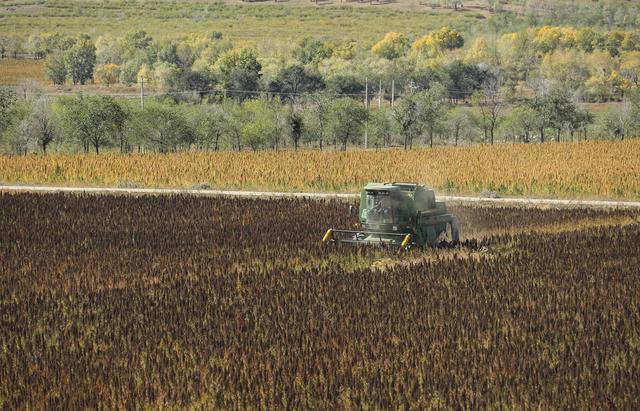
Core Insights - The article highlights the development of organic quinoa in Guyuan County, which is positioned as a key area for water conservation in Beijing, showcasing the integration of ecological protection and agricultural development in the Beijing-Tianjin-Hebei region [1][3]. Group 1: Agricultural Development - Guyuan County has transformed quinoa from a local grain to a high-end organic product, aided by scientific research from institutions like the Chinese Academy of Sciences [3]. - The introduction of the "Bali 2" quinoa variety, developed through collaboration with scientific teams, has increased yields from over 300 pounds to a maximum of 550 pounds per acre, representing a 30% increase compared to traditional varieties [3]. Group 2: Market Integration - The quinoa produced in Guyuan is closely linked to the Beijing market, with farmers reporting profits of over 1,500 yuan per acre, compared to 600 yuan for other crops [4]. - Guyuan has established partnerships with major supermarkets and community platforms in Beijing, enabling rapid delivery of quinoa products, including 36 specialty items, to consumers within 48 hours [4][5]. Group 3: Economic Impact - Over 2,600 farmers in Guyuan are involved in quinoa cultivation, generating an annual output value exceeding 150 million yuan, with the area accounting for one-fifth of the national quinoa planting area [5]. - The local government has implemented supportive policies, including a 5 million yuan annual subsidy and agricultural insurance for quinoa crops, to encourage more farmers to engage in quinoa production [5]. Group 4: Future Prospects - Guyuan is advancing the geographical indication certification for its quinoa and initiating the construction of a digital agriculture demonstration base, aiming for high-quality development in the quinoa industry [5]. - The region's strategy emphasizes ecological sustainability and technological advancement, positioning quinoa as a key player in the health market and a model for collaborative development in the Beijing-Tianjin-Hebei area [5].