
种植业

Search documents
管好用活帮扶项目资产
Jing Ji Ri Bao· 2026-01-19 22:18
Core Viewpoint - The article discusses the effective connection between poverty alleviation and rural revitalization in China through the management of assistance project assets, highlighting the need for improved asset management and operational efficiency to prevent asset loss and enhance sustainable income generation [1][2][3][4]. Group 1: Investment and Financial Support - Over the past three years, more than 400 million yuan has been invested in Gansu's Hezheng County to connect the apple, dairy sheep, and edible fungus industries [1]. - In Yunnan's Huigu Village, tens of millions of yuan in financial support has been used to repair ancient roads and revive culture, attracting over 120,000 tourists annually [1]. - During the "14th Five-Year Plan" period, central financial support for rural revitalization reached 850.5 billion yuan, an increase of 32 billion yuan compared to the "13th Five-Year Plan" [1]. Group 2: Challenges in Asset Management - Many assistance project assets face issues such as unclear ownership and poor maintenance, leading to accelerated deterioration and underutilization [2]. - Examples include unused poultry slaughterhouses with investments of several million yuan and irrigation projects generating minimal rental income [2]. - If these issues are not addressed, valuable assets may become sunk costs, hindering comprehensive rural revitalization [2]. Group 3: Asset Management Strategies - The focus should be on establishing a clear asset ownership structure and a multi-level responsibility network for effective management [3]. - It is essential to enhance the operational competitiveness of assets by introducing market mechanisms and professional management [3]. - Strengthening the capabilities of operational entities and providing support in finance and technology are crucial for improving asset profitability and sustainability [3]. Group 4: Technological Empowerment and Regulatory Innovation - The establishment of a digital management platform for assistance project assets is necessary for comprehensive monitoring and data support [4]. - Utilizing big data and IoT technologies can facilitate real-time monitoring and performance evaluation of key assets [4]. - Transitioning to a more transparent regulatory approach will ensure that asset revenues benefit agriculture and rural development effectively [4].
呼伦贝尔农垦大兴安岭集团 主栽作物单产连续三年稳定提升
Xin Lang Cai Jing· 2026-01-19 15:08
Core Viewpoint - The Hulunbuir Agricultural Reclamation Daxing'anling Group (referred to as "Daxing'an Group") aims to enhance crop yields through a series of measures focused on optimizing planting structures, strengthening technological support, and innovating operational models, with a target of achieving significant increases in soybean and corn yields by 2025 [1][2]. Group 1: Crop Production Strategy - Daxing'an Group adheres to the principles of "stabilizing grain, ensuring soybeans, and increasing production," with a key focus on improving the application rate of technology [1]. - The total sown area in 2025 is projected to reach 1.2852 million acres, with soybeans accounting for 72.73%, corn for 26.19%, and wheat and other crops for 1% [1]. - Over the past three years, Daxing'an Group has constructed 210,500 acres of high-standard farmland, providing a solid foundation for stable and high crop yields [1]. Group 2: Technological Advancements - Technology is identified as the core driver for agricultural yield increases, with Daxing'an Group conducting 27 comparative trials on soybean and corn varieties across different temperature zones [2]. - In 2025, the average yield for soybeans is expected to be 375.88 jin per acre, while corn is projected at 1,202.94 jin per acre, both showing steady improvements [2]. - Notable achievements include a soybean yield of 672.2 jin per acre at a demonstration site, setting a new record for Hulunbuir City, and a yield of 637.2 jin per acre at another site, ranking among the top in Inner Mongolia [2]. Group 3: Smart Agriculture Implementation - Daxing'an Group promotes modern agricultural machinery such as smart seeders, smart weeders, and UAVs for plant protection, integrating technologies like Beidou navigation and remote sensing for precise fertilization and pesticide application [3]. - The "Smart Agriculture Data Platform" collects and analyzes data in real-time across all agricultural production stages, providing precise support for decision-making [3]. - To enhance production efficiency, Daxing'an Group implements a high-yield technology model that includes rational crop rotation, deep tillage, selection of quality seeds, and precision planting, addressing production level disparities among contracted and market fields [3].
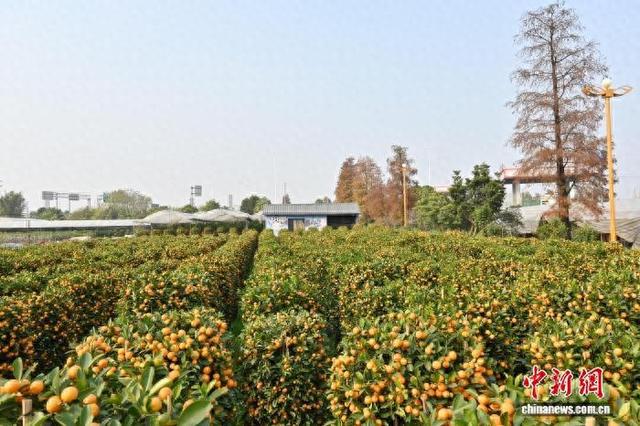
广东顺德年桔金黄 年味渐浓
Xin Lang Cai Jing· 2026-01-19 14:05
Core Viewpoint - The article highlights the bountiful harvest of kumquats in Chen Village, Shunde, Guangdong, as the region prepares for the Chinese New Year, with local farmers actively packaging and shipping the fruit to various locations including Guangdong, Fujian, and Singapore [1][2][3][4] Group 1 - The kumquat harvest in Chen Village is described as abundant, with the village being renowned as the "Hometown of Kumquats" [1][2][3][4] - Local farmers are engaged in the care, packaging, and transportation of kumquats, which symbolize the festive spirit of the Chinese New Year [1][2][3][4] - The kumquats are being distributed to multiple regions, indicating a strong market demand for this seasonal fruit [1][2][3][4]

2025年农业经济形势稳中向好:粮食实现增产丰收 肉类产量突破亿吨
Guo Jia Tong Ji Ju· 2026-01-19 08:31
Group 1: Agricultural Production - In 2025, China's grain production reached 14,297.5 billion jin, an increase of 167.5 billion jin or 1.2% from the previous year, maintaining stability above 14 trillion jin for two consecutive years [2] - The total grain sown area was 1.791 billion acres, up by 1.348 million acres or 0.1%, marking six consecutive years of growth [2] - The national grain yield was 399.1 kg per acre, an increase of 4.4 kg per acre or 1.1% from the previous year [2] Group 2: Crop Production by Type - The total grain output was 13,204.1 billion jin, an increase of 158.4 billion jin or 1.2% year-on-year, with corn production at 6,024.7 billion jin, up by 126.4 billion jin or 2.1% [3] - Rice production increased to 4,180.8 billion jin, up by 30.1 billion jin or 0.7%, while wheat production remained stable at 2,801.4 billion jin, a slight decrease of 0.5 billion jin [3] - Soybean production reached 418.1 billion jin, an increase of 5.2 billion jin or 1.3%, and sweet potato production was 614.7 billion jin, up by 3.1 billion jin or 0.5% [3] Group 3: Livestock Production - In 2025, the total meat production from pigs, cattle, sheep, and poultry exceeded 100.72 million tons, an increase of 4.2% or 409 million tons from the previous year [4] - Pork production reached a record high of 5,938 million tons, an increase of 232 million tons or 4.1% [4] - The number of pigs slaughtered was 71.973 million heads, an increase of 1.716 million heads or 2.4% from the previous year [4] Group 4: Poultry Production - The total poultry output was 18.32 billion birds, an increase of 9.8 million birds or 5.6% year-on-year, with poultry meat production at 2,837 million tons, up by 177 million tons or 6.7% [5] - Egg production was 3,498 million tons, a decrease of 90 million tons or 2.5% [5] - The total poultry stock at the end of 2025 was 6.27 billion birds, down by 210 million birds or 3.2% from the previous year [5] Group 5: Agricultural Market Supply and Prices - The overall producer price level for agricultural products decreased by 3.7% compared to the previous year, with quarterly declines of 1.6%, 1.1%, 4.5%, and 3.8% [6] - Prices for agricultural products fell by 2.1%, with livestock and their products down by 7.5% and forestry products down by 2.5% [6] - The price of rice increased by 0.1%, while prices for wheat, corn, and soybeans decreased by 1.9%, 3.8%, and 3.6% respectively [6]
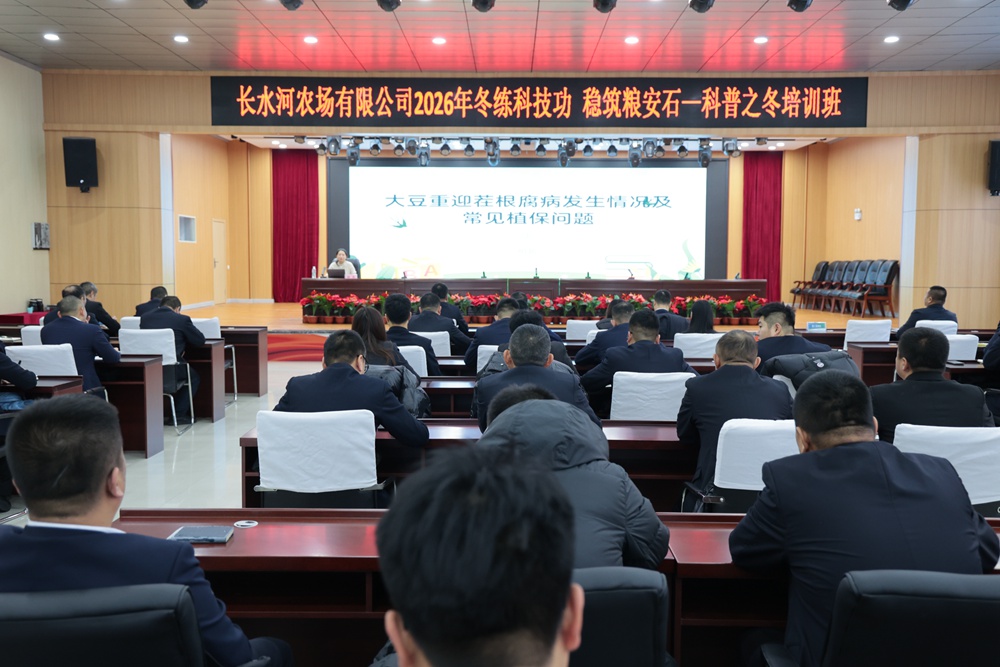
长水河农场有限公司“科技之冬”送技上门 大豆种植有了全周期植保方案
Jing Ji Wang· 2026-01-19 07:28
参训学员普遍认为,培训内容直面生产中的实际问题,尤其是对重迎茬病害的剖析深入透彻,技术方案具体可行。大家表示将把所学知识应用 于2026年的大豆种植实践中,切实提升田间管理的科学化水平,为稳产增收奠定基础。 下一步,长水河农场有限公司将持续推动农业科技落地转化,将"科普之冬"的培训成效切实转化为农业生产的实际效益,为保障粮食安全注入 扎实的科技动力。(文图:辛玲) 此次培训聚焦生产一线难题,特邀东北农业大学植物病理学硕士胡新进行授课。胡新以"大豆重迎茬根腐病发生情况及常见植保问题"为主题展 开讲解,系统分析了重迎茬种植模式下根腐病的发生特点与规律,并深入讲解了以科学轮作、生物菌剂拌种为核心的综合防治方案,明确了高 效药剂的科学使用规范。针对高寒地区常见的杂草与虫害问题,她进一步介绍了精异丙甲草胺+噻吩+广灭灵复配除草技术的施用时机、剂量 控制及安全防护要点,以及大豆食心虫的性诱剂诱杀、赤眼蜂防治等绿色防控技术,为学员提供了一套可操作的全周期植保管理策略。 1月14日,长水河农场有限公司举办2026年"冬练科技功 稳筑粮安石"科普之冬专题培训班,为农业技术人员带来一场针对大豆种植的"科技及 时雨"。农业发展部、 ...
农林牧渔行业周报第2期:消费旺季推动猪价抬升,看好节后去化加速
HUAXI Securities· 2026-01-19 05:45
Investment Rating - Industry Rating: Recommended [3] Core Insights - The pork price is rising due to the peak consumption season, and there is an expectation for accelerated destocking after the holiday [2][12] - The Ministry of Agriculture and Rural Affairs emphasizes the importance of agricultural modernization and the commercialization of genetically modified crops to enhance yield and self-sufficiency [1][11] - The report highlights the profitability recovery in pig farming, with self-breeding and purchased piglets turning profitable, indicating a short-term challenge for capacity destocking [2][12] Summary by Sections Planting Industry Chain - The Ministry of Agriculture and Rural Affairs is supporting Shandong Province in enhancing grain production and agricultural modernization, focusing on rural revitalization and technological innovation [1][11] - Key recommended stocks in the planting sector include Beidahuang and Suqian Agricultural Development, with a focus on leading seed companies like Dabeinong and Longping High-Tech [1][11] Swine Farming - The average price of live pigs is 12.72 CNY/kg, with a week-on-week increase of 1.26%. The number of breeding sows is 39.9 million, showing a decrease of 1.1% month-on-month and 2.1% year-on-year [2][12] - The report suggests focusing on companies with significant cost improvements and high future output elasticity, including stocks like Muyuan Foods and Wens Foodstuffs [2][12] Key Agricultural Product Data Tracking - Corn: The average price is 2359.57 CNY/ton, with a week-on-week increase of 0.26% [24] - Wheat: The average price is 2513.57 CNY/ton, remaining stable week-on-week [27] - Soybeans: The average price is 4053.16 CNY/ton, with a slight increase of 0.12% [38] - Cotton: The average price is 15640.00 CNY/ton, with a week-on-week increase of 0.18% [43]


农林牧渔行业周报第2期:消费旺季推动猪价抬升,看好节后去化加速-20260119
HUAXI Securities· 2026-01-19 05:03
Investment Rating - Industry rating: Recommended [3] Core Insights - The pork price is rising due to the peak consumption season, and there is an expectation for accelerated destocking after the holiday [2][12] - The Ministry of Agriculture and Rural Affairs emphasizes the importance of agricultural modernization and the commercialization of genetically modified crops to enhance yield and self-sufficiency [1][11] - The report highlights the profitability recovery in pig farming, with self-breeding and purchased piglets turning profitable, indicating a short-term challenge for capacity destocking [2][12] Summary by Sections Planting Industry Chain - The Ministry of Agriculture and Rural Affairs is supporting Shandong province in enhancing grain production and agricultural modernization, focusing on technology and innovation [1][11] - Key recommended stocks in the planting sector include Beidahuang and Suqian Agricultural Development, with a focus on genetically modified seed companies like Dabeinong and Longping High-Tech [1][11] Swine Farming - The average price of live pigs is 12.72 CNY/kg, with a week-on-week increase of 1.26% [2][12] - The number of breeding sows is 39.9 million, showing a decrease of 1.1% month-on-month and 2.1% year-on-year, indicating a steady adjustment in production capacity [2][12] - Recommended stocks in the swine sector include Muyuan Foods, WH Group, and others, with a focus on companies that show significant cost improvements and high future output elasticity [2][12]
魏锋华:2025年农业经济形势稳中向好
Guo Jia Tong Ji Ju· 2026-01-19 03:35
Group 1: Agricultural Production - In 2025, China's grain production reached 14,297.5 billion jin, an increase of 167.5 billion jin or 1.2% from the previous year, maintaining stability above 14 trillion jin for two consecutive years [2] - The total grain sown area was 1.791 billion mu, an increase of 1.348 million mu or 0.1%, marking six consecutive years of growth [2] - The national grain yield was 399.1 kg/mu, an increase of 4.4 kg/mu or 1.1% from the previous year [2] Group 2: Crop Production by Type - The total grain output was 13,204.1 billion jin, with corn production at 6,024.7 billion jin (up 126.4 billion jin or 2.1%), rice at 4,180.8 billion jin (up 30.1 billion jin or 0.7%), and wheat at 2,801.4 billion jin (slightly down by 0.5 billion jin) [3] - Soybean production was 418.1 billion jin, an increase of 5.2 billion jin or 1.3% [3] Group 3: Livestock Production - In 2025, the total meat production from pigs, cattle, sheep, and poultry exceeded 100.72 million tons, an increase of 4.2% from the previous year [4] - Pork production reached a record high of 5,938 million tons, up 232 million tons or 4.1% [4] - The number of pigs slaughtered was 71.973 million heads, an increase of 1.716 million heads or 2.4% [4] Group 4: Poultry Production - The total poultry output was 18.32 billion birds, an increase of 9.8 billion birds or 5.6% [5] - Poultry meat production was 28.37 million tons, an increase of 177 million tons or 6.7% [5] Group 5: Agricultural Market Supply and Prices - The overall producer price level for agricultural products decreased by 3.7% compared to the previous year [6] - Prices for livestock and their products fell by 7.5%, while forestry and fishery products saw declines of 2.5% and 1.2%, respectively [6] - Prices for rice increased by 0.1%, while wheat, corn, and soybean prices decreased by 1.9%, 3.8%, and 3.6%, respectively [6] Group 6: Economic Outlook - The agricultural economic situation in China is stable and improving, with steady development in grain and important agricultural products, providing strong support for addressing risks and promoting high-quality economic and social development [7]
以AI赋能绘就产业变革新图景
Xin Lang Cai Jing· 2026-01-18 21:31
Group 1 - The core viewpoint is that AI technology is transitioning from laboratory experiments to industry applications, fundamentally reshaping production logic, service forms, and value systems across various sectors, injecting strong momentum into high-quality economic development [1] - AI's disruptive transformation is primarily reflected in the fundamental restructuring of traditional production methods, particularly in agriculture and manufacturing, where AI-driven systems enhance efficiency and precision [2] - In agriculture, AI technologies such as visual recognition systems in drones enable precise identification of pests and diseases, leading to increased yields and reduced pesticide usage, marking a shift from experience-based practices to technology-driven approaches [2] Group 2 - AI is breaking traditional industry limitations and creating new ecosystems, particularly in education, where AI-driven systems personalize learning paths and enhance vocational training through virtual simulations [3] - The widespread application of AI raises new societal challenges, including data security and algorithm fairness, necessitating the establishment of legal frameworks and regulatory systems to protect individual privacy and ensure fair treatment [4] - Companies must embrace AI technology as part of their development strategies, particularly small and medium-sized enterprises, which can leverage AI cloud services to facilitate digital transformation [4] Group 3 - The transformation brought by AI is not merely about technology replacing human roles but emphasizes human-machine collaboration, where AI handles repetitive tasks while human creativity and empathy remain irreplaceable [5] - The integration of AI into various sectors presents both unprecedented opportunities and challenges, requiring a balanced approach to harness AI's potential while ensuring fairness and sustainability in its application [5]
河北滦州:温室大棚暖寒冬
Xin Lang Cai Jing· 2026-01-18 21:31
Core Viewpoint - Hebei Province's Liuanzhou City is leveraging agricultural cooperatives to promote a "cooperative + base + farmer" model, encouraging farmers to engage in large-scale and standardized facility agriculture, particularly in the cultivation of fruits, vegetables, and flowers, thereby increasing farmers' income during the winter season [1] Group 1 - Liuanzhou City is actively guiding farmers to utilize facility agriculture for specialized planting [1] - The model implemented includes cooperation between cooperatives, agricultural bases, and individual farmers [1] - The initiative aims to ensure that farmers remain productive during the winter months, thus preventing seasonal idleness [1]