
快递物流

Search documents
中通快递被约谈后,中通云仓宣布获A轮融资
Sou Hu Cai Jing· 2025-11-17 06:14
Core Insights - Zhongtong Cloud Warehouse Technology Co., Ltd. has increased its registered capital from 700 million to approximately 723 million yuan, with new shareholders including Zhengzhou Airport Science and Technology Industry Venture Capital Fund and Shanghai Guotai Junan Innovation Equity Investment Fund [1] - The company announced the completion of its Series A financing round, raising about 200 million yuan, which will be used for the construction of a nationwide intelligent warehousing and distribution network, expansion of overseas warehouse operations, and continuous R&D upgrades of its technology systems [1] - Zhongtong Cloud Warehouse, established in June 2018, is primarily owned by Hu Xiangliang, who also holds a significant stake in Zhongtong Express [1] Company Overview - Zhongtong Cloud Warehouse provides omnichannel logistics supply chain services to brand owners, distributors, offline stores, and e-commerce platforms, with a global warehousing network covering 99% of domestic districts and 94% of towns, operating over 270 warehouses with a total area exceeding 2 million square meters [3] - The company has 80 central warehouses, indicating a robust infrastructure to support its logistics operations [3] Regulatory Challenges - Prior to the financing announcement, Zhongtong Express, an important affiliate of Zhongtong Cloud Warehouse, faced scrutiny from the State Post Bureau due to operational irregularities, including poor service quality and inadequate protection of delivery personnel's rights [3] - On the same day, Zhongtong Cold Chain was announced to be removed from the Douyin e-commerce platform due to violations such as providing false logistics tracking and manipulating order fulfillment data, which compromised consumer rights and disrupted platform operations [4] Violations and Partnerships - Douyin e-commerce reported specific violations by logistics providers, including evading platform requirements and creating false tracking information, which led to the decision to terminate partnerships with certain logistics companies [4] - Zhongtong Cloud Warehouse has maintained a close partnership with Douyin e-commerce, having collaborated with nearly a thousand influencers and streamers to create value for both the platform and its clients [4]

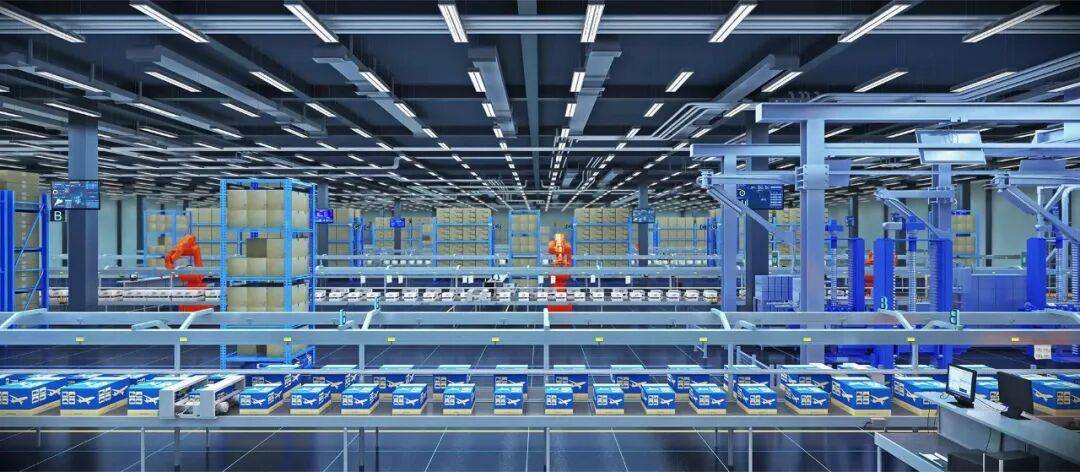
美团医药健康携手顺丰速运,在湖北鄂州共建医药电商航空物流中心
3 6 Ke· 2025-11-17 03:23
Core Viewpoint - Meituan Health and SF Express have established a strategic partnership to launch the first pharmaceutical e-commerce air logistics center in Ezhou, Hubei, enhancing the efficiency of pharmaceutical delivery services [1] Group 1: Strategic Partnership - The collaboration between Meituan Health and SF Express aims to optimize the logistics of pharmaceutical deliveries [1] - The new logistics center is located at Ezhou Huahu International Airport, marking a significant advancement in the industry [1] Group 2: Operational Efficiency - The logistics center allows for zero-distance, zero-transfer, and zero-waiting time for same-day orders, significantly improving delivery speed [1] - It features an independent flight network and capacity, eliminating reliance on passenger flights [1] Group 3: Delivery Capabilities - The center can achieve "next-morning delivery" to 35 cities and "next-day delivery" to 318 cities [1]

极兔速递年末业务旺季包裹量创新高 多个市场延续高增长
Zheng Quan Ri Bao Wang· 2025-11-17 03:13
Core Insights - J&T Express reported significant growth in global package volume during the Double 11 shopping festival, with over 100 million packages processed on November 11, marking a 9% year-on-year increase [1] - The average daily package volume from November 1 to 12 reached 94.59 million, reflecting a 15% year-on-year growth, particularly strong in Southeast Asia and new markets with growth rates of 78% and 83% respectively [1] Group 1: Market Performance - The Southeast Asian market showed robust growth, with the Philippines experiencing a 55% increase in average daily package volume during Double 11 compared to regular days [2] - Vietnam saw explosive growth, with a 211% year-on-year increase in total package volume from November 1 to 11 [2] Group 2: Capacity Expansion - To meet the demands of the peak season, J&T Express implemented 18 capacity expansion and upgrade projects in Thailand, enhancing operations across 10 centers and 8 distribution points, resulting in an overall capacity increase of 80% [2] - The company deployed over 300 temporary trucks daily and arranged for more than 9,000 personnel at end-point locations during the peak season [2] Group 3: Support for SMEs - In China, J&T Express became a preferred logistics partner for major e-commerce platforms, achieving a 15% year-on-year increase in average daily package volume in the Zhangzhou Longhai area during Double 11 [3] - The company optimized fulfillment processes and innovated return handling mechanisms to enhance customer experience, particularly for small and medium-sized enterprises [3] Group 4: Regional Growth - J&T Express demonstrated strong growth potential in emerging markets, with over 1 million packages processed in Brazil from November 11 to 12 due to proactive capacity expansion [4] - In Egypt, collaboration with local e-commerce platforms like noon resulted in a 41% year-on-year increase in package volume from November 1 to 12 [4] - The company continues to invest in advanced technologies such as AI sorting and automated transfer centers to enhance global logistics capabilities [4]
油运市场旺季启动,地缘冲突不改航空上行 | 投研报告
Zhong Guo Neng Yuan Wang· 2025-11-17 02:09
Group 1: Express Delivery Industry - The National Postal Administration reported that from October 21 to November 11, express delivery companies collected a total of 13.938 billion packages, with an average daily collection of 634 million packages, which is 117.8% of the regular business volume [2][3] - The peak daily business volume during the peak season reached 777 million packages, setting a new record for single-day business volume [2][3] - The express delivery market continues to expand, demonstrating its critical role in promoting consumption upgrades and supporting economic growth [2][3] Group 2: Industry Dynamics - The National Postal Administration emphasized the need to enhance delivery service levels and combat "involution" during recent meetings with industry stakeholders [2] - The express delivery business volume is expected to grow by approximately 7% year-on-year in October, with business revenue projected to increase by around 5% [3] - During the National Day and Mid-Autumn Festival holidays, from October 1 to 8, express delivery companies processed a total of 7.231 billion packages, with an average daily processing volume exceeding 900 million packages [3] Group 3: Investment Opportunities - The current e-commerce express delivery industry shows resilient demand, and the "anti-involution" trend is driving up express delivery prices, releasing profit elasticity for companies [12] - Companies such as SF Express and JD Logistics are expected to benefit from cyclical recovery and ongoing cost reductions, with significant potential for both performance and valuation increases [12] - Recommendations include focusing on YTO Express for market share growth, Shentong Express for capacity and service improvements, Zhongtong Express for stable operations, and SF Holdings for continuous operational potential [12]
顺丰控股(002352):战略投入拖累短期业绩 上调回购彰显长期信心
Xin Lang Cai Jing· 2025-11-17 00:33
Core Insights - In Q3 2025, the company achieved operating revenue of 78.4 billion yuan, a year-on-year increase of 8.2%, while net profit attributable to shareholders was 2.57 billion yuan, a year-on-year decrease of 8.5% [1][2] Business Performance - The company's operating revenue reached 78.4 billion yuan in Q3 2025, reflecting an 8.2% year-on-year growth, with total parcel volume increasing by 3.34 billion to 4.31 billion parcels, a growth of 33.4% [2] - The express logistics segment saw revenue growth of 14.4% year-on-year, while supply chain and international business revenue declined by 5.3% due to a significant drop in international freight rates compared to the previous year [2][3] - The company's gross profit was 9.79 billion yuan, a decrease of 4.4% year-on-year, with net profit margins under pressure due to increased resource investments and a 14.2% drop in express delivery prices [3] Strategic Initiatives - The company is focusing on enhancing its operational network and high-quality service capabilities, with a particular emphasis on mid-to-high-end express services, which have shown improved revenue growth [3] - The company is advancing its industry-specific strategies, achieving over 25% year-on-year growth in logistics revenue across sectors such as industrial equipment, high-tech communications, automotive, and consumer goods [4] - The international strategy includes expanding the international network and accelerating resource investment in cross-border logistics, with a 27% year-on-year increase in international express and cross-border e-commerce logistics revenue [4] Market Strategy and Future Outlook - The company is adjusting its market strategies dynamically, moving from scale-driven incentives to value-driven incentives, and plans to integrate internal and external resources for operational innovation [4] - The company has increased its share buyback plan to 1.5-3 billion yuan, reflecting confidence in future growth and long-term strategy [4] - Projected net profits for 2025-2027 are estimated at 11.04 billion, 12.48 billion, and 14.09 billion yuan, with corresponding price-to-earnings ratios of 18.5, 16.4, and 14.5 times [4]

AI抢饭碗!美国职场进入淘汰制,实习成奢侈品,2026届学生慌了
Sou Hu Cai Jing· 2025-11-16 11:48
当大规模裁员潮、AI替代风暴与经济疲软形成共振,2026届毕业生正遭遇一场 "三重危机" 叠加的就业 寒冬,找工作从 "双向选择" 沦为 "生死竞速"。 巨头裁员潮蔓延 企业裁员的触角正从科技行业向全领域延伸。 继亚马逊、UPS 宣布大规模减员后,威瑞森通信(Verizon)计划一周内裁撤1.5万个岗位,创下公司史 上最大规模裁员纪录。 传统制造业同样未能幸免,福特汽车宣布2026年初将关闭德国科隆工厂部分生产线,裁员1000 人,累 计欧洲裁员规模将达4000人。 美国银行数据显示,仅科技行业就已砍掉8.9万个岗位,其中2.7万个直接被AI替代。 距离2026年春季毕业季尚有半年,美国高校的求职氛围已降至冰点。 美国全国高校与雇主协会(NACE)对183家企业的最新调查显示,52%的雇主将明年春招评级为 "糟糕 或一般",这是自2020年疫情以来最悲观的预期。 更令人揪心的是,纽约联储数据显示,今年6月美国应届生失业率飙至4.8%,不仅高于4.3%的整体失业 率,更创下四年来同期峰值。 裁员背后企业用人策略发生根本转变。NACE调查显示,雇主更倾向于招聘有经验的求职者填补空缺, 而非从零培养应届生。 曾任职 ...


苏州工业园区公安多维发力保障快递物流平安顺畅
Su Zhou Ri Bao· 2025-11-15 23:38
Core Insights - The "Double 11" shopping festival has led to a surge in logistics and delivery volumes, prompting increased consumer activity and service demands, alongside rising safety risks [1] Group 1: Logistics Security Measures - The Suzhou Industrial Park has established a "patrol + stationed" mechanism to ensure the safety and smooth operation of logistics centers during the "Double 11" period [2] - The East Scenic Industrial Park logistics center, housing major logistics companies, employs over 3,000 delivery personnel and has more than 500 delivery vehicles, making it a critical hub for logistics services [2] - Police have implemented a dual-track prevention mechanism, including route patrols and central monitoring, to safeguard package security and logistics flow [2] Group 2: Safety Inspections and Risk Management - A special task force has been formed to conduct safety inspections across logistics networks, identifying and rectifying 19 safety hazards, with 8 rectified on-site [3] - No incidents of package theft or logistics disputes have been reported, indicating effective management of the logistics sector's stability [3] Group 3: Supporting the "Crab Economy" - The police have deployed a "Golden Shield" team to monitor crab sales and logistics during the peak season, ensuring a secure environment for crab transactions [4] - The crab trading market has three locations with over 180 sales points, with daily transaction volumes reaching thousands of kilograms [4] Group 4: Fraud Prevention Initiatives - The "Golden Shield" team conducts training for e-commerce operators on legal compliance and fraud prevention, aiming to eliminate consumer disputes and fraudulent activities [5] - Increased vigilance against fake deliveries has been emphasized, with delivery personnel instructed to report suspicious packages [5] Group 5: Community Support for New Employment Groups - Police have engaged with delivery personnel to educate them on telecom fraud, enhancing their awareness and protective measures against financial scams [6] - A comprehensive service system has been established to address the challenges faced by new employment groups, including access and convenience issues [6] Group 6: Anti-Fraud Awareness Campaigns - A collaborative anti-fraud promotion alliance has been formed with logistics and delivery companies, utilizing delivery personnel to disseminate fraud prevention information [7]
极兔速递年末业务旺季包裹量创新高,东南亚与新市场同比增78%和83%
Ge Long Hui· 2025-11-14 13:14
Core Insights - J&T Express has achieved record-breaking parcel volumes during the year-end peak season, with a global parcel volume exceeding 100 million on November 11, marking a 9% year-on-year increase [1] - The company has demonstrated strong growth in Southeast Asia and new markets, with parcel volume growth rates of 78% and 83% respectively [1] Southeast Asia: Sustained High Growth - The Philippines experienced a 55% increase in average daily parcel volume during the Double Eleven period compared to regular days [3] - Vietnam saw an explosive growth of 211% in parcel volume from November 1 to November 11 [3] - J&T Express has implemented 18 capacity expansion and upgrade projects in Thailand, enhancing overall operational capacity by 80% [3] China: Differentiated Services for Steady Growth - J&T Express has become a preferred logistics partner for major e-commerce platforms in China, achieving a 15% year-on-year increase in average daily parcel volume in the Zhangzhou Longhai area during the Double Eleven peak season [5] - The company has upgraded 57 transit centers and over 1,000 end-point networks to ensure efficient logistics operations [5] - Over 1,000 unmanned delivery vehicles have been deployed in China to address last-mile delivery challenges [5] New Markets: Strengthening Global Presence - In Brazil, J&T Express surpassed one million parcels from November 11 to 12, showcasing strong growth momentum [7] - In Egypt, the company has integrated into the local e-commerce ecosystem, with parcel volume from noon increasing by 41% compared to the same period in 2024 [7] - J&T Express continues to invest in advanced technologies such as AI sorting and automated transfer centers to enhance global logistics capabilities [7]
极兔速递年末业务旺季包裹量创新高 东南亚与新市场同比增78%和83%
Zhi Tong Cai Jing· 2025-11-14 13:13
Core Insights - J&T Express reported significant growth in global package volume during the Double Eleven shopping festival, with a record-breaking daily package volume exceeding 100 million on November 11, marking a 9% year-on-year increase [1] - From November 1 to December 12, the average daily package volume reached 94.59 million, reflecting a 15% year-on-year growth, particularly strong in Southeast Asia and new markets with growth rates of 78% and 83% respectively [1] Southeast Asia: Sustained High Growth - During the peak season, the Southeast Asian market showed robust activity, with the Philippines experiencing a 55% increase in average daily package volume during Double Eleven compared to regular days [2] - Vietnam saw explosive growth, with a 211% year-on-year increase in package volume from November 1 to 11 [2] - To support the peak season, J&T Express implemented 18 capacity expansion and upgrade projects in Thailand, enhancing overall operational capacity by 80% through the addition of five automated sorting systems [2] China: Differentiated Services for SMEs - In China, J&T Express became a preferred logistics partner for major e-commerce platforms by leveraging differentiated service strategies and enhancing network capabilities [3] - The average daily package volume in the Zhangzhou Longhai area increased by approximately 15% year-on-year during the Double Eleven peak season, effectively addressing the surge in orders [3] - J&T Express upgraded 57 transfer centers and over 1,000 end-point networks to ensure smooth and efficient logistics operations, deploying over 1,000 unmanned delivery vehicles to tackle last-mile delivery challenges [3] New Markets: Strengthening Global Presence - J&T Express demonstrated strong growth potential in emerging markets, with package volume in Brazil exceeding one million during November 11-12 due to proactive capacity expansion [4] - In Egypt, collaboration with local e-commerce platforms like noon resulted in a 41% year-on-year increase in package volume from November 1 to 12 [4] - The company continues to invest in advanced technologies such as AI sorting and automated transfer centers to enhance global logistics capabilities and support the growth of the global e-commerce economy [4]
极兔速递年末业务旺季包裹量创新高,东南亚与新市场同比增78%和83%
Ge Long Hui· 2025-11-14 13:07
Core Insights - J&T Express (1519.HK) reported significant growth in global package volume during the "Double Eleven" shopping festival, with a record-breaking daily package volume exceeding 100 million on November 11, marking a 9% year-on-year increase [1] - From November 1 to 12, the average daily package volume reached 94.59 million, reflecting a 15% year-on-year growth, particularly strong in Southeast Asia and new markets with growth rates of 78% and 83% respectively [1] Southeast Asia: Sustained High Growth - The Philippines experienced a 55% increase in average daily package volume during Double Eleven compared to regular days [3] - Vietnam saw explosive growth with a 211% year-on-year increase in package volume from November 1 to 11 [3] - J&T Express implemented 18 capacity expansion and upgrade projects in Thailand, enhancing overall operational capacity by 80% through the addition of five automated sorting machines [3] China: Differentiated Services for Steady Growth - J&T Express became a preferred logistics partner for major e-commerce platforms in China, achieving a 15% year-on-year increase in average daily package volume in the Zhangzhou Longhai area during Double Eleven [5] - The company optimized fulfillment processes and innovated return handling mechanisms to enhance customer experience, particularly for live-streaming e-commerce [5] - J&T Express upgraded 57 transit centers and over 1,000 end-point delivery locations in China, ensuring efficient logistics operations [5] New Markets: Strengthening Global Presence - In Brazil, J&T Express expanded trunk capacity ahead of the shopping festival, surpassing one million packages from November 11 to 12 [7] - In Egypt, collaboration with local e-commerce platforms like noon resulted in a 41% year-on-year increase in package volume from November 1 to 12 [7] - The company continues to invest in AI sorting and automated transit centers to enhance global logistics capabilities and support the growth of global e-commerce [7]