
港口

Search documents
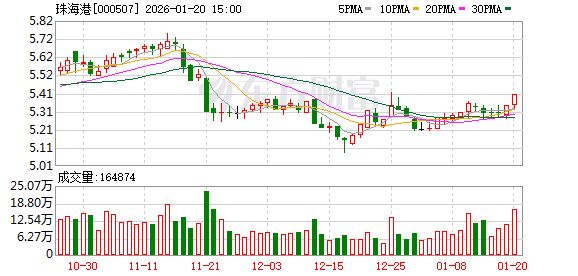
珠海港:股价表现受多方面因素影响
Zheng Quan Ri Bao· 2026-01-20 12:37
Core Viewpoint - Zhuhai Port emphasizes its commitment to a dual-driven strategy, focusing on the synergistic development of port logistics and new energy sectors, while enhancing sustainable development capabilities [2] Group 1: Company Strategy - The company maintains a dual-driven strategy that promotes the collaborative growth of its core businesses in port logistics and new energy [2] - Zhuhai Port is actively engaged in value management initiatives tailored to its unique characteristics [2] Group 2: Investor Relations - The company is focused on providing returns to shareholders and enhancing communication with investors [2] - Continuous efforts are made to convey operational results and development expectations to investors [2]


三省“双子星”抢龙头,透视区域经济新格局
Xin Jing Bao· 2026-01-20 11:44
Group 1: Economic Competition Overview - The competition between cities like Shenyang and Dalian is intensifying, with Shenyang narrowing the GDP gap to less than 500 billion yuan in 2024, marking a significant phase in the "Northeast first city" contest [1][2] - In Southeast China, Fuzhou and Quanzhou have been in a prolonged economic rivalry for over 20 years, with Fuzhou reclaiming its leading position in recent years after being surpassed by Quanzhou in 1999 [1][6][7] Group 2: Shenyang vs. Dalian - In 2024, Dalian's GDP reached 9516.9 billion yuan, while Shenyang's was 9027.1 billion yuan, with Dalian becoming the first city in Northeast China to join the "trillion yuan club" [2] - Shenyang's economic growth rate of 6.1% in 2023 allowed it to slightly surpass Dalian's 6.0%, reducing the economic gap by 245 billion yuan over two years [2][3] - Dalian's economic strength is rooted in its industrial base and port advantages, while Shenyang is leveraging its transportation hub status and policy support to transition towards high-end manufacturing [3][4] Group 3: Fuzhou vs. Quanzhou - Fuzhou's economic growth has been bolstered by its provincial capital status and the development of digital economy initiatives, with its digital economy surpassing 450 billion yuan by 2020 [6][7] - The GDP gap between Fuzhou and Quanzhou narrowed from over 600 billion yuan in 2018 to approximately 130 billion yuan by 2020, with Fuzhou regaining its position as the leading city in 2021 [7] - Quanzhou is focusing on upgrading its traditional manufacturing sectors while also developing emerging industries such as artificial intelligence and new materials [7][8] Group 4: Tangshan vs. Shijiazhuang - Tangshan surpassed Shijiazhuang in GDP for the first time in 2005, and by 2021, the gap had widened to 1740 billion yuan, but Shijiazhuang has since begun to close this gap [8][10] - In 2024, Tangshan's GDP crossed the trillion yuan mark, while Shijiazhuang reached 8203.4 billion yuan, indicating a potential shift towards a "dual trillion city" economy in Hebei [8][10] - Both cities are focusing on integrating with the Beijing-Tianjin-Hebei region and developing new industries, with Shijiazhuang emphasizing artificial intelligence and future industries [10][11]
远航港口(08502.HK)附属与中溧建设订立设备采购安装工程合同
Ge Long Hui· 2026-01-20 10:00
Core Viewpoint - Yuanhang Port (08502.HK) announced a contract with Zhongli Construction for equipment procurement and installation, valued at approximately RMB 29 million, aimed at upgrading outdated equipment and enhancing operational capabilities [1] Group 1: Contract Details - The contract was signed on January 20, 2026, between Chizhou Port Holdings (indirectly 72% owned by the company) and the contractor Zhongli Construction [1] - The total cost of the equipment construction work is approximately RMB 29,001,000 [1] Group 2: Purpose and Benefits - The equipment construction is necessary for upgrading the facilities at the Chizhou Jiangkou Port area, which involves phasing out outdated technology [1] - The upgrade will enhance the company's technical standards and allow it to benefit from national policy support [1] - Additionally, the construction will meet the planning and environmental requirements of the Jiangkou Port area, contributing to the long-term development of Chizhou Port Holdings' port operations [1] - This initiative is expected to improve the company's competitiveness in the inland port operator market in Chizhou, Anhui Province, China [1]
远航港口附属订立2900.1万元设备采购安装工程合同
Zhi Tong Cai Jing· 2026-01-20 09:40
Core Viewpoint - The announcement highlights the signing of a contract for equipment procurement and installation by Chizhou Port Holdings, which is indirectly 72% owned by the company, with Zhongli Construction Group for approximately RMB 29.01 million [1] Group 1: Contract Details - The contractor will be responsible for the construction of equipment at the Chizhou Jiangkou Port area, including a ship loading system, two belt conveyors, a rear pit hopper, and a dust suppression system [1] - The contract also includes the manufacturing, installation, technical services, training, debugging, trial operation, and acceptance of four sets of enclosed corridor facilities for the belt conveyors [1] - The contractor is obligated to repair any defects in the equipment during the defect liability period as per the procurement and installation contract [1] Group 2: Strategic Importance - The equipment construction is aimed at upgrading outdated technology at the Jiangkou Port area, enhancing the company's technical standards, and benefiting from national policy support [1] - The new equipment will meet the planning and environmental requirements of the Jiangkou Port area, contributing to the long-term development of Chizhou Port Holdings' port business [1] - This initiative is expected to improve the company's competitiveness in the inland port operator market in Chizhou, Anhui Province, China [1]
烟台市人大代表滕勇:深化港产城融合,释放港口发展新动能
Qi Lu Wan Bao· 2026-01-20 08:24
Core Viewpoint - Yantai aims to build a world-class marine port, emphasizing the integration of port, industry, and city development as a crucial path for economic growth and urban enhancement [1] Group 1: Current Development Status - The integration of port and industry in Laizhou is currently shallow, with local industrial parks still in the early stages of development, lacking scale and stable supply for the port [2] - The main cargo types at Laizhou Port primarily serve external enterprises, resulting in weak connections with local industries and a loss of logistics value as local goods flow to surrounding ports [2] Group 2: Challenges - The existing transportation system relies heavily on road transport, which is becoming less competitive due to environmental regulations and rising costs, limiting the port's efficiency and attractiveness for logistics-dependent industries [2] - The lack of a completed railway connection restricts effective integration with the inland areas, affecting cargo turnover efficiency [2] Group 3: Recommendations - Strengthening planning and policy support is essential to enhance the foundation for integrated development, including aligning port planning with local industrial and land use plans [3] - Focus on attracting industries that align with the port's logistics capabilities, such as petrochemicals and high-end equipment manufacturing, while improving infrastructure connectivity [3] - Deepening regional collaboration and learning from successful models in other port cities to create actionable integration development plans and secure higher-level support [4]
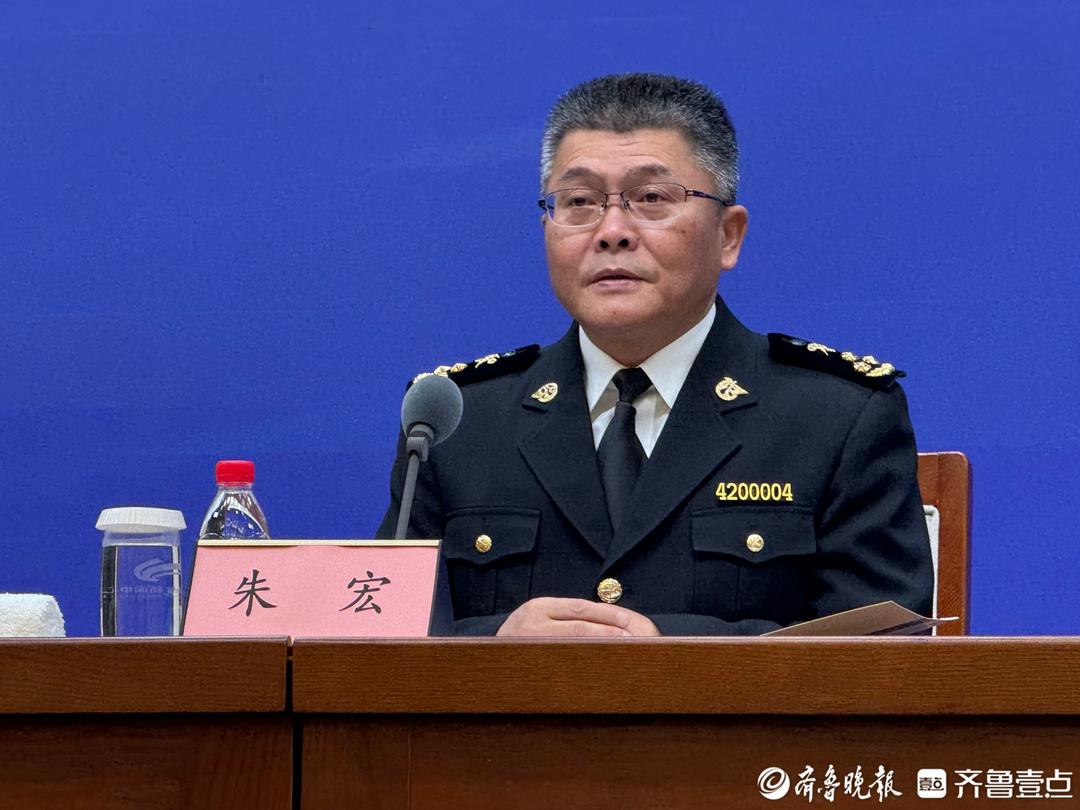
“智慧升级、通道拓展、口岸便利”,海关从这三方面助力山东“好品”走向全球
Qi Lu Wan Bao· 2026-01-20 07:51
Core Viewpoint - The Shandong provincial government is actively promoting the construction of a world-class port cluster and enhancing international logistics channels, with a focus on smart upgrades, channel expansion, and port facilitation during the 14th Five-Year Plan period [3][4]. Group 1: Smart Port Construction - The Qingdao Customs is advancing the construction of smart ports by establishing a "1+6" intelligent transfer supervision system centered around Qingdao Port, which integrates policies for "domestic and foreign trade on the same ship" and "composite ports" [3]. - The self-developed "intelligent transfer platform" has significantly optimized port transfer supervision processes, reducing the operational time for enterprises by approximately 50% [3]. - The integration of smart customs, smart ports, and smart checkpoints has led to the creation of the "Customs-Port Connection" smart inspection platform, enhancing logistics efficiency [3]. Group 2: Logistics Channel Development - The initiative to streamline the Yellow River Basin's land-sea logistics corridor includes the promotion of "land-sea linkage and sea-rail direct transport" models, which have reduced domestic transportation costs by 20% [4]. - The import and export value through Shandong ports by other provinces in the Yellow River Basin has increased by 70.4% during the 14th Five-Year Plan compared to the previous five years [4]. - A digital map of the Yellow River Basin's production and supply chain has been developed to guide enterprises in optimizing their industrial structure and expanding into Belt and Road countries, with a reported 87.9% increase in trade with these countries [4]. Group 3: Trade Facilitation - Customs has introduced a "local inspection, port release" model for specific products like agricultural goods and building materials, allowing inspections to be completed at the production site for faster export [4]. - Hundreds of foreign trade enterprises in Shandong have received Authorized Economic Operator (AEO) certification, which provides benefits such as lower inspection rates and simplified documentation for certified enterprises at foreign ports [4]. - The continuous growth and record-high levels of Shandong's foreign trade during the 14th Five-Year Plan reflect the effectiveness of port upgrades and international logistics channel construction [5].
智慧升级、通道拓展、口岸便利,“十四五”山东海关推动国际物流大通道建设
Feng Huang Wang Cai Jing· 2026-01-20 07:38
Core Viewpoint - The Shandong provincial government is focusing on enhancing international trade and logistics efficiency through smart port construction and improved trade facilitation measures during the 14th Five-Year Plan period, aiming for significant growth in foreign trade and logistics capabilities [2][6][7]. Group 1: Smart Port Construction - Shandong is advancing the construction of smart ports, centered around Qingdao Port, by establishing a "1+6" intelligent transfer supervision system that integrates various facilitation policies, significantly improving logistics efficiency and reducing operational time by approximately 50% [6]. - The province has pioneered a "Customs-Port Connection" smart inspection platform and a smart communication quarantine model for transportation tools, leading to substantial improvements in port logistics efficiency [6]. Group 2: Logistics Corridor Development - Shandong is working to streamline the Yellow River Basin's land-sea logistics corridor, promoting a "land-sea linkage, sea-rail direct transport" model, which has reduced domestic transportation costs by 20% [6]. - The province has developed a digital map for the supply chain in the Yellow River Basin, facilitating the optimization of industrial structures and expanding market access to countries involved in the Belt and Road Initiative, with a reported 87.9% increase in exports to these countries during the 14th Five-Year Plan compared to the previous period [7]. Group 3: Trade Facilitation Measures - Shandong Customs has introduced a "local inspection, port release" model for specific products, allowing inspections to be completed at the production site, thus enabling faster customs clearance [7]. - The customs authority has supported hundreds of foreign trade enterprises in obtaining Authorized Economic Operator (AEO) certification, which provides benefits such as reduced inspection rates and simplified documentation for certified companies [7].

从“内贸冠军”转型“双循环枢纽” 广州港“十五五”怎么拼?
2 1 Shi Ji Jing Ji Bao Dao· 2026-01-20 05:00
Core Viewpoint - Guangzhou Port is positioning itself as a high-level international shipping service hub, focusing on integrating port development into the core agenda of the marine economy, marking a significant transformation in its operational strategy [1]. Group 1: Port Development and Performance - Guangzhou Port achieved a cargo throughput of over 696 million tons and a container throughput exceeding 28 million TEUs during the 14th Five-Year Plan period, ranking among the top six ports globally [1]. - The proportion of foreign trade containers surpassed 50%, indicating a successful transition to a dual-circulation hub that balances domestic and international trade [1]. Group 2: Expansion of Shipping Network - By 2025, Guangzhou Port is expected to rank 12th globally and second in China, following Shanghai and Hong Kong, according to the Xinhua-Baltic International Shipping Center Development Index [2]. - The launch of the WSA3 shipping route to South America's west coast marks a significant milestone, facilitating the export of Chinese manufactured goods and the import of high-quality products from Latin America [2]. - Guangzhou Port plans to add 10 new foreign trade routes by the end of 2025, bringing the total to 182, with a focus on the Belt and Road Initiative and RCEP countries [2]. Group 3: Multi-Modal Transport System - The sea-rail intermodal transport volume is projected to exceed 700,000 TEUs by 2025, reflecting a year-on-year growth of 15.7% [3]. - The port has established 39 sea-rail intermodal routes connecting 11 provinces and 38 inland ports, enhancing its domestic logistics capabilities [3]. Group 4: Infrastructure Investment and Upgrades - During the 14th Five-Year Plan, Guangzhou Port Group invested 26 billion yuan in key projects, including the fully automated Nansha Phase IV terminal, increasing port capacity by 12 million tons [3]. - The establishment of the Nansha headquarters signifies a strategic shift towards enhancing the port's operational capabilities and global competitiveness [4]. Group 5: Future Goals and Strategic Initiatives - Guangzhou Port aims to become a world-class strong port by investing 20 billion yuan in top-tier port facilities and enhancing cargo and container throughput capacities [4]. - The port is focusing on digitalization, intelligence, and green transformation, aiming to create a low-carbon demonstration port area and improve the business environment [4]. - The local government plans to attract more shipping companies and enhance logistics services, particularly in emerging markets like Southeast Asia, the Middle East, and Latin America [5].

从“内贸冠军”转型“双循环枢纽”,广州港“十五五”怎么拼?
2 1 Shi Ji Jing Ji Bao Dao· 2026-01-20 04:57
Core Viewpoint - Guangzhou Port is positioning itself as a high-level international shipping service hub, integrating port development into the core agenda of the marine economy, and achieving significant growth in cargo and container throughput during the 14th Five-Year Plan period [2][3]. Group 1: Port Development and Performance - Guangzhou Port achieved a cargo throughput of over 696 million tons and a container throughput exceeding 28 million TEUs, ranking among the top six ports globally [2]. - The proportion of foreign trade containers surpassed 50%, marking a successful transition to a dual-circulation hub that balances domestic and international trade [2]. - By 2025, Guangzhou Port is expected to rank 12th globally and second in China, following Shanghai, Hong Kong, and Ningbo-Zhoushan [3]. Group 2: Expansion of Shipping Network - The launch of the WSA3 shipping route to South America signifies Guangzhou Port's expansion into new markets, facilitating the export of Chinese manufactured goods and the import of high-quality products from Latin America [3]. - By the end of 2025, Guangzhou Port plans to add 10 new foreign trade routes, bringing the total to 182, with a focus on the Belt and Road Initiative and RCEP countries [3]. Group 3: Multi-Modal Transport System - The sea-rail intermodal transport volume is projected to exceed 700,000 TEUs by 2025, reflecting a year-on-year growth of 15.7% [4]. - Guangzhou Port has established 39 sea-rail intermodal routes connecting 11 provinces and 38 inland ports, enhancing its domestic trade capabilities [4]. Group 4: Infrastructure Investment and Upgrades - During the 14th Five-Year Plan, Guangzhou Port Group invested 26 billion yuan in key projects, including the fully automated Nansha Phase IV terminal, increasing port capacity by 12 million tons [4]. - The strategic shift from "facing the river" to "facing the sea" was marked by the establishment of the Nansha headquarters, which is crucial for the development of Guangzhou as an international shipping hub [5]. Group 5: Future Goals and Initiatives - Looking ahead to the 15th Five-Year Plan, Guangzhou Port aims to invest 20 billion yuan to enhance port facilities and increase cargo capacity by 10 million tons and container capacity by 5 million TEUs [5]. - The port is focusing on digitalization, intelligence, and green transformation, aiming to create a low-carbon demonstration port and improve the business environment [5]. - Efforts will be made to attract more shipping companies and enhance the quality of domestic trade routes, particularly in emerging markets [6].

珠海港:完成发行4亿元超短期融资券
Xin Lang Cai Jing· 2026-01-20 03:51
Core Viewpoint - Zhuhai Port has successfully issued its first phase of ultra-short-term financing bonds for the year 2026, indicating a proactive approach to financing and capital management [1] Group 1: Financing Details - The ultra-short-term financing bond is named "26 Zhuhai Port Stock SCP001" with a total issuance amount of 400 million yuan [1] - The bond has a maturity period of 270 days and an issuance interest rate of 1.68% [1] - The issuance price is set at 100 yuan per 100 yuan [1] Group 2: Key Dates and Underwriters - The interest commencement date for the bond is January 19, 2026, while the repayment date is October 16, 2026 [1] - Beijing Bank Co., Ltd. serves as the book manager and lead underwriter, with China Merchants Bank Co., Ltd. acting as the co-lead underwriter [1]