
散货运输服务

Search documents
从“内贸冠军”转型“双循环枢纽” 广州港“十五五”怎么拼?
2 1 Shi Ji Jing Ji Bao Dao· 2026-01-20 05:00
Core Viewpoint - Guangzhou Port is positioning itself as a high-level international shipping service hub, focusing on integrating port development into the core agenda of the marine economy, marking a significant transformation in its operational strategy [1]. Group 1: Port Development and Performance - Guangzhou Port achieved a cargo throughput of over 696 million tons and a container throughput exceeding 28 million TEUs during the 14th Five-Year Plan period, ranking among the top six ports globally [1]. - The proportion of foreign trade containers surpassed 50%, indicating a successful transition to a dual-circulation hub that balances domestic and international trade [1]. Group 2: Expansion of Shipping Network - By 2025, Guangzhou Port is expected to rank 12th globally and second in China, following Shanghai and Hong Kong, according to the Xinhua-Baltic International Shipping Center Development Index [2]. - The launch of the WSA3 shipping route to South America's west coast marks a significant milestone, facilitating the export of Chinese manufactured goods and the import of high-quality products from Latin America [2]. - Guangzhou Port plans to add 10 new foreign trade routes by the end of 2025, bringing the total to 182, with a focus on the Belt and Road Initiative and RCEP countries [2]. Group 3: Multi-Modal Transport System - The sea-rail intermodal transport volume is projected to exceed 700,000 TEUs by 2025, reflecting a year-on-year growth of 15.7% [3]. - The port has established 39 sea-rail intermodal routes connecting 11 provinces and 38 inland ports, enhancing its domestic logistics capabilities [3]. Group 4: Infrastructure Investment and Upgrades - During the 14th Five-Year Plan, Guangzhou Port Group invested 26 billion yuan in key projects, including the fully automated Nansha Phase IV terminal, increasing port capacity by 12 million tons [3]. - The establishment of the Nansha headquarters signifies a strategic shift towards enhancing the port's operational capabilities and global competitiveness [4]. Group 5: Future Goals and Strategic Initiatives - Guangzhou Port aims to become a world-class strong port by investing 20 billion yuan in top-tier port facilities and enhancing cargo and container throughput capacities [4]. - The port is focusing on digitalization, intelligence, and green transformation, aiming to create a low-carbon demonstration port area and improve the business environment [4]. - The local government plans to attract more shipping companies and enhance logistics services, particularly in emerging markets like Southeast Asia, the Middle East, and Latin America [5].

广州港外贸集装箱占比过半,内贸第一大港进阶“双循环”枢纽
Nan Fang Du Shi Bao· 2026-01-19 06:35
Core Insights - Guangzhou Port is projected to handle over 696 million tons of cargo and exceed 28 million TEUs in container throughput by 2025, maintaining its position among the top six global ports [1] - The port has achieved double-digit growth in foreign trade cargo and container throughput, with foreign trade cargo increasing by 10.73% and container throughput by nearly 20%, marking a successful transition to a "dual circulation hub" [1] Global Network Expansion - Since 2025, Guangzhou Port has expanded its global shipping network, adding 10 new foreign trade routes, including a direct route from Nansha to South America, totaling 182 foreign trade routes [2] - The port has established deep cooperation with all top ten global shipping companies and formed friendly relations with 60 international ports, leading the nation in the number of friendly ports [2] Multimodal Transport System - Guangzhou Port has developed an efficient multimodal transport system, achieving seamless connections with rail, road, and inland waterway transport, and has maintained its status as the top domestic container port for 17 consecutive years [3] - In 2025, the sea-rail intermodal transport volume surpassed 700,000 TEUs, reflecting a year-on-year growth of 15.7% [3] Business Environment Optimization - The port has implemented a 24-hour pilot service with zero waiting time, reducing the average stay of container vessels to 0.87 days, ranking among the world's best [4] - Guangzhou has hosted significant economic development conferences, signing 21 projects with a total investment of nearly 7 billion yuan, expected to generate additional revenue of nearly 10 billion yuan [4] Infrastructure Upgrades - The Nansha Port area has established the world's first fully automated multimodal transport terminal, increasing container handling efficiency by 30% and deploying 158 unmanned guided vehicles for continuous operations [5] - The port has achieved 100% shore power coverage, with a total shore power supply exceeding 17 million kilowatt-hours, resulting in a carbon reduction of 11,730 tons [5] International Ranking Improvement - In 2025, Guangzhou Port ranked 12th globally in the Xinhua-Baltic International Shipping Center Development Index, surpassing Tokyo and ranking 4th in China [7] - The Pearl River cruise brand has gained significant influence, with Guangzhou ranking first globally in the International Urban Cruise Vitality Index Report, receiving over 4 million cruise passengers in 2025 [7]
2025年广州港强势破局:6.96 亿吨吞吐量+外贸占比超50%
Zhong Guo Jin Rong Xin Xi Wang· 2026-01-06 02:57
Core Insights - Guangzhou Port is projected to handle over 696 million tons of cargo and exceed 28 million TEUs in container throughput by 2025, maintaining its position among the top six global ports. The foreign trade cargo throughput is expected to grow by 10.73%, with foreign trade container throughput increasing by nearly 20%, leading the growth among coastal ports in China [1][2]. Global Network Expansion - Since 2025, Guangzhou Port has expanded its global shipping network, adding 10 new foreign trade routes, including a direct route from Nansha to South America. The port now operates 182 foreign trade liner routes, with 152 routes under the Belt and Road Initiative and 98 routes to RCEP countries, establishing connections with over 400 ports in more than 100 countries and regions [2][4]. Multimodal Transport System - Guangzhou Port has developed an efficient multimodal transport system, achieving seamless connections with rail, road, and inland waterway transport. The sea-rail intermodal volume surpassed 700,000 TEUs in 2025, marking a 15.7% year-on-year increase. The port operates 39 sea-rail intermodal trains, connecting 38 inland ports across 11 provinces [5]. Business Environment Optimization - The port has implemented a 24-hour pilot service with zero waiting time, reducing the average stay of container vessels to 0.87 days. Innovations such as "onboard certificate processing" have streamlined administrative services. In 2025, Guangzhou hosted a high-quality development conference, signing 21 projects with a total investment of nearly 7 billion yuan [7]. Infrastructure Upgrades - The Nansha Port Area has established the world's first fully automated multimodal terminal, increasing container handling efficiency by 30%. The port has also achieved 100% shore power coverage, with over 17 million kilowatt-hours of shore power supplied to vessels, resulting in a carbon reduction of 11,730 tons [8][9]. International Ranking Improvement - In 2025, Guangzhou surpassed Tokyo to rank 12th globally in the Xinhua-Baltic International Shipping Center Development Index, solidifying its position as the fourth in China. The Pearl River cruise brand also ranked first globally in the International Urban Cruise Vitality Index Report, with over 4 million visitors in 2025 [10][12]. Strategic Port Cluster Development - The Guangdong-Hong Kong-Macao Greater Bay Area port cluster, with Guangzhou, Shenzhen, and Hong Kong as key hubs, accounts for about one-quarter of the national container handling capacity. This strategic collaboration aims to transition from being the "largest" to the "strongest" in global supply chains, enhancing China's foreign trade capabilities [13].

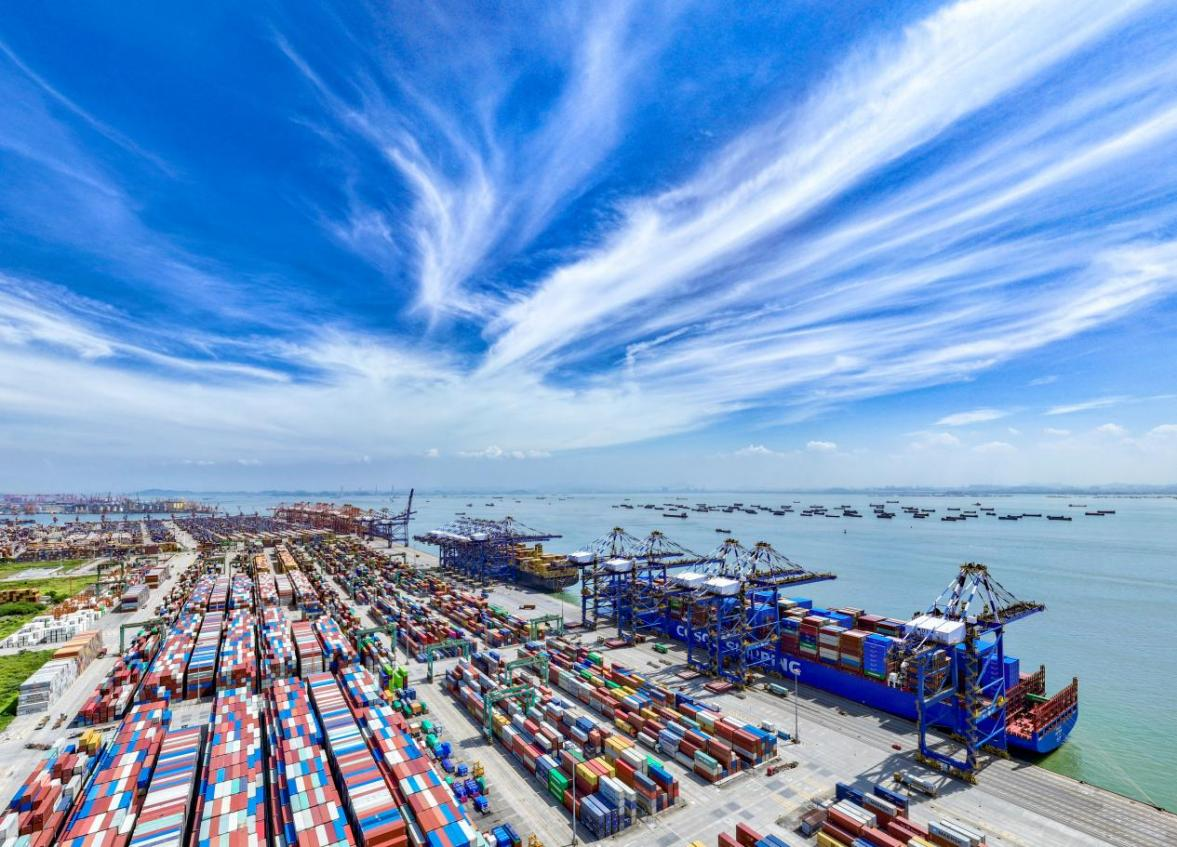
2025年广州港货物吞吐量突破6.96亿吨
Zhong Guo Xin Wen Wang· 2026-01-05 12:37
Core Viewpoint - Guangzhou Port is projected to achieve a cargo throughput of over 696 million tons and container throughput exceeding 28 million TEUs by 2025, maintaining its position among the top six global ports [1] Group 1: Cargo and Container Throughput - By 2025, Guangzhou Port's foreign trade cargo throughput is expected to grow by 10.73%, while foreign trade container throughput is anticipated to increase by nearly 20%, leading the growth among coastal ports in China [1] - The proportion of foreign trade containers at Guangzhou Port has surpassed 50%, marking a successful transition from being the "largest domestic trade port" to a "dual circulation hub" [1] Group 2: Global Shipping Network Expansion - Since 2025, Guangzhou Port has expanded its global shipping network, adding 10 new foreign trade routes, including a direct route from Nansha to South America, bringing the total to 182 foreign trade routes [3] - The port has established close shipping connections with over 400 ports in more than 100 countries and regions, and has signed a strategic cooperation memorandum with Maersk Group [3] Group 3: Industrial Clusters and Cargo Handling - The Guangzhou port area has developed various industrial clusters, including automotive manufacturing, marine engineering, petrochemicals, cold chain logistics, and grain [3] - The automotive roll-on/roll-off terminal cluster at Shazai Island has an annual throughput capacity of over 3 million vehicles, with a total automobile throughput of 1.5032 million vehicles in 2025, including 553,000 for export, reflecting a year-on-year growth of 37.6% [3] Group 4: Multimodal Transport System - Guangzhou Port has established an efficient multimodal transport system, achieving seamless connections with rail, road, and inland waterway transport, and has maintained its status as the largest domestic trade container port for 17 consecutive years [4] - By 2025, the sea-rail intermodal transport volume is expected to exceed 700,000 TEUs, with a year-on-year increase of 15.7% [4] Group 5: Regional Port Cooperation - The Guangdong-Hong Kong-Macao Greater Bay Area port cluster, including Guangzhou Port, Shenzhen Port, and others, accounts for approximately one-quarter of the national container handling capacity [5] - The three major ports have formed a pattern of "differentiated division of labor and complementary advantages," gradually transitioning from being the "largest in the world" to the "strongest in the world" [5]
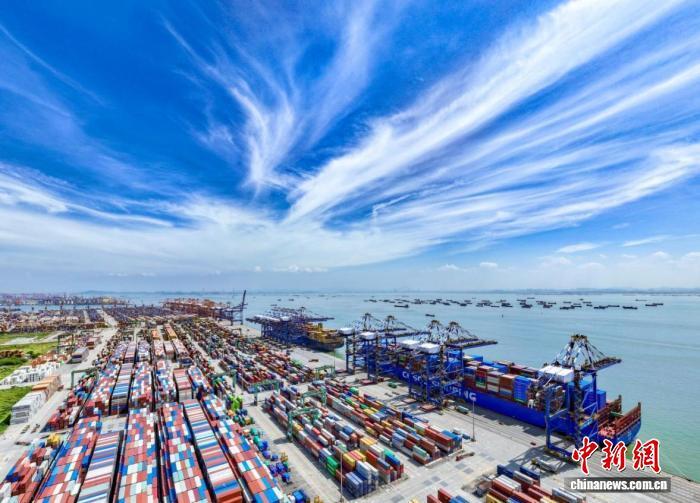
铜、白银新高,周期怎么看?
2025-12-08 00:41
Summary of Key Points from Conference Call Records Industry Overview Aviation Industry - The adjustment of the China-Japan route impacts airlines and ticket prices, with the route accounting for 3% of the total market share. The removal of flights has led to a shift in capacity to domestic flights, causing ticket prices to stabilize or slightly decline from previous growth of 2-3% [2] - Airlines have extended the free ticket refund period for the China-Japan route until March 31, 2026, resulting in short-term disruptions but overall limited impact due to the small number of flights removed [2] - The recommendation for airline stocks includes China Southern Airlines, China Eastern Airlines, and Air China, followed by Huaxia Airlines, Juneyao Airlines, and Spring Airlines [2] Retail and Duty-Free Market - The Shanghai Airport duty-free store bidding process has sparked discussions, with potential new operators being introduced as existing shareholders oppose the bid. This could lead to increased revenue for Shanghai Airport [4] - The bidding process may benefit Shanghai Airport regardless of the outcome, as the expected revenue from the bidding exceeds investment returns [4] Shipping and Bulk Freight - The Baltic Dry Index (BDI) reached a two-year high of 2,854 points, driven by the upcoming production of the West Manganese Mine and concentrated shipments from Australian mines [5] - The outlook for the bulk shipping market remains positive, with recommendations for stocks such as Haitong Development, Pacific Shipping, and China Merchants Energy [5] Express Delivery Industry - Jitu's volume growth in Southeast Asia reached 78% during the Double Eleven shopping festival, with new market growth at 83%, indicating strong performance [6] - The express delivery sector is experiencing a shift, with leading companies increasing market share while lower-tier companies see declines. Zhongtong has returned to double-digit growth in October and November, making it an attractive investment opportunity [7] Commodity Market Insights Metal Market - The commodity cycle since 2020 is not yet halfway through, with expectations for a bull market in 2026 driven by a weakening dollar and supply chain disruptions [8] - The investment strategy for 2026 focuses on energy metals, nickel, cobalt, gold, copper, aluminum, and strategic metals, influenced by energy revolutions and geopolitical tensions [11] - Specific insights include: - Nickel and cobalt prices are expected to remain high due to quota systems and unexpected demand for energy storage [8] - Copper's supply issues are critical, with both financial and commodity attributes driving its value [8] - Aluminum is anticipated to break out of a three-year range due to low inventory and increased demand from industrial and energy sectors [8] Coal Market - The coal market is currently under pressure, with prices for Shanxi coal dropping by 27 yuan, and overall coal inventory rising but still below last year's levels [13][14] - Electricity consumption has decreased year-on-year, but there is a seasonal uptick in demand [15] - The national coal market conference indicated a balanced supply-demand outlook for 2026, with a focus on long-term contracts and import controls to stabilize prices [16] Future Projections - The overall sentiment for the metal sector in 2026 is optimistic, emphasizing the importance of energy revolutions and geopolitical factors for long-term investment opportunities [9]
宁波远洋2025年三季度实现营收15.81亿元 同比增长19.23%
Zheng Quan Ri Bao Zhi Sheng· 2025-10-28 13:37
Core Insights - Ningbo Ocean Transportation Co., Ltd. reported a revenue of 1.581 billion yuan for Q3 2025, marking a year-on-year increase of 19.23%, and a net profit attributable to shareholders of 155 million yuan, up 21.15% year-on-year [1] - The company is focusing on strategic planning and layout to solidify its long-term development foundation [1] Container Business - The near-sea shipping routes have shown steady growth, with enhancements in Southeast Asia shipping services [1] - Two direct lines to Thailand and Vietnam have been renewed, and a new direct shipping line from Ningbo to Wenzhou to Manila has been launched, improving regional route networks [1] - The total number of shipping routes has exceeded 40, creating a comprehensive network for domestic and near-sea trade [1] Bulk Cargo Business - In Q3 2025, the company successfully launched its first West Africa route, marking a significant step in expanding its global shipping network [2] - This development underscores the company's commitment to deepening its presence in the West African market [2] Green Fleet Development - The company has integrated green and low-carbon principles into its fleet planning and operations, with 29 green energy-efficient vessels, accounting for 54.7% of its owned fleet [3] - The "740 standard container pure electric ship" project has been recognized as a national demonstration project for green low-carbon technology [3] - The first domestic pure electric ship has completed its hull construction and core power system installation [3] Market Response and Future Outlook - The international shipping market has experienced fluctuations due to multiple external factors, but the company has managed to enhance its main shipping business and expand its global route network [4] - The company has been recognized for its excellence in environmental, social, and governance (ESG) practices, being included in the "2025 Zhejiang Business ESG Classic 100" list [4] - Looking ahead, the company aims to strengthen its competitive capabilities and work towards becoming a leading regional logistics service provider in Asia [4]

海通发展(603162):25Q3点评:业绩环比显著改善,关注公司战略价值与周期共振
Hua Yuan Zheng Quan· 2025-10-19 11:50
Investment Rating - The investment rating for the company is upgraded to "Buy" [5][7] Core Views - The company's performance has significantly improved quarter-on-quarter, with a focus on its strategic value and cyclical resonance [5][7] - The company has expanded its fleet by acquiring second-hand ships during market lows, which has led to a substantial increase in operational capacity [7] - The international bulk shipping market has shown signs of recovery since June 2025, contributing to the company's profitability [7] Financial Performance Summary - For the first three quarters of 2025, the company achieved a revenue of 3.009 billion yuan, a year-on-year increase of 16.32%, while the net profit attributable to shareholders was 253 million yuan, a decrease of 38.47% [7] - In Q3 2025, the company reported a revenue of 1.209 billion yuan, a year-on-year increase of 34.27%, with a net profit of 166 million yuan, a slight decrease of 1.49% [7] - The company's net profit is expected to recover in the coming years, with projections of 368 million yuan in 2025, 914 million yuan in 2026, and 1.284 billion yuan in 2027 [6][7] Market Dynamics - The bulk shipping market is supported by multiple favorable factors, including the Federal Reserve's interest rate cuts and improvements in domestic industrial profits [7] - The strategic value of the company is highlighted in the context of U.S.-China port fee conflicts, which may provide a stable growth outlook for the company [7] Earnings Forecast and Valuation - The company is projected to have a net profit of 368 million yuan in 2025, with a year-on-year growth rate of -33.05%, followed by 914 million yuan in 2026 and 1.284 billion yuan in 2027, with growth rates of 148.56% and 40.49% respectively [6][7] - The current price-to-earnings (P/E) ratios are estimated at 28.27 for 2025, 11.37 for 2026, and 8.09 for 2027 [6][7]

传统港→智慧绿色港 河北如何打造世界级港口群?
Yang Shi Xin Wen Ke Hu Duan· 2025-06-17 06:17
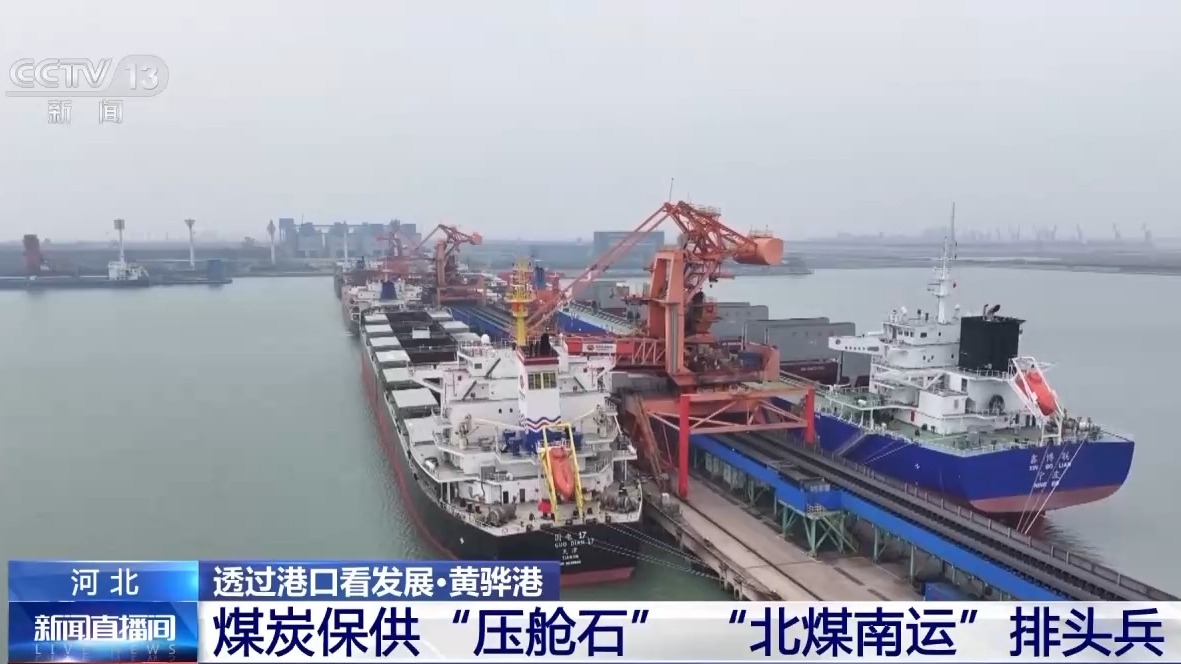
Core Viewpoint - Hebei province is enhancing its port capabilities, particularly at Huanghua Port, to adapt to international trade fluctuations and improve service efficiency in the economy [1][19]. Port Operations and Innovations - Huanghua Port features an automated coal unloading system that can process four carriages in 20 seconds without worker intervention, showcasing advancements in operational efficiency [3][5]. - The port has achieved a coal throughput of 88.2 million tons in the first five months of this year, establishing itself as a critical hub in China's energy supply chain [5][19]. - The ongoing Phase V expansion project will add 18 coal storage silos and four 70,000-ton bulk cargo berths, increasing annual coal transport capacity by 53.1 million tons [7][9]. Transition to a Comprehensive Port - Huanghua Port is transitioning from a coal-centric port to a comprehensive port, aiming to enhance its operational capabilities and embrace smart, green port technologies [10][12]. - The port currently has 47 operational berths, including those for bulk, liquid, and container cargo, positioning it as a modern logistics center for the region [12][20]. Regional Port Development - Hebei province aims to develop a world-class port cluster, with Qinhuangdao, Tangshan, and Huanghua ports each focusing on different functional roles and resource integration [20][22]. - Tangshan Port is projected to handle over 860 million tons of cargo by 2024, while Huanghua Port is enhancing its coal and crude oil handling capabilities [22][24]. - The province has established 118 inland ports and 47 sea-rail intermodal routes, creating a multi-modal transport network that connects inland regions to the ports [24]. Technological Advancements - The implementation of smart production systems at Huanghua Port has reduced process preparation time by 23%, facilitating faster cargo movement [17][19]. - The port's operational model has shifted from human-controlled to autonomous management, enhancing overall efficiency [16].
交运周专题:“五一”客座率大增,蒙煤库存加速去化
Changjiang Securities· 2025-05-06 23:30
Investment Rating - The report maintains a "Positive" investment rating for the transportation industry [8]. Core Insights - The report highlights a significant increase in passenger load factors during the "May Day" holiday, with domestic passenger load factors rising by 4.9 percentage points year-on-year and international load factors increasing by 5.2 percentage points [3][21]. - Despite the increase in load factors, ticket prices remain under pressure, with domestic oil-inclusive ticket prices down by 10.0% year-on-year and average oil-inclusive ticket prices during the holiday period down by 8.5% [3][21]. - The report anticipates a positive outlook for the aviation sector, recommending A-share private airlines and the three major Hong Kong airlines due to tightening supply and clear signs of demand recovery [3]. - In the shipping sector, oil tanker rates have decreased by 8.6% to $47,000 per day, while bulk shipping rates continue to rise, with the BDI index increasing by 3.5% to 1,421 [4][52]. - The logistics sector shows a sustained increase in express delivery volumes, with a year-on-year increase of 19.9% in the week of April 21-27, totaling 4.08 billion parcels [5][55]. Summary by Sections Passenger Transport - Domestic passenger volume growth accelerated, with a 13% year-on-year increase in the seven-day moving average [3][15]. - International passenger volume also saw a high increase of 24% year-on-year in the same period [3][15]. - The report recommends focusing on A-share private airlines and the three major Hong Kong airlines due to favorable conditions in the aviation market [3]. Shipping - Oil tanker rates have seen a decline, with the average VLCC-TCE down by 8.6% to $47,000 per day due to reduced cargo volumes from the Middle East and other regions [4][45]. - The SCFI index for foreign trade shipping decreased by 0.5% to 1,341 points, while domestic shipping rates showed stability with a slight increase [4][50]. - The report recommends focusing on the oil tanker sector due to expected demand increases from OPEC+ production hikes [4][53]. Logistics - The express delivery sector continues to grow rapidly, with a total of 4.08 billion parcels delivered in the week of April 21-27, marking a 19.9% year-on-year increase [5][55]. - The report notes improvements in bulk commodity transportation prices, with a 5.4% increase week-on-week [5][55]. - Recommendations include focusing on companies like SF Express and other major players in the express delivery market due to their strong performance and shareholder returns [5].