
双循环枢纽

Search documents
中国内贸第一大港如何成功转型“双循环枢纽”?|粤讲粤明
2 1 Shi Ji Jing Ji Bao Dao· 2026-01-27 07:57
Core Insights - The Guangdong provincial government aims to strengthen its port construction and enhance the international hub status of Guangzhou Port, with a target of achieving over 6.96 billion tons in cargo throughput and over 28 million TEUs in container throughput by 2025, maintaining its position among the top six global ports [3][4] Port Development - Guangzhou Port's foreign trade container throughput is expected to grow by nearly 20% in 2025, indicating a shift from network expansion to operational efficiency and higher value per container [4] - The number of foreign trade liner routes from Guangzhou Port will expand to 182 by 2025, with a focus on enhancing coverage and density to major economies and emerging markets [3][4] Export Growth - Guangzhou's foreign trade export value reached 7.56 trillion yuan from January to November 2025, with a year-on-year increase of 20.1%, significantly outpacing the growth of liner routes [4] - High-value products such as new energy vehicles, lithium batteries, and photovoltaic products are driving the increase in export value density, reflecting a shift towards higher-value international trade [4] Strategic Transformation - Guangzhou Port is transitioning from a logistics channel focused on throughput to a strategic node that supports regional industrial upgrades and higher-value international trade [4] - The port is actively constructing a hidden port network to gather inland cargo sources and has established 39 sea-rail intermodal routes and 73 shuttle barge routes, enhancing its service network across 11 provinces [4][5] High-End Shipping Services - The development of high-end shipping services is proposed to follow a two-step strategy, starting with domestic services and gradually expanding to international markets [5] - Policy support for high-end shipping services includes tax incentives and the establishment of a high-end shipping service development zone in Nansha [5] Digital and Smart Port Infrastructure - The construction of a digital infrastructure for ports is emphasized, including the integration of key technologies and the establishment of a unified data platform for port logistics [6] - The aim is to lead the development of standards and rules for green and smart ports, leveraging automation and digital technologies [6]


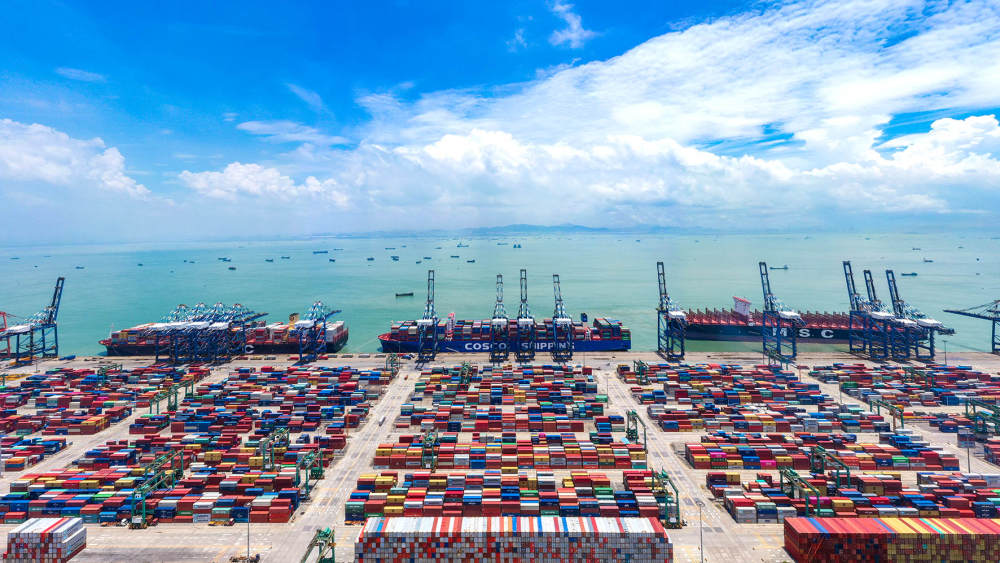
中国内贸第一大港如何成功转型“双循环枢纽”?
2 1 Shi Ji Jing Ji Bao Dao· 2026-01-27 07:53
Core Viewpoint - The strong momentum of Guangzhou's foreign trade is driven by the proactive advancement of ports and deep integration into the industrial hinterland, creating a closed loop of "cargo organization - efficient channels - value enhancement" [1][5]. Group 1: Port Development and Performance - The Guangdong Provincial Government's report emphasizes the enhancement of port construction and the elevation of Guangzhou Port's status as an international hub [2]. - In 2025, Guangzhou Port is projected to handle over 696 million tons of cargo and exceed 28 million TEUs in container throughput, maintaining its position among the top six global ports [2]. - A significant change is noted as the proportion of foreign trade containers at Guangzhou Port surpasses 50%, marking its successful transformation into a "dual circulation hub" [2]. Group 2: Growth in Trade and Export - The number of foreign trade liner routes from Guangzhou Port is expected to expand to 182 by 2025, with a year-on-year increase of 10.73% in foreign trade cargo throughput and nearly 20% growth in foreign trade container throughput, indicating improved cargo structure and shipping efficiency [3]. - Guangzhou's foreign trade export value reached 7.56 trillion yuan from January to November 2025, reflecting a year-on-year increase of 20.1%, significantly outpacing the growth in the number of routes and container throughput [4]. - The export of high-value products such as new energy vehicles, lithium batteries, and photovoltaic products has surged, enhancing the overall export value density [4]. Group 3: Strategic Development Model - The strong dynamics of Guangzhou's foreign trade stem from the proactive establishment of an invisible port network and the expansion of high-value shipping routes, which enhance export capabilities [5]. - The port has opened 39 sea-rail intermodal routes and 73 shuttle barge routes, effectively gathering inland cargo and transforming from "cargo from the port" to "port gathering cargo" [5]. - The logistics flow around the Nansha Port area has led to the emergence of nearly 2,500 enterprises in the port industry cluster, creating a complete value closed loop that supports regional economic development [5]. Group 4: Future Directions and Recommendations - The next steps involve shifting from "hardware expansion" to "software empowerment" by developing shipping soft power, including a two-step strategy for upgrading high-end shipping services [7]. - A combination of policies is recommended to support the development of high-end shipping services, including tax incentives and the establishment of offshore accounts for high-end shipping service enterprises [8]. - Accelerating the construction of digital smart port infrastructure is crucial, focusing on integrating key technologies and establishing a unified data platform for port logistics [9].
从“内贸冠军”转型“双循环枢纽” 广州港“十五五”怎么拼?
2 1 Shi Ji Jing Ji Bao Dao· 2026-01-20 05:00
Core Viewpoint - Guangzhou Port is positioning itself as a high-level international shipping service hub, focusing on integrating port development into the core agenda of the marine economy, marking a significant transformation in its operational strategy [1]. Group 1: Port Development and Performance - Guangzhou Port achieved a cargo throughput of over 696 million tons and a container throughput exceeding 28 million TEUs during the 14th Five-Year Plan period, ranking among the top six ports globally [1]. - The proportion of foreign trade containers surpassed 50%, indicating a successful transition to a dual-circulation hub that balances domestic and international trade [1]. Group 2: Expansion of Shipping Network - By 2025, Guangzhou Port is expected to rank 12th globally and second in China, following Shanghai and Hong Kong, according to the Xinhua-Baltic International Shipping Center Development Index [2]. - The launch of the WSA3 shipping route to South America's west coast marks a significant milestone, facilitating the export of Chinese manufactured goods and the import of high-quality products from Latin America [2]. - Guangzhou Port plans to add 10 new foreign trade routes by the end of 2025, bringing the total to 182, with a focus on the Belt and Road Initiative and RCEP countries [2]. Group 3: Multi-Modal Transport System - The sea-rail intermodal transport volume is projected to exceed 700,000 TEUs by 2025, reflecting a year-on-year growth of 15.7% [3]. - The port has established 39 sea-rail intermodal routes connecting 11 provinces and 38 inland ports, enhancing its domestic logistics capabilities [3]. Group 4: Infrastructure Investment and Upgrades - During the 14th Five-Year Plan, Guangzhou Port Group invested 26 billion yuan in key projects, including the fully automated Nansha Phase IV terminal, increasing port capacity by 12 million tons [3]. - The establishment of the Nansha headquarters signifies a strategic shift towards enhancing the port's operational capabilities and global competitiveness [4]. Group 5: Future Goals and Strategic Initiatives - Guangzhou Port aims to become a world-class strong port by investing 20 billion yuan in top-tier port facilities and enhancing cargo and container throughput capacities [4]. - The port is focusing on digitalization, intelligence, and green transformation, aiming to create a low-carbon demonstration port area and improve the business environment [4]. - The local government plans to attract more shipping companies and enhance logistics services, particularly in emerging markets like Southeast Asia, the Middle East, and Latin America [5].
从“内贸冠军”转型“双循环枢纽”,广州港“十五五”怎么拼?
2 1 Shi Ji Jing Ji Bao Dao· 2026-01-20 04:57
Core Viewpoint - Guangzhou Port is positioning itself as a high-level international shipping service hub, integrating port development into the core agenda of the marine economy, and achieving significant growth in cargo and container throughput during the 14th Five-Year Plan period [2][3]. Group 1: Port Development and Performance - Guangzhou Port achieved a cargo throughput of over 696 million tons and a container throughput exceeding 28 million TEUs, ranking among the top six ports globally [2]. - The proportion of foreign trade containers surpassed 50%, marking a successful transition to a dual-circulation hub that balances domestic and international trade [2]. - By 2025, Guangzhou Port is expected to rank 12th globally and second in China, following Shanghai, Hong Kong, and Ningbo-Zhoushan [3]. Group 2: Expansion of Shipping Network - The launch of the WSA3 shipping route to South America signifies Guangzhou Port's expansion into new markets, facilitating the export of Chinese manufactured goods and the import of high-quality products from Latin America [3]. - By the end of 2025, Guangzhou Port plans to add 10 new foreign trade routes, bringing the total to 182, with a focus on the Belt and Road Initiative and RCEP countries [3]. Group 3: Multi-Modal Transport System - The sea-rail intermodal transport volume is projected to exceed 700,000 TEUs by 2025, reflecting a year-on-year growth of 15.7% [4]. - Guangzhou Port has established 39 sea-rail intermodal routes connecting 11 provinces and 38 inland ports, enhancing its domestic trade capabilities [4]. Group 4: Infrastructure Investment and Upgrades - During the 14th Five-Year Plan, Guangzhou Port Group invested 26 billion yuan in key projects, including the fully automated Nansha Phase IV terminal, increasing port capacity by 12 million tons [4]. - The strategic shift from "facing the river" to "facing the sea" was marked by the establishment of the Nansha headquarters, which is crucial for the development of Guangzhou as an international shipping hub [5]. Group 5: Future Goals and Initiatives - Looking ahead to the 15th Five-Year Plan, Guangzhou Port aims to invest 20 billion yuan to enhance port facilities and increase cargo capacity by 10 million tons and container capacity by 5 million TEUs [5]. - The port is focusing on digitalization, intelligence, and green transformation, aiming to create a low-carbon demonstration port and improve the business environment [5]. - Efforts will be made to attract more shipping companies and enhance the quality of domestic trade routes, particularly in emerging markets [6].

中国内贸第一大港转型为“双循环枢纽” 广州港外贸集装箱占比首超50%
Nan Fang Ri Bao Wang Luo Ban· 2026-01-19 09:34
Core Insights - Guangzhou Port is projected to handle over 696 million tons of cargo and exceed 28 million TEUs in container throughput by 2025, maintaining its position among the top six global ports [1] - The port has seen a 10.73% growth in foreign trade cargo throughput and nearly 20% growth in foreign trade container throughput, leading the growth among coastal ports in China [1] - The establishment of the Nansha headquarters signifies a strategic move to enhance resource allocation and promote the integration of shipping, logistics, trade, and finance in the region [1] Group 1 - Guangzhou Port has expanded its global shipping network, adding 10 new foreign trade routes, including a direct route from Nansha to South America, totaling 182 foreign trade routes [1] - The port has established close shipping connections with over 400 ports in more than 100 countries and regions [1] - The port's foreign trade container throughput has surpassed 50% for the first time, marking a successful transition from being the largest domestic trade port to a dual-circulation hub [1] Group 2 - Guangzhou Port has built an efficient multimodal transport system, achieving seamless connections with rail, road, and inland waterway transport [2] - The sea-rail intermodal volume is expected to exceed 700,000 TEUs in 2025, reflecting a 15.7% year-on-year growth [2] - The port operates 39 sea-rail intermodal trains connecting 38 inland ports across 11 provinces, enhancing logistics efficiency [2] Group 3 - Guangzhou Port has risen to 12th place globally in the Xinhua-Baltic International Shipping Center Development Index, ranking 4th in China [2] - The port cluster in the Guangdong-Hong Kong-Macao Greater Bay Area, including Guangzhou, Shenzhen, Dongguan, and Foshan, is projected to handle about one-quarter of the national container throughput [2]
2025年广州港强势破局:6.96 亿吨吞吐量+外贸占比超50%
Zhong Guo Jin Rong Xin Xi Wang· 2026-01-06 02:57
Core Insights - Guangzhou Port is projected to handle over 696 million tons of cargo and exceed 28 million TEUs in container throughput by 2025, maintaining its position among the top six global ports. The foreign trade cargo throughput is expected to grow by 10.73%, with foreign trade container throughput increasing by nearly 20%, leading the growth among coastal ports in China [1][2]. Global Network Expansion - Since 2025, Guangzhou Port has expanded its global shipping network, adding 10 new foreign trade routes, including a direct route from Nansha to South America. The port now operates 182 foreign trade liner routes, with 152 routes under the Belt and Road Initiative and 98 routes to RCEP countries, establishing connections with over 400 ports in more than 100 countries and regions [2][4]. Multimodal Transport System - Guangzhou Port has developed an efficient multimodal transport system, achieving seamless connections with rail, road, and inland waterway transport. The sea-rail intermodal volume surpassed 700,000 TEUs in 2025, marking a 15.7% year-on-year increase. The port operates 39 sea-rail intermodal trains, connecting 38 inland ports across 11 provinces [5]. Business Environment Optimization - The port has implemented a 24-hour pilot service with zero waiting time, reducing the average stay of container vessels to 0.87 days. Innovations such as "onboard certificate processing" have streamlined administrative services. In 2025, Guangzhou hosted a high-quality development conference, signing 21 projects with a total investment of nearly 7 billion yuan [7]. Infrastructure Upgrades - The Nansha Port Area has established the world's first fully automated multimodal terminal, increasing container handling efficiency by 30%. The port has also achieved 100% shore power coverage, with over 17 million kilowatt-hours of shore power supplied to vessels, resulting in a carbon reduction of 11,730 tons [8][9]. International Ranking Improvement - In 2025, Guangzhou surpassed Tokyo to rank 12th globally in the Xinhua-Baltic International Shipping Center Development Index, solidifying its position as the fourth in China. The Pearl River cruise brand also ranked first globally in the International Urban Cruise Vitality Index Report, with over 4 million visitors in 2025 [10][12]. Strategic Port Cluster Development - The Guangdong-Hong Kong-Macao Greater Bay Area port cluster, with Guangzhou, Shenzhen, and Hong Kong as key hubs, accounts for about one-quarter of the national container handling capacity. This strategic collaboration aims to transition from being the "largest" to the "strongest" in global supply chains, enhancing China's foreign trade capabilities [13].
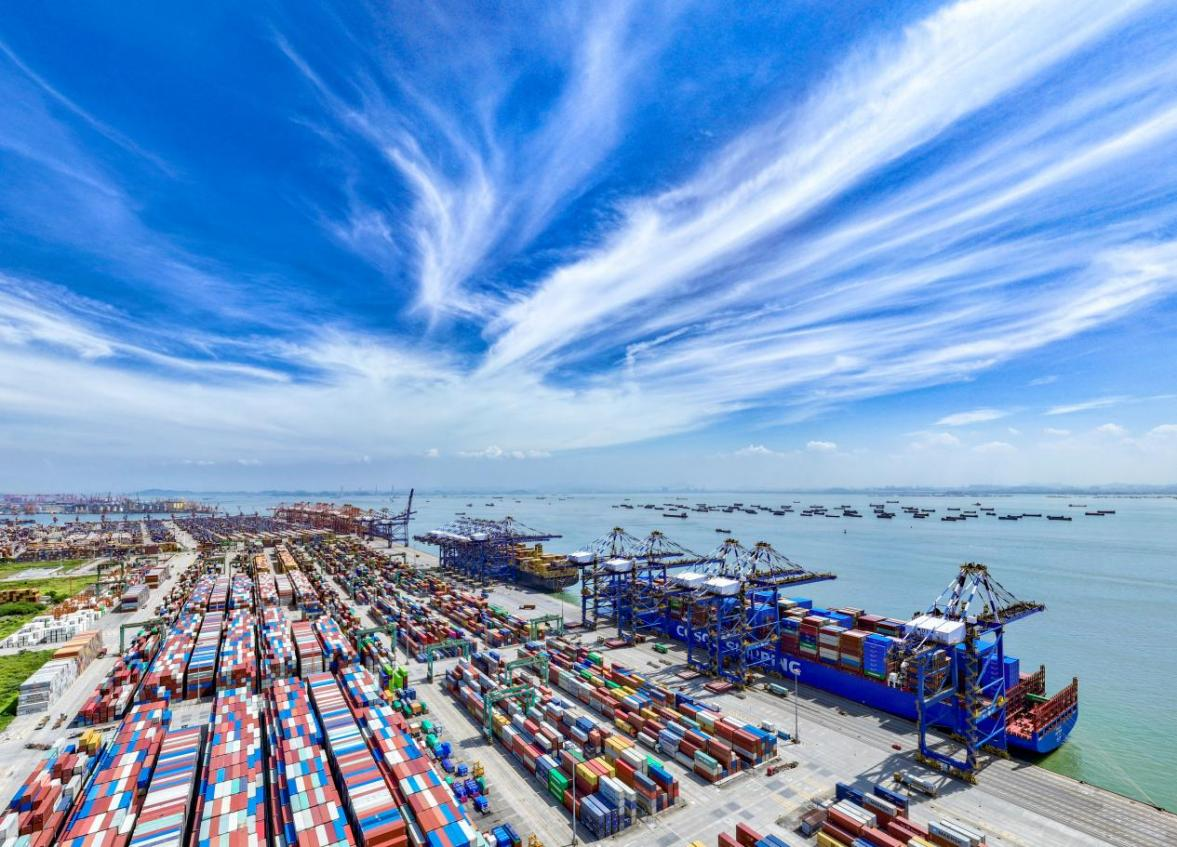
加速转型!前11月广州港外贸集装箱占比历史性突破50%
Nan Fang Du Shi Bao· 2025-12-15 13:30
Core Viewpoint - Guangzhou Port is undergoing a significant transformation, shifting from being primarily a domestic trade hub to a dual-circulation nexus, with foreign trade container throughput surpassing 50% for the first time, indicating resilience and vitality in its operations [4]. Group 1: Trade Volume and Growth - From January to November 2025, Guangzhou Port's foreign trade cargo throughput reached 179 million tons, a year-on-year increase of 10.72% [1]. - The foreign trade container throughput was 13.04 million TEUs, showing a substantial growth of 19.23% year-on-year [1]. - The port is expected to achieve an annual cargo throughput of 695 million tons and a container throughput of 27.5 million TEUs, maintaining its position among the top six global ports [1]. Group 2: Structural Changes and Efficiency - The foreign trade container throughput has historically surpassed domestic trade, marking a structural shift in the port's operations [4]. - The automation at Nansha Port Area's Phase IV, featuring 158 unmanned guided vehicles, has reduced vessel stay time in port to 0.87 days, achieving globally leading efficiency metrics [4]. - The "One Port, One Declaration" initiative covers 23 inland ports in the Greater Bay Area, enhancing customs efficiency [4]. Group 3: Strategic Partnerships and Global Connectivity - Guangzhou Port has established deep cooperative relationships with all top ten global shipping companies and signed a strategic partnership memorandum with Maersk Group [4]. - The port has formed friendly relations with 60 international ports, ranking first in the country [4]. - Currently, Guangzhou Port operates 182 foreign trade shipping routes connecting over 400 ports globally, with 152 routes under the Belt and Road Initiative and 98 routes to RCEP countries [4]. Group 4: Economic Impact and Infrastructure Development - The port and related industries contribute nearly 350 billion yuan to Guangzhou's economy, highlighting the significance of the port in regional economic development [5]. - The recent opening of new terminals and anchorages has added two foreign trade berths and five deep-water anchorages, increasing foreign trade cargo handling capacity by 29 million tons per year [5]. - The expansion of the port's open access will enhance its comprehensive service capabilities and international shipping hub functions, supporting the Greater Bay Area's infrastructure connectivity [5]. Group 5: Future Development Directions - Future development of Guangzhou Port will focus on six key areas: strengthening hub functions, improving service levels, expanding the port economy, promoting smart transformation, enhancing organizational capabilities, and deepening open cooperation [6].
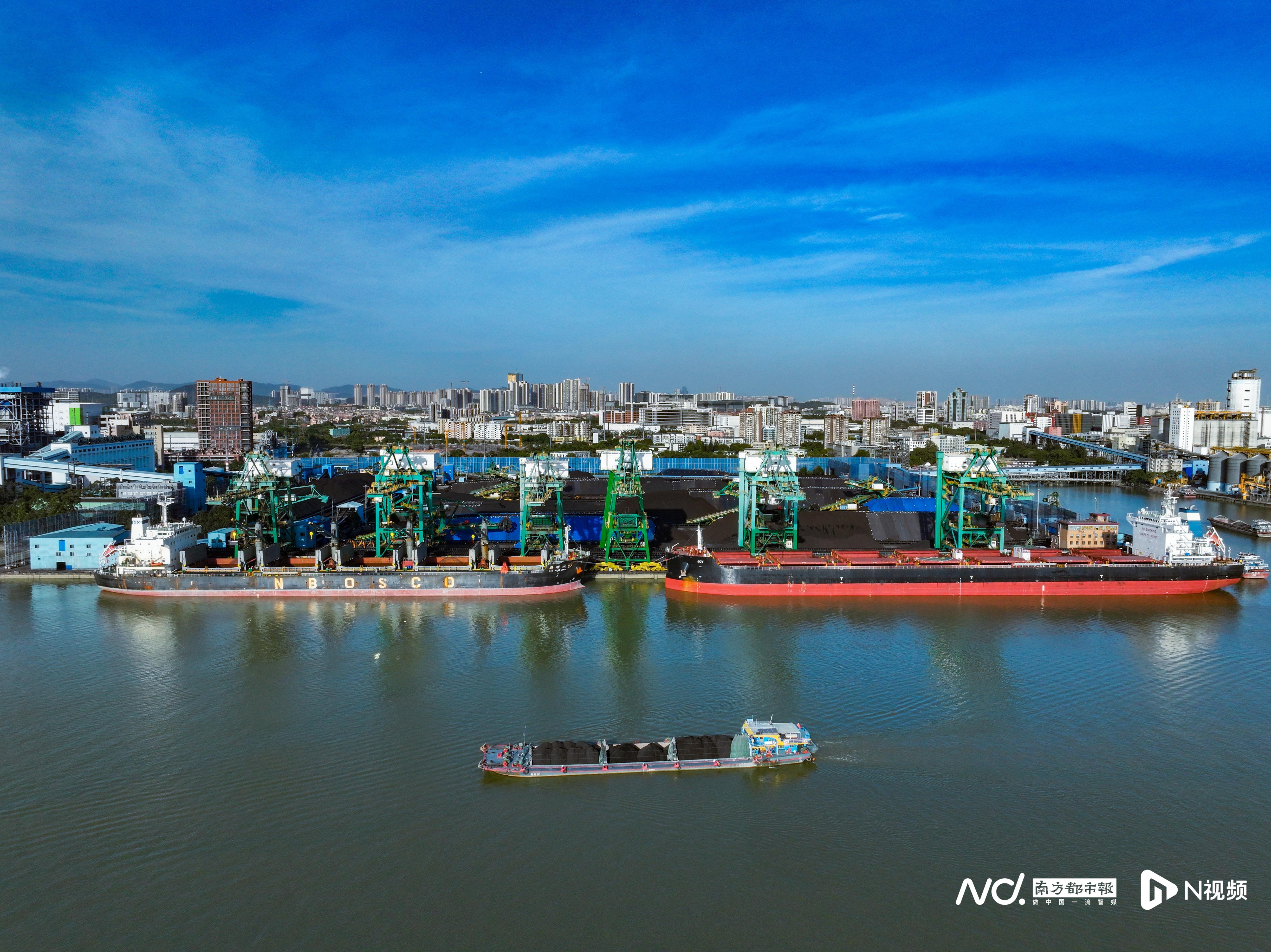
海南自贸港开放机遇交流大会在海口举行
Hai Nan Ri Bao· 2025-12-13 00:29
Core Viewpoint - The 2025 14th Annual Conference on the Development of Listed Companies and the Hainan Free Trade Port Opportunity Exchange Conference is being held in Haikou, focusing on the theme "Embracing Diversity, Open Cooperation" and attracting over 400 listed companies and more than 20 institutions to discuss policy paths and global development opportunities under the new closure of the Hainan Free Trade Port [1] Group 1 - The Hainan International Economic Development Bureau provided a detailed analysis of new opportunities following the full closure of the free trade port, emphasizing Hainan's strategic position to leverage the inland market and Southeast Asia [1] - The conference highlighted four leading industries that Hainan is focusing on, with the Bureau offering one-stop services to encourage various market entities to seize development opportunities as a dual circulation hub [1] - Experts at the conference suggested that Hainan should actively align with international high-standard economic and trade rules during the 14th Five-Year Plan period, with technologies like embodied intelligence driving upgrades in smart manufacturing [1] Group 2 - The conference included a roundtable discussion featuring leading domestic industry enterprises, focusing on two main topics: "AI Value Anchors" and "New Export Paradigms," where participants shared practical experiences and in-depth insights [1]