
铝业

Search documents
铝产业链周报-20260209
Chang Jiang Qi Huo· 2026-02-09 06:52
1. Report Industry Investment Rating No relevant content provided. 2. Core View of the Report - The overall idea is to allocate long positions at low levels, reduce positions before the Spring Festival, and pay attention to capital sentiment. Although the supply expectation has improved, the current market sentiment of being bullish on non - ferrous metals remains unchanged [4]. 3. Summary by Directory 3.1. Week - ly View - In Shanxi and Henan, bauxite prices are stable. The mainstream transaction price of Guinea bulk ore remained stable at $61.5 per dry ton week - on - week. Alumina operating capacity decreased by 800,000 tons to 94.25 million tons week - on - week, and the national alumina inventory increased by 79,000 tons to 5.193 million tons. Electrolytic aluminum operating capacity increased by 42,000 tons to 44.676 million tons week - on - week. Domestic downstream aluminum processing leading enterprises' operating rate decreased by 1.5% to 57.9% week - on - week. Aluminum ingot social inventory continued to accumulate during the week. The order support for recycled cast aluminum alloy was insufficient, dragging down the operating rate of recycled aluminum plants [4]. 3.2. Macroeconomic Indicators - The report presents data on the US Treasury yield curve (10 - year, 2 - year, and 10 - year real yield), the US dollar index, and the exchange rate of the US dollar against the RMB [6]. 3.3. Bauxite - Domestic bauxite prices have been stable recently. Fundamental issues such as mining rectification, mine reclamation requirements, and strengthened safety and environmental supervision are difficult to solve in the short term. Most mines enter the shutdown period during the Spring Festival, and the resumption of production is generally postponed until after the National Two Sessions. The cost of using domestic ore is significantly higher than that of imported ore, and the continuous decline in the price of imported ore puts great pressure on domestic ore. The mainstream transaction price of Guinea bulk ore remained stable at $61.5 per dry ton week - on - week. The shipping volume of Guinea ore increased, and the spot supply of imported ore increased, putting pressure on the ore price [9]. 3.4. Alumina - As of last Friday, the alumina production capacity was 114.62 million tons, unchanged week - on - week; the operating capacity was 94.25 million tons, a decrease of 800,000 tons week - on - week, with an operating rate of 82.3%. The weighted price of domestic spot alumina was 2,610.4 yuan per ton, unchanged week - on - week. The national alumina inventory was 5.193 million tons, an increase of 79,000 tons week - on - week. Near the Spring Festival, the operating capacity of alumina in the country fluctuates. Two alumina enterprises in Guangxi that had been under maintenance will resume production one after another, and two enterprises in Shanxi that had planned maintenance will carry out maintenance. The decline in bauxite prices provides room for alumina enterprises to reduce production costs and also opens up space for a possible decline in alumina prices [12]. 3.5. Important High - frequency Data of Alumina - The report presents data on the basis, alumina port inventory, north - south price difference, and alumina transportation volume [14][15][16][17]. 3.6. Electrolytic Aluminum - As of last Friday, the electrolytic aluminum production capacity was 45.402 million tons, unchanged week - on - week; the operating capacity was 44.676 million tons, an increase of 42,000 tons week - on - week. New production capacity: The first - phase 120,000 - ton capacity of Tianshan Aluminum has reached full production, and the second - phase 80,000 - ton capacity is still under construction, expected to reach full production within the year. Zha Aluminum's 350,000 - ton capacity will be built and put into production and reach full production in 2026. Guangxi Longlin is accelerating the revitalization of 57,100 tons of idle capacity. Overseas, on the 11th, the first batch of 500,000 - ton electrolytic aluminum project in North Kalimantan, Indonesia, started production. On the 15th, the first - phase 120,000 - ton electrolytic aluminum project of Huatong Angola Industrial Co., Ltd. held an official commissioning ceremony, and full production may be achieved in the second quarter [19]. 3.7. Important High - frequency Data of Electrolytic Aluminum - The report presents data on the processing fee of 6063 aluminum rods, the forward curve of Shanghai aluminum, the price of thermal coal, and the import profit of aluminum [21]. 3.8. Inventory - The report presents data on the social inventory of aluminum rods, the social inventory of aluminum ingots, the aluminum futures inventory of the Shanghai Futures Exchange, and the LME aluminum inventory [23][24][25][26]. 3.9. Cast Aluminum Alloy - The operating rate of leading recycled aluminum alloy enterprises decreased by 0.6% to 58.3% week - on - week. The decline in aluminum prices did not effectively stimulate trading volume. Downstream die - casting enterprises mainly purchased for rigid demand and replenished inventory at low prices due to weak orders and the expectation of pre - holiday shutdown, with low inventory - building willingness. Insufficient order support dragged down the operating rate of recycled aluminum plants [29]. 3.10. Important High - frequency Data of Cast Aluminum Alloy - The report presents data on the average price of profile aluminum, the forward curve of aluminum alloy futures, the seasonal trend of the price difference between ADC12 and A00, and the import profit of ADC12 aluminum alloy ingots [31][32][33][34]. 3.11. Downstream Operating Rate (First Part) - The operating rate of domestic downstream aluminum processing leading enterprises decreased by 1.5% to 57.9% week - on - week. The operating rate of leading aluminum profile enterprises decreased by 8.3% to 36% week - on - week. As the Spring Festival approaches, profile enterprises are in the year - end finishing stage, and the operating rate has declined. The operating rate of leading aluminum plate and strip enterprises increased by 2% to 66% week - on - week. The environmental protection restrictions in the central plains region have temporarily ended, and related enterprises have gradually resumed pre - holiday inventory - building, while accelerating the shipment of finished products to reduce inventory pressure. Can - making materials still maintain full - line operation, and the production lines of mid - and low - end products have seen an increase in operating rate due to the decline in aluminum prices and pre - holiday inventory - building demand [41]. 3.12. Downstream Operating Rate (Second Part) - The operating rate of domestic leading cable enterprises decreased by 2.6% to 58% week - on - week. As the Spring Festival approaches, enterprises actively adjust their production rhythm, resulting in a decline in operating rate. Although downstream cable enterprises have successively received power grid orders at the average price of last week, the shipment rhythm of leading enterprises has slowed down due to weak terminal提货 demand at the end of the year. The operating rate of leading primary aluminum alloy enterprises decreased by 0.5% to 57.9% week - on - week. As the Spring Festival approaches, most enterprises actively reduce production due to the traditional off - season, and both production and on - hand orders show a slight contraction [45].

严控新增矿铜冶炼项目!有色金属ETF天弘(159157)标的指数上涨2%,盘中净申购近5000万份
Ge Long Hui· 2026-02-09 06:42
Group 1 - The non-ferrous metal sector has rebounded across the board, with the Tianhong Non-Ferrous Metal ETF (159157) index rising by 2%, and a net subscription of 46 million units during the trading session [1] - The Tianhong Non-Ferrous Metal ETF closely tracks the CSI Industrial Non-Ferrous Metal Theme Index, with the top three industries being copper (34.43%), aluminum (21.82%), and rare earths (13.60%), collectively accounting for nearly 70% [1] - The ETF is the first in the market among those tracking non-ferrous metal indices, highlighting its scarcity and investment value, and it is supported by two off-market linked funds [1] Group 2 - The US dollar index fell to its lowest level since February 4, leading to a strong rebound in gold and silver prices, which in turn contributed to the rebound in non-ferrous metals [2] - The upcoming "golden three silver four" spring construction peak season, along with policy implementations after the March Two Sessions, is expected to boost resource products and the infrastructure chain [2] - The US has initiated a $12 billion critical mineral reserve plan, covering various key minerals including rare earths, cobalt, and gallium, and has established bilateral and trilateral agreements to strengthen the critical mineral supply chain [2] - The China Nonferrous Metals Industry Association has announced measures to strictly control new copper smelting projects and promote the construction of a reserve system, while the People's Bank of China has purchased gold for the 15th consecutive month [2] - According to Founder Securities, the emphasis on critical mineral resources by major countries indicates a significant revaluation of the strategic attributes of metals, with a tight supply structure expected to maintain upward price trends in the medium to long term [2]
全球媒体聚焦︱英媒:中国铝冶炼厂开启绿色征程
Sou Hu Cai Jing· 2026-02-09 02:16
Core Viewpoint - The Chinese aluminum industry is transitioning towards green and low-carbon development, with significant production capacity being relocated from traditional coal-based regions to areas rich in renewable energy [1][2]. Group 1: Industry Transition - China's aluminum production is projected to reach 43.8 million tons in 2024, accounting for approximately 60% of global output [2]. - Due to large-scale capacity transfers, 13 million tons of electrolytic aluminum capacity now comes from regions like Yunnan, Sichuan, Xinjiang, and Inner Mongolia, representing about 30% of the national total [2]. - New aluminum smelting plants in these regions utilize clean energy and have lower development costs [2]. Group 2: Environmental Impact - The multi-year, multi-billion dollar relocation project is aiding one of the world's most polluting industries in achieving decarbonization [4]. - Successful decarbonization in the aluminum sector could serve as a model for implementing stricter production limits and capacity replacements in other industries [4]. Group 3: Regional Development - Yunnan province, known for its clear skies, is becoming a focal point for the future development of the aluminum industry, with numerous smelting plants concentrated in industrial parks [5]. - The region is equipped with a large high-voltage power grid that transmits electricity from local hydropower stations, complemented by solar panels and wind turbines [5]. Group 4: Corporate Initiatives - A major private aluminum company in Shandong plans to establish its second smelting plant in Yunnan, aiming for an annual output of 4 million tons, equivalent to the total annual output of North America's aluminum industry [7]. - The company's report indicates that this relocation, along with investments in solar and wind projects in Shandong and Yunnan, will reduce its carbon emissions by approximately two-thirds [7]. - The mayor of Wenshan, Le Jiawen, stated that the Chinese aluminum industry is undergoing a profound and systematic transformation, shifting competition from scale and cost to a focus on green and low-carbon advantages [7].

所长早读-20260209
Guo Tai Jun An Qi Huo· 2026-02-09 02:08
Report Summary 1. Investment Ratings The report does not explicitly provide an overall investment rating for the industry. However, it gives trend intensities for various commodities, which can be used as a reference for investment sentiment: - Strongly Bullish: Cotton [191] - Bullish: None - Neutral: Gold, Silver, Zinc, Lead, Tin, Aluminum, Alumina, Cast Aluminum Alloy, Platinum, Palladium, Nickel, Stainless Steel, Carbonate Lithium, Industrial Silicon, Polysilicon, Rebar, Hot - Rolled Coil, Ferrosilicon, Silicomanganese, Coke, Coking Coal, Steam Coal, Logs, Rubber, LLDPE, PP, Caustic Soda, Pulp, Glass, Methanol, Urea, Styrene, Soda Ash, LPG, Propylene, Fuel Oil, Low - Sulfur Fuel Oil, Container Freight Index (European Line), Short - Fiber, Bottle Chips, Offset Printing Paper, Pure Benzene, Palm Oil, Soybean Oil, Soybean Meal, Soybean, Corn, Sugar, Eggs, Peanuts [21][27][29] - Bearish: Copper, Iron Ore, PX, PTA, MEG, Synthetic Rubber, PVC, Live Pigs [24][61][87] 2. Core Views - Global financial markets have shown complex fluctuations from the night session last Friday to this morning. Domestic A - share markets continued to fluctuate, with the Shanghai Composite Index hovering around 4065. The technology - growth sector remained under pressure, while the consumer and defensive sectors were relatively resilient. Hong Kong stocks were also weak. Internationally, the three major US stock indices diverged, with the Dow hitting a new high and the Nasdaq retreating due to tech - stock volatility. In the commodity market, gold prices stabilized and rebounded after previous large fluctuations, and silver prices also rebounded. Market sentiment remained cautious, and asset fluctuations were mainly affected by overseas policy expectations, geopolitical risks, and the pace of domestic economic recovery [8]. - For copper, the short - term fundamentals are weak, but the long - term outlook is positive. The market is in a wait - and - see mode. It is recommended to buy on dips and use options to hedge risks [9][10]. - For caustic soda, the cost is rising, and the valuation is at a low level. It is suggested to close out short positions in the 03 contract before the Spring Festival and gradually build long positions in the 05 contract [12]. 3. Summary by Commodity Precious Metals - Gold: It is in an oscillating rebound, with a trend intensity of 0 [19][21]. - Silver: It is experiencing a high - level decline, with a trend intensity of 0 [19][21]. Base Metals - Copper: The price is oscillating, and trading is cautious. The trend intensity is - 1 [22][24]. - Zinc: It is in a range - bound oscillation, with a trend intensity of 0 [25][27]. - Lead: Supply and demand are both weak, and the price is oscillating, with a trend intensity of 0 [28][29]. - Tin: It is consolidating in an oscillation, with a trend intensity of 0 [31][36]. - Aluminum: Attention should be paid to post - holiday destocking. The trend intensity of aluminum is 0, alumina is - 1, and cast aluminum alloy is 0 [38][40]. - Platinum: It is recovering in an oscillation, with a trend intensity of 0 [41][43]. - Palladium: It is rebounding following the precious - metal sector, with a trend intensity of 0 [41][43]. - Nickel: There is an impact from pre - holiday capital outflows, and the medium - term contradiction lies in Indonesia. The trend intensity is 0 [45][51]. - Stainless Steel: There are frequent maintenance and production cuts in February, and the cost support center has shifted upward. The trend intensity is 0 [45][51]. Energy and Chemicals - Carbonate Lithium: The supply - demand pattern is tight. Attention should be paid to the evolution of macro - sentiment. The trend intensity is 0 [52][55]. - Industrial Silicon: The industry inventory is accumulating. Attention should be paid to this week's commodity sentiment. The trend intensity is 0 [57][59]. - Polysilicon: The industry cost guidance price has been determined. The trend intensity is 0 [57][59]. - Iron Ore: The restocking is almost over, and the demand expectation is weakening. The trend intensity is - 1 [60][61]. - Rebar and Hot - Rolled Coil: The apparent demand has weakened month - on - month, and they are in a wide - range oscillation. The trend intensity of both is 0 [64][67]. - Ferrosilicon and Silicomanganese: There is a game between fundamentals and sentiment, and they are in a wide - range oscillation. The trend intensity of both is 0 [69][72]. - Coke and Coking Coal: They are in a high - level oscillation, with a trend intensity of 0 for both [73][76]. - Steam Coal: The coal price is expected to remain stable before the Spring Festival [77][78]. - Logs: The port arrivals are low, and the spot price is stable with a slight increase. The trend intensity is 0 [79][82]. - PX: It is in a pre - holiday range - bound market, with a weakening month - spread. The trend intensity is - 1 [84][87]. - PTA: The downside space may be limited, and the month - spread is bearish. The trend intensity is - 1 [84][87]. - MEG: The supply pressure is still high. The trend intensity is - 1 [84][87]. - Rubber: It is in a wide - range oscillation. The trend intensity is 0 [92][93]. - Synthetic Rubber: It is under oscillating pressure. The trend intensity is - 1 [96][98]. - LLDPE: The import window is narrowing, and it is in a pre - holiday oscillating market. The trend intensity is - 1 [99][101]. - PP: The valuation repair is limited, and the weekly export signing volume has declined. The trend intensity is 0 [102][104]. - Caustic Soda: The cost is rising, and the valuation is at a low level. The trend intensity is 0 [105][108]. - Pulp: It is oscillating. The trend intensity is 0 [110][112]. - Glass: The original - sheet price is stable. The trend intensity is 0 [115][116]. - Methanol: It is oscillating. The trend intensity is 0 [118][123]. - Urea: It is oscillating with support. The trend intensity is 0 [124][126]. - Styrene: It is in a high - level oscillation. The trend intensity is 0 [127][128]. - Soda Ash: The spot market has changed little. The trend intensity is 0 [129][132]. - LPG: There are still geopolitical disturbances, and the fundamental driving force is downward. The trend intensity is 0 [135][142]. - Propylene: Supply and demand remain tight, and the upward driving force is weakening. The trend intensity is 0 [136][142]. - PVC: It is weakly oscillating. The trend intensity is - 1 [146][147]. - Fuel Oil: It is in a narrow - range adjustment, and the short - term weakness has暂缓. The trend intensity is 0 [149]. - Low - Sulfur Fuel Oil: It is weakly oscillating, and the spot high - low sulfur spread in the overseas market continues to decline. The trend intensity is 0 [149]. - Container Freight Index (European Line): It is in an oscillating market. The trend intensity is 0 [151][159]. Agricultural Products - Short - Fiber and Bottle Chips: They are in a short - term oscillating market. The trend intensity of both is 0 [160][161]. - Offset Printing Paper: It is recommended to close out short positions. The trend intensity is 0 [163]. - Pure Benzene: It is strongly oscillating. The trend intensity is 0 [168][170]. - Palm Oil: The macro - sentiment is fluctuating, and the fundamental driving force is limited. The trend intensity is 0 [172][176]. - Soybean Oil: It is in a range - bound adjustment. The trend intensity is 0 [172][176]. - Soybean Meal: The overnight US soybeans rose slightly, and Dalian soybean meal may oscillate. The trend intensity is 0 [177][179]. - Soybean: The spot is gradually entering the holiday mode, and the price is oscillating. The trend intensity is 0 [177][179]. - Corn: The callback range is limited. The trend intensity is 0 [180][182]. - Sugar: It is in a narrow - range consolidation. The trend intensity is 0 [183][186]. - Cotton: It is expected to remain oscillating before the Spring Festival. The trend intensity is 1 [188][191]. - Eggs: They are in an oscillating adjustment. The trend intensity is 0 [194][196]. - Live Pigs: The peak - season weakness is confirmed, and the release of the "backlog" has begun. The trend intensity is - 2 [198][201]. - Peanuts: They are oscillating. The trend intensity is 0 [203][205].
电解铝:资金持续离场,节前震荡为主
Yin He Qi Huo· 2026-02-09 01:00
电解铝 :资金持续离场 节前震荡为主 研究员:陈婧 期货从业证号:F03107034 投资咨询从业证号:Z0018401 铝策略展望 ◼ 衍生品:暂时观望。 GALAXY FUTURES 1 227/82/4 228/210/172 181/181/181 87/87/87 文 字 色 基 础 色 辅 助 色 137/137/137 210/10/16 221/221/221 208/218/234 ◼ 宏观:上周五贵金属市场的大幅回落在本周初得以延续,随后转为震荡格局,这其中有特朗普任命新任美联储主席为凯文沃什以及地缘冲 突有所缓和带来的预期转变,也有AI相关股票财报不及预期拖累美股回落带动的股期共振影响,而价格下跌的加速更多是前期快速上涨中 积累的风险得到释放的结果。此外,对人工智能支出和科技股估值的担忧引发的全球抛售潮在本周进一步加深,科技股从美国市场蔓延至 亚洲市场持续下挫,美元反弹。 ◼ 产业供应:近期无预期外变化。国内辽宁某30万吨闲置产能预计在3-5月开始复产,印尼某去年四季度新投的电解铝项目二期投产进度在 今年预计相对缓慢,印尼其余项目及安哥拉项目投产进度基本如期。国内华北某新投项目虽然通电但 ...
有色钢铁行业周观点(2026年第6周):短期波动不改中长期向好
Orient Securities· 2026-02-08 13:25
Investment Rating - The report maintains a "Positive" outlook for the non-ferrous metals industry [5] Core Viewpoints - Short-term fluctuations do not alter the long-term positive trend for the non-ferrous metals sector, with a focus on low-position investment opportunities [7][12] - The zinc sector is viewed as an overlooked foundational material in the context of "de-globalization," with improving supply-demand dynamics expected to drive prices upward [13] - The aluminum sector, particularly the electrolytic aluminum industry, is anticipated to enjoy valuation premiums due to its supply chain security and competitive advantages [14] - In the precious metals sector, investors are advised to wait for price stabilization before re-entering positions, despite a long-term bullish outlook for gold [14] Summary by Sections 1. Core Viewpoints - Short-term market volatility is expected, but the long-term outlook remains positive, driven by ongoing demand and supply constraints in the non-ferrous metals market [12] - The zinc market is expected to benefit from increased demand due to re-industrialization in Asia, Africa, and Latin America, despite current domestic construction concerns [13] - The aluminum industry is positioned to gain from enhanced supply chain security and competitive advantages, with domestic production capabilities improving [14] - Precious metals are currently experiencing high volatility, and investors are encouraged to wait for a more stable price environment before making new investments [14] 2. Steel Industry - The steel sector is facing a weak fundamental backdrop as it approaches the Chinese New Year, with expectations for policy measures to support the industry [15] - Steel production has seen a slight increase, but demand for rebar is weakening, with a notable decrease in consumption [20] - Inventory levels for both social and steel mill stocks are rising, indicating potential oversupply concerns [22] - Overall steel prices have experienced a slight decline, reflecting broader market trends [31] 3. New Energy Metals - Lithium production in December 2025 saw a significant year-on-year increase, indicating strong supply growth in the new energy sector [35] - The demand for new energy vehicles remains robust, with production and sales showing significant year-on-year growth [39] - Prices for lithium and nickel have shown notable declines, while cobalt prices have remained stable [44]
黄金大反攻!有色ETF华宝(159876)最高上探1.5%,此前两日吸金4093万元!机构:供应+需求+库存出现转折
Xin Lang Ji Jin· 2026-02-08 12:09
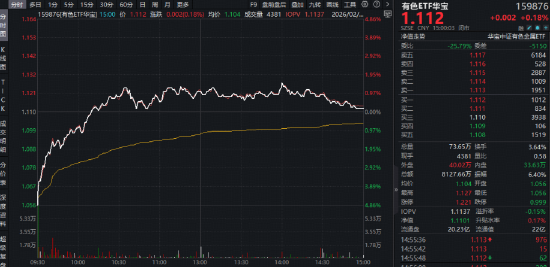
Core Viewpoint - The escalation of geopolitical tensions between the US and Iran has led to a significant increase in gold prices, with spot gold rising above $4900 per ounce, benefiting the non-ferrous metal sector and related ETFs [1][3]. Group 1: Market Performance - The non-ferrous ETF Huabao (159876) saw a maximum intraday increase of 1.53%, ultimately closing up 0.18%, indicating resilience in the market [1]. - Over 10 billion yuan of main capital has flowed into the non-ferrous metal sector, with Huabao ETF attracting 40.93 million yuan in the previous two days [1]. - Key stocks in the sector include Hunan Gold, which surged over 9%, Shengxin Lithium Energy up over 6%, and Guocheng Mining rising over 5% [1]. Group 2: Geopolitical and Economic Factors - The US-Iran geopolitical situation has intensified, with Iran warning it can easily access US military bases, prompting the US to advise its citizens to leave Iran [3]. - Recent US employment data fell short of expectations, increasing speculation about potential interest rate cuts by the Federal Reserve, which is favorable for gold prices [3]. Group 3: Supply and Demand Dynamics - According to Citic Futures, the short-term outlook for precious metals is mixed due to fluctuating investor expectations regarding Federal Reserve policies, but pre-holiday stocking demand may support prices [3]. - Guojin Securities highlights significant changes in the fundamentals of non-ferrous metals, with supply, demand, and inventory all undergoing important shifts [3]. - National Securities predicts that the combination of supply-demand mismatch, macroeconomic easing, and industrial upgrades will sustain high profitability in the non-ferrous sector for 3-5 years [3]. Group 4: Investment Strategies - The Huabao non-ferrous ETF and its linked funds cover a wide range of metals, including copper, aluminum, gold, rare earths, and lithium, making it an efficient tool for investors to gain exposure to the non-ferrous metal sector [4][5]. - It is suggested to allocate 10%-20% of investment portfolios to the non-ferrous metal sector to benefit from potential price increases while diversifying risk [3].
氧化铝月报 2026/02/06:关注矿端潜在扰动,静待基本面拐点-20260206
Wu Kuang Qi Huo· 2026-02-06 13:18
1. Report Industry Investment Rating - Not mentioned in the report 2. Core Viewpoints of the Report - The alumina smelting end's overcapacity pattern is difficult to change in the short - term, and the inventory accumulation trend continues. Although the recent capacity maintenance has increased, the overall output remains at a high level. The continuous rebound of alumina still faces three dilemmas: over - capacity in the smelting end, downward cost support, and delivery pressure of expired warehouse receipts. It is recommended to wait and see in the short term. The reference operating range of the domestic main contract AO2605 is 2600 - 3000 yuan/ton. Attention should be paid to domestic supply contraction policies, Guinea's ore policies, and the Fed's monetary policy [12] 3. Summary According to the Directory 3.1 Monthly Assessment - **Futures price**: As of February 6, the alumina index increased by 3.33% to 2,824 yuan/ton compared with the price on December 31. The overall commodity long - making atmosphere was active within the month. Coupled with the supply disturbance of Guinea's bauxite and the increase in capacity maintenance, the alumina futures price fluctuated upward. However, the continuous rebound of alumina still needs to focus on the implementation of strong supply - side contraction policies, the introduction of bauxite price - support policies by the Guinea government, and the full digestion of expired warehouse receipts. The basis was deeply discounted in January. As of February 6, the spot price in Shandong was at a discount of 201 yuan/ton compared with the AO2603 contract price. The spread between the first - and third - month contracts fluctuated in January, and as of February 6, the spread was - 68 yuan/ton [11] - **Spot price**: The alumina output within the month remained at a high level for the year, the inventory accumulation trend continued, and the spot price was under downward pressure. As of February 6, 2026, the spot prices in Guangxi, Guizhou, Henan, Shandong, Shanxi, and Xinjiang were 2,685 yuan/ton, 2,740 yuan/ton, 2,635 yuan/ton, 2,555 yuan/ton, 2,615 yuan/ton, and 2,900 yuan/ton respectively, down 60 yuan/ton, 50 yuan/ton, 55 yuan/ton, 45 yuan/ton, 50 yuan/ton, and 60 yuan/ton respectively compared with the beginning of January, and the decline rate narrowed compared with the previous period [11] - **Inventory**: As of January 30, the total social inventory of alumina increased by 394,000 tons to 5.565 million tons compared with the beginning of January. Among them, the inventory in electrolytic aluminum plants, alumina plants, in - transit inventory, and port inventory increased by 210,000 tons, decreased by 10,000 tons, increased by 156,000 tons, and increased by 38,000 tons respectively. As of February 6, 2026, the alumina futures warehouse receipts increased by 61,100 tons to 218,000 tons compared with the beginning of January, and the inventory in the delivery warehouses of the Shanghai Futures Exchange increased by 68,300 tons to 265,200 tons [11] 3.2 Supply - side - In December 2025, the alumina output was 8 million tons, a year - on - year increase of 8.75% and a month - on - month increase of 2.07%. The cumulative output in the first twelve months of 2025 was 90.65 million tons, a year - on - year increase of 10.06% compared with the previous year. Due to the shrinking profit, the number of alumina maintenance capacities has increased recently, but due to the gradual release of new capacities, the overall output still remains at a relatively high level. According to the alumina enterprise production plan, the planned production capacity of domestic alumina this year is 13.4 million tons, mainly concentrated in the first and fourth quarters [12][43][46] 3.3 Futures and Spot Ends - **Spot price**: The alumina output within the month remained at a high level for the year, the inventory accumulation trend continued, and the spot price was under downward pressure. As of February 6, 2026, the spot prices in Guangxi, Guizhou, Henan, Shandong, Shanxi, and Xinjiang were 2,685 yuan/ton, 2,740 yuan/ton, 2,635 yuan/ton, 2,555 yuan/ton, 2,615 yuan/ton, and 2,900 yuan/ton respectively, down 60 yuan/ton, 50 yuan/ton, 55 yuan/ton, 45 yuan/ton, 50 yuan/ton, and 60 yuan/ton respectively compared with the beginning of January, and the decline rate narrowed compared with the previous period [18] - **Futures price and basis**: As of February 6, the alumina index increased by 3.33% to 2,824 yuan/ton compared with the price on December 31. The overall commodity long - making atmosphere was active within the month. Coupled with the supply disturbance of Guinea's bauxite and the increase in capacity maintenance, the alumina futures price fluctuated upward. However, the continuous rebound of alumina still needs to focus on the implementation of strong supply - side contraction policies, the introduction of bauxite price - support policies by the Guinea government, and the full digestion of expired warehouse receipts. The basis was deeply discounted in January. As of February 6, the spot price in Shandong was at a discount of 201 yuan/ton compared with the AO2603 contract price. The spread between the first - and third - month contracts fluctuated in January, and as of February 6, the spread was - 68 yuan/ton [22] 3.4 Raw Material End - **Bauxite price**: As of February 6, the prices of some domestic bauxite fluctuated downward within the month. The prices of bauxite in Guizhou, Henan, and Shanxi decreased by 10 yuan/ton, 10 yuan/ton, and 50 yuan/ton respectively. The CIF price of Guinea's bauxite decreased by 5 US dollars/ton to 61 US dollars/ton, and the CIF price of Australia decreased by 9 US dollars/ton to 58 US dollars/ton. Currently, the bauxite shipment from Guinea is still at a high level, the sea - floating inventory continues to rise, the bauxite surplus pattern intensifies, and the port inventory is still at a high level. It is expected that the bauxite price will fluctuate downward. Attention should be paid to the support of the CIF price of Guinea's bauxite at 60 US dollars/ton. In the middle of the month, workers at a mine in the Boké region of Guinea launched an indefinite strike. This region is the core area of Guinea's bauxite. It is necessary to observe whether the impact of the strike expands. Currently, production and shipment are normal [26] - **Bauxite production and import**: In January 2026, China's bauxite production was 5.34 million tons, a year - on - year increase of 6.2% and a month - on - month increase of 8.09%. In December 2025, the bauxite import was 14.67 million tons, a year - on - year decrease of 2.02% and a month - on - month decrease of 2.88%. The total import in the first twelve months of 2025 was 201.19 million tons, a year - on - year increase of 26.48%. In December 2025, China imported 11.36 million tons of bauxite from Guinea, a year - on - year increase of 9.4% and a month - on - month increase of 6.12%. The cumulative import in the first twelve months of 2025 was 149.5 million tons, a year - on - year increase of 35.32%. The shipment rebounded after the rainy season [28][30][33] - **Bauxite inventory**: As of January 31, 2026, the bauxite shipment volume of major countries in the world remained at a relatively high level. The latest data of China's bauxite port inventory was 24.19 million tons, with a slight inventory reduction but still sufficient reserves. In January, China's bauxite inventory increased by 1.64 million tons, and the total inventory reached 57.9 million tons, still at a high level in the past five years, and the enterprise's ore inventory was sufficient. In key regions, the bauxite inventory in Shanxi increased by 240,000 tons in January, and the inventory in Henan decreased by 160,000 tons. The inventory increase mainly came from Shandong [36][40] 3.5 Import and Export - In December 2025, the net import of alumina was 21,900 tons. The opening of the previous import window drove the continuation of monthly net imports. The import volume decreased from 2.32 million tons in the previous month to 2.28 million tons, and the export volume increased from 1.68 million tons to 2.1 million tons. The total net export in the first twelve months of 2025 was 1.35 million tons. As of February 6, the FOB price in Australia decreased by 4 US dollars/ton to 304 US dollars/ton compared with the beginning of January, and the import profit and loss was - 75 yuan/ton. The prices at home and abroad decreased synchronously, and the current import window remained closed [12][51][54] 3.6 Demand - side - In December 2025, China's electrolytic aluminum production was 3.83 million tons, a year - on - year increase of 3.05% and a month - on - month increase of 4.02%. The total production in the first twelve months of 2025 was 44.38 million tons, a year - on - year increase of 2.71%. In terms of operating capacity, in December 2025, the operating capacity of electrolytic aluminum was 44.69 million tons, a month - on - month increase of 50,000 tons. In terms of the operating rate, the operating rate of electrolytic aluminum in December decreased by 0.46% to 96.76% [58][61] 3.7 Inventory - As of January 30, the total social inventory of alumina increased by 394,000 tons to 5.565 million tons compared with the beginning of January. Among them, the inventory in electrolytic aluminum plants, alumina plants, in - transit inventory, and port inventory increased by 210,000 tons, decreased by 10,000 tons, increased by 156,000 tons, and increased by 38,000 tons respectively. As of February 6, 2026, the alumina futures warehouse receipts increased by 61,100 tons to 218,000 tons compared with the beginning of January, and the inventory in the delivery warehouses of the Shanghai Futures Exchange increased by 68,300 tons to 265,200 tons [11][66][69]
明泰铝业:公司废铝采购依托完善的国内回收网络形成稳定供给
Zheng Quan Ri Bao· 2026-02-06 13:11
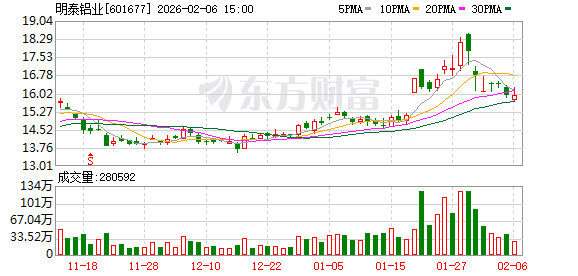
Group 1 - The company has established a stable supply of scrap aluminum through a comprehensive domestic recycling network and also utilizes import channels from multiple countries and regions [2] - The EU's strengthened export controls on scrap aluminum do not impact the company [2]

铝类市场周报:逢低备库需求回暖,铝类或将有所支撑-20260206
Rui Da Qi Huo· 2026-02-06 08:48
1. Report Industry Investment Rating - Not provided in the report 2. Core Views Electrolytic Aluminum - The supply of electrolytic aluminum remains stable, with the theoretical profit of electrolytic aluminum plants still good. The operating capacity has a slight increase, but the increment is limited due to the industry ceiling. The demand has recovered as downstream processing enterprises stock up before the festival, but it may gradually weaken as the stocking nears the end and the holiday approaches. The industrial inventory accumulates seasonally. It is recommended to conduct short - term long positions at low prices for the main contract of Shanghai aluminum, while paying attention to operation rhythm and risk control [6]. Alumina - The cost support of alumina weakens as the supply of domestic bauxite becomes sufficient and the purchase demand of alumina plants is weak. The supply is abundant as the smelter production sentiment is driven by the good performance of the alumina disk, and the industrial inventory accumulates slightly. The demand for alumina increases steadily as new electrolytic aluminum production capacity is put into operation, but the increment is limited. It is recommended to conduct oscillatory trading with a light position for the main contract of alumina, while paying attention to operation rhythm and risk control [7]. Cast Aluminum - The supply of cast aluminum alloy decreases slightly as recycling aluminum plants gradually enter the shutdown state. The demand improves slightly as downstream die - casting enterprises increase their willingness to purchase at low prices, but the spot market transaction only improves slightly due to the seasonal off - season and stricter environmental protection policies. The supply of cast aluminum is still excessive, and the industrial inventory is at a high level. It is recommended to conduct oscillatory trading with a light position for the main contract of cast aluminum, while paying attention to operation rhythm and risk control [9]. Options Market - Considering that the volatility of aluminum prices may expand in the future, a double - buying strategy can be considered to bet on the increase in volatility [72]. 3. Summary by Directory 3.1 Week - ly Key Points Summary - **Electrolytic Aluminum**: Supply is stable, demand recovers, and industrial inventory accumulates seasonally. Suggest light - position short - term long positions at low prices [6]. - **Alumina**: Supply is sufficient, demand is stable, and industrial inventory accumulates slightly. Suggest light - position oscillatory trading [7]. - **Cast Aluminum**: Supply decreases slightly, demand improves slightly, and supply is still excessive with high inventory. Suggest light - position oscillatory trading [9]. 3.2 Futures and Spot Markets - **Price Movement**: As of February 6, 2026, the closing price of Shanghai aluminum was 23,285 yuan/ton, a decrease of 5.61% from January 30; the closing price of LME aluminum was 3,026 US dollars/ton, a decrease of 5.98% from January 30. The alumina futures price increased by 0.31% to 2,603 yuan/ton, and the cast - aluminum alloy main contract closing price decreased by 3.81% to 21,950 yuan/ton [12][16]. - **Ratio and Spread**: As of February 6, 2026, the Shanghai - LME ratio of electrolytic aluminum was 7.71, a decrease of 0.13 from January 30. The aluminum - zinc futures spread was 1,135 yuan/ton, a decrease of 140 yuan/ton from January 30; the copper - aluminum futures spread was 76,785 yuan/ton, a decrease of 2,335 yuan/ton from January 30 [13][22]. - **Inventory and Position**: As of February 6, 2026, the Shanghai aluminum position was 651,002 lots, a decrease of 12.3% from January 30; the net position of the top 20 in Shanghai aluminum increased by 61,620 lots [19]. - **Spot Price**: As of February 6, 2026, the spot price of A00 aluminum ingots was 23,110 yuan/ton, a decrease of 6.21% from January 30, with a spot discount of 150 yuan/ton, an increase of 90 yuan/ton from the previous week. The average alumina price in Henan, Shanxi, and Guiyang remained flat compared with January 30, and the national average price of cast - aluminum alloy (ADC12) decreased by 3.29% to 23,550 yuan/ton [25][29]. 3.3 Industry Situation - **Inventory**: As of February 5, 2026, the LME electrolytic aluminum inventory decreased by 0.95% to 492,975 tons; the SHFE electrolytic aluminum inventory increased by 10.01% to 216,771 tons; the domestic electrolytic aluminum social inventory increased by 7.29% to 796,100 tons. As of February 6, 2026, the SHFE electrolytic aluminum warehouse receipts increased by 7.21% to 155,533 tons; the LME electrolytic aluminum registered warehouse receipts increased by 0.28% to 440,650 tons [34]. - **Bauxite**: The domestic bauxite inventory at nine ports decreased by 370,000 tons. In December 2025, the monthly import of bauxite was 14.6734 million tons, a decrease of 2.85% month - on - month and 2.02% year - on - year. From January to December, the total import of bauxite was 200.5319 million tons, an increase of 26.31% year - on - year [37]. - **Scrap Aluminum**: The price of scrap aluminum in Shandong decreased by 750 yuan/ton week - on - week. In December 2025, the import of aluminum scrap and fragments increased by 22.8% year - on - year, and the export decreased by 4.4% year - on - year [43]. - **Alumina**: In December 2025, the alumina production was 8.0108 million tons, an increase of 6.7% year - on - year; the total production from January to December was 92.4456 million tons, an increase of 8% year - on - year. The import of alumina decreased by 1.99% month - on - month and increased by 1389.71% year - on - year, and the export increased [46]. - **Electrolytic Aluminum**: In December 2025, the electrolytic aluminum production was 3.874 million tons, an increase of 3% year - on - year; the total production from January to December was 45.016 million tons, an increase of 2.4% year - on - year. The in - production capacity increased by 0.36% month - on - month and 1.66% year - on - year, the total capacity increased by 0.27% month - on - month and 0.58% year - on - year, and the operating rate was 98.31% [52]. - **Aluminum Products**: In December 2025, the aluminum product production was 6.1356 million tons, with no year - on - year change; the total production from January to December was 67.5039 million tons, a decrease of 0.2% year - on - year. The import increased by 7.1% year - on - year, and the export increased by 7.7% year - on - year [56]. - **Cast Aluminum Alloy**: In December 2025, the built - in capacity of recycled aluminum alloy was 1.26 million tons, with no month - on - month change and an increase of 15.96% year - on - year. The production was 684,000 tons, a decrease of 2.28 month - on - month and 2.53% year - on - year [59]. - **Aluminum Alloy**: In December 2025, the aluminum alloy production was 1.825 million tons, an increase of 13.7% year - on - year; the total production from January to December was 19.297 million tons. The import decreased by 11.81% year - on - year, and the export increased by 20.03% year - on - year [62]. - **Real Estate**: In December 2025, the real estate development climate index was 91.45, a decrease of 0.44 from the previous month and 1.1 from the same period last year. From January to December 2024, the new housing construction area decreased by 20.47% year - on - year, and the housing completion area decreased by 23.9% year - on - year [65]. - **Infrastructure and Automobile**: From January to December 2024, the infrastructure investment decreased by 1.48% year - on - year. In December 2025, the automobile sales in China decreased by 6.2% year - on - year, and the production decreased by 2.09% year - on - year [68]. 3.4 Options Market Analysis - Given that the future volatility of aluminum prices may increase, a double - buying strategy can be used to bet on the increase in volatility [72].