家具制造业

Search documents
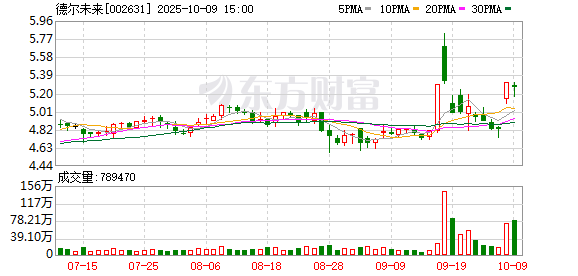
德尔未来最新筹码趋于集中
Zheng Quan Shi Bao Wang· 2025-10-09 12:46
Core Viewpoint - The company, Del, reported a significant decrease in shareholder accounts and a decline in financial performance for the first half of the year [2] Group 1: Shareholder Information - As of September 30, the number of shareholders for Del was 42,225, a decrease of 6,045 from the previous period (September 20), representing a decline of 12.52% [2] Group 2: Stock Performance - The closing price of Del's stock was 5.26 yuan, down 0.94%, while the stock price has increased by 5.41% since the concentration of shares began [2] - The stock experienced three increases and four decreases over the trading days, including one instance of hitting the daily limit [2] Group 3: Financial Performance - For the first half of the year, Del achieved operating revenue of 523 million yuan, a year-on-year decrease of 23.14% [2] - The company reported a net loss of 57.13 million yuan, a year-on-year decline of 138.43% [2] - The basic earnings per share were -0.0717 yuan [2]


麒盛科技:嘉兴智海投资管理有限公司拟减持不超过2%公司股份
Mei Ri Jing Ji Xin Wen· 2025-10-09 11:38
每经AI快讯,麒盛科技(SH 603610,收盘价:18.79元)10月9日晚间发布公告称,截至本公告披露 日,公司控股股东嘉兴智海投资管理有限公司持有公司约8363万股,占公司总股本的23.69%;公司实 际控制人、董事长唐国海直接持有公司约6181万股,占公司总股本的17.51%;公司副总经理陈艮雷先 生持有公司约125万股,占公司总股本0.35%。 嘉兴智海投资管理有限公司拟通过大宗交易的方式减持不超过公司总股本比例的2%,即减持不超过约 706万股(占其持有股份总数的8.44%);唐国海拟通过集中竞价交易的方式减持不超过公司总股本比 例的1%,即减持不超过约353万股(占其直接持有股份总数的5.71%);陈艮雷拟通过集中竞价的方式 减持不超过约31万股公司股份(占其持有股份总数的24.94%),即不超过公司总股本的0.09%。 截至发稿,麒盛科技市值为66亿元。 每经头条(nbdtoutiao)——与美元脱钩后,暴涨102倍,揭秘黄金疯涨背后神秘的"无形之手"!专家: 推动金价上涨的逻辑没有变 (记者 王晓波) 2024年1至12月份,麒盛科技的营业收入构成为:家具制造业占比96.63%,其他业务占比 ...

浙江永强9月30日获融资买入1003.07万元,融资余额2.20亿元
Xin Lang Cai Jing· 2025-10-09 01:29
Core Viewpoint - Zhejiang Yongqiang's stock experienced a decline of 1.08% on September 30, with a trading volume of 73.70 million yuan, indicating a potential shift in investor sentiment and market dynamics [1] Financing Summary - On September 30, Zhejiang Yongqiang had a financing buy-in amount of 10.03 million yuan and a financing repayment of 11.80 million yuan, resulting in a net financing outflow of -1.77 million yuan [1] - As of September 30, the total financing and securities lending balance for Zhejiang Yongqiang was 222 million yuan, with the financing balance accounting for 2.76% of the circulating market value, indicating a high level of financing activity [1] - The company had a securities lending repayment of 18,600 shares and a securities lending sell-out of 1,500 shares, with a total securities lending balance of 1.12 million yuan, also reflecting a high level of activity in this area [1] Business Performance - For the first half of 2025, Zhejiang Yongqiang reported a revenue of 3.08 billion yuan, representing a year-on-year growth of 3.34%, and a net profit attributable to shareholders of 513 million yuan, which is a 0.88% increase compared to the previous period [2] - The company has cumulatively distributed dividends of 2.50 billion yuan since its A-share listing, with 152 million yuan distributed over the past three years [3] Shareholder Structure - As of June 30, 2025, the number of shareholders for Zhejiang Yongqiang was 83,700, a decrease of 3.75% from the previous period, while the average circulating shares per person increased by 3.90% to 22,864 shares [2] - The second-largest circulating shareholder is Hong Kong Central Clearing Limited, holding 92.52 million shares, an increase of 50.83 million shares from the previous period [3] - Other notable shareholders include Southern CSI 1000 ETF, holding 10.01 million shares, and Huaxia CSI 1000 ETF, holding 5.91 million shares, both of which have increased their holdings compared to the previous period [3]

财说丨趣睡科技陷减持潮、估值泡沫与小米依赖三重困局
Xin Lang Cai Jing· 2025-10-08 23:34
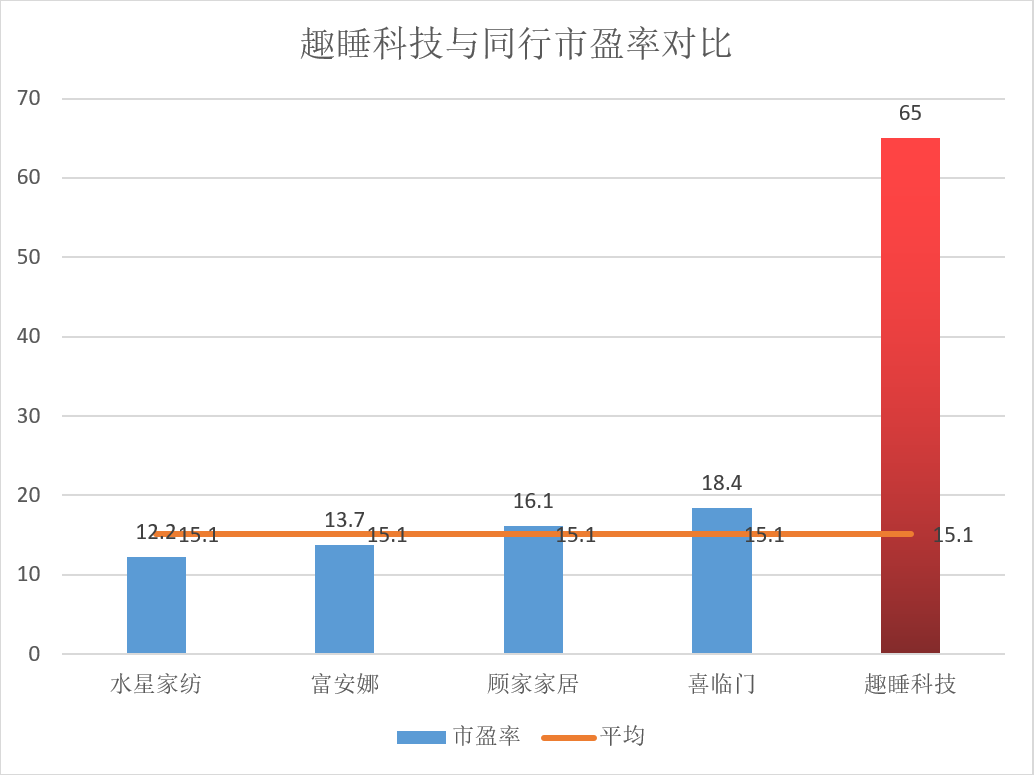
Core Viewpoint - Qushui Technology (301336.SZ) reported a revenue growth of 15.82% and a net profit growth of 19.43% in the first half of 2025, but faces significant challenges including shareholder sell-offs, project delays, and over-reliance on Xiaomi channels for over 60% of its online revenue, raising concerns about its growth story [1][2][3]. Shareholder Actions - In September, Qushui Technology disclosed multiple shareholder reduction plans, including a transfer of 1.2824 million shares by major shareholders at a price of 43.56 CNY per share, which is 16% lower than the market price [2][3]. - A total of six shareholders planned to reduce their holdings by up to 5.49% of the total share capital, with some engaging in "clearance-style reductions," indicating a lack of confidence in the company's future [3][4]. Valuation Concerns - Qushui Technology's price-to-earnings (P/E) ratio stands at 65, significantly higher than competitors like Xilinmen (18.4), Gujia Home (16.1), and the industry average of 15.1, suggesting a valuation bubble [4][6]. - The company's revenue growth of 15.82% and net profit growth of 19.43% are insufficient to justify such a high P/E ratio, leading to investor skepticism [6][9]. Project Delays - Three key projects funded by the IPO are delayed, with the full series product upgrade and home research center projects postponed by one year, and the digital management system project delayed by two years, reflecting poor performance expectations [7][9]. - The delays are attributed to underperformance in market demand and increased competition, indicating a misjudgment in the company's strategic planning [9][10]. Financial Management Issues - Qushui Technology received a regulatory letter for three violations in fundraising management, including exceeding approval limits and improper use of funds, highlighting internal control weaknesses [10][11]. - These issues undermine investor trust and reflect a lack of compliance with regulatory standards [10]. Dependency on Xiaomi - In the first half of 2025, 69% of Qushui Technology's online sales came from Xiaomi channels, which limits pricing power and compresses profit margins due to Xiaomi's strong influence [11][12]. - The company's weak presence in self-owned channels, with only 2% of total revenue from offline sales, raises concerns about its ability to diversify and mitigate risks [13].
2025年1-8月全国家具制造业出口货值为898.9亿元,累计下滑7.9%
Chan Ye Xin Xi Wang· 2025-10-05 01:52
Core Insights - The furniture manufacturing industry in China is experiencing a decline in export value, with a reported drop of 11.6% year-on-year in August 2025, amounting to 10.7 billion yuan [1] - Cumulatively, from January to August 2025, the total export value of the furniture manufacturing sector reached 89.89 billion yuan, reflecting a year-on-year decrease of 7.9% [1] Company Insights - Listed companies in the furniture sector include Fangda Group (000055), Conch New Materials (000619), Beixin Building Materials (000786), Zhongqi New Materials (001212), Tubao (002043), Baoying Co., Ltd. (002047), Yasha Co., Ltd. (002375), Beijing Lier (002392), Leizhi Group (002398), Qinglong Pipe Industry (002457), Mingdiao Co., Ltd. (002830), Meizhi Co., Ltd. (002856), Haosai (002963), and Zhongtian Decoration (002989) [1] Industry Report - The report titled "2026-2032 China Furniture Industry Market Survey Analysis and Investment Development Potential" was released by Zhiyan Consulting, a leading industry consulting firm in China [1] - Zhiyan Consulting has been dedicated to industry research for over a decade, providing in-depth industry reports, business plans, feasibility studies, and customized services [1]

解读美国232贸易调查新进展
SINOLINK SECURITIES· 2025-09-30 14:51
Geopolitical Developments - Ongoing multi-departmental dialogues between the US and China indicate a positive trend in bilateral relations, despite ongoing tensions over the Russia-Ukraine conflict[1] - Poland has reopened the China-Europe Railway after a closure of over ten days, reflecting Europe's strategic adjustments amid geopolitical pressures[1] US Trade Policies - The US has announced new tariffs effective October 1, including 100% on brand or patented drugs, 50% on kitchen cabinets, 30% on upholstered furniture, and 25% on heavy trucks[2][14] - The 232 trade investigations initiated by the Trump administration have increased unpredictability and uncertainty in trade relations, with over ten investigations launched during his second term[2][16] Impact on China - The 232 trade investigations are expected to have limited short-term impact on China, as Chinese companies adapt by shifting production strategies to mitigate tariff effects[3][20] - Key exports from China to the US include electronics (24% of total exports), machinery (17%), and furniture, which may face increased costs and reduced competitiveness due to new tariffs[20] Future Focus Areas - Upcoming attention will be on the progress of US-China trade negotiations, potential new conditions in Russia-Ukraine talks, and developments in the Gaza conflict[3][22] - The US government faces a shutdown risk on October 1, which could delay key economic data releases, impacting market stability[24]
菲林格尔:获得政府补助108.44万元
Ge Long Hui· 2025-09-30 09:35
Core Viewpoint - Filinger (603226.SH) announced that the company and its subsidiaries received a total of 1.0844 million yuan in government subsidies from July 1 to September 30, 2025 (unaudited) [1] Summary by Category - Government Subsidies - The total amount of government subsidies received by the company and its subsidiaries is 1.0844 million yuan [1] - The reporting period for these subsidies is from July 1 to September 30, 2025 [1] - The financial data reported is unaudited [1]

特朗普对部分木制家具加征关税,进一步增加美国人住房成本
Sou Hu Cai Jing· 2025-09-30 03:36
Core Points - The Trump administration continues to utilize import tariffs to revitalize U.S. manufacturing and strengthen national security [1][4] - New tariffs include a 10% tax on imported softwood lumber and a 25% tax on imported cabinets and wood products, effective from October 14, with some rates increasing on January 1 [1] - The increase in tariffs is expected to raise costs in the residential construction and renovation sectors, exacerbating housing affordability issues for average Americans [1] - Approximately 30% of the softwood used in the U.S. comes from Canada, which faces a 14.5% countervailing and anti-dumping duty [1] Industry Insights - The new tariffs are part of a broader strategy to restructure domestic supply chains, although domestic lumber production may not meet the immediate demands of builders [4] - There is a noted generational gap in interest towards manufacturing jobs, with younger individuals preferring careers in fields like social media and fashion design [4] - The latest tariff measures stem from an investigation initiated by the U.S. Department of Commerce under Section 232 of the Trade Expansion Act, which allows for tariffs based on national security concerns [4][5] Legislative Context - The U.S. Department of Commerce has also launched new investigations into imports of robots, industrial machinery, and medical devices under the same legal framework [5] - The International Emergency Economic Powers Act (IEEPA) allows the President to impose tariffs without stringent requirements to prove national security concerns, which has been a focal point in recent tariff implementations [5] - The legality of the White House's invocation of IEEPA is set to be debated in the Supreme Court on November 5 [5]
深圳推动传统产业“智变”一举三得
Sou Hu Cai Jing· 2025-09-29 23:13
Core Insights - Shenzhen is focusing on upgrading traditional industries to align with modern technological advancements and market demands, aiming to enhance the overall scale of traditional industries to over 700 billion yuan within three years [1][2][3] Group 1: Traditional Industry Development - Traditional industries are characterized by labor-intensive and manufacturing processes, relying on mature technologies and stable market systems, contrasting with emerging industries that are driven by new technologies and high innovation [2] - Shenzhen's traditional industries, such as textiles, packaging, furniture manufacturing, and jewelry, are recognized as national benchmarks, with the watch industry leading global production [2] - The push for traditional industry optimization reflects a pragmatic approach to meet consumer demands and stimulate economic recovery [2] Group 2: Technological Empowerment - Traditional industries can transform into new productive forces through the integration of new technologies, particularly with the ongoing technological revolution represented by artificial intelligence [2][3] - The AI eyewear market is projected to grow significantly, with Shenzhen's eyewear industry expected to reach an annual output value of over 15 billion yuan and account for 50% of the global mid-to-high-end eyewear market by 2024 [3] - The initiative to upgrade traditional industries will enhance their development capabilities, expand market opportunities for tech companies, and foster a robust ecosystem for new products and business models [3]
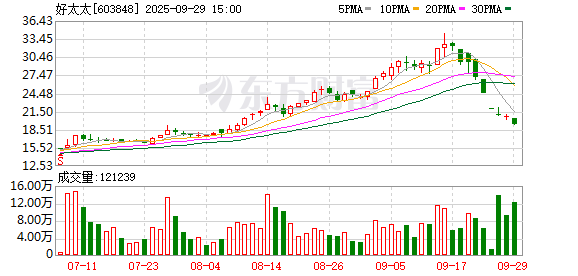
好太太跌6.39%,机构净卖出1645.22万元,沪股通净卖出831.82万元
Zheng Quan Shi Bao Wang· 2025-09-29 09:54
Group 1 - The stock of Haotaitai (603848) fell by 6.39% today, with a turnover rate of 3.01% and a trading volume of 237 million yuan, experiencing a fluctuation of 5.81% [2] - Institutional investors net sold 16.45 million yuan, while the Shanghai-Hong Kong Stock Connect saw a net sell of 8.32 million yuan, with a total net sell from brokerage seats amounting to 9.34 million yuan [2] - The stock was listed on the Shanghai Stock Exchange's watch list due to a daily price deviation of -7.29%, with significant net selling from institutional and Hong Kong stock connect investors [2] Group 2 - For the first half of the year, the company reported a revenue of 677 million yuan, a year-on-year decrease of 5.00%, and a net profit of 86.17 million yuan, down 39.97% year-on-year [3] - The top five brokerage seats accounted for a total transaction volume of 90.31 million yuan, with buying transactions amounting to 28.10 million yuan and selling transactions totaling 62.21 million yuan, resulting in a net sell of 34.11 million yuan [3] - The main capital outflow for the stock today was 33.88 million yuan, with large orders seeing a net outflow of 7.88 million yuan and big orders netting out 26.00 million yuan, leading to a total net outflow of 125 million yuan over the past five days [2][3]