
核聚变能源

Search documents
谷歌同意购电,核聚变发电成交“第二单”
Hua Er Jie Jian Wen· 2025-07-01 00:39
Core Viewpoint - Google's power purchase agreement with Commonwealth Fusion Systems (CFS) signifies a strong endorsement for the nascent nuclear fusion energy sector, indicating growing commercial viability and interest from major tech companies [1][2][4]. Group 1: Agreement Details - Google has committed to purchasing 200 megawatts of power from CFS's planned nuclear fusion power plant in Virginia, which is expected to have a total capacity of 400 megawatts and aims to be the first grid-connected fusion power plant [1][2]. - This agreement is the second power purchase agreement in the emerging nuclear fusion energy field, highlighting the increasing interest from large enterprises in this technology [1][2]. Group 2: Implications for CFS - The agreement is seen as a significant signal to investors and the supply chain that commercial nuclear fusion is becoming "increasingly likely," which will aid CFS in securing further financing [1][3]. - As part of the collaboration, Google has agreed to increase its investment in CFS's next funding round and has signed an option to purchase power from other CFS plants in the future [1]. Group 3: Industry Context - The partnership reflects a broader trend among tech companies, including Microsoft, which has also signed a similar agreement with Helion for a 50-megawatt fusion facility, indicating a competitive race to secure energy supplies for large-scale data centers [2][3]. - The growing demand for energy driven by artificial intelligence development is creating unprecedented pressure on tech companies to secure long-term, reliable, and clean energy sources [3][4]. Group 4: Future of Nuclear Fusion - Nuclear fusion is viewed as an attractive energy solution due to its potential to produce energy without long-lived nuclear waste and carbon emissions, while offering high energy density [4]. - Despite skepticism regarding the timeline for commercial nuclear fusion, the agreement between Google and CFS suggests that market patience and capital foresight are creating conditions for breakthroughs in this advanced technology [4].

谷歌宣布与联邦聚变系统公司签署核聚变商业购电协议 标志着核聚变能源首次实现商业化电力采购
news flash· 2025-06-30 14:20
Core Insights - Google’s parent company Alphabet has signed a commercial power purchase agreement with Commonwealth Fusion Systems (CFS) to buy 200 megawatts of electricity from its fusion power project in Virginia, marking the first instance of commercial electricity procurement from nuclear fusion [1] Company Summary - Alphabet is engaging in a pioneering venture by purchasing electricity generated from nuclear fusion, a technology that has not yet been commercially applied on Earth [1] - Commonwealth Fusion Systems, a startup spun out from MIT in 2018, is developing the ARC demonstration project in Virginia, located near the world’s largest data center cluster [1]
招商证券:核聚变产业化加速 关注电源系统
智通财经网· 2025-06-30 09:07
Group 1 - The core viewpoint of the report highlights the advancements in Tokamak technology represented by EAST and Circulation 3 since 2025, with the BEST project of fusion energy operations starting its assembly ahead of schedule and initiating bidding processes [1][2] - Multiple private enterprises have entered the field, with new startups emerging since 2024, such as Xingneng Xuanguang, Nova, and Xianjue, receiving support from government departments and internet capital [1][2] Group 2 - The power system is identified as a core component of controllable nuclear fusion devices, with its value proportion being second only to the magnetic system in the overall fusion system [3] - The barriers to entry for power systems are high, with companies that have long-term technical accumulation expected to benefit, as the requirements for controllable nuclear fusion power systems are stringent and necessitate customized development [4]

未来产业:可控核聚变发展加速,助力能源转型(附36页PPT)
材料汇· 2025-06-24 15:16
Core Viewpoint - The article emphasizes the rapid advancements in nuclear fusion projects both domestically and internationally, highlighting significant investments and technological breakthroughs that could lead to commercial viability in the near future [2][6][21]. Group 1: Recent Developments in Domestic Fusion Projects - The "BEST" project has commenced assembly ahead of schedule, with the goal of completing construction by 2027 [4]. - Various tenders related to the "BEST" and "Xinghuo No. 1" projects have been launched, indicating a robust pipeline of activities and investments [4][6]. - The "Chinese Circulation No. 3" project achieved a significant milestone with a fusion triple product reaching 10^20, marking a critical advancement in plasma performance [4]. Group 2: Investment and Financing Trends - TAE Technologies, a leading U.S. fusion company, raised over $150 million in its latest funding round, bringing its total funding to $1.35 billion, with participation from major investors like Chevron and Google [6]. - Japan announced an additional investment of 10 billion yen (approximately $69 million) into its three major fusion research institutions, aiming for commercialization in the 2030s [6]. - The UK government plans to invest £2.5 billion over the next five years to advance its fusion energy initiatives, including the STEP project [6]. Group 3: Technological Innovations Driving Progress - Innovative magnetic field structures, such as spherical tokamaks, are expected to enhance confinement performance and increase fusion power output in smaller volumes [8]. - The application of high-temperature superconductors is anticipated to significantly improve fusion output power by allowing for higher current densities and stronger magnetic fields [12][14]. - The integration of AI and supercomputing technologies is facilitating real-time predictions and optimizations in plasma behavior, thereby accelerating research and development processes [16]. Group 4: Global Competition and Market Dynamics - The U.S. and China are the largest investors in nuclear fusion, with China's investment growth outpacing that of the U.S. in recent years [18][23]. - As of 2024, the U.S. has invested $5.63 billion in fusion, while China has invested $2.49 billion, indicating a competitive landscape [23]. - The article outlines the potential for fusion energy to meet global energy demands sustainably, with significant advantages over traditional energy sources [21][24]. Group 5: Future Outlook and Application Scenarios - The most optimistic projections suggest that the first fusion power plant could connect to the grid between 2025 and 2030, while a more conservative estimate places this timeline between 2031 and 2035 [48]. - The potential applications of nuclear fusion include electricity generation, industrial heating, and propulsion for spacecraft, with key developments expected around 2030 [53][55]. - The article highlights a "three-step" strategy for China's fusion energy application, progressing from experimental validation to commercial demonstration [42].

中东战火未冷,全球资本抢滩“人造太阳”
财富FORTUNE· 2025-06-24 12:42
Core Viewpoint - The article emphasizes the accelerating development and investment in controllable nuclear fusion technology, which is seen as a "ultimate energy" solution amid geopolitical tensions and energy security concerns in China [1][7]. Group 1: Energy Security and Nuclear Fusion - China's energy import dependency is at 20%, with oil strategic reserves only sufficient for 24 days, highlighting severe energy security issues [1]. - Controllable nuclear fusion offers significant advantages, such as the energy released from 1 gram of deuterium-tritium fuel being equivalent to 8 tons of oil, and the cost of generating electricity can be controlled below 0.005 yuan per kilowatt-hour [1][6]. - The Chinese government has included nuclear fusion in its "Top Ten Future Industries" initiative, planning over 300 billion yuan investment by 2030 [1]. Group 2: Investment and Commercialization - Social capital is actively investing in nuclear fusion projects, with notable investments like the 3.275 billion yuan increase in Kunlun Capital aimed at controllable nuclear fusion [2]. - The establishment of Fusion New Energy, a core platform for commercializing nuclear fusion technology, has attracted significant investment, with registered capital reaching 14.5 billion yuan [2]. Group 3: Technological Advancements - The CRAFT project, a key system for fusion reactors, achieved full domestic production of its low-noise current drive system, marking a significant technological milestone [3]. - The HL-3, China's largest and most advanced nuclear fusion experimental device, achieved new operational records, indicating rapid progress in fusion technology [3]. Group 4: Market Potential and Future Outlook - The global controllable nuclear fusion market is projected to reach $496.5 billion by 2030 and may exceed $1 trillion by 2050 [6]. - The article notes a decline in China's crude oil imports for the first time in 20 years, reflecting a strategic shift towards reducing oil dependency and increasing focus on nuclear fusion as a viable energy solution [6][7].
能源转型:可控核聚变发展加速,助力能源转型
Huaan Securities· 2025-06-20 13:52
Investment Rating - The report indicates a positive outlook on the nuclear fusion industry, highlighting significant advancements and investment opportunities in the sector. Core Insights - The nuclear fusion industry is experiencing accelerated development, with both domestic and international projects making substantial progress. The commercialization of fusion energy is anticipated in the 2030s, with various application scenarios emerging. The report emphasizes the importance of nuclear fusion as a sustainable energy source to meet global energy demands and facilitate the energy transition [4][18][22]. Summary by Sections 1. Current Focus on Nuclear Fusion - The report discusses the urgency of focusing on nuclear fusion due to its potential to provide a sustainable energy solution amidst global energy challenges [3]. 2. Domestic and International Progress in Nuclear Fusion - Domestic projects are led by research institutions, with commercial companies following suit. Internationally, the U.S. leads in the number of companies and diverse technologies, with expectations for commercial fusion energy by 2028 [4][28]. - Recent domestic advancements include the initiation of the BEST project and various tendering activities for related components, indicating a robust pipeline of development [7][10]. 3. Future Outlook for the Industry - The report forecasts that the timeline for commercial fusion power generation will likely fall within the 2030s, with diverse application scenarios and potential supply-side constraints [4][62]. - The report highlights the role of technological innovations, such as AI and advanced materials, in enhancing fusion output power beyond expectations [12][17]. 4. Investment Opportunities in the Fusion Sector - The report outlines investment opportunities within the nuclear fusion manufacturing chain, emphasizing the importance of technological breakthroughs and the competitive landscape of global fusion initiatives [4][10][19]. - Significant investments are noted, including TAE Technologies' $150 million funding round and Japan's additional ¥10 billion investment in fusion research [10][21]. 5. Key Players in the Nuclear Fusion Industry - The report identifies key players in the domestic nuclear fusion landscape, including various research institutions and companies focused on commercialization, such as 聚变新能 (Fusion New Energy) and 先觉聚能 (Xianjue Fusion) [29][34][60]. - Internationally, notable companies include CFS, Helion, and Tokamak Energy, each with distinct projects and technological approaches [60]. 6. Technological Innovations Driving Progress - Innovations in magnetic field structures and high-temperature superconductors are highlighted as critical factors that could enhance fusion power output and efficiency [13][16]. - The application of AI and supercomputing in fusion research is expected to significantly reduce trial-and-error phases, accelerating development timelines [17]. 7. Global Competition and Energy Transition - The report emphasizes the global race in nuclear fusion investment, with the U.S. and China as the leading countries. It underscores the role of fusion energy in achieving long-term climate goals and transitioning to low-carbon energy sources [18][19][24].
合肥,为人类“种太阳”
AI研究所· 2025-06-20 09:17
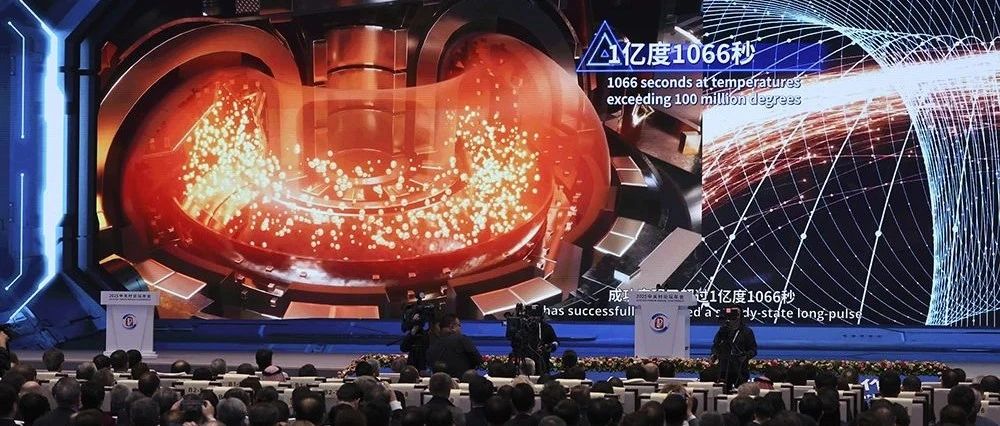
Core Viewpoint - The article highlights the significant advancements in nuclear fusion research in Hefei, particularly the achievements of the EAST (Experimental Advanced Superconducting Tokamak) device, which has set world records in plasma operation, marking a crucial step towards the realization of nuclear fusion as a viable energy source [1][4][8]. Group 1: Progress of "Artificial Sun" - The EAST device achieved a plasma temperature of 100 million degrees Celsius for 1066 seconds, setting a new world record for high confinement mode operation [1][4]. - The CRAFT (Kua Fu) low ripple current drive system has passed expert testing and has been fully domesticated, playing a key role in heating plasma to extreme temperatures [1][4]. - Since its establishment in 2006, the EAST device has conducted over 150,000 experiments, contributing valuable data for understanding nuclear fusion processes [7][8]. Group 2: Energy Industry's "Butterfly Effect" - Nuclear fusion energy offers unique advantages such as abundant raw materials, safety, efficiency, and low carbon emissions, with deuterium extracted from seawater providing energy equivalent to 300 liters of gasoline per liter of seawater [11]. - The nuclear fusion industry chain is expected to grow significantly, with upstream materials like lithium and beryllium becoming increasingly in demand as research progresses [12]. - The midstream involves high-precision equipment manufacturing, which will accelerate the overall upgrade of China's high-end equipment manufacturing industry [13]. - The downstream sector will see a transformation in energy supply, potentially replacing traditional fossil fuels with clean nuclear fusion energy, enhancing energy security and reducing environmental pollution [14]. Group 3: Hefei's Support for "Artificial Sun" - Hefei has become a focal point for nuclear fusion research, establishing itself as a national scientific center with significant infrastructure and innovation platforms [16]. - The city has formed a fusion industry alliance with over 1,000 units to collaboratively tackle key technologies and accelerate the full industry chain layout [18]. - Hefei is actively promoting the transformation of scientific achievements into production, providing a conducive environment for technology commercialization [19].

可控核聚变深度汇报
2025-06-19 09:46
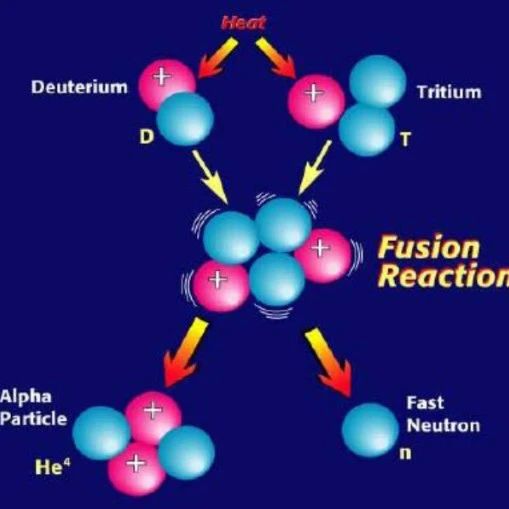
可控核聚变深度汇报 20250618 摘要 可控核聚变作为战略性新兴产业,受到全球各国高度重视,中国已制定 "三步走"战略,并成立创新联合体,多家国央企增资,显示国家推动 未来能源发展的决心,视其为大国竞争制高点。 可控核聚变具有能量密度高、原料充足、安全性高、环境友好四大优势, 其中氘氚聚变能量密度是铀 235 裂变的四倍以上,原料氘可直接从海水 提取,氚可通过中子轰击锂制备。 可控核聚变技术难点在于实现"点火",即输出能量大于输入能量,需 满足上亿度高温、等离子体密度 10^20 立方米分之一、等离子体与磁 场约束时间超过 3 秒等苛刻条件,目前全球水平 q 值仅为 4,距离商业 化所需的 30 仍有差距。 可控核聚变主要技术路径包括磁约束和惯性约束,磁约束以托卡马克、 仿星器和 FRC 装置为代表,惯性约束分为激光驱动型和 Z 箍缩型,美国 NIF 装置已实现激光驱动型惯性约束聚变点火,q 值达 1.5,今年提升至 4。 Q&A 可控核聚变的基本原理是什么?与核裂变相比有哪些优势? 核能是所有一次能源中能量密度最高的,其涉及到爱因斯坦的质量能量转换方 程 E=mc²。核能主要有三种释放形式:核衰变、核裂 ...
【明日主题前瞻】固态电池行业会议将召开,前4个月行业投资额达150亿
Xin Lang Cai Jing· 2025-06-18 11:48
Group 1: Solid-State Battery Industry - The fifth China International Solid-State Battery Technology Conference will be held on June 19-20, 2025, with industry investment reaching 15 billion in the first four months of the year [1] - The Ministry of Industry and Information Technology (MIIT) plans to establish a standard system for solid-state batteries by April 2025, with 6 billion allocated for special research and development [2] - Companies like Puli Technology and Liyuanheng are actively developing solid-state battery technologies and have made significant progress in equipment and process innovations [2] Group 2: Robotics and AI - Ant Group has invested in Lingxin Qiaoshou Technology, which focuses on embodied intelligence platforms crucial for humanoid robots [3] - Companies like Zhenyu Technology and Hanwei Technology are successfully delivering products related to robotics, including linear actuators and flexible sensors [4] - The demand for key components in humanoid robots, such as motors and tactile sensors, is expected to increase, benefiting leading technology firms in the industry [3][4] Group 3: Autonomous Delivery Vehicles - Cainiao has launched a new autonomous delivery vehicle, the Cainiao GT-Lite, priced at 21,800 yuan, with a promotional price of 16,800 yuan [5] - The logistics autonomous vehicle market is entering a phase of large-scale commercialization, driven by technological advancements and decreasing component costs [5] - Companies like Xingwang Yuda and Xiangyou Technology are developing autonomous driving systems and collaborating with postal services to enhance delivery capabilities [6] Group 4: High-Bandwidth Memory (HBM) Market - Samsung Electronics has secured a contract for HBM3E supply from Broadcom, indicating strong demand for high-performance memory in AI applications [7] - The HBM market is expected to experience explosive growth due to increased data center investments and the need for high bandwidth and low power consumption [7] - Companies like Shengmei Shanghai and Saiteng Co. are actively involved in providing equipment and materials for HBM production [8] Group 5: Digital Human Technology - Baidu has launched the industry's first dual digital human interactive live broadcast room, enhancing consumer interaction through advanced AI technology [9] - The development of digital humans is expected to lead to more personalized marketing strategies and improved customer experiences in e-commerce [9] - Companies like New Guodu Holdings are focusing on general-purpose AI technology and multi-modal AI product research [9][10] Group 6: Renewable Energy and Nuclear Fusion - China National Petroleum Corporation plans to invest 655 million yuan in Kunlun Capital for controlled nuclear fusion projects [10] - Several state-owned enterprises are exploring nuclear fusion energy, which is seen as a clean and efficient energy source [11] - Companies like Zhongyou Capital and Xuguang Electronics are involved in nuclear fusion technology development and related projects [11] Group 7: Domestic CPU Market - Shanghai Zhaoxin Integrated Circuit Co., a leading domestic CPU manufacturer, has initiated an IPO on the Sci-Tech Innovation Board, aiming to raise approximately 4.169 billion yuan [12] - The CPU market in China is projected to grow from 216.032 billion yuan in 2023 to 232.61 billion yuan in 2024, driven by advancements in AI and cloud computing [12] - Companies like Guangdian Yuntong and Zhongke Shuguang are enhancing their capabilities in CPU and GPU products [13]
聚变磁约束结构仿星器VS托卡马克
2025-06-18 00:54
Summary of Fusion Industry Conference Call Industry Overview - The conference call focused on the nuclear fusion industry, particularly advancements in magnetic confinement fusion technology, specifically the stellarator and tokamak designs [1][3][4]. Key Points and Arguments - **Significant Progress in Europe**: Germany's Fusion has completed a record €130 million financing, aiming to establish a 1GW fusion power plant by early 2030, indicating strong market support for the stellarator approach [1][3]. - **Comparison of Magnetic Confinement Devices**: The stellarator does not require plasma current drive, leading to more stable operation, although it has a more complex magnetic field structure and slightly inferior confinement performance compared to tokamaks [1][4][5]. - **Achievements of W7-X Stellarator**: The W7-X stellarator in Germany achieved a discharge duration of 43 seconds, with fusion triple product levels comparable to or slightly exceeding China's EAST, highlighting the feasibility of the stellarator technology [1][7][8]. - **Importance of Fusion Triple Product**: The fusion triple product, which considers temperature, plasma density, and energy confinement time, is crucial for assessing controllable nuclear fusion. Focusing on comprehensive indicators rather than single factors is essential [1][8]. - **Domestic Advancements in China**: The South China No. 3 device has reached and exceeded the optimal ignition temperature of 160 million degrees Celsius, suggesting accelerated future progress in domestic fusion research [1][9]. Catalysts for Future Growth - **Potential Catalysts in 2025**: The nuclear fusion sector may experience multiple catalysts for growth, including policy support, industrial developments (e.g., Shanghai Superconductor IPO, various project tenders), the EU's fusion strategy announcement, and the UK's £2.5 billion investment plan over five years [1][9]. Key Components and Companies to Watch - **Focus on Key Components**: Attention should be given to critical components such as the divertor (produced by Guoguang Electric, Antai Technology, and HEDON Intelligent), vacuum chambers (by HEDON Intelligent and Shanghai Electric), and low-temperature superconductors (developed by Western Superconducting) [2][10]. - **Emerging Companies**: Other notable companies include Yuyuan Co., Jinda Co., Shanghai Superconductor, Yongding Co., and Jin Da Co. Companies in power supply, such as Wangzi New Materials and Exabio, are also highlighted for their performance and development efforts [2][10]. Development Status of Stellarators and Tokamaks - **Domestic vs. International Development**: While China primarily focuses on tokamaks, significant progress has been made in stellarators. Internationally, both designs are advancing rapidly, necessitating increased attention and investment in stellarator technology domestically [1][11].