
轨道交通

Search documents
惠州双节假期高速公路车流总量超1044万辆
Nan Fang Du Shi Bao· 2025-10-09 12:05
Core Insights - The overlapping of the National Day and Mid-Autumn Festival resulted in an 8-day holiday, leading to a significant increase in traffic and passenger flow in Huizhou [1][2] Traffic Volume and Revenue - From October 1 to 8, Huizhou's expressways experienced a traffic flow of approximately 10.44 million vehicles, representing a year-on-year increase of 21% [1] - Approximately 5.99 million small passenger vehicles were exempted from tolls, totaling a toll exemption of about 160.77 million yuan [1] Passenger Transportation - During the holiday, Huizhou sent a total of 1.4491 million passengers, with road transport being the primary mode, sending 792,700 passengers, a 2.88% increase from 2024 [1] - Rail transport saw a total of 594,200 passengers, with a slight year-on-year decrease of 1.63% [2] - Air travel increased significantly, with 55,400 passengers, marking a year-on-year growth of 33.82% [1] Operational Efficiency - All 21 expressways in Huizhou operated normally despite the high traffic pressure, with the top five service areas handling significant vehicle volumes [2] - Special measures were implemented to alleviate traffic pressure, including allowing small vehicles to use emergency lanes during peak return times [2] Safety and Compliance - A total of 1,030 law enforcement personnel were deployed to ensure traffic safety and order during the holiday, conducting 295 inspections in key areas [2] - Various illegal operations were addressed, with a total of 61 cases processed, including illegal passenger transport and overloading violations [2]
新闻分析丨激活“新引擎” 夯实“硬支撑”——1—8月份石家庄固定资产投资稳快增长的背后
Sou Hu Cai Jing· 2025-10-08 02:50
Core Viewpoint - Shijiazhuang's fixed asset investment growth rate for January to August reached 14.8%, surpassing both national and provincial averages, indicating strong economic momentum and potential for regional development [1][2]. Investment Growth Drivers - The city has focused on high-quality development, systematically planning and accelerating investment projects, which has led to the rapid advancement of large-scale, high-quality projects that serve as new engines for economic growth [2][4]. Major Projects Supporting Development - Significant projects such as the Taiwei Aviation Simulator Production Base with a total investment of 3 billion yuan and the Hebei High-speed Group's Electronic Technology Industrial Park are underway, contributing to the local economy with expected annual outputs exceeding 1 billion yuan [3][4]. Infrastructure Investment - Infrastructure investment in Shijiazhuang has shown a robust growth of 16.3% year-on-year, which is higher than the overall investment growth rate, indicating a strong focus on enhancing urban infrastructure [7]. Project Planning and Execution - The city has planned 341 key construction projects with a total investment of 379.48 billion yuan, focusing on strategic emerging industries and traditional industry upgrades, which are crucial for future economic development [4][6]. Service and Environment Optimization - The local government has improved the business environment by providing effective services and support for major projects, exemplified by the Qingkong Innovation Base project, which has attracted partnerships with leading enterprises [8]. Future Outlook - The city aims to continue enhancing project support mechanisms and optimizing the investment environment to ensure timely project execution and sustained economic growth [8].
假期坚守岗位 重大工程建设加速推进
Yang Shi Wang· 2025-10-02 12:02
Core Insights - Major construction projects are progressing steadily during the National Day and Mid-Autumn Festival holidays, showcasing the commitment of thousands of builders to national development [1][2] Energy Sector - The world's first 16-megawatt floating offshore wind power system, "Three Gorges Pioneer," has completed integrated assembly in Beihai, Guangxi, and is expected to generate 44.65 million kilowatt-hours of clean electricity annually, sufficient to power 24,000 three-person households for a year [1] - The "Double Tower One Machine" solar thermal energy storage power station in Gansu's Guazhou County has completed final adjustments, utilizing nearly 27,000 heliostats to efficiently collect solar energy, contributing 1.8 billion kilowatt-hours of clean energy to the grid each year [1] Infrastructure Development - In Jinan, Shandong, construction of eight rail transit lines is advancing with over 26,000 builders on site to ensure timely completion for public benefit [1] - The Tianshan Victory Tunnel in Xinjiang is undergoing intensive construction on its entrance and underground passages, while other sections of the Uwei Expressway are focused on pavement and bridge work to meet year-end operational readiness [1]
轨道交通资阳线开通一年,累计客运量突破1100万人次 一条交通线激活的同城效应
Si Chuan Ri Bao· 2025-10-02 01:33
Core Insights - The opening of the Ziyang Line has significantly improved cross-city commuting between Chengdu and Ziyang, with over 11 million passengers in its first year and an average daily ridership exceeding 30,000 [1][2] - The line has become a popular choice for both daily commuters and event attendees, demonstrating its impact on local transportation dynamics [1][2] Group 1: Commuting Patterns - The Ziyang Line has a high concentration of commuter traffic, with 80% of ridership during peak hours, particularly at the Futian Station, which connects to Lines 18 and 19 [1] - The line has facilitated cross-city commuting for many workers, exemplified by employees like Fu Xuemai, who travel daily between the two cities [1][3] Group 2: Economic and Industrial Impact - The Ziyang Line has fostered collaboration among over 400 enterprises in Chengdu and Ziyang, enhancing industrial synergy and development [4] - The line has attracted high-end talent to Ziyang, as evidenced by the experience of companies like Sichuan Xinghe Power Space Technology, which has seen a significant portion of its workforce commuting from Chengdu [3][4] Group 3: Event Transportation - The Ziyang Line has become a preferred transportation option for major events, such as the "Chuan Chao" opening match, highlighting its role in facilitating access to cultural and sporting events [1]
31.99亿元!全国首批新型政策性金融工具项目正式签约落地
Sou Hu Cai Jing· 2025-09-30 08:45
Core Insights - The first batch of new policy financial instruments in China has been officially signed and implemented in Wuxi, Jiangsu Province, marking a significant development in the region's financial landscape [1] Group 1: Project Details - The Wuxi to Yixing Intercity Rail Transit Project has been approved for funding through new policy financial instruments amounting to 3.199 billion yuan, with 1.433 billion yuan allocated for the first phase and 1.766 billion yuan for the second phase, making it the largest project approved in the province [1] - On September 29, the China Development Bank Jiangsu Branch provided a one-time funding injection of 1.766 billion yuan specifically for the capital of the second phase of the Wuxi to Yixing Intercity Rail Transit Project, representing the first batch of funding from the newly established policy financial instruments nationwide [1]

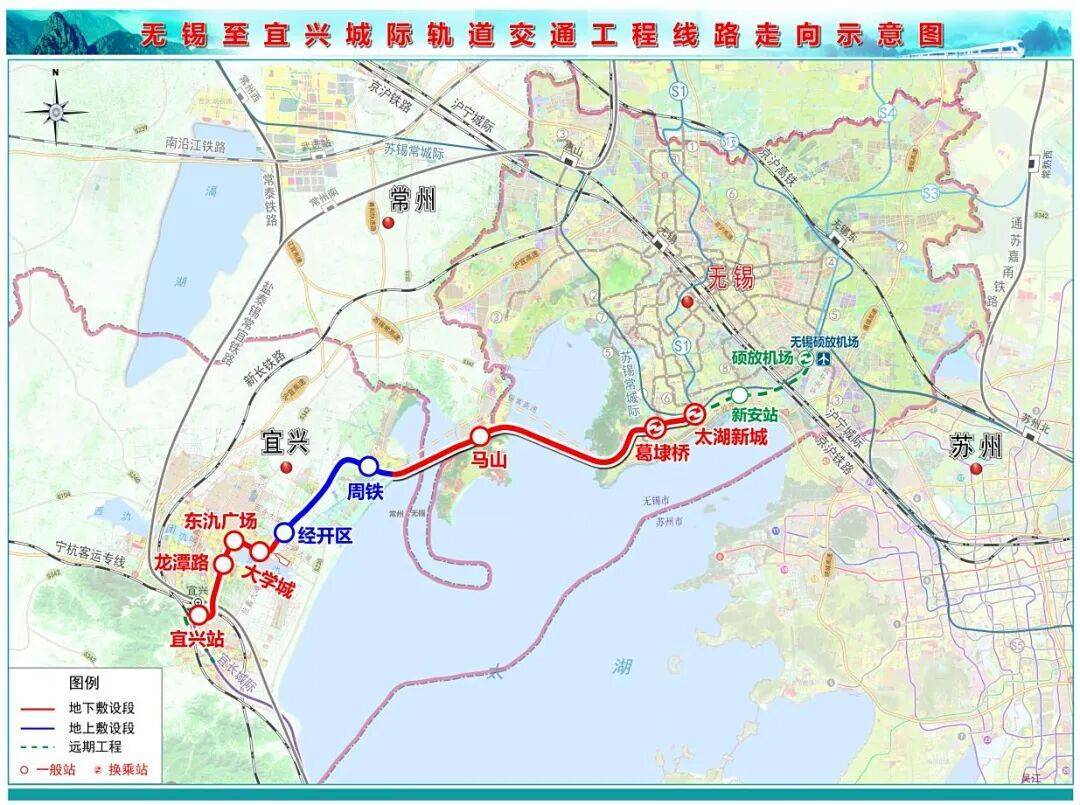
无锡至宜兴城际轨道交通工程获得全国首批新型政策性金融工具投放
Zheng Quan Shi Bao Wang· 2025-09-30 07:54
Core Points - The first batch of new policy financial tools in China has been officially signed and implemented in Wuxi City, Jiangsu Province [1] - The Wuxi to Yixing intercity rail project has received funding of 3.199 billion yuan, making it the largest approved project in Jiangsu Province [1] - The China Development Bank's Jiangsu branch has provided a one-time funding of 1.766 billion yuan specifically for the second phase of the Wuxi to Yixing intercity rail project [1]
国睿科技股价涨5.02%,前海开源基金旗下1只基金重仓,持有27.76万股浮盈赚取43.58万元
Xin Lang Cai Jing· 2025-09-30 03:50
Group 1 - The core viewpoint of the news is that Guorui Technology has seen a stock price increase of 5.02%, reaching 32.86 CNY per share, with a trading volume of 5.22 billion CNY and a market capitalization of 408.07 billion CNY as of September 30 [1] - Guorui Technology, established on June 28, 1994, and listed on January 28, 2003, is based in Nanjing, Jiangsu Province, and specializes in the research, development, production, debugging, sales, and related services of air traffic control radar, meteorological radar and application systems, rail transit signal systems, microwave devices, and special power supplies [1] - The revenue composition of Guorui Technology is as follows: radar equipment and related systems account for 78.61%, industrial software and intelligent manufacturing 11.74%, smart rail transit 8.32%, and others 1.33% [1] Group 2 - According to data from the top ten holdings of funds, Qianhai Kaiyuan Fund has a significant position in Guorui Technology, with its Qianhai Kaiyuan Belt and Road Mixed A Fund (001209) holding 277,600 shares, representing 7.88% of the fund's net value, making it the largest holding [2] - The Qianhai Kaiyuan Belt and Road Mixed A Fund was established on April 29, 2015, with a latest scale of 47.4766 million CNY, and has achieved a year-to-date return of 13.83%, ranking 5429 out of 8167 in its category [2] - The fund has a one-year return of 0.78%, ranking 7874 out of 8010, and has experienced a cumulative loss of 35.8% since its inception [2] Group 3 - The fund manager of Qianhai Kaiyuan Belt and Road Mixed A Fund is Wu Guoqing, who has been in the position for 10 years and 9 days, managing total assets of 5.333 billion CNY [3] - During his tenure, the best fund return achieved was 369.94%, while the worst return was -30.77% [3]

广州地铁五线齐开 大湾区城市走向“直联直通”
Zhong Guo Xin Wen Wang· 2025-09-30 03:43
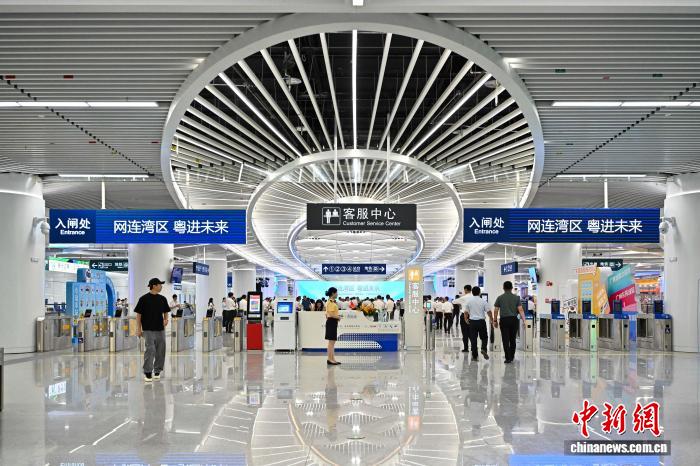
Core Points - Guangzhou Metro has opened three intercity rail lines and two metro lines, enhancing connectivity in the Greater Bay Area [1][3][5] - The total operational length of intercity railways managed by Guangzhou Metro Group has reached 420 kilometers, connecting six cities and facilitating convenient transfers with 14 metro lines [3][5] - The overall operational mileage of the Guangzhou Metro network has now reached 768.4 kilometers [3] Intercity Rail Developments - The newly opened intercity lines add eight stations that allow seamless transfers to nearby national rail and metro stations [5] - The "golden triangle" formed by the stations of Panyu, Pazhou, and Guangzhou Lianhuashan enables direct access to key areas such as the Pazhou Convention and Exhibition Center and Guangzhou Baiyun Airport without transfers [5] - Travel times from Pazhou Station include 30 minutes to Guangzhou Baiyun Airport, 30 minutes to downtown Foshan and Dongguan, 60 minutes to Shenzhen Airport, and 90 minutes to downtown Qingyuan, creating a "30-60-90" transportation circle [5] Future Expansion Plans - By the end of this year, Guangzhou Metro plans to commence construction on the Foshan-Guangzhou-Dongguan intercity line and take over operations of the Guangzhou-Dongguan-Shenzhen intercity line [3] - Additional projects include the southern extension of the Guangqing intercity railway and the completion of the remaining section of Metro Line 22, with the total operational mileage of "metro + intercity + tram" expected to exceed 1,300 kilometers [3] Service Enhancements - All new intercity railway stations are equipped with AEDs, designated "love seats," and services for individuals with mobility challenges [5] - Most stations feature restrooms, including accessible facilities, and some stations have added nursing rooms for mothers [5]
奋力打造“强区强镇富民兴村”示范标杆
Nan Fang Du Shi Bao· 2025-09-29 23:15
Core Viewpoint - The article highlights the significant economic and developmental progress of Xinhui District, which has achieved a GDP exceeding 1 trillion yuan and is recognized as a national strong district in various categories, including comprehensive strength and green development [5][6][12]. Economic Breakthrough - In 2023, Xinhui District's GDP reached 102.81 billion yuan, marking a year-on-year growth of 7.2%, officially entering the "trillion club" [6]. - By 2024, the GDP is projected to rise to 106.37 billion yuan, with Xinhui maintaining its position in the national comprehensive strength top 100 districts, ranking 46th, an increase of one position from the previous year [6]. - In the first half of 2025, the GDP reached 49.76 billion yuan, leading the total in Jiangmen [6]. Modern Industrial System - Xinhui is focusing on a "2+2+N" modern industrial system, emphasizing high-end equipment manufacturing and new materials as strategic emerging industries [7]. - The industrial output value for key industries in 2024 is expected to reach 141.92 billion yuan, with significant growth in sectors like rail transportation and new energy batteries, each exceeding 50% year-on-year [7]. Urban Quality Improvement - Xinhui is enhancing urban functions to become a demonstration area for integrated urban-rural development, with significant investments in transportation infrastructure [9][10]. - The district is part of the Guangdong-Hong Kong-Macao Greater Bay Area, with improved connectivity through various highways and the opening of the Shenzhen-Zhongshan Bridge [9]. Social Development and Livelihood Upgrades - During the 14th Five-Year Plan, Xinhui is increasing public spending on education, healthcare, and ecological initiatives, with over 60 billion yuan allocated for public welfare [12][14]. - The district is developing a vocational education city, aiming for a scale of 150,000 students by 2027, and has introduced multiple higher education institutions [12]. Agricultural and Cultural Development - The Xinhui Chenpi (dried tangerine peel) industry has seen a total output value exceeding 26.1 billion yuan in 2024, with a year-on-year growth of 13% [17]. - The transformation of Qibang Village into a model of rural revitalization showcases the successful implementation of the "Hundred-Thousand Project," significantly increasing local income [15][16]. Industrial Transformation - Xinhui is transitioning from a ship dismantling hub to a high-tech manufacturing center, with the shipbuilding and marine engineering industry achieving a production value of 7.76 billion yuan in 2024, reflecting a growth of 39.9% [18].

广深带头“织网”轨道交通 大湾区进阶“一小时产业圈”
2 1 Shi Ji Jing Ji Bao Dao· 2025-09-29 15:46
Core Insights - The recent opening of new metro lines in Guangzhou and Shenzhen marks a significant advancement in the rail transit network of the Greater Bay Area, enhancing connectivity and operational efficiency [1][3][4] Group 1: Infrastructure Developments - Shenzhen Metro's Line 16 Phase II and Line 6 Branch II commenced operations on September 28, followed by the opening of multiple new lines in Guangzhou on September 29, including three intercity railways and two metro lines [1][3] - Guangzhou Metro's operational mileage has reached 768.4 kilometers, while Shenzhen Metro has surpassed 600 kilometers, contributing to a total of over 1,100 kilometers of rail transit in the region [1][3] Group 2: Economic and Strategic Implications - The integration of Guangzhou and Shenzhen's metro systems through Dongguan is expected to create the largest metro network in the country, significantly reducing commuting costs and time, thus facilitating smoother flow of production factors [2][4] - The development of a dense and efficient rail network is anticipated to transform the Greater Bay Area into a tightly connected urban region, enhancing industrial collaboration and spatial restructuring [2][4][5] Group 3: Passenger Demand and Growth - The Guangzhou-Shenzhen intercity railway currently accommodates a daily passenger volume of 166,000, with a peak of over 70,000 during the summer transport season, indicating a near-capacity operation [6][7] - Guangzhou Metro's ridership reached a historical high of 12.2 million passengers on December 31, 2024, with an average daily ridership of approximately 9.15 million as of August 31, 2023, reflecting a year-on-year increase of 3.98% [6][7] Group 4: Technological Integration - The ongoing enhancement of the metro network is closely linked with the integration of smart and digital technologies, which are expected to optimize operational efficiency and reduce commuting times [8] - Companies like Jiadu Technology are applying AI and digital twin technologies to improve metro scheduling and station management, thereby increasing overall network efficiency [8]