
军事

Search documents
日本新财年防卫预算再创新高
Xin Hua She· 2025-12-26 03:20
Core Viewpoint - The Japanese government has approved a record defense budget exceeding 9 trillion yen for the fiscal year 2026, marking a significant increase in military spending as part of its new security strategy [1]. Group 1: Defense Budget Overview - The approved defense budget for fiscal year 2026 surpasses 9 trillion yen, setting a new record [1]. - The total defense spending from fiscal years 2023 to 2027 is projected to reach approximately 43 trillion yen [1]. - Japan's defense budget has consistently exceeded key thresholds, surpassing 6 trillion yen, 7 trillion yen, and 8 trillion yen in consecutive fiscal years starting from 2023 [1].
萨赫勒国家联盟启动联合电视台 深化主权整合进程
Shang Wu Bu Wang Zhan· 2025-12-25 18:05
Core Viewpoint - The Sahel Alliance (AES) has launched a joint regional television station to enhance political and information sovereignty among member states, marking a significant step in their integration process [1] Group 1: Strategic Initiatives - The television station aims to combat misinformation and shape a common narrative for the Sahel region [1] - The launch coincides with the one-year anniversary of the three countries' formal exit from the Economic Community of West African States (ECOWAS) [1] - AES is accelerating the establishment of a parallel system that includes security and economic frameworks [1] Group 2: Military and Financial Developments - AES has initiated a joint military force comprising 5,000 personnel [1] - An investment development bank has been established with a capital of 500 billion West African francs (approximately 900 million USD) [1] Group 3: Communication and Information Strategy - The alliance aims to directly communicate with approximately 78 million citizens through media channels to counter external narratives [1] - The emphasis on information control is seen as equally important as defense and finance within the strategic framework of the alliance [1] Group 4: Regional Positioning - AES is working to establish a unified stance to secure an autonomous development path amid changing regional dynamics [1]
日本一航空自卫队基地水体检出“永久性化学物”
Yang Shi Xin Wen· 2025-12-24 18:41
Core Viewpoint - Recent tests at a Japan Air Self-Defense Force base in Miyazaki Prefecture revealed elevated levels of perfluoroalkyl and polyfluoroalkyl substances (PFAS) in multiple water bodies [1] Group 1: Environmental Impact - The latest investigation showed that out of eight tested water bodies around the New Tanegashima base, seven exceeded the safe limits for PFAS [1] - PFAS are known as "forever chemicals" due to their persistence in the environment and human body, making them difficult to degrade [1] Group 2: Health Concerns - Experts warn that long-term consumption of water contaminated with PFAS may adversely affect reproductive health and child development, and could potentially lead to cancer and other diseases [1] Group 3: Government Response - The Miyazaki Prefectural Government has requested the New Tanegashima base to cooperate in investigating the source of the pollution [1]
2025,日本加速右倾的一年
Xin Lang Cai Jing· 2025-12-23 04:37
Core Viewpoint - Japan is experiencing a significant political shift towards the right, driven by social and economic anxieties, as evidenced by the recent elections and the rise of far-right political forces [2][3][4]. Political Landscape - The July 2025 Senate elections marked a turning point, with the ruling Liberal Democratic Party (LDP) and its ally Komeito suffering losses, while the far-right party made significant gains, winning 14 seats [2]. - The election results reflect a broader societal shift towards right-wing politics, influenced by global trends [2]. - The election of Sanae Takaichi as Prime Minister represents a strategic move by the LDP to regain conservative voters amid crises [3]. Military and Defense Budget - Japan's defense budget is set to reach approximately 11 trillion yen for the 2025 fiscal year, marking a historical peak and achieving the goal of defense spending constituting 2% of GDP two years ahead of schedule [6][7]. - The focus of the defense budget includes enhancing "counterattack capabilities" and establishing new military bases in strategic locations [7]. - Legal frameworks are being adjusted to facilitate military expansion, including plans to significantly relax weapon export restrictions [7][8]. Societal Concerns - Rising social anxieties, including stagnant wages and high inflation, are contributing to a growing sense of disillusionment among the Japanese populace [4][9]. - The political climate has led to an increase in nationalist sentiments and anti-immigrant rhetoric, which far-right parties are capitalizing on [4][9]. Economic Policies - The government has proposed a comprehensive economic strategy with a spending plan of 21.3 trillion yen aimed at boosting the economy and defense spending [11]. - However, there are concerns regarding the sustainability of these policies, especially given Japan's high national debt, which stands at 250% of GDP [11]. - The potential deterioration of Japan-China relations could further complicate economic recovery efforts, as trade between the two countries exceeds 300 billion USD annually [11].
【环球财经】特朗普签署2026财年国防授权法案
Xin Hua She· 2025-12-19 05:31
Core Points - The U.S. President Trump signed the National Defense Authorization Act for fiscal year 2026, increasing military spending to $901 billion [1] - The Senate passed the bill on December 17, and the House of Representatives approved it on December 10 [1] - The act includes provisions for raising active-duty military personnel salaries, supporting the deployment of National Guard and active-duty troops at the U.S.-Mexico border, and developing the "Iron Dome" missile defense system [1] Summary by Sections - **Military Spending**: The act raises U.S. military spending to $901 billion, reflecting a significant increase in defense budget allocations [1] - **Military Personnel and Operations**: It includes measures to increase salaries for active-duty military personnel and support for border security operations [1] - **International Aid and Sanctions**: The act mandates $400 million in military aid to Ukraine annually for the next two years and repeals the 2002 authorization for military action in Iraq, while also lifting sanctions on Syria [1]
特朗普签署2026财年国防授权法案
财联社· 2025-12-19 00:14
Core Points - The U.S. President signed a $901 billion defense authorization bill for the fiscal year 2026 [1] - The Senate passed the bill with a vote of 77 in favor and 20 against, following the House's approval [2] - The bill includes provisions for military pay raises, support for border security, missile defense system development, and military readiness enhancements [2] Summary by Sections - **Defense Spending and Policy**: The defense authorization bill serves as a guiding document for U.S. defense spending and policy for the upcoming fiscal year [3] - **Military Aid and Sanctions**: The bill allocates $400 million annually to Ukraine for military assistance over the next two years and includes measures to repeal previous authorizations for military action in Iraq and sanctions on Syria [2] - **Accountability Measures**: A clause in the bill mandates the Defense Secretary to provide unedited footage and orders related to a military operation in the Caribbean, although the full video will not be publicly released [2]

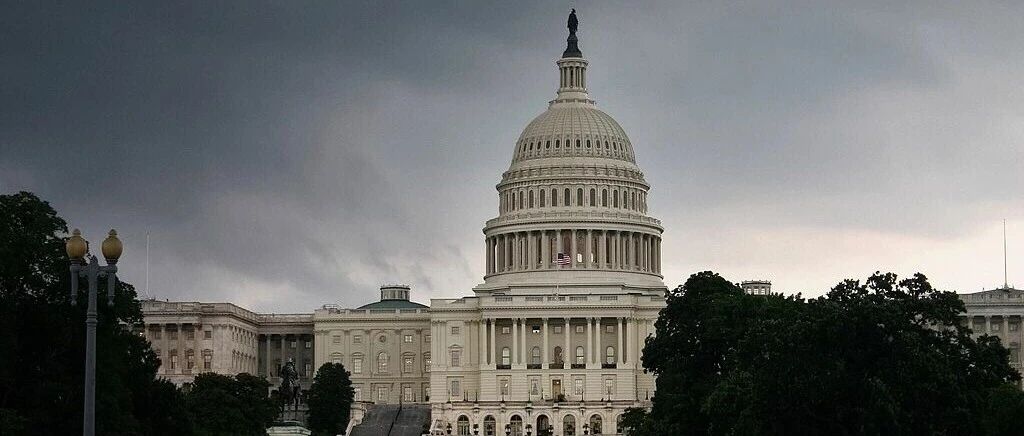
美总统特朗普签署2026财年国防授权法案
Yang Shi Xin Wen· 2025-12-19 00:06
Core Points - The U.S. President signed a $901 billion defense authorization bill for the fiscal year 2026 [1] Group 1: Legislative Process - The Senate passed the bill with a vote of 77 in favor and 20 against on December 17, following the House of Representatives' approval on December 10 [2] Group 2: Key Provisions - The bill includes measures to increase active-duty military personnel salaries, support the deployment of National Guard and active-duty troops at the U.S.-Mexico border to intercept illegal immigration and drug trafficking, and develop the "Iron Dome" missile defense system [2] - It mandates $400 million in military aid to Ukraine annually for the next two years, repeals the 2002 authorization for military action in Iraq, and lifts sanctions on Syria [2] - A provision requires Defense Secretary Lloyd Austin to submit unedited footage and operational orders related to a U.S. military attack on a vessel in the Caribbean, which resulted in the death of two survivors [2]
特朗普:全面封锁!油价拉升!
Zheng Quan Shi Bao· 2025-12-17 16:57
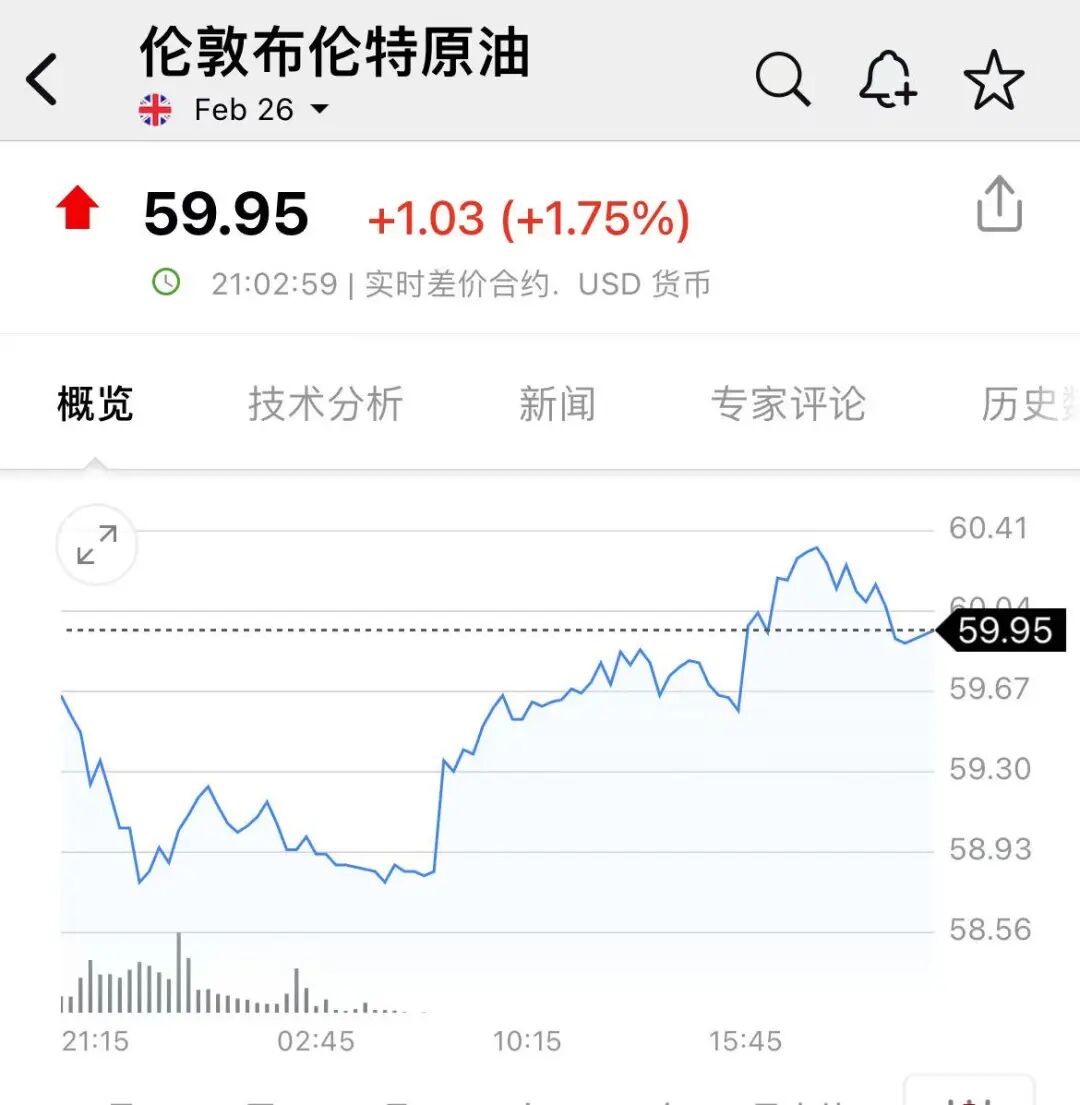
Group 1: Oil Price Surge - International oil prices experienced a sudden spike, with WTI and Brent crude oil rising sharply due to reports of the U.S. preparing new sanctions against Russia if Moscow does not agree to a peace plan regarding Ukraine. Brent crude futures saw an increase of up to 2.4%, surpassing $60 per barrel during trading [1]. Group 2: U.S. Actions Against Venezuela - President Trump ordered a complete blockade of all sanctioned oil tankers entering or leaving Venezuela, citing reasons such as asset theft, terrorism, drug trafficking, and human trafficking [2][4]. - The U.S. military seized a tanker near Venezuela, which was allegedly involved in transporting oil from Venezuela and Iran, as part of a broader strategy to enforce sanctions against entities supporting foreign terrorist organizations [6]. - The U.S. Treasury updated its sanctions list, adding six tankers related to Venezuela, while Venezuela's Foreign Minister condemned the seizure as an act of "international piracy" [6]. Group 3: Military Presence and Tensions - The U.S. has increased its military presence in the Caribbean near Venezuela, deploying F-35A fighter jets and EA-18G Growler electronic warfare aircraft, indicating preparations for potential military action rather than mere symbolic displays of force [6]. - Venezuela's Defense Minister stated that surrender is not an option for the country, emphasizing readiness to defend against U.S. actions and asserting that the Venezuelan people are resisting what they perceive as U.S. imperialism [6][7].
日政府“穷兵黩武”引强烈抗议 旅游业者称面临“存亡危机”
Yang Shi Xin Wen· 2025-12-16 23:18
Group 1: Defense Spending and Military Deployment - The Japanese Senate approved a supplementary budget that raises defense spending for the fiscal year 2025 to approximately 11 trillion yen (about 500 billion RMB), marking a record high and sparking strong opposition from various sectors [2][3] - The Japanese Defense Ministry plans to deploy upgraded Type 12 anti-ship missiles in Kumamoto City, with expansion to Shizuoka Prefecture by 2027, which is seen as a shift from the "defensive" principles of the pacifist constitution [2] - The Defense Ministry signed a land lease agreement in Okinawa for radar deployment, with construction expected to begin after the New Year in 2026, raising local concerns about potential missile deployments [3][4] Group 2: Impact on Tourism Industry - The increase in defense spending and regional tensions have led to significant cancellations of flights between Japan and China, with 72 routes and 904 flights cut, equating to approximately 156,000 seats lost [5][6] - Japanese tourism operators are facing a "survival crisis" due to the cancellations, particularly during the peak travel season from the end of the year to the Spring Festival [5][6] - If the current situation persists, it is predicted that Japan's tourism revenue could decrease by about 2.2 trillion yen (approximately 100 billion RMB), negatively impacting the country's GDP by 0.36% [6]
封锁出海口、精准炸园区,泰柬冲突升级背后,东南亚经济安全陷双重困境
Feng Huang Wang Cai Jing· 2025-12-16 14:14
Group 1 - The core issue of the conflict between Thailand and Cambodia stems from territorial disputes and the failure of previous agreements, leading to renewed hostilities shortly after a peace agreement was signed [2][3] - The conflict escalated from light weapon exchanges to full-scale military operations involving air and naval forces within a week, indicating a significant increase in military engagement [2][3][7] - The Thai military has adopted a strategy of air superiority and armored advances, utilizing advanced weaponry to target Cambodian military positions and infrastructure [9][11] Group 2 - The economic implications of the conflict are significant, as Cambodia's casino and online gambling industries are crucial for its economic growth, and attacks on these sectors could lead to severe economic repercussions [12][14] - The military actions are also politically motivated, with leaders in both countries using the conflict to consolidate power and rally domestic support amid internal pressures [13][14] - The international response has been limited, with ASEAN and the U.S. attempting to mediate, but the effectiveness of such interventions remains uncertain given the ongoing hostilities [15][16]