卫星运营

Search documents
目标直指中国空间站?马斯克宣布Space X新动作:4400颗卫星集体降轨
Sou Hu Cai Jing· 2026-01-06 06:40
Core Viewpoint - The article discusses the escalating technological competition between the U.S. and China, particularly focusing on the recent actions of SpaceX regarding its Starlink satellites, which are perceived as a direct threat to China's space station [1][4]. Group 1: U.S. Actions and Motivations - The U.S. has been imposing sanctions on China since 2019, particularly targeting the semiconductor industry, but the recent focus has shifted to space, specifically targeting China's space station [1][4]. - SpaceX announced a "deorbiting plan" for approximately 4,400 Starlink satellites, lowering them to around 480 kilometers, which brings them dangerously close to China's Tiangong space station, which operates at about 400 kilometers [1][4]. - The U.S. claims that this deorbiting is for safety and to reduce space debris, but this rationale is viewed as disingenuous given the potential risks it poses to other satellites and space stations [7][9]. Group 2: International Norms and Regulations - SpaceX's actions are seen as a violation of international space norms, as large-scale orbital maneuvers should be communicated to international space agencies and relevant countries to avoid collision risks [9][12]. - The lack of proper communication and coordination with international bodies raises concerns about the potential for catastrophic consequences in near-Earth orbit [12][14]. Group 3: China's Response and Capabilities - In response to U.S. actions, China has developed a comprehensive space safety defense, including a "Tianwen" space telescope network for tracking space debris and a laser deorbiting device for immediate threats [13][14]. - China is also leading the drafting of a "Low Earth Orbit Satellite Operation Convention," emphasizing accountability for orbital changes, which could isolate the U.S. in the international community [14].


星链卫星降低轨道高度运行,太空资源"圈地运动"进一步升级
3 6 Ke· 2026-01-05 10:50
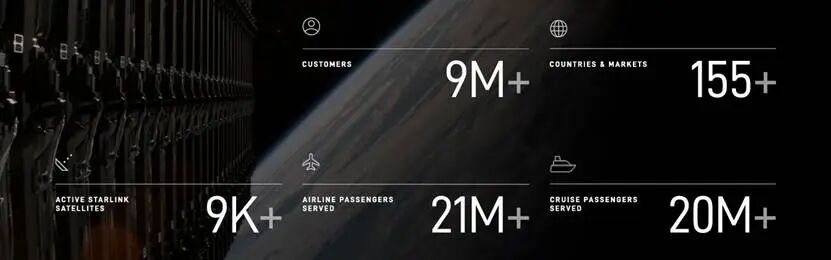
Core Viewpoint - SpaceX is lowering the orbital altitude of thousands of Starlink satellites to reduce collision risks, which has sparked industry debate and raised concerns about increasing competition for limited orbital resources [1][5]. Group 1: Satellite Operations and Adjustments - SpaceX's Vice President of Starlink, Michael Nichols, announced a major reorganization plan to lower the altitude of approximately 4,400 satellites from about 550 kilometers to around 480 kilometers [2]. - This adjustment aims to create a safer operational environment and facilitate quicker deorbiting of malfunctioning satellites, thereby reducing space debris [2]. - The upcoming solar minimum in the early 2030s will decrease atmospheric density, extending the natural decay time of satellites at higher altitudes; lowering the altitude can reduce this decay time from over four years to a few months, increasing the decay rate by over 80% [2]. Group 2: Increasing Congestion in Low Earth Orbit (LEO) - The number of objects in low Earth orbit (LEO) is projected to rise significantly, from about 13,700 in 2019 to approximately 24,185 by 2025, marking a 76% increase [3]. - By the end of 2029, it is estimated that around 70,000 satellites could be in LEO, more than five times the number in 2019 [3]. - The frequency of satellites needing to perform collision avoidance maneuvers has increased, with the percentage rising from 0.2% in 2019 to 1.4% by early 2025 [3]. Group 3: Challenges and Competition in Satellite Internet - The congestion in the 400-600 kilometer altitude range is expected to become more pronounced, even with SpaceX's adjustments [5]. - The current lack of coordination among satellite operators complicates the situation, making SpaceX's proactive lowering of orbits a viable solution to mitigate collision risks [4]. - The competition for limited orbital resources is intensifying, highlighting the inadequacy of existing international space regulations [5][11]. Group 4: SpaceX's Market Position and Developments - Starlink has rapidly become the fastest-growing satellite service provider, connecting over 9 million users, with 4.6 million new users added in 2025 alone [7]. - SpaceX has completed over 300 dedicated Falcon 9 rocket launches for the Starlink constellation, with more than 3,000 optimized V2 Mini satellites deployed in 2025, significantly increasing the constellation's capacity [8]. - The advancements in satellite technology and deployment strategies position SpaceX favorably in the competitive satellite internet landscape [8][11].
亚太卫星早盘上涨12% 近两周股价累计涨幅接近40%
Xin Lang Cai Jing· 2025-12-31 02:40
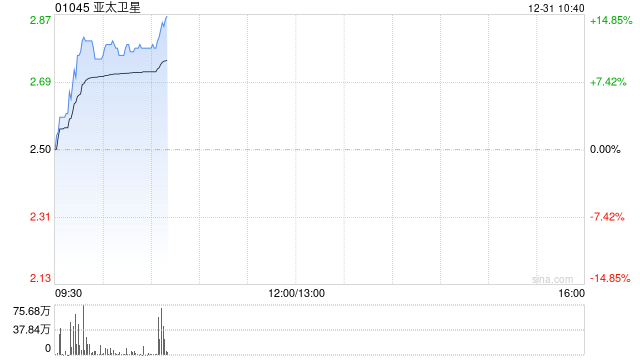
Group 1 - Asia Pacific Satellite (01045) has seen a stock price increase of over 12%, with a cumulative rise of nearly 40% over the past two weeks, currently trading at 2.80 HKD with a transaction volume of 18.56 million HKD [1][4] - Asia Pacific Satellite is a subsidiary of China Satellite Communications Co., Ltd., operating satellites including Asia Pacific 5C, 6C, 7, and 9, and jointly managing Asia Pacific 6D and 6E satellites, covering approximately 75% of the global population across Asia, Europe, Africa, and Oceania [1][4] - Zhongyou Securities indicates that the commercial space sector is experiencing growth opportunities, with attention on upstream and downstream enterprises in satellite manufacturing, ground equipment, and data processing, driven by technological advancements and policy support [1][4] Group 2 - The emerging field of space computing is expected to have long-term development potential, with accelerated commercialization of space technology likely leading to breakthroughs in satellite internet and remote sensing applications [1][4] - The industry ecosystem is becoming increasingly complete, and the market size is expected to continue expanding [1][4]
亚太卫星再涨超12% 近两周累涨近四成 公司为中国卫通控股子公司
Zhi Tong Cai Jing· 2025-12-31 02:28
Group 1 - Asia Pacific Satellite (01045) has seen a rise of over 12%, with a cumulative increase of nearly 40% over the past two weeks, currently trading at 2.77 HKD with a transaction volume of 16.08 million HKD [1] - Asia Pacific Satellite is a subsidiary of China Satellite Communications Group Co., Ltd., operating satellites such as AsiaSat 5C, 6C, 7, and 9, and providing satellite communication and broadcasting services to approximately 75% of the global population across Asia, Europe, Africa, and Oceania [1] - Zhongyou Securities indicates that the commercial space sector is experiencing growth opportunities, with attention on upstream and downstream enterprises in satellite manufacturing, ground equipment, and data processing, driven by technological advancements and policy support [1] Group 2 - The emerging field of space computing is expected to have long-term development potential, with accelerated commercialization of space technology leading to breakthroughs in satellite internet and remote sensing applications [1] - The industry ecosystem is becoming increasingly complete, and the market size is anticipated to continue expanding [1]

亚太卫星再涨近8% 公司为中国卫通控股子公司 当前运营亚太5C等多颗卫星
Zhi Tong Cai Jing· 2025-12-30 03:24
Group 1 - Asia Pacific Satellite (01045) has seen a nearly 8% increase, with a cumulative rise of nearly 30% over the past five trading days, currently trading at 2.55 HKD with a transaction volume of 13.74 million HKD [1] - Asia Pacific Satellite is a subsidiary of China Satellite Communications Co., Ltd., operating satellites such as AsiaSat 5C, 6C, 7, and 9, and providing satellite communication and broadcasting services to approximately 75% of the global population across Asia, Europe, Africa, and Oceania [1] - Huolong Securities reports that the 2025 government work report emphasizes "safe and healthy development" for commercial aerospace, marking a new phase of large-scale application, with expectations for explosive growth in domestic low-orbit communication satellite launches by 2026 [1] Group 2 - The acceleration of low-orbit satellite internet construction in China is driven by technological advancements and market expansion, with projections indicating that the low-orbit satellite market could exceed 100 billion to 150-200 billion RMB by 2030 [1] - The deployment of low-orbit satellite projects such as "National Network Constellation" and "Thousand Sails Constellation" is expected to enhance China's competitive position in space resource acquisition [1]
港股异动 | 亚太卫星(01045)再涨近8% 公司为中国卫通控股子公司 当前运营亚太5C等多颗卫星
智通财经网· 2025-12-30 03:06
Group 1 - Asia Pacific Satellite (01045) has seen a nearly 8% increase, with a cumulative rise of close to 30% over the past five trading days, currently trading at 2.55 HKD with a transaction volume of 13.74 million HKD [1] - Asia Pacific Satellite is a subsidiary of China Satellite Communications Group Co., Ltd., operating satellites such as AsiaSat 5C, 6C, 7, and 9, and providing satellite communication and broadcasting services to approximately 75% of the global population across Asia, Europe, Africa, and Oceania [1] - According to Huolong Securities, the 2025 government work report emphasizes "safe and healthy development" for commercial aerospace, marking a new phase of large-scale application, with expectations for explosive growth in domestic low-orbit communication satellite launches by 2026 [1] Group 2 - The acceleration of low-orbit satellite internet construction in China is driven by technological advancements and market expansion, with projections indicating that the low-orbit satellite market could exceed 100 billion to 150-200 billion RMB by 2030 [1] - The deployment of low-orbit satellite constellations such as "National Network Constellation" and "Thousand Sails Constellation" is part of China's strategy to secure valuable non-renewable space resources [1]
政策利好下亚太卫星盘中涨近12%!黄金股大跌
Zhong Guo Ji Jin Bao· 2025-12-29 10:39
Market Overview - The Hong Kong stock market experienced a decline, with the Hang Seng Index falling by 0.71% to close at 25,635.23 points, and the Hang Seng Technology Index decreasing by 0.30% to 5,483.01 points [2] - The total market turnover for the day was HKD 224.51 billion [2] Stock Performance - Among the Hang Seng Index constituents, 22 stocks rose while 67 fell, with Sands China Limited dropping by 4.46% to HKD 19.91 per share, JD Health down by 3.42% to HKD 56.50, and CK Hutchison Holdings decreasing by 3.35% to HKD 53.45 [2][3] - Notable declines included Midea Group down 3.05%, and Zijin Mining down 3.01% [3] Specific Stock Movements - Geely Automobile repurchased 1.956 million shares for HKD 33.14 million, totaling 22.434 million shares repurchased in the last 30 days for a total of HKD 385 million, reflecting confidence in the company's value [4] - The energy sector saw a slight increase of 0.41%, while the materials sector led declines with a drop of 2.21% [4] Satellite Industry Developments - Asia Pacific Satellite shares surged nearly 12% following the release of new listing standards for commercial rocket companies by the Shanghai Stock Exchange, which clarified the requirements for companies seeking to list on the STAR Market [6][7] - The stock closed at HKD 2.40 per share, up 10.09% [7] Commercial Space Sector Insights - The new guidelines for commercial rocket companies are expected to accelerate capital operations within the sector, transitioning from policy expectations to institutional realization [10] - The guidelines are seen as a long-term structural support for the commercial space industry, enhancing market recognition of hard tech assets on the STAR Market [10] Gold Sector Performance - The gold sector faced significant declines due to a pullback in gold prices, with major companies like China National Gold Group and Zijin Mining experiencing drops of 5% or more [11][12] - The domestic gold price on the SHFE closed at CNY 1,007.18 per gram, down 0.91% [11] Market Outlook - UBS forecasts that the upward trend in the Chinese market is likely to continue through 2026, driven by advanced manufacturing and technological self-reliance as new growth engines [13]

冲高回落!
Zhong Guo Ji Jin Bao· 2025-12-29 10:33
Market Overview - The Hong Kong stock market experienced a decline, with the Hang Seng Index falling by 0.71% to close at 25,635.23 points, while the Hang Seng Technology Index decreased by 0.30% to 5,483.01 points [2] - The total market turnover for the day was HKD 224.51 billion [2] Stock Performance - Among the Hang Seng Index constituents, 22 stocks rose while 67 fell, with notable declines in Sands China Limited (-4.46%), JD Health (-3.42%), and CK Hutchison Holdings (-3.35%) [2][3] - BYD Company saw an increase of 3.74%, closing at HKD 97.10 per share, while Geely Automobile rose by 3.43% to HKD 17.50 per share [3] Geely Automobile Buyback - Geely Automobile repurchased 1.956 million shares on December 24, involving HKD 33.14 million, and has repurchased a total of 22.434 million shares in the last 30 days, totaling HKD 385 million [4] Industry Insights - The commercial rocket sector received a boost from the Shanghai Stock Exchange's new listing guidelines, which clarify the requirements for commercial rocket companies to list on the Sci-Tech Innovation Board [6][9] - The new guidelines are expected to accelerate capital operations for rocket enterprises, with a focus on long-term structural benefits rather than short-term market reactions [10] Gold Sector Performance - The gold sector faced a downturn due to a drop in gold prices, with major companies like China National Gold Group and Zijin Mining experiencing declines of 5% or more [11][12] - The domestic gold price fell, with SHFE gold closing at CNY 1,007.18 per gram, down 0.91% [12] Future Market Outlook - UBS forecasts that the upward trend in the Chinese market is likely to continue through 2026, driven by advanced manufacturing and technological self-reliance [13]

冲高回落!
中国基金报· 2025-12-29 10:30
Group 1 - The Hong Kong stock market experienced a decline, with the Hang Seng Index falling by 0.71% to close at 25,635.23 points, while the Hang Seng Technology Index and the Hang Seng China Enterprises Index also saw slight decreases of 0.30% and 0.26% respectively [2] - Among the major stocks, Sands China Limited dropped by 4.46% to HKD 19.91 per share, JD Health fell by 3.42% to HKD 56.50 per share, and CK Hutchison Holdings decreased by 3.35% to HKD 53.45 per share, leading the blue-chip declines [3] - BYD Company Limited and Geely Automobile Holdings Limited saw increases of 3.74% and 3.43% respectively, indicating some positive movement in the automotive sector [3] Group 2 - Asia Pacific Satellite saw a significant increase of nearly 12% in trading, driven by the announcement of new listing standards for commercial rocket companies by the Shanghai Stock Exchange [7][8] - The new guidelines specify that successful payload launches will be a core requirement for commercial rocket companies seeking to list on the Sci-Tech Innovation Board, providing clarity for several companies aiming for public offerings [10] - Analysts from Guotai Junan and Zhongyin Securities noted that the new listing standards could accelerate capital operations in the commercial space sector, transitioning the industry from a phase of policy expectations to one of institutional realization [11] Group 3 - Gold stocks experienced a widespread decline due to a drop in gold prices, with companies like WanGuo Gold Group and Zijin Mining falling by 6.59% and 5.86% respectively [12][13] - The domestic gold price on the Shanghai Futures Exchange closed at CNY 1,007.18 per gram, down by 0.91%, reflecting a broader trend of decreasing gold prices [13] Group 4 - UBS Wealth Management's report suggests that the upward trend in the Chinese market is expected to continue through 2026, driven by advanced manufacturing and technological self-reliance as new growth engines [15][16] - Despite ongoing geopolitical risks and potential market volatility, the report indicates that there remains upward potential for the Chinese stock market as domestic investors enter the market and global capital reallocates [16]

美国星链的傲慢:一场不对等的太空“碰瓷”指控
Guan Cha Zhe Wang· 2025-12-23 00:51
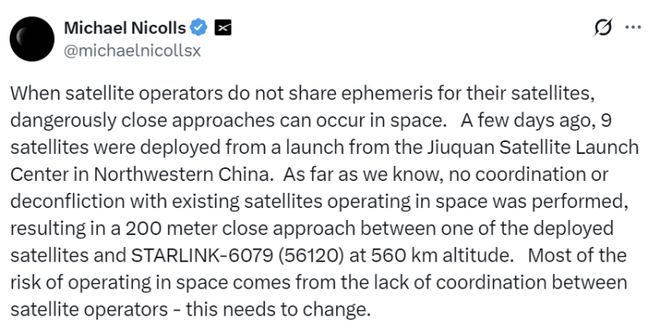
Core Viewpoint - The incident involving a close approach between SpaceX's Starlink satellites and a Chinese satellite highlights the complexities of space safety and international cooperation in the context of escalating US-China technological competition [1][2]. Group 1: Incident Details - SpaceX's Vice President Michael Nichols accused a Chinese satellite of a "dangerous close approach" to Starlink satellites, claiming a distance of only 200 meters [1]. - The close approach occurred approximately 48 hours after the Chinese satellite's launch, indicating that the responsibility for orbital management lies with the satellite operators, not the launch service provider [2]. - The claim of a 200-meter proximity lacks independent verification from space situational awareness companies, raising questions about its reliability [3][4]. Group 2: SpaceX's Historical Context - SpaceX has a history of safety issues, including a 2019 incident where a European satellite had to perform a collision avoidance maneuver due to a close approach with a Starlink satellite [7]. - In 2021, two emergency maneuvers were required by China's Tiangong space station to avoid Starlink satellites, raising concerns about SpaceX's coordination with other space operators [8]. Group 3: Orbital Congestion and Governance - The number of active satellites in orbit has surged from under 3,400 in 2019 to nearly 13,000 today, with SpaceX's Starlink constituting 72% of this total [9]. - SpaceX's planned expansion to 42,000 satellites will further congest near-Earth orbit, necessitating improved coordination among satellite operators [10]. - The lack of effective international space governance and the outdated nature of existing treaties highlight the urgent need for new regulations to manage orbital traffic [13]. Group 4: Potential Solutions and Cooperation - Establishing a technical coordination mechanism free from political interference is essential for effective space traffic management [16]. - Revising or repealing the Wolf Amendment could facilitate US-China cooperation in space safety [16]. - Recent communications between Chinese and US space agencies indicate a potential for improved collaboration, which is crucial for preventing future incidents [12].