力箭一号火箭

Search documents
涨停,17万手封单!A股第一名
Zhong Guo Zheng Quan Bao· 2026-02-25 08:48
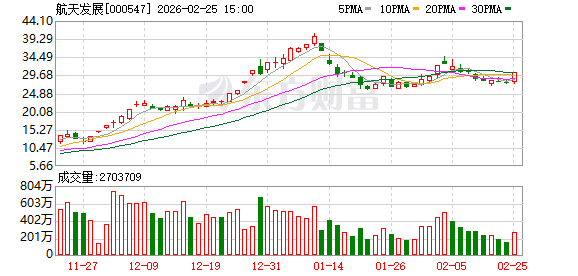
Market Performance - The A-share market saw all three major indices rise collectively, with the Shanghai Composite Index increasing by 0.72%, the Shenzhen Component Index by 1.29%, and the ChiNext Index by 1.41% [4] - The total market turnover reached 24,809 billion, an increase of 2,627 billion compared to the previous day [4] Sector Highlights - Price increase themes saw a collective surge, with sectors such as PET copper foil, chemicals, rare earth permanent magnets, non-ferrous metals, and port shipping performing well [2] - The real estate sector was active, with companies like I Love My Home and Huazhong Holdings hitting the daily limit [2][9] - The commercial aerospace sector experienced a strong afternoon rally, with Aerospace Development reaching a closing price of 30.34 yuan per share, resulting in a market capitalization of 48.498 billion [2][5] Commercial Aerospace Developments - Multiple factors, including technological breakthroughs and policy guidance, are catalyzing the commercial aerospace sector's performance [2][8] - Blue Arrow Aerospace participated in the 63rd meeting of the United Nations Committee on the Peaceful Uses of Outer Space, presenting on the ZQ-3 reusable launch vehicle [6] - The company plans to optimize landing processes and aims to conduct recovery tests in the second quarter of 2026 [7] Real Estate Policy Changes - The Shanghai Municipal Housing and Urban-Rural Development Committee announced further adjustments to real estate policies, effective February 26, 2026, including reduced housing purchase restrictions for non-local residents [10]


3大火箭企业,同台披露最新时间表
Zhong Jin Zai Xian· 2026-01-26 01:08
Core Viewpoint - The construction of satellite internet constellations faces significant capacity shortages and cost pressures, making reusable rockets a critical focus for domestic commercial aerospace companies. Group 1: Blue Arrow Aerospace - Blue Arrow Aerospace's Zhuque-3 rocket aims for high-frequency reuse, with a three-step development plan: solidifying recovery technology, transitioning to mass production, and developing the Zhuque-3A variant [2][3] - The first flight of Zhuque-3 on December 3, 2025, successfully verified many reusable rocket technologies, despite the failure of the first stage recovery [3][4] - The goal is to achieve a recovery capacity of 18 tons, providing flexible, low-cost, and rapid response launch options [2] Group 2: Star River Power - Star River Power's Zhishen-2 rocket is targeting its first flight by the end of 2026, utilizing a hundred-ton deep-thrust liquid oxygen-kerosene engine and 3D printing technology for lightweight innovation [5] - The Zhishen-2 rocket has a takeoff mass of approximately 757 tons and a launch capacity of 20 tons to LEO, with a cost of about 60,000 yuan per kilogram for satellite customers [5] Group 3: China Aerospace Science and Technology Corporation - China Aerospace is adopting a dual-track strategy to address the current capacity shortage in commercial aerospace, focusing on both small and large rockets [6][7] - The Lijian-1 rocket has completed 11 launches, placing over 80 satellites into orbit, while the Lihong series aims to validate recovery technologies for future applications [7][8] - The Lijian-2 rocket's launch cost has been reduced to 30,000 yuan per kilogram, comparable to SpaceX's Falcon 9, with further reductions expected through recovery [8]
美国星链的傲慢:一场不对等的太空“碰瓷”指控
Guan Cha Zhe Wang· 2025-12-23 00:51
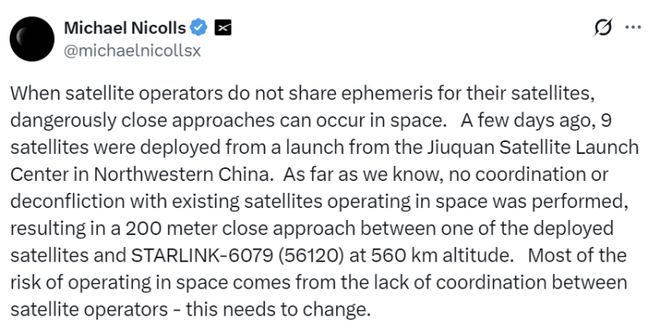
Core Viewpoint - The incident involving a close approach between SpaceX's Starlink satellites and a Chinese satellite highlights the complexities of space safety and international cooperation in the context of escalating US-China technological competition [1][2]. Group 1: Incident Details - SpaceX's Vice President Michael Nichols accused a Chinese satellite of a "dangerous close approach" to Starlink satellites, claiming a distance of only 200 meters [1]. - The close approach occurred approximately 48 hours after the Chinese satellite's launch, indicating that the responsibility for orbital management lies with the satellite operators, not the launch service provider [2]. - The claim of a 200-meter proximity lacks independent verification from space situational awareness companies, raising questions about its reliability [3][4]. Group 2: SpaceX's Historical Context - SpaceX has a history of safety issues, including a 2019 incident where a European satellite had to perform a collision avoidance maneuver due to a close approach with a Starlink satellite [7]. - In 2021, two emergency maneuvers were required by China's Tiangong space station to avoid Starlink satellites, raising concerns about SpaceX's coordination with other space operators [8]. Group 3: Orbital Congestion and Governance - The number of active satellites in orbit has surged from under 3,400 in 2019 to nearly 13,000 today, with SpaceX's Starlink constituting 72% of this total [9]. - SpaceX's planned expansion to 42,000 satellites will further congest near-Earth orbit, necessitating improved coordination among satellite operators [10]. - The lack of effective international space governance and the outdated nature of existing treaties highlight the urgent need for new regulations to manage orbital traffic [13]. Group 4: Potential Solutions and Cooperation - Establishing a technical coordination mechanism free from political interference is essential for effective space traffic management [16]. - Revising or repealing the Wolf Amendment could facilitate US-China cooperation in space safety [16]. - Recent communications between Chinese and US space agencies indicate a potential for improved collaboration, which is crucial for preventing future incidents [12].
五位专家和企业家谈——如何发挥新型举国体制优势
Ren Min Ri Bao· 2025-12-15 08:56
Group 1 - The core idea of the news is the emphasis on enhancing the new type of national system to achieve breakthroughs in key core technologies across various fields, including integrated circuits and advanced materials [1][2][3] - The new type of national system is crucial for accelerating the establishment of a technology powerhouse in China, integrating government leadership with market mechanisms [1][5] - Experts from various sectors, including research institutions and enterprises, are providing suggestions on how to leverage this system for rapid technological advancements [1][2] Group 2 - The systematic approach of the new type of national system is highlighted through the successful implementation of the space science pilot project, which has created a closed-loop management system covering the entire cycle from planning to application [2][3] - The integration of scientific goals with engineering implementation has been achieved through innovative task systems, fostering a strong talent pool and enhancing the infrastructure for future projects [2][3] - The focus on original innovation and the encouragement of free exploration by scientists are essential for achieving significant theoretical breakthroughs and scientific discoveries [3][11] Group 3 - The case of the "Hualong One" nuclear power project illustrates the successful collaboration between private enterprises and state organizations under the new type of national system, leading to the development of advanced safety equipment [5][6] - The project faced challenges such as high technical requirements and funding issues, which were addressed through coordinated efforts among various stakeholders, showcasing the importance of collaborative innovation [6][5] - The new type of national system provides unprecedented strategic opportunities for private enterprises to participate in major technological projects, emphasizing their role in the national innovation framework [6][5] Group 4 - The aerospace sector is identified as a high-tech field that requires the full utilization of the advantages of the socialist system and a large-scale market to drive sustainable development [8][7] - The integration of traditional national aerospace capabilities with emerging commercial aerospace forces is essential for achieving significant advancements in the field [8][7] - The establishment of a new innovation development model that combines national guidance, local leadership, and market dominance is crucial for the aerospace industry's growth [8][7] Group 5 - The new type of national system is seen as a key mechanism for enhancing the level of technological self-reliance and self-improvement, focusing on mastering core technologies [10][9] - The successful development of ion membrane technology is presented as an example of how concentrated efforts can lead to significant advancements in industrial capabilities [10][9] - The emphasis on aligning scientific research with national needs is crucial for transforming laboratory breakthroughs into practical applications [10][11] Group 6 - The importance of strengthening the technology finance supply to support high-level technological self-reliance is highlighted, advocating for a shift towards knowledge value investment [12][13] - The role of state-owned financial institutions and government-guided funds is emphasized in driving the growth of strategic emerging industries [13][12] - The need for a well-functioning technology finance system that encourages investment in hard technology and facilitates the growth of innovative enterprises is underscored [13][12]

专家和企业家谈如何发挥新型举国体制优势
Bei Jing Ri Bao Ke Hu Duan· 2025-12-15 03:04
Core Viewpoint - The article emphasizes the importance of leveraging the advantages of the new type of national system to accelerate breakthroughs in key core technologies across various strategic fields, including integrated circuits, advanced materials, and space science [2][3]. Group 1: National Strategy and Technological Innovation - The new type of national system is a crucial approach to respond to complex international competition and technological challenges, aiming for high-level self-reliance in technology [3]. - It integrates government leadership with market mechanisms, ensuring that scientific research aligns with national strategic goals [3][4]. - The space science pilot project, initiated in 2011, exemplifies a systematic approach to scientific satellite planning, creating a closed-loop management system that covers the entire cycle from design to application [4]. Group 2: Collaborative Mechanisms and Talent Development - The project has fostered a new task system that integrates scientific objectives with engineering implementation, enhancing collaboration among scientists and engineers [4]. - It emphasizes the importance of developing a skilled talent pool through education and practical experience, which is essential for future missions [4][5]. - The article highlights the role of private enterprises in national technological initiatives, showcasing how collaboration between private companies and research institutions can lead to significant advancements [6][7]. Group 3: International Cooperation and Market Dynamics - The article advocates for proactive international collaboration in large scientific projects, aiming to attract top global scientists and enhance China's influence in space science [5][9]. - It stresses the need for a balanced approach that combines effective market mechanisms with proactive government involvement to foster innovation and competitiveness in the aerospace sector [9][10]. Group 4: Financial Support and Resource Allocation - The article discusses the importance of a robust technology finance system that aligns with national strategies, promoting knowledge value investment to support critical technological developments [15][16]. - It highlights the necessity of integrating various financial resources to ensure that innovative projects receive adequate support, thereby enhancing the overall efficiency of the national innovation system [16][17]. Group 5: Future Directions and Strategic Goals - The article calls for a focus on original innovation and addressing major scientific challenges, encouraging scientists to pursue groundbreaking discoveries [4][12]. - It emphasizes the need for continuous improvement in basic research and the integration of technological innovation with industrial development to drive high-quality growth [13][14].

如何发挥新型举国体制优势?听听专家和企业家怎么说
Sou Hu Cai Jing· 2025-12-15 00:46
Group 1 - The new type of national system is crucial for accelerating the establishment of a technology powerhouse in China, integrating government leadership with market mechanisms to enhance scientific research and innovation [11][12][13] - The space science pilot project initiated in 2011 exemplifies a systematic approach to scientific satellite planning, achieving breakthroughs in technology through a closed-loop management system that covers the entire cycle from design to application [13][14] - The collaboration between private enterprises and state-owned entities in major technology projects, such as the "Hualong One" nuclear power project, demonstrates the effectiveness of the new national system in fostering innovation and overcoming challenges [15][16] Group 2 - The aerospace sector is highlighted as a high-tech field that requires a combination of effective markets and proactive government involvement to drive sustainable development and innovation [18][19] - The emphasis on aligning scientific research with national needs is essential for achieving significant advancements in core technologies, as seen in the development of ion membrane technology [20][21] - The integration of financial support for hard technology development is vital, with a focus on knowledge value investment to attract capital into strategic emerging industries [23][24]

如何发挥新型举国体制优势(科技视点·大家谈)
Ren Min Wang· 2025-12-14 22:32
Group 1 - The article emphasizes the importance of a new type of national system to enhance China's technological self-reliance and innovation capabilities in key areas such as integrated circuits, advanced materials, and biomanufacturing [10][11][12] - The new system aims to integrate government leadership with market mechanisms, ensuring that scientific research aligns with national strategic goals while fostering a collaborative environment for scientists [11][12][13] - The space science pilot project, initiated in 2011, is highlighted as a successful example of this system, demonstrating effective management and collaboration in satellite design, launch, and scientific output [12][14] Group 2 - The article discusses the role of private enterprises, such as Jiangsu Shentong Valve Co., in national projects like the "Hualong One" nuclear power project, showcasing how the new system facilitates collaboration between academia, industry, and government [15][16] - The successful development of critical components for the "Hualong One" project illustrates the importance of coordinated efforts and resource sharing among various stakeholders in achieving technological breakthroughs [16][17] - The article stresses the need for private companies to align their development with national strategies to contribute to technological advancements and modernization [15][17] Group 3 - The article outlines the necessity of combining effective market mechanisms with proactive government involvement to support the development of a robust aerospace industry in China [17][18] - It highlights the historical achievements of China's aerospace sector and the need for continued innovation and collaboration to maintain competitiveness in the global arena [18][19] - The article calls for a new innovation development model that integrates national guidance, local initiatives, and market leadership to foster high-quality growth in emerging industries [18][19] Group 4 - The article emphasizes the significance of aligning scientific research with national needs, particularly in the context of developing core technologies like ion membrane technology [20][21] - It discusses the successful establishment of production lines for ion membranes, demonstrating the effective integration of research and industry to meet domestic and international demands [20][21] - The article points out that advancements in high-end ion membranes will be crucial for future international competition in clean energy and storage technologies [21][22] Group 5 - The article advocates for a comprehensive approach to technology finance, emphasizing the need for investment in knowledge value alongside traditional financial metrics [22][23] - It highlights the role of venture capital and government funds in supporting high-tech startups and ensuring that financial resources are directed towards strategic industries [23][24] - The article calls for improved connections between primary and secondary markets to facilitate funding for technology innovation and create a sustainable ecosystem for growth [23][24]

五位专家和企业家谈——如何发挥新型举国体制优势(科技视点·大家谈)
Ren Min Ri Bao· 2025-12-14 22:06
Group 1 - The core idea of the article emphasizes the importance of improving the new type of national system to achieve decisive breakthroughs in key core technologies across various fields such as integrated circuits, high-end equipment, and biotechnology [1][4] - The new type of national system is seen as a crucial method for accelerating the establishment of a technology powerhouse in China, combining government leadership with market mechanisms [2][12] - The article highlights the need for a systematic approach to strengthen the national strategic technology force, ensuring a full-process breakthrough from scientific discovery to talent cultivation [3][10] Group 2 - The article discusses the successful implementation of the "Hualong One" nuclear power project, showcasing how private enterprises can participate in national technology initiatives under the new type of national system [6][8] - It illustrates the collaborative efforts between private companies, research institutions, and government bodies in overcoming technical challenges, emphasizing the importance of a coordinated approach [7][8] - The article points out that the new type of national system provides unprecedented strategic opportunities and institutional guarantees for private enterprises to engage in major national technology projects [8][12] Group 3 - The article stresses the need for a combination of effective markets and proactive government roles in advancing China's aerospace capabilities, highlighting the historical achievements of the country in this field [9][10] - It calls for a new innovation development model that integrates national guidance, local initiatives, and market leadership to enhance the aerospace industry [10][12] - The article emphasizes the importance of aligning scientific research with national needs to ensure that breakthroughs in core technologies are effectively translated into productive capabilities [11][13] Group 4 - The article discusses the role of technology finance in supporting high-level technological self-reliance, advocating for a shift towards knowledge value investment to attract financial capital to critical areas [15][16] - It highlights the importance of integrating various financial resources to support strategic emerging industries and facilitate breakthroughs in technology [16][17] - The article suggests that a well-developed technology finance system is essential for promoting innovation and ensuring that financial capital can effectively contribute to technological advancements [16][17]
星辰大海竞赛,IPO抢滩正酣丨中国龙报告之商业航天篇
2 1 Shi Ji Jing Ji Bao Dao· 2025-07-08 07:51
Core Insights - The China Securities Regulatory Commission has expanded the listing standards for the Sci-Tech Innovation Board to include more cutting-edge technology sectors such as artificial intelligence and commercial aerospace, allowing unprofitable companies to access capital markets [1][4] - The commercial aerospace industry in China has evolved from government-led initiatives to market-driven exploration over the past decade, establishing a complete industrial chain covering satellite manufacturing, launch services, and ground applications [1][11] Group 1: Industry Development - The commercial aerospace sector is experiencing a "space gold rush," with multiple companies accelerating their securitization efforts across the entire industry chain, including satellite development and aerospace electronics [3][4] - Key enterprises are actively announcing financing progress or initiating listing procedures, indicating a wave of securitization in this strategic emerging industry [4][5] - By 2024, the number of commercial aerospace-related companies in China exceeded 546, nearly five times that of 2015, with a significant increase in registered companies [12][18] Group 2: Financing and Market Trends - In 2025, the commercial aerospace industry is expected to see a significant transformation, with a focus on technology paths, market trends, and geographic distribution [2][10] - Notable companies like Chengdu Guoxing Aerospace have submitted applications for IPOs, aiming to become the first commercial aerospace stock on the Hong Kong Stock Exchange [5][19] - The financing landscape is vibrant, with companies like Beijing Xingji Glory completing significant funding rounds to support their operational and technological advancements [8][22] Group 3: Technological Advancements - The industry is transitioning from high-cost research projects to predictable return industries, with a clear evolution in the commercial aerospace supply chain [10][11] - Key technologies are undergoing a transformation, moving from isolated communication to integrated networks, with a focus on standardization and industrialization [17][25] - The development of satellite internet is highlighted as a "killer application" in the commercial aerospace sector, supported by advancements in satellite manufacturing and communication technologies [11][12] Group 4: Regional Development and Policy Support - Various regions in China are competing to establish themselves as hubs for commercial aerospace, with Beijing, Shanghai, and Hainan leading the way [28][31] - Local governments are actively supporting the commercial aerospace industry through policies and funding, creating a collaborative environment for innovation and growth [29][33] - The G60 Starlink project in Shanghai exemplifies regional collaboration, aiming to complete a constellation deployment by 2025 [29][31]

24家穗企登全球独角兽榜
Guang Zhou Ri Bao· 2025-07-05 03:10
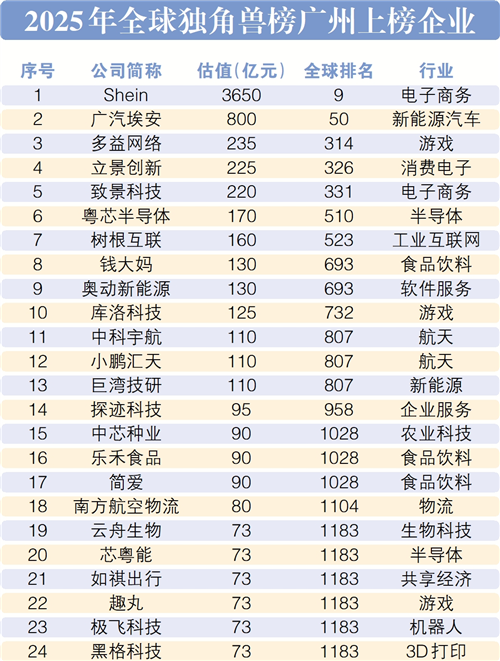
Core Insights - Guangzhou maintains its position with 24 unicorn companies, ranking 4th in China and 11th globally, with Shein valued at 365 billion RMB, making it one of the top ten globally [2][4] Group 1: Unicorn Companies Overview - The unicorn count in Guangzhou remains stable compared to last year, with two companies (Wenyan Zhixing and Xiaoma Zhixing) successfully listed and two new entrants (Xinyue Energy and Quwan Technology) joining the list [2][4] - The unicorn companies in Guangzhou exhibit a diverse range of industries, including e-commerce, new energy vehicles, gaming, and more, with Shein leading at a valuation of 365 billion RMB [3][4] Group 2: Industry Trends - The overall trend shows steady progress with continuous innovation, highlighted by the successful listings of Wenyan Zhixing and Xiaoma Zhixing, which have become benchmarks in the autonomous driving sector [4] - Hard technology dominates the industrial upgrade, with over 50% of unicorns in this sector, contributing to the "Smart Manufacturing City" and "Technology Strong City" strategies [5] - Digital transformation is revitalizing traditional industries, with companies like Shein and Zhijing Technology leveraging AI and digital technologies to enhance supply chains and drive growth [6]