
数字农业

Search documents
在“浙”看到未来乡村(“融”观中国)
Ren Min Ri Bao Hai Wai Ban· 2025-10-13 04:29
Core Insights - The article discusses the transformation of rural areas in Zhejiang Province through digitalization, enhancing agricultural efficiency and improving living standards for residents [7][10]. Group 1: Digital Agriculture - The implementation of smart sensors and digital platforms in agriculture allows for real-time monitoring and management of crops, leading to increased productivity and efficiency [8][9]. - The "shared vegetable garden" initiative enables citizens to pay for and monitor a 15-square-meter plot of land, generating over 5 million yuan in income from 200 households by the end of 2024 [8][9]. - The collective economic income of Yong'an Village increased from 730,000 yuan in 2019 to 6.09 million yuan in 2024, with 215,000 visitors contributing to a total revenue of 10.75 million yuan from agricultural tourism [9]. Group 2: Smart Waste Management - The introduction of smart garbage trucks in Wusi Village allows for real-time tracking of waste collection, achieving a 95% accuracy rate in waste classification [12][13]. - A digital governance platform integrates data from various sectors, improving the efficiency of environmental management and reducing response times for issues from five days to three hours [12][13]. Group 3: Health and Wellness Innovations - The establishment of smart health stations in villages provides residents with access to medical services, including remote consultations and health monitoring through wearable devices [15][16]. - The smart wristbands distributed to elderly residents can monitor vital signs and send alerts in emergencies, enhancing the safety and health management of the aging population [16][17]. Group 4: Future Developments - Zhejiang Province plans to build 1,000 digital agricultural factories and 100 future farms by the end of 2027, positioning digital economy as a key driver for rural economic development [10][14].

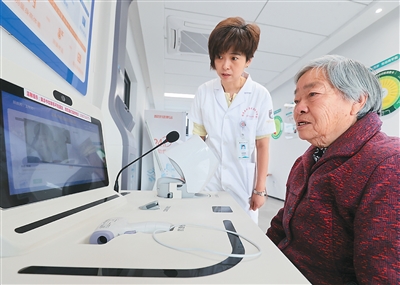
统筹协同发展数字农业
Jing Ji Ri Bao· 2025-09-17 22:07
Core Viewpoint - The digital empowerment of modern agriculture is essential for achieving high-quality agricultural development and accelerating the construction of a strong agricultural nation, significantly enhancing the level of agricultural digitalization and intelligence [1] Group 1: Digital Agriculture Development - The integration of new information technologies such as IoT, AI, cloud computing, and big data with agriculture has accelerated the digitalization process in China, with agricultural technology progress contribution rate exceeding 63% and the informationization rate approaching 30% by 2024 [1] - As of January this year, the Ministry of Agriculture and Rural Affairs has supported the establishment of 34 national digital agriculture innovation centers and 116 smart agriculture innovation application projects, injecting new momentum into the transformation and upgrading of traditional agriculture [1] Group 2: Policy Framework - The central government has issued several key documents, including the "Digital Agriculture and Rural Development Plan (2019-2025)" and the "14th Five-Year Plan for Digital Agriculture Construction," emphasizing the integration of digital technology with the agricultural economy and strengthening digital production capacity [1] Group 3: Challenges in Digital Transformation - Current challenges in agricultural digital transformation include inadequate infrastructure, insufficient depth of technology and industry integration, and a lack of high-quality talent, leading to high investment costs and low conversion rates in some digital agriculture sectors [2] - There is a need for coordinated efforts among industrial policies, enterprises, and consumers to address these challenges effectively [2] Group 4: Role of Industry Policies - Industry policies should utilize financial subsidies, tax incentives, and agricultural insurance to support the construction of digital agriculture infrastructure and shorten project implementation cycles [2] - Adjustments in funding policies should focus on key areas such as digital and smart agriculture to promote a path of agricultural industrialization centered on smart agriculture [2] Group 5: Role of Enterprises - Enterprises should drive modern agricultural development through technological innovation, establishing a collaborative system among government, industry, academia, and research to enhance overall agricultural technology innovation efficiency [2] - Leading technology enterprises should focus on the digital transformation of the entire agricultural production chain, expanding the application scenarios of digital technologies [2] Group 6: Consumer Engagement - Consumers can play a role in promoting modern agriculture by creating digital agriculture platforms that strengthen the connection between consumers and agricultural production, focusing on green, healthy, and organic consumption demands [3] - Utilizing big data to analyze consumer preferences can facilitate the digital transformation and upgrading of the modern agricultural industry chain [3]
浇友谊之花 结合作硕果 “数”看东博会发展历程
Xin Hua Wang· 2025-09-17 02:16
Core Insights - The China-ASEAN Expo (CAEXPO) has evolved into a significant economic and trade bridge between China and ASEAN countries since its inception in 2004, showcasing the robust growth and potential of bilateral trade and cooperation [1] Group 1: Growth Metrics - The total number of exhibition booths has increased from 2,506 in the first expo to 6,493 in 2024, with the newly added Guilin exhibition area contributing 1,093 booths [2] - The exhibition area has expanded significantly from 50,000 square meters in the first expo to 192,000 square meters in the 21st expo, marking a historical high and providing more opportunities for international display and exchange [4] - The number of participating enterprises has risen from 1,505 in 2004 to 3,300 in 2024, reflecting a growing enthusiasm among exhibitors [4] Group 2: Trade Growth - Bilateral trade between China and ASEAN has surged from $105.883 billion in 2004 to $982.34 billion in 2024, representing an increase of 827.7% [10] - The trade volume between Guangxi and ASEAN countries has also seen significant growth, from $1 billion in 2004 to 397.82 billion yuan in 2024, achieving a historical high [10] - The year-on-year growth rates for 2023 and 2024 were 22.8% and 17.2%, respectively, indicating a stable upward trend in trade [10] Group 3: Digital Transformation - The introduction of the "Cloud CAEXPO" in 2020 has attracted 9,473 enterprises over five sessions, averaging about 2,000 participants per session, demonstrating the platform's sustainability and engagement [7] - The total number of economic and trade activities reached 411, showcasing a shift from quantity to quality and enhancing the effectiveness of trade cooperation through digital services [7] Group 4: Diverse Exhibits - The expo has transitioned from showcasing specialty products to advanced processing and smart collaboration, featuring a wide range of exhibits from agricultural products to cutting-edge technology [12] - The 22nd CAEXPO will host 3,200 enterprises from 45 countries and regions, with a total exhibition area of 160,000 square meters, including a new 10,000 square meter AI pavilion [12] - Approximately 1,200 innovative products, including AI and AR technologies, will be presented, highlighting the expo's focus on technological advancement [12] Group 5: Future Outlook - The CAEXPO is entering a new phase aimed at deepening economic cooperation, promoting industrial synergy, and enhancing people-to-people connections, thereby contributing to a closer China-ASEAN community [14]
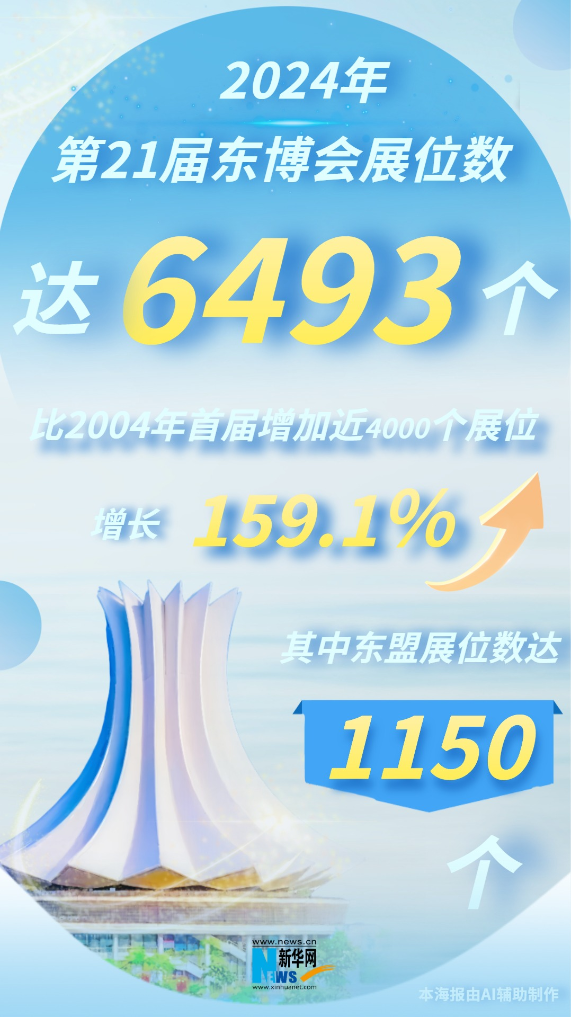
全球农创客杭州竞技 拼多多五年耕耘搭建农业创新“世界桥”
Jing Ji Guan Cha Wang· 2025-09-12 04:59
Core Insights - The "2025 Global Agri-Tech Innovation Competition" showcased innovative agricultural solutions from around the world, emphasizing the integration of digital technology in agriculture and the role of Chinese enterprises in promoting global agricultural sustainability [1][2][6] Group 1: Competition Overview - The competition attracted 519 digital agriculture solutions from 97 countries, marking a historical high in participation and coverage, with over 80% of entries from Africa, Asia, and Europe [2][7] - The event highlighted the importance of youth-led innovation in addressing challenges such as climate change and resource depletion affecting smallholder farmers [2][7] Group 2: Award Winners - The gold medal was awarded to the SafeSip team from Tanzania for their innovative solution addressing poultry water safety, which significantly reduced disease rates and mortality among poultry [1][3] - The silver medal went to the "Real-time Pig Guard" team from China, which developed an AI system capable of predicting respiratory diseases in pigs based on cough sounds [3][4] - The bronze medal was awarded to the PlantPulse Patch team from the USA, focusing on early disease warning for high-value crops using nanomaterial sensors [4][5] Group 3: Innovation and Technology - The SafeSip team's solution includes a solar-powered IoT monitoring system that allows small farmers to detect pathogens in water, with a subscription cost of only $6 per month [3][4] - The "Real-time Pig Guard" team aims to automate monitoring of pigs' health, allowing a single worker to manage up to 10,000 pigs annually [4][5] - The PlantPulse Patch team's technology is expected to reduce crop loss from diseases by 50%, potentially saving over $100 billion annually in global losses [4][5] Group 4: Support and Ecosystem - The competition has evolved into a flagship project for the Food and Agriculture Organization (FAO), supported by a comprehensive ecosystem that fosters innovation from incubation to practical application [6][7] - The top three teams will receive seed funding and opportunities to showcase their innovations at the FAO's Science and Innovation Forum in Rome [6][7] - Pinduoduo has committed to supporting the competition for five consecutive years, aiming to drive innovation and sustainable development in the agricultural sector [6][8] Group 5: Pinduoduo's Agricultural Strategy - Pinduoduo's agricultural innovation strategy includes three major competitions: the Global Agri-Tech Innovation Competition, the Multi-Research Technology Competition, and the National Technology Small Courtyard Competition, creating a complete ecosystem from research to application [8][9] - The company has launched a "100 Billion Support" plan to enhance agricultural production and farmer income, focusing on digital agriculture and rural revitalization [9][10]

科技青年扎根田间猪圈,拼多多农创客大赛解锁农业科技新未来
Sou Hu Cai Jing· 2025-09-10 12:17
Group 1 - The "2025 Global Agricultural Innovation Competition" showcased innovative agricultural technology solutions from teams with an average age under 30, redefining agricultural production possibilities [1] - The event attracted 519 digital agriculture solutions from 97 countries, with 12 projects reaching the finals, several of which have already demonstrated significant benefits in real-world applications [1] Group 2 - The "AI Pig Farming" team developed an AI model trained on over 200,000 sound data points from pigs, achieving a 7-day early warning for respiratory diseases, increasing management efficiency and reducing inspection costs by 40% [3] - The SafeSip team from Tanzania created a solar-powered low-cost water purification system, reducing the incidence of infectious diseases in poultry by 67% and mortality rates by 58%, with a payback period of 4.5 months [3] Group 3 - The PlantPulse Patch team introduced a nanosensor technology that can predict tomato late blight 2-3 days in advance, potentially reducing global plant disease losses by over $100 billion annually [5] - The "Hanhai Miracle" project from a Chinese team developed bio-based composite materials that can convert sandy soil into arable land within 30 days, enabling two people to manage 1,000 acres of farmland [5] Group 4 - The agricultural technology market shows immense potential, with annual post-harvest losses in Africa amounting to $6 billion and plant disease impacts in the U.S. exceeding $10 billion [6] - Pinduoduo's Vice President highlighted the company's commitment to agriculture as a core strategy, having hosted the competition for five consecutive years and investing in agricultural innovation through substantial financial support [6]
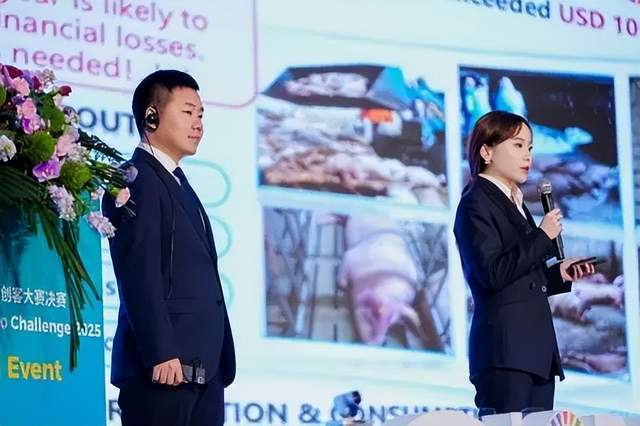
拼多多“千亿扶持”助力农研创新 2025全球农创客大赛汇聚青年智慧共促农业可持续发展
Sou Hu Cai Jing· 2025-09-06 15:12
Core Insights - The "2025 Global Agri-Tech Innovation Competition" recently concluded in Hangzhou, showcasing the potential of digital technology in traditional agriculture with participation from 97 countries and 519 digital agriculture solutions [1] Group 1: Award Winners - The Tanzanian SafeSip team won the gold award for their "Safe Water Innovation for Poultry" solution, which significantly reduced poultry disease transmission by 67% and mortality by 58% through a comprehensive water purification system [3] - The Chinese "Real-time Pig Guard" team received the silver award for their AI-based pig farming solution, which allows for early detection of respiratory diseases and improves labor efficiency, enabling one worker to manage 10,000 pigs [3] - The American PlantPulsePatch team earned the bronze award for their "Plant Growth Early Warning Monitoring System," which can reduce crop disease losses by 50% and aims to address over $100 billion in annual global losses [3] Group 2: Other Notable Innovations - Other participating teams presented various tech-driven agricultural solutions, such as a high-altitude balloon monitoring system for irrigation and pest control, solar-powered irrigation and cold chain storage, and AI-based risk prediction for straw burning [5] - Pinduoduo, a continuous supporter of the event, announced plans to invest in digital agriculture and rural revitalization through a "100 billion support plan" over the next three years [5] Group 3: Future Directions - Zhejiang University emphasized the importance of youth-led innovations in transforming global agriculture towards sustainability, with over 80% of projects coming from Africa, Asia, and Europe [6] - The Food and Agriculture Organization (FAO) highlighted the role of innovative solutions in addressing climate change and resource scarcity, planning to collaborate with partners to implement these solutions globally [6]
富邦科技:设立了“番茄公社”作为公司数字农业技术的展示窗口与集中示范样板园区
Zheng Quan Ri Bao Zhi Sheng· 2025-09-02 13:10
Core Viewpoint - Fubon Technology is aligning with national rural revitalization strategies and digital economy development plans by focusing on digital agriculture support services, aiming to provide comprehensive digital agricultural solutions for new agricultural operators [1] Group 1: Company Initiatives - The company is committed to modernizing agriculture by leveraging advanced technologies and products in the digital agriculture sector [1] - Fubon Technology has established the "Tomato Community" as a demonstration park to showcase its digital agricultural technologies [1] Group 2: Industry Context - The company is seizing opportunities presented by the development of new productive forces in agriculture, contributing to the overall modernization of the agricultural sector [1]

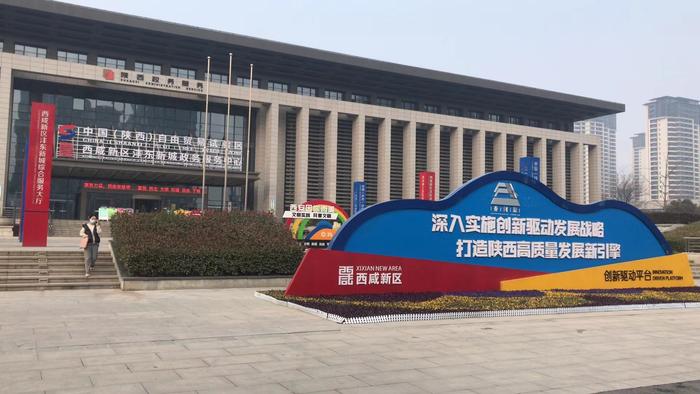
陕西西咸新区“十四五”:锚定千亿级产业冲刺发展新高
Zhong Guo Jing Ying Bao· 2025-08-29 19:37
Economic Growth - Shaanxi Xixian New Area's GDP is projected to exceed 103 billion yuan in 2024, marking a 68.4% increase from the end of the 13th Five-Year Plan, with per capita GDP rising from 47,100 yuan to 75,400 yuan [3][4] - The resident population has increased to 1.3666 million, reflecting a synchronization of economic development and improved living standards [4] - The area aims to achieve "three 100 billion" goals in 2025, targeting GDP, industrial output, and fixed asset investment to each surpass 100 billion yuan [3] Innovation and Technology - Technological innovation is identified as the core engine for high-quality regional economic development, with significant reforms in talent evaluation and investment models to enhance technology transfer [7][10] - By the end of 2024, the number of high-tech enterprises in the area is expected to reach 4,100, a 17-fold increase from the end of the 13th Five-Year Plan [10] - The introduction of 114,000 talents has been pivotal in supporting technological innovation [9] Industry Development - The Xixian New Area is focusing on the "4+1" leading industry strategy, with significant growth in hydrogen energy, photovoltaic, low-altitude economy, and agricultural technology sectors [4][12] - The hydrogen energy sector has attracted 87 enterprises, accounting for over half of the province's total, establishing a complete industrial chain [13] - The photovoltaic industry has become a "100 billion-level pillar," with output reaching 19.73 billion yuan in the first half of the year, a 65% year-on-year increase [14]
调研速递|湖北富邦科技接受多家投资者调研,聚焦业务发展与战略布局要点
Xin Lang Cai Jing· 2025-08-26 10:48
Core Viewpoint - Hubei Fubon Technology Co., Ltd. held a half-year performance briefing on August 26, 2025, discussing business development and strategic layout with investors through an online platform [1][2]. Group 1: Business Development - The agrochemical additive business is performing well, with a focus on "precision, greenness, efficiency, and nutrition" in product strategy, leading to a revenue of 496.41 million yuan in the first half of 2025, a year-on-year increase of 5.62% [3]. - The company has established a digital agriculture industrial park in Sanhe Town, Echeng City, leveraging land transfer and smart agricultural technology [3]. - The modern agriculture business achieved a revenue of 122.37 million yuan in the first half of 2025, reflecting a year-on-year growth of 13.31% [3]. Group 2: Financial Performance - In the first half of 2025, the company reported total revenue of 684.60 million yuan, a year-on-year increase of 6.50%, with domestic revenue of 365.06 million yuan (up 5.10%) and overseas revenue of 319.54 million yuan (up 8.16%) [3]. - The net profit attributable to shareholders was 61.22 million yuan, with net assets increasing by 9.53% to 1.47 billion yuan [3]. Group 3: Strategic Initiatives - The company is focusing on technological innovation in the fields of biological and digital agriculture, with a dual strategy of "biotechnology + digital technology" to drive agricultural modernization [3]. - The company has developed a "soil digital map" and related digital solutions through its subsidiary, Wuhan Soutu Data Technology Co., Ltd., which is in the demonstration application stage domestically [3]. - The company has established a cooperative in the Netherlands to enhance its core competitiveness by utilizing European market resources [3].
富邦科技(300387) - 300387富邦科技投资者关系管理信息20250826
2025-08-26 10:04
Group 1: Business Performance - The company achieved a revenue of 68,459.76 million yuan in the first half of 2025, representing a year-on-year increase of 6.50% [8] - Domestic revenue reached 36,505.79 million yuan, up 5.10%, accounting for 53.32% of total revenue; while overseas revenue was 31,953.97 million yuan, increasing by 8.16%, making up 46.68% of total revenue [8] - The modern agriculture business generated 12,236.98 million yuan in revenue, with a year-on-year growth of 13.31% [6][10] Group 2: Agricultural Business Strategy - The company focuses on the transformation and upgrading of agricultural additives, emphasizing precision, greenness, efficiency, and nutrition [2] - It has been recognized as the "global leader in fertilizer additive sales" by an international consulting firm, with a revenue of 49,641.49 million yuan, reflecting a growth of 5.62% [2] - The company is developing a digital agriculture industry park in Echeng City, integrating economic crop planting, agricultural technology display, and education [3] Group 3: Technological Innovation - The company is committed to technology innovation, focusing on biodegradable and environmentally friendly materials, and has launched products like nitrogen-fixing for gramineous crops and nematode control [3][4] - It has established a comprehensive R&D system for biological agriculture, covering microbial agents, bio-fertilizers, and biopesticides [4] - The company is leveraging "digital + biological" technology to drive modern agricultural transformation [4] Group 4: Market Expansion and Risk Management - The company is optimizing its sales network to expand into emerging international markets, particularly Southeast Asia [6] - It employs a dual currency settlement strategy to mitigate foreign exchange risks, ensuring stable overseas business development [8] - The company has established a cooperative in the Netherlands to enhance international market engagement and technology acquisition [7] Group 5: Financial Management and Future Outlook - The decline in net profit is attributed to increased investments in core technologies and product innovation, as well as extended product turnover periods due to overseas market expansion [10] - The company aims to balance scale and efficiency, enhancing resource allocation and operational efficiency to improve profitability [11] - Future strategies include continuous optimization of financial management and risk assessment related to goodwill [11]