
文创产业

Search documents
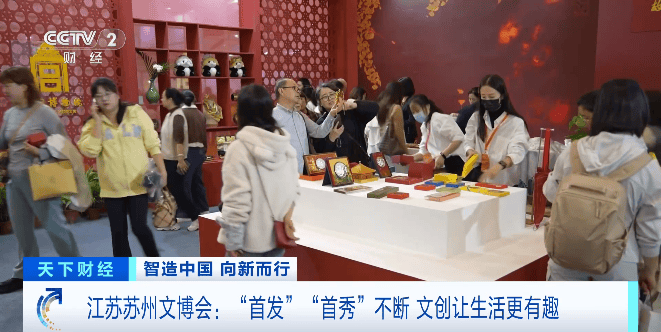
苏州文博会成全球文创“首秀”舞台,科技助力穿越古今
Sou Hu Cai Jing· 2025-11-01 15:13
Core Insights - The 14th Suzhou Cultural and Creative Design Industry Trade Fair opened with the theme "Cultural Creativity Makes Life More Interesting," featuring nearly 500 enterprises from over 40 countries and regions, showcasing many debut products [1] Group 1: Event Overview - The trade fair allows visitors to experience creativity through immersive activities such as exhibition, interaction, consumption, and roaming [1] - Notable participation includes over 40 cultural institutions, such as the Palace Museum and the British Museum, presenting unique cultural products [3] Group 2: Featured Products - The Palace Museum celebrates its 100th anniversary with a series of popular cultural products, including a special edition stamp issued by the Universal Postal Union for a single museum [3] - Products designed from various Palace Museum artifacts feature floral patterns, adding significant commemorative value [5] Group 3: Local Cultural Elements - Suzhou, known for its osmanthus flower, has developed a series of creative products themed around this flower for the trade fair [7] Group 4: Technology Integration - A key highlight of this year's fair is the integration of technology with cultural creativity, particularly in the digital experience area where visitors can use virtual reality headsets to immerse themselves in historical scenes [9] - The immersive experience is enhanced by realistic spatial positioning, allowing participants to walk through historically accurate environments [11]

元隆雅图三季报:“大IP+科技”战略显成效,C端零售筑增长新引擎
Quan Jing Wang· 2025-10-30 05:22
Core Insights - Yuanlong Yatu (002878.SZ) reported a revenue of 2.214 billion yuan for the first three quarters of 2025, marking a year-on-year increase of 23.75%, and a net profit attributable to shareholders of 8.986 million yuan, up 127.09% [1] - In Q3 2025, the company achieved a revenue of 823 million yuan, reflecting a growth of 41.06%, and a net profit of 13.593 million yuan, which is a significant increase of 235.80% [1] Group 1: Business Strategy and Performance - The company is advancing its "Big IP + Technology" core strategy, transitioning from a B2B marketing leader to a B2C model, which has opened new growth avenues through retail IP product design and development [1][2] - The marketing services segment generated 2.176 billion yuan in revenue, a 25.17% increase year-on-year, with a gross profit of 259 million yuan, up 2.86% [2] - The IP cultural and creative segment is aligned with trends in cultural tourism and national trends, increasing collaboration on national IP and product development [2] Group 2: International and Sports IP Collaboration - The company has expanded its licensed IP to 15 through collaboration with Universal Pictures, launching various plush products and merchandise tied to popular films, achieving strong sales [3] - In the sports IP sector, the company reported revenue of 33.56 million yuan from licensed memorabilia, with a gross margin of 35.22%, benefiting from events like the Harbin Winter Games and Chengdu Universiade [3] Group 3: Retail Strategy and Market Expansion - The establishment of Yuanlong Yuanchuang Cultural (Beijing) Co., Ltd. marks a significant step in the company's C-end retail strategy, with the first store opening in Beijing [4] - The flagship store features nearly 400 SKUs and combines standardized IP scenes with local cultural displays, enhancing consumer experience [4] - The second immersive IP cultural store opened in Tiananmen, serving as a cultural landmark and attracting both tourists and locals [4] Group 4: Market Dynamics and Future Outlook - The company is leveraging the rise of national trends and sports IP opportunities, supported by technological advancements, to drive growth in the cultural consumption sector [5] - The integration of B2B and B2C markets is creating a commercial loop that enhances product design and customer service, positioning the company to capitalize on the growing IP economy [5]
元隆雅图三季报:营业收入8.23亿元 同比增长41.06%
Zheng Quan Shi Bao Wang· 2025-10-29 15:25
Core Insights - The company Yuanlong Yatu (002878.SZ) reported a revenue of 2.214 billion yuan for the first three quarters of 2025, representing a year-on-year growth of 23.75%, and a net profit attributable to shareholders of 8.986 million yuan, up 127.09% [2] - In Q3 alone, the company achieved a revenue of 823 million yuan, marking a 41.06% increase year-on-year, and a net profit of 13.593 million yuan, which is a 235.80% increase [2] Group 1: Business Strategy and Performance - The company is advancing its "Big IP + Technology" core strategy, transitioning from a B2B marketing leader to a "B+C linkage" model, focusing on retail IP cultural product design and development [2][3] - The marketing services segment, including promotional services and new media marketing, generated 2.176 billion yuan in revenue, a 25.17% increase, with a gross profit of 259 million yuan, up 2.86% [3] - The sports IP sector has shown significant growth, with licensed merchandise revenue reaching 33.56 million yuan and a gross margin of 35.22%, benefiting from events like the Harbin Winter Games and Chengdu Universiade [3] Group 2: C-end Retail Strategy - The establishment of the wholly-owned subsidiary Yuanlong Yuanchuang Cultural (Beijing) Co., Ltd. and the launch of the C-end retail brand "Yuanlong Yuanchuang" marks a significant milestone in the company's strategy [4] - The first store opened in Beijing features nearly 20 well-known IPs and around 400 SKUs, combining standardized IP scenes with local cultural displays [4] - The company is expanding its C-end market presence through diverse channel layouts and product development, creating a "B+C linkage" business model [5]
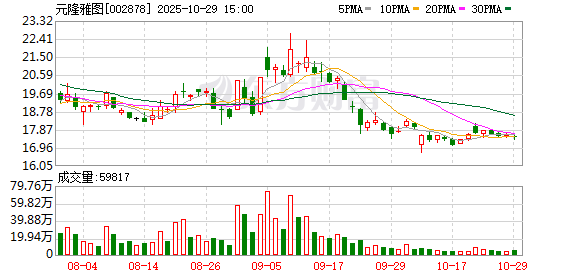
元隆雅图三季报:营业收入8.23亿元,同比增长41.06%
Zheng Quan Shi Bao Wang· 2025-10-29 15:06
Core Insights - Yuanlong Yatu, a leading company in the cultural and creative industry, reported a revenue of 2.214 billion yuan for the first three quarters of 2025, marking a year-on-year increase of 23.75%, and a net profit attributable to shareholders of 8.986 million yuan, up 127.09% [1] - In Q3 2025, the company achieved a revenue of 823 million yuan, reflecting a 41.06% year-on-year growth, and a net profit of 13.593 million yuan, which is a 235.80% increase compared to the same period last year [1] Group 1: Business Strategy and Performance - The company is advancing its "Big IP + Technology" core strategy, transitioning from a B2B marketing leader to a "B+C linkage" model, focusing on retail IP cultural product design and development [1][2] - The marketing service business, including gifts, promotional services, and new media marketing, generated a total revenue of 2.176 billion yuan in the first three quarters, up 25.17% year-on-year, with a gross profit of 259 million yuan, a 2.86% increase [2] - Yuanlong Yatu's licensed merchandise business in the sports IP sector generated 33.56 million yuan in revenue, with a gross margin of 35.22%, an increase of 3.42 percentage points, driven by events like the Harbin Winter Universiade and Chengdu World University Games [2] Group 2: Retail Strategy and Market Expansion - The company launched its C-end retail strategy with the establishment of a wholly-owned subsidiary, Yuanlong Yuanchuang Cultural (Beijing) Co., Ltd., and introduced the C-end retail sub-brand "Yuanlong Yuanchuang" [3] - The first store of "Yuanlong Yuanchuang" opened in Beijing, featuring nearly 400 SKUs from around 20 well-known domestic and international IPs, showcasing a modular store design that combines standardized IP scenes with local cultural displays [3] - The company is expanding its retail store network, with 51 licensed merchandise retail stores opened in Guangzhou, Shenzhen, and Hong Kong, anticipating continued revenue growth in the licensed merchandise business in Q4 [2][4]
别让“山寨”绊住文创产业发展
Jing Ji Ri Bao· 2025-10-27 00:04
Core Viewpoint - The cultural and creative industry is facing significant challenges due to rampant imitation and infringement, as highlighted by the recent administrative penalty case in Beijing, which underscores the need for stronger intellectual property protection and innovative development strategies [1][2]. Group 1: Intellectual Property Issues - The recent case of infringement involving the cultural and creative products of Beijing's central axis resulted in a penalty of over 243,000 yuan, illustrating the prevalence of counterfeit products in the industry [1]. - The creative aspect is vital for the cultural and creative industry, and intellectual property serves as a crucial safeguard for this creativity [1]. - Many businesses are copying original designs without authorization, which undermines the market share and profits of original creators, thus stifling industry innovation [1]. Group 2: Consumer Challenges - Consumers face difficulties in distinguishing between genuine and counterfeit cultural products, often resorting to social media for comparisons and verification [2]. - The proliferation of counterfeit products complicates the purchasing process for consumers, who must become "anti-counterfeiting experts" to avoid being misled [2]. Group 3: Recommendations for Industry Improvement - To foster the development of the cultural and creative industry, a dual approach is necessary: strengthening intellectual property protections while allowing reasonable space for cultural innovation [2]. - Enforcement measures should include increasing statutory compensation amounts, establishing infringement blacklists, and enhancing deterrent effects against violations [2]. - A systematic registration of potential intellectual property rights should be implemented before product launches, along with the introduction of anti-counterfeiting technologies to ensure traceability and legal support for rights protection [2]. - Establishing a standardized licensing mechanism for derivative development can facilitate compliance and clarify usage scope and quality standards, promoting a win-win situation for cultural dissemination and industry growth [2][3].
“谷子”穰穰酝佳酿(评论员观察)
Ren Min Ri Bao· 2025-10-22 21:57
Core Insights - The rise of "Guzi" culture, characterized by bags adorned with badges and creative merchandise, reflects a growing trend in cultural IP derivatives, contributing to the expansion of the "Guzi economy" [1][2] - The market size of China's "Guzi economy" is projected to reach 168.9 billion yuan in 2024, representing a 40.63% increase from 2023, with expectations to exceed 300 billion yuan by 2029 [1] - The "Guzi economy" thrives on high-quality cultural products that meet consumer demands, with companies focusing on quality and creativity to enhance consumer satisfaction [1][2] Group 1 - The "Guzi economy" is a manifestation of the vibrant human economy, driven by cultural creation and economic activities [1] - Consumers are increasingly demanding higher quality and creativity in cultural products, prompting companies to innovate and improve their offerings [1] - The integration of 3D printing technology has improved production efficiency, allowing for mass production of creative merchandise [1] Group 2 - The "Guzi" phenomenon encourages repeated consumer engagement, enhancing the resilience of the market and expanding the cultural creative industry [2] - Diverse business models within the "Guzi economy" are broadening revenue channels and addressing fluctuations in consumer traffic [2] - The cultural creative industry is extending its value chain into tourism and sports, creating new business opportunities and vitality [2] Group 3 - A shopping mall in Beijing successfully increased foot traffic and sales by shifting its focus to cultural and experiential consumption, highlighting the importance of cultural trends in retail [3] - The exploration of cultural IP value is expected to yield more high-quality cultural products that resonate with younger consumers, driving economic growth [3]
文物活化、非遗传承、文旅融合 多视角感知中华文脉在传承中创新、在开放中焕彩
Yang Shi Wang· 2025-10-18 08:43
Core Perspective - The article highlights the significant advancements in cultural heritage and tourism in China during the "14th Five-Year Plan" period, showcasing the integration of technology and cultural preservation efforts [1]. Group 1: Cultural Heritage and Technological Integration - Over 130,000 new cultural heritage sites have been discovered, and nearly 2,000 national protection units are undergoing restoration [1]. - The use of virtual reality (VR) technology at the Sanxingdui Museum allows visitors to experience archaeological sites, enhancing engagement with ancient artifacts [3][7]. - AI technology has been employed to reconstruct ancient artifacts, such as the 2.53-meter bronze bird-foot statue, by accurately matching and assembling fragments from different excavation sites [9]. Group 2: Cultural and Tourism Industry Growth - The cultural tourism industry in China has seen a revenue surge, exceeding 10 trillion yuan, with museums receiving nearly 1.5 billion visitors annually [1]. - The Sanxingdui Museum has introduced various creative cultural products, such as bags and keychains featuring bronze figures, making ancient culture more accessible and appealing to younger audiences [10][12]. - In Gansu, the "Digital Dunhuang" project aims to reunite lost artifacts through digital means, attracting nearly 30,000 visitors from 29 countries since its launch [21]. Group 3: Regional Cultural Developments - Tibet's cultural tourism sector has welcomed over 57 million visitors in the first eight months of 2025, marking an 11.3% increase year-on-year, with cultural industry output exceeding 10 billion yuan [28]. - The "Village T" fashion show in Guizhou has gained national attention, showcasing local ethnic cultures and significantly boosting sales of traditional handicrafts [38].

版权能给产业带来什么?听听参展单位怎么说
Da Zhong Ri Bao· 2025-10-18 00:44
Group 1 - Copyright not only protects works but also empowers industry development, as seen in various cultural products and experiences showcased at the 10th China International Copyright Expo [1][2] - The Sichuan Digital Publishing Media Co. reported nearly 600 copyright registrations for Sanxingdui cultural products, leading to over 2,000 derivative products and an annual sales revenue of approximately 200 million yuan [1] - Yangzhou Anbeisi Toy Co. has over 30,000 copyrighted plush toy designs, with a popular dinosaur plush selling 35 million units in one month, highlighting the importance of copyright in product success [1] Group 2 - The VR film "Digital One Big·Original Intention Journey" offers an immersive experience of the early 20th century Shanghai, showcasing the first National Congress of the Communist Party of China [2] - This project utilizes LBE VR technology and aims to break traditional communication barriers, allowing audiences to explore historical narratives in a virtual setting [2] - The project is part of a broader initiative by the CPC First Congress Memorial Hall to enhance intellectual property protection and promote the development of cultural products related to revolutionary history [2]
“熊猫家园”百余款产品,闪耀CLE中国授权展!
Huan Qiu Wang· 2025-10-15 09:06
Core Viewpoint - The 18th CLE China Licensing Expo is currently taking place at the Shanghai New International Expo Center, showcasing over 2,600 global licensed IP resources, with a significant focus on the "Panda Homeland" exhibition from Chengdu, which features the first "Panda Homeland Cultural and Creative Competition" and its successful commercialization results [1][15]. Group 1: Exhibition Highlights - The "Panda Homeland" booth is a major attraction, presenting over a hundred products that have garnered significant audience interest and engagement [3][12]. - The booth's design theme, "Leisure City, Comfortable Life," immerses visitors in a creatively reimagined panda world, enhancing the overall experience beyond mere product display [3][6]. - The exhibition has attracted both domestic and international visitors, with positive feedback on the appealing panda-themed products [6][14]. Group 2: Product and Market Strategy - The products on display include a wide range of categories such as trendy toys, financial collectibles, aesthetic lifestyle items, and stationery, all designed to resonate with current consumer emotional values [6][17]. - "Panda Homeland" has established partnerships with companies like Hongxing Erke and the Industrial and Commercial Bank of China, showcasing over 100 creative products that will be officially launched in October [17][19]. - The company aims to enhance its strategic development by integrating culture and technology, focusing on digital innovations and expanding international collaborations to promote panda culture globally [19][21]. Group 3: Future Development Plans - The second "Panda Homeland Cultural and Creative Competition" will introduce an "Industry Mentor Group" to guide early-stage creations, facilitating the transition from concept to market [21]. - The company plans to build a comprehensive operational system that integrates creative incubation, design production, and channel marketing to improve product development efficiency [19][21]. - Future initiatives include developing virtual IP images using AI technology and creating immersive consumption experiences through online and offline channels [19][21].

熊猫家园运营中心周蕾:推动熊猫IP从成都走向世界
Mei Ri Jing Ji Xin Wen· 2025-10-15 04:50
Core Insights - The event "2025 Chengdu Cultural and Creative Industry (Guangdong-Hong Kong-Macao Greater Bay Area) Cooperation Conference" aims to promote the synergy between Chengdu's cultural IP and creative design resources with the manufacturing capabilities of the Greater Bay Area [1] - The "Panda Home" brand, introduced by Chengdu Media Industry Group, serves as a cultural link between Chengdu and Dongguan, enhancing cultural resource complementarity and cross-regional collaboration with advanced manufacturing [1] Group 1 - The first "Panda Cultural Creative Competition" was held under the guidance of UNESCO and other organizations, attracting 13,854 original works globally, establishing the panda IP as a significant cultural connector [1] - Chengdu Media Industry Group has established the "Panda Home Operation Center" to facilitate high-quality market transformation of outstanding works, achieving a cumulative output value of 63.77 million yuan [2] - The "Panda Home" initiative has led to the registration of 116 design patents and the signing of 137 designers, creating eight core panda IP images and developing over 100 competitive cultural products [2] Group 2 - The second "Panda Cultural Creative Competition" has expanded its international cooperation network, receiving 7,389 submissions, including 2,133 from overseas, and aims to set global standards for the industry [3] - The competition focuses on international participation, market-oriented evaluation, and practical award settings, enhancing its authority and relevance in the creative industry [3] - Future plans include deepening collaboration with global creative forces and opening various cooperation channels, aiming to elevate the panda IP to an international stage [3]