机动车检测

Search documents
严惩车检造假!最高法发布人民法院依法审理涉机动车环境监管典型案例
Yang Shi Wang· 2025-07-15 02:33
Group 1 - The article emphasizes the importance of strict legal enforcement in the vehicle emission inspection industry to protect the environment and ensure compliance with regulations [1][2][3] - Three typical cases were highlighted, showcasing the judiciary's role in addressing environmental violations related to vehicle emissions [1][2][3] Group 2 - Case 1 involved a vehicle inspection company that issued false emission reports for over 400 vehicles, resulting in a fine of 300,000 yuan and prison sentences for responsible individuals [5][7][8] - Case 2 focused on an individual who replaced catalytic converters with substandard products, leading to significant air pollution, with the court mandating both the individual and the rental company to share the costs of environmental damage [9][10][11] - Case 3 demonstrated the judiciary's support for administrative agencies in enforcing penalties against inspection companies that issued false reports, reinforcing the authority of environmental regulations [13][14][15]
周乃翔在淄博调研督导时强调 扛牢政治责任 采取有力措施 全力推动督察问题整改见底到位
Da Zhong Ri Bao· 2025-06-24 01:02
Group 1 - The central ecological environment protection inspection highlighted shortcomings in air pollution prevention efforts in cities like Zibo and Dezhou, prompting a strong response from provincial authorities [1][2] - The provincial government emphasized the need to implement Xi Jinping's ecological civilization thoughts and ensure political responsibility for environmental protection [1] - Specific companies, such as Zibo Huarui Motor Vehicle Testing Co., Ltd. and Shandong Fuyue Testing Co., Ltd., were found to have engaged in illegal operations and data manipulation during vehicle emissions testing [1] Group 2 - The inspection also identified issues with the operation of pollution control facilities at companies like Zibo Henglu Building Materials Sales Co., Ltd. and Shandong Yingzheng Nano Materials Technology Co., Ltd. [2] - The provincial government called for tailored remediation plans for each company, emphasizing the importance of corporate responsibility and effective implementation of corrective measures [2] - There is a push for the transformation and upgrading of the lime industry, encouraging companies to improve production processes and eliminate outdated capacity for greener development [2]
违法排污、检验造假,中央生态环保督察曝光多市大气污染乱象
Nan Fang Du Shi Bao· 2025-06-23 10:00
Core Points - The central report highlights significant air pollution issues in Inner Mongolia's Ulaanbaatar and Shandong's Zibo and Dezhou cities, with inadequate implementation of pollution control measures [1][4] - Ulaanbaatar's industrial parks and mining areas have severe pollution, with PM10 and PM2.5 concentrations ranking at the bottom in the region since 2022 [1] - Zibo and Dezhou, as key cities in the Beijing-Tianjin-Hebei region, have also shown poor air quality rankings, with Dezhou having the highest proportion of heavily polluted days in 2024 [1] Group 1: Ulaanbaatar's Pollution Issues - Ulaanbaatar's coal coking industry has lagged in upgrades, with over 2.2 million tons of illegal coking capacity added since 2021 [1][2] - Companies like Junzheng Chemical have operated coking projects without proper approvals, leading to significant environmental violations [1] - The city has failed to complete the transformation of 10.3 million tons of coking capacity for dry quenching and ultra-low emissions on time [1] Group 2: Zibo and Dezhou's Pollution Problems - Zibo's lime production facilities have malfunctioning pollution control systems, leading to direct emissions of smoke and dust [3] - Dezhou has seen illegal construction of steel production facilities, adding 1.37 million tons of annual capacity without proper approvals [3] - Both cities have been criticized for inadequate emergency response measures during heavy pollution events [3] Group 3: Regulatory Failures - There are serious issues with vehicle emission testing agencies in both cities, with many found to be falsifying inspection results [3] - The report indicates a lack of strict daily supervision and accountability in pollution control efforts across the regions [4] - The inspection team plans to conduct further investigations and follow-up inspections to address these issues [4]


实行双主营业务发展!南华仪器并购嘉得力再迎新进展
仪器信息网· 2025-06-23 08:18
Core Viewpoint - The merger and acquisition is seen as a significant step for Nanhua Instruments to transition from traditional vehicle inspection to a dual track of "environmental protection + intelligent cleaning" [1][5] Group 1: Company Overview - Nanhua Instruments has disclosed its response to the Shenzhen Stock Exchange's inquiry regarding the restructuring, addressing the questions raised by the exchange [2] - Jiade Li is a national high-tech enterprise focused on innovation, providing comprehensive solutions for commercial cleaning equipment, including smart floor scrubbers and sweepers [3] - Jiade Li has achieved stable revenue growth, with projected revenues of 133 million yuan and 128 million yuan for 2023 and 2024, respectively, and corresponding net profits of approximately 21.99 million yuan and 17.66 million yuan [3] Group 2: Market Potential - The global B2B cleaning equipment market is projected to reach 28.3 billion yuan in 2023 and is expected to grow to 47.52 billion yuan by 2030, with a compound annual growth rate (CAGR) of 7.7% from 2024 to 2030 [5] Group 3: Performance Commitments - Jiade Li has provided performance commitments to Nanhua Instruments, promising a net profit of no less than 18 million yuan for 2025 and 20 million yuan for 2026, or a cumulative net profit of no less than 38 million yuan for 2025 and 2026 [6] - The stability of Jiade Li's team and its innovative capabilities will be maintained, while integrating its business and R&D capabilities into the overall development system of the listed company [6]


2省区大气污染防治工作不力 中央生态环保督察公开通报
Xin Hua Wang· 2025-06-23 06:11
Group 1 - The central ecological environmental protection inspection highlighted inadequate air pollution prevention efforts in Inner Mongolia's Ulaanbaatar and Shandong's cities such as Zibo and Dezhou, with significant issues in compliance and enforcement [1][2] - Ulaanbaatar's industrial park and mining areas are characterized by widespread resource-based and structural pollution, with PM10 and PM2.5 concentrations ranking at the bottom among 12 leagues in the region since 2022 [1] - The coal coking industry in Ulaanbaatar has lagged in upgrading, with over 2.2 million tons of illegal coking capacity added since 2021, including a 3 million tons/year project by Junzheng Chemical that was not compliant with capacity indicators [1][2] Group 2 - In Shandong, Zibo and Dezhou are identified as key cities for air pollution prevention, with both cities ranking low in air quality indices for 2023 and 2024, and Dezhou having the highest proportion of heavy pollution days in the province for 2024 [2][3] - Numerous enterprises in Zibo and Dezhou have been found to have serious violations in pollution control, including improper operation of pollution control facilities and significant emissions from lime production and casting industries [2][3] - The failure to complete coal-fired boiler elimination tasks and unauthorized construction of steel production facilities in Dezhou has led to the production of over 670,000 tons of crude steel since 2022, indicating a lack of compliance with environmental regulations [3]
如何强化机动车排放检验机构规范运营?来自天津市津南区的一线调研及思考
Zhong Guo Huan Jing Bao· 2025-06-22 23:09
Core Insights - The article highlights the increasing air pollution from vehicle emissions in urban areas, emphasizing the need for stricter regulation and oversight of vehicle emission testing institutions in Tianjin's Jinnan District [1] Issues Identified - A special investigation conducted by the Jinnan District Ecological Environment Bureau revealed significant issues among seven vehicle testing institutions, including data falsification and non-compliance with operational standards [2] - Some institutions were found to have manipulated testing data and interfered with equipment to pass non-compliant vehicles, with instances of issuing passing reports for vehicles emitting visible smoke [2] - The methods of data falsification have become more sophisticated, making traditional regulatory approaches ineffective [2] - Common violations included inadequate sampling techniques, improper use of equipment, and arbitrary interruptions of the testing process [3] - Institutions were found to be using inappropriate testing methods to expedite the process and reduce liability, leading to a lack of proper training and understanding of standards among staff [3] - Equipment and technology deficiencies were noted, with outdated devices and inadequate calibration leading to data inaccuracies [3] - Weak regulatory oversight was highlighted, with a significant number of vehicles tested but insufficient professional personnel to manage the complexities of regulation [4] - The existing information monitoring platform lacks comprehensive functionality, making it difficult to analyze testing data effectively [4] - The industry faces severe competition, with institutions engaging in price wars that compromise service quality [4] - Insufficient training and understanding of standards among testing personnel were prevalent, leading to non-compliance with operational procedures [4] Recommendations - The article suggests increasing regulatory and enforcement efforts, including regular inspections and stricter penalties for institutions found to be violating regulations [6] - It advocates for the integration of technology in monitoring, such as real-time data uploads to the monitoring platform and the use of AI for anomaly detection [6] - Strengthening the capabilities of testing institutions is recommended, including standardizing equipment and revising operational procedures to eliminate human interference [7] - Promoting industry self-regulation and public oversight is also suggested, with mechanisms for transparency and community involvement in monitoring [8]
南华仪器并购嘉得力再迎新进展
Zheng Quan Shi Bao Wang· 2025-06-13 12:28
Core Viewpoint - Nanhua Instrument's acquisition of Jiadelin marks a significant step in transitioning from traditional vehicle inspection to "environmental + intelligent cleaning" sectors, with Jiadelin expected to become a core growth engine for the company [2] Group 1: Company Overview - Jiadelin is a leading player in the commercial cleaning equipment sector in China, specializing in high-end cleaning devices such as intelligent floor scrubbers and sweepers [1] - Jiadelin has developed a smart service system with remote monitoring and digital management capabilities, enhancing product value and expanding its product range [1] - The company has successfully tested its large commercial unmanned floor scrubbers in major properties like Vanke, demonstrating its advanced technology [1] Group 2: Financial Performance - Jiadelin is projected to achieve revenues of 133 million yuan and 128 million yuan in 2023 and 2024, respectively, with corresponding net profits of 21.99 million yuan and 17.66 million yuan [1] - The gross profit margins for Jiadelin are stable, recorded at 39.53% and 38.39% for 2023 and 2024 [1] Group 3: Market Potential - The global B2B cleaning equipment market is expected to reach 28.3 billion yuan in sales in 2023, with projections of 47.52 billion yuan by 2030, indicating a compound annual growth rate (CAGR) of 7.7% from 2024 to 2030 [2] Group 4: Performance Commitment - Jiadelin has made performance commitments to Nanhua Instrument, promising a net profit of no less than 18 million yuan in 2025 and 20 million yuan in 2026, with cumulative targets for those years [3] - This commitment reflects Jiadelin's confidence in its technological capabilities and market prospects, providing a boost to Nanhua Instrument's future profitability [3]
2024反垄断执法:办结11件市场垄断案,罚没1.19亿
Nan Fang Du Shi Bao· 2025-06-06 13:41
Core Points - The National Anti-Monopoly Bureau released the "2024 Annual Report on Anti-Monopoly Law Enforcement in China," highlighting the enforcement actions taken against monopolistic practices and market dominance abuse [1][2] Summary by Categories Anti-Monopoly Enforcement - In 2024, 11 cases of monopoly agreements and abuse of market dominance were concluded, with a total penalty of 119 million yuan [2] - The report emphasized ongoing investigations into monopolistic agreements, particularly in the motor vehicle inspection sector, with significant penalties imposed on multiple companies [3] Digital Economy Regulation - The report noted the ongoing normalization of anti-monopoly regulation in the digital economy, with specific focus on Alibaba and Meituan's compliance with rectification measures [4] Operator Concentration Oversight - The average review time for operator concentration cases was reduced to 24.7 days, down by one day from the previous year, with 643 cases processed in total [5][6] - The manufacturing sector accounted for the highest number of concentration cases, with 213 cases, representing 34% of the total [5] Administrative Monopoly - A total of 72 cases of abuse of administrative power to exclude or restrict competition were filed, with 57 cases concluded [8] - The report highlighted efforts to combat local protectionism and market segmentation, with a significant increase in the number of cases filed and concluded compared to the previous year [8] Industry Focus Areas - The anti-monopoly enforcement agency is paying close attention to the cultural entertainment ticketing market, patent database market, and the new energy vehicle charging and swapping industry [9] - The report suggested enhancing market regulation in the new energy vehicle charging sector and addressing issues related to pricing and service standards [10]
《中国反垄断执法年度报告》发布 通报多家企业和机构涉嫌垄断被罚
Jing Ji Guan Cha Wang· 2025-06-06 04:38
Core Insights - The report from the State Administration for Market Regulation (SAMR) highlights the enforcement actions taken in 2024 against monopolistic practices, including the resolution of 11 cases of monopoly agreements and abuse of market dominance, as well as the review of 643 merger cases [1][2] Group 1: Enforcement Actions - In 2024, SAMR concluded 11 cases related to monopoly agreements and abuse of market dominance, and imposed administrative penalties on one case for obstructing investigations [1] - A total of 643 merger cases were reviewed, with 4 significant transactions receiving competitive scrutiny, leading to conditional approvals and the abandonment of 2 key transactions by the parties involved [2] - SAMR took action against 72 cases of abuse of administrative power to eliminate or restrict competition, particularly in the vehicle inspection sector, affecting 46 inspection agencies [1] Group 2: Digital Economy and Major Cases - The report emphasizes the ongoing efforts to enhance antitrust regulation in the digital economy, including strict oversight of Alibaba Group's compliance with a three-year rectification plan [1] - Notable cases include the investigation into Nvidia for potential antitrust violations and the first case in the financial data sector involving Ningbo Senpu for abusing market dominance [2][9] Group 3: Typical Cases - Case 1: Five rock wool companies in Xinjiang were fined a total of 5.2055 million yuan for reaching and implementing a monopoly agreement [3] - Case 2: Thirteen vehicle inspection agencies in Hunan were penalized with fines totaling 2.3283 million yuan for colluding to raise inspection fees [4] - Case 3: Nine driving schools in Chongqing were fined a total of 391,500 yuan for implementing a price-fixing agreement [5] - Case 4: Ten vehicle inspection companies in Tianjin were fined a total of 675,100 yuan for reaching a monopoly agreement [6] - Case 5: Weihai Water Group was fined a total of 65.2012 million yuan for abusing its dominant market position in water supply services [7] - Case 6: Hainan Kunlun Port Gas Company was fined a total of 7.1283 million yuan for limiting transactions in the gas supply market [8] - Case 7: Ningbo Senpu was fined 4.5328 million yuan for abusing its market position by refusing to provide services to other information providers [10]
问题车竟能带病上路!央视调查起底尾气排放检测乱象
Yang Shi Xin Wen Ke Hu Duan· 2025-05-25 13:18
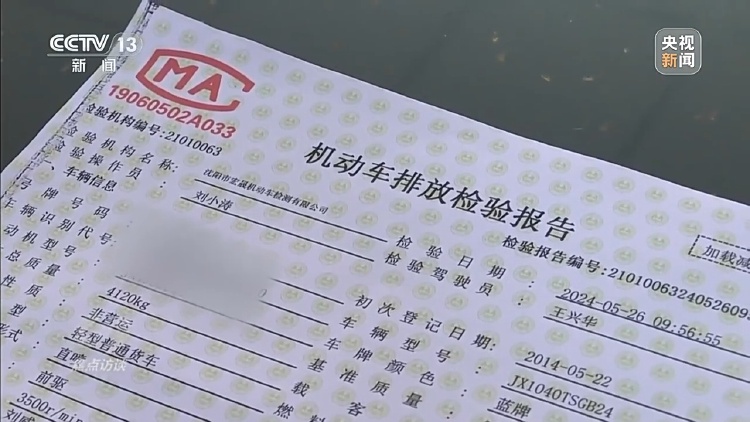
Core Viewpoint - The article highlights the rampant malpractice in vehicle emission testing in China, where some inspection stations are allowing non-compliant vehicles to pass while failing compliant ones, often for illegal profit [2][18]. Group 1: Emission Testing Malpractices - A significant number of vehicle inspection stations are engaging in fraudulent practices, including using OBD (On-Board Diagnostics) cheating devices to generate false data, allowing non-compliant vehicles to pass inspections [9][12]. - In a specific case in Shenyang, 13,000 identical OBD codes were detected, indicating the use of a cheating device that replaced actual vehicle data with fabricated information [5][9]. - The use of OBD cheating devices has led to the emergence of a gray market, where these devices are sold online, contributing to widespread corruption in the vehicle inspection industry [9][11]. Group 2: Regulatory Response and Industry Impact - In response to the growing issue, the Ministry of Ecology and Environment has initiated a nationwide crackdown on fraudulent vehicle emission testing, resulting in the revocation of testing qualifications for 580 inspection agencies and criminal charges against 110 entities by December 2024 [18][20]. - The article emphasizes the importance of vehicle emission testing in reducing air pollution, noting that nitrogen oxides from vehicles account for over 34% of national emissions, with heavy-duty trucks contributing 80% of that figure [20]. - New regulations are being proposed to enhance the functionality of OBD systems to prevent tampering and ensure compliance, aiming to restore integrity in the vehicle inspection process [20].