虚拟现实

Search documents
凯文・凯利:意外之美|我们的四分之一世纪
经济观察报· 2025-12-19 10:15
Core Viewpoint - The future of China is seen as a potential surpassing of the United States, akin to Japan's rise in the 1980s, with the main risks stemming from internal errors rather than external constraints [1][15]. Group 1: Unexpected Developments - The rapid proliferation of smartphones has redefined industry landscapes, integrating multiple functionalities into a single device, which exemplifies a "non-linear explosion" driven by technological convergence [5][6]. - The slow development of VR technology contrasts sharply with the smartphone boom, highlighting the importance of system dependencies and the need for a comprehensive sensory experience for true immersion [8][9]. - The emergence of large language models (LLMs) represents an unexpected breakthrough in AI, showcasing the potential for logic and reasoning through language, diverging from traditional AI paths [11][12]. Group 2: Future Outlook for China - Key drivers for China's growth in the next 25 years include the default option of open-source technology, the confidence of tech innovators moving beyond imitation, and a cultural shift led by returnees embracing globalization [16]. - The exploration spirit that embraces "unexpected beauty" is deemed crucial for fostering innovation and overcoming challenges [17].


【公告臻选】光芯片+云计算+大数据+人工智能+智慧存储!公司拟斥资最多90亿元采购云算力服务
第一财经· 2025-12-16 14:16
Group 1 - The company is a direct supplier to Tesla, focusing on robotics, industrial AI, industrial AR/VR, Industry 4.0, and smart manufacturing [2] - The company plans to invest up to 9 billion yuan in cloud computing services, integrating optical chips, cloud computing, big data, artificial intelligence, and smart storage [2] - The company's products have been utilized in major global sporting events such as the Qatar World Cup and the Paris Olympics, emphasizing its involvement in virtual reality, MiniLED, artificial intelligence, and ultra-high-definition video [2]

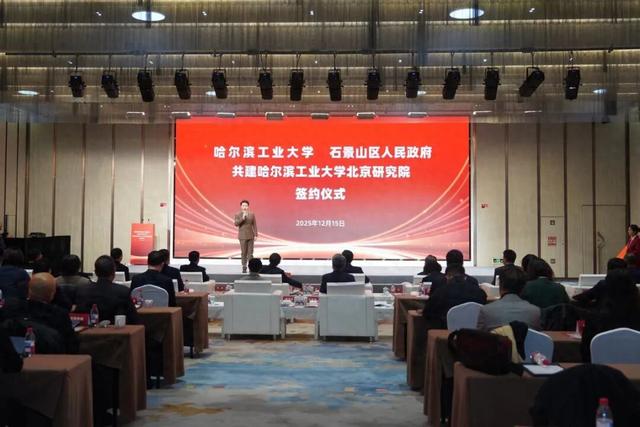
哈尔滨工业大学北京研究院在石景山区揭牌
Bei Jing Ri Bao Ke Hu Duan· 2025-12-16 07:30
Core Viewpoint - The establishment of the Harbin Institute of Technology Beijing Research Institute represents a strategic collaboration between Harbin Institute of Technology and the Shijingshan District government, aimed at enhancing technological innovation and regional economic development [3][9]. Group 1: Collaboration and Objectives - The research institute aims to serve as a model for university-local government cooperation, focusing on strategic planning, resource investment, and efficient mechanism construction [5]. - The partnership is intended to strengthen the integration of education, technology, and talent development, positioning the institute as a hub for high-level talent cultivation and a platform for emerging industry development [5][7]. Group 2: Regional Economic Development - Shijingshan District emphasizes the role of higher education and research institutions in driving high-quality regional economic development, with a focus on technological innovation leading industrial innovation [7]. - The district has successfully transformed its industrial structure, with the ratio of secondary to tertiary industries shifting from 7:3 to 1:9, and its GDP surpassing 100 billion yuan for the first time in 2022 [10]. - By 2024, the digital economy is projected to account for 57.4% of the district's GDP, with a total GDP of 1,312.9 billion yuan, reflecting a year-on-year growth of 6.5% [10]. Group 3: Strategic Importance - The research institute's establishment is seen as a significant milestone in deepening strategic cooperation between the university and the district, contributing to national strategic needs and the capital's development [9]. - The collaboration aims to explore a model of collaborative innovation between industry and academia, enhancing the region's competitiveness and development capabilities [9][10].
Meta豪掷6000亿押注AI:28岁天才少年能否改写科技巨
Sou Hu Cai Jing· 2025-12-12 23:09
Core Insights - Meta is shifting its focus from the metaverse to AI, with a significant budget reallocation of $600 billion over the next three years, primarily directed towards AI initiatives led by Alexandr Wang [2][3] Group 1: Leadership Changes and Internal Dynamics - Alexandr Wang, a 28-year-old talent from ScaleAI, has been appointed by Mark Zuckerberg to lead a team that has rapidly recruited nearly 100 top AI talents from companies like OpenAI and Google [3] - The rise of Wang's team has sparked backlash from veteran executives, with 17 high-level departures from the metaverse core team, including John Carmack, who criticized the shift towards an "AI dictatorship" [3][4] Group 2: Financial Performance and Strategic Shift - Meta's Reality Labs, focused on the metaverse, reported a 39% year-over-year revenue decline in Q1 2024, while AI advertising systems saw a 28% revenue increase [3] - Zuckerberg announced that 75% of the infrastructure investment will now be directed towards AI, effectively reallocating $450 billion initially intended for the metaverse to Wang's "TBD Lab" [3] Group 3: Project Adjustments and Future Directions - The Meta smart glasses project has seen a reduction of 300 engineers, who have been reassigned to AI voice assistant development, and the launch of the AR glasses Project Nazare has been indefinitely postponed [4] - The new AI glasses, "Orion," will incorporate models developed by Wang's team, indicating a strategic pivot towards AI-driven products [4] Group 4: Competitive Landscape and Innovation - In the context of an AI arms race, Meta aims to differentiate itself by focusing on vertical breakthroughs in social scenarios, as highlighted by Wang's development of "SocialGPT," which has increased Instagram engagement by 47% during testing [5] - The competitive landscape includes major players like Microsoft-OpenAI and Google's DeepMind, with Meta seeking to carve out its niche in the evolving AI market [5] Group 5: Power Dynamics and Historical Parallels - Discussions among tech elites suggest that Zuckerberg's actions mirror historical corporate power struggles, reminiscent of Steve Jobs' ousting of John Sculley at Apple [6] - The internal resource allocation has been restructured to prioritize AI, leading to the sidelining of various VR projects, which are now considered "digital ruins" [6] - The ongoing transformation at Meta reflects a critical moment in tech history, with parallels drawn to past failures of companies like Yahoo and Microsoft in adapting to new technological paradigms [6]


Meta确认将部分投资“从元宇宙转向AI眼镜”
Sou Hu Cai Jing· 2025-12-06 14:28
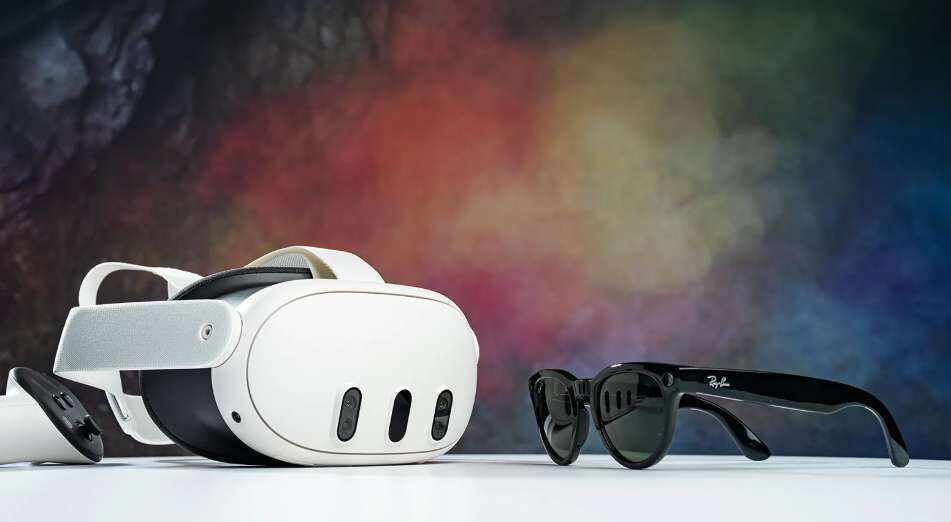
Core Viewpoint - Meta has confirmed a shift in investment strategy, reallocating funds from its metaverse division, Reality Labs, to focus on AI glasses and wearable devices, amidst ongoing financial losses in the metaverse sector [1][3]. Group 1: Budget Adjustments - Meta's Reality Labs is facing a budget cut of up to 30%, primarily affecting VR and Horizon Worlds operations [3]. - The official statement from Meta indicates that the decision is driven by strong momentum in the AI glasses and wearable devices market, with no broader adjustment plans currently in place [3]. - The budget cuts are expected to impact funding for third-party studios developing content for Horizon Worlds, with potential layoffs as part of the adjustment [3]. Group 2: Financial Performance - Reality Labs has accumulated losses exceeding $60 billion since 2020, prompting the need for a strategic shift [3]. - Despite a record high quarterly revenue in Q4 2024 due to the launch of Quest 3S, sales of Quest devices saw a year-on-year decline in the first two quarters of 2025, with a temporary rebound attributed to retailers stocking up for the holiday season [4]. - Meta's investment in creator competitions for Horizon Worlds has not yielded significant results, as the platform struggles to compete with cross-platform giants like Roblox and Fortnite [4]. Group 3: Success in Smart Glasses - Sales of Meta's smart glasses have surged, with 2 million units sold as of February 2024, and a reported increase of over two times year-on-year by July 2025 [4][5]. - The company plans to increase annual production capacity for smart glasses to 10 million units by the end of 2026, with this target now expected to be met ahead of schedule due to strong sales contributions [5]. - The success in the smart glasses market, contrasted with stagnation in VR and metaverse platforms, is likely influencing Meta's decision to redirect funds to solidify its leadership position before competitors like Apple and Google enter the space [5].
Meta拟削减元宇宙预算30%,累计亏损超700亿美元
Bei Ke Cai Jing· 2025-12-06 06:44
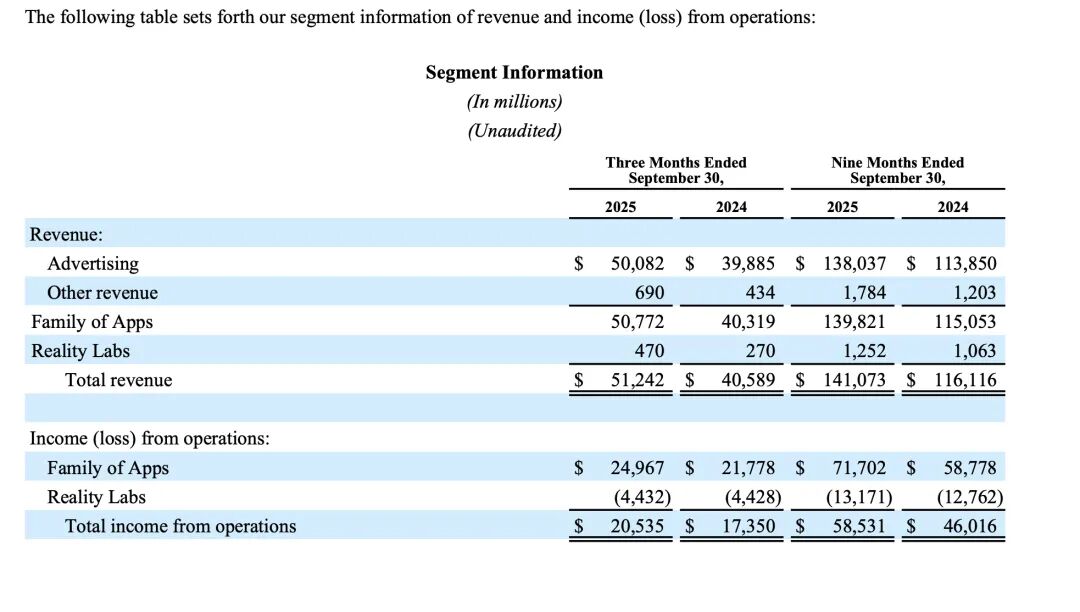
Core Viewpoint - Meta is planning to significantly cut its Metaverse business budget by up to 30%, reflecting a strategic shift away from its previous focus on the Metaverse, which has incurred losses exceeding $70 billion since its inception in early 2021 [1][2]. Group 1: Budget Cuts and Financial Performance - Meta's CEO Mark Zuckerberg is discussing a budget reduction for the Metaverse team as part of the 2026 budget planning, with a general directive for management to cut 10% of budgets across the board [1]. - The Reality Labs department, which oversees the Metaverse initiatives, has reported cumulative losses of over $70 billion since 2021, indicating ongoing financial struggles [1]. - In Q3, Reality Labs generated revenue of $470 million, a 74% year-over-year increase, but still faced a loss of $4.432 billion, showing that despite revenue growth, profitability remains elusive [3]. Group 2: Strategic Shift and Market Reaction - Meta confirmed that resources from the Metaverse will be redirected to support other projects within Reality Labs, such as AI glasses and wearable devices, indicating a broader strategic pivot [2]. - Following the announcement of budget cuts, Meta's stock price rose by 3.43% to $661.53 per share, with a total market capitalization of $1.67 trillion, suggesting positive investor sentiment towards the budget reduction [2]. - Analysts from TD Cowen estimate that a 30% budget cut could lead to a reduction of $4 billion to $6 billion in costs for Reality Labs by 2026, which may improve investor confidence [3]. Group 3: Industry Context and Future Outlook - The concept of the Metaverse, originating from the 1992 sci-fi work "Snow Crash," has seen fluctuating interest, with Meta's previous rebranding from Facebook to Meta aimed at capitalizing on this trend [2]. - There is speculation that Meta may eventually close its Metaverse projects to focus more on AI initiatives, as suggested by industry analysts [4]. - The overall sentiment among investors has been cautious, with expectations that budget cuts could lead to a more favorable outlook for Meta's financial performance in the future [3].

扎克伯格的“元宇宙梦”醒了:Meta拟削减相关部门30%预算
Guo Ji Jin Rong Bao· 2025-12-05 12:49
Core Insights - Meta's CEO Mark Zuckerberg plans to significantly reduce resources allocated to the metaverse, with potential budget cuts of up to 30% for the metaverse division in the upcoming year [1][2] - The company is also implementing a company-wide cost budget reduction of 10%, which is a routine request during budget cycles [1] Group 1: Metaverse Strategy and Financial Performance - Zuckerberg had previously invested heavily in the metaverse, even rebranding Facebook to Meta in 2021 to focus on creating a virtual reality shared environment [2] - The Reality Labs division, responsible for VR and AR hardware and software, has faced disappointing financial performance, prompting the budget adjustments [2][3] - In Q3 2025, Reality Labs revenue surged 74% year-over-year to $470 million, but the operating loss remained substantial at $4.432 billion, with cumulative losses exceeding $70 billion since 2021 [3][5] Group 2: Market Challenges and Strategic Shift - Meta's metaverse project has been criticized by investors as a money pit, and the company faces scrutiny from global regulators regarding children's privacy and safety in virtual environments [6] - In response to these challenges, Meta is shifting its focus towards artificial intelligence (AI), with less emphasis on the metaverse in recent communications [6] - The restructuring within Meta includes the reassignment of key personnel from the metaverse division to AI initiatives, indicating a strategic pivot towards AI development [6][7]
华星创业:近几年布局数字经济细分虚拟现实行业发展新业务
Zheng Quan Ri Bao Zhi Sheng· 2025-12-05 12:09
(编辑 王雪儿) 证券日报网讯 12月5日,华星创业在互动平台回答投资者提问时表示,公司近几年布局数字经济细分虚 拟现实行业发展新业务。公司目前在该赛道尚未形成有规模的收入。该细分行业尚处于快速发展过程 中,产品形态和商业模式还在不断发展迭代,存在市场风险。 ...

虚拟现实旅游体验世界名胜
Sou Hu Cai Jing· 2025-12-05 11:54
Core Insights - Virtual reality (VR) tourism is transforming how people explore the world by providing immersive experiences that transcend physical travel limitations [1][3] - The technology utilizes 3D modeling, spatial audio, and haptic feedback systems to create interactive virtual environments, allowing users to experience global landmarks from home [1][3] Group 1: Technological Advancements - VR tourism's appeal lies in its ability to break spatial and temporal boundaries, enabling users to explore sites like the Egyptian pyramids in detail, which traditional tourism cannot offer [3] - The experience relies on a combination of advanced technologies, including high-precision laser scanning, 8K panoramic photography, and AI algorithms for realistic lighting and interaction [3] - Some high-end VR systems incorporate temperature simulation and scent release, enhancing the immersive experience by allowing users to feel the environment [3] Group 2: Educational Applications - VR tourism serves as a significant educational tool, allowing students to engage in virtual field trips that enhance their understanding of historical and ecological concepts [5] - Research indicates that classes using VR for teaching have a 35% higher retention rate of geographical knowledge compared to traditional methods [5] - The advent of 5G technology supports cloud-based VR tourism, enabling real-time interaction among users in different locations, enhancing the shared experience [5] Group 3: Industry Adoption - Over 200 museums and 50 World Heritage sites have launched official VR tour projects, indicating a growing trend in the industry [5] - Collaborative projects, such as the "V故宫" experience by Google Arts & Culture and the Palace Museum, allow users to explore areas not open to the public [5] - Innovations like Norway's "Northern Lights VR," which uses real-time weather data to simulate dynamic auroras, demonstrate the potential of VR tourism as a complement to real travel experiences [5]

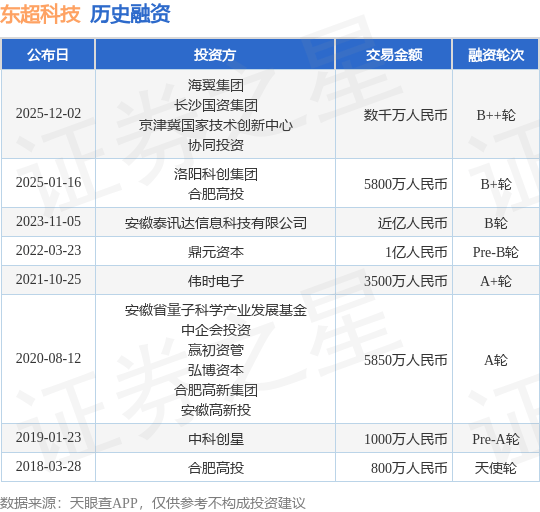
【投融资动态】东超科技B++轮融资,融资额数千万人民币,投资方为海翼集团、长沙国资集团等
Sou Hu Cai Jing· 2025-12-05 11:40
东超科技成立于2016年8月,位于合肥市高新区,是全球虚拟现实技术领军企业、元宇宙领域独角兽企 业。公司自主研发的"无介质空中悬浮成像"技术打破国际垄断,填补国内空白,将科幻电影场景变为现 实。"无介质空中悬浮成像"技术应用光场重构原理,提出基于矩阵光波导的空中成像方法,依托自主研 发的具有负折射功能效应的新型材料(负折射平板透镜),集成相关交互技术后,实现了空中精准复杂 交互式成像系统。该技术具备实用性和创新性,"实用性"体现在可将传统实体屏幕信息投射在空中精准 操作,避免接触式交叉感染风险;"创新性"具体体现在其科技含量高、空中互动性强、视觉冲击力大等 优势,将为传统产业的屏显转型升级提供高性价比的替代选项。技术可广泛应用在智能座舱、医疗卫 生、民生工程、智慧家居、展览展示等领域。 数据来源:天眼查APP 以上内容为证券之星据公开信息整理,由AI算法生成(网信算备310104345710301240019号),不构成 投资建议。 | 公布日 | 投资方 | 交易金额 | 融资轮次 | | --- | --- | --- | --- | | 2025-12-02 | 海更集团 | 数千万人民币 | B++轮 ...