
轨道交通

Search documents
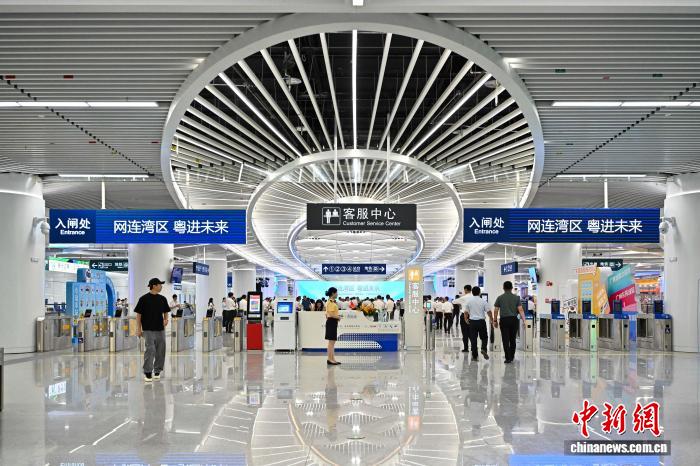
广州地铁同日开通多条城际铁路和地铁线路
Zhong Guo Xin Wen Wang· 2025-09-29 12:36
Core Points - Guangzhou Metro has opened multiple intercity railways and metro lines on September 29, enhancing connectivity in the Greater Bay Area [1][3][5] - The total operational length of intercity railways managed by Guangzhou Metro Group has reached 420 kilometers, linking six cities: Guangzhou, Foshan, Dongguan, Huizhou, Zhaoqing, and Qingyuan [1][3] - The metro network has expanded to 768.4 kilometers with the addition of three intercity lines and two metro lines [3][5] Intercity Railways - The newly opened intercity lines include the Guangzhou East Ring Intercity (Panyu to North Baiyun Airport), Pailian Intercity, and the northern extension of the Guanghui Intercity [1][3] - These lines feature eight stations that allow for convenient transfers to national rail and metro stations, forming a "golden triangle" with key stations [3][5] - The new intercity lines enable direct access to key areas in Guangzhou, such as the Pazhou Exhibition Center and the International Financial City, without the need for transfers [3][5] Metro Lines - The newly opened metro lines include the second phase of Line 13 (Tianhe Park to Yuzhu), the second phase of Line 14 (Jiahe Wanggang to Lejia Road), and the Guangzhou East Station on Line 11 [3][5] - The integration of these metro lines with intercity railways is expected to enhance regional connectivity and support economic development in the area [5] Future Developments - Guangzhou Metro Group plans to start construction on the Foshan-Dongguan Intercity by the end of this year and will take over the operation of the Dongguan-Shenzhen Intercity [5] - Additional projects include the southern extension of the Guangqing Intercity Railway and the completion of the remaining section of Metro Line 22, aiming to exceed 1,300 kilometers of combined "metro + intercity + tram" routes [5]

智洋创新:控股股东智洋控股及其一致行动人计划减持不超过约422万股
Mei Ri Jing Ji Xin Wen· 2025-09-29 12:04
Group 1 - The controlling shareholder of Zhiyang Innovation, Zibo Zhiyang Holdings, holds approximately 78.1 million shares, accounting for about 33.71% of the total share capital of approximately 232 million shares [1] - Zhiyang Innovation's controlling shareholder and its concerted action party plan to reduce their holdings by a total of up to approximately 4.22 million shares, with Zibo Zhiyang Holdings reducing up to 2.3 million shares and Zhiyang Investment reducing up to 1.92 million shares [1] - The planned share reduction is due to the shareholders' personal funding needs, and the shares being reduced are all unrestricted tradable shares [1] Group 2 - For the year 2024, Zhiyang Innovation's revenue composition is as follows: 82.57% from the power industry, 9.58% from the rail transit industry, 7.49% from the water conservancy industry, 0.26% from other businesses, and 0.1% from other industries [2] - As of the report, Zhiyang Innovation has a market capitalization of 6.9 billion yuan [2]

广深莞地铁密集“上新”,跨市轨交重塑大湾区
第一财经· 2025-09-29 10:12
Core Viewpoint - The article highlights the rapid expansion of the rail transit network in the Guangdong-Hong Kong-Macao Greater Bay Area, emphasizing its role in enhancing regional connectivity and reshaping urban and industrial landscapes [3][12]. Summary by Sections Shenzhen Metro Development - As of September 28, 2023, Shenzhen's metro system has reached an operational mileage of 609.6 kilometers, ranking fifth nationally, with a network density of 0.305 kilometers per square kilometer, the highest among mainland cities [5][6]. - The metro system has seen a significant increase in passenger volume, with a daily average of 8.95 million trips from January to August 2023, marking a 7.1% year-on-year growth [6][7]. - The surge in ridership is attributed to a growing resident population, which reached 22.38 million by the end of 2024, and the opening of new transit routes enhancing cross-border travel [7][8]. Greater Bay Area Rail Network Expansion - The article discusses the ongoing construction of multiple rail lines connecting Shenzhen with Dongguan and Huizhou, facilitating seamless transit across the Greater Bay Area [9][10]. - The opening of new metro lines in Guangzhou and Dongguan is expected to significantly improve intercity connectivity, transforming the region's transportation landscape [10][11]. - The integration of rail systems is projected to lower commuting costs and time, enhancing the movement of talent, technology, and capital within the Greater Bay Area [12][14]. Economic and Industrial Implications - The expansion of the rail network is anticipated to reshape the industrial and population distribution in the Greater Bay Area, fostering a more integrated economic environment [12][14]. - The connectivity between Shenzhen, Dongguan, and Huizhou is expected to facilitate a "same-city life" experience for residents, while also promoting industrial collaboration among neighboring cities [14]. - The article notes that the development of the rail network aligns with broader reforms aimed at improving the efficiency of resource allocation across various sectors in the Greater Bay Area [14].

神州高铁:9月28日召开董事会会议
Mei Ri Jing Ji Xin Wen· 2025-09-29 08:33
截至发稿,神州高铁市值为78亿元。 每经头条(nbdtoutiao)——农夫大战怡宝,抢到更多蛋糕的却是宗馥莉!农夫绿瓶上市后,怡宝上 演"滑铁卢":市占率大跌近5个百分点 (记者 曾健辉) 每经AI快讯,神州高铁(SZ 000008,收盘价:2.88元)9月29日晚间发布公告称,公司第十五届第十三 次董事会会议于2025年9月28日以通讯方式召开。会议审议了《关于修订 <神州高铁贯彻落实 三重一大 ="三重一大" 决策制度实施办法="决策制度实施办法"> 的议案》等文件。 2025年1至6月份,神州高铁的营业收入构成为:轨道交通占比100.0%。 ...

外资与本土企业“双向奔赴” 西安开放型经济涌动新活力
Sou Hu Cai Jing· 2025-09-29 04:56
Group 1 - The Kazakhstan Xi'an Port has become a crucial node for the China-Europe Railway Express, significantly enhancing cross-border logistics efficiency [2] - In the first half of the year, Xi'an attracted foreign investment of $421 million, achieving 54.7% of its annual target, with 149 new foreign enterprises established, a year-on-year increase of 4.9% [2] - The establishment of the smart factory by COFCO Coca-Cola in Xi'an represents a significant upgrade in foreign investment, showcasing the integration of AI technology in production [3] Group 2 - Eaton Electric Group is investing in a new energy industry base in Xi'an, focusing on energy storage systems and new energy vehicles, which will inject new momentum into the high-tech zone's development [4] - The high-tech zone has implemented a mechanism to address business concerns, achieving a 100% resolution rate for 1,961 enterprise-related issues, creating a stable and predictable development environment [5] - The high-tech zone has gathered over 500 high-level talents and 15,000 hard-tech innovation talents, providing a solid foundation for foreign enterprises' R&D centers and high-end manufacturing projects [5] Group 3 - The export value of the high-tech zone reached 220.29 billion yuan in the first eight months of the year, marking a year-on-year increase of 17.1%, with private enterprises becoming a driving force in overseas expansion [6] - The establishment of the "Technology Enterprises Going Global Alliance" aims to provide a one-stop service system for enterprises venturing abroad, facilitating international cooperation [7] - The synergy between foreign investment and local enterprises' overseas expansion enhances the overall industrial resilience and attractiveness of Xi'an as an investment destination [8]


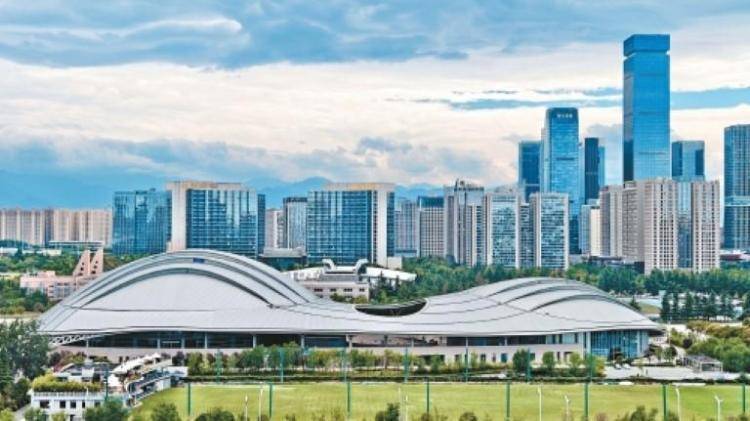
轨交崇明线计划明年通车
Jie Fang Ri Bao· 2025-09-29 01:32
Core Insights - The construction of the "Metro Town" - Xinghai Community, centered around the Changxing Island Station of Metro Line 22, is progressing steadily, marking a significant step in the integration of production and urban development on Changxing Island [1] Infrastructure Development - The main structure of the terminal station, Yu'an Station, on Metro Line 22 was successfully capped on September 23, indicating that all stations along the line have completed their main structural work [1] - The Metro Line 22 will connect to the city’s metro network, with a maximum operating speed of 120 km/h, and is expected to be completed and operational by the end of 2026 [1] Urban Planning - Xinghai Community is strategically located next to Changxing Island Country Park and adjacent to the marine equipment industrial base, positioning it as a core area of Changxing Island [1] - The community aims to integrate residential, commercial, public services, and industrial services, aspiring to create a park city demonstration area and a significant transportation hub connecting the central urban area, Changxing Island, and Hengsha Island [1]
广深莞地铁密集“上新”,跨市轨交重塑大湾区|湾区观察
Di Yi Cai Jing· 2025-09-28 13:56
Core Insights - Shenzhen Metro's operational mileage has surpassed 600 kilometers, reaching 609.6 kilometers, ranking fifth nationally [2][3] - The rapid expansion of the Guangdong-Hong Kong-Macao Greater Bay Area's rail transit network is facilitating the smooth flow of regional production factors and reshaping urban space and industrial patterns [2][4] Summary by Sections Shenzhen Metro Expansion - Shenzhen Metro's operational mileage reached 609.6 kilometers with the opening of Line 16 Phase II and Line 6 Branch II, maintaining the highest network density among mainland cities at 0.305 kilometers per square kilometer [3] - The metro's ridership has been robust, with an entry volume of 169.48 million and a passenger flow of 300.13 million in August, ranking third nationally [3] - Daily average ridership from January to August was 8.95 million, showing a significant year-on-year increase of 7.1% [3][4] Population Growth and Demand - The surge in metro ridership is attributed to a substantial increase in the resident population, which reached 22.38 million by the end of 2024, marking a year-on-year increase of 741,100 [4] - The opening of the Shenzhen-Zhongshan Channel and the rise in cross-border travel from Hong Kong have also contributed to increased metro usage [4] Future Developments - Shenzhen is set to welcome four new metro lines by the end of the year, enhancing the coverage and operational efficiency of its rail network [4] - Ongoing construction of the metro's fifth phase is expected to push the total mileage beyond 800 kilometers by 2030, connecting with neighboring cities like Dongguan and Huizhou [4][5] Greater Bay Area Connectivity - The integration of Shenzhen's metro with Dongguan's rail system is underway, with plans for extensions that will enhance connectivity between the two cities [5] - The overall development of the Greater Bay Area's rail network is anticipated to significantly reduce commuting costs and time, fostering economic collaboration among cities [8] Economic Implications - The expansion of the rail network is expected to reshape the industrial and population layout in the Greater Bay Area, enhancing the flow of talent, technology, and capital [8] - The construction of cross-city metro lines will facilitate a "same-city life" experience for residents, while also restructuring urban and industrial logic [8][9]

精准搭建合作桥梁,共绘产业发展蓝图,泰安高新区长三角优质产业项目对接会召开
Qi Lu Wan Bao Wang· 2025-09-28 08:11
Core Viewpoint - The recent meeting in Tai'an High-tech Zone focused on connecting high-quality industrial projects in the Yangtze River Delta, showcasing the region's industrial advantages and development opportunities [1][2] Group 1: Meeting Overview - The meeting was hosted by Deputy Secretary of the Party Working Committee, Yao Laixin, and included representatives from 11 key enterprises in the Yangtze River Delta [1] - Tai'an High-tech Development Group presented the industrial layout, park facilities, and service guarantees of the high-tech zone, highlighting advantages in six major industrial chains including power transmission, automotive manufacturing, and new energy materials [1] Group 2: Cooperation Intentions - During the discussion, representatives from Yangtze River Delta enterprises engaged in targeted discussions, resulting in five cooperation intentions, laying a solid foundation for future collaboration [1] - Specific projects mentioned include the rail transit base project by Qingyan Rui, anesthetic and medical equipment projects by Linke Medical, and a methanol new energy project by Shandong Kangwo, with intentions to advance cooperation [1] Group 3: Future Plans - Tai'an High-tech Zone aims to use this event as a starting point to continuously track and follow up on intended cooperation projects, optimize investment services, and strengthen resource guarantees [2] - The goal is to promote the landing and growth of more high-quality industrial projects from the Yangtze River Delta, contributing to the establishment of a modern industrial system and achieving high-quality development [2]
激活“未来工厂”新质态
Xin Hua Ri Bao· 2025-09-26 20:31
Core Viewpoint - The transformation of traditional industries in Jiangsu Province is centered around intelligent upgrades and digital transformation, creating a replicable "Jiangsu model" for national industrial digitalization [1][2]. Group 1: Industrial Reconstruction - Jiangsu's three-year action plan for intelligent transformation signifies a fundamental shift in manufacturing logic, aiming for 50% of large-scale industrial enterprises to achieve basic-level smart factory standards by 2027 [2][3]. - The province has established a three-dimensional promotion system of "policy guidance + platform empowerment + benchmark demonstration" to support this transformation [2][3]. - The integration of 5G technology with the Internet of Things in Wuxi has led to a 37% reduction in product defect rates and a 45% increase in order response speed [2][4]. Group 2: Key Dimensions of Transformation - The transformation involves three key dimensions: intelligent production methods, digital value chain extension, and green ecological reconstruction [3][4]. - The shift from traditional manufacturing to service-oriented manufacturing is emphasized, alongside the integration of carbon neutrality goals into the smart manufacturing system [3][4]. Group 3: Exemplary Cases - Nanjing Konne's project showcases a 30% reduction in R&D cycles through data platform construction, breaking down departmental data barriers [4][5]. - Zhongke Su Valve's application of 5G and industrial internet has improved equipment utilization by 40% and reduced energy consumption by 25% [4][5]. - Changzhou Times New Energy's "zero-carbon factory" has achieved 100% green electricity supply and a 35% reduction in energy consumption per unit of output [4][5]. Group 4: Strategic Actions for Intelligent Transformation - Five strategic actions are proposed: mechanism construction, technical support, ecological cultivation, green transformation, and talent-driven initiatives [6][7]. - A dynamic cultivation system covering the entire lifecycle of enterprises is to be established, with differentiated policy support based on the classification of smart factories [7][8]. Group 5: Future Directions - Jiangsu's "smart transformation" practice is evolving into a comprehensive system encompassing technological innovation, ecological co-construction, and institutional innovation [10]. - Future efforts should focus on overcoming key technological challenges, building cross-industry industrial internet platforms, and establishing a regulatory framework suitable for the digital economy [10].

计量器具型式评价证书互认,京津冀企业跨省迁址“搬家不搬证”
Xin Jing Bao· 2025-09-26 01:50
Core Insights - The 2025 North China National Metrology Testing Center Work Symposium was held in Hohhot, focusing on building a new regional metrology service system through policy collaboration, standard co-construction, regulatory linkage, and data sharing to support high-quality economic and social development in the region [1] Group 1: Regional Collaboration and Infrastructure Development - The market regulatory departments of Beijing, Tianjin, Hebei, Shanxi, and Inner Mongolia have successfully established a collaborative metrology support system, significantly enhancing service efficiency [1] - The three regions of Beijing, Tianjin, and Hebei have achieved mutual recognition of "measuring instrument type evaluation certificates," facilitating cross-regional business operations [1] - A total of 9,229 public measurement standards have been co-constructed among the five regions, improving the value transmission system [1] Group 2: Industry-Specific Measurement Centers - Various regions have established industry metrology testing centers focusing on their advantageous industries, such as graphene and aerospace materials in Beijing, and rail transportation in Hebei [2] - Beijing is planning to build the first national automotive autonomous driving metrology data application base, while Tianjin is preparing a smart power metering data base [2] Group 3: Green Transition Initiatives - The North China region has taken the lead in establishing a carbon measurement laboratory and a regional carbon emission monitoring system [2] - Specific carbon measurement tasks have been identified, with Shanxi outlining 44 key tasks and Inner Mongolia applying core equipment developed by the national carbon measurement center [2] Group 4: Public Welfare and Consumer Protection - The five regions have intensified the regulation of consumer metrology, with initiatives such as promoting fair scale management in Beijing and implementing IoT anti-cheating scales in Hebei [2] - Inner Mongolia has effectively addressed fuel dispenser cheating issues through a smart regulatory platform, ensuring consumer protection [2]