
有色金属矿采选业

Search documents
股市必读:华锡有色(600301)1月16日主力资金净流出9689.21万元,占总成交额12.67%
Sou Hu Cai Jing· 2026-01-18 16:57
Trading Information - On January 16, 2026, Huaxi Nonferrous Metals (600301) closed at 48.21 yuan, down 4.72%, with a turnover rate of 5.66%, trading volume of 155,700 shares, and a transaction amount of 765 million yuan [1] - On the same day, the net outflow of main funds was 96.89 million yuan, accounting for 12.67% of the total transaction amount; retail funds had a net inflow of 90.10 million yuan, accounting for 11.78% of the total transaction amount [1][3] Company Announcements - The 25th meeting of the 9th Board of Directors of Guangxi Huaxi Nonferrous Metals Co., Ltd. was held on January 15, 2026, where the proposal to adjust the 2026 futures hedging plan limit was approved with a vote of 9 in favor, 0 against, and 0 abstentions [1] - The adjusted limit for the 2026 futures hedging plan is set at a maximum margin amount of 320 million yuan at any point in time, and the maximum value of contracts held on any trading day is 900 million yuan, valid from January 15, 2026, to December 31, 2026 [2] - The company held its first temporary shareholders' meeting on January 16, 2026, where several proposals were approved, including the expected daily related transactions for 2026 and the extension of commitments to avoid competition by controlling shareholders [1][3] - Guangxi Key Metals Group has become the indirect controlling shareholder of the company, holding 56.47% of the shares, while the actual controller remains the Guangxi State-owned Assets Supervision and Administration Commission [2][3]

产业债系列报告:基本面修复下的有色金属产业债
Hua Yuan Zheng Quan· 2026-01-18 14:13
1. Report Industry Investment Rating The report does not explicitly mention the industry investment rating. 2. Core Views of the Report - The fundamentals of each link in the non - ferrous metal industry chain are jointly repaired, and the core indicators of the issuing entities in the non - ferrous metal industry have improved [1][4]. - It is recommended to focus on allocating AA+/AAA - rated central enterprises and regional leading state - owned enterprises, and select entities with relatively superior core financial indicators, and appropriately extend the duration for higher coupon yields [3][56]. - The credit spread of non - ferrous metal industrial bonds has been narrowing, and coupon income may need to be explored in the medium - and long - term of high - quality central and state - owned enterprises [51][52]. 3. Summary by Relevant Catalogs 3.1产业链各环节基本面协同修复 - **Overall Industry Operation**: From January to November 2025, the cumulative year - on - year growth rate of the industrial added value of the non - ferrous metal mining and dressing industry above the national scale was 7.6%, and that of the smelting and rolling processing industry was 7.1%. The output of ten common non - ferrous metals reached 7,447.4 million tons, and the overall operating income scale exceeded 9 trillion yuan, with a cumulative year - on - year increase of 13.3% [5]. - **Upstream Resource Mining**: Central and local state - owned enterprises dominate. China has advantages in rare metals like rare earths but has a high external dependence on strategic minerals. In 2025, the price of non - ferrous metals showed an upward trend, driving the improvement of the operating conditions of upstream mining enterprises [1][8][9]. - **Mid - stream Smelting and Processing**: In January - November 2025, the output of refined copper and electrolytic aluminum increased by 7.0% and 2.4% respectively. The output of deep - processed products was much higher than that of smelting products. There was a structural differentiation in the prosperity, with new - energy metal smelting being a highlight [2][16][22]. - **Downstream Application**: Basic metals are mainly used in traditional industries, while lithium, cobalt, and nickel are used in emerging fields. In 2024, the demand for lithium increased by nearly 30%, and the demand for nickel and cobalt increased by 6% - 8%, with the new - energy industry being the core driving force [23]. 3.2有色金属行业发行主体核心指标改善 - **Profitability**: From Q1 to Q3 in 2025, 36 issuing entities achieved a total operating income of 41,067 billion yuan and a net profit of 2,058 billion yuan, with year - on - year increases of 8.5% and 30.6% respectively. The average ROE was 6.91%, and the average net sales profit margin was 6.04%, both showing significant improvements [4][25]. - **Operating Ability**: The average inventory turnover was 6.27 times, and the average current asset turnover was 2.45 times, with year - on - year increases of 0.28 and 0.17 times respectively, indicating improved payment collection and capital return efficiency [4][27]. - **Solvency**: As of Q3 2025, the average asset - liability ratio was 58.0%, the current ratio was 1.18 times, and the quick ratio was 0.61 times. The EBITDA interest coverage ratio increased significantly, indicating enhanced debt repayment ability [4][33]. 3.3有色金属产业债结构分布及机会挖掘 - **Bond Structure**: As of January 7, 2026, there were 290 non - ferrous metal industrial bonds with a total balance of 290.1 billion yuan. Most of the bonds were issued by state - owned enterprises and had high ratings, and the remaining maturity was mostly less than 3 years [43]. - **Credit Spread**: Since 2025, the credit spread of non - ferrous metal industrial bonds has been narrowing, mainly due to the low - interest - rate environment, sufficient capital, and the improvement of industry fundamentals [51]. - **Coupon Income**: The average static coupon of AA+ and above bonds with a remaining maturity of less than 3 years is less than 2%. Coupon income may need to be explored in the medium - and long - term of high - quality central and state - owned enterprises, such as the 3 - 5Y AA+ bonds with a static coupon of 2.13% as of January 7, 2026 [52]. - **Recommended Bonds**: The report recommends some 3 - 5Y non - ferrous metal industrial bonds issued by central and state - owned enterprises for investors' reference [58][59].



今年市场的两条主线:AI和地缘、反内卷
Sou Hu Cai Jing· 2026-01-17 01:57
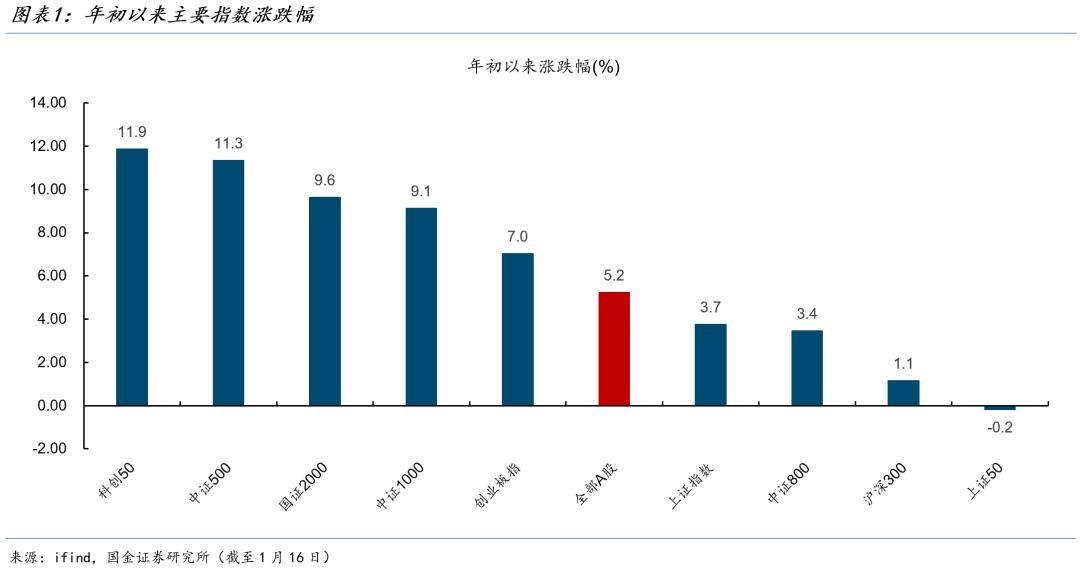
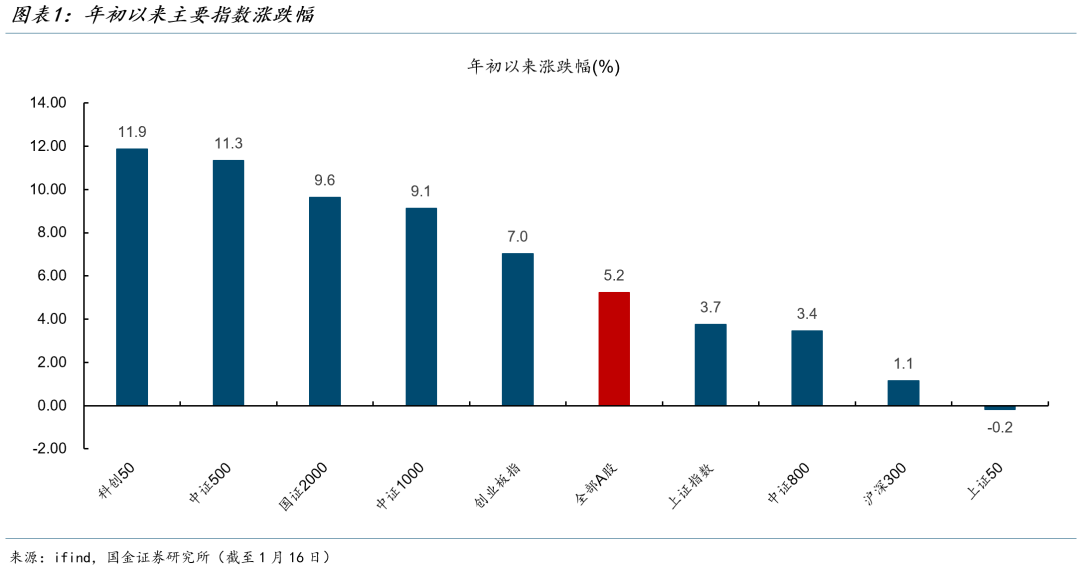
Group 1 - The core theme for A-share pricing in 2026 revolves around AI and geopolitical factors, reflecting the U.S. focus on technology for growth and geopolitical strategies for elections, while another underpriced theme is "anti-involution," corresponding to China's push for reform-driven momentum [1][8] - Since the beginning of 2026, the A-share market has shown a "good start" with a cumulative increase of 5.2% in the Wind All A index and an average daily trading volume exceeding 3 trillion yuan, with the Sci-Tech 50, CSI 500, and National 2000 indices leading the gains at 11.9%, 11.3%, and 9.6% respectively [2] - The leading sectors include media, computer, non-ferrous metals, and military industries, with year-to-date increases of 16.0%, 14.0%, 14.0%, and 9.0%, indicating that the current market focus is on "AI and geopolitical" themes [2] Group 2 - The impact of AI is evident not only in the A-share market but also in marginal changes in the macro economy, with the PPI in December 2025 rising by 0.2% month-on-month, marking the highest increase since 2024, driven in part by AI's contribution to price improvements in non-ferrous and technology sectors [5][8] - In December 2025, prices in the non-ferrous metal mining and smelting industries rose by 3.7% and 2.8% respectively, with AI-driven electricity demand significantly boosting prices for metals like copper, silver, lithium, and cobalt [5] - The prices of external storage devices and integrated circuits increased by 15.3% and 2.4% respectively in December 2025, with high-end AI chips occupying advanced process resources, leading to structural tensions in chip availability [7] Group 3 - The improvement in PPI reflects strategic choices made by China and the U.S. in the current global macro context, which are expected to become two main pricing themes for A-shares in 2026: "AI and geopolitics" and "anti-involution" [8] - The "anti-involution" theme is entering a new phase in 2026, with recent discussions emphasizing the need to address malicious low-price dumping and promote healthy competition [9] - Recent policy changes indicate a clearer execution strategy for "anti-involution," focusing on "quality over price" in industries like photovoltaics and energy storage, with regulatory bodies emphasizing quality standards and price monitoring [10][12] Group 4 - The cancellation of export tax rebates for photovoltaic products and the reduction of tax rates for battery products reflect the national-level implementation of "anti-involution," aimed at allowing competitive companies to raise prices and retain funds for domestic investment [11] - Local governments are shifting their competitive advantages from unsustainable policy incentives to sustainable business environments and professional service capabilities, indicating a broader commitment to "anti-involution" practices [12] - Strengthened regulatory enforcement against monopolistic and unfair competition behaviors signals an acceleration of "anti-involution," aiming to enhance market order and promote a virtuous cycle of quality and pricing in the industry [12]

宋雪涛:今年市场的两条主线
智通财经网· 2026-01-17 01:46
Market Performance - The A-share market has shown a "good start" in 2026, with the total return of the Wind All A index reaching 5.2% and the average daily trading volume exceeding 30 trillion yuan [1] - The leading sectors include technology and small-cap stocks, with the Sci-Tech 50, CSI 500, and National Index 2000 showing cumulative gains of 11.9%, 11.3%, and 9.6% respectively [1] Sector Analysis - The media, computer, non-ferrous metals, and military industries have led the market, with year-to-date gains of 16.0%, 14.0%, 14.0%, and 9.0% respectively, indicating a market focus on "AI and geopolitics" [1] - The AI-driven market trend is extending from upstream computing infrastructure to downstream AI applications, with geopolitical conflicts in regions like Venezuela and Iran catalyzing the non-ferrous and military sectors [1] Economic Indicators - The Producer Price Index (PPI) in China rose by 0.2% month-on-month in December 2025, marking the highest monthly increase since 2024, with AI contributing to this improvement, particularly in non-ferrous and technology prices [3] - Prices in the non-ferrous metal mining and smelting industries increased by 3.7% and 2.8% respectively, driven by rising electricity demand due to AI [3] - In the technology sector, prices for external storage devices and integrated circuits rose by 15.3% and 2.4%, respectively, with high-end AI chips impacting the availability of other chips [3] Policy and Structural Changes - The "anti-involution" policy is gaining traction, contributing to the PPI recovery, with lithium-ion battery manufacturing prices increasing by 1.0% and new energy vehicle manufacturing prices turning from a decline of 0.2% to an increase of 0.1% [4] - The strategic choices made by China and the U.S. in the current global macro context are expected to shape A-share pricing in 2026, focusing on "AI and geopolitics" and "anti-involution" [6] - The "anti-involution" initiative is transitioning from capacity governance to operational entity management, emphasizing quality competition and regulatory compliance [7][8] Government Initiatives - Local governments are shifting their focus from unsustainable policy incentives to sustainable business environments and professional service capabilities in attracting investments [10] - Recent central government actions have intensified the regulation of anti-monopoly and unfair competition, signaling a stronger push for "anti-involution" [10] - The cancellation of export tax rebates for photovoltaic products reflects the national level's commitment to "anti-involution," aiming to enhance the competitiveness of leading enterprises [8]
宋雪涛:今年市场的两条主线
雪涛宏观笔记· 2026-01-17 01:22
Core Viewpoint - The main pricing themes for A-shares in 2026 are centered around AI and geopolitical factors, reflecting the U.S. focus on technology for growth and geopolitical selection, while another theme that has not been fully priced in is "anti-involution," corresponding to China's pursuit of reform for momentum [2][9]. Market Performance - Since the beginning of 2026, the A-share market has shown a "good start" with a cumulative increase of 5.2% in the Wind All A index and an average daily trading volume exceeding 3 trillion yuan. The Sci-Tech 50, CSI 500, and National 2000 indices have led the gains with increases of 11.9%, 11.3%, and 9.6% respectively, indicating that technology and small-cap stocks are outperforming large-cap stocks [4]. - The leading sectors include media, computer, non-ferrous metals, and military industries, with year-to-date increases of 16.0%, 14.0%, 14.0%, and 9.0% respectively, reflecting the current market's focus on "AI and geopolitics" [4]. AI Impact on Economy - AI's influence is evident in both the A-share market trends and marginal changes in the macro economy. In December 2025, China's PPI rose by 0.2% month-on-month, marking the highest monthly increase since 2024, with AI contributing to improvements in PPI, particularly in non-ferrous and technology sectors [6][9]. - In December 2025, prices in the non-ferrous metal mining and smelting industries increased by 3.7% and 2.8% respectively, driven by AI-related electricity demand, which significantly boosted prices of metals like copper, silver, tungsten, tantalum, aluminum, lithium, cobalt, and nickel [6]. Pricing Dynamics - In December 2025, prices for external storage devices and integrated circuits rose by 15.3% and 2.4% respectively, with AI-related high-end chips occupying advanced process resources, leading to structural tensions in chip availability. Samsung and SK Hynix plan to raise server DRAM prices by 60%-70% in Q1 2026, significantly higher than previous cycles [8]. - The implementation of "anti-involution" has also contributed to the month-on-month recovery of PPI, with lithium-ion battery manufacturing prices increasing by 1.0% and the price of complete new energy vehicles turning from a decline of 0.2% to an increase of 0.1% [8]. Strategic Choices - The improvement in PPI reflects strategic choices made by China and the U.S. in the current global macro context, which are expected to become the two main pricing themes for A-shares in 2026. The "AI and geopolitics" theme corresponds to the U.S. seeking new productive forces in a stagflation environment, while the "anti-involution" theme aligns with China's push for reform to drive momentum through fiscal and income distribution reforms [9]. Anti-Involution Developments - The "anti-involution" theme is entering a new phase in 2026, as highlighted by recent policy discussions emphasizing the need to address malicious low-price dumping and promote healthy competition [10]. - The core of "anti-involution" in the industry is "quality over price," with regulatory bodies emphasizing compliance in price competition within the photovoltaic industry and addressing irrational competition behaviors [11]. - Recent policy changes, such as the cancellation of export tax rebates for photovoltaic products, reflect the national-level commitment to "anti-involution," allowing leading companies to raise prices to absorb costs and redirect funds to domestic consumption [12][13]. Regulatory Environment - Strengthened anti-monopoly and anti-unfair competition regulations signal an acceleration of "anti-involution," with the market regulator engaging with leading companies in the silicon material and photovoltaic sectors to prevent collusion and ensure fair competition [14].
广西华锡有色金属股份有限公司2026年第一次临时股东会决议公告
Shang Hai Zheng Quan Bao· 2026-01-16 19:43
Group 1 - The company held its first extraordinary shareholders' meeting on January 16, 2026, with no resolutions being rejected [2] - The meeting was conducted in compliance with the Company Law and the company's articles of association, using a combination of on-site and online voting [2][3] - Three proposals were approved during the meeting, including the expected daily related transactions for 2026, the application for comprehensive credit limits from banks, and the postponement of commitments to avoid competition by controlling shareholders [4][5] Group 2 - The company adjusted its futures hedging plan for 2026, increasing the maximum margin amount from RMB 15,504 million to RMB 32,000 million and the maximum contract value from RMB 64,600 million to RMB 90,000 million [22] - The adjustment aims to mitigate risks associated with price fluctuations of raw materials and products, particularly tin, and is expected to enhance the company's overall risk resistance capabilities [10][22] - The funding for the futures hedging business will come from the company's own funds, ensuring that it does not affect normal business operations [12][22] Group 3 - The company announced a change in its indirect controlling shareholder, with Guangxi Beibu Gulf International Port Group transferring its shares in Guangxi Huaxi Group to establish Guangxi Key Metal Industry Development Group [34] - This transfer does not alter the actual controller of the company, which remains the State-owned Assets Supervision and Administration Commission of the Guangxi Zhuang Autonomous Region [34][37] - The transaction is in line with national strategies to concentrate state capital in key industries and is not expected to adversely affect the company's operations or the interests of minority shareholders [35][37]
逾300家A股公司发布2025年业绩预告
Zheng Quan Ri Bao· 2026-01-16 16:36
Group 1: Core Insights - Over 300 A-share companies have released performance forecasts for 2025, with 6 companies expecting net profits exceeding 10 billion yuan [1] - Zijin Mining Group is projected to achieve a net profit of approximately 51 to 52 billion yuan for 2025, representing a year-on-year increase of about 59% to 62% [1] - The increase in Zijin Mining's profits is attributed to a rise in the production of key mineral products, including gold, copper, silver, and lithium carbonate [1] Group 2: Industry Trends - Other companies in the non-ferrous metals sector, such as Luoyang Luanchuan Molybdenum and Zhejiang Huayou Cobalt, are also expected to see significant year-on-year profit growth due to rising product prices and operational efficiencies [2] - The recovery of the domestic economy, infrastructure development, and the growth of the new energy vehicle industry are driving demand for non-ferrous metals [2] - Despite challenges in the photovoltaic industry, such as rising costs and increased competition, long-term profitability is expected to improve with technological advancements and market expansion [2]
绿科科技国际:尾矿选矿厂FEED包授予GR Engineering Services Limited
Zhi Tong Cai Jing· 2026-01-16 15:07
Group 1 - The company, Green Tech International (00195), announced the latest information regarding the Renison Tin Mine's tailings reprocessing project, in which it holds a 50% interest through its indirect non-wholly owned subsidiary, YT Parksong Australia Holding Pty Limited [1] - The Renison project is managed by Bluestone Mines Tasmania Joint Venture Pty Ltd (BMTJV), which is co-owned by Metals X Limited, holding the other 50% stake [1] - The latest information is based on data provided by Metals X [1] Group 2 - BMTJV is currently reviewing and updating its previous feasibility study and advancing environmental permits to facilitate investment decisions regarding the tailings [2] - BMTJV has awarded the front-end engineering and design (FEED) package for the tailings processing plant to GR Engineering Services Limited, which includes the construction of a new tailings reprocessing facility with an annual processing capacity of 2.4 million tons [2] - The FEED package is expected to be completed by the third quarter of 2026, with a final investment decision anticipated by the end of 2026 [2]
绿科科技国际(00195.HK):BMTJV已将尾矿选矿厂前端工程与设计包授予GR Engineering Services
Ge Long Hui· 2026-01-16 15:05
Group 1 - The company, Green Technology International (00195.HK), announced updates regarding the Renison tin mine project, in which it holds a 50% interest through its indirect subsidiary YT Parksong Australia Holding Pty Limited [1] - The Renison project is managed by Bluestone Mines Tasmania Joint Venture Pty Ltd (BMTJV), which is co-owned by Metals X Limited, holding the other 50% [1] - The latest information is based on data provided by Metals X [1] Group 2 - BMTJV is currently reviewing and updating the pre-feasibility study and advancing environmental permits to facilitate investment decisions regarding the tailings [2] - BMTJV has awarded the front-end engineering and design (FEED) package for the tailings processing plant to GR Engineering Services Limited, which includes the construction of a new facility with an annual processing capacity of 2.4 million tons [2] - The FEED package is expected to be completed by the third quarter of 2026, with a final investment decision anticipated by the end of 2026 [2]
绿科科技国际(00195):尾矿选矿厂FEED包授予GR Engineering Services Limited
智通财经网· 2026-01-16 15:05
Group 1 - The core point of the article is that GreenTech International (00195) has provided an update on the Renison tailings reprocessing project, in which it holds a 50% interest through its indirect subsidiary YT Parksong Australia Holding Pty Limited [1] - The Renison project is managed by Bluestone Mines Tasmania Joint Venture Pty Ltd (BMTJV), which is co-owned by Metals X Limited, holding the other 50% stake [1] - The latest information is based on data provided by Metals X [1] Group 2 - BMTJV is currently reviewing and updating its previous feasibility study and advancing environmental permits to facilitate investment decisions regarding the tailings [2] - BMTJV has awarded the front-end engineering and design (FEED) package for the tailings processing plant to GR Engineering Services Limited, which includes the construction of a new facility with an annual processing capacity of 2.4 million tons [2] - The FEED package is expected to be completed by the third quarter of 2026, with a final investment decision anticipated by the end of 2026 [2]