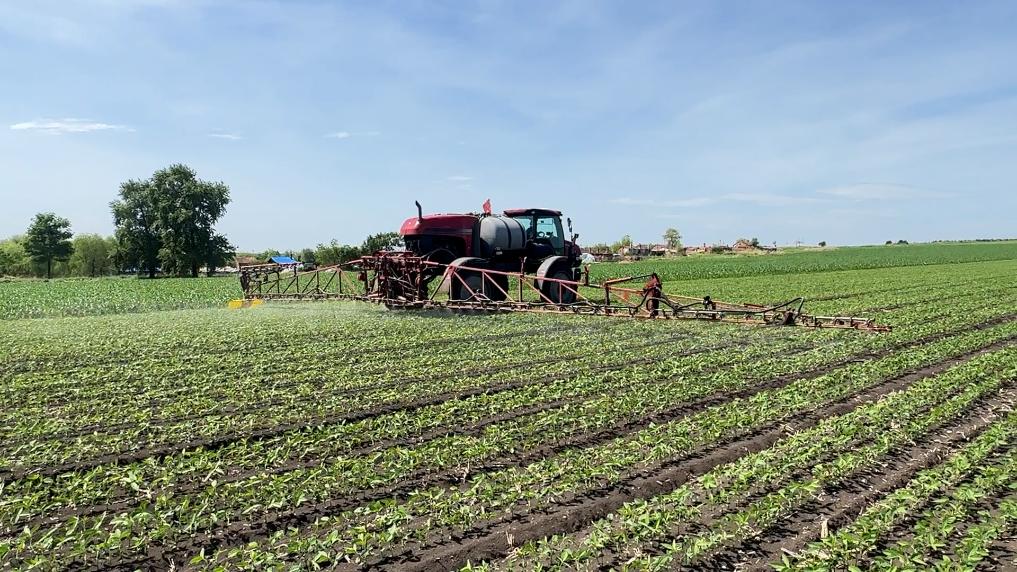
种植业

Search documents
(乡村行·看振兴)荸荠变身“金疙瘩” 江西万年特色产业铺就振兴致富路
Zhong Guo Xin Wen Wang· 2026-01-08 08:32
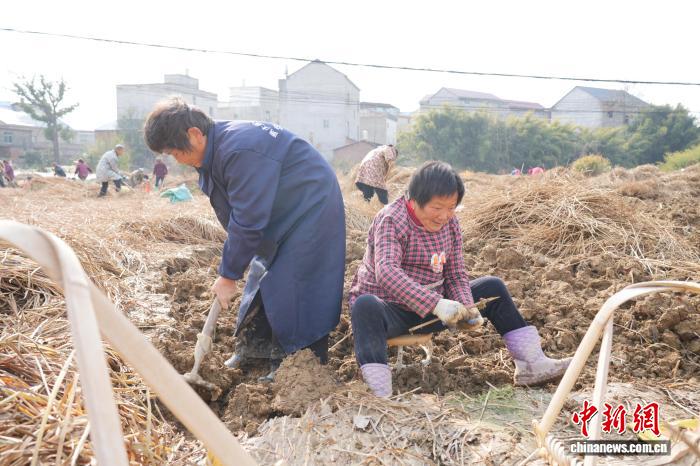
Core Viewpoint - The development of the water chestnut industry in Jiangxi's Wanian County is significantly contributing to local economic revitalization and providing employment opportunities for residents [1][3]. Group 1: Industry Development - The village of Shewan is leveraging its favorable water resources and ecological environment to expand water chestnut cultivation, resulting in high demand for the product during the winter and spring harvest seasons [1][2]. - Water chestnuts, known for their crisp texture and nutritional value, are being marketed successfully, with local farmers reporting high yields and prices compared to traditional rice cultivation [2][3]. Group 2: Economic Impact - Farmers in Shewan are achieving yields of up to 4,000 pounds per acre, with total production reaching 40 tons, translating to an annual income exceeding 300,000 yuan (approximately 30 million) [2]. - The water chestnut industry has created job opportunities for over 220 local residents, allowing them to earn substantial daily wages without leaving their homes [3]. Group 3: Sales and Marketing Strategies - The village is adopting a dual sales strategy that includes both offline purchases from local buyers and online sales through e-commerce platforms, enhancing market reach [2]. - The local party secretary is actively involved in training villagers on e-commerce operations and marketing strategies, contributing to the establishment of a new sales model for water chestnuts [2][3].

盐碱地:未来粮仓?
Xin Lang Cai Jing· 2026-01-08 07:39
Core Viewpoint - Saline-alkaline land can be revitalized through the cultivation of halophytes, which can ensure food supply and restore ecological balance, provided they align with local cultural and economic needs, supported by policies and market promotion [1]. Group 1: Agricultural Innovations - Farmers like Huubrecht Janse in the Netherlands are exploring the cultivation of halophytes such as Salicornia to combat soil salinization caused by rising salinity levels in nearby water bodies [2][3]. - Over 7,000 edible halophyte species exist globally, with historical evidence of their use for food, medicine, and fuel dating back thousands of years [3]. - Halophytes are being integrated into food products, such as low-sodium salt sources for condiments and innovative food items like green pasta and gin [4]. Group 2: Environmental Challenges - Climate change is accelerating soil salinization, with rising sea levels and prolonged droughts exacerbating the issue, affecting approximately 20% of global arable land [5]. - Agricultural irrigation practices contribute to soil salinization, with about 1.5 million hectares of farmland lost annually due to salinity [5]. - Halophytes can serve as a viable alternative for agriculture in saline and arid regions, providing significant environmental benefits, including storm surge buffering and carbon storage [6]. Group 3: Ecological Restoration - Companies like NARA are utilizing halophytes for ecological restoration projects, demonstrating rapid recovery of degraded saline wetlands [7][8]. - In Ghana, local initiatives are transforming halophytes into fish feed, addressing both ecological restoration and community livelihood challenges [9][10]. Group 4: Market Potential and Challenges - Despite the potential of halophytes, consumer awareness and demand remain low, with many people unfamiliar with these crops [12][13]. - Agricultural policies often favor traditional crops, creating barriers for halophyte cultivation, which requires alignment with local economic and cultural contexts to succeed [14][15]. - Research is ongoing to develop halophytes that can thrive in saline conditions, with some studies focusing on genetic improvements to enhance their agricultural viability [12].
居民“菜篮子”持续上新供应足 新年消费市场红红火火“热气腾腾”
Yang Shi Wang· 2026-01-08 06:59
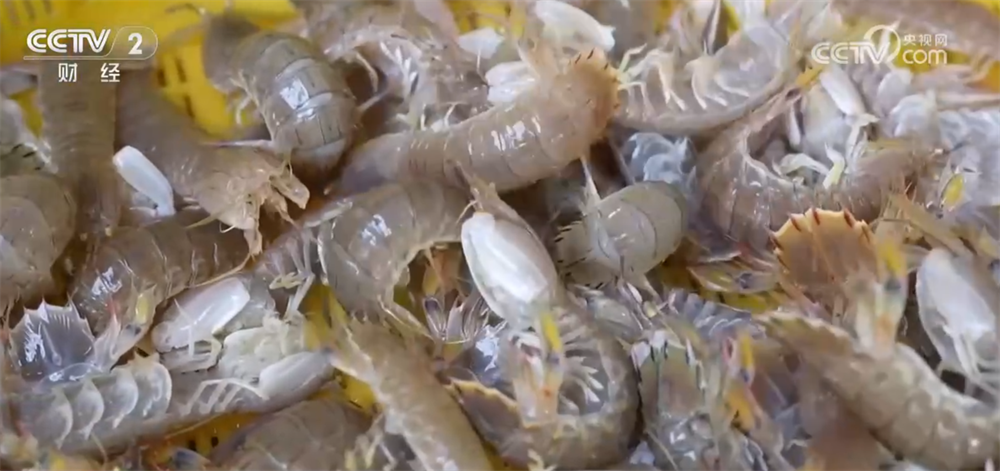
Group 1: Seafood Industry - The peak season for catching mantis shrimp (also known as "pi pi xia") is currently underway in Fuding City, Fujian Province, with local fishermen actively engaged in catching and processing these seafood products [1] - The annual catch of mantis shrimp from Yushan Island is approximately 1,000 tons, generating a market value of around 60 million yuan, while the production of dried mantis shrimp is about 20 tons, valued at approximately 4 million yuan [5] Group 2: Agricultural Products - In Chengwu County, Shandong, the sales of dried chili pepper strings are on the rise, serving both decorative and culinary purposes, which has positively impacted local farmers' income [4][7] - The simple weaving process of chili pepper strings provides flexible job opportunities for nearby villagers [7] Group 3: Seasonal Products - In Zhejiang, the market for New Year flowers has started to heat up ahead of the Spring Festival, with various festive decorations also being showcased [8] - Specialty New Year flowers, such as butterfly peonies and water-cultivated tulips, are gaining popularity, with sales figures indicating that thousands of pots have already been sold [10] Group 4: Food Industry - In Nanning, Guangxi, the cold weather has boosted the demand for hot pot ingredients, with supermarkets and fresh markets seeing a surge in sales of items like beef balls and lamb rolls [11][14]
(乡村行·看振兴)中央资金精准“滴灌” 根植内蒙古沙地的“乌兰”托起振兴路
Zhong Guo Xin Wen Wang· 2026-01-08 05:39
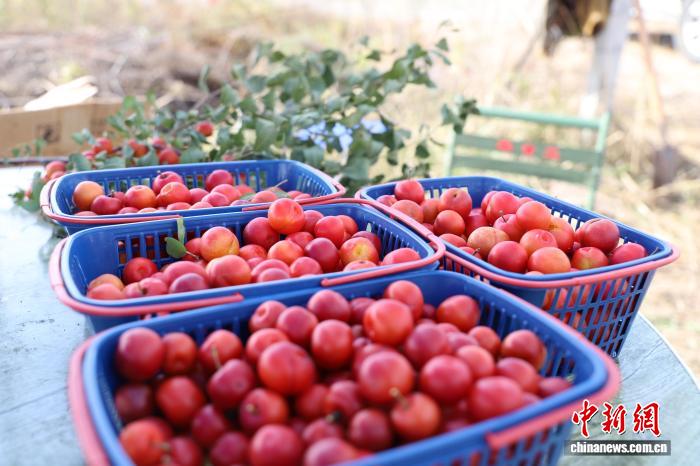
中新网兴安盟1月8日电 题:中央资金精准"滴灌" 根植内蒙古沙地的"乌兰"托起振兴路 作者 张玮 王文亮 寒冬时节,走进内蒙古兴安盟扎赉特旗巴彦乌兰苏木农业园区的深加工车间,一股清甜的果香扑面而 来。流水线上,一颗颗红艳艳的欧李经过分拣、熬煮、封装,变身为罐头、果酱等产品,被工人们打包 装箱搬上物流车。 巴彦乌兰,蒙古语,意为盛产欧李的美丽富饶之地。传说,过去这里漫山遍野生长着欧李,每当果实成 熟,勒勒车经过,车轮都会被染成红色,"巴彦乌兰山"由此得名。 巴彦乌兰苏木党委书记傲日格乐介绍,这种学名欧李、俗称钙果的小灌木,不仅果实含钙量高,更有着 顽强的生命力——根植沙地,越是恶劣气候扎根越深,春季栽植后无需特殊防护便能安全越冬。它既能 防风固沙、改良土壤,又能加工成干果、饮料、果酒等高附加值产品,生态与经济价值兼具。 近年来,巴彦乌兰苏木立足资源禀赋,将欧李种植作为乡村振兴的特色产业重点培育。2024年,巴彦塔 拉嘎查示范种植的500亩欧李迎来盛产期,采摘量近125万公斤。 "春天栽树、夏天除草、秋天摘果,一天能挣300元。"该嘎查村民李海明脸上洋溢着丰收的喜悦,"去年 还在盼挂果,今年就能丰收,这欧李真是' ...
宁德:走好特色路,建设样板区
Xin Lang Cai Jing· 2026-01-08 04:34
Group 1 - The core idea of the articles revolves around the innovative practices in rural revitalization in Ningde City, particularly in the Jiudu Town area, which integrates agriculture and tourism to stimulate economic growth [1][2] - The establishment of a party-building collaborative model in the Houtong Creek Jiudu area aims to break down administrative barriers and promote the development of both agricultural and tourism industries, specifically focusing on the "Chinese yam + cultural tourism" dual-drive model [1] - The success of the peach industry in Baishiban Village, which transitioned from low yield to high profitability through the introduction of new peach varieties, exemplifies the potential for agricultural transformation in rural areas [2][3] Group 2 - The introduction of ten new peach tree varieties led to a significant increase in revenue, with the village generating over 500,000 yuan last year and expectations to exceed 1 million yuan this year [2][3] - The development of rural tourism, including the establishment of a farmhouse restaurant and a coffee shop, has created new business opportunities and enhanced local economic activity [3][4] - The Half Ridge Village has implemented a "forest health" model, integrating medicinal herbs and sustainable practices, which has attracted over 36,000 visitors last year, showcasing the potential of eco-tourism [5]
机构:在B50生物柴油实施之际 马来西亚种植板块前景或将保持光明
Sou Hu Cai Jing· 2026-01-08 04:05
Core Viewpoint - The outlook for Malaysia's plantation sector remains optimistic, providing a defensive buffer against market uncertainties due to the anticipated increase in palm oil demand from Indonesia's B50 biodiesel policy set to launch in the second half of the year [1] Summary by Category Market Outlook - The average crude palm oil price is expected to rise from 4,332 Malaysian Ringgit per ton last year to 4,400 Malaysian Ringgit per ton by 2026, supported by the B50 biodiesel policy [1] Policy Impact - Although the significant impact of the B50 policy is expected to be more pronounced from 2027, the news surrounding its implementation is likely to support prices in the interim [1] Company Preferences - Given the weak outlook for refining and oleochemical products, the company favors upstream businesses with larger exposure [1] - Malaysia Investment Bank maintains an "overweight" rating on the plantation sector, identifying SD Guthrie and Johor Plantations as preferred stocks [1]
新疆伊犁州 建成全国首个200万亩玉米“吨粮田”
Xin Lang Cai Jing· 2026-01-07 15:07
Core Insights - The total grain production in Ili Kazakh Autonomous Prefecture, Xinjiang, exceeded 8.22 billion pounds in 2025, marking the ninth consecutive year of leading grain production in the region, contributing 22.9% to the total grain production growth in Xinjiang [1][2] - The region set 17 national high-yield records and 3 regional high-yield records for spring wheat and corn, establishing the first 2 million mu (approximately 133,333 hectares) corn "ton grain field" in the country, achieving a significant yield breakthrough of over 2,400 pounds per mu [1] Agricultural Development - A total of 6.48 million mu (approximately 432,000 hectares) of high-standard farmland focused on efficient water conservation has been established, accounting for 70.6% of the cultivated area, with a stable seed variety coverage rate of over 98% [2] - The area for seed corn production occupies 64% of the total in Xinjiang, maintaining its position as the second-largest seed corn production base in the country [2] - The comprehensive mechanization rate for major crops in the region exceeds 99%, with smart agricultural technologies such as Beidou navigation, drones for pest control, and integrated water and fertilizer systems covering over 80% of the agricultural practices [2] Future Goals - Ili Prefecture aims to strengthen its agricultural capabilities by focusing on stabilizing production capacity, optimizing structure, increasing single yield, enhancing processing, and improving efficiency to contribute further to national food security [2]
刘国中在河南调研时强调:着力抓好小麦田管促苗情转化升级 扎实做好“菜篮子”产品稳产保供
Xin Hua She· 2026-01-07 12:17
Group 1 - The core message emphasizes the importance of ensuring food security and stable supply of agricultural products, particularly focusing on wheat management and "vegetable basket" products [2][3] - The government aims to implement measures for effective monitoring and management of winter wheat conditions, ensuring a strong foundation for summer grain production [3] - There is a focus on the timely provision of agricultural inputs such as fertilizers, pesticides, and seeds to support spring farming needs [3] Group 2 - The report highlights the need for monitoring prices and supply of "vegetable basket" products, especially during the peak consumption season around the Spring Festival [4] - It stresses the importance of enhancing the production capacity of livestock and dairy industries while addressing challenges faced by these sectors [4] - The development of facility agriculture is encouraged to diversify food supply and improve farmers' income [4]
刘国中在河南调研时强调 着力抓好小麦田管促苗情转化升级 扎实做好“菜篮子”产品稳产保供
Xin Hua She· 2026-01-07 12:14
Group 1 - The core message emphasizes the importance of ensuring food security and stable supply of essential agricultural products, particularly in the context of the upcoming "15th Five-Year Plan" [1] - The government is focusing on the management of winter wheat, with a stable national sowing area but some regions experiencing weak seedling conditions, necessitating proactive measures for disaster prevention and yield enhancement [2] - There is a commitment to monitoring seedling and soil moisture conditions closely to mitigate risks from adverse weather, ensuring the safe overwintering of winter wheat [2] Group 2 - The government is prioritizing the supply and price stability of "vegetable basket" products, especially during the peak consumption season around the Spring Festival, with a focus on monitoring prices and ensuring quality [3] - Measures will be taken to enhance the production capacity of livestock, particularly in the pork and dairy sectors, while also addressing animal disease prevention to improve industry quality and efficiency [3] - The development of facility agriculture is encouraged to diversify food supply capabilities and better support farmers' income growth [3]
农业农村部:2025年我国三大粮食作物化肥利用率达43.3%
Xin Hua She· 2026-01-07 09:38
Core Insights - The core viewpoint of the article is that by 2025, the fertilizer utilization rate for major grain crops in China, including wheat, corn, and rice, is projected to reach 43.3%, an increase of 3.1 percentage points compared to 2020 [1]. Group 1: Fertilizer Utilization Rate - The fertilizer utilization rate for wheat, corn, and rice is expected to improve to 43.3% by 2025 [1]. - This represents a 3.1 percentage point increase from the 2020 level [1]. Group 2: Contributing Factors - The continuous improvement in fertilizer utilization is attributed to systematic policy guidance, technological innovation, and optimized promotion services [1]. - Since the start of the "14th Five-Year Plan," the Ministry of Agriculture and Rural Affairs has been actively promoting actions to reduce fertilizer use while increasing efficiency [1]. - Initiatives include the implementation of green planting and breeding cycles, deepening soil testing and formula fertilization, and fostering specialized scientific fertilization service organizations [1].