造船业

Search documents
22艘订单全给一家船厂!希腊船王持续订造集装箱船
Sou Hu Cai Jing· 2025-07-26 11:31
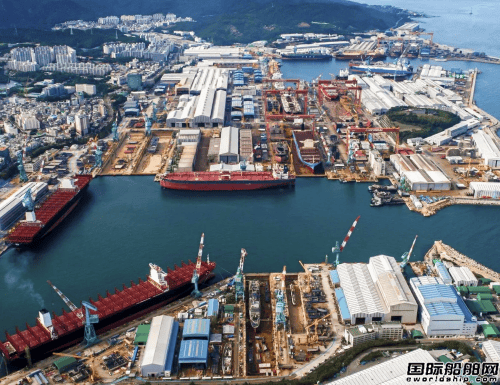
Group 1 - HD Hyundai Heavy Industries announced a contract for the construction of two 2800TEU container ships with a total value of 156.4 billion KRW (approximately 114 million USD) [2] - The new ships will be built at HD Hyundai's Ulsan facility and are scheduled for delivery by the end of 2027 [2] - The contract includes features such as a desulfurization device and a design for future installation of onboard CO2 capture technology [2] Group 2 - Capital Maritime & Trading, owned by Greek shipping magnate Evangelos Marinakis, has ordered a total of 10 ships from HD Hyundai this year, including the latest two [2][3] - HD Hyundai Heavy Industries has secured 82 new ship orders worth 11.22 billion USD (approximately 803 billion RMB) in 2023, achieving 62.2% of its annual order target of 18.05 billion USD (approximately 1300 billion RMB) [3] - The orders include various types of vessels, such as LNG carriers, container ships, and LPG/Ammonia carriers [3] Group 3 - HD Hyundai's Ulsan facility specializes in medium-sized vessels and has a strong position in the global medium-sized container ship market [3] - The company has made significant advancements in eco-friendly ship development, including the delivery of the world's first methanol-powered container ship in 2023 [3] Group 4 - Despite the strong order book, HD Hyundai's Ulsan facility reported an operating loss of 166.2 billion KRW (approximately 125 million USD) in 2023, making it the only subsidiary of HD Hyundai Heavy Industries to incur a loss that year [4] - In 2024, the facility managed to achieve an operating profit of 88.5 billion KRW (approximately 65.2 million USD), but this was significantly lower compared to other subsidiaries [5] - In Q1 2023, the Ulsan facility reported an operating profit of 68.5 billion KRW (approximately 34.8 million RMB), still trailing behind other subsidiaries' profits [5]

韩国总统办公室:韩国将制定一项包括造船合作在内的、双方都同意的计划。
news flash· 2025-07-26 08:37
韩国总统办公室:韩国将制定一项包括造船合作在内的、双方都同意的计划。 ...
韩国总统办公室:在美国商务部长与韩国产业部长最近一次会晤中,美国表示对造船业感兴趣。
news flash· 2025-07-26 08:33
韩国总统办公室:在美国商务部长与韩国产业部长最近一次会晤中,美国表示对造船业感兴趣。 ...
从5.7%看江苏经济“稳”与“进”
Xin Hua Ri Bao· 2025-07-23 23:27
Group 1: Economic Performance - Jiangsu's GDP grew by 5.7% year-on-year in the first half of the year, outperforming the national average by 0.4 percentage points, indicating a trend of stable and high-quality development [1] - Infrastructure investment in Jiangsu increased by 6.9% year-on-year, contributing 1.0 percentage points to overall investment growth, which supports economic stability and enhances public welfare [3] - The industrial added value of large-scale industries in Jiangsu rose by 7.4% year-on-year, reflecting strong internal momentum for economic growth [4] Group 2: Fiscal Stability and Social Investment - Jiangsu's general public budget revenue grew by 1.1% in the first half of the year, with tax revenue increasing by 2.7%, while public budget expenditure rose by 2.3% [2] - Significant investments in education, health, and social security were noted, with expenditures in these areas growing by 6%, 13.3%, and 4.3% respectively, indicating a focus on improving public welfare [2] Group 3: Industrial Development and Innovation - The high-tech manufacturing sector in Jiangsu saw an increase in added value of 11.8% year-on-year, contributing 36.3% to the growth of large-scale industries [5] - The shipbuilding industry in Jiangsu is experiencing a high boom cycle, with a 41.9% year-on-year increase in deadweight tonnage of orders, indicating strong demand and growth potential [5][6] Group 4: Income Growth and Urban-Rural Balance - Per capita disposable income in Jiangsu increased by 5.2% year-on-year, with rural residents' income growth of 5.8% outpacing urban residents' growth of 4.8%, narrowing the income gap [7][8] - The development of strong village companies in rural areas is expected to provide local employment opportunities and share economic benefits with residents [7]
证监会同意!千亿级央企合并获批复
Jin Rong Shi Bao· 2025-07-22 09:35
Core Viewpoint - The merger between China Shipbuilding (600150) and China Shipbuilding Industry Corporation (601989) has received approval from the China Securities Regulatory Commission, marking a significant step in the consolidation of state-owned enterprises in the shipbuilding industry [1][2]. Group 1: Merger Details - The merger will result in China Shipbuilding absorbing all assets, liabilities, and operations of China Shipbuilding Industry, leading to the latter's delisting and cancellation of its legal entity status [1]. - Post-merger, China Shipbuilding's total assets will exceed 400 billion yuan, positioning it as the largest publicly listed shipbuilding company globally [1][2]. - The exchange ratio for the merger is set at 1:0.1335, with China Shipbuilding's share price at 37.84 yuan and China Shipbuilding Industry's average trading price at 5.05 yuan [2]. Group 2: Industry Context - The merger reflects a broader trend of consolidation among state-owned enterprises, driven by national policies and market mechanisms, with 18 major asset restructurings reported in the A-share market over the past year [1][2]. - Analysts indicate that the integration of China Shipbuilding and China Shipbuilding Industry will enhance the core competitiveness of the surviving entity, allowing for better capital operations and increased investment value [3]. - The transaction is noted as the largest absorption merger in A-share history, with high efficiency in its execution supported by favorable policies [2][3]. Group 3: Future Prospects - Following the merger, the new China Shipbuilding is expected to lead globally in asset scale, revenue, and order backlog, establishing itself as a world-class flagship in the shipbuilding industry [3]. - The merger aims to eliminate internal competition and leverage synergies between the two companies, focusing on value creation and improving operational efficiency [3].


朝鲜将再建造一艘5000吨级驱逐舰
news flash· 2025-07-22 01:51
Core Viewpoint - North Korea plans to construct a new 5,000-ton destroyer by October 10, 2026, ahead of the anniversary of the founding of the Workers' Party of Korea [1] Group 1: Company Developments - The South Pyongyang Shipyard is set to build the third "Choi Hyun" class destroyer, with a mobilization meeting held on July 21 to rally workers for the project [1]
扩建上海港!中国挑战美国造船业封锁
Jin Tou Wang· 2025-07-21 06:32
Group 1 - Shanghai is focusing on developing a world-class shipbuilding center, particularly for high-value vessels such as LNG carriers and container ships [1] - The Longxing Island shipyard will be expanded to handle large ship trials, with high-tech vessels expected to account for 80% of the output from this industrial base [1] - The industry cluster is projected to reach over 120 billion RMB (approximately 16.71 billion USD) in scale within three years [2] Group 2 - Longxing Island is designated as a "global technology breakthrough center," aiming to develop over 10 types of high-tech ships and marine engineering equipment by 2027 [2] - China has maintained a dominant position in the global shipbuilding supply chain, securing 70% of new orders in 2024, with a total order volume of 46.45 million compensated gross tonnage [2] - In the first half of the year, China's share of new orders dropped to 56% from 75% year-on-year, while South Korea's share increased from 14% to 30% [2] Group 3 - Longxing Island's industrial output exceeded 80 billion RMB last year, producing advanced vessels such as the polar research icebreaker "Xuelong 2" and car carriers capable of transporting up to 7,800 vehicles [3] - The expansion of Longxing Island shipyard is expected to enhance China's capabilities in high-tech ship research and development, potentially overcoming U.S. restrictions on China's shipbuilding industry [3]
订单持续下滑!日本造船业市占率跌破10%
Sou Hu Cai Jing· 2025-07-20 12:11
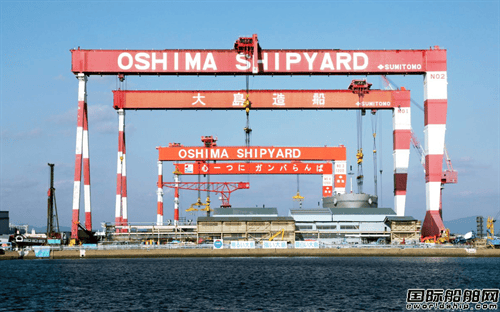
Group 1 - In June 2025, Japanese shipbuilders received a total of 23 orders amounting to 1.355 million GT, a decrease of 36.9% compared to 54 orders totaling 2.148 million GT in June 2024 [2] - From April to June 2025, the total number of orders received by Japanese shipbuilders was 55 vessels totaling 2.867 million GT, reflecting a year-on-year decline of 39.8% [2] - In the first half of 2025, Japanese shipbuilders secured a total of 94 orders amounting to 5.0232 million GT, representing a significant year-on-year decline of 68.1% [2] Group 2 - Despite strong global demand for new shipbuilding, Japanese shipyards are unable to take on more orders due to a lack of available shipbuilding slots [3] - Japanese shipbuilders' market share for new orders in the first half of 2025 was less than 10%, amid strong competition from Chinese and Korean shipbuilders [3] - As of the end of June 2025, Japanese shipbuilders had a backlog of 620 vessels totaling 29.99 million GT, which is sufficient to sustain approximately 3.5 years of production based on 2024 completion rates [3]
2025年上半年全球新船订单:中国份额下滑18.8%,韩国船厂稳居第二
Sou Hu Cai Jing· 2025-07-19 12:05
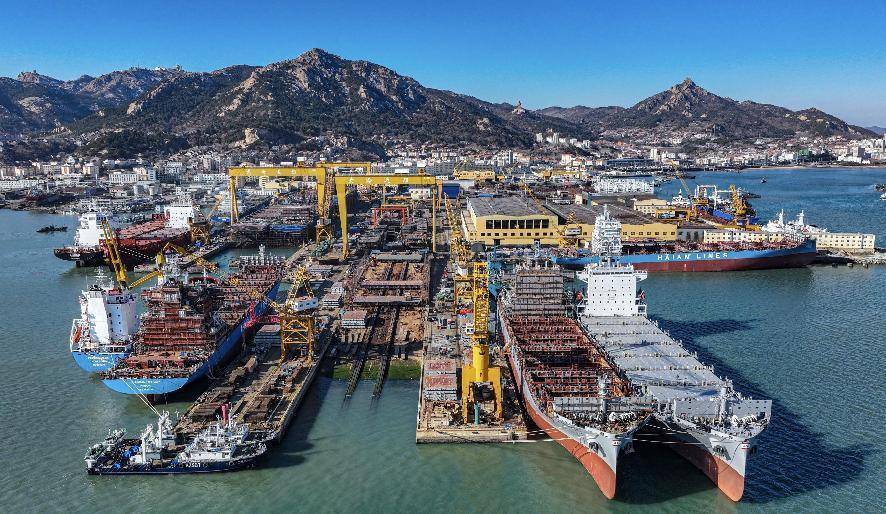
Core Viewpoint - The global shipbuilding industry is experiencing a significant downturn in 2025 due to increased instability and uncertainty, with new ship orders and tonnage declining sharply compared to previous years [1][10]. Ship Orders and Tonnage - In the first half of 2025, a total of 647 new ship orders were placed, amounting to 46.78 million deadweight tons (DWT), representing a year-on-year decline of 57.9%, the lowest level since 2021 [1]. - The total compensated gross tonnage (CGT) for new orders was 19.38 million, down 54.5% year-on-year, with a total order value of $67.54 billion (approximately 485.1 billion RMB), a decrease of 47.6% [1]. Ship Type Analysis - Container ship orders increased, with 201 vessels ordered, totaling 21.74 million DWT, a year-on-year increase of 27.2%, accounting for 46.4% of total orders [3]. - Demand for liquefied natural gas (LNG) carriers was particularly weak, with only 23 vessels ordered, totaling 937,000 DWT, a dramatic year-on-year drop of 86.4% [3]. - Other ship types, including bulk carriers, crude oil tankers, product tankers, and LPG carriers, saw declines exceeding 60% in terms of deadweight tonnage [3]. Regional Performance - Chinese shipyards maintained the top position, securing 370 orders in the first half of the year, totaling 26.30 million DWT, which represented 56.2% of global orders, although this was a decrease from 75% year-on-year [6]. - South Korean shipyards captured a market share of 30.3% with 113 orders totaling 14.15 million DWT, an increase of 16.6 percentage points year-on-year [8]. - Japanese shipyards ranked third, with orders totaling 3.67 million DWT and a market share of 7.9% [9]. Financial Outlook - Chinese shipbuilding companies are expected to report significant profit increases, with China Shipbuilding forecasting a net profit of 2.8 to 3.1 billion RMB, a year-on-year increase of 98.25% to 119.49% [6]. - South Korean shipbuilders are also projected to see substantial profits, with combined operating profits expected to exceed 2.5 trillion KRW (approximately 12.9 billion RMB) in the first half of the year [8]. Market Dynamics - The decline in orders for Chinese shipyards is attributed to U.S. "301 investigations" leading to order shifts, and tight shipyard capacity limiting the willingness to lower prices [10]. - Despite the challenges, Chinese shipyards have strong technical capabilities in emerging sectors like green energy vessels, and the competitive landscape of the global shipbuilding industry is unlikely to undergo a drastic transformation [10].
“两船”合并,获批!
证券时报· 2025-07-18 14:43
Core Viewpoint - The merger of China Shipbuilding Industry Corporation and China Shipbuilding Heavy Industry Corporation marks a significant consolidation in the shipbuilding industry, aiming to enhance operational efficiency and reduce competition between the two entities [1][2]. Group 1: Merger Details - On July 18, the China Securities Regulatory Commission approved the merger of China Shipbuilding Industry Corporation (referred to as "China Shipbuilding") with China Shipbuilding Heavy Industry Corporation (referred to as "China Heavy Industry") through the issuance of 3.053 billion new shares [1]. - Post-merger, China Shipbuilding will inherit all assets, liabilities, businesses, personnel, contracts, and other rights and obligations of China Heavy Industry, resulting in total assets exceeding 400 billion yuan and revenue surpassing 130 billion yuan [1]. - This transaction is noted as the largest absorption merger in A-share history [1]. Group 2: Strategic Implications - The merger is a crucial step in addressing the competition between the two companies in the shipbuilding sector, aligning with national strategic priorities and enhancing the quality of operations [2][5]. - The combined entity will focus on high-quality development in shipbuilding and streamline operations to eliminate overlapping business areas, thereby improving overall operational quality [2][6]. - The merger is expected to consolidate research and production resources, enhance coordination in core business areas, and facilitate better collaboration in both military and civilian shipbuilding sectors [6]. Group 3: Market Position - Following the merger, the new China Shipbuilding will lead globally in asset scale, revenue, and order backlog, positioning itself as the world's premier publicly listed shipbuilding company [1][6].