
央国企整合

Search documents
央国企动态系列报告之53:央国企整合呈现多元模式,契合“十五五”盘活主线
CMS· 2025-12-15 04:34
Group 1: Central State-Owned Enterprises (SOEs) Restructuring - China Metallurgical Group is divesting non-core assets worth approximately RMB 606.76 billion to refocus on its core engineering business[8] - The merger between Haiguang Information and Zhongke Shuguang was terminated due to market volatility, maintaining independent operations[14] - Hubei's state-owned assets have acquired around 15 listed companies, with over 50% of these being newly added through mergers in the past five years[16] Group 2: Asset Activation Strategies - The "14th Five-Year Plan" emphasizes asset activation as part of industrial upgrading strategies across various provinces[22] - Sichuan has introduced a three-year action plan to support enterprises in listing and mergers, focusing on a full lifecycle service[26] - Hubei's mergers are strategically aligned with the "51020" modern industrial cluster, targeting sectors like new energy and high-end equipment manufacturing[18] Group 3: Market Performance of Central SOEs - As of December 12, 2025, the total market capitalization of A-share listed central SOEs is RMB 35.1 trillion, accounting for 30.3% of the A-share market[32] - The National New SOE small-cap index has risen by 2.5% over the past two weeks, outperforming the Shanghai and Shenzhen 300 index by 1.3 percentage points[32] - The average price-to-earnings (P/E) ratio for central SOEs is 45.1 times, which is relatively high compared to the overall A-share market[32]


证监会同意!千亿级央企合并获批复
Jin Rong Shi Bao· 2025-07-22 09:35
Core Viewpoint - The merger between China Shipbuilding (600150) and China Shipbuilding Industry Corporation (601989) has received approval from the China Securities Regulatory Commission, marking a significant step in the consolidation of state-owned enterprises in the shipbuilding industry [1][2]. Group 1: Merger Details - The merger will result in China Shipbuilding absorbing all assets, liabilities, and operations of China Shipbuilding Industry, leading to the latter's delisting and cancellation of its legal entity status [1]. - Post-merger, China Shipbuilding's total assets will exceed 400 billion yuan, positioning it as the largest publicly listed shipbuilding company globally [1][2]. - The exchange ratio for the merger is set at 1:0.1335, with China Shipbuilding's share price at 37.84 yuan and China Shipbuilding Industry's average trading price at 5.05 yuan [2]. Group 2: Industry Context - The merger reflects a broader trend of consolidation among state-owned enterprises, driven by national policies and market mechanisms, with 18 major asset restructurings reported in the A-share market over the past year [1][2]. - Analysts indicate that the integration of China Shipbuilding and China Shipbuilding Industry will enhance the core competitiveness of the surviving entity, allowing for better capital operations and increased investment value [3]. - The transaction is noted as the largest absorption merger in A-share history, with high efficiency in its execution supported by favorable policies [2][3]. Group 3: Future Prospects - Following the merger, the new China Shipbuilding is expected to lead globally in asset scale, revenue, and order backlog, establishing itself as a world-class flagship in the shipbuilding industry [3]. - The merger aims to eliminate internal competition and leverage synergies between the two companies, focusing on value creation and improving operational efficiency [3].


两大巨头合并!中科院实控公司梳理
天天基金网· 2025-05-27 10:58
Group 1 - The core viewpoint of the article highlights the strategic merger between Zhongke Shuguang and Haiguang Information, marking a significant event in the context of recent regulatory changes in China's merger and acquisition policies [1][2]. - The merger is the first absorption merger transaction following the revision of the "Major Asset Restructuring Management Measures for Listed Companies" on May 16, indicating a shift towards encouraging absorption mergers in the current regulatory environment [1][2]. - The article notes that both companies are affiliated with the Chinese Academy of Sciences, with Zhongke Shuguang being a listed company under the Academy's Computing Institute, and Haiguang Information's largest shareholder being Zhongke Shuguang [1]. Group 2 - The report from Kaiyuan Securities indicates that the current wave of mergers and acquisitions is characterized by two main trends: the integration of central state-owned enterprises and mergers in the hard technology sector [2]. - The support for mergers and acquisitions of technology companies is emphasized, with policies aimed at fostering key core technology advancements and strengthening leading technology enterprises [2].


金额同比增超10倍,证监会新规有望将并购重组推向新高潮
Xuan Gu Bao· 2025-05-18 23:40
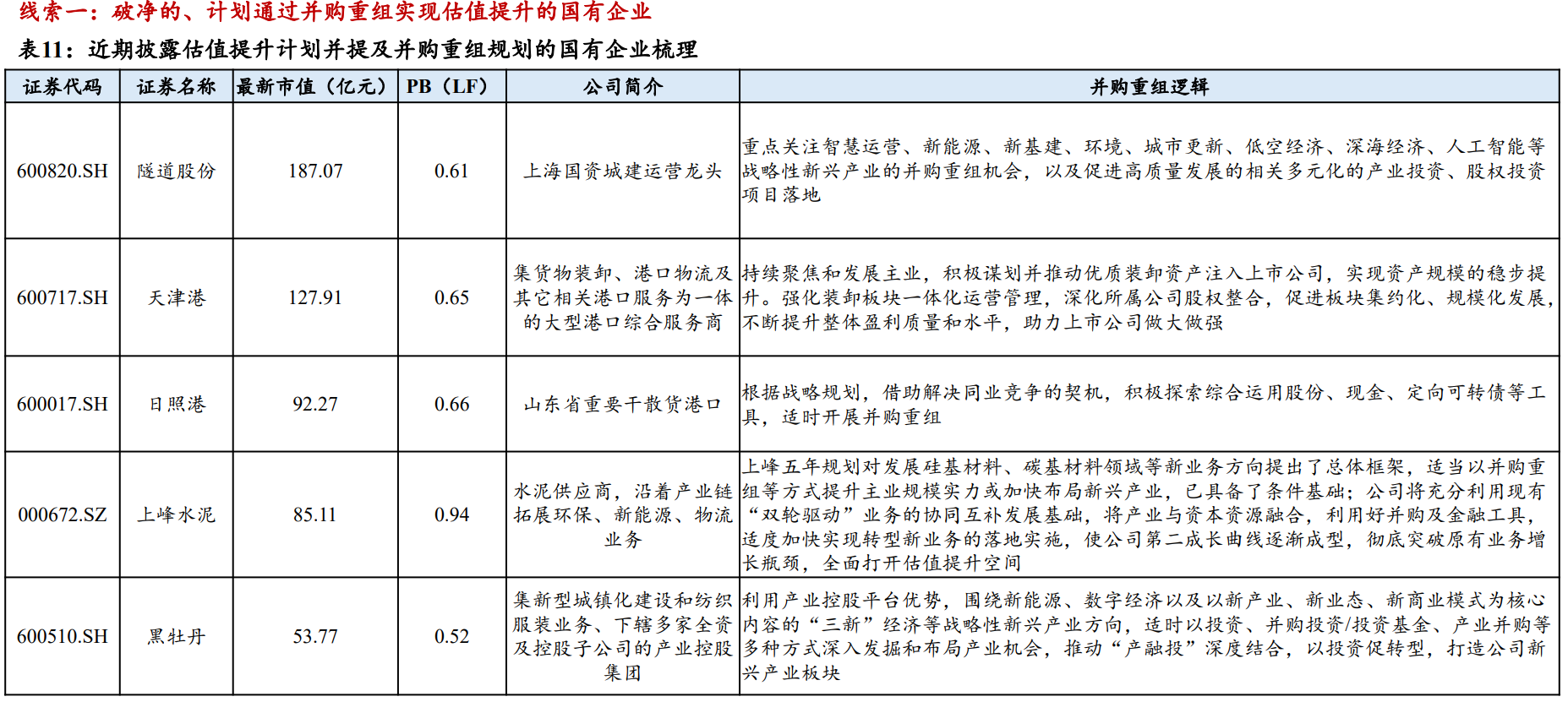
Group 1 - The China Securities Regulatory Commission has implemented revised regulations for major asset restructuring of listed companies, optimizing the review process, innovating transaction tools, and enhancing regulatory inclusiveness [1] - Since the release of the "Six Merger Rules," the scale and activity of the merger and acquisition market have significantly increased, with over 1,400 asset restructuring disclosures and more than 160 major asset restructurings reported [1] - In 2023, listed companies have been more proactive in planning asset restructurings, with over 600 disclosures, representing a 1.4 times increase compared to the same period last year; the total amount of completed major asset restructuring transactions has exceeded 200 billion yuan, an increase of 11.6 times year-on-year [1] Group 2 - The revised regulations allow eligible merger and acquisition transactions to bypass the stock exchange's review committee and complete registration within five working days, significantly reducing the review process from several months to within two weeks [1] - The new regulations reflect a substantial increase in regulatory tolerance for mergers and acquisitions, encouraging traditional industries to enhance concentration and optimize industry structure through restructuring [1] - Central state-owned enterprises and hard technology mergers and acquisitions are identified as two core trends in the current wave of mergers and acquisitions, driven by multiple factors including state-owned enterprise reform policies and industry transformation [1] Group 3 - Policies supporting mergers and acquisitions for technology companies have been frequently released, emphasizing priority support for mergers and acquisitions that focus on key core technology breakthroughs [2] - The increasing activity in mergers and acquisitions among listed companies is expected to enhance the effectiveness of capital market functions, with securities firms likely to play a more active role as intermediaries, leading to increased revenue from financial advisory projects [2] - A table of companies with their latest market values and PB ratios indicates potential investment opportunities, including companies like Tunnel Shares (600820.SH) with a market value of 187.07 billion yuan and a PB ratio of 0.61, and Tianjin Port (600717.SH) with a market value of 127.91 billion yuan [2]
午评:创业板指半日跌0.99% 多只银行股再创历史新高
Zhong Guo Jin Rong Xin Xi Wang· 2025-05-09 04:05
Market Overview - A-shares experienced fluctuations on May 9, with the Shanghai Composite Index adjusting at low levels and the ChiNext Index dropping over 1% at one point [1] - The banking sector showed resilience, with major banks like China Construction Bank, Shanghai Pudong Development Bank, and Jiangsu Bank reaching historical highs [1] - The ST sector continued its strong performance, with over 20 stocks hitting the daily limit up [1] - Semiconductor stocks declined, with Huahong Semiconductor falling over 10% [1] Sector Performance - Textile manufacturing, banking, electricity, and ST sectors saw significant gains, while semiconductor, film and television, retail, and storage chip sectors faced notable declines [2] Institutional Insights - Huatai Securities anticipates that increased investment in global AI computing power will drive high growth in the optical communication sector, with telecom operators expected to maintain steady growth [3] - Open Source Securities highlights that the recent "merger and acquisition six guidelines" have positioned central state-owned enterprises as key players in the current wave of mergers and acquisitions, particularly in hard technology [3] Economic Data - In the first four months, China's imports and exports to neighboring countries grew by 5.1%, with trade relations deepening [5] - In April, China's exports in USD terms increased by 8.1%, outperforming expectations, while imports slightly decreased by 0.2% [6] Company Updates - Semiconductor giants SMIC and Huahong Semiconductor have not announced any A-share shareholder reductions recently, despite changes in shareholding by a significant investor [7][8]

汽车市场高景气延续,白酒需求筑底回升,并购重组浪潮再起
Sou Hu Cai Jing· 2025-05-09 01:07
Group 1 - The trading volume in the Shanghai and Shenzhen markets reached 1.29 trillion yuan, a decrease of 174.9 billion yuan compared to the previous trading day, with military and copper cable sectors leading in gains, while PEEK materials and agriculture sectors saw significant declines [1] - The automotive market is expected to maintain high prosperity, with the automotive industry index rising 12.51% relative to the CSI 300 index in Q1 2025, driven by the vehicle replacement subsidy policy, leading to significant growth in sales [1] - Public funds' holdings in the automotive sector have increased for five consecutive quarters, reaching a historical high, and the Shanghai Auto Show is expected to further stimulate consumer enthusiasm for purchasing vehicles in Q2 [1] Group 2 - The demand for liquor is currently at a historical low, but the downward risk is limited, with supportive policies expected to provide a foundation for consumer recovery, leading to a gradual rebound in liquor demand [1] - The overall performance of the liquor industry is anticipated to show a "first suppress then rise" trend in Q3 and Q4 due to low base effects [1] - The integration of central state-owned enterprises and mergers in hard technology is becoming a core trend in the current wave of mergers and acquisitions, driven by state-owned enterprise reform policies and industrial transformation [2]