
制造业

Search documents
美国危机加剧!特朗普发文呼吁,政府停摆创纪录,盯上中国赚钱!
Sou Hu Cai Jing· 2026-02-02 05:03
Group 1 - The article highlights the increasing domestic pressure on the U.S. government, with Trump focusing on China amidst a looming government shutdown and Supreme Court decisions, suggesting a strategy to create a sense of urgency domestically [1] - Trump's comments appear to be a self-defense mechanism aimed at delaying internal crises by portraying China as a bargaining chip in the ongoing U.S.-China rivalry [1][3] - The capital markets have begun to react to the U.S. government's challenges, with European pension funds adjusting their investments in U.S. debt, indicating a loss of confidence in U.S. financial stability [3][5] Group 2 - The U.S. debt is expanding rapidly, and the burden of interest payments is becoming unsustainable, leading to a reassessment of risk in the capital markets [5][7] - The U.S. is shifting its strategy to a more aggressive financial approach, including controlling monetary policy and creating expectations for interest rate cuts to alleviate domestic pressures [7][9] - Energy has re-emerged as a critical lever for the U.S., with efforts to raise energy prices to impact other countries' costs and maintain U.S. economic stability [9][11] Group 3 - The U.S. is not seeking to completely sever ties but aims to make it more expensive for competitors, particularly China, to operate by increasing energy costs and imposing tariffs through allies [11][13] - The U.S. strategy involves targeting key logistical and financial nodes to exert pressure without direct confrontation, which may ultimately undermine U.S. credibility and international relations [13][15] - In contrast, China is adopting a long-term strategy, diversifying its trade relationships and focusing on stable and reasonable pricing, indicating a shift away from reliance on the U.S. market [15][17] Group 4 - The article notes that seemingly minor retaliatory measures in critical materials and technologies could have significant impacts, highlighting the interdependence between the U.S. and China [17][18] - Trump's preemptive actions before negotiations with China are seen as strategic positioning to create leverage, but the effectiveness of such tactics is questioned given the changing dynamics of the global landscape [18]


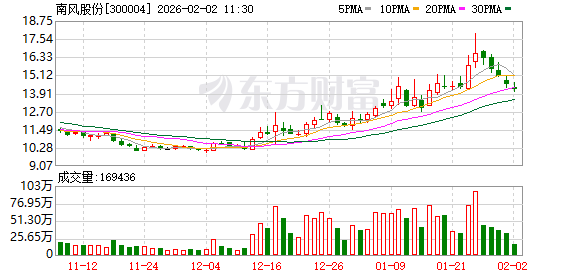
南风股份:目前南方增材二期厂房改造及设备采购、调试工作即将完成
Mei Ri Jing Ji Xin Wen· 2026-02-02 03:56
Group 1 - The company is nearing completion of the second phase capacity construction for its Southern Additive project, which was initially expected to be completed by early January [2] - The company confirmed that the renovation of the factory and the procurement and debugging of equipment are almost finished, and discussions with relevant customers are proceeding normally [2] - The company will comply with the regulations of the China Securities Regulatory Commission and the Shenzhen Stock Exchange regarding information disclosure in case of significant developments [2]

光大期货:2月2日金融日报
Xin Lang Cai Jing· 2026-02-02 02:22
Group 1: Market Performance - In January, the Wind All A index rose significantly with a monthly increase of 5.83% and an average daily trading volume of 3.05 trillion yuan, although it fell by 1.59% in the last week [3] - The CSI 1000 index increased by 8.68%, the CSI 500 by 12.12%, the CSI 300 by 1.65%, and the SSE 50 by 1.17%, driven mainly by the electronics and non-ferrous metals sectors, while the banking sector dragged down the overall index [3] - Domestic investor sentiment was high, with a monthly increase in financing balance of 197.1 billion yuan, while the issuance of stock funds decreased to 20 billion yuan, but mixed funds surged to 46.9 billion yuan, significantly above the monthly average of 13.4 billion yuan in 2025 [3][4] Group 2: Policy Expectations - The current valuation levels of A-share hot topics are high, with the dynamic PE of the CSI 500 index exceeding two standard deviations above the past five years [4] - The China Securities Regulatory Commission emphasized the need for a stable market, discouraging excessive speculation and market manipulation, indicating a preference for a "slow bull" market rather than a "crazy bull" [4][5] - The Shanghai and Shenzhen stock exchanges have introduced measures to increase the minimum margin ratio for financing purchases of stocks [4] Group 3: Bond Market Dynamics - In January, the bond market experienced a decline followed by a recovery, with the People's Bank of China (PBOC) significantly increasing the net injection of Medium-term Lending Facility (MLF) [6][7] - As of January 30, the yields for 2-year, 5-year, 10-year, and 30-year government bonds were 1.38%, 1.58%, 1.81%, and 2.29% respectively, with varying changes from the previous month [6] - The issuance of government bonds in January was 2.08 trillion yuan, with a net issuance of 1.181 trillion yuan, including 426.7 billion yuan of central government bonds and 754.3 billion yuan of local government bonds [8] Group 4: Manufacturing and Economic Indicators - The official manufacturing PMI for January was 49.3, below the expected 50.1, indicating a contraction in the manufacturing sector [9][10] - The decline in PMI is attributed to seasonal factors and insufficient market demand, with labor-intensive industries experiencing a drop in exports and early returns of workers for the Spring Festival [10] - The price indices for raw materials and factory output both increased, with the purchasing price index at 56.1 and the factory price index at 50.6, indicating potential pressure on corporate profits [11][12] Group 5: Precious Metals Market - In January, gold prices rose by 13.01% to 4,880.034 USD/oz, while silver surged by 19.12% to 85.259 USD/oz, with both metals experiencing extreme volatility [25][26] - The market dynamics were influenced by geopolitical tensions, concerns over the US dollar's credibility, and expectations of continued loose monetary policy from the Federal Reserve [25][26] - The sharp adjustment on January 30 was seen as a forced liquidation of overbought positions, but the long-term drivers for precious metals remain intact [26][27]

Bofa Hartnett 更大的事件才能终结黄金牛市
2026-02-02 02:22
Summary of Key Points from the Conference Call Industry or Company Involved - The discussion primarily revolves around the **gold and silver markets**, as well as broader **financial market trends** influenced by U.S. monetary policy and economic conditions. Core Insights and Arguments - **Market Dynamics**: The report highlights a significant drop in the stock market and a rise in the dollar, alongside an unexpected announcement regarding the Federal Reserve's leadership transition, which has implications for monetary policy [1][3]. - **Dollar Weakness**: Since Trump's inauguration, the dollar has depreciated by **12%**, which has positively impacted manufacturing in key swing states [3]. - **Historical Performance**: The report outlines that during past dollar bear markets, gold and emerging market stocks have significantly outperformed other assets, with average returns of **141%** for gold and **104%** for EM stocks [6][7]. - **Investment Strategy**: A shift in investment strategy from a traditional 60/40 portfolio to a diversified 25/25/25/25 allocation has yielded a **10-year return of 8.7%**, marking the best performance since 1992 [9]. - **Future Predictions**: Hartnett anticipates that the best trades for 2026 will include long positions in large and mid-cap bonds, international stocks, and gold, as well as short positions in the dollar and certain tech bonds [21][23][27]. Other Important but Potentially Overlooked Content - **Political and Economic Trends**: The report discusses various macroeconomic trends, including political populism, globalization shifts, and the transition of the Federal Reserve's independence to a more compliant stance [17][30]. - **Liquidity and Market Sentiment**: There is a noted concern about excessive optimism in the market, with liquidity conditions and potential economic prosperity being key factors influencing investor sentiment [32]. - **Debt and Economic Growth**: The U.S. faces significant debt levels, with a nominal GDP of **$31 trillion** and a national debt increase of **$15 trillion** over the past five years [27]. - **Market Risks**: The report warns of potential capital outflows if non-U.S. asset allocators reduce their stock and bond holdings by just **5%**, which could lead to a **$1.5 trillion** capital outflow [20]. This summary encapsulates the critical insights and data points from the conference call, providing a comprehensive overview of the current state and future outlook of the gold and silver markets, as well as broader economic trends.
早盘速递-20260202
Guan Tong Qi Huo· 2026-02-02 01:54
Report Summary 1. Hot News - Trump nominates Kevin Warsh as the next Fed Chair, but some senators oppose the nomination unless the investigation against Powell is dropped. Warsh's policy stance may combine rate cuts and balance - sheet reduction [2] - In 2025, China's national fiscal revenue was 21.6 trillion yuan, down 1.7% year - on - year, with securities transaction stamp duty revenue up 57.8% to 203.5 billion yuan. Fiscal expenditure was 28.74 trillion yuan, up 1% year - on - year, and about 10 billion yuan in child - rearing subsidies were issued [2] - China's official manufacturing PMI in January was 49.3%, down 0.8 percentage points month - on - month; non - manufacturing PMI was 49.4%, down 0.8 percentage points; and the composite PMI output index was 49.8%, down 0.9 percentage points [3] - Trump declares a national emergency, threatening to impose ad - valorem tariffs on countries supplying oil to Cuba, and warns of potential 50% tariffs on Canadian planes [3] - The Shanghai Futures Exchange will adjust the daily price limit of silver futures contracts from 2605 to 2701 to 17% and the margin ratios for hedging and general positions to 18% and 19% respectively from the close of February 3 [3] 2. Sector Performance - Key sectors to watch: urea, lithium carbonate, coking coal, silver, PVC [4] - Night session performance: Non - metallic building materials rose 1.85%, precious metals rose 38.07%, oilseeds rose 7.90%, soft commodities rose 2.17%, non - ferrous metals rose 26.49%, coal - coking - steel - ore rose 8.22%, energy rose 2.59%, chemicals rose 9.23%, grains rose 1.00%, and agricultural and sideline products rose 2.48% [4] 3. Sector Positions - The chart shows the changes in commodity futures sector positions in the past five days from January 26 to January 30, 2026 [5] 4. Performance of Major Asset Classes - Equity: Shanghai Composite Index fell 0.96% daily, 0% monthly, and rose 3.76% year - to - date; S&P 500 fell 0.43% daily, 0% monthly, and rose 1.37% year - to - date; Hang Seng Index fell 2.08% daily, 0% monthly, and rose 6.85% year - to - date, etc. [6] - Fixed - income: 10 - year Treasury bond futures rose 0.06%, 5 - year Treasury bond futures rose 0.01%, and 2 - year Treasury bond futures were flat [6] - Commodities: CRB commodity index fell 1.12% daily, 0% monthly, and rose 7.13% year - to - date; WTI crude oil rose 0.37% daily, 0% monthly, and rose 14.19% year - to - date; London spot gold fell 9.25% daily, 0% monthly, and rose 13.01% year - to - date [6] - Others: US dollar index rose 0.99% daily, 0% monthly, and fell 1.17% year - to - date; CBOE volatility index rose 3.32% daily, 0% monthly, and rose 16.66% year - to - date [6] 5. Stock Market Risk Appetite and Commodity Trends - The report presents the trends of major commodities such as the Baltic Dry Index, CRB spot index, WTI crude oil, London spot gold and silver, LME copper, etc., as well as the risk premium of the stock market [7]
我国工业绿色发展更加突出“碳效优化”
Jin Rong Shi Bao· 2026-02-02 01:14
Core Viewpoint - The construction of zero-carbon factories is a crucial strategy for enhancing the green and low-carbon development level of industries and improving their competitiveness in the green and low-carbon sector. The recent issuance of the "Guiding Opinions on the Construction of Zero-Carbon Factories" by five departments, including the Ministry of Industry and Information Technology, marks a significant step towards promoting carbon reduction and green transformation in key industries [1][2]. Group 1: Goals and Pathways - The "Guiding Opinions" systematically outline the main goals and construction pathways for zero-carbon factory development in China, emphasizing the importance of carbon reduction and efficiency enhancement [1]. - The construction of zero-carbon factories is seen as a means to cultivate new productive forces and support the achievement of carbon peak and carbon neutrality goals [1]. Group 2: Technological Innovation - Zero-carbon factory construction relies on technological innovation, structural adjustments, and management optimization to continuously reduce carbon dioxide emissions within factories [2][3]. - The focus is on achieving near-zero emissions rather than absolute zero, with an emphasis on continuous improvement under current technological and economic conditions [2]. Group 3: Standards and Management - The success of zero-carbon factory construction hinges on having standards for benchmarking, focusing on both source reduction and process decarbonization [4]. - The "Guiding Opinions" require factories to meet energy efficiency standards and implement management optimizations to ensure efficient operation of equipment [4][5]. Group 4: Supply Chain Collaboration - The "Guiding Opinions" advocate for a collaborative approach to carbon reduction across supply chains, emphasizing the analysis of carbon footprints of key products and the adoption of green low-carbon solutions in procurement and logistics [5][6]. - A digital energy and carbon management center is recommended to enhance data management capabilities, supporting process control and effectiveness evaluation [5][6]. Group 5: Financial and Policy Support - The construction of zero-carbon factories involves integrated innovation in policies, standards, and business models, with a focus on creating a collaborative ecosystem for carbon reduction [7]. - The "Guiding Opinions" highlight the role of green finance in supporting zero-carbon factory construction, including mechanisms for preferential credit and innovative financial products to lower transformation costs for enterprises [7][8]. Group 6: Carbon Offset Principles - The "Guiding Opinions" establish the principle of "reduce as much as possible, continuously improve," emphasizing that carbon offsetting should only occur after all feasible reductions have been made [8].
X @Bloomberg
Bloomberg· 2026-02-01 23:35
今日必读🏛️部分议员质疑美联储新主席提名🏭中国1月制造业活动再陷收缩🪙黄金和白银遭遇猛烈抛售获取免费中文电子报《彭博财经早茶》,洞悉全球市场动态。Catch up on what's moving China's markets in our free Chinese language newsletter. https://t.co/Jurz2812uA ...
【时事观察】欧洲经济或进入“两低”模式
Xin Lang Cai Jing· 2026-02-01 21:22
Economic Growth and Inflation - The EU's GDP is projected to grow by 1.6% in 2025, while the Eurozone's GDP is expected to grow by 1.5%, with inflation in the Eurozone dropping to 2.0% by December 2025 [1][3] - In the fourth quarter of the previous year, both the Eurozone and EU economies grew by 0.3% quarter-on-quarter, with year-on-year growth of 1.3% and 1.4% respectively [1] Country-Specific Performance - Germany's economy is expected to grow by 0.2% in 2025, emerging from two consecutive years of recession, while France and Spain are projected to grow by 0.9% and 2.8% respectively [1] - Household consumption in Germany increased by 1.4% in 2025, contributing to economic growth alongside government spending [2] External Challenges - The EU economy faces significant pressure from external factors, particularly the impact of U.S. tariffs, which have led to a 7.8% decline in German exports to the U.S. in the first three quarters of 2025 [3][4] - The EU's trade agreements with the U.S. are under threat, with a proposed 15% tariff on many EU goods, creating uncertainty for 2026 [4] Structural Issues - The EU is grappling with structural challenges such as labor shortages and slow industrial transformation, particularly affecting Germany's manufacturing and chemical sectors [4] - The euro appreciated by approximately 14.4% in 2025, which could negatively impact European exports and economic growth by increasing costs for European companies [4][5] Future Outlook - The European Commission forecasts a modest growth of 1.2% for the Eurozone and 1.4% for the EU in 2026, with Germany's growth forecast revised down from 1.3% to 1.0% [3] - The EU is actively seeking to mitigate the impact of U.S. tariffs by exploring new markets, including free trade agreements with Mercosur and India, although these efforts face internal opposition [5]
当人工智能走向实体空间
Xin Lang Cai Jing· 2026-02-01 20:19
Core Insights - Modern artificial intelligence (AI) is a product of advanced computing and is transforming various industries, evolving from early symbolic approaches to deep learning and large-scale model training [1][4]. Group 1: Historical Development of AI - The pursuit of intelligence has deep historical roots, beginning with the creation of symbolic systems for communication, which allowed for the storage and transmission of complex information [2]. - The evolution of computing technology, starting from Turing's model to the first electronic computer ENIAC, laid the foundation for AI development [3]. - The emergence of industrial robots and expert systems in the 1960s to 1980s marked the transition of AI from information processing to practical applications [3]. Group 2: Current Trends in AI - The rise of large models, such as OpenAI's GPT-3 with 175 billion parameters, demonstrates the potential of scale in AI capabilities [4]. - AI is transitioning from narrow AI, represented by expert systems and deep learning, to general AI, with advancements in generative AI and autonomous machine evolution [4]. Group 3: AI in Manufacturing - AI is becoming integral to the manufacturing sector, with a significant increase in the application of large models and intelligent agents in industrial enterprises, projected to rise from 9.6% in 2024 to 47.5% in 2025 [7]. - The establishment of smart factories in China, with over 421 national-level demonstration factories, showcases the successful integration of AI and digital twin technologies [7]. Group 4: Challenges and Solutions - The development of practical AI faces challenges such as high technical barriers and unclear implementation paths [10]. - A proposed framework for advancing practical AI includes a "perception-cognition-decision-execution" system, emphasizing the need for accurate representation of physical entities and collaborative decision-making between large and small models [11]. Group 5: Policy and Standardization - The Chinese government is promoting AI integration across all industrial processes, emphasizing a comprehensive upgrade of traditional industries through AI [8]. - Establishing a unified standard system for practical AI is crucial for supporting large-scale development and ensuring effective integration across various sectors [12].
中国工业的2026: 大省如何挑大梁
Xin Lang Cai Jing· 2026-02-01 17:16
Group 1: Industrial Growth Targets and Strategies - The core objective for China's industrial sector is to achieve a medium to high-speed growth rate of around 5% in industrial added value by 2026, supported by new production capacities and policy measures [1][2] - Various provinces have set specific growth targets for 2026, such as Zhejiang aiming for a 6% increase in industrial added value and 8% growth in digital economy core industries [3] - The Ministry of Industry and Information Technology emphasizes the importance of major industrial provinces like Guangdong, Jiangsu, and Shandong in stabilizing the industrial economy, as they collectively account for over 60% of the national industrial added value [2][3] Group 2: Investment and Project Initiatives - Shanghai plans to initiate 133 industrial projects with a total investment of 110 billion yuan in 2026, focusing on large-scale projects to support the "14th Five-Year Plan" [4] - Hebei is set to implement a "Project Construction Year" in 2026, emphasizing the completion and effectiveness of key projects while promoting the development of emerging industries [3] - The overall manufacturing investment growth is expected to improve to between 3% and 5% in 2026, compared to a low of 0.6% in the previous year [5] Group 3: Emerging Industries and Future Development - The "14th Five-Year Plan" prioritizes the establishment of a modern industrial system and the strengthening of the real economy, with a focus on developing emerging industries and future industries [6] - Various regions are actively deploying strategies to foster new growth points in industries such as 6G, quantum technology, and biomanufacturing, with Guangdong and Beijing leading initiatives in these areas [7][8] - The integration of technology and industry is expected to accelerate, with significant government support for artificial intelligence, advanced manufacturing, and renewable energy sectors [8]