天然气

Search documents
冻死事小,失节事大!欧盟禁用俄罗斯天然气,中国成救命稻草
Sou Hu Cai Jing· 2026-02-02 07:19
Group 1 - The EU has decided to completely sever its energy ties with Russia by 2027, including stopping LNG imports as early as this autumn, indicating a significant shift in energy policy driven by internal conflicts within the EU [3][5] - Countries like Hungary, Slovakia, and Austria, which have relied heavily on Russian gas, will be forced to accept a unified energy policy, creating opportunities for energy suppliers like Norway, the US, and Qatar to fill the gap left by Russia [5][9] - Norway plans to donate 75 billion Norwegian Krone (approximately 50.2 billion RMB) to Ukraine from 2023 to 2028, showcasing its financial gains from the energy crisis and enhancing its image in the Western alliance [7] Group 2 - The US is strategically focusing on controlling a key gas pipeline in Ukraine, which could allow it to dictate energy prices and political conditions in Central Europe [9] - Despite a drop in European gas prices to their lowest since 2019, prices remain significantly higher than a decade ago, indicating a long-term shift in the energy market dynamics [11] - Russia's gas exports to China are expected to increase significantly, with projected deliveries through the Power of Siberia pipeline reaching 38.8 billion cubic meters by 2025, more than doubling from 2022 [11][12] Group 3 - China's energy demand is gradually decreasing due to a shift towards renewable energy and increased domestic exploration, causing concern for Russia, which had hoped to rely on China as a major market [15][16] - In 2024, China's oil imports are projected to decline by 1.9% to 55.3 million tons, marking the first significant drop in 20 years, with a further expected decline of 7.7% in 2025 [16] - The current international energy landscape reflects a complex interplay of political and economic factors, with China maintaining a position of leverage in negotiations with Russia while diversifying its energy sources [17][18]

E-Gas系统:1月26日-2月1日当周中国LNG进口量约105万吨
Xin Hua Cai Jing· 2026-02-02 06:46
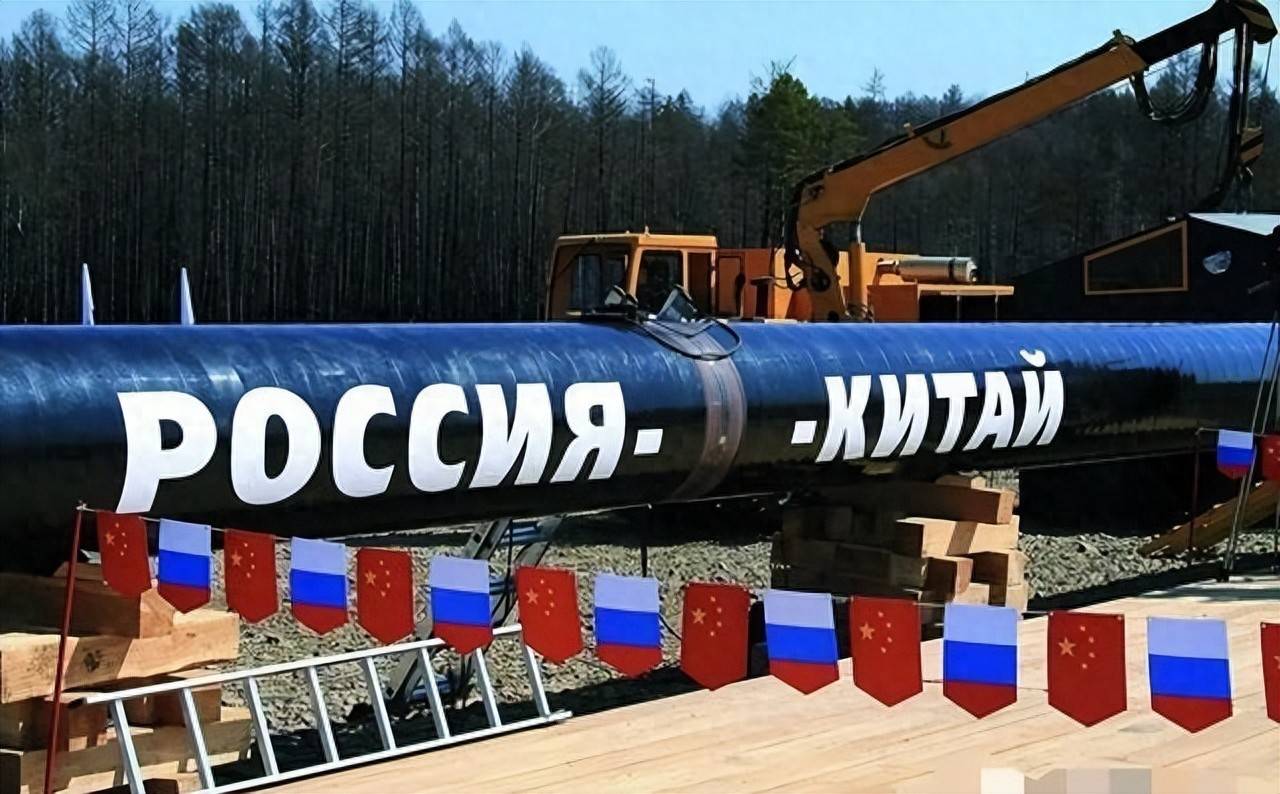
Core Insights - During the week of January 26 to February 1, China imported a total of approximately 1.05 million tons of LNG through coastal receiving stations, a decrease from the previous week's import of 1.21 million tons [1] LNG Import Analysis - A total of 16 LNG vessels were imported during the specified week [1] - The breakdown of LNG imports by country shows that Qatar supplied 5 vessels, amounting to approximately 380,000 tons, which represents about 36% of the total imports for that week [4] - The distribution of LNG receiving stations indicates that the South China region received 6 vessels, the Yangtze River Delta received 6 vessels, and the Bohai Rim region received 4 vessels, with the Shenzhen Dapeng LNG receiving station handling the highest volume of 3 vessels, totaling around 210,000 tons [4] Future Projections - For the upcoming week of February 2 to February 8, it is predicted that China will import 11 LNG vessels, with an estimated total volume of approximately 730,000 tons [4]
冻死事小,失节事大?欧盟硬禁俄气陷绝境,中国绝非“救命稻草”!
Sou Hu Cai Jing· 2026-02-02 04:51
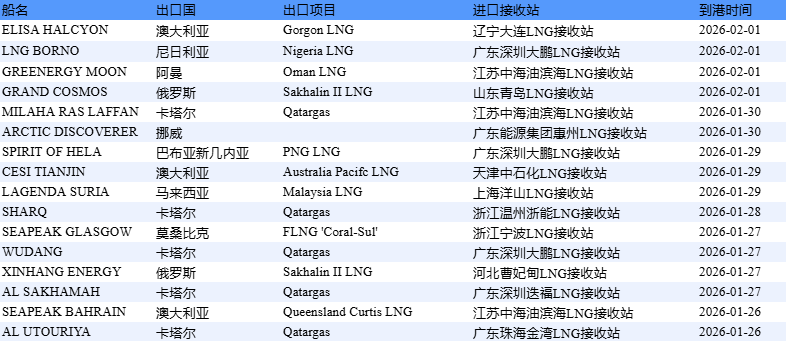
Group 1 - The EU's reliance on Russian gas remains significant despite its rhetoric of "de-Russification," with over 76.1% of LNG exports from the Yamal project still reaching EU ports, generating €7.2 billion in revenue for Russia [2] - The extreme winter in early 2026 led to gas storage levels in Germany and the Netherlands dropping below warning thresholds, with Germany at 54.1% and the Netherlands at 46.1%, resulting in widespread energy shortages and increased costs for households [4] - The EU's shift from Russian gas to American LNG has resulted in higher prices, with American LNG expected to account for 70% of EU supplies by 2029, raising concerns about political leverage over Europe [6] Group 2 - The EU's search for alternative energy sources has turned towards China, but China's energy cooperation with Russia is based on mutual benefit and not intended to fill the EU's energy gaps [8] - China's oil imports are projected to decline in 2024 and 2025 due to a strategic shift towards renewable energy and increased domestic production, indicating a reduced reliance on foreign energy [9] - Internal divisions within the EU regarding energy policies are evident, with countries like Hungary and Slovakia opposing bans while others like Poland and Denmark support them, leading to weakened cohesion and exacerbating the energy crisis [9]
锐财经|能源供应保障能力有效提升
Ren Min Ri Bao Hai Wai Ban· 2026-02-02 03:25
Core Insights - The National Energy Administration of China has outlined the energy landscape for 2025, indicating improved energy supply security, a relaxed supply-demand balance, and the implementation of multiple key policies to support healthy industry development and the establishment of a new energy system [1] Group 1: Energy Supply and Security - Energy supply security is expected to be robust, with coal production stable and industrial coal output increasing by 1.2% year-on-year. Crude oil and natural gas production are projected to reach historical highs, with industrial crude oil output up by 1.5% and natural gas output up by 6.2% [2] - The electricity supply is anticipated to be stable, with several ultra-high voltage direct current transmission projects coming online, enhancing the interconnectivity of the power system [2] Group 2: Green and Low-Carbon Transition - The pace of green and low-carbon transition is accelerating, with policies aimed at integrating and promoting renewable energy. New wind and solar installations are expected to exceed 430 million kilowatts, with cumulative installed capacity surpassing 1.8 billion kilowatts, and renewable energy generation accounting for over 60% of total power generation [2] - Renewable energy generation is projected to reach approximately 4 trillion kilowatt-hours, exceeding the total electricity consumption of the 27 EU countries combined [2] Group 3: Industry Development - The industry is experiencing significant orderly development, with measures to address competition in the photovoltaic sector. By the end of 2025, prices for polysilicon and silicon wafers are expected to rise by 52.0% and 35.6%, respectively, from their lowest points [2] - Coal production and supply are being stabilized, with the spot price of 5500 kcal thermal coal at ports in the Bohai Rim expected to reach 690 yuan per ton, an increase of 75 yuan from the lowest point [2] Group 4: New Energy Storage - New energy storage capacity is projected to grow by 84% compared to the end of 2024, reaching 136 million kilowatts/351 million kilowatt-hours, marking a more than 40-fold increase since the end of the 13th Five-Year Plan [3] - The North China region accounts for the largest share of new energy storage installations, with 32.5% of the total, followed by Northwest China at 28.2% [3] Group 5: Electricity Market Transactions - The scale of electricity market transactions is expected to reach a new high, with a cumulative transaction volume of 6.64 trillion kilowatt-hours, representing a year-on-year increase of 7.4% [5] - Market-based transactions are projected to account for 64.0% of total electricity consumption, an increase of 1.3 percentage points year-on-year, driven by the continuous operation of provincial spot markets and the expansion of registered market participants [7] - Cross-regional electricity transactions are expected to grow to 1.59 trillion kilowatt-hours, a historical high, with a year-on-year increase of 11.6% [7]
IEA:今年欧洲LNG进口量将再创新高
Zhong Guo Hua Gong Bao· 2026-02-02 03:18
中化新网讯 近日,国际能源署(IEA)在其最新发布的《2026年第一季度天然气市场报告》中预测,欧洲 今年的液化天然气(LNG)进口量预计将超过1850亿立方米,创下历史新纪录。这将是欧洲连续第二年刷 新LNG进口纪录。 在供应侧,美国是欧洲增量LNG的主要来源,其对欧LNG交付量在2025年同比增长60%。由于欧洲市场 的LNG净回值价格在多数时间高于亚洲主要市场,吸引更多灵活的LNG船货流向欧洲。 IEA指出,2026年全球LNG供应大幅增长将在重新平衡全球天然气市场方面发挥关键作用,有助于缓解 地缘政治不确定性加剧的市场压力。该机构能源市场与安全负责人表示,这股"LNG浪潮"将在未来几年 塑造全球天然气市场,可能对价格构成下行压力,并在区域市场日益互联的背景下提升流动性。 报告数据显示,2025年欧洲LNG进口量已首次突破1750亿立方米,较2024年大幅增长30%,这使得LNG 在欧洲天然气供应结构中的占比从2024年的30%跃升至2025年的38%。 LNG进口强劲主要受几大因素驱动,即补充库存、俄罗斯管道气供应持续减少以及对乌克兰的管道气 出口。其中,为在供暖季前补充库存,去年4月至10月期间的注 ...
小摩闭门会-金银暴跌油价上涨的原因-鹰派沃什伊朗局势黄金基本面不变
2026-02-02 02:22
小摩闭门会-金银暴跌油价上涨的原因,鹰派沃什伊朗局势 黄金基本面不变 20260201 摘要 黄金市场回调被认为是健康的,此前金价已接近超涨状态,凯文·沃什获 提名是催化剂,但趋势衰竭是回调的基础。预计央行将入场多元化配置, 中期目标仍看好黄金至 6,000 美元。 铜价近期剧烈波动,中国实体市场观望,投资性需求是推动因素。短期 内铜的基本面停滞,但未来 6-9 个月可能出现机会,关注 6 月 232 条款 审查和中国工业企业的接受度。 当前油价较公允价值高出约 9 美元,地缘政治溢价显著,特朗普政府对 伊朗采取行动的威胁增加。预计不会出现长期石油供应中断,短暂政治 驱动型油价上涨后将消退。 极寒天气对能源需求产生影响,美国石油产量减少近 200 万桶/日,需 求激增 50 万桶/日,欧洲需求增加 50 万桶/日。1 月全球供需平衡受到 日均 100 万桶负面影响,推高能源价格。 美国和欧洲极端天气导致能源市场供需两端出现极端事件。美国石油和 天然气供应受冻结影响,天然气产量日产量下降 180-190 亿立方英尺, LNG 原料气流量减半。 Q&A 近期黄金和白银市场波动剧烈,您如何看待这一现象?此次回调是否 ...
未知机构:美股收盘交易沃什晚上好-20260202
未知机构· 2026-02-02 02:10
美股收盘:交易沃什 晚上好。 这是周五的市场盯市报告,沃什被提名为美联储主席的消息成为市场广泛关注的焦点。 受月末调仓资金流的影响,股票和信贷市场的风险资产交易呈现震荡态势,最终风险资产全天收低。 美元受沃什提名的消息推动走强,这也导致美债收益率曲线趋陡,短端表现则持续坚挺。 股票市场 美股在周五经 美股收盘:交易沃什 晚上好。 这是周五的市场盯市报告,沃什被提名为美联储主席的消息成为市场广泛关注的焦点。 受月末调仓资金流的影响,股票和信贷市场的风险资产交易呈现震荡态势,最终风险资产全天收低。 美元受沃什提名的消息推动走强,这也导致美债收益率曲线趋陡,短端表现则持续坚挺。 股票市场 美股在周五经历了震荡走势后收低,但最终脱离了盘中低点:标普 500 指数下跌 43 个基点,收于 6939 点; 纳斯达克 100 指数下跌 128 个基点,收于 25552 点;罗素 2000 指数下跌 155 个基点,收于 2613 点。 11 个板块中有 7 个板块收跌,其中材料板块领跌,下跌 184 个基点,信息技术板块紧随其后,下跌 133 个基 点;日常消费品板块上涨 135 个基点,能源板块上涨 98 个基点,这两个 ...
能源早新闻丨全国最大,投运!
中国能源报· 2026-02-01 22:33
Industry News - The National Development and Reform Commission and the National Energy Administration have announced improvements to the capacity pricing mechanism for power generation, including coal and natural gas power generation, pumped storage, and a new independent storage capacity pricing mechanism [2] - By 2025, China's energy investment is expected to exceed 3.5 trillion yuan, marking an 11% year-on-year increase [2] - China's renewable energy generation is projected to surpass the total electricity consumption of the 27 EU countries by 2025, with renewable energy generation capacity exceeding 600 million kilowatts and accounting for over 60% of total generation [2] - The cumulative production capacity of renewable energy hydrogen production in China is expected to exceed 250,000 tons per year by the end of 2025, representing a doubling from the previous year [3] - The structure of steel products in China is shifting towards higher quality and innovation during the 14th Five-Year Plan period, achieving a self-sufficiency rate of nearly 100% [3] - The largest offshore photovoltaic project in China has completed its transmission line project, enabling full capacity grid connection and supporting regional green electricity collaboration [4] - Shanxi Province's unconventional natural gas production is projected to reach a historical high of 18.23 billion cubic meters by 2025, reflecting an 8.9% year-on-year increase [4] Corporate News - The integration of state-owned enterprises in the energy sector of Tibet has been completed, marking a significant breakthrough in the reform of state-owned enterprises [7]
容量电价机制改革政策出台,2025年我国天然气表观消费量同比增长0.1%
Xinda Securities· 2026-02-01 05:59
Investment Rating - The investment rating for the utility sector is "Positive" [2] Core Insights - The report highlights the introduction of a capacity pricing mechanism reform policy aimed at supporting the construction of a new energy system and promoting green and low-carbon energy transition [5] - It is projected that China's apparent natural gas consumption will reach 426.55 billion cubic meters in 2025, reflecting a year-on-year growth of 0.1% [5] - The report indicates that the electricity sector is expected to see profit improvement and value reassessment following several rounds of supply-demand tensions [5] Market Performance - As of January 30, the utility sector declined by 1.7%, underperforming the broader market, with the electricity sector down by 1.48% and the gas sector down by 3.20% [4][12] - The report notes that the coal price at Qinhuangdao Port (Q5500) increased by 5 RMB/ton week-on-week, reaching 691 RMB/ton [4][20] - The report tracks coal inventory and daily consumption, indicating a decrease in coal inventory at Qinhuangdao Port to 5.75 million tons, down by 50,000 tons week-on-week [29] Electricity Sector Data Tracking - The average price in the Guangdong electricity market for the day-ahead market was 325.42 RMB/MWh, up 2.76% week-on-week [49] - The report provides insights into the water inflow situation at the Three Gorges Reservoir, with an outflow of 9,230 cubic meters per second, up 12.01% year-on-year [42] Natural Gas Sector Data Tracking - Domestic LNG prices increased week-on-week, with the national index at 4,045 RMB/ton, reflecting a 1.33% increase [55] - The report notes that the European TTF spot price rose by 7.0% week-on-week, while the US HH spot price surged by 19.4% [59] Investment Recommendations - For the electricity sector, the report suggests focusing on leading coal power companies such as Guodian Power, Huaneng International, and Huadian International, as well as regional leaders in tight supply areas [5] - In the natural gas sector, companies with low-cost long-term gas sources and receiving station assets are expected to benefit from market conditions [5]
欧盟彻底掐断俄罗斯天然气:谁的寒冬,谁的盛宴?
Sou Hu Cai Jing· 2026-02-01 01:44
Core Viewpoint - The European Union (EU) has made a historic decision to completely ban Russian liquefied natural gas (LNG) from entering the EU market starting January 1, 2027, marking a significant shift in energy strategy and geopolitical autonomy in Europe [1][3][29] Geopolitical Drivers - The decision to ban Russian gas is a culmination of multiple factors, primarily driven by geopolitical considerations following the Russia-Ukraine conflict that began in 2022 [7][9] - The EU's energy security strategy has fundamentally shifted from economic interdependence with Russia to a focus on strategic autonomy, reflecting a significant change in its approach to energy policy [7][9] Energy Supply Diversification - The EU has accelerated efforts to diversify its energy supply, with the United States becoming the primary supplier of LNG, accounting for nearly 45% of current EU LNG imports [12][15] - The EU is also exploring additional sources, including increased imports from Azerbaijan, Algeria, and Qatar, and is fast-tracking the construction of the Trans-Caspian gas pipeline [14][15] Infrastructure Investment - The EU faces substantial costs in transforming its energy infrastructure, with emergency investments in gas infrastructure expected to exceed €100 billion from 2022 to 2027 [15][16] - The transition will require significant upgrades to energy grids and storage facilities, which will ultimately impact energy prices for businesses and consumers in Europe [15][16] Economic Impact - The ban on Russian gas is anticipated to impose significant economic costs and inflationary pressures on the EU, particularly affecting energy-intensive industries such as chemicals and steel [16][19] - The EU's GDP growth rate may be reduced by 0.5 to 1 percentage points annually due to the long-term economic implications of the ban [16][19] Internal Divisions - There are notable divisions within the EU regarding the ban, with Eastern European countries like Hungary and Slovakia opposing the "one-size-fits-all" approach due to their high dependence on Russian gas [19] - Western and Northern European countries are more supportive of the ban, reflecting differing levels of readiness for energy transition [19] Global Implications - The EU's ban on Russian gas will have far-reaching effects on the global energy market, permanently altering the LNG trade landscape and increasing competition for resources, particularly in Asia [22][25] - Major LNG exporting countries like the U.S., Qatar, and Australia are expected to compete for market share in Europe, potentially leading to a surge in investment in liquefaction facilities [25][27] Future Challenges - The successful implementation of the ban will face challenges, including ensuring supply security and managing social and political pressures related to energy prices [29] - The upcoming winter of 2027-2028 will be a critical test for the EU's energy strategy, as it will be the first winter without Russian gas [29]