
量子计算

Search documents
重磅发布!2025量子计算研究报告揭示全球五大发展趋势
Sou Hu Cai Jing· 2025-09-30 02:18
Core Insights - Quantum computing has become a strategic focus in the global technology competition, with significant investments and initiatives from major countries including the US, EU, and China [1][2][3] Group 1: National Strategies - Major global powers view quantum computing as a critical area for future industrial competition, establishing dedicated plans and investing substantial funds [2] - The US has committed over $6 billion from 2019 to 2025 through the National Quantum Initiative, with nearly $1 billion budgeted for the fiscal year 2025 [2] - The EU aims to enhance its autonomous capabilities in quantum technology through its 2025 strategy, while China emphasizes quantum technology as a key development direction in its 2025 government work report [3] Group 2: Research Output - Global research output in quantum computing has surged from over 1,000 papers in 2015 to over 5,000 in 2024, a nearly fivefold increase, with the US and China leading [4] - China ranks second globally in publication volume but has lower citation rates compared to Canada, the US, and Germany, indicating room for improvement in research quality and international impact [4] Group 3: Patent Activity - Over the past decade, more than 19,000 quantum computing patents have been filed globally, with the US accounting for 49.34% and China for 24.36%, indicating significant progress in original technology and commercialization [5] Group 4: Technological Routes - Various technological routes in quantum hardware are being explored, including superconducting, ion trap, neutral atom, photonic, silicon semiconductor, and topological approaches, each with its own advantages and challenges [8] - China maintains a global lead in superconducting technology, exemplified by the development of the "Zuchongzhi 3" chip, which outperforms supercomputers in specific tasks [8][9] Group 5: Industry Development - The quantum computing industry is rapidly maturing, with over 400 companies globally as of August 2025, including 107 in the US and 42 in China [11] - Investment in quantum computing exceeded $2 billion in the first half of 2025, with the US leading in funding, while China benefits from government and industry fund support [11] Group 6: Application Exploration - Quantum computing applications are in early stages but show accelerating trends in sectors like finance, biomedicine, energy, and chemicals, with potential advantages in optimization and simulation tasks [13] - Quantum computing cloud platforms are emerging as key enablers for industrialization, with China's "Tianyan" platform attracting users from over 60 countries [13] Group 7: Future Outlook - The global competition in quantum computing is expected to intensify, with China showing potential breakthroughs in superconducting and photonic technologies [14] - Despite leading in publication and patent numbers, challenges remain in research quality, industrialization, and ecosystem collaboration, necessitating continued efforts in foundational research and application promotion [14]

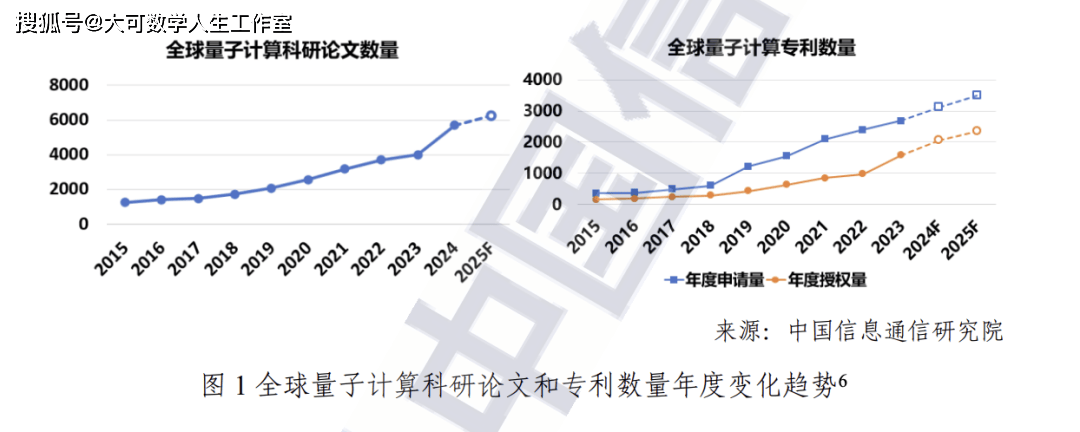
新型量子纠错码开发成功 性能非常接近哈希界限
Ke Ji Ri Bao· 2025-09-29 23:47
Core Insights - The Tokyo University of Science team has achieved a significant breakthrough in quantum error correction technology by developing an efficient and scalable quantum Low-Density Parity-Check (LDPC) error-correcting code, maintaining high stability in systems with hundreds of thousands of logical qubits, approaching theoretical limits [1][2] - This advancement provides crucial technical support for large-scale fault-tolerant quantum computing, potentially accelerating practical applications in quantum chemistry, cryptanalysis, and complex optimization [1] Group 1 - The current quantum computers can manipulate dozens of qubits, but solving real-world problems often requires millions of stable and reliable logical qubits [1] - Existing quantum error correction methods generally suffer from high resource consumption and low efficiency, requiring many physical qubits to encode a small number of logical qubits, severely limiting system scalability [1] - Many existing error correction codes have low coding rates and limited performance improvement potential, with significant gaps remaining from the theoretical best error correction limits, known as the hashing bound [1][2] Group 2 - The team successfully overcame these challenges by proposing a new construction method, designing a prototype LDPC code with excellent error correction characteristics, and introducing affine arrangement-based techniques to enhance code structure diversity [2] - Unlike traditional LDPC codes defined over binary finite fields, the new scheme uses non-binary finite fields, allowing each encoding unit to carry more information, thus improving overall error correction capability [2] - The new error correction code, transformed into a CSS-type quantum error correction code, employs an improved sum-product algorithm, developing an efficient joint decoding strategy that can handle both bit-flip and phase-flip errors simultaneously, unlike most previous methods [2]
腾讯研究院AI速递 20250930
腾讯研究院· 2025-09-29 16:01
Group 1: Generative AI Developments - DeepSeek-V3.2-Exp introduces Sparse Attention mechanism, significantly improving long text training and inference efficiency without compromising performance [1] - The model is open-sourced on HuggingFace and Modao platforms, with accompanying papers and code released [1] - Official API prices have been reduced by over 50% due to decreased service costs, with V3.1-Terminus interface available until October 15 for comparison [1] Group 2: RoboBrain-X0 Innovations - RoboBrain-X0 achieves zero-shot cross-ontology generalization, allowing deployment on various real robots with just pre-training [2] - The core innovation focuses on learning "what to do" rather than "how to move," standardizing complex actions into token sequences [2] - In real-world cross-ontology evaluations, the overall success rate reached 48.9%, nearly 2.5 times that of the baseline model π0, with a 100% success rate in basic grasping tasks [2] Group 3: 3D Generation Breakthroughs - The 3D-Omni model is the first to unify multiple conditional controls for 3D generation, supporting various control signals [3] - It employs a lightweight unified control encoder and progressive difficulty-aware training strategy for detailed 3D asset generation [3] - The model effectively addresses the "paper object" issue in single-view generation, accurately reconstructing geometric details and proportions [3] Group 4: Quantum Computing Advances - Caltech team sets a new record with a quantum bit array of 6100 qubits, achieving a coherence time of 13 seconds and a single-qubit control precision of 99.98% [6] - The team utilized optical tweezers to capture atoms and move qubits while maintaining superposition, highlighting the advantages of neutral atom systems over superconducting circuits and ion traps [6] - This achievement balances scale, precision, and coherence, reinforcing neutral atoms as a leading platform for quantum computing, though large-scale error correction demonstrations are still needed for practical applications [6] Group 5: AI Integration Predictions - Julian Schrittwieser from AlphaGo argues against the notion of AI stagnation, emphasizing significant advancements in AI capabilities over recent years [7] - METR research indicates exponential growth in AI abilities, with the latest models capable of autonomously completing tasks over two hours, and a trend of doubling capabilities every seven months [7] - Predictions suggest that by mid-2026, models may autonomously work for eight hours, achieving expert-level performance across multiple industries by the end of the year [7] Group 6: GPU Market Dynamics - The dominance of NVIDIA GPUs is expected to be challenged within 2-3 years as specialized chips for different workloads emerge, shifting the market from a 90% concentration to a more diversified ecosystem [8] - Inference costs have decreased by 100 times and may drop another 10 times, driven by advancements in MoE architecture, model quantization, and collaborative design between algorithms and hardware [8] - AI applications are anticipated to diversify into three categories: traditional chatbots, ultra-low latency scenarios, and large-scale batch processing, with hardware suppliers needing to optimize accordingly [8]

创新药、低空飞行器、量子计算、脑机接口 院士报告为颠覆性技术“把脉问诊”
Ke Ji Ri Bao· 2025-09-29 09:48
Group 1: Innovation in Pharmaceuticals - China has made significant progress in innovative drug development, with the number of new drug approvals increasing from 4 in 2015 to 37 in 2024, and the proportion of first-in-class drugs rising from 4% to 38% [1] - Despite the advancements, challenges such as lack of original theories and technologies, intense competition, changing international environments, and payment system issues pose risks to sustainable industry growth [1][2] Group 2: Development of eVTOL Industry - The eVTOL industry in China is rapidly developing, currently leading globally, supported by the foundations laid by the aviation and new energy vehicle industries [2] - Key technological challenges include distributed propulsion aerodynamics, high-energy power sources, and safety control in complex environments, with a focus on smart technologies to enable autonomous flight [2] Group 3: Quantum Computing and Technology - The development of quantum technology is highlighted as a path for differentiation, with significant progress in solid-state quantum computing and scientific instrument research [3] - Emphasis is placed on the need for China to strengthen its independent research and development of scientific instruments to become a technological powerhouse [3] Group 4: Brain-Computer Interface Advancements - Brain-computer interfaces are categorized into brain control and brain modulation, with potential applications in aiding patients with movement disorders and treating mental health conditions [3] - Innovative non-invasive techniques are being explored to target specific brain areas for treatment, avoiding the side effects associated with traditional invasive surgeries [3] Group 5: Overall Technological Landscape - The reports from the four academicians reflect China's technological self-reliance and the competitive landscape of global technology [4] - Addressing the challenges is crucial for China to maintain a leading position in disruptive innovation and to secure control over technological advancements [4]
院士报告为颠覆性技术“把脉问诊”
Ke Ji Ri Bao· 2025-09-29 03:13
Group 1: Innovation in Pharmaceuticals - China has made significant progress in innovative drug development, with the number of approved new drugs increasing from 4 in 2015 to 37 in 2024, and the proportion of first-in-class drugs rising from 4% to 38% [1] - Despite the advancements, challenges such as lack of original theories and technologies, intense competition, changing international environments, and payment system issues pose risks to sustainable industry growth [1][2] Group 2: Development of eVTOL Industry - The eVTOL industry in China is rapidly developing, with a competitive landscape and a leading position globally [2] - Key challenges include distributed propulsion aerodynamics, high-energy power sources, and safety control in complex environments, with a focus on smart technology as a solution [2] Group 3: Quantum Computing and Technology - The development of quantum technology is highlighted as a path for differentiation, with a focus on solid-state quantum computing and scientific instrument research [3] - Emphasis on the need for independent research and development of scientific instruments to strengthen China's position in technology [3] Group 4: Brain-Computer Interface Advancements - Brain-computer interfaces are categorized into brain control and brain modulation, with applications in aiding patients with movement disorders and treating mental health conditions [3] - Non-invasive techniques for brain modulation are being explored, which could avoid the side effects associated with traditional invasive surgeries [3] Group 5: Overall Technological Landscape - The reports from the four academicians reflect China's technological self-reliance and the realities of global technological competition, emphasizing the need to confront challenges to maintain leadership in disruptive innovation [4]
IBM是“真量子龙头”,但市场对汇丰新闻反应过度
Hua Er Jie Jian Wen· 2025-09-29 01:37
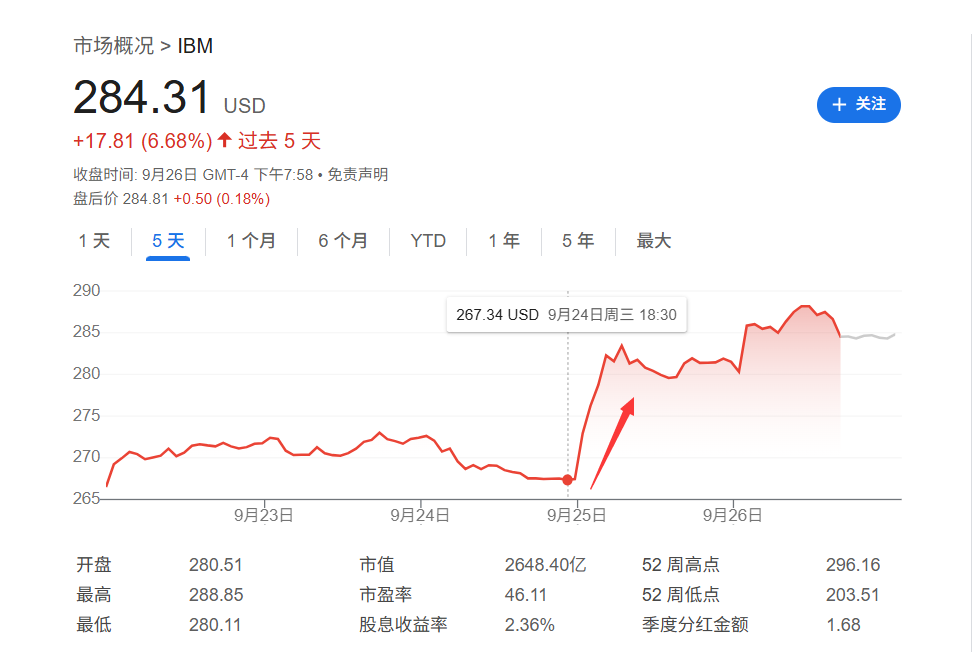
Core Insights - The news highlights the significant impact of quantum computing commercialization on IBM's stock price, which surged following HSBC's successful use of IBM's quantum processor for bond trading optimization [1][2]. Group 1: Market Reaction - On September 25, IBM's market capitalization increased by nearly $13 billion, with the stock price rising over 5% after HSBC's announcement [2]. - Morgan Stanley's analysis suggests that the market's enthusiastic response may have overestimated the future potential of quantum technology, which is still in its early stages [2][9]. Group 2: Quantum Computing Performance - HSBC reported a 34% performance improvement in predicting the probability of winning bids in the European corporate bond market using IBM's Heron quantum processor compared to traditional computing resources [4]. - The report emphasizes the importance of early commercial applications in demonstrating the value proposition of quantum computing [4]. Group 3: IBM's Market Position - IBM is identified as the clear leader in the quantum market, possessing the largest and most extensive advanced quantum computing ecosystem [5]. - Since 2017, IBM has installed over 75 quantum systems globally, surpassing the total of all other quantum suppliers combined [7]. Group 4: Valuation Analysis - Morgan Stanley's reverse engineering analysis indicates that the market's valuation increase implies expectations of IBM selling approximately 265 quantum systems by 2029, priced at $13.3 million each [6][8]. - The analysis is based on multiple assumptions, including a 10% net profit margin and a 50x price-to-earnings ratio, highlighting the speculative nature of the current market sentiment [6][8]. Group 5: Future Outlook - The report concludes that while IBM and the quantum industry may achieve significant success by 2029, the current hype around quantum computing may not be justified as a substantial driver of stock prices today [9].

彭波:美英科技协议价值几何
Jing Ji Ri Bao· 2025-09-29 00:21
Core Points - The signing of the "Technology Prosperity Agreement" between the US and UK aims to deepen strategic cooperation in cutting-edge technology fields, including AI, quantum computing, and civil nuclear energy [1][2] - The agreement is expected to help both countries dominate the global AI landscape, with US tech companies committing £31 billion (approximately $42 billion) to enhance the UK's AI infrastructure [1][2] Group 1: Economic and Political Implications - The agreement is seen as a potential economic boost for the UK government, which is facing declining public support, by showcasing its ability to attract foreign investment and develop high-tech industries [2][3] - The Northeast region of England is projected to become a new AI growth area, potentially creating over 5,000 jobs and attracting billions in private investment [2] Group 2: Challenges and Concerns - There are significant disparities in the technological capabilities of the US and UK, with the US holding a dominant position in funding, corporate strength, and market size, which may lead to the UK facing risks of technological dependency [3] - The differing regulatory and ethical standards between the two countries could pose challenges for the implementation of the agreement, particularly in areas like data flow and AI ethics [3][4] Group 3: Strategic Direction and Criticism - The agreement has been criticized for overemphasizing military and national security applications, potentially distorting the priorities of scientific research [4] - The absence of blockchain technology from the agreement raises concerns about the UK's long-term strategic development in the fintech sector, as it risks falling behind in digital asset innovation [4] - The agreement reflects strong political motives, aiming to solidify the US-UK special relationship while promoting a "US first" technology strategy [4][5] Group 4: Institutional Framework - The agreement seeks to establish a formal US-UK technology cooperation alliance, emphasizing collaboration in international standard organizations and the development of technology rules [5] - It aims to create AI systems that align with democratic values, thereby fostering a technology cooperation network based on shared values and countering the technological advancements of non-Western countries [5]
创新药、低空飞行器、量子计算、脑机接口——院士报告为颠覆性技术“把脉问诊”
Ke Ji Ri Bao· 2025-09-28 23:43
Group 1: Innovation in Pharmaceuticals - China has made significant progress in innovative drug development, with the number of approved new drugs increasing from 4 in 2015 to 37 in 2024, and the proportion of first-in-class drugs rising from 4% to 38% [1] - Despite the advancements, challenges such as lack of original theories and technologies, intense competition, changing international environments, and payment system issues pose risks to sustainable industry growth [1][2] Group 2: Development of eVTOL Industry - The eVTOL industry in China is rapidly developing, currently leading globally, supported by the aviation and new energy vehicle sectors [2] - Key technological challenges include distributed propulsion aerodynamics, high-energy power sources, and safety control in complex environments, with a focus on integrating artificial intelligence for autonomous flight capabilities [2] Group 3: Quantum Computing and Research - The Shenzhen International Quantum Research Institute is pursuing a differentiated competition strategy by expanding into solid-state quantum computing and scientific instrument development, achieving notable progress in a short time [3] - Emphasis on the need for China to strengthen its independent research and development of scientific instruments to become a technological powerhouse [3] Group 4: Brain-Computer Interface Technology - Brain-computer interfaces are categorized into brain control and brain modulation, with applications in aiding patients with movement disorders and treating mental health conditions [3] - The development of non-invasive techniques for brain modulation is highlighted as a crucial future direction, with innovative methods proposed for targeted brain area stimulation [3] Group 5: Overall Technological Landscape - The reports from the four academicians reflect China's technological self-reliance and the realities of global technological competition, emphasizing the need to confront challenges to maintain leadership in disruptive innovation [4]
美英科技协议价值几何
Jing Ji Ri Bao· 2025-09-28 21:49
Core Viewpoint - The signing of the "Technology Prosperity Agreement" between the US and UK aims to deepen strategic cooperation in cutting-edge technology fields, particularly in AI, quantum computing, and civil nuclear energy, although the actual impact on the tech industries of both countries remains to be seen [1][2]. Group 1: Agreement Details - The agreement focuses on collaboration in rapidly developing technologies such as AI, quantum computing, and civil nuclear energy [1]. - Major US tech companies, including Microsoft, Google, NVIDIA, and OpenAI, have committed to invest £31 billion (approximately $42 billion) to enhance the UK's AI infrastructure and advanced technologies [1]. Group 2: Market Reactions - Some analysts believe the agreement will create an alternative supply chain from design to manufacturing, reducing reliance on foreign technology and enhancing the technological strength of both nations [2]. - The agreement could provide much-needed economic support and political capital for the UK government, potentially creating over 5,000 jobs and attracting billions in private investment in the Northeast of England [2]. Group 3: Challenges and Concerns - There is a significant power imbalance, with the US holding advantages in funding, corporate strength, and market size, which may lead to the US dominating the collaboration [3]. - The UK faces risks of technological dependency and potential loss of sovereignty, as UK startups are often acquired by US tech companies [3]. - Discrepancies in regulatory and ethical standards between the US and UK could pose obstacles to the implementation of the agreement [3]. Group 4: Controversies - The agreement has been criticized for overemphasizing military and national security applications, potentially distorting research priorities [4]. - The absence of blockchain technology from the agreement raises concerns about the UK's long-term strategic development in the fintech sector [4]. - The agreement reflects strong political motives, aiming to solidify the US-UK special relationship and support the "America First" technology strategy [4]. Group 5: Institutional Framework - The agreement aims to establish a formal US-UK technology cooperation alliance to strengthen their leading position in global tech competition [5]. - It emphasizes collaboration in international standard organizations and the development of AI systems that align with democratic values, potentially creating a technology network based on shared values [5].
高盛:AI情绪分析深入解读市场脉搏
Goldman Sachs· 2025-09-28 14:57
Investment Rating - The report indicates a negative GS indicator, but there is positive inflow into PB accounts, suggesting a cautious optimism in the market [1][3]. Core Insights - The market consensus has shifted towards expectations of looser fiscal policies and monetary adjustments, with a projected economic acceleration in the first half of 2025 [6]. - There is significant demand for Chinese franchise businesses, and a positive outlook for Asia, despite potential risks from the APEC summit and US-China interactions [7]. - The collaboration between Nvidia and OpenAI has raised questions about the peak of AI demand, with short-term demand exceeding capacity, leading to increased capital expenditure forecasts [8][11]. - The technology sector, particularly quantum computing, has shown strong performance, with a notable increase in demand for single-stock options [4][5]. Summary by Sections Market Trends - The S&P index has shown some weakness, retreating from historical highs, but sentiment indicators remain neutral [3]. - There is a notable increase in single-stock option demand, with call option volumes reaching new highs daily [4][5]. Economic Outlook - The macro consensus has shifted towards expectations of more accommodative fiscal policies and monetary adjustments, with a belief in a significant market rally in the near future [6]. - Concerns exist regarding the sustainability of the current bull market, particularly with large companies potentially reducing capital expenditures post-2026 [2][9]. Sector Analysis - The cloud computing landscape is evolving, with traditional players like Oracle and new entrants like Nvidia actively competing for market share [10]. - AI and emerging technologies remain critical areas of focus, with significant potential in robotics, autonomous driving, and quantum computing [11]. Investment Behavior - Investors are currently optimistic about AI and technology investments, but there are emerging concerns about cyclical adjustments and the need for portfolio diversification towards cyclical sectors [14].