
农业科技

Search documents
青春华章 | 水润华夏 利在千秋
Yang Guang Wang· 2025-10-09 07:58
Core Viewpoint - Water management is crucial for the stability and prosperity of Jiangsu, a province rich in water resources, which has historically shaped its civilization and economy [1][2][11] Group 1: Water Management and Historical Context - Jiangsu's geographical features, including major rivers and lakes, have historically influenced its development and necessitated effective water management strategies [1][2] - The province has a long history of water management efforts, from ancient flood control projects to modern engineering feats, reflecting both technological advancements and social mobilization [2][3] Group 2: Infrastructure Development - The Huaihe River to the sea waterway project, completed in 2003, marked a significant achievement in water management, preventing major flooding and enhancing regional drainage capabilities [3][4] - Ongoing construction of the second phase of the Huaihe River to the sea waterway aims to further improve flood control standards and irrigation conditions in the region [4] Group 3: Agricultural Impact - Jiangsu's extensive water resources support its agricultural productivity, with water covering approximately 16.9% of the province's total area, contributing to its reputation as a "land of fish and rice" [5][6] - Research and implementation of water-saving irrigation techniques have led to significant water conservation and increased rice yields, demonstrating the importance of sustainable water use for food security [6][8] Group 4: Ecological and Cultural Significance - The relationship between water and the cultural identity of Jiangsu is emphasized, with initiatives aimed at restoring ecosystems and promoting harmonious coexistence with water resources [9][10] - The transformation of industrial and urban areas along waterways into ecological zones reflects a commitment to sustainable development and cultural heritage [9][10] Group 5: Economic Development and Connectivity - Jiangsu's strategic location and developed waterway systems facilitate economic connectivity, enhancing trade routes and logistics, particularly through the Lianyungang port [10][11] - The province's historical and modern water management practices contribute to its economic resilience and are integral to China's broader modernization efforts [11]


托普云农9月30日获融资买入1156.30万元,融资余额1.70亿元
Xin Lang Cai Jing· 2025-10-09 01:39
Core Viewpoint - Top Cloud Agriculture has shown a mixed performance in financing activities and stockholder dynamics, with a notable increase in revenue and net profit year-on-year, indicating potential growth in the agricultural technology sector [1][2]. Financing Activities - On September 30, Top Cloud Agriculture's stock price increased by 0.23%, with a trading volume of 75.37 million yuan. The financing buy-in amount was 11.56 million yuan, while the financing repayment was 18.52 million yuan, resulting in a net financing outflow of -6.96 million yuan [1]. - As of September 30, the total balance of margin trading for Top Cloud Agriculture was 171 million yuan, with the current financing balance at 170 million yuan, accounting for 9.26% of the circulating market value [1]. Company Overview - Zhejiang Top Cloud Agriculture Technology Co., Ltd. was established on April 7, 2008, and is located in Hangzhou, Zhejiang Province. The company specializes in the research, production, sales, and service of agricultural detection instruments and agricultural IoT [1]. - The main business revenue composition includes smart agriculture projects (70.63%), smart hardware devices (27.76%), and other technical services (1.60%) [1]. Financial Performance - For the period from January to June 2025, Top Cloud Agriculture achieved an operating income of 250 million yuan, representing a year-on-year growth of 17.46%. The net profit attributable to the parent company was 52.14 million yuan, with a year-on-year increase of 10.86% [2]. - Since its A-share listing, Top Cloud Agriculture has distributed a total of 50.02 million yuan in dividends [2]. Shareholder Dynamics - As of September 10, the number of shareholders for Top Cloud Agriculture was 8,823, a decrease of 0.11% from the previous period. The average circulating shares per person increased by 0.11% to 2,193 shares [2]. - As of June 30, 2025, among the top ten circulating shareholders, Bosera Innovation Economy Mixed A ranked as the fourth largest with 264,300 shares, an increase of 11,700 shares from the previous period. New entrants included Southern CSI 1000 ETF and Huaxia CSI 1000 ETF, while some entities exited the top ten list [2].
“藏粮于技”关乎农业发展方式变革
Jing Ji Ri Bao· 2025-10-08 22:36
Core Viewpoint - The "storing grain in technology" strategy is essential for addressing risks and challenges, as well as seizing the initiative for future development [2] Group 1: Agricultural Technology and Innovation - The contribution rate of agricultural technology progress is projected to reach 63.2% by the end of 2024, indicating a shift from extensive to intensive agricultural growth [3] - The comprehensive mechanization rate for crop farming has exceeded 75%, with major grains like wheat, corn, and rice achieving mechanization rates of over 97%, 91%, and 88% respectively [4] - The coverage rate of quality seeds has surpassed 96%, with self-sufficiency in major crop varieties reaching 100%, ensuring food security through domestic seed sources [4][5] Group 2: Environmental and Resource Management - Technological advancements are systematically breaking through resource and environmental constraints, allowing for more efficient agricultural practices [3] - Intelligent irrigation systems and green pest control technologies are being implemented to enhance resource efficiency and reduce ecological damage [3] - The shift towards data-driven agriculture is being facilitated by high-end machinery equipped with GPS and sensors, improving monitoring and disaster response capabilities [4] Group 3: Sustainable Development and Food Security - The focus of breeding goals has expanded from merely increasing yield to improving quality, with modern varieties exhibiting traits that reduce the need for chemical inputs [5] - The "storing grain in technology" strategy is reshaping traditional agricultural practices towards a more sustainable and efficient model [5] - This strategic approach aims to ensure that food security remains firmly in the hands of the nation, mitigating risks associated with external supply disruptions [5]

“丰收消费”打造农文旅融合新场景、新业态 打开田间地头增收新空间
Yang Shi Wang· 2025-10-08 05:55
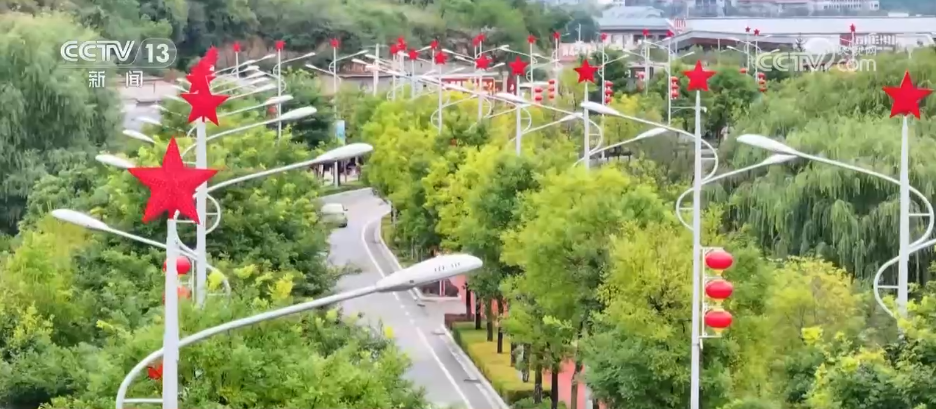
央视网消息:国庆中秋假期,恰逢金秋丰收季。中国旅游研究院最新调度显示,全国多地推出"丰收体验游",预计带动乡村旅游人次大幅 增长,不断上新的新场景、新业态,打开田间地头增收新空间。 秋风到,枫叶红,河南宝泉大峡谷的小松鼠收到了"季节通知"。小家伙们在眼前这个木屋里找到了新的"游乐场",怀抱着来自太行山"地 产"的花生和板栗窜来窜去,南来北往的游客跟着它们节奏,找寻太行山的"丰收果实"。眼前这个"晒秋小院",走进去就像闯进了太行的丰收 调色盘,辣椒红、玉米黄,晒出太行的丰收味儿。 文旅大数据显示,双节期间,全国超500条乡村旅游示范线路持续升温。在四川盐亭、山东武城等地"亲子农耕体验""农家院团圆饭"等项 目成为游客首选;在江苏盐城阜宁金沙湖和苏州太仓庆丰村,打年糕、音乐市集、主题沙雕、稻田艺术画等丰富多彩的农文旅融合项目,带动 农民增收。 边唱边跳的朱玉萍老人今年已经六十多岁了,既是延安南泥湾的本地农民,也是这里的"乡村新导游"。 科技赋能、稻田焕新,"种地"有新法子。南泥湾开发区携手黑龙江北大荒集团,"数字种田"落地,"寒地粳稻"生根,"稻渔共生"互补。这 里还不断迎来新"住客",朱鹮种群北迁安家落户延安后 ...
中经评论:科技为笔,绘就“三农”新图景
Zhong Guo Jing Ji Wang· 2025-10-05 05:20
Group 1 - The core viewpoint emphasizes the importance of agricultural modernization and rural development as foundational elements for national security and economic growth [1][2][3] - Technological advancements in agriculture are highlighted, with a projected agricultural technology progress contribution rate of 63.2% by 2024 and grain production expected to exceed 1.4 trillion jin [1] - Rural infrastructure improvements are noted, including over 464,000 kilometers of rural roads and a 90% 5G coverage rate in administrative villages, enhancing public service levels [1] Group 2 - The increase in farmers' income is identified as a key focus, with the urban-rural income ratio decreasing from 2.56:1 in 2020 to 2.34:1 in 2024 [2] - The growth of a diverse talent pool in rural areas is emphasized, with over 9 million high-quality farmers trained [2] - The need for balanced urban-rural development and addressing challenges such as insufficient integration of technology and industry is discussed [2][3] Group 3 - The strategy for agricultural and rural modernization is outlined, focusing on building an agricultural powerhouse and enhancing public services in education, healthcare, and elderly care [3] - The commitment to promoting agricultural efficiency, rural vitality, and increasing farmers' income is reiterated as essential for revitalizing rural areas [3]
这项秸秆还田新技术可助力实现水稻单产和地力提升
Xin Hua She· 2025-10-04 06:09
Core Viewpoint - The autumn water cutting and burying straw returning technology significantly enhances rice yield while reducing fertilizer usage, presenting a viable solution for sustainable agriculture in Northeast China [1] Group 1: Technology Overview - The autumn water cutting and burying straw returning technology allows for rice straw to be buried in the soil after harvest, achieving a yield of 670.3 kg per mu (approximately 0.067 hectares) with a 28% reduction in fertilizer usage compared to control fields, resulting in an increase of 67.4 kg per mu [1] - This technology transforms traditional straw returning methods by utilizing the effective accumulated temperature during the 200-day fall, winter, and spring period, and creates a favorable environment for microbial activity through water-based soil preparation [1] Group 2: Development and Implementation - The technology has been developed over several years by the Chinese Academy of Agricultural Sciences, which also created supporting machinery and water-fertilizer management techniques [1] - Experts in the industry recognize that the integration of agricultural machinery and agronomy in this technology addresses significant challenges in straw returning in Northeast China, contributing to the protection of black soil and increasing rice yield on a large scale [1]
新技术识别“最优饲草带”助力保障北方干旱区饲草安全
Xin Hua She· 2025-10-01 02:47
Core Insights - The research team led by Wang Shudong at the Chinese Academy of Sciences has made breakthroughs in artificial intelligence and remote sensing technology, successfully identifying optimal forage belts at kilometer scales in arid and semi-arid regions of northern China [1][3] - The results have been published in the international journal "Water Research" and are expected to provide scientific support for ecological protection in the Yellow River basin and national forage security [1] Group 1 - The team integrated satellite remote sensing, ecological hydrological models, and ground measurement data to reduce reliance on high-density ground sampling [1] - Key production factors such as irrigation water usage and vegetation productivity have been improved to over 90% accuracy through the use of ensemble learning and transfer learning techniques [1] - The introduction of regional bias correction technology has increased the accuracy of optimal forage belt identification to over 85% [1] Group 2 - Unlike traditional assessments that focus on single indicators, this technology constructs a three-dimensional collaborative optimization model of "water resource consumption - soil carbon sequestration - forage productivity" [3] - The unified evaluation system incorporates ecological, economic, and water cost factors, presenting results in a "one-map visualization" format [3] - This allows managers to directly identify priority planting areas and input-output ratios, providing precise decision-making support for resource allocation [3]
中国团队研发遥感融合人工智能技术 精准量化饲草种植发展潜力
Zhong Guo Xin Wen Wang· 2025-09-30 05:40
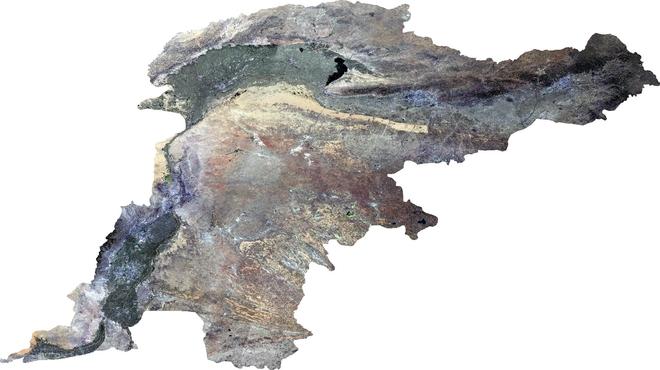
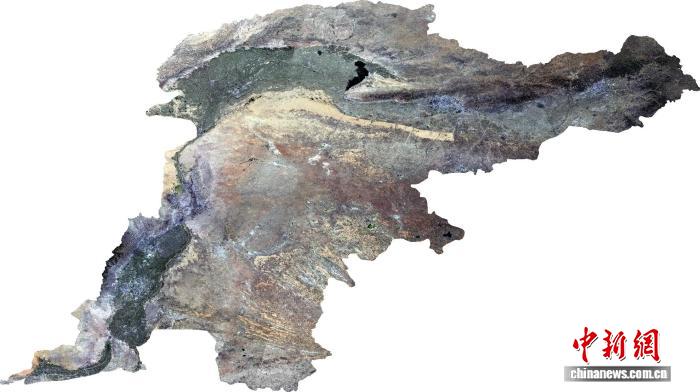
Core Insights - The Chinese Academy of Sciences' Aerospace Information Innovation Research Institute has developed an innovative AI and remote sensing integrated technology for precise identification of optimal forage areas in arid and semi-arid regions, particularly in the Yellow River basin [1] - This research addresses the dual pressures of rigid water resource constraints and the need to ensure forage security in northern China, aiming to scientifically restore degraded land while enhancing overall land productivity [2] Research Framework - The research team constructed a cross-level, cross-data source fusion technology framework that effectively integrates satellite remote sensing data, ecological hydrological process model simulations, and ground measurement data, significantly reducing reliance on high-density ground sampling points [4] - Utilizing multi-source satellite observation data, the team generated high-quality training samples based on water balance and crop growth mechanism models, achieving over 90% accuracy in the inversion of key production factors such as irrigation water usage, net primary productivity of vegetation, and soil organic carbon distribution [4] Decision-Making Tool - The study presents a three-dimensional optimization problem that balances water resource consumption, soil carbon sequestration benefits, and forage production output, moving away from traditional assessments that focus on single yield or ecological indicators [5] - By measuring ecological benefits, economic returns, and water costs on a unified scale, the research provides a visual tool that helps managers prioritize which plots are most suitable for forage planting, thereby optimizing resource allocation [6] Broader Implications - The developed remote sensing and AI technology framework has the potential for application in other arid regions, such as the Inner Mongolia-Ningxia ecological transition zone and the Hexi Corridor-Tarim Basin oasis edge, and offers valuable insights for similar challenges in global arid and semi-arid areas, including the Sahel region of Africa and parts of South Asia and West Asia [6]
AI农业 究竟有多“野”丨粤来粤好百千万
2 1 Shi Ji Jing Ji Bao Dao· 2025-09-30 05:17
Core Viewpoint - The world's first rice unmanned farm located in Zengcheng, Guangzhou, showcases a modern agricultural "sci-fi" scene through the integration of AI and agricultural machinery [1] Group 1 - The farm represents a significant advancement in modern agriculture, utilizing cutting-edge technology to enhance farming practices [1] - The project is a collaborative effort involving multiple organizations, including the Guangdong Provincial Department of Science and Technology [1]
转型贷款赋能 农业绿色转型加速
Jin Rong Shi Bao· 2025-09-30 02:42
Core Viewpoint - The agricultural green transformation in China is gaining momentum, driven by the dual carbon goals, but faces financing challenges due to the inherent vulnerabilities of traditional agriculture [1] Group 1: Financial Support Initiatives - The People's Bank of China Jiangjin Branch has initiated transformation finance to support sustainable development in agriculture, establishing a project database and a one-on-one service team to streamline loan processes for eligible green projects [1][2] - The introduction of a "carbon footprint + credit" financing model has enabled companies like Guangzhou Shuangqiao (Chongqing) Co., Ltd. to secure loans without traditional collateral, facilitating their transition to energy-efficient equipment [2] Group 2: Technological Advancements and Impact - Chongqing Guolong Agricultural Technology Development Group received a tailored loan of 25 million yuan to acquire advanced agricultural machinery, significantly improving planting efficiency and increasing fresh corn production by approximately 6,250 tons annually [3] - The implementation of smart agricultural technology has led to a 10-fold increase in planting efficiency, with precise sowing techniques reducing labor costs and enhancing productivity [3][4] Group 3: Environmental and Economic Benefits - The financial support has resulted in a reduction of over 15% in annual energy consumption for companies, translating to savings of 1,000 tons of standard coal, and a 19% decrease in carbon emissions during starch sugar production [4] - The green transformation has not only improved the companies' market competitiveness but also benefited local communities, providing employment opportunities and increasing local farmers' annual income by 20,000 yuan [3][4]