
Semiconductor

Search documents
未知机构:东吴计算机春节海内外AI催化不断聚焦最确定的AIinfra20260-20260224
未知机构· 2026-02-24 03:30
Summary of Conference Call Records Industry Overview - The conference call discusses the AI infrastructure industry, highlighting the rapid advancements and product launches from major players such as Alibaba, ByteDance, Zhiyu, Kimi, Minimax, and Google during the Spring Festival period [1][1]. - The demand for AI infrastructure is increasing, particularly in the context of new storage architectures due to ongoing storage shortages [1][1]. Key Points and Arguments - **Token Usage Surge**: OpenClaw's token usage increased to approximately 13% of all tokens on OpenRouter within two weeks, indicating a growing interest in this platform [1][1]. - **Storage Shortages**: Hynix reported that all customer demands cannot be met, with DRAM and NAND inventory levels only sufficient for about four weeks [2][2]. - **New Product Launches**: SanDisk is expected to launch new HBF products, while there is a recommendation for new storage GPU-native database directions, particularly highlighting Xinghuan Technology's rapid progress [2][2]. - **Pricing Trends**: Following the release of new models by Zhiyu, there has been a simultaneous increase in GLMCoding Plan and API prices, reflecting the strong demand for computing power [2][2]. - **Rising Rental Prices**: The rental prices for computing power in overseas markets (H, A, B cards) continue to rise, indicating a robust demand for computational resources [2][2]. Additional Important Content - **Domestic Model Success**: Four Chinese models ranked among the top five globally in terms of usage from February 16 to February 22, showcasing China's competitive position in the global AI landscape [3][3]. - **Impact on Domestic Computing Demand**: The success of Chinese large models is expected to drive demand for domestic computing power, with relevant companies including Haiguang Information, Zhongke Shuguang, Cambrian, and others identified as key players [4][4]. - **Risks**: Potential risks include the underdevelopment of AI technology and geopolitical tensions between China and the United States [4][4].
月之暗面20天收入超2025全年 智谱公开GLM-5技术细节
2 1 Shi Ji Jing Ji Bao Dao· 2026-02-24 02:45
Group 1: Industry Developments - Kimi, a large model unicorn, has raised over $1.2 billion in funding, achieving the fastest valuation of over $10 billion in China [2] - Zhiyuan released a technical report on GLM-5, a next-generation foundational model that significantly reduces reasoning costs while maintaining long-context capabilities [2] - SK Hynix reported that the storage market has entered a seller's market, with prices expected to rise due to AI demand and limited cleanroom space [10] Group 2: Company Financing - AI² Robotics completed a Series B financing round exceeding 1 billion RMB, with a valuation surpassing 10 billion RMB [6] - Qianxun Intelligent announced nearly 2 billion RMB in financing through two rounds, with participation from various investment firms [7] Group 3: Product Launches and Innovations - Honor plans to launch its first humanoid robot at the upcoming Mobile World Congress, marking its entry into the humanoid robot market [8] - Luxshare Precision announced a share buyback of 9.9 million shares, representing 0.14% of its total share capital [13] Group 4: Operational Updates - Huagong Technology reported that its production bases in Wuhan and Thailand are fully operational during the Spring Festival, with orders extending to Q4 2026 [8] - Luxshare Technology achieved a key breakthrough in the production of 12-inch silicon carbide single crystal samples [11]

未知机构:TMTB日终总结核心围绕Citrini抛售展开分析了科技板块的大幅波动背后-20260224
未知机构· 2026-02-24 02:30
Summary of TMTB Conference Call Industry Overview - The conference call focused on the technology sector, particularly the impact of the Citrini sell-off on market dynamics and valuations within the internet and software segments [1][2]. Core Market Performance - The Nasdaq 100 ETF (QQQs) declined by 1.22%, with the internet and software sectors being heavily affected, while the semiconductor sector outperformed the market [1]. - The Citrini article amplified existing valuation concerns in the tech sector, acting as a catalyst for the sell-off rather than introducing new market issues [1]. Key Points on Sell-off Reasons - Investors are no longer willing to accept high valuations for internet and software stocks, leading to significant declines in individual stocks such as SHOP (-7%), MDB (-12%), and DDOG (-11%) [2]. - The valuation assessments do not account for heavy stock-based compensation (SBC) in software companies, with some firms showing no profitability under GAAP standards, exacerbating the sell-off [2]. - The development of AI technology has sparked both excitement and fear among investors, with potential benefits for AI semiconductors but negative implications for internet and software companies [2]. - Citrini's article suggested that AI advancements could lead to a structural crisis, impacting global payment and consumer finance systems, which heightened market fears [2]. Market Judgments - The era of high valuations for internet and software stocks is likely over, with a long-term "valuation fog" expected to persist [3]. - In the short term, the market may stabilize, but individual stock differentiation will increase, leading to a focus on selective stock strategies [3]. - The development of the digital world, while driven by AI, will be slowed by organizational inertia and human habits, preventing rapid disruption of existing structures [3]. Sector and Stock Differentiation - Significant declines were noted in various sectors, including gig economy stocks (DASH, UBER), alternative asset management (APO, BX), Indian IT services, SaaS software, and payment/consumer finance (MA, V, AXP) [4]. - IBM saw a 15% drop due to competition from Anthropic's Claude Code tool, which threatens its high-margin consulting business [4]. - Conversely, the optical communications sector showed strong performance, with companies like LITE, CIEN, and GLW benefiting from accelerated capital expenditures in AI data centers [4]. - BE rose by 8% nearing new highs, while NBIS and SNDK increased by 3% due to upcoming catalysts [4]. Sector Performance Breakdown - In the TMT sector, telecommunications led with a 1.4% increase, while internet, payment, business services, and software sectors fell by over 3.8% [5]. - Within the AI sub-sector, new cloud providers/miners (2.7%) and optical communications (0.9%) performed well, while AI software stocks dropped by 6.5% [5]. - Market factors indicated that TMT momentum pairs led with a 4.0% increase, while factors related to long-term profitability and GARP software saw significant declines [5].
未知机构:TMTBTMTBREAKOUT发布的付费日终总结报告日期为2026年2月-20260224
未知机构· 2026-02-24 02:30
Summary of TMTB Report on Market Trends and Technology Stocks Industry Overview - **Industry Focus**: Technology sector, particularly internet and software stocks - **Date of Report**: February 24, 2026 - **Key Event**: Market sell-off triggered by an article titled "Citrini" [1][2] Market Performance Overview - **Overall Trend**: The QQQ index, which is tech-heavy, declined by 1.22% [1] - **Declining Sectors**: Internet and software stocks experienced significant sell-offs, contributing to the market's downturn [3] - **Resilient Sectors**: Semiconductor stocks outperformed the market, with telecommunications and networking equipment also showing gains [4] Core Market Trends Analysis - **Valuation Logic Shift**: The report highlights a critical and ongoing trend in the tech investment landscape for 2026: - Investors are unwilling to pay high valuations regardless of a company's narrative or fundamentals [5] - **Examples of Declining Stocks**: - SHOP: Down 7% with a valuation of 10x revenue and 50x P/E - MDB: Down 12% with a valuation of 9x revenue and 60x P/E - DDOG: Down 11% with a valuation of 8x revenue and 47x P/E - CRWD: Down 10% with a valuation of 17x revenue and 75x P/E - NET: Down 10% with a valuation of 20x revenue and 130x P/E - **Underlying Issues**: High valuation multiples do not account for significant stock-based compensation (SBC) costs, and many companies are not profitable under GAAP accounting [6] - **Future Outlook**: Investors are unlikely to accept "sky-high valuations" as they did in the past, indicating a fundamental change in market perception [5][6] "Citrini Article" and Human Imagination Resonance - **Broader Context**: The report places the sell-off within the larger context of rapid AI advancements impacting human psychology and investment logic [7] - **Key Insight**: Human imagination is growing faster than technical indices, leading to fundamental doubts about the "terminal value" of many tech companies, creating a "terminal value fog" [7] - **Citrini's Role**: The article effectively captured and escalated fears regarding potential disruptions to global payment and consumption systems, acting as a catalyst for market sentiment [8] Future Market Outlook and Investment Strategy - **Short-term Stability**: Despite ongoing emotional shocks and the "terminal value fog," the market may stabilize in the coming weeks, shifting focus from broad sector declines to individual stock differentiation [9] - **Long-term Perspective**: The report cautions that while digital innovation progresses rapidly, real-world changes are constrained by corporate, governmental, and societal inertia, leading to slower implementation [10] - **Market Metaphor**: The author compares current market uncertainty to fog in San Francisco, suggesting that while uncertainty is present, it will eventually clear [11] Sector and Stock Movements - **Strong Performers**: The optical sector is expected to benefit from increased AI data center capital expenditures, with companies like LITE, CIEN, GLW, and COHR showing gains [13] - **Weak Performers**: The "Citrini Doomsday Basket" includes sectors directly threatened by AI disruption, such as gig economy (DASH, UBER), alternative asset management/insurance (APO, BX, KKR), Indian IT services (INFY, WIT), SaaS software (NOW, CRM), and payment/consumer finance (MA, V, AXP, SYF), all of which experienced significant declines [14] - **Notable Decline**: IBM fell 15% due to AI tools threatening its legacy consulting business [15] Conclusion - **Core Argument**: The market sell-off on February 24, 2026, is not an isolated incident but a concentrated reflection of the structural shift in tech stock valuations driven by the AI revolution and investor imagination [16] - **Future Implications**: The era of high valuations for internet and software companies may be over, leading to a new phase of valuation reassessment and significant stock differentiation [16]

黑芝麻智能高开逾2% 携手国汽智控斩获首个华山A2000芯片量产方案项目定点
Zhi Tong Cai Jing· 2026-02-24 01:44
Core Viewpoint - Black Sesame Intelligence (000716) has achieved a significant milestone in its strategic partnership with Guoqi Zhikong, marking a key development in the smart driving solutions based on the Huashan A2000 chip [1] Group 1: Company Developments - Black Sesame Intelligence's stock opened over 2% higher, currently up 2.43% at HKD 19.78, with a trading volume of HKD 1.2541 million [1] - The partnership with Guoqi Zhikong has successfully secured a smart driving project with a leading domestic automaker, covering L2+ to L3 level full-scene intelligent driving functions [1] - This marks the first publicly announced mass production solution since the launch of the Huashan A2000 chip, indicating the platform's entry into the phase of large-scale implementation [1] Group 2: Future Outlook - The collaboration will focus on joint development and deep technical optimization of core functions such as highway navigation, urban navigation, and intelligent parking [1] - The first batch of mass production vehicles equipped with this solution is expected to be realized by 2026 [1]

Exclusive: China's DeepSeek trained AI model on Nvidia's best chip despite US ban, official says
Reuters· 2026-02-24 00:10
Core Viewpoint - The Chinese AI startup DeepSeek has reportedly trained its latest AI model on Nvidia's most advanced AI chip, the Blackwell, which may violate U.S. export controls [1][2]. Group 1: Company Information - DeepSeek's new AI model is expected to be released as soon as next week [1]. - The U.S. government believes that DeepSeek may attempt to remove technical indicators that could reveal its use of American AI chips [2]. - The U.S. policy emphasizes that Blackwell chips are not being shipped to China, indicating that DeepSeek's possession of these chips could represent a violation of export controls [2][4]. Group 2: Industry Context - The situation could further complicate discussions among Washington policymakers regarding Chinese access to advanced American AI semiconductor technology [3]. - The Chinese embassy in Washington has expressed opposition to the politicization of economic and technological issues, criticizing the expansive use of export controls [2].

世界计算·长沙智谷一区全面投运 逾200家企业签约入驻,二三区预计年中竣工
Xin Lang Cai Jing· 2026-02-23 23:45
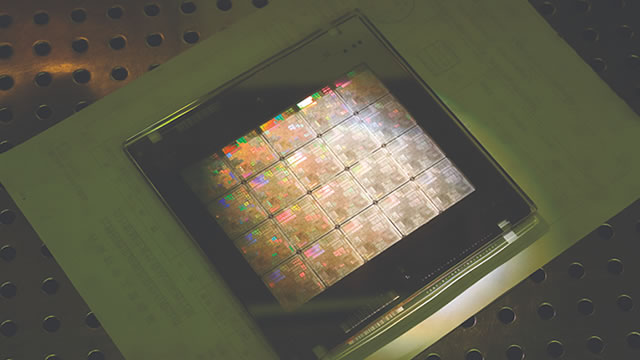
Group 1 - The core focus of the news is the rapid development and investment in the Changsha Global R&D Center, specifically the World Computing Changsha Smart Valley, which aims to create a robust computing ecosystem and attract numerous enterprises [1][2] - The first phase of the Smart Valley, covering approximately 830,000 square meters, is operational, while the second and third phases, totaling around 900,000 square meters, are expected to be completed by mid-year [1] - Over 200 companies have signed agreements to establish operations in the park, with nearly 50 already in place, and plans to attract 20 leading enterprises, 50 headquarters, and 1,500 small and medium-sized enterprises, aiming to gather 80,000 to 100,000 talents [1] Group 2 - The park emphasizes industrial collaboration, utilizing a "super middle platform + chain life service platform" to foster partnerships among enterprises and share computing resources [1] - The park has launched an initial 200P computing power to support AI training, big data, and reasoning computing, ensuring operational capabilities even before full spatial delivery [1] - The park features a comprehensive energy system that reduces energy costs for enterprises by over 15%, alongside 100,000 square meters of commercial living space, talent apartments, and smart facilities, promoting integration of industry and urban life [2]
AMAT vs. AMKR: Which AI-Driven Semiconductor Stock is a Safer Bet?
ZACKS· 2026-02-23 15:25
Core Insights - Applied Materials (AMAT) and Amkor Technology (AMKR) are essential players in the AI infrastructure value chain, with AMAT focusing on semiconductor equipment manufacturing and AMKR on packaging and testing finished chips [1][2]. Group 1: AMAT Overview - AMAT is a leading manufacturer of semiconductor fabrication equipment, particularly in deposition, etching, and inspection, and is expected to see significant growth in its wafer fabrication equipment businesses by 2026 [3]. - The company specializes in advanced technologies such as Gate-All-Around transistors at 2nm and below, hybrid bonding, and 3D device metrology, which are critical for next-generation semiconductor manufacturing [4]. - AMAT's HBM chips are becoming more complex, with a projected increase in wafer starts per bit, leading to a target of $3 billion in revenue in the coming years [5]. - The company anticipates future HBM generations will adopt hybrid bonding, where it is a leading innovator with its Kinex product [6]. - The Zacks Consensus Estimate predicts revenue growth of 9% and 18% for AMAT in fiscal 2026 and 2027, respectively, with earnings growth estimates of 16% and 24.5% for the same periods [7]. Group 2: AMKR Overview - AMKR is benefiting from strong demand for advanced packaging driven by AI and high-performance computing, although it faces challenges in the near term [10]. - The company expects record revenues in advanced packaging in 2026, with significant growth in its 2.5D and high-density fan-out platforms, supported by new data center CPU programs [12]. - The automotive sector is also a growth area for AMKR, with increasing semiconductor content per vehicle despite flat global auto unit volumes [13]. - However, the traditional PC market is expected to be soft, which may offset growth in other areas, and near-term margins are under pressure due to various factors [14]. - The Zacks Consensus Estimate for AMKR suggests revenue growth of 8.2% and 5.5% for fiscal 2026 and 2027, respectively, with earnings growth estimates of 8% and 29.7% [15]. Group 3: Comparative Performance - Over the past year, AMAT shares have increased by 122.7%, while AMKR shares have risen by 118.4% [16]. - In terms of valuation, AMAT has a forward price-to-earnings (P/S) ratio of 9.09, compared to AMKR's 1.62, indicating a higher valuation for AMAT relative to its historical median [19]. - AMAT is currently rated as a Zacks Rank 2 (Buy), while AMKR holds a Zacks Rank 3 (Hold), suggesting that AMAT is the preferred investment choice at this time [23].


“邪修”AI芯片的Taalas,成色如何?|AGI焦点
Tai Mei Ti A P P· 2026-02-23 13:51
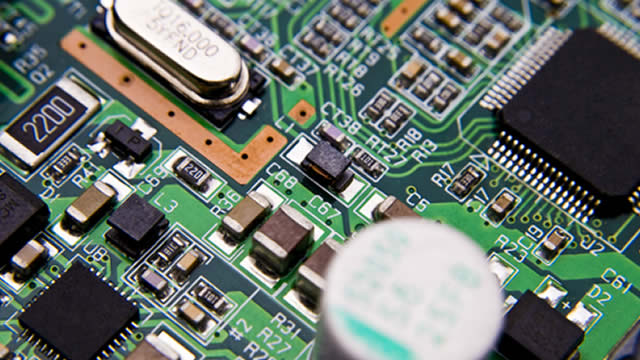
Core Viewpoint - Taalas, a Canadian startup, has launched its HC1 chip, claiming to potentially disrupt Nvidia's dominance in the AI chip market with significant performance and efficiency improvements [2][5]. Group 1: Product Launch and Performance - Taalas released its first product, the HC1 chip, optimized for the Llama 3.1 8B model, achieving an inference speed of 12,000 tokens per second with a 50-fold efficiency improvement over traditional GPU solutions [2]. - The HC1 chip's peak inference speed is close to 17,000 tokens per second, which is nearly 10 times faster than current leading technologies, with construction costs reduced to 1/20 and power consumption to 1/10 of existing solutions [2]. - In tests, Taalas's HC1 outperformed Nvidia's H200 and B200 chips by 48 times, with performance figures of 230 tokens per second and 353 tokens per second respectively [3]. Group 2: Technology and Innovation - Taalas employs a unique ASIC technology that allows for a two-month chip customization cycle, contrasting with the traditional GPU approach [2][5]. - The company aims to eliminate software dependencies by directly embedding models onto chips, which enhances performance and reduces costs significantly [8][9]. - Taalas's approach is described as "Total specialization," where each model has a dedicated chip, potentially leading to lower inference costs and faster speeds [8][9]. Group 3: Market Position and Future Prospects - Taalas has raised a total of $219 million in funding, indicating strong investor confidence in its disruptive potential [2][8]. - The company plans to release a new product for medium-scale inference models in 2024, which will be closely watched for its performance [14]. - Analysts suggest that Taalas's chips may find significant applications in edge computing scenarios, such as robotics and autonomous vehicles, due to their low latency and power consumption [20]. Group 4: Challenges and Industry Context - Despite the excitement, Taalas faces challenges in adapting its technology to larger models, as it currently focuses on the smaller 8B version of Llama 3.1 [13]. - Concerns have been raised about the practical utility of Taalas's chips, particularly regarding their ability to keep pace with rapidly evolving large models [17][18]. - The competitive landscape remains dominated by Nvidia, which has a robust software ecosystem that Taalas aims to disrupt [21].
节后“红包行情”会否继续?券商分析师假期“连轴转”,关注这些方向
Mei Ri Jing Ji Xin Wen· 2026-02-23 11:43
炒股就看金麒麟分析师研报,权威,专业,及时,全面,助您挖掘潜力主题机会! 每经记者|王海慜 每经编辑|赵云 2026年马年春节假期,虽然A股休市,但资本市场却热度不减。 各大券商分析师们开启"加班模式",以高频路演、专题研报填补假期信息真空。从兴业证券策略团队的 连续七天新春专题路演,到中信证券聚焦AI(人工智能)大模型的系列电话会,再到多家机构跟踪春 节消费动态,头部与中小券商均紧抓假期窗口输出市场观点。 港股马年开市两天呈现结构性行情,2月20日开市首日AI大模型、机器人板块逆势大涨,创新药、氢能 概念股表现亮眼。2月23日,港股大涨。截至收盘,恒生指数涨2.53%,恒生科技指数涨3.34%。 此外,业内预计,美国最高法院关税裁定利好非美市场资产,叠加A股春节效应的历史正向表现,市场 对马年春节后"红包行情"的延续抱有较高期待。 机器人、创新药大热 这场名为"新春专题系列"的直播,内容涵盖港股情绪研究框架、2026年十大产业趋势、全球估值比较、 全球产业映射、出海深度报告等多个维度。张启尧及其团队试图在春节假期这一A股市场"空窗期",通 过高频的观点输出,抢占投资者的注意力高地。 这并非行业个例。多家机构 ...