
装备制造业

Search documents
2025年1-10月工业企业利润分析:低基数与生产走弱下的利润增速收窄
Yin He Zheng Quan· 2025-11-27 08:12
Group 1: Profit Growth Analysis - Profit growth for industrial enterprises from January to October 2025 is 1.9%, down from 3.2% in the previous period[1] - The main reasons for the narrowing profit growth are the weakening low base effect and declining production[1] - Industrial production in October 2025 decreased by 4.9%, a drop of 1.6 percentage points compared to the previous month[1] Group 2: Price and Profit Margin Trends - The Producer Price Index (PPI) showed a slight improvement in October 2025, increasing by 0.1% compared to a decline of 2.1% in the previous month[1] - Profit margins slightly decreased to 5.25% from 5.26% in the previous month[1] - Mining industry profit margins improved slightly, while manufacturing and utility sectors saw a decline compared to September[1] Group 3: Demand and Inventory Dynamics - Weak demand has led to passive inventory accumulation, with inventory levels increasing by 6.82% in October 2025[1] - The Purchasing Managers' Index (PMI) fell by 1.2 percentage points to 47.3% in October 2025, indicating contraction in manufacturing activity[1] Group 4: Future Outlook and Investment Implications - Future profit trends are expected to stabilize after short-term fluctuations, supported by domestic demand expansion policies[2] - External demand and geopolitical risks will also influence future profit trajectories[2] - Equipment and high-tech manufacturing sectors remain the main drivers of profit growth[1]
区域观察丨新GDP万亿之城,是东北的破局还是长三角的扩容?
Sou Hu Cai Jing· 2025-11-27 08:04
GDP万亿城市是推动全国经济增长的重要动力源。随着2025年度收官的临近,大连、温州、徐州这三座准GDP万亿城市的晋级赛,已从蓄力积淀转入冲 刺"撞线"的关键阶段。 前三季度筑牢的增长根基、积累的发展优势,既为年末收官提供了坚实支撑,更彰显出三座城市经济发展的韧性、活力与潜力,一场关乎城市能级跃升的 竞速正进入白热化。 从核心数据来看,三城已形成"温州领跑、徐州紧追、大连猛赶"的紧咬态势。今年前三季度,温州实现地区生产总值7414.4亿元,同比增长6.1%,以微弱 优势成为最接近万亿门槛的选手;徐州以7298.12亿元的经济总量和6.0%的增速,保持着"贴身"追赶的强劲势头;大连实现地区生产总值7248.2亿元,同比 增长6.0%,虽表现略逊于前两者,但增速仍高出全国0.8个百分点。值得关注的是,三座城市不仅总量差距微小,增速均达到6%及以上,齐头并进的突破 势头,让这场晋级赛的悬念持续拉满。 在这场竞速中,工业经济"压舱石"作用尤为凸显,成为三城冲刺的核心动力源。今年前三季度,温州全市规上工业增加值同比增长10%,高于全省2.9个百 分点,列浙江省第一,这一指标已连续26个月保持8%以上增速,连续31个月高 ...


59502.9亿元、1.9%,增长!透过数据看工业新增长点多 企业效益结构优化
Yang Shi Wang· 2025-11-27 07:34
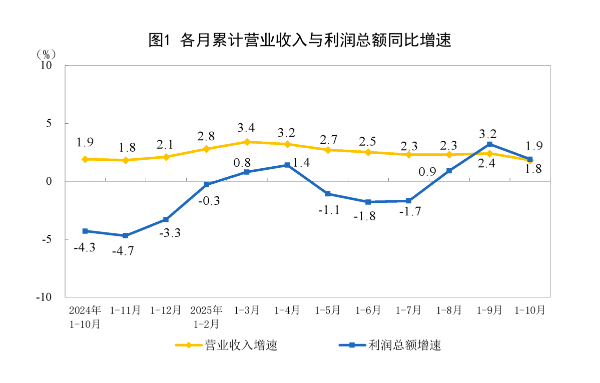
Core Insights - The overall profit of industrial enterprises above designated size in China showed stable growth from January to October, with a total profit of 59,502.9 billion yuan, representing a year-on-year increase of 1.9% [3][7] - The equipment manufacturing industry experienced a significant profit increase of 7.8%, contributing 2.8 percentage points to the overall profit growth of industrial enterprises [5][7] - High-tech manufacturing also performed well, with profits rising by 8.0%, surpassing the average growth rate of all industrial enterprises by 6.1 percentage points [8][11] Group 1 - From January to October, the total profit of industrial enterprises above designated size reached 59,502.9 billion yuan, with a year-on-year growth of 1.9% [3] - The revenue of these enterprises also saw a year-on-year increase of 1.8%, indicating sustained growth [3] - The profit growth of the equipment manufacturing sector was a key driver for the overall industrial profit increase, highlighting the sector's importance in the industrial economy [7] Group 2 - The high-tech manufacturing sector demonstrated robust performance, with an 8.0% increase in profits, indicating a positive trend in this area [8][11] - The structural optimization of industrial enterprise efficiency is evident, with traditional industries showing signs of improved productivity and profitability [11] - The ongoing integration of technological and industrial innovation is supporting the stability and recovery of industrial profits, with macroeconomic policies expected to further enhance enterprise performance [14]

三连增!国家统计局发布:↑1.9%
券商中国· 2025-11-27 06:40
Core Viewpoint - The profit of industrial enterprises in China showed a slight increase of 1.9% year-on-year for the first ten months of the year, but a decline of 5.5% was observed in October due to high base effects and rising financial costs [1][3]. Group 1: Profit Performance - From January to October, the total profit of industrial enterprises reached 59,502.9 billion yuan, with a year-on-year growth of 1.9% [1]. - In October alone, the profit of industrial enterprises decreased by 5.5% year-on-year, influenced by a high base from the previous year and increased financial expenses [3]. - Cumulative profit growth has been positive since August, with mining industry profits down by 27.8%, manufacturing up by 7.7%, and utilities up by 9.5% [3]. Group 2: Traditional Industry Development - The development of new productive forces in traditional industries has begun to show results, with profits significantly exceeding the industry average [2][4]. - In the chemical and building materials sectors, specific industries such as graphite and carbon products, biochemicals, and cultural chemicals saw profit increases of 77.7%, 73.4%, and 19.1%, respectively, outperforming their industry averages [4]. Group 3: Structural Optimization - The profit of the equipment manufacturing sector grew by 7.8% year-on-year, contributing 2.8 percentage points to the overall profit growth of industrial enterprises [5]. - High-tech manufacturing also performed well, with profits increasing by 8.0%, surpassing the average growth of all industrial enterprises by 6.1 percentage points [5]. - Among the eight major categories in equipment manufacturing, seven reported year-on-year profit growth [5]. Group 4: High-Quality Development - The intelligent unmanned aerial vehicle and intelligent vehicle-mounted equipment manufacturing sectors experienced remarkable profit growth of 116.1% and 114.9%, respectively [6].

权威数读|前10个月,规上工业企业利润稳定增长
Xin Hua She· 2025-11-27 05:45
国家统计局27日发布数据显示,今年前10个月,我国工业企业利润稳定增长,装备制造业利润较快增长,高技术制造业效益增势良好,传统产 业提质升级成效显现,工业经济高质量发展稳步推进。跟随海报,一起了解下吧。 装备制造业利润较快增长 1—10月份 规模以上装备制造业利润同比增长7.8% 拉动全部规模以上工业企业利润增长 2.8个百分点 8个大类行业中有7个行业利润实现同比增长 权威数读_/ 王国观侯以 早早 141年14 实现利润总额59502.9亿元 同比增长1.9% 自今年8月份以来累计增速连续三个月保持增长 权威数读_/ 工业企业营收保持增长 1—10月份 规模以上工业企业营业收入同比增长1.8% 为工业企业盈利恢复创造有利条件 权威数读 / 策划:令伟家 统筹:曹建礼 文案:刘雅萱 制作:林胜概 高技术制造业效益 增势良好 1—10月份 规模以上高技术制造业利润同比增长8.0% 高于全部规模以上工业平均水平6.1个百分点 智能无人飞行器制造、智能车载设备制造行业 利润分别增长116.1%、114.9% 权威数读_/ 传统产业提质升级 成效显现 1—10月份 传统产业新质生产力发展成效初步显现 十八年四月二十 ...

权威数读丨前10个月,规上工业企业利润稳定增长
Xin Hua Wang· 2025-11-27 05:27
Core Insights - The industrial profits in China have shown stable growth in the first ten months of the year, with significant contributions from the equipment manufacturing and high-tech manufacturing sectors [1][2]. Group 1: Industrial Profit Growth - In the first ten months, the total profit of large-scale industrial enterprises reached 59,502.9 billion yuan, reflecting a year-on-year increase of 1.9% [3]. - Since August, the cumulative growth rate has maintained an upward trend for three consecutive months [3]. Group 2: Revenue Growth - The operating revenue of large-scale industrial enterprises increased by 1.8% year-on-year in the first ten months, creating favorable conditions for profit recovery [6]. Group 3: Equipment Manufacturing Sector - The profit of large-scale equipment manufacturing enterprises grew by 7.8% year-on-year, contributing 2.8 percentage points to the overall profit growth of large-scale industrial enterprises [9]. - Out of eight major industry categories, seven reported year-on-year profit growth [9]. Group 4: High-Tech Manufacturing Sector - The profit of large-scale high-tech manufacturing enterprises increased by 8.0% year-on-year, surpassing the average growth rate of all large-scale industrial enterprises by 6.1 percentage points [11]. - Notable profit growth was observed in the manufacturing of intelligent unmanned aerial vehicles and intelligent vehicle-mounted equipment, with increases of 116.1% and 114.9%, respectively [11].

中国规上工业企业利润累计增速连续三个月保持增长
Zhong Guo Xin Wen Wang· 2025-11-27 04:10
中国规上工业企业利润累计增速连续三个月保持增长 中新社北京11月27日电 (记者 王恩博)中国国家统计局27日公布,1至10月份,中国规模以上工业企业利 润同比增长1.9%,自今年8月以来累计增速连续三个月保持增长。 国家统计局工业司首席统计师于卫宁表示,1至10月,规模以上工业企业营业收入同比增长1.8%,营业 收入持续保持增长,为工业企业盈利恢复创造有利条件。 1至10月,规模以上装备制造业利润同比增长7.8%,拉动全部规模以上工业企业利润增长2.8个百分点; 实现利润总额占全部规模以上工业企业利润总额比重达38.5%,较上年同期提高2.0个百分点。从行业 看,1至10月,装备制造业的8个大类行业中有7个行业利润实现同比增长,其中,铁路船舶航空航天、 电子行业利润两位数增长。 1至10月,规模以上高技术制造业利润同比增长8.0%,高于全部规模以上工业平均水平6.1个百分点。从 行业看,智能电子制造发展向好,智能无人飞行器制造、智能车载设备制造行业利润分别增长 116.1%、114.9%;半导体制造效益增长较快,集成电路制造、电子专用材料制造、半导体分立器件制 造行业利润分别增长89.2%、86.0%、17 ...
【图解】税收数据反映10月份我国新质生产力持续发展壮大
Zhong Guo Jing Ji Wang· 2025-11-27 03:26
Group 1 - The core viewpoint of the article highlights the robust growth of China's new productive forces, particularly in high-end manufacturing, innovative industries, and the integration of digital and physical sectors, which injects new vitality into economic development [4][5][6]. Group 2 - In high-end manufacturing, sales revenue in October increased by 7.3% year-on-year, consistently outperforming the average level of the manufacturing industry, with its share nearing half of the manufacturing sector [5]. - The three major manufacturing sectors reported sales revenue growth of 27.2%, 24.4%, and 10.1% respectively, indicating strong performance [5]. - The innovative industries experienced a year-on-year sales revenue growth of 13.6% in October, maintaining a double-digit growth rate [6]. - High-tech service and manufacturing sectors also contributed to this growth, with significant increases in sales revenue [6]. - The integration of digital and physical sectors showed an 8.5% year-on-year growth in sales revenue, reflecting ongoing advancements in the digital economy [7]. - The core industries of the digital economy saw sales revenue growth of 9.6%, with digital product services and digital technology applications growing by 10.2% and 13.1% respectively [8].

基数抬高工业利润增速转负 高技术制造业效益增势良好
Di Yi Cai Jing· 2025-11-27 03:21
Core Viewpoint - In October, the profit growth of industrial enterprises above designated size in China experienced a decline after two months of rapid growth, with a year-on-year decrease of 5.5% due to high base effects and rising financial costs [1][2]. Summary by Sections Industrial Profit Growth - From January to October, the profit of industrial enterprises above designated size increased by 1.9% year-on-year, maintaining growth for three consecutive months since August [1]. - In August and September, the profits saw significant increases of 20.4% and 21.6% respectively [2]. Revenue and Sector Performance - The operating income of industrial enterprises above designated size grew by 1.8% year-on-year from January to October, creating favorable conditions for profit recovery [4]. - By sector, mining profits fell by 27.8%, while manufacturing profits rose by 7.7%, and profits in the electricity, heat, gas, and water production and supply sector increased by 9.5% [4]. High-Tech and Equipment Manufacturing - High-tech and equipment manufacturing sectors were the main drivers of profit growth, with profits in this category rising by 7.8%, contributing 2.8 percentage points to the overall profit growth of industrial enterprises [4]. - High-tech manufacturing profits increased by 8.0%, outperforming the average industrial profit growth by 6.1 percentage points [5]. Traditional Industries and Upgrading - Traditional industries showed signs of quality improvement, with profits significantly exceeding the industry average [5]. - In specific segments, profits in the chemical and building materials sectors saw substantial increases, with graphite and carbon products manufacturing up by 77.7% and biochemical pesticides up by 73.4% [6]. Future Outlook and Policy Implications - The National Development and Reform Commission is addressing issues of price competition in various industries to maintain a stable market order, which is expected to support high-quality development [7]. - Analysts suggest that ongoing policies to expand domestic demand and manage price competition will be crucial for the sustained improvement of industrial profits [6][7].
国家统计局:1—10月份规模以上工业企业利润稳定增长
Zhong Guo Xin Wen Wang· 2025-11-27 02:54
Group 1 - The core viewpoint of the articles highlights the stable growth of industrial enterprise profits in China, with a year-on-year increase of 1.9% from January to October 2023, marking three consecutive months of growth since August [1] - The mining industry experienced a decline of 27.8%, while the manufacturing sector grew by 7.7%, and the electricity, heat, gas, and water production and supply sector saw a growth of 9.5% [1] - In October, industrial enterprise profits saw a year-on-year decrease of 5.5% due to high base effects from the previous year and increased financial costs [1] Group 2 - The equipment manufacturing industry showed a profit growth of 7.8% from January to October, contributing 2.8 percentage points to the overall profit growth of industrial enterprises, with its profit accounting for 38.5% of total industrial profits, an increase of 2.0 percentage points from the previous year [2] - Among the eight major categories in the equipment manufacturing sector, seven reported profit growth, with the railway, shipbuilding, aerospace, and electronics industries experiencing double-digit growth rates of 32.0% and 12.8% respectively [2] - High-tech manufacturing profits increased by 8.0%, surpassing the average growth rate of all industrial enterprises by 6.1 percentage points, with significant growth in smart electronic manufacturing and semiconductor sectors [2] Group 3 - Traditional industries are showing signs of quality improvement, with profits significantly exceeding the industry average, particularly in the chemical and building materials sectors [3] - Specific industries such as graphite and carbon products, biochemical pesticides, and cultural information chemicals saw profit increases of 77.7%, 73.4%, and 19.1% respectively, outperforming their respective industry averages [3] - The focus moving forward will be on implementing policies to expand domestic demand, optimize structure, and foster new energy, aiming for a qualitative and quantitative upgrade in the industrial economy [3]