
交通基础设施

Search documents
新加坡位居东南亚道路基础设施质量首位
Shang Wu Bu Wang Zhan· 2025-10-14 15:49
Group 1 - Singapore ranks first in Southeast Asia with a score of 6.65 in the latest Road Quality Index, reflecting advanced urban planning and continuous investment in its transportation system [1] - Malaysia and Brunei follow with scores of 5.45 and 4.93 respectively, known for well-maintained highways and smooth traffic connections between major cities [1] - Thailand and Indonesia show significant progress with scores of 4.36 and 3.89, but still face challenges in rural and regional road quality [1] Group 2 - Major cities like Kuala Lumpur, Bangkok, and Jakarta are focusing on improving road quality due to increasing vehicle numbers and frequent traffic congestion [1] - Indonesia and Thailand have invested heavily in infrastructure, launching multiple highway and toll road projects to connect industrial and tourist areas more efficiently [1] - Countries such as the Philippines, Cambodia, Laos, and Vietnam lag behind with scores below 3.6, indicating a need for continuous improvement in road construction and quality control [1] Group 3 - Improving road networks in Southeast Asia is crucial for enhancing travel experiences and is vital for trade, logistics, and economic integration [2] - The construction of high-quality and sustainable transportation infrastructure will be key in shaping future travel methods and economic growth in the region [2]
什么是重庆国企改革概念,涵盖哪些产业链
Sou Hu Cai Jing· 2025-10-07 01:23
Core Insights - The reform of state-owned enterprises (SOEs) in Chongqing is becoming a focal point in the capital market, driven by mixed-ownership reform, asset integration, governance optimization, and operational efficiency improvements [1][2] - The reform process encompasses several key industrial chains, including transportation infrastructure, public utilities, and manufacturing [1] Group 1: Transportation Infrastructure - SOEs in the transportation infrastructure sector, such as rail transit, highways, and port logistics, are enhancing service and profitability by attracting strategic investors and promoting market-oriented operations [1] Group 2: Public Utilities - Public utility enterprises, including water, gas, and electricity supply, are focusing on improving management efficiency and service quality while exploring diversified business models [1] Group 3: Manufacturing - The manufacturing sector, particularly in automotive, equipment manufacturing, and new materials, is undergoing transformation through technology upgrades, divestment of non-core assets, and the promotion of smart manufacturing [1] - Some enterprises are actively participating in the Chengdu-Chongqing economic circle construction to expand regional collaborative development [1] Group 4: Financial Services - The reform in the financial services sector involves local financial platforms integrating resources, strengthening risk control, and supporting the real economy to build a more robust financial support system [2] Group 5: Consumer Sector - Consumer-oriented SOEs in sectors like culture, tourism, and commerce are attempting to activate growth potential through brand revitalization and digital transformation [2] Group 6: Overall Impact - The overall reform of Chongqing's SOEs is expected to enhance corporate value and inject new momentum into the high-quality development of the regional economy [2] - Investors are encouraged to understand the underlying industrial logic of the reforms and focus on fundamental improvements and long-term growth rather than chasing short-term concepts [2]
沪苏湖高铁、常泰长江大桥等迎来通车后首次国庆“大考”路网协同,畅享新基建“一路生花”
Xin Hua Ri Bao· 2025-10-06 23:30
Core Viewpoint - The recent infrastructure developments in Jiangsu, including the opening of the Suzhou-Huzhou High-Speed Railway and the Changtai Yangtze River Bridge, have significantly improved transportation efficiency and enhanced the travel experience for citizens during the National Day holiday [1][5]. Group 1: Infrastructure Impact - The Suzhou South Station saw a total of 114,000 passengers from September 29 to October 6, while Shengze Station recorded 43,000 passengers, indicating strong demand for the new high-speed rail services [2]. - The Changtai Yangtze River Bridge managed an average daily traffic of 90,374 vehicles, with peak traffic on the first day of the holiday reaching 100,000 vehicles [2][3]. - The Ningyang Yangtze River Bridge experienced an 850% increase in traffic on October 1, with peak vehicle counts reaching approximately 19,000 [2]. Group 2: Operational Efficiency - Jiangsu's transportation department implemented ten measures to ensure smooth traffic flow, including a smart operation management platform that integrates various monitoring systems [3]. - The province has become the first in China to offer free towing and recovery services on highways, enhancing the overall travel experience [3]. - The Changtai Yangtze River Bridge has identified over 200 abnormal events with an accuracy rate exceeding 95%, demonstrating effective incident management [3]. Group 3: Service Enhancements - The Ningyang Yangtze River Bridge has upgraded its toll stations to mini service areas, providing amenities such as hot meals and electric vehicle charging stations [4]. - Cultural performances at the Shengze Station during the holiday period enriched the travel experience, showcasing local cultural heritage [4]. - The overall improvements in transportation infrastructure not only reduced travel times but also added a sense of warmth and community to the travel experience [4][6].
路网协同,畅享新基建“一路生花”
Xin Hua Ri Bao· 2025-10-06 21:27
Core Insights - The recent National Day holiday showcased the effectiveness of major infrastructure projects in Jiangsu, such as the Suzhou-Huzhou High-Speed Railway and the Changtai Yangtze River Bridge, significantly improving travel times and passenger experiences [1][5] Infrastructure Performance - The Suzhou South Station saw a total of 114,000 passengers from September 29 to October 6, while the Shengze Station recorded 43,000 passengers, indicating strong demand for the new high-speed rail services [2] - The Changtai Yangtze River Bridge experienced an average daily traffic of 90,374 vehicles, with a peak of 100,000 vehicles on the first day of the holiday, demonstrating its capacity to handle increased traffic [2][3] - The Ningyang Yangtze River Bridge reported a traffic surge of 850% on October 1, reaching a peak of approximately 19,000 vehicles, with expected return traffic peaks between 12,000 to 15,000 vehicles on October 7 and 8 [2] Traffic Management and Services - Jiangsu's transportation department implemented ten key measures to manage the high traffic flow, focusing on precise control and coordinated operations across the network [3] - The Changtai Yangtze River Bridge utilized a smart operation management platform, achieving over 95% accuracy in identifying abnormal events and ensuring rapid incident response [3] - The Ningyang Yangtze River Bridge enhanced services by transforming toll stations into mini service areas, providing food and charging stations, and ensuring quick accident resolution [4] Cultural Integration - The Suzhou-Huzhou High-Speed Railway incorporated cultural performances at the Shengze Station, enriching the travel experience and promoting local culture [4] - The overall infrastructure improvements not only reduced travel times but also enhanced the warmth and accessibility of transportation services, contributing to a more integrated regional experience [5]
新疆交建:公司将持续筑牢在交通基础设施领域的核心竞争力
Zheng Quan Ri Bao Wang· 2025-09-30 09:11
Core Viewpoint - The company aims to strengthen its core competitiveness in the transportation infrastructure sector, supporting road network construction and enhancing logistics business development to facilitate regional transportation and industrial synergy [1] Company Strategy - The company will continue to build its core competitiveness in the transportation infrastructure field [1] - It emphasizes deep support for road network construction [1] - The company is focused on empowering logistics business development [1] - It aims to assist in the coordinated development of regional transportation and industry [1]

江苏国企内部审计和综合监督培训班举办
Xin Hua Wang· 2025-09-15 14:12
Core Points - The training session for internal auditing and comprehensive supervision in state-owned enterprises was held from September 9 to 11, organized by the Jiangsu Provincial Audit Office and the Provincial State-owned Assets Supervision and Administration Commission [1] - The training aimed to enhance the internal auditing and supervision capabilities of state-owned enterprises, focusing on building an efficient internal supervision system [1] - Experts from various organizations, including the China Academy of Information and Communications Technology and China Coal Energy Group, provided lectures on topics such as digital transformation in auditing and vertical management reform in central enterprises [1] Group 1 - The training session was attended by over 150 participants, including leaders responsible for internal auditing and key personnel from state-owned enterprises and local state-owned assets supervision departments [1] - The curriculum included research on the digital transformation path of auditing, interpretation of internal auditing operational guidelines, and guidance on comprehensive supervision work [1] - Experience sharing was conducted by Jiangsu Bank, Jiangsu Transportation Holding Group, and Nanjing Transportation Group regarding internal auditing and comprehensive supervision practices [1]
国家发改委,重磅发文
Zhong Guo Ji Jin Bao· 2025-09-14 04:16
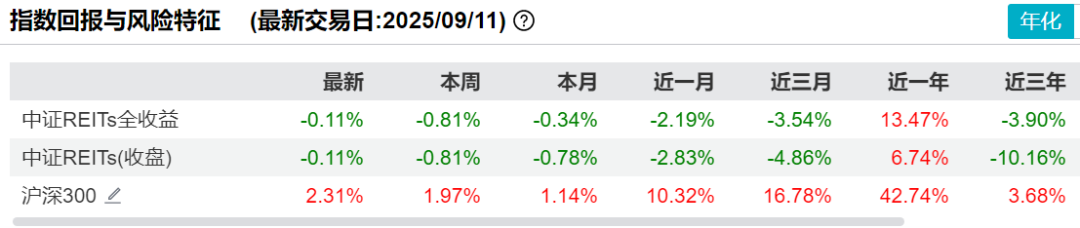
Group 1 - The REITs market is experiencing a downward trend, with the China Securities REITs Total Return Index declining by 0.81% as of September 12 [2][3] - Among the 74 publicly listed REITs, only 12 saw an increase this week, with the top performers including Zhongyin Zhongwai Logistics REIT and Huaxia Jinmao Commercial REIT, both rising over 0.8% [4][5] - The overall trading activity in the REITs market has decreased, with an average turnover rate of 0.99% across the market [7] Group 2 - A new infrastructure REIT, Shanxi Zhen Zhong Gong Investment Ruiyang Heating REIT, has been officially submitted for approval, marking the first REIT project in Shanxi [8] - The National Development and Reform Commission has issued a notice to accelerate the regular application and issuance of infrastructure REITs, emphasizing the importance of expanding the market and supporting private investment projects [11][12] - The notice also highlights the need for streamlined processes for new project acquisitions and improved project management efficiency [12]

镇洋发展(603213.SH):浙江沪杭甬拟换股吸收合并镇洋发展 9月3日起复牌
智通财经网· 2025-09-02 16:48
Core Viewpoint - Zhejiang Huhangyou is merging with Zhenyang Development through a share exchange, enhancing its business scope into the chemical industry and leveraging synergies in hydrogen energy and new energy transportation infrastructure [1] Group 1: Merger Details - The merger involves a share exchange ratio of 1:1.0800, meaning each share of Zhenyang Development will be exchanged for 1.0800 shares of Zhejiang Huhangyou [1] - Following the merger, Zhejiang Huhangyou will take over Zhenyang Development's existing business and expand into the chemical sector [1] Group 2: Strategic Benefits - The merger aims to enhance overall competitiveness and green transformation capabilities through deep collaboration in hydrogen energy preparation and application [1] - The integration of resources and business operations is expected to optimize corporate governance, improve resource allocation efficiency, and strengthen core competitiveness and industry position [1] Group 3: Financing and Market Impact - The merger will utilize an "A+H" dual financing platform to broaden financing channels and achieve a full industry chain synergy [1] - The company's A-shares and convertible bonds will resume trading on September 3, 2025 [1]

正值上市关键节点!山西千亿省属国企旗下拟上市公司“换帅”
Sou Hu Cai Jing· 2025-09-02 16:30
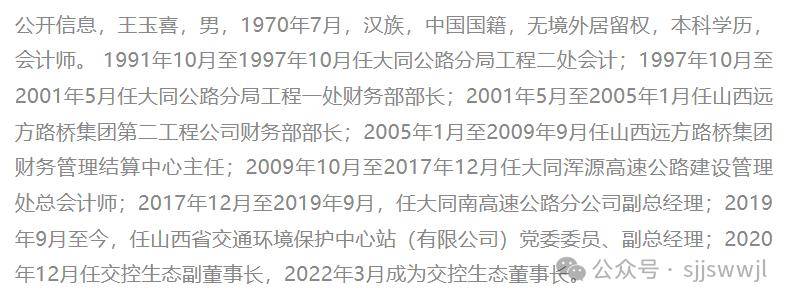
Core Viewpoint - The leadership change at Shanxi Jiaokong Ecological Environment Co., Ltd. is a strategic move ahead of its planned IPO, with Mu Xiaofeng appointed as the new chairman and legal representative, potentially bringing fresh momentum to the company's performance and listing prospects [1][9]. Group 1: Leadership Change - Mu Xiaofeng has been elected as the new chairman of the board, with his term lasting until the end of the current board's tenure [1]. - The previous chairman, Wang Yuxi, resigned for work-related reasons, leaving his position earlier than expected [3]. - Mu Xiaofeng has extensive experience in the transportation and environmental sectors, having worked his way up from grassroots positions within the Shanxi transportation system [4]. Group 2: Company Background - Shanxi Jiaokong Ecological Environment Co., Ltd. is a subsidiary of Shanxi Transportation Holding Group, focusing on ecological and environmental services [5]. - The company has evolved from its origins in 2011 as Shanxi Zhonglixin Environmental Technology Co., Ltd. and has undergone several name changes and ownership transitions [7]. - As of 2024, Shanxi Transportation Holding Group reported total assets of 650.48 billion yuan and annual revenue of 51.25 billion yuan [7]. Group 3: Financial Performance and IPO Plans - In 2023, the company achieved a revenue of 254 million yuan and a net profit of 20.57 million yuan, with a projected revenue of 300 million yuan for 2024, reflecting a year-on-year growth of 17.95% [9]. - The company submitted its IPO application to the China Securities Regulatory Commission in January 2025, marking it as the first company in Shanxi to file for IPO guidance this year [9]. - The leadership change is seen as a critical factor in enhancing the company's performance and supporting its IPO ambitions [9].
公募REITs周报:二级市场收益承压,新型基础设施换手率领先-20250829
Guohai Securities· 2025-08-29 07:32
1. Report Industry Investment Rating The provided content does not mention the industry investment rating. 2. Core Viewpoints of the Report - The primary - market activity of China's REITs market was relatively active this week. As of August 22, 2025, 14 REITs products were successfully issued this year, one less than the same period last year. The secondary - market REITs index was under pressure, but market activity increased. The weekly average turnover rate rose to 0.77%, up 0.13 percentage points from the previous week. Franchise - type REITs outperformed property - type REITs, and the transportation infrastructure sector had the smallest decline. New infrastructure had the highest turnover rate, while park infrastructure had the highest trading volume. There was a continuous valuation difference between property - type and franchise - type REITs [4]. 3. Summary According to the Table of Contents 3.1 Primary - Market Issuance Dynamics - As of August 22, 2025, 14 REITs products were successfully issued this year, one less than the same period in 2024. July was a concentrated issuance month, and there were no new products launched this month. Currently, there are 2 products under inquiry, 2 accepted, 3 with exchange feedback, 3 with manager feedback, and 3 approved. There are no products under application. This week, the review status of one REIT project, "Huaxia Hubei Jiaotou Chutian Expressway Closed - end Infrastructure Securities Investment Fund", was updated to "accepted" [4][9][10]. 3.2 Secondary - Market Review and Analysis 3.2.1 Market Scale - As of August 22, 2025, the total market value of public REITs in the whole market was 215.894 billion yuan, a decrease of 3.63 billion yuan from the previous week. The total floating market value increased to 103.439 billion yuan, a weekly increase of 1.18 billion yuan. The weekly average turnover rate was 0.77%, up 0.13 percentage points from the previous week, indicating increased market trading activity [13]. 3.2.2 Price Changes and Volatility - In the week of August 22, 2025, the CSI REITs Total Return Index closed down 1.74%, underperforming the ChinaBond New Comprehensive Wealth Index (down 0.31% for the week), the Dividend Index (up 0.90% for the week), the CSI Convertible Bond Index (up 2.83% for the week), and the CSI 300 Index (up 4.18% for the week). The volatility of the CSI REITs Total Return Index was 0.90%, higher than that of the ChinaBond New Comprehensive Wealth Index (0.13%), the Dividend Index (0.41%), and the CSI Convertible Bond Index (0.35%), but lower than that of the CSI 300 Index (0.91%). Property - type REITs had a weighted average weekly price change of - 1.88%, underperforming franchise - type REITs (- 0.98%). All asset types declined this week. The affordable rental housing sector led the decline with a - 3.96% change, while the transportation infrastructure sector had the smallest decline (- 0.87%). Only 4 REITs had a weekly increase of over 1%, namely CICC Chongqing Liangjiang Industrial Park REIT (2.33%), ICBC Hebei Expressway Group Expressway REIT (2.18%), CITIC Construction Investment Mingyang Smart New Energy REIT (1.38%), and Guotai Junan Dongjiu New Economy REIT (1.36%) [14][22][25]. 3.2.3 Turnover Rate and Valuation - In terms of weekly trading volume, park infrastructure REITs ranked first with 272 million shares, followed by affordable rental housing (129 million shares), warehousing and logistics (110 million shares), consumer infrastructure (102 million shares), transportation infrastructure (84.8 million shares), new infrastructure (69 million shares), energy infrastructure (65 million shares), and municipal environmental protection and water conservancy (30 million shares). The new infrastructure sector had the highest weekly turnover rate at 2.54%. As of August 22, 2025, the average cash distribution rate of property - type REITs was 3.89%, with park infrastructure leading at 4.20%. The average cash distribution rate of franchise - type REITs was 7.83%, with transportation infrastructure leading at 9.60%. The ChinaBond REITs valuation yield (IRR) of property - type REITs (4.09%) was higher than that of franchise - type REITs (3.27%). The PV multiplier of property - type REITs (1.28) was higher than that of franchise - type REITs (1.20) [28][29].