
消费基础设施

Search documents
房地产开发C-REITs周报:Q1首发扩容与存量扩募双轮驱动,关注年报信息
GOLDEN SUN SECURITIES· 2026-03-22 03:24
Investment Rating - The investment rating for the industry is maintained as "Accumulate" [5] Core Insights - The C-REITs market is experiencing a dual drive of new issuance and expansion of existing funds, with a focus on annual report information [2] - The overall performance of the C-REITs secondary market is weak, with a total market capitalization of approximately 223.89 billion yuan and an average market value of about 2.8 billion yuan per REIT [11] - The REITs index has shown a year-to-date increase of 1.18%, while the overall market indices have generally declined [9][10] Summary by Sections REITs Index Performance - The CSI REITs total return index decreased by 0.13% this week, closing at 1021.8 points, while the CSI REITs closing index fell by 0.15% to 785 points [9] - Year-to-date, the CSI REITs total return index has increased by 1.18%, while the CSI REITs closing index has risen by 0.82% [9] C-REITs Secondary Market Performance - The secondary market for C-REITs is showing weak fluctuations, with 39 REITs rising and 37 falling this week, resulting in an average weekly change of -0.02% [11] - The best-performing sectors this week include affordable housing and transportation infrastructure, while municipal water conservancy and logistics sectors have seen a pullback [11] REITs Valuation Performance - The internal rate of return (IRR) for listed REITs continues to show differentiation, with the top three being Ping An Guangzhou Guanghe REIT (11%), E Fund Guangkai Industrial Park REIT (9.9%), and Huaxia China Communications Construction REIT (9.7%) [3] - The price-to-net asset value (P/NAV) ratio for REITs ranges from 0.7 to 1.8, with the highest being E Fund Huawai Agricultural Market REIT (1.7) and the lowest being E Fund Guangkai Industrial Park REIT (0.7) [3] Investment Recommendations - The current investment strategy focuses on three main lines: 1. Attention to policy themes and quality undervalued projects, particularly in high-energy cities and professional operations [2] 2. Acknowledgment of the market's recognition of the benefits of affordable housing assets, with a recommendation to consider asset resilience and market prices for timing [2] 3. Monitoring the parallel expansion of REITs and new issuances, focusing on original rights holders with sufficient asset reserves and quality projects [2]
公募REITs周速览(2026年1月12-16日):小幅回调
HUAXI Securities· 2026-01-18 13:23
1. Report Industry Investment Rating - No relevant information provided 2. Core Viewpoints of the Report - In the week from January 12 - 16, 2026, the CSI REITs Total Return Index closed at 1025.26 points, down 0.35% weekly, with average daily trading volume of 124 million units, average daily trading value of 526 million yuan, and average daily turnover rate of 0.45%, showing a volume - shrinking correction in the second week of the year. As of January 16, the total market value of 78 listed REITs in China was 222.5 billion yuan, a week - on - week decrease of 0.39%. [1][12] - In the secondary market, except for the industrial park sector which rose 0.36%, other asset types declined slightly, with the energy facilities, new - type facilities, and rental housing sectors leading the decline. In the primary market, the Shanghai Stock Exchange issued the second - round feedback on Shanxi Securities Jinzhong Public Investment Ruiyang Heating REIT on January 15, 2026. [2][6] 3. Summary by Relevant Catalogs Secondary Market: Slight Decline in Each Asset Type and Weakening Trading Activity - **Overall Market Performance**: The CSI REITs Total Return Index declined, with reduced trading volume and turnover rate. The total market value of listed REITs also decreased slightly. [1][12] - **Sector - by - Sector Performance** - **Industrial Park**: The only rising sector this week, with a dividend distribution rate of about 4.57%. It's recommended to focus on park REITs with stable fundamentals, income distribution adjustment mechanisms, and high dividend distribution rates, such as CICC Chongqing Liangjiang, Huaxia Jinyu Zhizao Gongchang, and Chuangjin Hexin Shounong. [2][21] - **Energy Facilities**: The sector with the largest decline this week, possibly affected by the Q4 2025 operating data. Some individual bonds, such as CITIC Construction Investment Mingyang Smart Energy New Energy, had significant declines. However, AVIC Jingneng Photovoltaic REIT is worthy of attention after its expansion and addition of hydropower assets. [3][25] - **Data Center (IDC)**: The sector corrected this week. Benefiting from the strong demand in the AI computing power sector in the equity market, the future demand of the projects is sustainable, and the industry is highly prosperous. The dynamic dividend distribution rates of the two IDC REITs are about 3.60% and 3.47% respectively. [4][29] - **Consumption Infrastructure**: Relatively resilient. Some REITs, such as CCB Principal Wumart Consumption, led the increase. With high occupancy rates and slightly rising rent prices, and approaching traditional consumption seasons like the Spring Festival, it's worth continuing to pay attention to, especially those with high dividend distribution rates. [4][32] - **Rental Housing**: The performance was mixed. Some were driven up by expansion expectations. The sector has a good fundamental situation, and it's recommended to focus on REITs with a dividend distribution rate of over 3.1%. [5][35] Primary Market: Second - Round Feedback on Shanxi Securities Jinzhong Public Investment Ruiyang Heating REIT - On January 15, 2026, the Shanghai Stock Exchange issued the second - round feedback on Shanxi Securities Jinzhong Public Investment Ruiyang Heating REIT, focusing on issues such as heat source price, heating shutdown rate, operation management fee, and pipeline transportation fee. [6][45] - As of January 16, 2026, there was 1 project issued but not yet listed, 11 projects with feedback, and 4 projects accepted by the exchange. [7][47]
“通往再平衡之路”系列:经济“开门红”或较温和
Orient Securities· 2026-01-11 06:18
Group 1: Economic Outlook - A moderate "opening red" is expected for 2026, with a divergence in market opinions regarding initial economic data and risk preferences[5] - The overall fiscal strength for 2026 will depend on the outcomes of local two sessions, impacting early-year economic performance[8] - The broad fiscal index showed slight improvement at the end of 2025, but remains low, indicating limited rebound potential for early 2026 infrastructure growth[15] Group 2: Investment Trends - Investment direction is shifting from traditional infrastructure to new productive forces, with increased focus on digital economy, AI, and green initiatives[19] - In Henan province, the first quarter investment targets for transportation, energy, and water conservancy are significantly lower than previous years, indicating a shift in investment focus[19] - Policy-driven financial tools are expected to support investments beyond traditional infrastructure, with significant funding allocated to emerging sectors[19] Group 3: Risks and Challenges - The risk of "anti-involution" policies may exceed the positive effects of fiscal tools, potentially suppressing investment and impacting overall growth[20] - Changes in assumptions regarding fiscal measurements could lead to deviations in projected outcomes, highlighting the uncertainty in economic forecasts[22]

中国市场-当前三件关键事项-China_ Three things in China
2025-12-22 02:31
Summary of Key Points from the Conference Call Industry Overview: China Economic Activity - November activity data in China showed weakness, with industrial production, retail sales, and fixed asset investment (FAI) all falling short of expectations. Retail sales growth decreased to 1.3% year-over-year, marking the lowest level since the Covid pandemic, attributed to limited consumer goods trade-in subsidies and a payback from previous online sales festivals [1][2] - Single-month FAI continued to experience double-digit year-over-year declines, indicating a persistent downturn in investment growth for Q4 [1] - The investment tracker, which aligns with GDP definitions, suggests weakening investment growth in Q4, leading to potential downside risks to the 4.5% year-over-year real GDP forecast for Q4 [1] Fiscal Policy - November fiscal data revealed that expenditure growth was underperforming revenue growth, reflecting a conservative fiscal stance. The estimate for the 2025 augmented fiscal deficit (AFD) was revised to 11.0% of GDP from a previous estimate of 12.0% [2] - Projections for the 2026 AFD were adjusted to 12.2% of GDP, indicating a widening of 1.2 percentage points from 2025, which is more positive than earlier assumptions [2] - A more supportive fiscal stance is deemed necessary due to the ongoing weakening of domestic growth momentum [2] Government Response - The Central Financial and Economic Affairs Commission addressed the recent slowdown, emphasizing the need to expand domestic demand. Key investment areas identified include consumer infrastructure, livelihood sectors, urban renewal, and major projects like railways and nuclear power plants [5] - Policymakers are focused on implementing effective measures to accelerate growth from Q4 into Q1, acknowledging the recent economic slowdown [5] Market Sentiment - Investors are advised to consider the report as one of several factors in their investment decisions, highlighting the importance of a comprehensive approach to market analysis [2] Additional Insights - The report indicates a broader trend of slowing economic activity in China, with implications for investment strategies and fiscal policy adjustments [1][2][5] - The focus on infrastructure and major projects suggests potential investment opportunities in these sectors, contingent on government action and market conditions [5]
固定收益周报:REITs配置窗口渐进,聚焦三季报韧性主线-20251210
Western Securities· 2025-12-10 13:13
1. Report Industry Investment Rating No information about the report industry investment rating is provided in the given content. 2. Core Viewpoints of the Report - After the current REITs market has experienced a correction, its valuation has become reasonable. It offers high investment cost - effectiveness for long - term allocation funds, and investors can seize the opportunity to allocate high - quality projects during the adjustment period [1]. - It is recommended to lay out along two main lines based on the third - quarter performance: first, sectors with strong fundamentals, such as data centers and rental housing; second, REITs whose fourth - quarter performance is expected to improve quarter - on - quarter, such as outlet projects benefiting from the National Day holiday and the "Double 11" promotion [1]. - Attention should be paid to the structural entry opportunities that may be brought by the concentrated lifting of strategic placement shares. In November - December 2025, the public REITs market will see a round of concentrated lifting of restrictions, with a monthly lifting scale of over 1 billion shares. The short - term liquidity pressure will cause the valuation of some high - quality targets to bear pressure, but it also provides a window for low - level layout [1]. 3. Summary According to the Directory 3.1 Market Review - In the third quarter of 2025, the REITs market showed a profit - taking correction. The CSI Total Return REITs Index fluctuated downward, mainly driven by profit - taking needs after the market's rise in the first half of the year, the narrowing of the primary - secondary market valuation gap, and the suppression of the bond market sentiment by the strong performance of the equity market. After the long - term interest rate stabilized, the index recovered slightly, but then continued to decline due to a lack of upward momentum and low trading volume [10]. - In terms of asset attributes, the overall decline of equity - type REITs was higher than that of operating - right - type REITs. In the third quarter, most sectors recorded declines, with only the data center sector rising by 1.2%, while the energy sector had the largest decline of 9.84% [11]. 3.2 Quarterly Report Performance Overview - In the third quarter of 2025, 73 public REITs completed their quarterly reports. The municipal environmental protection sector led the market in terms of operating income, followed by the rental housing and consumption sectors. The performance of other sectors was differentiated [15]. - The industrial park sector continued to face pressure, with most of the fund revenues declining year - on - year by more than 10%. The warehousing and logistics sector, although affected by the "price - for - volume" strategy, was more resilient than the industrial park sector. The rental housing sector was relatively stable, with the operating income of many REITs increasing year - on - year. The consumption REITs sector showed strong performance elasticity, with the income of most REITs rising quarter - on - quarter, except for the outlet format [15]. - The data center sector had no historical comparable data but had high - quality assets and good operating conditions. The highway sector's performance mostly declined, and the energy sector's performance fluctuated significantly. The municipal environmental protection sector performed outstandingly, with both year - on - year and quarter - on - quarter increases in operating income [16]. 3.3 Project Operation Status 3.3.1 Industrial Parks - The industrial park REITs sector showed a decline in both volume and price, with an average occupancy rate of 81.7% at the end of the third quarter of 2025, a year - on - year and quarter - on - quarter decrease of 4pct and 0.1pct respectively, and an average rent of 89.5 yuan/square meter/month, a year - on - year and quarter - on - quarter decline of 9.9% and 1.2% respectively [21]. - Factory - type projects were more resilient, while incubator projects were at the bottoming stage. Most industrial parks continued to adopt a price - cut strategy to stabilize the occupancy rate, and the second - tier cities faced greater pressure in attracting investment [22]. 3.3.2 Warehousing and Logistics - The overall operation of the warehousing and logistics sector was under pressure but remained resilient. The average occupancy rate of warehousing and logistics REITs was 92.2% at the end of the third quarter of 2025, basically unchanged year - on - year and slightly down 3.4pct quarter - on - quarter. Projects with a high proportion of related - party leases were more stable [29]. - Affected by market demand and supply, the warehousing and logistics REITs continued the "price - for - volume" strategy, with the average rent dropping 5.0% year - on - year and 1.5% quarter - on - quarter to 32.1 yuan/square meter/month at the end of the third quarter of 2025 [29]. 3.3.3 Rental Housing - The overall occupancy rate of rental housing projects remained high and increased year - on - year, reaching 96.1% at the end of the third quarter of 2025, a year - on - year increase of 0.7pct and a quarter - on - quarter decrease of 0.05pct. The rent levels of each project fluctuated slightly, with an increase or decrease of no more than 1% quarter - on - quarter, which was normal business fluctuation [36]. 3.3.4 Consumer Infrastructure - The occupancy rate of consumer REITs remained high and was relatively stable year - on - year and quarter - on - quarter, reaching 97.4% at the end of the third quarter of 2025, a year - on - year increase of 0.1pct and a quarter - on - quarter decrease of 0.3pct. The rent of some consumer - type REITs showed seasonal fluctuations due to the operation mode [42]. 3.3.5 Data Centers - There are only two data center REITs, Runze Technology REIT and Wanguo Data REIT, both listed on August 8, 2025. The third - quarter reports showed that the underlying projects of the two REITs were operating smoothly, with a utilization rate close to 100% [45]. 3.3.6 Highways - Although the summer travel and tourism boosted the toll revenue of highways quarter - on - quarter, the overall performance of highway projects was still weak year - on - year. In the third quarter of 2025, the toll revenue decreased by 2.4% year - on - year and increased by 13.2% quarter - on - quarter, and the average daily natural traffic volume decreased by 3.7% year - on - year and increased by 16.2% quarter - on - quarter. The impact of the opening of competing highways continued [46]. 3.3.7 Energy Infrastructure - In the third quarter of 2025, the power generation of energy projects fluctuated significantly, and the overall operation performance was poor. Among the 6 energy REITs with year - on - year data, only the settlement power of TBEA REIT increased year - on - year, while the others decreased [51]. 3.3.8 Municipal Environmental Protection - The underlying assets of the municipal environmental protection sector were operating steadily, and some projects showed a steady - to - rising trend in volume and price. For example, the domestic waste treatment volume and kitchen waste treatment volume of Shougang Green Energy REIT increased by 10.1% and 27.7% respectively year - on - year, and the settlement power increased by 22.8% year - on - year [56]. 3.4 Public REITs Investment Recommendations - The allocation value of REITs is gradually emerging, and the P/NAV has returned to near the average. The long - term capital allocation window has been opened [59]. - Fundamentals are the core factor determining the secondary - market performance of REITs. When the market enters the valuation repair stage after a general decline, sectors with good performance have stronger rebound momentum. The data center, rental housing, consumption, and municipal environmental protection sectors are the focus of market funds during the valuation repair process [62]. - In addition to being driven by fundamentals, the performance of the REITs market is also affected by factors such as the risk - free interest rate and the policy environment. In the context of potential disturbances in the bond market at the end of the year and the lack of new funds entering the market, trading - type funds need to be vigilant about short - term fluctuations and participate carefully [63].
基础设施REITs发行扩围至城市更新设施等领域
Zheng Quan Ri Bao· 2025-12-01 16:25
Core Insights - The National Development and Reform Commission (NDRC) has expanded the scope of infrastructure REITs to include urban renewal projects, which encompasses the renovation of old neighborhoods and factories, as well as comprehensive urban renewal facilities [1][2] - The integration of urban renewal with market-oriented rental housing is expected to revitalize existing assets and meet housing demands in major cities, while avoiding large-scale demolitions [2][3] - The updated list of eligible projects now includes new asset types such as hotels and sports venues, with specific guidelines on their inclusion in the REITs framework [3][4] Summary by Categories Policy Expansion - The newly released list includes urban renewal facilities and commercial office facilities as new sectors for REITs [3] - The inclusion of urban renewal is seen as a strategic move to support the transformation of the real estate industry towards a new development model focused on operation and revitalization of existing assets [1][2] Market Dynamics - The combination of urban renewal and rental housing aligns well with the financing characteristics of REITs, which require stable, long-term funding for projects with significant upfront investment and long cultivation periods [2][3] - The NDRC has been actively working to expand the infrastructure REITs market since its initiation in 2020, with 12 major industries and 52 asset types now included, and 18 asset types having already achieved their first issuance [2][3] Project Guidelines - The new guidelines specify that the initiators of projects in rental housing, consumer infrastructure, commercial office facilities, elderly care facilities, and urban renewal must be independent legal entities focused on long-term operations rather than short-term sales [4] - The maximum allowable area for hotels and commercial office spaces within the underlying assets of a REIT project is set at 30%, with exceptions allowing up to 50% in special cases [3][4]
国家发展改革委有关负责人回答证券时报记者提问时表示: 基础设施REITs进一步扩围 酒店、体育场馆、商办设施等纳入
Zheng Quan Shi Bao· 2025-11-27 19:30
Group 1: REITs Expansion - The National Development and Reform Commission (NDRC) is actively promoting the expansion of infrastructure REITs to include urban renewal facilities, hotels, sports venues, and commercial office facilities [1][2] - Since its launch in 2020, the REITs market has expanded to cover 12 major industries and 52 asset types, with 18 asset types from 10 industries having achieved their first issuance [2] Group 2: "Two Heavy" Construction Achievements - The NDRC has allocated 7 trillion yuan and 8 trillion yuan in special long-term bonds for 2024 and 2025, respectively, to support 1,465 and 1,459 "hard investment" projects [3] - Significant improvements in urban safety resilience have been achieved through the construction and renovation of urban underground pipelines [3] - Over 100,000 new high school seats have been created, and 15,000 hospital wards have been renovated to improve healthcare conditions [3] Group 3: Credit Repair and Humanoid Robots - The NDRC has issued the "Credit Repair Management Measures," which will take effect on April 1, 2026, addressing challenges in credit repair management [4] - The NDRC emphasizes the need to balance speed and potential bubbles in the humanoid robot industry, aiming to prevent market saturation and ensure orderly development [5] - The establishment of industry standards and evaluation systems for the humanoid robot sector is a priority, along with support for collaborative technological advancements [5]
国家发改委答证券时报记者提问:REITs发行范围已涵盖12大行业52个资产类型
Zheng Quan Shi Bao Wang· 2025-11-27 07:16
Core Insights - The National Development and Reform Commission (NDRC) has been actively promoting the expansion of the infrastructure Real Estate Investment Trusts (REITs) market since its initiation in 2020 [1] - Initially, the issuance scope included sectors such as warehousing logistics, toll roads, municipal facilities, and industrial parks, with subsequent expansions to include clean energy, data centers, affordable rental housing, water conservancy facilities, cultural tourism, and consumer infrastructure [1] - Currently, the issuance scope encompasses 12 major industries and 52 asset types, with 18 asset types across 10 industries having successfully completed their first issuance and listing [1]
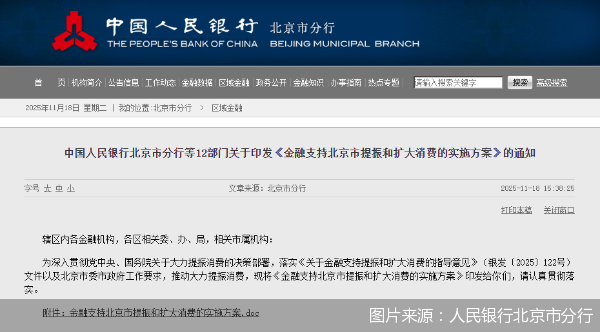
北京:支持符合条件的消费基础设施发行REITs
Bei Jing Shang Bao· 2025-11-18 09:44
Core Viewpoint - The People's Bank of China and 12 other departments have issued an implementation plan to support the expansion of consumption in Beijing, focusing on infrastructure and commercial circulation systems [1] Group 1: Financial Support Measures - Financial institutions are encouraged to actively engage with key projects related to the construction of Beijing as an international consumption center and other significant consumption projects [1] - The plan emphasizes optimizing financial products and services, including adjusting loan approval conditions based on borrowers' credit status and repayment capabilities [1] - It proposes to provide preferential loan rates and reduce financing costs for market entities [1] Group 2: Infrastructure Development - The implementation plan supports the issuance of Real Estate Investment Trusts (REITs) for eligible consumption infrastructure projects [1] - It highlights the importance of upgrading commercial districts, renewing business formats, and building circulation systems [1]

重要信息:83个项目已上市,发售总额2070亿元
Shang Hai Zheng Quan Bao· 2025-11-11 12:50
Core Insights - The National Development and Reform Commission (NDRC) has recommended a total of 105 infrastructure REITs projects to the China Securities Regulatory Commission (CSRC), with 83 projects already issued and listed, raising a total of 207 billion yuan, which is expected to drive new project investments exceeding 1 trillion yuan [1][2]. Group 1: Infrastructure REITs Development - Infrastructure REITs are an effective way to revitalize existing infrastructure assets through the public market, serving as a crucial link between the real economy and capital markets [2]. - The NDRC aims to promote the normalization of the recommendation and issuance of infrastructure REITs in 2024, expanding the market further [2][3]. Group 2: Private Investment Projects - The NDRC has recommended 18 private investment projects to the CSRC, with 14 projects already issued and listed, raising nearly 30 billion yuan [2]. - Private investment projects have become "first projects" in various fields, demonstrating a positive demonstration effect [2]. Group 3: Future Initiatives - The NDRC plans to enhance collaboration with the CSRC to support more eligible private investment projects for issuance, thereby broadening financing channels for private enterprises and promoting a virtuous cycle of investment and financing [3]. - The NDRC will focus on expanding the market by increasing the number of mature asset type project applications and facilitating the first listings of new asset types [3]. - A special coordination service mechanism will be established to address challenges faced by private investment projects in the REITs issuance process [3]. Group 4: Policy Support for Private Investment - The NDRC will continue to implement policies that support the listing and financing of technology-driven enterprises and mergers and acquisitions through a "green channel" [4]. - The NDRC aims to create a comprehensive national investment and financing service platform to enhance efficient connections between financing and credit services, targeting more precise credit resource allocation to private enterprises [4].