内河航运

Search documents
首破5亿吨!2025年西江船闸联合调度年过货量创新高
Xin Hua Wang· 2026-01-02 15:05
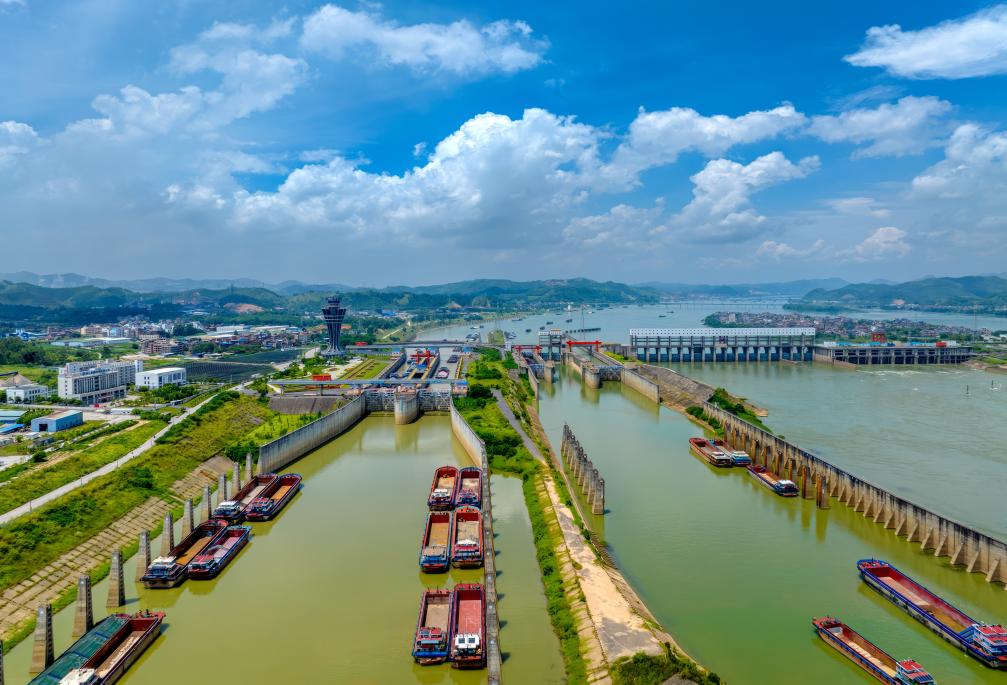
Core Insights - The total cargo throughput at the Xijiang Ship Lock is projected to reach 507 million tons in 2025, marking the first time it surpasses 500 million tons, with an average annual growth rate of approximately 8.3%, setting a historical record [1] Group 1: Xijiang Shipping Efficiency - The Xijiang shipping route connects the Lianyun-Guizhou Plateau, traverses Guangxi and Guangdong, and links to the Hong Kong-Macao terminals, serving as a vital "water lifeline" for the southwest region [1] - Previous issues such as fragmented management and lack of information sharing among different lock operators led to significant delays for vessels, constraining navigation efficiency [1] - To address these bottlenecks, the Xijiang Group has implemented an innovative management model that enables unified scheduling, management, and information sharing, significantly improving navigation efficiency [1] - The implementation of a vessel scoring management system has resulted in a 25% increase in lock passage efficiency per lock [1] Group 2: Longzhou Ship Lock - The Longzhou Ship Lock is a key project in the construction of the Xijiang Golden Waterway, handling 90% of the inland transportation tasks in Guangxi [3] - In 2025, the cargo throughput at Longzhou is expected to exceed 22.4 million tons, remaining stable compared to the previous year [3] - Approximately 600,000 tons of goods are processed daily at Longzhou, with bulk construction materials such as gravel and cement continuously transported to the Guangdong-Hong Kong-Macao Greater Bay Area, effectively supporting regional construction demands [3]

新年开启这些第一
He Nan Ri Bao· 2026-01-01 23:30
Core Insights - The article highlights the vibrant economic activities in Henan province as the new year begins, showcasing various sectors including transportation, manufacturing, and tourism, reflecting a strong start to the "14th Five-Year Plan" period [2] Transportation and Travel - Zhengzhou East Station is experiencing a peak in passenger flow during the New Year holiday, with an expected 915,000 travelers from December 31, 2025, to January 4, 2026 [3] - The station has implemented measures such as adding 20 temporary trains and optimizing passenger flow to ensure safety and convenience [3] - The integration of travel and cultural tourism is emphasized, with discounts available for travelers visiting local attractions using high-speed train tickets [4] Shipping and Logistics - The first cargo ship of the year, "Yuchang Tai 8898," departed from Zhoukou Central Port carrying 2,000 tons of ammonium sulfate to Nanjing, marking a significant moment for inland shipping in Henan [5][6] - Zhoukou Port has opened 43 domestic and international shipping routes, with cargo throughput increasing from 18.6 million tons in 2020 to 52.05 million tons in 2024, accounting for over 85% of the province's total [6] Foreign Trade - The first foreign trade order of the year for Henan was a gold selection line delivered to Zambia by Nile River Machinery, showcasing the company's commitment to sustainable practices and customer service [7] - A new market procurement trade model has facilitated the export of local candy to the Philippines, enhancing the export capabilities of small and medium-sized enterprises in Henan [8] Cultural Tourism - The Yinxu Museum in Anyang welcomed its first visitors of the year with a special guided tour led by the museum's director, highlighting the significance of cultural heritage [9][10] - The museum's initiative to engage visitors through interactive experiences has proven popular, with high demand for participation in guided tours [11] Energy Supply - Sinopec (Henan) Refining and Chemical Company successfully transported approximately 16,000 tons of oil products to ensure supply during the holiday, emphasizing the importance of safety and supply stability [13][14] - The company has implemented a comprehensive supply guarantee plan, focusing on both quantity and quality to meet the increased demand during the holiday season [13]
2026济宁航运“全面跃升年”,全力冲刺北方内河航运中心建设
Qi Lu Wan Bao· 2026-01-01 01:38
Core Viewpoint - Jining aims to establish itself as the "Northern Inland Shipping Center" by 2026, focusing on comprehensive upgrades in inland shipping and logistics infrastructure, while promoting a modern shipping ecosystem that integrates ports, industries, and cities [1][2] Group 1: Infrastructure Development - Jining is initiating the expansion of the Grand Canal and Liang-Ji Canal sections, with a focus on enhancing infrastructure quality and increasing high-grade waterway mileage to over 370 kilometers [1] - The city plans to implement supportive policies for multi-modal transport and has launched three new container shipping routes, aiming for over 10% growth in public, rail, and water freight transport [1] Group 2: Industrial and Economic Growth - Jining is accelerating the development of key projects like the second phase of Liangshan Port and differentiating the development of seven major hundred-billion yuan logistics parks [1] - The city is enhancing logistics trade by integrating into major transport corridors and establishing cooperation with significant sea and river ports, while also creating a platform for port-enterprise collaboration [2] Group 3: Technological and Environmental Initiatives - Jining is advancing green and smart transformation in inland shipping, including the publication of guidelines for smart waterway construction and the development of standards for new energy vessels [2] - The city is promoting the construction of LNG refueling stations for inland vessels and optimizing the crew allocation for battery-powered ships, aiming to participate in the development of new energy vessels across various waterways [2]
于613篇推文,见动能之变
Mei Ri Jing Ji Xin Wen· 2025-12-31 13:22
Core Insights - The year 2025 is characterized as "extraordinary" by the Central Economic Work Conference, highlighting significant developments in various sectors, particularly in artificial intelligence and human investment [2][3] Group 1: Artificial Intelligence - Artificial intelligence has transitioned from being labeled as "laboratory technology" to being deeply integrated into various industries, marking the beginning of the "AI+ era" [2] - The "Hangzhou Six Dragons" emerged as a key term in the AI sector, with significant developments such as the approval of local regulations for embodied intelligent robotics in Hangzhou [4] - The AI industry is projected to grow from 486.2 billion yuan in 2026 to 1 trillion yuan by 2030, with a compound annual growth rate of 19.8% [4] Group 2: Investment in People - The government has emphasized "investment in people" for the first time in its work report, focusing on initiatives like childcare subsidies and free preschool education [7] - This shift towards prioritizing human capital is seen as a long-term strategy to enhance economic growth and address the challenges of a declining population [8] Group 3: Trade Connectivity - China's exports have shown resilience, with ASEAN, the EU, and Belt and Road countries becoming key growth engines for foreign trade [3][9] - The central government has initiated measures to enhance domestic and foreign trade integration, with a focus on expanding market diversity [10] Group 4: Economic Powerhouses - Economic powerhouses like Guangdong, Jiangsu, and Zhejiang contribute over 60% of the national GDP, playing a crucial role in stabilizing the economy [14] - The central government has reiterated the importance of these provinces in achieving national modernization goals [14] Group 5: Hainan Free Trade Port - The Hainan Free Trade Port, which officially commenced operations on December 18, 2025, represents a significant step in China's openness, encompassing various sectors including trade, finance, and talent [15][16] - The establishment of this free trade port is seen as a pioneering experiment in systemic openness, with the potential to set precedents for national policies [16]
寄给“十五五”的明信片丨枢纽聚势 联通内外
He Nan Ri Bao· 2025-12-29 23:43
Core Insights - In 2025, Henan aims to strengthen its transportation infrastructure by developing a comprehensive transportation network that includes highways, railways, aviation, and waterways, with significant projects underway to enhance connectivity and support high-quality development [1] Group 1: Highway Development - The total mileage of highways in Henan is set to exceed 10,000 kilometers, with the completion of the Xuchang Ring Expressway marking a significant milestone [2][4] - The Xuchang Ring Expressway faced challenges due to its proximity to National Road 240 and the Zheng-Fu High-Speed Railway, requiring innovative engineering solutions to ensure safety [2] - The project was completed in a tight timeframe, with construction teams working under challenging conditions, including heavy rainfall, to ensure timely delivery [4] Group 2: Aviation Growth - Zhengzhou Airport's annual cargo throughput has surpassed 1 million tons, positioning it among the global aviation cargo leaders [5][6] - The airport has evolved from handling basic goods to accommodating specialized cargo, reflecting significant growth in its operational capabilities [6] - The development of a "dual hub" model with international connections is expected to further enhance Zhengzhou's status as a global logistics hub [7] Group 3: Port Operations - The opening of Pingdingshan Port marks Henan's fourth cargo transport city, facilitating direct shipping routes that enhance logistical efficiency for local businesses [8][9] - The port's operations are expected to grow as new vessels and improved waterways are introduced, allowing for larger cargo capacities and reduced transportation costs [10] - The development of the port is seen as a catalyst for regional economic growth, providing new opportunities for local industries and communities [9] Group 4: Service Quality in Transportation - Zhengzhou East Station is focusing on enhancing service quality alongside operational efficiency, with initiatives aimed at improving cleanliness and customer service [11][12] - The station has implemented upgrades to facilities and services in preparation for increased passenger traffic during peak travel seasons [12] - Continuous improvements in service delivery are expected to enhance the overall travel experience for passengers, contributing to the growth of Henan's transportation network [12]
亚洲开发银行助力桂林漓江新能源游船绿色升级
Xin Lang Cai Jing· 2025-12-29 14:07
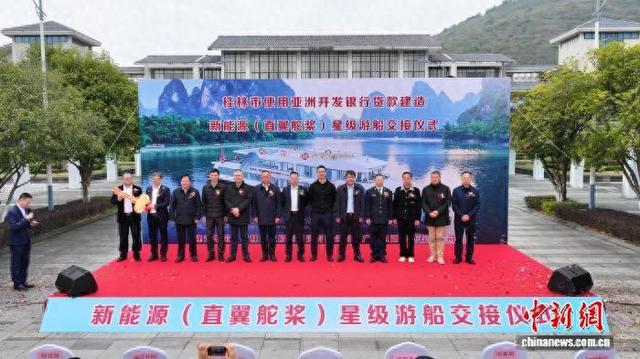
Core Viewpoint - The launch of two newly built new energy (direct wing paddle) tourist boats on the Li River marks a significant step towards upgrading to green and intelligent shipping in the Li River basin [1][2]. Investment and Project Overview - The initiative is part of the "Guangxi Li River Basin Comprehensive Governance Demonstration Project," with a total investment of approximately 2.319 billion RMB. This project aims to promote ecological protection and sustainable development in the Li River basin [2]. - The project received support from the Asian Development Bank, which provided a sovereign loan of about 938 million RMB, and officially commenced in March 2023 [2]. Project Components - The project focuses on three main areas: 1. Enhancement of ecological protection infrastructure, including tributary ecological restoration and the construction of ecological slow-moving pathways 2. Development of sustainable tourism and low-carbon facilities, including the establishment of tourism distribution centers and pilot projects for clean energy transportation 3. Protection of traditional villages and improvement of livelihoods [2]. Technological Advancements - The newly launched boats utilize a domestically developed direct wing paddle propulsion system, which improves propulsion efficiency by approximately 20% compared to traditional propellers. This advancement leads to significant energy savings regardless of the energy source used [5]. - The direct wing paddle technology enhances maneuverability and comfort, making it particularly suitable for the shallow, winding, and fast-flowing characteristics of the Li River [5]. Future Plans and Integration - Although the current fleet operates on a hybrid power model as a transitional solution towards zero emissions, the technology platform allows for future integration of cleaner energy sources [6]. - The operation of new energy vessels will be coordinated with other project components, such as ecological pathways, village restoration, and wastewater treatment, creating a new vision for ecological protection and tourism development in the Li River basin [6].
广西龙滩水电站千吨级通航建筑物工程开工 破解西南内河出海困局
Zhong Guo Xin Wen Wang· 2025-12-29 10:05
值得关注的是,贵州、广西两省区已初步达成共识,拟共同推动将红水河全域生态保护与高质量发展工 程纳入国家"十五五"相关规划。未来的红水河,将不仅是高效的航运通道,更将成为生态保护与经济发 展协同共进的示范河流。 技术突破直接带来运输能力的跃升。工程建成后,年单向通航能力将从原有的197.3万吨提升至375.46万 吨,实现运能翻番。这意味着,长期以来受陆运高成本制约的煤炭、矿产、建材等西南大宗商品,将首 次具备长距离、大规模水路运输的经济可行性。"过去不划算的运输线路,如今将成为可行现实。"一位 在场参会的贵州货运企业负责人说。 从250吨级、500吨级到如今1000吨级,通航标准的三次提升背后,是一场持续20余年的战略布局。"规 划必须顺应区域经济社会发展和民众需求,固守旧规只会阻碍进步。"交通运输部珠江航务管理局云贵 办事处主任李万松指出,尽管工程投资规模增加,但考虑到其对西部陆海新通道的支撑作用、沿江产业 带动效应以及长期民生效益,这无疑是一笔"极具远见的价值投资"。 李万松接受采访时说:"龙滩通航建筑物工程肩负着一项历史使命——打通红水河全线贯通的'最后一公 里'。"该工程不仅将直接激活上游贵州境内36 ...
周口港中心港区中心作业区开港启航
He Nan Ri Bao· 2025-12-29 07:39
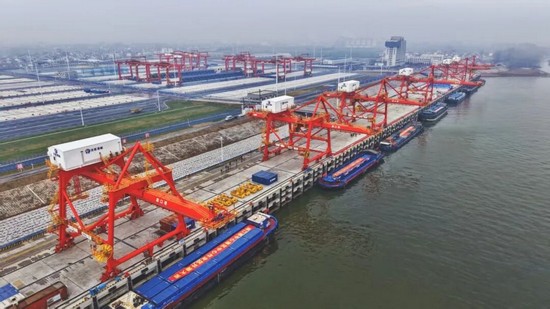
Core Viewpoint - The opening of the Zhoukou Port Center Operation Area marks a significant upgrade in the inland shipping capabilities of Henan province, transforming it into a key hub for regional development and international trade [1][4]. Group 1: Infrastructure and Capacity - Zhoukou Port has officially opened its first phase, featuring the largest construction scale with 22 planned 2000-ton berths, and the highest container berth capacity in the province [1]. - The first phase has an annual throughput capacity of 1.075 million TEUs, with an initial operational capacity of 300,000 TEUs [3]. - The port's design includes stringent engineering standards, such as flood control measures designed for a 100-year event, and a comprehensive smart maintenance system [1]. Group 2: Operational Efficiency - Zhoukou Port has achieved the highest level of automation, enabling remote operations for loading, transportation, and storage [1]. - The port's information system is optimized for intelligent vessel passage and dynamic scheduling within the port area [1]. - The service capabilities are enhanced by integrating customs clearance, logistics transfer, and loading inspection functions, providing a comprehensive service experience [1]. Group 3: Trade and Economic Impact - Zhoukou Port has opened 24 domestic container routes and 19 foreign trade relay routes, facilitating a global shipping network [2]. - From January to November, the port handled a cargo throughput of 47.405 million tons and a container throughput of 160,000 TEUs, reflecting a year-on-year growth of 9.5% [2]. - The port aims to create a high-efficiency logistics network that connects domestic mainlines and expands international shipping routes to regions including Europe, Africa, and Southeast Asia [4].
内河航运 黄金水道激发中原动能——2025河南经济热词观察之六
He Nan Ri Bao· 2025-12-26 23:21
Core Insights - The opening of the Zhoukou Port marks a significant milestone in the development of inland shipping in Henan, showcasing the province's ambition to enhance its logistics capabilities and connect to broader markets [1][2] - The rapid growth of inland shipping in Henan is evidenced by the establishment of multiple ports and a substantial increase in cargo throughput, indicating a shift towards more efficient transportation methods [2][3] Group 1: Port Developments - Zhoukou Port officially commenced operations on December 24, with a capacity for handling millions of containers, symbolizing the rise of inland shipping in the region [1] - The construction of ports like Gushi and Pingdingshan is ongoing, with significant excavation and development efforts, reflecting the commitment to enhancing inland shipping infrastructure [1] - By the end of November, Henan's port throughput reached 60.68 million tons, representing a year-on-year increase of 20.2%, with 48 container shipping routes established [2] Group 2: Economic Impact - The cost efficiency of water transport is highlighted, with water transport costing only 0.08 yuan per ton-kilometer, significantly lower than road transport, which can save companies over 10 million yuan annually in logistics costs [1][2] - The development of the inland shipping network is part of a broader strategy to integrate Henan into the national unified market, transforming it from an inland region to an open frontier [2] Group 3: Strategic Goals - Henan's "11246" project aims to enhance the comprehensive transportation system by achieving an annual cargo throughput of over 100 million tons, investing 100 billion yuan, and extending navigable routes to over 2,000 kilometers within 3 to 5 years [3] - The initiative includes the development of four major waterways and the establishment of six modern ports, positioning Henan as a key player in regional logistics and transportation [3]
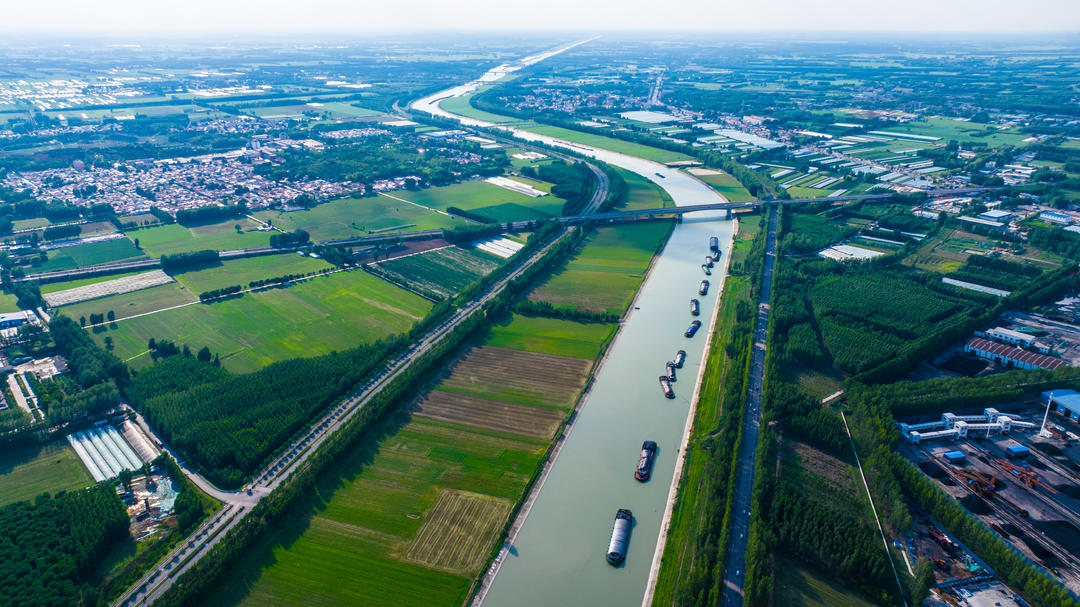
亿吨港将添硬核支撑!2030年京杭运河济宁段将全线二级通航
Qi Lu Wan Bao· 2025-12-25 07:03
Core Insights - Jining Port has achieved a historic milestone by reaching a cargo throughput of 106 million tons from January to November this year, marking an 18.5% year-on-year increase, making it the first northern inland river port to surpass 100 million tons and entering the ranks of national major ports [1][3] Group 1: Port Development - The development of Jining's port and shipping industry is driven by a dual approach of "planning guidance + project-driven" strategies, establishing a solid foundation for growth [3] - The city has revised the overall planning for Jining Port, focusing on the construction of three major port clusters, with over 103 berths for vessels over 1,000 tons, accounting for 68% of the province's inland river berths [3] Group 2: Waterway Enhancement - The Jining Port and Shipping Development Center is enhancing waterway capacity by upgrading key waterways, including the main channels of the Grand Canal and several important tributaries, resulting in the province's first secondary standard waterway [3] - The total length of high-grade waterways in the city has increased to 360 kilometers, representing 58% of the province's inland waterways, facilitating the passage of 2,000-ton and 10,000-ton vessels from Jining to the sea [3] Group 3: Future Plans - Future plans include accelerating the implementation of waterway upgrade projects and planning for the expansion of the Grand Canal and other significant projects, aiming for the entire Jining section of the Grand Canal to reach secondary navigation standards by 2030 [3]