
太阳能电池

Search documents
[热闻寻踪]钙钛矿电池商业化临门一脚 哪些公司将率先破门?
Quan Jing Wang· 2025-11-17 03:28
Core Insights - Recent breakthroughs in perovskite battery technology have garnered significant market attention, with notable advancements in efficiency and durability [1] - The perovskite battery has achieved an energy conversion efficiency of 27.2% and maintained over 82% performance after 1000 hours at 85 degrees Celsius, meeting key commercialization requirements [1] - Collaborative efforts have led to record efficiencies of 33.4% in flexible perovskite batteries, with practical components nearing 30% efficiency [1] Industry Developments - Companies are increasingly focusing on perovskite technology, with many engaging in R&D and production of related equipment [2][4][5] - The market for low-temperature conductive pastes is expected to grow as perovskite and tandem battery technologies advance [3] - The integration of perovskite technology with existing solar cell technologies is seen as a pathway to replace traditional silicon-based solutions [4] Company Strategies - Companies like 帝尔激光 have established technical reserves in the production processes for perovskite solar cells [2] - 苏州固锝 is a leading supplier of conductive pastes for solar cells, focusing on enhancing product performance and expanding into the perovskite market [3] - 捷佳伟创 has developed a pilot line for perovskite batteries and is actively participating in various projects, showcasing its capabilities in providing complete production solutions [4] Market Outlook - The perovskite battery sector is viewed as a promising new market, with companies like 京东方 emphasizing its potential despite current limitations compared to silicon [6] - Companies are optimistic about the future of perovskite technology, with ongoing R&D aimed at improving efficiency and lifespan [6][9] - The overall market for perovskite materials and technologies is expected to expand significantly, driven by advancements in production techniques and increasing demand for renewable energy solutions [1][8]
上海市进口出口连续七个月“双增长”
Xin Hua Cai Jing· 2025-11-14 08:07
Core Insights - Shanghai's total import and export value reached 3.71 trillion yuan in the first ten months of the year, marking a 5.2% increase year-on-year, which is 1.6 percentage points higher than the national average growth rate [1] - In October alone, Shanghai's import and export value was 367.98 billion yuan, with exports at 161.53 billion yuan and imports at 206.45 billion yuan, reflecting year-on-year growth of 3.5% and 2.8% respectively [1] Group 1: Trade Performance - Cumulative exports from Shanghai in the first ten months totaled 1.64 trillion yuan, up 10.5% year-on-year, while cumulative imports reached 2.07 trillion yuan, a 1.3% increase [1] - Shanghai's trade with emerging markets such as ASEAN, the Middle East, and Africa saw significant growth, with imports and exports of 530.31 billion yuan, 133.36 billion yuan, and 122.22 billion yuan respectively, representing year-on-year increases of 12.6%, 19.7%, and 26.8% [1] - Trade with major BRICS countries like Brazil and India also grew, with respective import and export values of 92.35 billion yuan and 81.34 billion yuan, showing increases of 7.8% and 31.6% [1] Group 2: Emerging Products and Sectors - Exports of emerging products such as electric passenger vehicles, lithium batteries, and solar cells reached 131.43 billion yuan, reflecting an 11.7% year-on-year increase, with growth rates exceeding 25% in the last six months [2] - The export of green shipping equipment, particularly liquid cargo ships, surged to 27.46 billion yuan, marking a substantial year-on-year increase of 115% [2] - Imports of high-tech products showed significant growth, with semiconductor manufacturing equipment, computers and components, and aircraft and parts increasing by 29.6%, 18.3%, and 92.4% respectively [2] Group 3: Consumer Goods - The import of consumer goods in Shanghai performed well, with dairy products, dried and fresh fruits, and beef seeing year-on-year increases of 16.2%, 15.3%, and 10.8% respectively, indicating a gradual release of domestic consumption vitality [2]
拆解中国“新三样”万亿出口:谁在卖?卖去哪?
Cai Jing Wang· 2025-11-12 07:59
Core Insights - China's "New Three Items" (electric vehicles, lithium-ion batteries, solar cells) are experiencing significant export growth, with a total export value of 909.77 billion yuan in the first three quarters of 2025, marking a 20% year-on-year increase [3][7][11] - The export of electric vehicles is particularly noteworthy, with 2.599 million units exported, representing a 55.1% increase, and an export value of 339.69 billion yuan, up 33.1% [4][11] - The solar cell export volume increased by 69.3% to 9.28 billion units, but the export value fell by 13.3% to 15.22 billion yuan due to oversupply and price declines [20][21] Export Performance - The export of lithium-ion batteries is the largest by value, with 3.9713 trillion yuan exported in the first three quarters, a 27.8% increase, accounting for over 43% of the "New Three Items" export value [3][15] - Guangdong is the largest province for "New Three Items" exports, while Anhui shows the fastest growth rate [4][10] - Western Europe is the primary market for China's "New Three Items," with Germany being the largest importer, accounting for nearly 10% of total exports [5][11] Market Dynamics - The rapid growth of Chinese electric vehicles in Thailand, where they hold over 80% market share in the electric vehicle sector, exemplifies the success of China's "New Three Items" [3][11] - The average export price of solar cells has dropped significantly, indicating a price war in the industry, which may lead to a consolidation of weaker companies [20][23] - The demand for lithium batteries is increasing globally, particularly in Europe and the U.S., where local supply is insufficient, providing opportunities for Chinese manufacturers [17][18] Regional Insights - The top ten countries for electric vehicle exports from China include six in the Asia-Pacific region, with Belgium being the largest market, followed by Australia and Thailand [14][12] - The export of lithium batteries is dominated by Fujian province, which accounts for over 25% of the total lithium battery exports from China [15][16] - The trend of diversifying export destinations is evident, with developing countries increasingly becoming significant markets for solar products [21][22]


【国金电新】钙钛矿应用新纪元:数据上天,技术落地
Ge Long Hui· 2025-11-11 13:27
Core Insights - The emergence of perovskite solar cells is positioned to challenge traditional silicon-based technologies, leveraging their high efficiency, flexibility, and lower production costs [2] - The successful launch of a satellite by StarCloud, equipped with advanced AI technology, marks a significant step towards establishing large-scale solar-powered data centers in space [1] Group 1: Perovskite Solar Cells - Perovskite solar cells are recognized for their potential to surpass silicon in efficiency, with theoretical single-junction efficiency of 33% and dual-junction efficiency of 45% [2] - The unique application of perovskite cells in space mitigates their stability issues caused by moisture on Earth, making them suitable for high-performance environments [2] - The manufacturing process for perovskite cells is simpler and more cost-effective compared to current thin-film materials like gallium arsenide and cadmium telluride, indicating a faster path to market adoption [2] Group 2: Space Data Centers - StarCloud's planned 5GW orbital data center will utilize solar panels that can capture energy at eight times the efficiency compared to Earth, enabling continuous power generation [1] - The average temperature in space, approximately -270°C, significantly reduces the cooling requirements for high-density server integration, addressing a major challenge in data center operations [1] - The deployment of 4km x 4km solar panels for the data center, assuming a 30% efficiency for single-junction perovskite cells, could yield a total power output of 38.4GW [2]
钙钛矿电池领域获得重要进展 13只概念股业绩稳定增长
Xin Lang Cai Jing· 2025-11-11 00:17
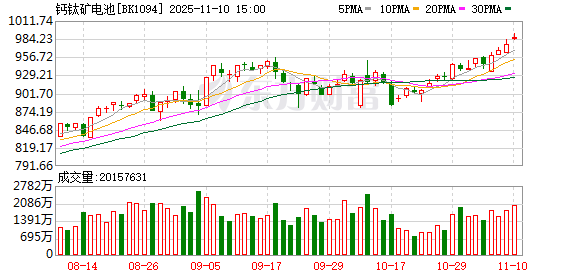
Core Insights - The research team led by researcher You Jingbi from the Institute of Semiconductor Research, Chinese Academy of Sciences, has made significant progress in perovskite solar cells, achieving a power conversion efficiency of 27.2% for prototype devices and enhancing operational stability, laying a crucial foundation for the industrialization of perovskite solar cells [1] Group 1: Investment Opportunities - Seven perovskite battery stocks have recorded net financing purchases exceeding 100 million yuan since the fourth quarter of 2025, with Longi Green Energy, Canadian Solar, BOE Technology Group, and Tongwei Co., Ltd. leading the list with amounts of 909 million yuan, 887 million yuan, 786 million yuan, and 766 million yuan respectively [1] - Thirteen perovskite battery stocks reported net profits exceeding 10 million yuan in the first three quarters of 2025, with stable year-on-year growth, including Jiepu Technology, Xian Dao Intelligent, and Weidao Nano, which saw profit increases of 97.3%, 94.97%, and 64.84% respectively [1]





钙钛矿电池领域获重要进展 13股业绩稳定增长(附名单)
Zheng Quan Shi Bao Wang· 2025-11-11 00:01
Core Insights - The perovskite solar cell industry is experiencing significant advancements, with a prototype achieving a power conversion efficiency of 27.2% and improved operational stability, laying a crucial foundation for industrial development [3][4]. Perovskite Solar Cell Developments - A research team from the Chinese Academy of Sciences has developed a perovskite solar cell prototype with a power conversion efficiency of 27.2%, significantly enhancing its operational stability [3]. - The quality of the perovskite film has improved, with carrier lifetime extended to 20 microseconds and a substantial reduction in interface defect density [3]. - The solar cell maintained 86.3% of its initial efficiency after 1529 hours of continuous operation and 82.8% after 1000 hours under accelerated aging conditions at 85°C [3]. Industry Milestones - GCL-Poly's GW-level perovskite production line has achieved a historic milestone with the first large-sized commercial perovskite module being produced [3]. - The domestic production rate of TCO conductive film glass has surpassed 95%, enhancing supply chain security [3]. Market Trends and Investment Opportunities - The perovskite sector is witnessing a robust trend of "technological breakthroughs, industrial implementation, and supply chain localization," focusing on three main areas: supply-side reform leading to price increases, long-term growth opportunities from new technologies, and industrialization opportunities from GW-level perovskite layouts [4]. Stock Performance and Financing - A total of seven perovskite battery stocks have seen net financing purchases exceeding 100 million yuan since Q4 2025, with Longi Green Energy and Aiko Solar leading the list [6]. - Longi Green Energy reported a revenue of 50.915 billion yuan for the first three quarters, a year-on-year decrease of 13.10%, while its net profit was a loss of 3.403 billion yuan, showing a reduction in losses compared to the previous year [9]. - Tongwei Co. achieved a revenue of 64.6 billion yuan, down 5.38% year-on-year, with a net loss of 5.27 billion yuan, also showing a reduction in losses [9]. Companies with Stable Growth - Thirteen perovskite battery stocks reported net profits exceeding 100 million yuan with stable growth, including Jietu, Xian Dao Intelligent, and Weidao Nano, with profit growth rates of 97.3%, 94.97%, and 64.84% respectively [10]. - Jietu achieved a revenue of 1.509 billion yuan, a year-on-year increase of 41.02%, while Xian Dao Intelligent reported a revenue of 10.439 billion yuan, up 14.56% year-on-year [10].
早新闻|这些赛道迎利好
Zheng Quan Shi Bao· 2025-11-10 23:57
Group 1: Government Policies and Initiatives - The State Council has issued measures to guide private capital's orderly participation in low-altitude economy infrastructure construction [1] - The National Development and Reform Commission and the National Energy Administration have released guidelines to promote the consumption and regulation of renewable energy, aiming for a multi-level consumption regulation system by 2030 [2] - The Ministry of Industry and Information Technology emphasizes the importance of application scenarios for new technologies and products, accelerating the development of key application areas such as "5G+", "Artificial Intelligence+", and "Robotics+" [3] Group 2: Technological Advancements - Researchers from the Chinese Academy of Sciences have achieved significant progress in perovskite solar cells, developing a prototype with a photoelectric conversion efficiency of 27.2% [4] Group 3: Company News - Zhongji Xuchuang plans to issue H-shares and list on the Hong Kong Stock Exchange [6] - Baiwei Storage's application for H-share issuance has been accepted by the China Securities Regulatory Commission [7] - Mindray Medical has submitted its H-share issuance application to the Hong Kong Stock Exchange [8] - Tianji Co., Ltd. is promoting the industrialization of lithium sulfide material preparation patents [8] - *ST Yuanshang has confirmed that there is no undisclosed significant information [8] - Shannon Chip Innovation has noted reports of rising storage chip prices but stated that its fundamentals have not changed significantly [8] - Sichuan Jinding's associate company does not involve space computing business [8] - Demingli is planning refinancing, with no significant changes in its operating environment [8] - Chengxing Co., Ltd. warns of potential irrational stock speculation risks [8] - Lingzhi Software intends to acquire 100% equity of Kaimiride, with stock resuming trading on November 11 [8] - Victory Co., Ltd. plans to acquire gas-related assets from its controlling shareholder, with stock resuming trading on November 11 [8] - Fangzhi Technology intends to acquire Zhixiang Technology for 116 million yuan to cultivate new profit growth points [8]
光电转换效率超27%,国内钙钛矿太阳能电池再获重要进展
Xuan Gu Bao· 2025-11-10 23:45
Industry Developments - The Chinese Academy of Sciences has achieved significant progress in perovskite solar cells, developing a prototype with a power conversion efficiency of 27.2% and improved operational stability, laying a crucial foundation for industrialization [1] - The production cost for current hundred megawatt (MW) capacity is approximately 1-1.5 yuan/W, with packaging materials like glass accounting for over 30% of the cost; future gigawatt (GW) level production is expected to drop below 0.8 yuan/W [1][2] - By 2030, perovskite production capacity is projected to exceed 100 GW, with a component market nearing 40 billion yuan, benefiting equipment manufacturers as market penetration increases [2] Company Insights - Mannsster has received orders for its perovskite products, including systems for gigawatt, pilot, and experimental single-junction and tandem coating, with a notable competitive advantage in domestic gigawatt-level coating systems [3] - Junda Co., a local company in Hainan, has collaborated with renowned universities and institutions to develop perovskite tandem cells with a laboratory efficiency of 32.08%, leading the industry [3]


科技创新驱动,海外市场布局,中企品牌价值TOP100突破19万亿元
Huan Qiu Shi Bao· 2025-11-03 22:55
Group 1 - The core viewpoint of the articles emphasizes the importance of technological innovation and brand value growth among Chinese enterprises, particularly in the context of global trade uncertainties [1][2]. - The total brand value of the top 100 Chinese enterprises reached 19.35 trillion RMB in 2024, reflecting an 8.48% year-on-year increase, showcasing the resilience of Chinese brands [1]. - Technological innovation is identified as a key driver for the increase in brand value, with a significant focus on artificial intelligence (AI) integration into core business operations [1][2]. Group 2 - The Chinese AI industry is projected to exceed 700 billion RMB in 2024, maintaining a growth rate of over 20% for several consecutive years, indicating a strong trend towards AI adoption in manufacturing [1][2]. - Chinese enterprises are actively expanding into overseas markets, with a reported 9.44 trillion RMB in overseas revenue for listed companies in 2024, marking a 7.97% increase [2]. - The export of green products, such as electric vehicles and solar batteries, is rapidly increasing, reflecting China's commitment to ESG (Environmental, Social, and Governance) principles and attracting foreign investment in energy transition [3].
市场大 潜力足——从三季度数据看河南发展系列观察之三
He Nan Ri Bao· 2025-10-25 23:17
Economic Performance - In the first three quarters, Henan's fixed asset investment grew by 4.5% year-on-year, surpassing the national average by 5.0 percentage points [1] - The total retail sales of consumer goods in Henan reached 21,049.93 billion yuan, with a year-on-year growth of 6.2%, exceeding the national average by 1.7 percentage points [1] - Henan's import and export volume reached 643.18 billion yuan, growing by 18.7% year-on-year, which is 14.7 percentage points higher than the national average [1] Investment and Industrial Development - Foreign enterprises are increasing their investments in Henan, contributing to industrial upgrades and new growth [2] - A new factory by Swire Coca-Cola in Zhengzhou, with an investment exceeding 900 million yuan, is expected to produce over 1 million tons annually, setting a benchmark for the beverage industry in the region [2] - Investment in projects worth over 100 million yuan increased by 8.4%, driving overall investment growth by 5.4 percentage points [3] Consumer Market Dynamics - The consumer market in Henan is vibrant, with new consumption patterns emerging, including night economy and holiday economy [5] - Over 40 billion yuan in consumption vouchers have been issued, stimulating over 50 billion yuan in consumption [5] - Retail sales of sports and entertainment goods increased by 58.2%, with significant growth in categories like cameras and smartphones [5] Open Economy and Trade - Henan's free trade zone saw double-digit growth in import and export volumes, with over 150,000 enterprises established [7] - The province has implemented 27 measures to stabilize and enhance foreign trade, focusing on international market expansion [7] - The import and export scale reached a historical high in the first three quarters, with electric vehicles and solar batteries gaining popularity in international markets [7] Future Outlook - The economic performance in the first three quarters reflects Henan's market scale and potential, laying a foundation for sustainable development [8] - The province aims to create a more open, resilient, and dynamic market to support high-quality economic growth [8]