
电气设备制造

Search documents
当前时点如何看2026年AIDC电气设备投资机会
2025-12-29 01:04
Summary of AIDC Electrical Equipment Market Conference Call Industry Overview - The conference call focused on the AIDC (Artificial Intelligence Data Center) electrical equipment market, particularly in North America, highlighting the impact of energy shortages and the increasing demand for electrical equipment such as transformers and power supplies [1][2][3]. Key Points and Arguments 1. Energy Supply and Pricing - North American terminal electricity prices have risen by over 5% due to energy shortages, particularly in the PJM region, indicating a tight electricity supply that may worsen with AI development [1][2]. - The construction of data centers in the PJM region has significantly increased spot electricity prices, suggesting a growing demand for electrical equipment [2]. 2. Transformer Demand - There is a surge in demand for high-voltage transformers, with orders from companies like ABB, Siemens, and General Electric reaching 3-4 times their annual revenue, leading to long delivery cycles [1][3]. - Chinese companies, leveraging production capacity and cost advantages, are expected to expand exports to the U.S., with firms like Siyuan, Jinpan, and Igor already achieving exports [1][3]. 3. AIDC Power Supply Trends - The trend towards high-voltage direct current (HVDC) power supplies is expected to gain momentum, with significant applications anticipated in 2026, particularly with Meta's new product launches [1][4]. - Domestic companies such as Oulitong and New Energy are making marginal breakthroughs in power supply technology, indicating a competitive edge in customization speed [4]. 4. Growth in Gas Turbine Orders - Gas turbine orders have seen a significant increase, with a growth rate of approximately 50%-60% as of September 2025, and hydrogen turbine orders growing even faster [1][8]. - Major manufacturers like Baker Hughes, Ansaldo, and Kawasaki are experiencing increased demand, with light gas turbine production ramping up while heavy gas turbine delivery cycles remain long [8]. 5. PCB Industry Developments - The PCB (Printed Circuit Board) industry is witnessing an increase in the usage and value of drilling needles due to material upgrades, with leading manufacturers like Dingtai and Zhongtung exceeding 50% production capacity [2][15]. - The P4B technology is nearing maturity, leading to increased equipment performance requirements and a strong growth outlook for equipment demand and value [15]. 6. Competitive Landscape for Chinese Companies - Chinese companies are positioned to play a crucial role in the global AIDC electrical equipment market, particularly in traditional components like transformers and emerging technologies such as HVDC and SST products [5][6]. - The ability to respond quickly and provide customized services is expected to give Chinese firms a competitive advantage [5]. 7. Infrastructure and Modular Data Centers - The construction cycle for modular data centers is shortening due to AI infrastructure demands, with companies like Schneider and CIMC participating in total or partial contracting [1][14]. - Significant growth is anticipated in this sector by 2026, driven by increased penetration rates [14]. 8. Liquid Cooling Technology - Liquid cooling technology is expected to see substantial growth, supported by changes in demand and the introduction of new products into the overseas supply chain [11][13]. - Companies are actively preparing talent to support the development of this technology, indicating its importance in the AI industry [11]. Additional Important Insights - The overall sentiment for the AIDC electrical equipment market is optimistic, with expectations of price elasticity and valuation expansion across various sectors, including power, infrastructure, and PCB [16]. - Companies like Yingliu, Hangyu Technology, and Jereh are highlighted as having strong growth potential in the AI power sector due to solid customer relationships and strategic partnerships [9][10].
卖掉公司!老板坚持发2.4亿美元奖金,540名员工每人爽领44.3万美元
Sou Hu Cai Jing· 2025-12-27 21:10
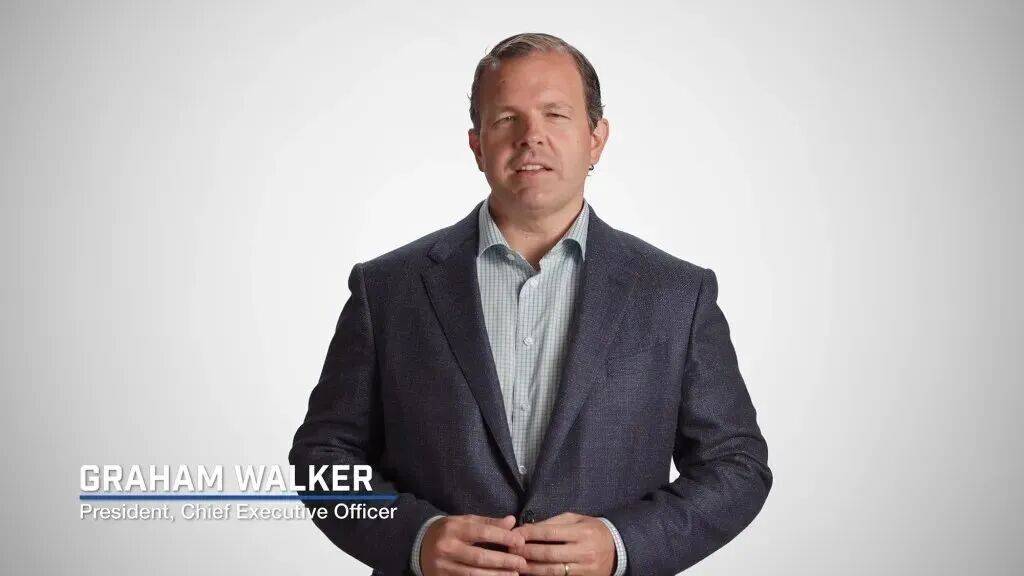
Core Insights - The sale of Fibrebond for $1.7 billion to Eaton Power Management has led to a unique employee bonus structure, with 15% of the sale proceeds, amounting to $240 million, distributed among 540 full-time employees, resulting in an average bonus of approximately $443,000 per employee [1][3] Group 1: Employee Bonus Structure - The decision to allocate 15% of the sale proceeds as employee bonuses was explicitly included in the sale agreement, with a condition that the bonuses would be paid over five years as retention rewards, favoring long-term employees [3] - The unexpected bonuses have significantly impacted employees' lives, with many using the funds for debt repayment, purchasing vehicles, paying tuition, and even traveling with family [3][5] Group 2: Company Background and Growth - Fibrebond, established in 1982, initially focused on electrical equipment manufacturing and faced near bankruptcy due to a fire in 1998, but the company successfully transformed into a manufacturer of data center construction and modular power equipment enclosures [6] - The company experienced a 400% revenue increase over five years, driven by the surge in demand for cloud computing during the pandemic, which attracted acquisition interest from larger firms [6] Group 3: Community Impact - The distribution of bonuses has revitalized the local economy in Grand Island, a town with a population of 12,000, as increased consumer spending has positively affected local retailers and the real estate market [6] - The actions of the company's owner, Graham Walker, have earned him the title of "real-life Santa Claus" among local residents, highlighting a new understanding of corporate responsibility and employee appreciation [7]


美国老板17亿卖公司,给全体员工发了2.4亿美元,人均44万!只提了一个要求...
Sou Hu Cai Jing· 2025-12-27 16:05
Core Viewpoint - The sale of Fibrebond, a family-owned business in Minden, Louisiana, to Eaton Corporation for $1.7 billion includes a unique condition that 15% of the sale price, approximately $240 million, must be distributed as bonuses to employees, significantly impacting the local community [2][4][5]. Company Overview - Fibrebond was founded in 1982 by Claude Walker, initially employing a small number of staff and focusing on manufacturing protective covers for telecommunications equipment [12]. - The company faced significant challenges, including a devastating fire in 1998 and a reduction in clients during the early 2000s, which led to a drastic decrease in workforce from over 900 to 320 employees [12]. - Despite hardships, the company maintained employee salaries and established an employee assistance fund during tough times, fostering strong loyalty among staff [12]. Sale and Employee Bonuses - The sale to Eaton was finalized with a stipulation that the $240 million bonus would be distributed based on employee tenure, with an average payout of $443,000 per employee, translating to over 3 million RMB [4][5]. - The bonuses are to be paid over five years, incentivizing employees to remain with the company to receive the full amount, with exceptions for employees aged 65 and older [4][5]. Impact on Employees and Community - Employees expressed disbelief and joy upon receiving the bonuses, with many using the funds to pay off debts, invest in businesses, or secure their financial futures [7][9]. - The bonuses have stimulated local economic activity, benefiting various businesses in Minden, such as car dealerships and real estate agents [9][10]. Business Transformation and Growth - Under Graham Walker's leadership, Fibrebond underwent a significant transformation, investing $150 million in data center equipment, which aligned with the rising demand for cloud computing and AI technologies [14]. - The company's sales increased by 400% over five years, attracting the attention of major corporations like Eaton [15].

高铁电气:公司中标新建成渝中线铁路相关项目,中标金额5903.17万元
Xin Lang Cai Jing· 2025-12-26 07:39
Group 1 - The company announced that its subsidiary, Baoji Baodeli Electric Equipment Co., Ltd., has received bid notifications from Changjiang Coastal Railway Group Sichuan Co., Ltd. and Changjiang Coastal Railway Group Chongqing Co., Ltd. [1] - The projects include material procurement for the new Chengyu Central Line railway (including Shiliang South Station) in Sichuan, with bid amounts of 5.1601 million RMB and 12.3803 million RMB [1] - Additionally, the material procurement for the new Chengyu Central Line railway in Chongqing has a bid amount of 3.8043 million RMB, and the ninth batch of construction management materials procurement for the Sichuan section has a bid amount of 37.687 million RMB [1] - The total bid amount for all projects is 59.0317 million RMB [1]

【风口研报】重型燃气轮机转子+核电主管道+核聚变磁体结构件,这家国内大型电气设备制造商当前产品供不应求,多个下游高景气
财联社· 2025-12-25 10:56
Group 1 - The core viewpoint of the article highlights the strong demand for products from a domestic large-scale electrical equipment manufacturer, specifically heavy gas turbine rotors, nuclear power main pipelines, and nuclear fusion magnetic structure components, indicating multiple downstream high prosperity [1] - Another company is building a full-stack technology system centered around AI, integrating computing, storage, perception, and execution, and is expected to address the computing power bottleneck in diverse scenarios through continuous iteration of its self-developed NPU technology [1]

电力、电气行业2026年度信用风险展望
Lian He Zi Xin· 2025-12-24 11:29
Investment Rating - The credit risk outlook for the power and electrical equipment manufacturing industry in 2026 is overall controllable, with structural differentiation continuing, highlighting the stability of leading enterprises while remaining cautious about the operational and debt pressures faced by small and medium-sized enterprises [8][50]. Core Insights - The power and electrical equipment manufacturing industry is a crucial part of the national economy, closely linked to macroeconomic growth and electricity investment demand. Since 2024, electricity consumption has steadily increased, and the industry is accelerating the construction of a new energy system and power grid [8][9]. - In 2025, industry policies focus on growth stabilization, market reform, industrial integration, and rural electricity support, with attention needed on the execution of growth targets and the participation of private capital [8][11]. - The industry is characterized by a pyramid structure, with a large number of small and medium-sized enterprises facing intense competition. The ability to negotiate with upstream and downstream partners is weak, and there is significant capital occupation from accounts receivable and inventory [8][21]. - Profitability in the industry is under pressure from upstream and downstream factors, but there was a slight recovery in operating profit in the first half of 2025, with overall profitability remaining stable compared to the previous year [8][27]. - The industry maintains a good credit status, with no new defaults reported in 2025, although there is a need to monitor potential concentrated repayment pressures in the future [8][39]. Industry Fundamentals - The power and electrical equipment manufacturing industry is significantly influenced by national economic growth and electricity investment demand. In 2024, the total electricity consumption in China reached 9.85 trillion kWh, a year-on-year increase of 6.8% [10]. - The investment in power generation and grid construction has seen substantial growth, with a focus on renewable energy installations becoming the mainstay [19][18]. Industry Policies and Regulatory Environment - Numerous policies have been introduced to support the power and electrical equipment industry, emphasizing growth targets, market reforms, and rural electrification [11][13]. - Key policies include the "Power Equipment Industry Growth Stabilization Work Plan (2025-2026)" which sets revenue growth targets for traditional power equipment at around 6% annually [13][15]. Industry Operating Conditions - In the first three quarters of 2025, investment growth in power generation and grid construction continued, with a notable increase in the construction of new energy systems [17]. - The total installed power generation capacity reached 3.72 billion kW by the end of September 2025, a year-on-year increase of 17.5% [18]. Industry Competitive Landscape - The industry exhibits a pyramid-shaped competitive structure, with a high degree of marketization and significant pressure on capital occupation. The number of enterprises in the power and electrical equipment manufacturing sector exceeds ten thousand, with small and medium-sized enterprises making up a large proportion [21][22]. - The competition is particularly fierce in the low and medium voltage cable sectors, while high voltage and ultra-high voltage cable production is dominated by a few key players due to high technical barriers [21]. Industry Financial Status - The profitability of the industry is affected by the dual pressures of upstream raw material costs and downstream customer pricing. In the first half of 2025, sample enterprises saw a slight increase in operating profit, with overall revenue growth of 1.07% [27][28]. - The financial leverage of sample enterprises decreased slightly by mid-2025, remaining at a moderate level, with an average asset-liability ratio of around 58% [33][36]. Industry Bond Market Performance - The credit status of the power and electrical equipment industry remains stable, with no defaults reported in 2025. The majority of bonds issued are short-term financing bonds and general corporate bonds [39][40]. - As of the first nine months of 2025, 37 bonds were issued, primarily by local state-owned enterprises with AAA ratings, indicating a preference for short-term flexible financing [41][43].
保研发、保人才、保产权 保险为科技创新提供全周期保障方案
Jin Rong Shi Bao· 2025-12-24 03:18
Core Insights - The article emphasizes the importance of providing systematic risk protection for innovation entities throughout the entire process of research and development, transformation, and industrialization in the context of technological innovation [1][2]. Group 1: Company Overview - Guangdong Xinsanjiang Electric Equipment Co., Ltd. is a high-tech enterprise specializing in the research and manufacturing of high and low voltage complete electrical equipment [1]. - The company faces significant challenges in its journey towards intelligent and high-end electrical equipment, including unclear R&D paths and high technical barriers, which can lead to substantial financial losses if projects fail [1]. Group 2: Insurance Solutions - In September, Ping An Property & Casualty Insurance provided the "Ping An Yueke Bao" product to Xinsanjiang Electric, covering various risks such as R&D property protection, patent protection, key personnel protection, R&D risk protection, cybersecurity protection, and public liability insurance [1][2]. - This insurance solution aims to address multiple risks faced by small and medium-sized technology enterprises during R&D innovation, transformation of results, and market expansion, including R&D failures, equipment damage, intellectual property infringement, and loss of core talent [1][2]. Group 3: Industry Trends - The insurance industry is evolving to deepen its service offerings, extending coverage from R&D to subsequent stages like transformation and market application, and shifting from standardized products to customized solutions [2]. - There is a growing need for comprehensive risk management services that not only focus on tangible asset protection but also emphasize the safeguarding of intangible assets such as talent, intellectual property, and data security [2][3]. - As technological innovation activities become more active, the demand for diverse and complex risk protection will increase, making insurance a crucial element in promoting technology transfer and supporting the upgrade of traditional industries [3].
三分钱买一个饼的国家,中国企业去了能干嘛?
虎嗅APP· 2025-12-22 15:38
Core Insights - The article discusses the economic situation in Egypt, focusing on the significance of the "bread" policy and its implications for local businesses and foreign investments [4][5][6][11]. Group 1: Economic Context - The "bread policy" in Egypt has been in place for over 80 years, initially introduced to prevent hunger during World War II, and has evolved to maintain a subsidized price for bread [6][7]. - The price of bread has increased from 0.05 EGP to 0.2 EGP, which seems minimal but reflects a broader economic struggle where basic food items consume a significant portion of household income [7][9]. - Many families spend a substantial part of their income on bread, with some households potentially spending one-tenth of their income just to avoid hunger, highlighting the dire economic conditions [10][11]. Group 2: Talent and Employment - Despite low GDP per capita, Egypt is referred to as the "brain warehouse" of the Middle East, with many Egyptians holding high positions in various sectors across the region [15][16]. - The presence of skilled Egyptian professionals in countries like Saudi Arabia and the UAE indicates a strong potential for local talent, which can be advantageous for foreign companies looking to enter the market [18][19]. Group 3: Market Dynamics - The article emphasizes that understanding the local language and culture is crucial for businesses aiming to penetrate the African market, as Egypt serves as a cultural and linguistic hub in the Arab world [21][22][25]. - Companies that establish a presence in Egypt can benefit from the country's strategic location and cultural connections to other Arabic-speaking nations, making it easier to expand into those markets [27][29]. Group 4: Investment Opportunities - Egypt offers a unique opportunity for foreign companies with its policy of 100% permanent ownership of land, which can provide a sense of security and commitment for long-term investments [33][37]. - The article suggests that companies should not only focus on hiring talent but also on creating educational institutions to develop a skilled workforce tailored to their needs, as exemplified by ElSewedy's technical academy [40][43]. Group 5: Cultural Considerations - Understanding and accommodating local customs, such as the five daily prayers of Muslims, is essential for foreign companies to foster a respectful and productive work environment [47][49]. - Companies that integrate local practices into their operations, such as providing prayer rooms and adjusting work schedules, can enhance employee loyalty and productivity [53][55]. Group 6: Stages of Market Entry - The article outlines three stages of market entry for Chinese companies: selling products, building systems, and integrating deeply into the local economy [58][62][66]. - Successful companies in Egypt are those that not only sell products but also contribute to local infrastructure and education, thereby becoming integral to the community [70][71].

江苏华辰:12月22日召开董事会会议
Mei Ri Jing Ji Xin Wen· 2025-12-22 09:20
每经头条(nbdtoutiao)——新能源重卡爆单了,11月销量同比增长178%!两班倒都供不应求,客户直 接进厂催单,这情景十年难遇 (记者 王瀚黎) 每经AI快讯,江苏华辰(SH 603097,收盘价:27.3元)12月22日晚间发布公告称,公司第三届第二十 三次董事会会议于2025年12月22日在公司三楼会议室以现场结合通讯表决方式召开。会议审议了《关于 公司"提质增效重回报"行动方案评估报告的议案》等文件。 2024年1至12月份,江苏华辰的营业收入构成为:电气设备制造行业占比98.77%,其他业务占比 1.23%。 截至发稿,江苏华辰市值为45亿元。 ...

西门子能源(海南)有限公司成立
Zheng Quan Ri Bao Wang· 2025-12-21 12:43
本报讯(记者袁传玺)天眼查工商信息显示,近日,西门子能源(海南)有限公司成立,注册资本6000万 元,经营范围包括机械电气设备制造、发电机及发电机组制造等。股东信息显示,该公司由西门子能源 有限公司全资持股。 ...