
办公用品

Search documents
什么消费最先“稳定”?
一瑜中的· 2026-03-31 12:51
Group 1: Core Viewpoint - The article discusses the stabilization of essential consumer goods in the retail sector, indicating that these goods may have returned to a stable growth phase starting in 2024, with growth rates around 4% for 2024 and 2025 [2][3][12]. Group 2: Consumer Segmentation - The retail sector is divided into four categories: subsidy-related retail (7.9 trillion, 16% of total), real estate-related retail (0.2 trillion, 0.2%), price-volatile retail (2.6 trillion, 5.2%), and essential retail (39 trillion, 79%) [2][11]. - Essential retail has historically been the most stable segment, with an average annual growth rate fluctuation of only 0.6 percentage points from 2009 to 2019 [11][12]. Group 3: Economic Observations - The weekly economic activity index (WEI) rose to 5.49% as of March 22, 2026, up from 4.98% the previous week, indicating an upward trend in economic activity [4][20]. - Retail sales of passenger cars showed a significant narrowing of decline, with a year-on-year decrease of 7% as of March 22, compared to a previous decline of 19% [4][27]. - Real estate sales saw a rebound, with residential sales in 67 cities increasing by 12% year-on-year as of March 28, 2026 [4][27]. Group 4: Production and Infrastructure - Cement shipment rates improved to 32.8% as of March 27, 2026, although the rate of improvement has slowed [4][31]. - The overall operating rates in various industries showed mixed results, with some sectors performing better than last year while others lagged [4][31]. Group 5: Trade and Exports - China's port container throughput showed a significant rebound, with a week-on-week growth of 3.7% as of March 22, 2026 [4][38]. - The number of cargo ships from China to the U.S. saw a year-on-year decline of 22.4% as of March 27, 2026, indicating a worsening trend in direct trade flow [4][39]. Group 6: Price Trends - Oil prices continued to rise, with Brent crude at $112.6 per barrel, while gold prices fell to $4,492 per ounce, down 1.8% [4][58]. - Domestic coal prices increased, with Shanxi thermal coal priced at 761 yuan per ton, up 3.5% [4][59].


上海意烁龙贸易有限公司成立,注册资本8000万人民币
Sou Hu Cai Jing· 2026-02-26 10:07
Company Overview - Shanghai Yishuo Long Trading Co., Ltd. has been established with a registered capital of 80 million RMB [1] - The legal representative of the company is Hu Bao, and it is wholly owned by Shanghai Zhongla Trading Co., Ltd. [1] Business Scope - The company’s business activities include the sale of toys, digital cultural creative technology equipment, office supplies, communication devices, electronic products, cameras and equipment, daily necessities, gifts and flowers, home audio-visual equipment, and internet sales [1] - Additional services offered include information consulting (excluding licensed information consulting), conference and exhibition services (with overseas exhibitions requiring approval), digital cultural creative content application services, digital cultural creative software development, and professional design services [1] Company Classification - Shanghai Yishuo Long Trading Co., Ltd. is classified under the national standard industry of resident services, repair, and other services, specifically in the category of other unlisted services [1] - The company is registered as a limited liability company (wholly owned by a natural person) [1] Registration Details - The company is located at Room 508, No. 1080, Moyu South Road, Anting Town, Jiading District, Shanghai [1] - The business registration period is from February 25, 2026, to an indefinite term [1] - The registration authority is the Jiading District Market Supervision Administration [1]
上海80后“卖螺丝”:9个月收入11亿,港股IPO
3 6 Ke· 2026-02-13 13:11
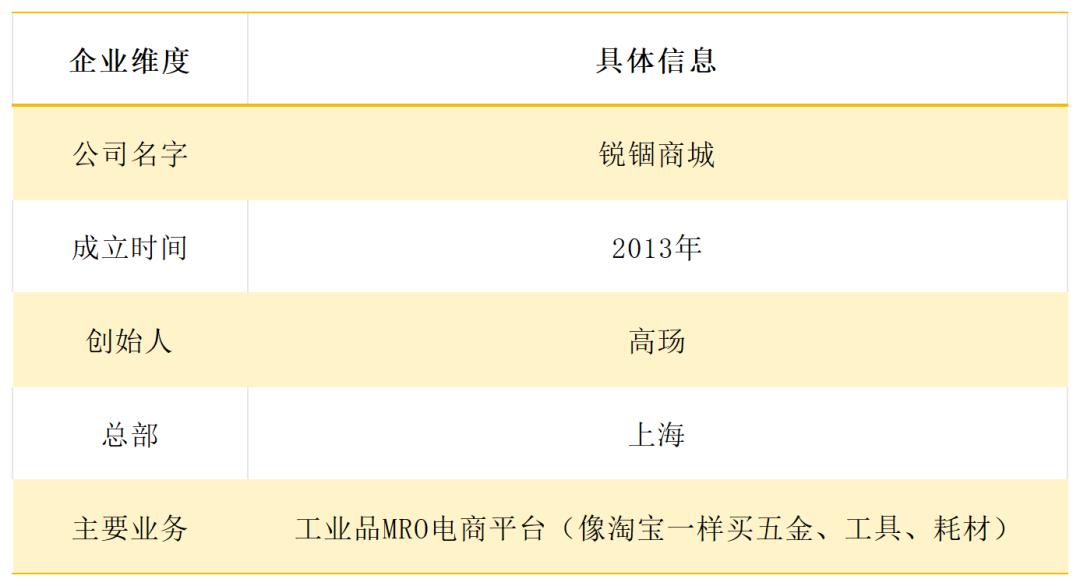
Core Insights - RuiGu Mall, founded in 2013, has become a significant player in the industrial MRO e-commerce sector, serving as an "invisible supplier" to 220,000 hardware stores, but has yet to achieve profitability, with a cumulative net loss of nearly 1.9 billion yuan from 2023 to the first nine months of 2025 [1][8]. Company Overview - Company Name: RuiGu Mall [2] - Founded: 2013 [2] - Founder: Gao Chang [2] - Headquarters: Shanghai [2] - Main Business: Industrial MRO e-commerce platform [2][3] Business Model and Market Position - RuiGu Mall targets the industrial MRO market, facilitating online transactions for various factory components and tools, akin to a Taobao for industrial supplies [3][6]. - The platform connects upstream suppliers with downstream hardware stores and factories, enhancing procurement efficiency [6][12]. - As of 2022, RuiGu Mall was valued at over 6.9 billion yuan and holds an 8.1% market share in the domestic online MRO procurement sector, ranking second [8][17]. Financial Performance - In 2023, RuiGu Mall reported total revenue of 5.05 billion yuan with a net loss of 6.38 billion yuan [9]. - For 2024, projected revenue is 8.77 billion yuan with a net loss of 7.74 billion yuan [9]. - As of September 30, 2025, the company generated approximately 11.24 billion yuan in revenue with a net loss of 5.24 billion yuan [9]. Industry Context - The MRO procurement service market in China reached 3.7 trillion yuan in 2024, expected to grow to 4.5 trillion yuan by 2029, with a compound annual growth rate of about 4.2% [17]. - The MRO sector has evolved through various stages, with RuiGu Mall emerging during the rise of industrial e-commerce post-2010 [10]. Technological Trends - The MRO procurement landscape is being transformed by AI and big data, which are expected to streamline processes such as sourcing, price comparison, and ordering [18][22]. - Future advancements may significantly reduce procurement cycles and errors, enhancing overall efficiency in the sector [20][22].
Central Garden (CENT) Q1 Earnings Surpass Estimates
ZACKS· 2026-02-04 23:15
Core Insights - Central Garden (CENT) reported quarterly earnings of $0.21 per share, exceeding the Zacks Consensus Estimate of $0.11 per share, and matching the earnings from the previous year [1] - The earnings surprise was +85.35%, with the company previously expected to post a loss of $0.20 per share but instead reporting a loss of $0.09, resulting in a surprise of +55% [2] - The company has surpassed consensus EPS estimates in all four of the last quarters [2] Revenue Performance - Central Garden posted revenues of $617.37 million for the quarter ended December 2025, which was 4.18% below the Zacks Consensus Estimate and down from $656.44 million year-over-year [3] - The company has only topped consensus revenue estimates once in the last four quarters [3] Stock Performance and Outlook - Central Garden shares have increased by approximately 7.3% since the beginning of the year, outperforming the S&P 500's gain of 1.1% [4] - The future performance of the stock will largely depend on management's commentary during the earnings call and the company's earnings outlook [4][5] Earnings Estimates - The current consensus EPS estimate for the upcoming quarter is $1.05 on revenues of $845.55 million, and for the current fiscal year, it is $2.75 on revenues of $3.14 billion [8] - The estimate revisions trend for Central Garden was mixed prior to the earnings release, resulting in a Zacks Rank 3 (Hold) for the stock, indicating expected performance in line with the market [7] Industry Context - The Consumer Products - Discretionary industry, to which Central Garden belongs, is currently in the top 40% of over 250 Zacks industries, suggesting a favorable outlook compared to lower-ranked industries [9]


2025消费之谜:上海反超北京,一线落后,不同城市冰火两重天?
Sou Hu Cai Jing· 2026-01-01 11:41
Group 1 - The core observation is that major cities like Shanghai and Beijing are experiencing contrasting consumer spending patterns, with Shanghai showing a significant increase in spending on clothing and cosmetics, while Beijing consumers are focusing on gold and jewelry, indicating a more conservative spending approach [1][3][5] - In 2025, Shanghai's clothing expenditure is six times that of Beijing, and cosmetics spending is four times higher, with Shanghai accounting for 30% of national cosmetic sales [5][7] - The influx of foreign tourists in Shanghai, driven by relaxed visa policies, has contributed significantly to the city's retail growth, with a nearly 40% increase in inbound tourists compared to the previous year [7][10] Group 2 - The statistical methodology for calculating consumer spending has changed in Shanghai, now focusing on actual business activity locations rather than company registration, which has positively impacted Shanghai's reported consumption figures [12][14] - Despite Shanghai's recovery, both Beijing and Shanghai's overall performance still lags behind the national average, indicating broader economic challenges [14][15] - The shift in consumer behavior in major cities is attributed to changes in corporate logistics, with many companies moving warehousing and logistics operations to more tax-friendly locations, leading to a disconnect in spending statistics [15][17] Group 3 - The decline in property values in major cities has led consumers to be more cautious with large purchases, shifting their spending towards experiences rather than physical goods [19][30] - In contrast, second and third-tier cities are benefiting from lower mortgage rates and government subsidies, which are driving consumer spending and contributing to national consumption growth [22][24] - The consumer landscape in smaller cities is characterized by a more direct and tangible spending approach, with local initiatives like shopping festivals and subsidies effectively boosting local economies [25][27]

上海消费反超北京,一线城市落后全国,为啥不同城市冰火两重天?
Sou Hu Cai Jing· 2025-12-30 11:41
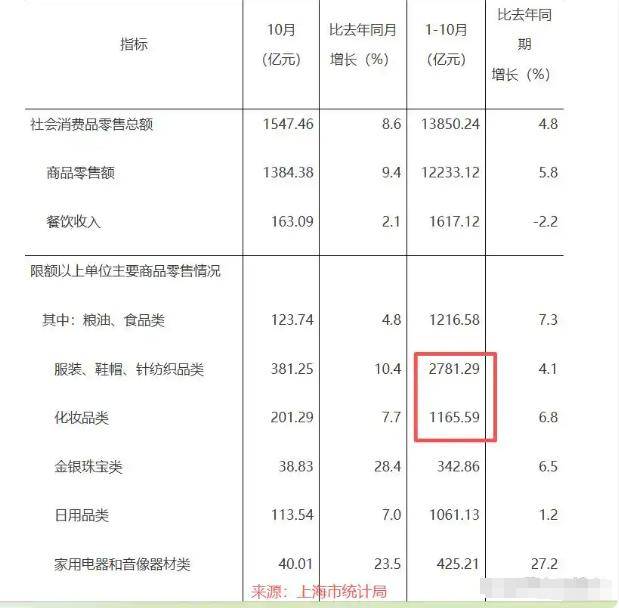
Core Insights - The article analyzes the consumption data of Shanghai and Beijing, revealing significant differences in spending habits, with Shanghai residents spending six times more on clothing and four times more on cosmetics compared to their Beijing counterparts, while Beijing residents spend twice as much on gold and jewelry than those in Shanghai [1] Group 1: Consumption Data Analysis - In October, Shanghai's total retail sales of consumer goods reached 1547.46 billion yuan, showing an 8.6% year-on-year increase, while the cumulative sales from January to October were 13850.24 billion yuan, reflecting a 4.8% growth [2] - The retail sales of clothing, shoes, and textiles in Shanghai amounted to 381.25 billion yuan in October, with a 10.4% increase, while cosmetics sales reached 201.29 billion yuan, growing by 7.7% [2] - In contrast, Beijing's retail sales data is affected by the registration location of businesses, leading to discrepancies in reported consumption figures [3][4] Group 2: Statistical Methodology - The method of calculating retail sales based on the registered location of businesses can distort the actual consumption data, as purchases made in one city may be attributed to another due to tax incentives and operational strategies [3] - The National Bureau of Statistics has recognized these issues and has been implementing statistical reforms since 2021 to improve accuracy in consumption data reporting [7] Group 3: Consumer Behavior and Trends - The differences in consumption patterns between Beijing and Shanghai are influenced by local policies, such as car purchase restrictions, which affect consumer confidence and spending behavior [9] - The influx of international tourists in Shanghai, with 8.28 million visitors in the first 11 months of the year, has significantly boosted retail sales, highlighting the city's ability to attract external consumption [11] - The ongoing urban adjustments in Beijing, including the reduction of manufacturing enterprises, have short-term impacts on consumption data but are aimed at long-term urban development [13] Group 4: Broader Economic Context - The article notes that while first-tier cities like Beijing and Shanghai show slower retail growth compared to second and third-tier cities, this trend may be attributed to higher living costs and consumer sentiment in larger cities [15] - The consumption landscape is evolving, with a shift towards experiential spending in first-tier cities, as residents prioritize experiences over material goods [19] - The article concludes that the differences in consumption data between Beijing and Shanghai reflect distinct developmental paths, emphasizing the importance of understanding the underlying factors driving consumer behavior [24]
海南优美莱国际商贸有限公司成立,注册资本1000万人民币
Sou Hu Cai Jing· 2025-12-26 03:35
Core Viewpoint - Hainan Youmeilai International Trading Co., Ltd. has been established with a registered capital of 10 million RMB, fully owned by Hainan Youmeilai International Media Co., Ltd. [1] Company Summary - The legal representative of Hainan Youmeilai International Trading Co., Ltd. is Li Sheng [1] - The company is registered with a capital of 10 million RMB [1] - The business scope includes general operations such as import and export of goods, technology import and export, retail and wholesale of sports goods, clothing, cosmetics, and daily necessities [1] - The company is classified under the wholesale and retail industry, specifically in other wholesale sectors [1] - The registered address is located at Room K039, 12th Floor, Beijing Building, No. 56 Guomao Avenue, Longhua District, Haikou City, Hainan Province [1] - The company is categorized as an other limited liability company with an operational period until December 25, 2025, with no fixed term thereafter [1] - The registration authority is the Hainan Provincial Market Supervision Administration [1]
沈建光:四季度消费 “冷暖不均”,政策还需加力
Di Yi Cai Jing· 2025-12-24 15:24
Core Viewpoint - The recent trends in China's consumer market indicate a decline in overall consumption growth, with a notable differentiation in product categories and a resilient service consumption sector. The urban consumption has significantly slowed down, necessitating policy adjustments to stimulate recovery and address structural disparities [1][9]. Group 1: Product Consumption Trends - The retail sales growth of goods has weakened, with November's year-on-year growth dropping to 1%, the lowest since August 2023. This decline is attributed to high base effects from the previous year and diminishing policy impacts [2]. - Categories related to the "trade-in" policy, such as home appliances and automobiles, have seen significant declines in retail sales, with decreases of 19.4% and 8.3% respectively in November. This reflects the exhaustion of consumer demand in these sectors [2]. - Non-trade-in categories have shown more stable performance, with retail growth for essential goods like food and beverages remaining robust, and some discretionary categories like cosmetics and clothing experiencing growth rates of 7.9% and 4.9% respectively [3]. Group 2: Service Consumption Insights - Service retail sales have demonstrated resilience, with a cumulative year-on-year growth of 5.4% from January to November, surpassing the 4.1% growth in goods retail. This indicates an increasing share of service consumption in overall spending [4]. - The growth in service consumption is supported by the development of new consumption scenarios, such as cultural and sports activities, which have contributed to a 19.5% increase in national box office revenue [4]. - The potential for service consumption remains significant, as it currently lags behind goods consumption in GDP contribution, suggesting opportunities for growth in sectors like tourism, elderly care, and childcare [5]. Group 3: Urban Consumption Dynamics - Urban retail growth has notably slowed, with November figures showing a year-on-year increase of only 1%, compared to 2.8% in rural areas. This shift is partly due to the diminishing effects of the trade-in policy [7]. - The central economic work conference has emphasized the need to eliminate unreasonable restrictions in the consumption sector to stabilize urban consumption, particularly in first-tier cities where growth has been weaker compared to lower-tier cities [7]. - Recommendations include accelerating the removal of consumption restrictions and promoting new consumption forms, such as yacht and automotive modifications, to enhance consumer confidence and spending [8][9].
有家商业零售(江西)有限公司成立,注册资本500万人民币
Sou Hu Cai Jing· 2025-12-22 17:30
Group 1 - A new company named Youjia Commercial Retail (Jiangxi) Co., Ltd. has been established with a registered capital of 5 million RMB [1] - The legal representative of the company is Ding Jihua, and it is wholly owned by Jiangxi Youjia Industrial Co., Ltd. [1] - The business scope includes food sales, catering services, retail of tobacco products, daily necessities sales, office supplies sales, health food (pre-packaged) sales, retail of edible agricultural products, and sales of agricultural by-products [1] Group 2 - The company is classified under the wholesale and retail industry, specifically in the retail sector [1] - The registered address of the company is located at No. 698, Yongle Road, Xihu District, Nanchang City, Jiangxi Province [1] - The company is a limited liability company with no fixed term of operation, registered until December 22, 2025 [1]
阜阳名久商贸有限公司成立 注册资本10万人民币
Sou Hu Cai Jing· 2025-12-18 02:18
Group 1 - Fuyang Mingjiu Trading Co., Ltd. has been established with a registered capital of 100,000 RMB [1] - The legal representative of the company is Hu Changjiu [1] - The business scope includes retail of tobacco products, alcohol sales, and food sales, among other activities [1] Group 2 - The company is authorized to operate specific projects that require approval from relevant authorities [1] - General business activities include sales of health food (pre-packaged), household appliances, daily necessities, electronic products, office supplies, and more [1] - The company also engages in enterprise management consulting, corporate image planning, advertising publishing, and wholesale and retail of stationery [1]